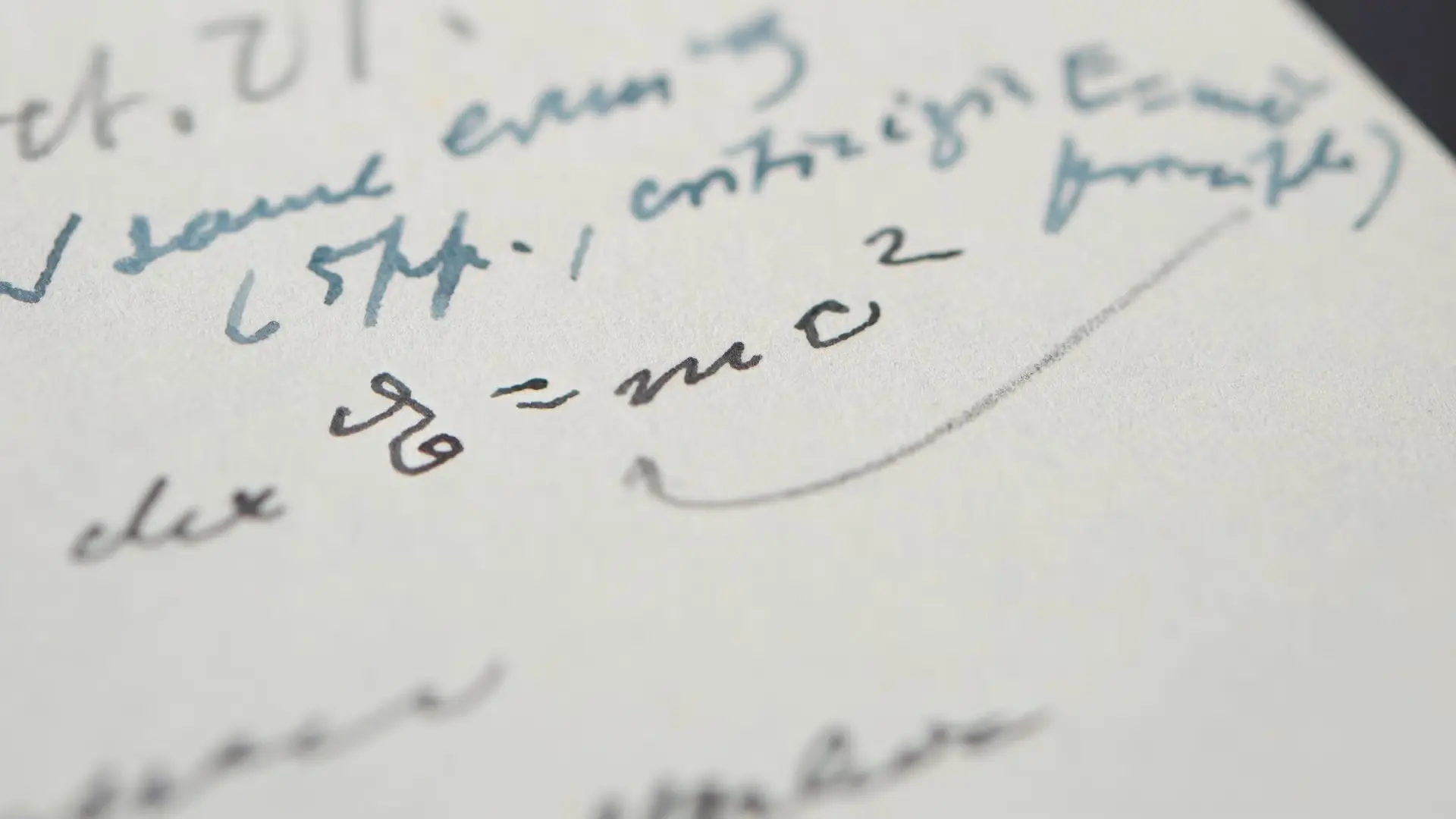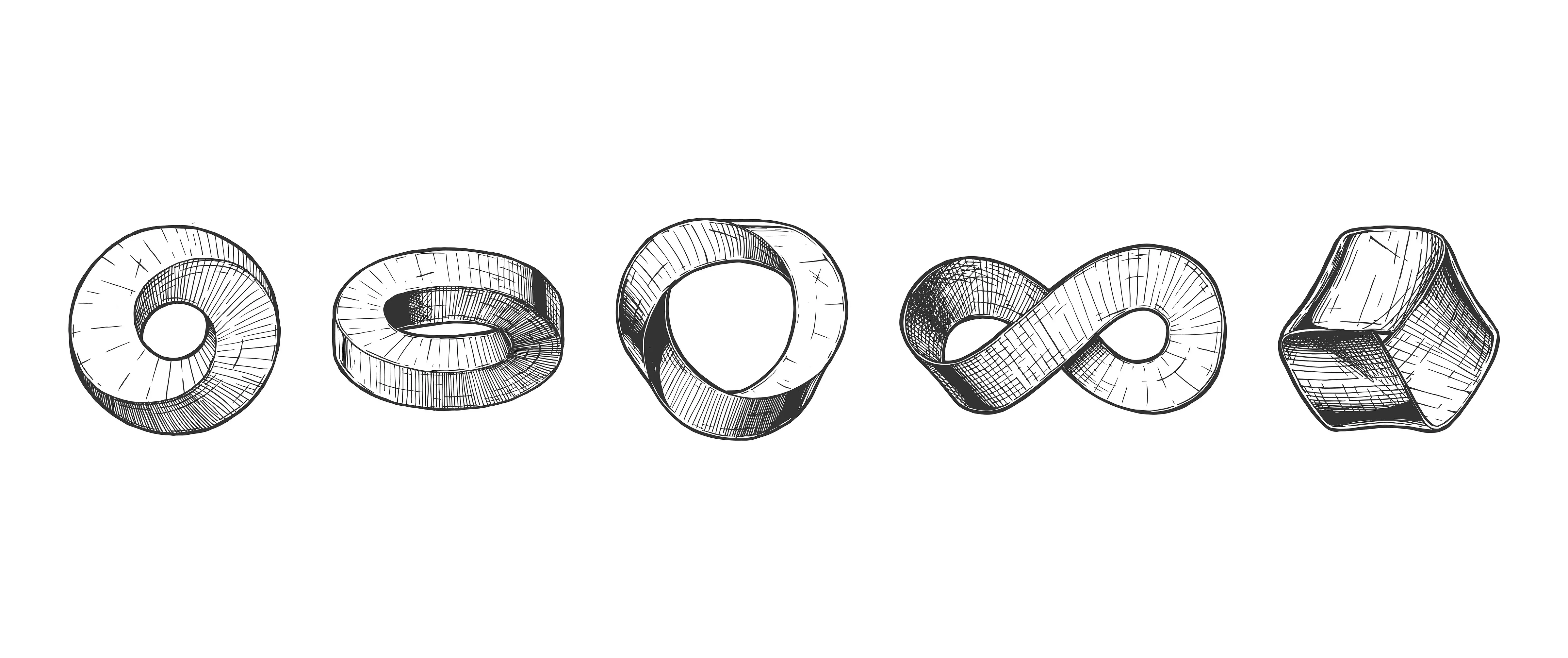
A sheet of paper has two sides. Nobody needs mathematics to learn this; anyone who has ever held a pencil already knows front from back. It is precisely this obviousness that makes the Möbius strip so disorienting. Because that ordinary scrap of paper, once one of its ends is given a half twist and glued to the other, loses one of its two sides. A single side remains. An ant walking along it arrives at the exact point behind where it started without ever crossing an edge, without ever lifting a foot. Then it carries on and returns to where it began. Across that whole walk, there was never any such place as “the other side” of the paper.
The first time you make one, the mind refuses to accept it. The object in your hand still feels as though it has two sides, because your fingers hold it that way. But touch a pencil to a point and carry it forward without lifting it from the paper, and the line betrays you. It passes over the seam, crosses onto what you took to be the “back,” then passes over the seam again and returns to where you began. The path you have drawn is as long as both sides of a flat strip combined. One unbroken line has toured both faces, because there are no two faces to begin with.
Two men, the same year, unaware of each other
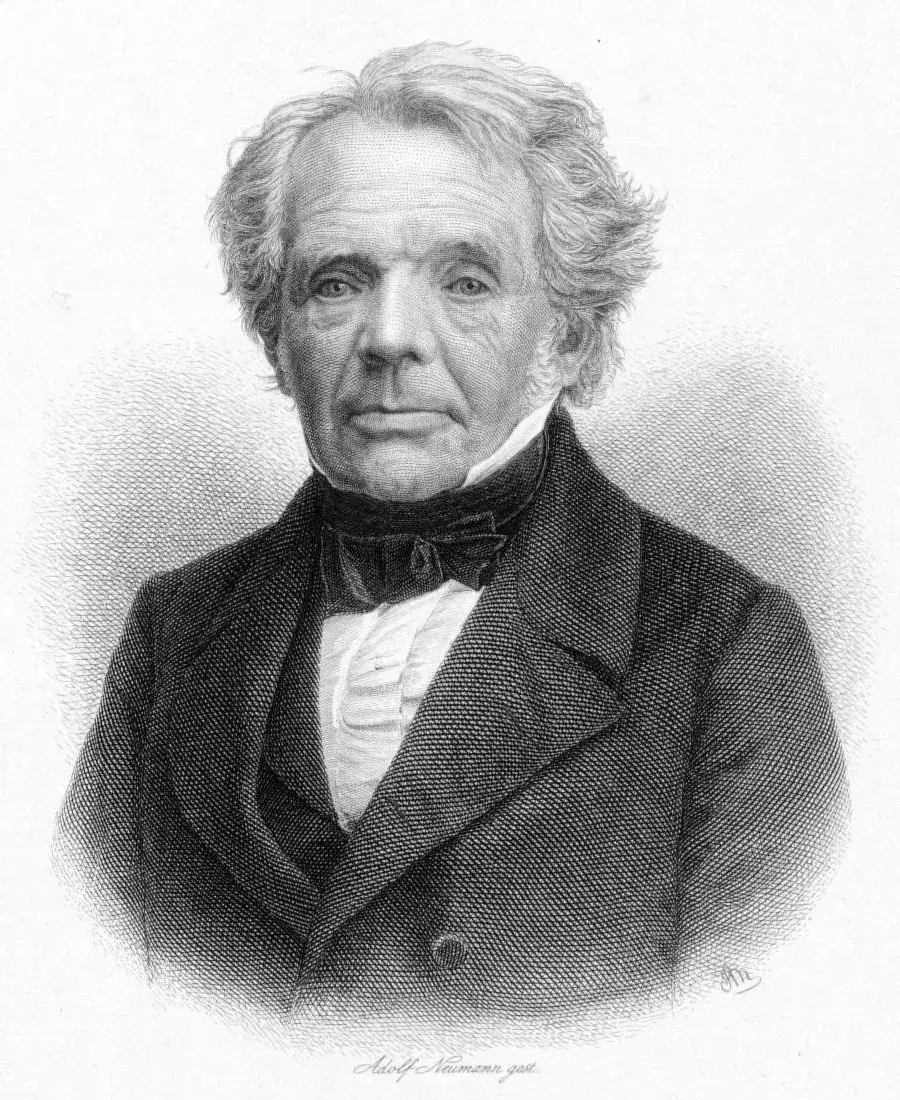
The object's history is as strange as the object itself. In 1858, two German mathematicians, August Ferdinand Möbius and Johann Benedict Listing, discovered the strip entirely independently of one another. The same idea, the same year, surfaced in two separate minds. In fact, Listing came across the strip a few months earlier and published his discovery in 1861. Möbius, by contrast, did not announce his own discovery until 1865, in a paper titled “Ueber die Bestimmung des Inhaltes eines Polyëders”; it was there that he first described an object with a single edge and a single side. His notebooks show he arrived at the idea in 1858, so the discovery belongs to 1858 and the publication to 1865. Such coincidences are not rare in the history of mathematics, but there is a pointed irony here: the object kept Möbius's name, even though it was Listing who gave the word “topology” to science. They shared the strip; they could not share the fame.
What Möbius did, in effect, was hand a mathematician a concept they had wrestled with for centuries: infinity. The human mind spent thousands of years trying to describe infinity, and the concept kept slipping through its fingers. The strip turns infinity into a concrete object. An ant set down on it can walk on without stopping, without changing direction, forever; the beginning and the end become impossible to tell apart. An abstract idea descends into a scrap of paper that fits in your palm.
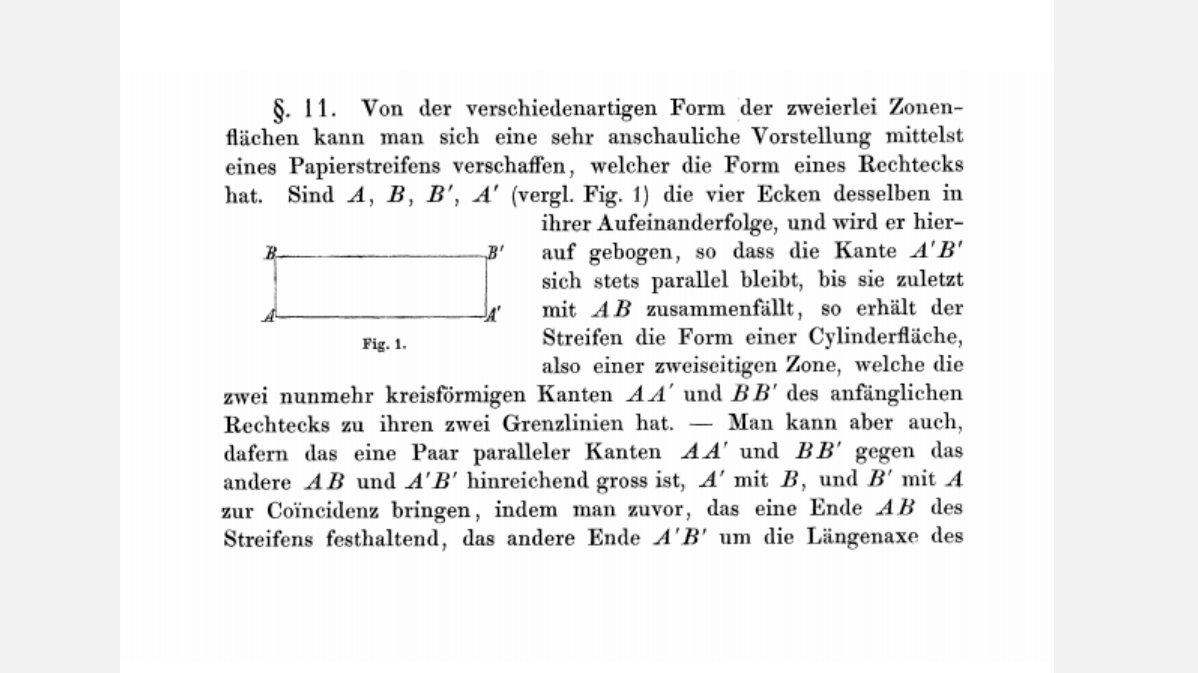
It is worth adding that the strip is born from a cylinder. Glue the ends of a long thin sheet without any twist and you get an ordinary loop. That loop has two perfectly good sides. A line drawn on it travels only one of them, covering half, while the other half stays untouched. The only difference is that half twist you give before gluing. A one-hundred-and-eighty-degree turn of the wrist converts a two-sided object into a one-sided one. That so small a gesture should produce so large a consequence is the strip's real beauty.
They shared the strip; they could not share the fame.
Surprises beneath the scissors
My favorite thing about the Möbius strip is what happens when you try to cut it. Intuition collapses entirely here.
Cut an ordinary paper loop down the middle: you get two separate, thinner loops. That is what you expect. Now do the same to a Möbius strip. Cut right down the center, following the line all the way around. You expect two pieces. What you get is not two pieces. It is one long strip, and that strip has two twists. The scissors are in your hand, the paper has not split in two; instead it has grown longer. Everyone who sees this the first time stops and checks again.
No description quite substitutes for watching it happen. The animation walks through the center cut, the one-third cut, and several variations besides — each one dismantling an assumption you did not know you were making. That is as good an introduction as any to why the strip belongs not to geometry but to topology.
Studying not the geometry, but the untouchable
All of this belongs to topology. Topology is the branch of mathematics that studies how shapes can be continuously bent and stretched into other shapes, and what stays the same and what changes through such transformations. Knead a lump of clay and its length, its angles, the curvature of its surface all change. But if it has a hole, the object counts as “the same” as long as that hole is not closed up. Geometry deals with measurements; topology with what measurement cannot touch.
The Möbius strip's one-sidedness is exactly this kind of topological property. Stretch it, compress it, squeeze it; make it out of colored paper or out of sheet metal and it stays one-sided. The property depends not on the object's dimensions but on the presence of that single twist in its construction. This is what mathematicians call a “non-orientable surface”: a surface on which no consistent definition of “front” and “back” is possible.
From the library to the baggage belt
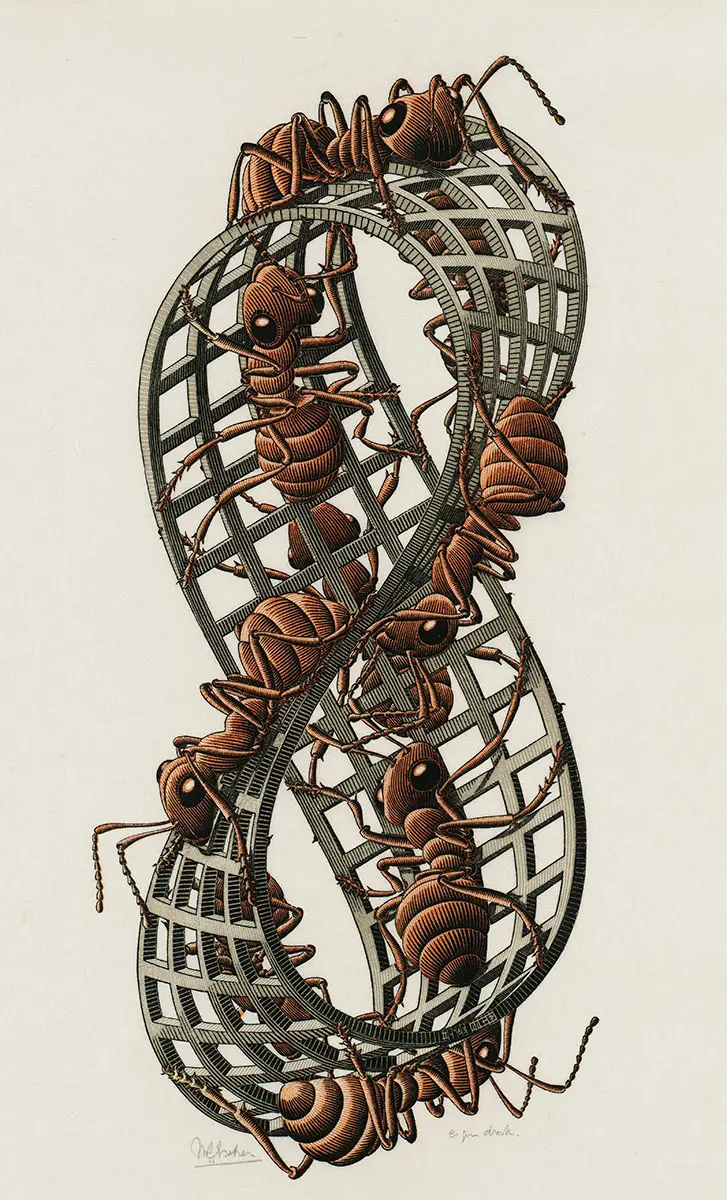
The strip did not stay on paper. It inspired some artists and architects as well. The best known is the Dutch graphic artist M. C. Escher's 1963 print Möbius Strip II (Red Ants). In it, a column of red ants walks one after another along the strip's single, never-ending surface. That endless procession explains the object's mathematics in a single glance; it lays out an abstract concept without writing down a single equation — as the documentary M.C. Escher: Journey into Infinity makes plain in a different medium. The national library in Astana, Kazakhstan, was also designed in the shape of a Möbius strip. The design proposes a structure in which interior and exterior spaces flow into each other in an unbroken loop, and it won first prize in an international competition. Tying the idea of infinite knowledge to an infinite surface is a fitting choice for a library.
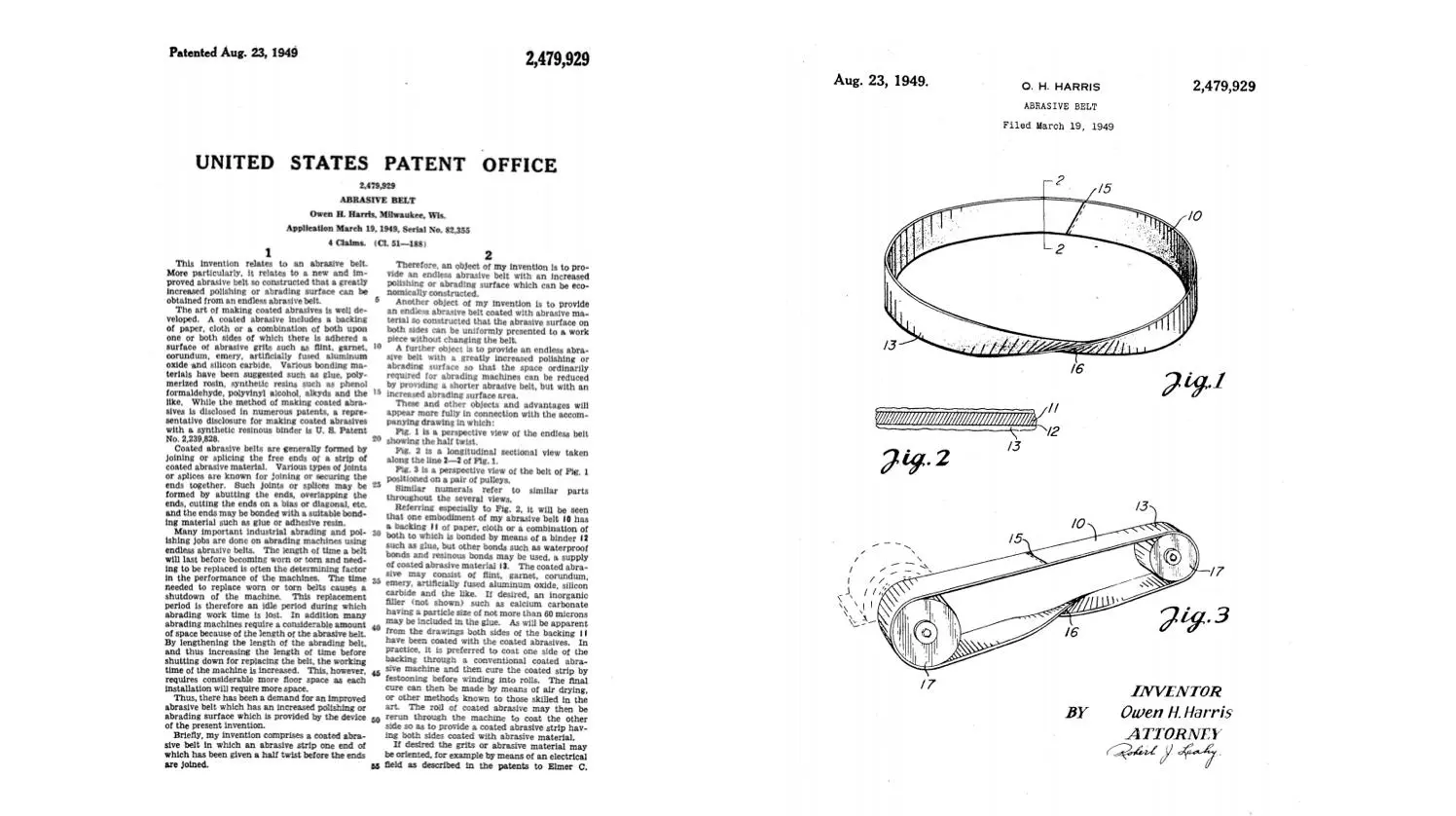
The strip also has everyday uses, and they are surprisingly practical. Some of the conveyor belts that carry luggage at airports are designed as giant Möbius strips. The reason is simple but clever: the whole surface of a one-sided belt wears evenly, because there is no such thing as a “rarely used back side.” The belt therefore lasts twice as long. The idea did not stay on paper; in 1949 the B.F. Goodrich Company patented a Möbius strip conveyor belt. More precisely, the patent belonged to Owen H. Harris's design for an abrasive belt, and it rested on the very fact that spreading the wear evenly across the entire surface made the belt last longer. The same logic works in the fan belts of cars; a one-sided belt runs on its entire surface, wears evenly, lasts longer. The same idea was used in old tape recordings too; a half twist given to the magnetic tape doubled the playing time in a single loop.
A ship that curls into itself
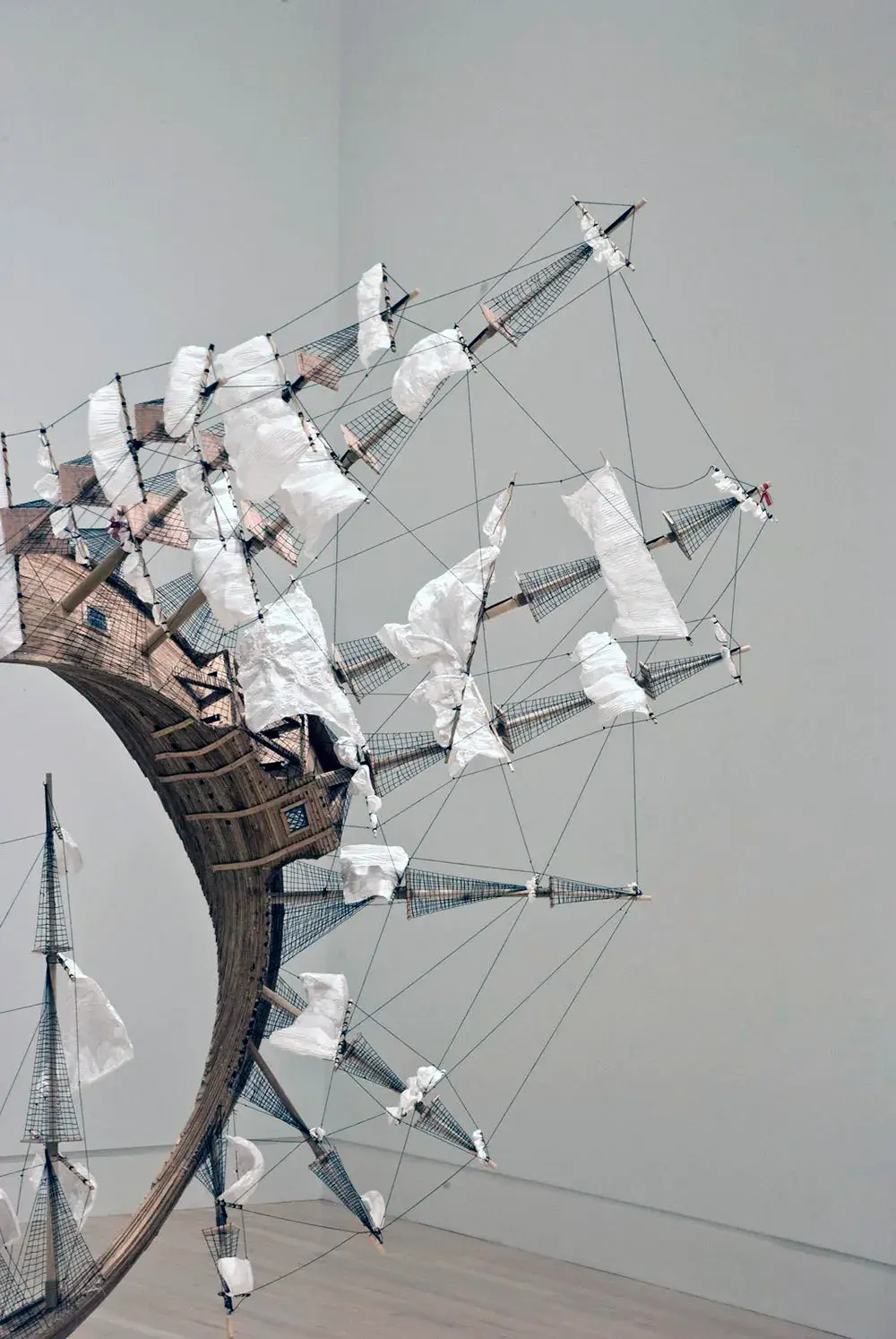
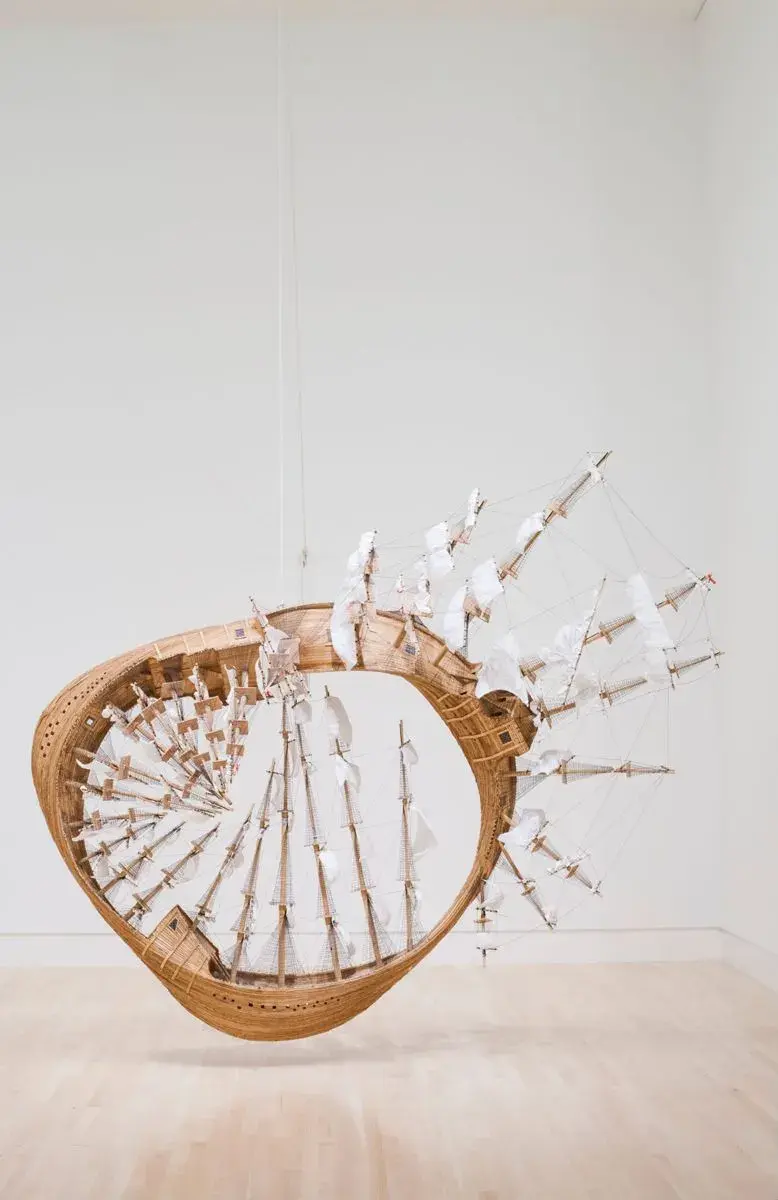
Perhaps the most striking place the strip has seeped into art is Tim Hawkinson's 2006 sculpture Möbius Ship. Imitating the meticulous methods of ship-in-a-bottle hobbyists, Hawkinson built a wooden sailing ship as an unbroken loop that curls in upon itself. The roughly ten-foot-wide work was made from ordinary household objects like twist ties and packing materials, and it is on display today at the Indianapolis Museum of Art. A complete ship, with masts, sails, and rigging, hangs in the air transformed into a single surface with no bow and no stern.
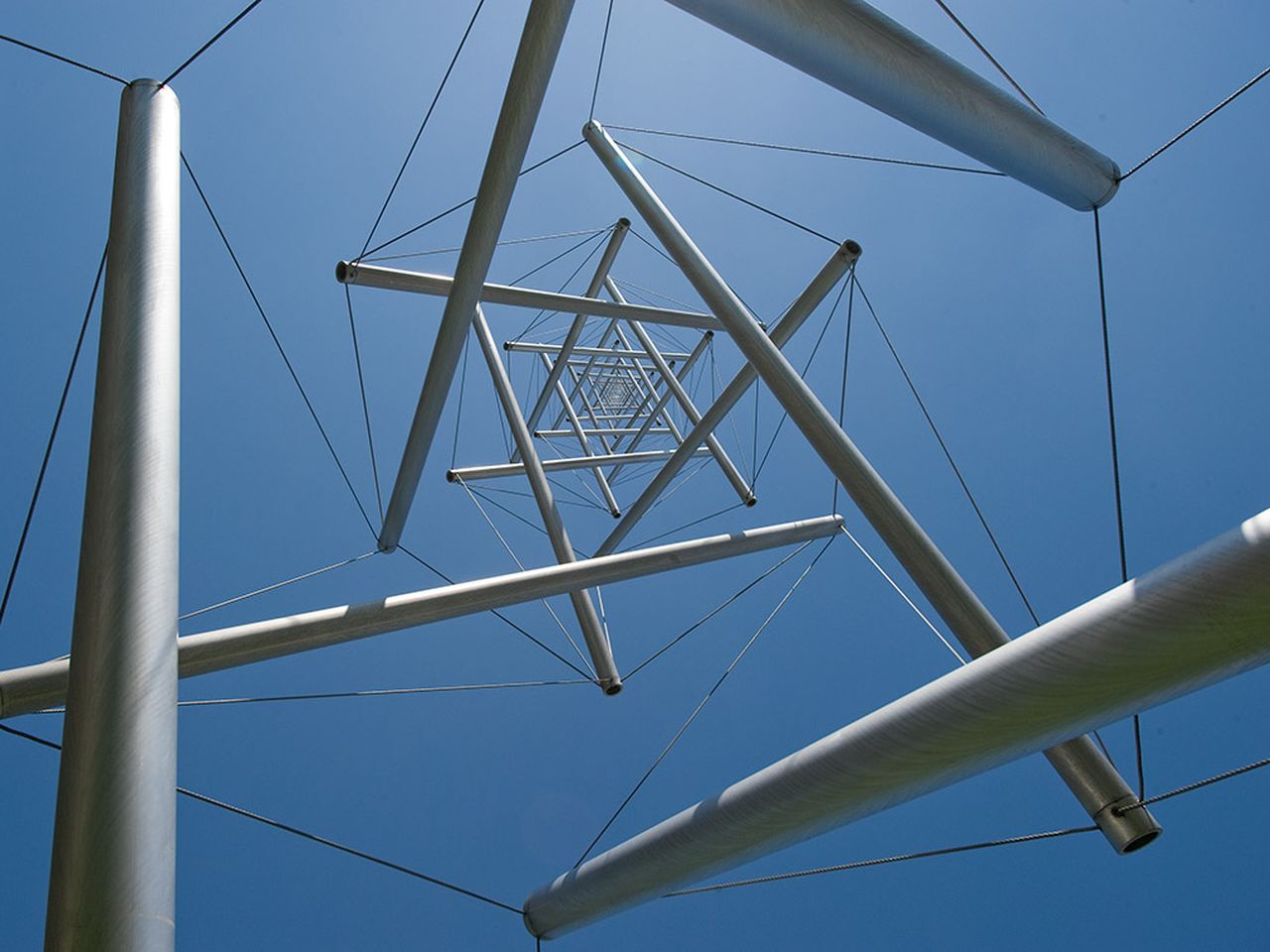
The work's name is as clever as its form. Möbius Ship is a play on Herman Melville's novel Moby Dick. The link drawn between that novel's endless loop of a captain's obsession and a surface with no clear beginning or end is no accident. Turning ordinary material into something unexpected, Hawkinson does exactly what the Möbius strip itself does: he takes an object you think you know and bends it into a form the mind struggles to accept. The same instinct runs through Kenneth Snelson's Needle Tower, where aluminum tubes float in a network of cables and the structure holds up because of what isn't there.
The Möbius strip in your pocket
Set the libraries and sculptures aside, and there is a Möbius strip that most people see every day without ever noticing: the recycling symbol. Look closely and those three chasing arrows form a closed Möbius strip. One of the arrows is twisted, just like the half turn given to one end of the paper. The symbol was designed in 1970 by a college student named Gary Anderson, for a student design competition held for the first Earth Day.
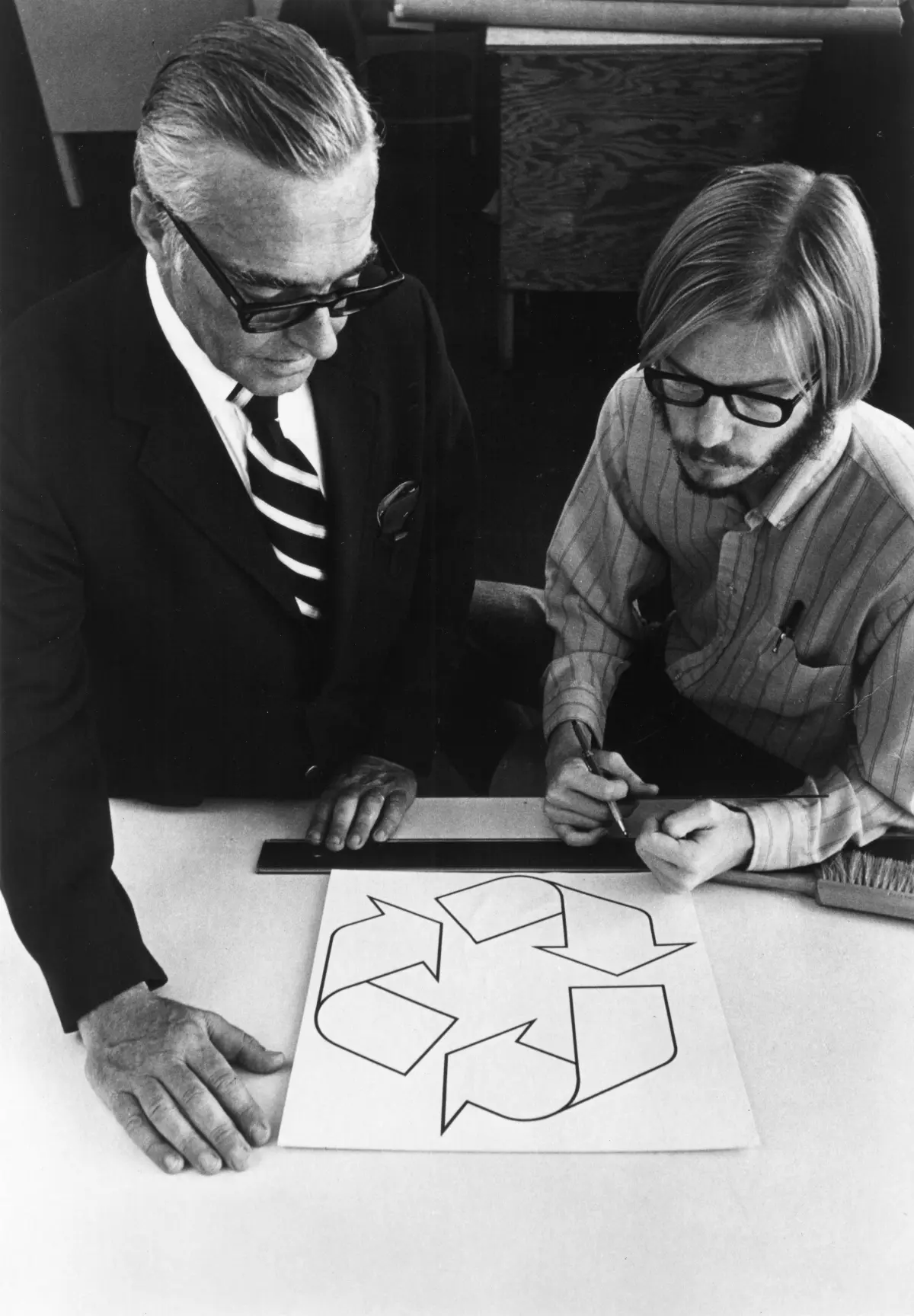
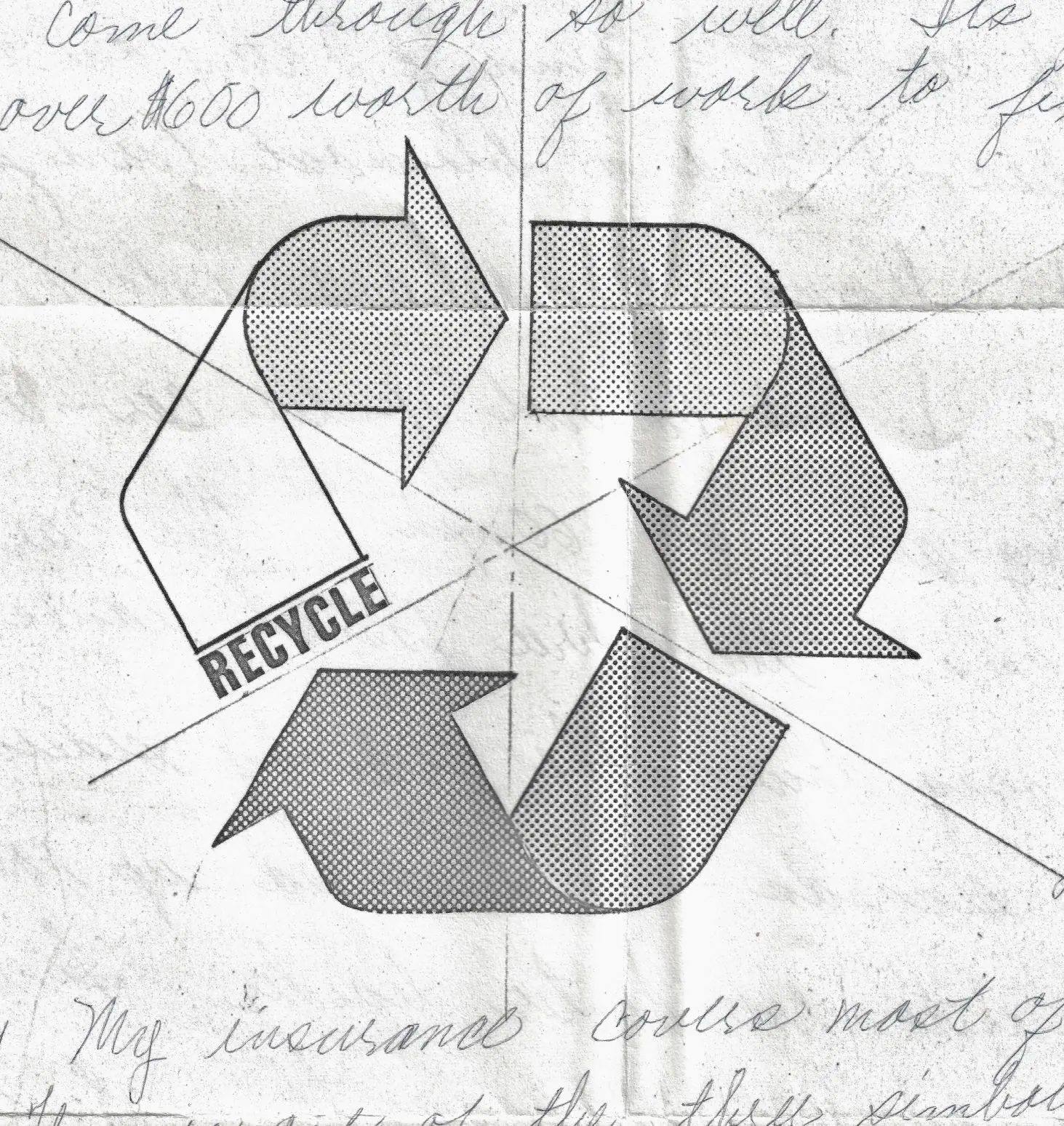
The choice was deliberate. To convey the idea that material is not consumed and discarded but keeps returning to the start in a continuous cycle, it is hard to find a form more fitting than a surface with no beginning and no end. That single-twisted strip, hinting at infinity, sits quietly on billions of packages. Most people use it without ever knowing it is a Möbius strip.
The stone that nature twisted itself
Everything I have named so far came from human hands: paper, sculpture, building, symbol. But that signature twist of Möbius's sometimes appears on its own, with no intention behind it. The Möbius Arch in the Alabama Hills of California is the finest example. Formed as wind and water wore away the granite over thousands of years, this natural arch looks as though the strip's familiar turn has been carved into stone. No one designed it; geology happened to produce a form that defies the usual rules of geometry.

The arch's most striking feature is the window-like opening within it. Seen from the right angle, that opening frames Mount Whitney, the tallest summit in the contiguous United States, right at its center. The clean alignment of a mathematical curiosity with a natural landscape is what has drawn photographers there for years. The stone's twist frames the snow-capped peak behind it, and the result is an image where abstract mathematics and untouched nature meet in the same frame.
One step further
If the strip has caught your interest, its truly mysterious relative is worth meeting: the Klein bottle. The Möbius strip is an object with a surface but also an edge; it has a border, a boundary. The Klein bottle has no edge. It is a surface with no distinction between inside and outside, one that passes through itself and does not truly fit into three-dimensional space. Glue two Möbius strips together along their edges and you theoretically get a Klein bottle, but you cannot do this physically, because the object cannot settle into our world without piercing itself.
The most lasting lesson of the Möbius strip is perhaps just this. A human hand gives a sheet of paper a half twist, and out comes something intuition rejects but logic accepts — the same tension at the heart of proving that √2 is irrational. That a one-sided object can exist in a two-sided world is mathematics' way of reminding us how little we know the things right in front of our eyes. A sheet of paper, a pair of scissors, a twist. The object tells the rest.
To make a Möbius strip yourself, all you need is a long thin paper strip, a little glue, and one half twist. The rest begins with a pencil.