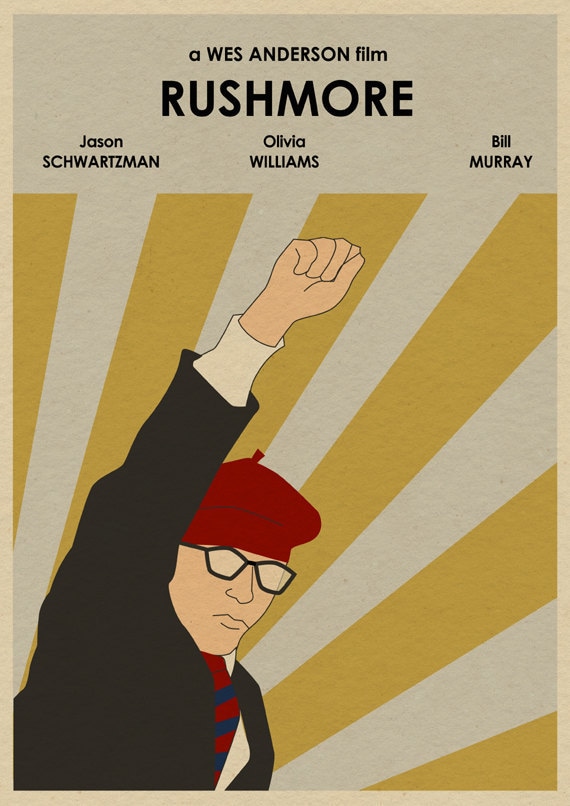
ax Fischer is failing every class at Rushmore Academy. He is also the founder of the Beekeepers Club, the Fencing Team, the Astronomy Society, the Yankee Review, the Max Fischer Players, and eleven other organizations. He is not a bad student. He is a student who has decided, without quite articulating it, that the school exists for him rather than the other way around. This distinction matters more than any grade.
Rushmore is Wes Anderson's second film, made in 1998 and co-written with Owen Wilson. It stars Jason Schwartzman in his debut as Max, Bill Murray as Herman Blume — a wealthy industrialist who is in the slow process of disappearing from his own life — and Olivia Williams as Rosemary Cross, a first-grade teacher at the school whom both of them fall for. The love triangle is the plot. But what the film is actually about is something older and stranger: the question of what it means to be a person who cares more than is reasonable about the things he cares about.
Anderson shot the film at his own high school — St. John's School in Houston, Texas. He delivered directions to Bill Murray in a whisper on the first day of shooting, afraid the actor would shoot him down. Murray later wrote Anderson a blank check when Disney refused to fund a helicopter shot.
The film is structured in five acts, like a play — which is appropriate, because Max experiences his entire life as a production he is directing. Every problem is a staging challenge. Every rival is a cast member who has gone off-script. When he is expelled from Rushmore and enrolled in public school, he does not crumble. He builds a new theater and begins rehearsals. The school is not the point. The making is the point.
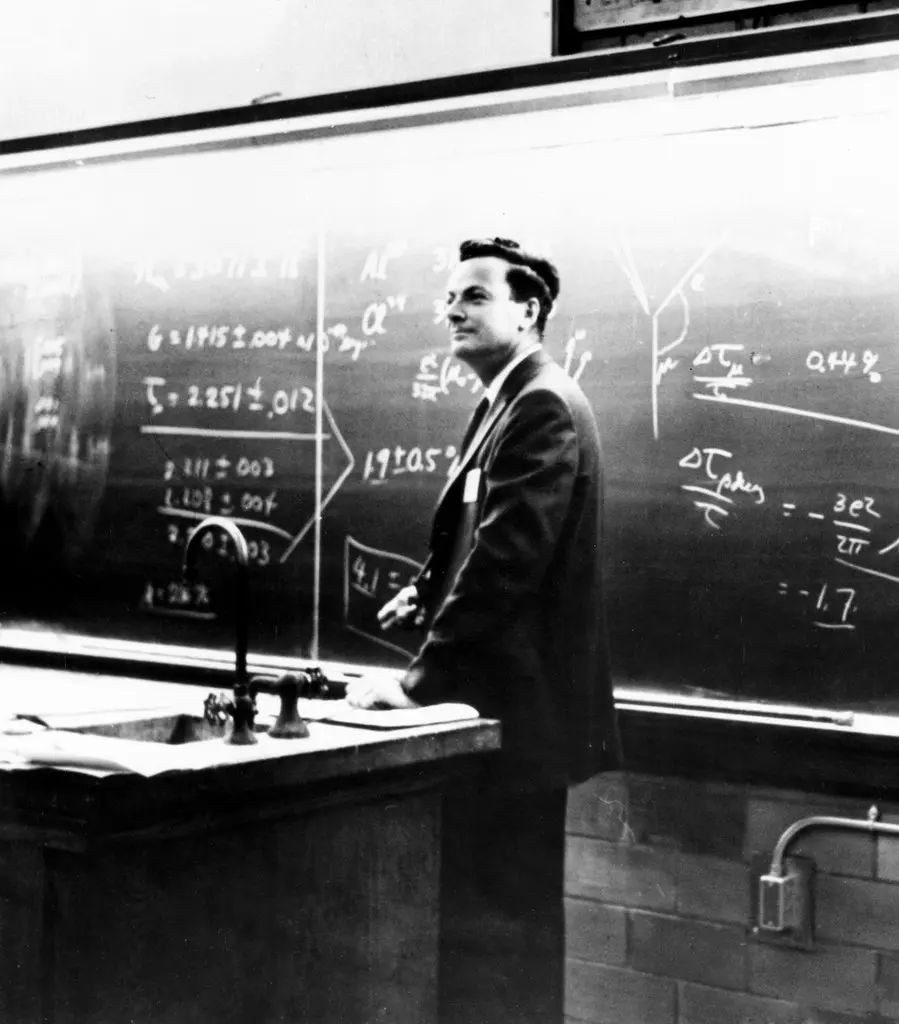
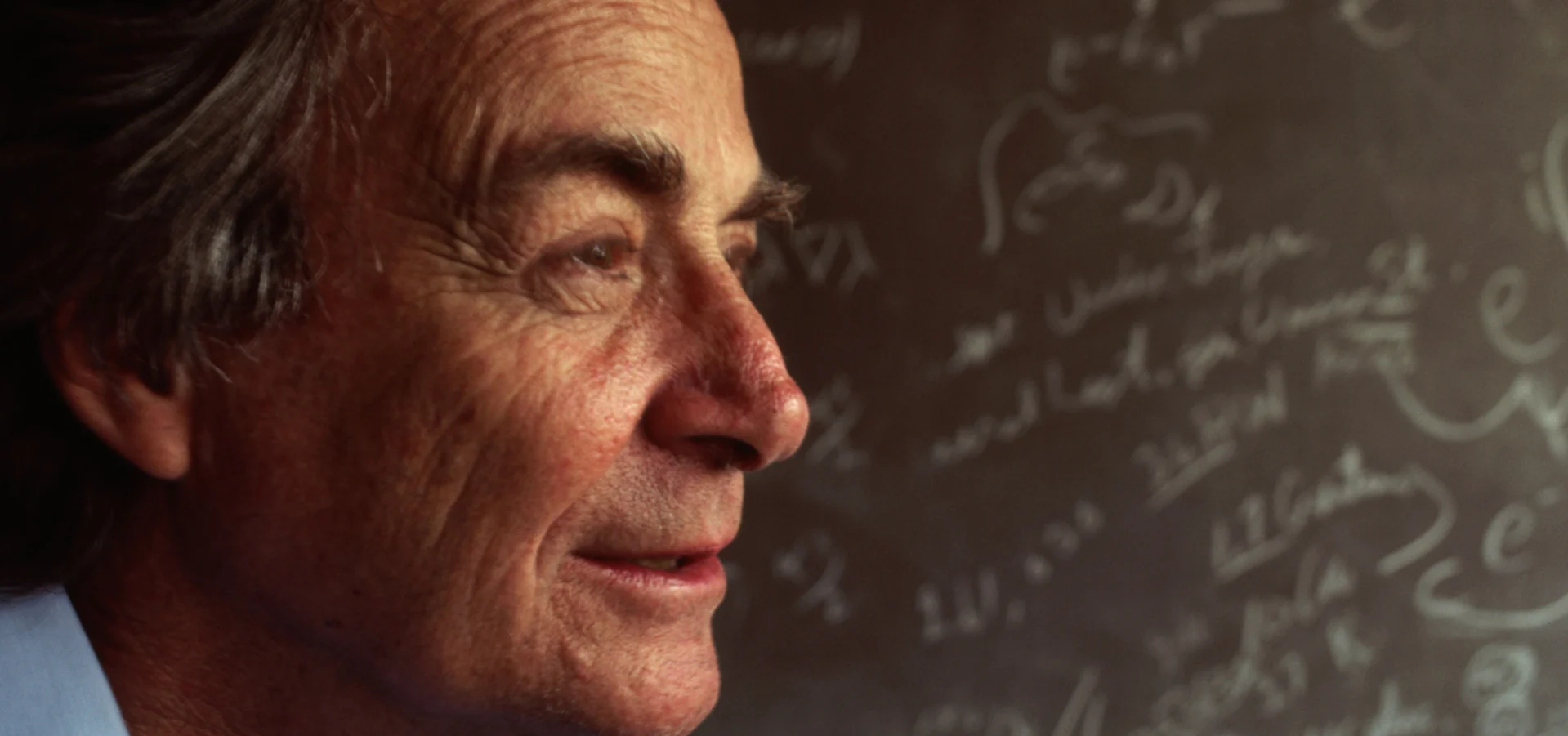
This is where Rushmore quietly earns its place among films about education — not because it is a film about a good teacher (though Rosemary Cross is one, even in her grief), but because it asks what school is actually for. Max is failing by every institutional metric. He cannot pass Latin. But he saved Latin — it was being cut from the curriculum, and he fought to keep it — which is the kind of paradox that most school systems are not designed to process. It is very close to what Richard Feynman kept arguing about: that genuine care for a subject and formal success within a subject are not the same thing, and a system that cannot tell them apart is not measuring what it thinks it is measuring.
“I saved Latin. What did you ever do?”
Max Fischer to Herman Blume — Rushmore, 1998
Herman Blume is the film's other education. He is what happens when you stop caring about the things you care about — when competence replaces passion so gradually and completely that you can no longer remember which came first. He is rich, successful, and entirely absent. His twin sons ignore him. He smokes in the school swimming pool at a student event and watches the children with the expression of a man observing weather. When he meets Max, something in him wakes up that he had filed away under “adolescence.” Max irritates him, impresses him, and reminds him — in no particular order — that having opinions about things is not actually embarrassing.
On Teaching, Sideways
Rosemary Cross teaches first grade. She is kind, composed, and carrying a private loss — her husband, who died young — that gives her a stillness the rest of the film keeps circling without quite landing on. She is not the inspirational teacher cinema has codified: no desk-standing, no breakthrough speeches, no moment where the difficult student finally understands.
What she does instead is more interesting. She takes Max seriously enough to tell him the truth. Not cruelly, but clearly: he is fifteen, she is an adult, the thing he feels is real but the situation is not possible. Most teacher characters either dismiss the student or enable them. She does neither. She holds the line with enough gentleness that Max can eventually find the line himself.
Anderson and Wilson's screenplay operates on the principle that small specific details carry more weight than grand gestures. Both Max and Blume underline things they find important — Max in a hymn book, Blume in his chapel speech. This single visual rhyme, noticed only if you're paying attention, tells you everything about why these two people find each other. They are both people who underline things. In a world that mostly skims, this is enough. It is the same instinct that drives the Feynman technique: if you cannot explain it simply, you found the edge of what you actually know, and that edge is worth marking.
The soundtrack — British Invasion tracks by The Kinks, The Who, Cat Stevens, The Faces — does not comment on the action in the way film scores usually do. It plays as if it is the music Max has in his head: slightly too grand for the circumstances, perfectly suited to how he experiences them. The famous final scene, where Max and Rosemary dance to “Ooh La La” by The Faces, works because by that point the film has earned the feeling that the music and the moment belong to each other. The lyrics — I wish that I knew what I know now, when I was younger — do not belong to Max. They belong to everyone watching him.
Rushmore holds a 90% on Rotten Tomatoes and an IMDb rating of 7.6. It launched Schwartzman's career and gave Bill Murray a second one. It won Anderson the Independent Spirit Award for Best Director. The Criterion Collection put it out, which is the film industry's way of saying: this one, specifically, is worth keeping. It is a film about the stubborn dignity of caring about things — a quality the best films quietly share, regardless of genre or budget. The same year this film came out, the other great education film of the decade was still a decade away: Stand and Deliver asks what it costs to teach math to people the system has already decided can't do it.
In short
Ninety-three minutes. A student who fails everything and saves the thing he loves. Wes Anderson's best argument that how you spend your attention is who you are.
Rushmore · Dir. Wes Anderson · USA, 1998 · abakcus.com