
DIY · Card 72 · Engineering · Geometry
Two chairs, a broom and the biggest blanket in the house. In 2020 IKEA drew fort instructions in the style of its famous manuals; here is how to build one, and the engineering that keeps the roof up.
01The brief
A fort is a building. Build it like an engineer.
45°
the wall slope that gives a blanket fort the most room
6
fort designs in IKEA Russia’s 2020 lockdown instructions
3
sticks make a frame that cannot wobble; four can
Almost everyone has built a blanket fort, and almost everyone has watched one collapse. The trouble is rarely the blanket. It is the frame underneath: posts that rock, a ridge that sags, walls that slide in.
Builders solved those problems long ago with triangles, slopes and weights. Borrow their tricks and the fort will stand all afternoon. It pairs well with the geodesic dome and the cardboard chair.
02Kit
Everything is already in the house.
Tick off what you have
0 of 5 ready
03Method
Posts, ridge, roof, pegs, weights, then everything soft.
Step 1 of 8 · Minute 0
Collect two big blankets or sheets, two chairs, a broom or a length of rope, clothes pegs or clips, a stack of heavy books, all the cushions you can find and a string of battery fairy lights.
The roof sags in the middle.
Why
The ridge is a rope that isn’t tight enough, or the blanket is heavy.
Fix
Use a broom handle instead of rope, or tie the rope tighter and add a third chair in the middle.
The walls keep sliding inwards.
Why
Nothing is holding the bottom edges.
Fix
Pull the edges out and lay a row of heavy books along each one.
The whole fort leans over.
Why
The posts are rocking sideways.
Fix
Push the chairs against a wall or sofa, or lean a broom diagonally against each one to make a triangle.
04Fort engineering
A blanket over a ridge is a triangle in cross-section. Its two sloping sides are fixed by the blanket’s width, so the only choice is how high to put the ridge. Low makes a wide, flat crawl space; high makes a tall, thin slot.
Find the height that holds the most air:
Air inside
1.11 m³
Floor
3.69 m²
Children sitting
12
Wide and low: lots of floor, but only 91 % of the best headroom. Raise the ridge towards 78 cm for the roomiest fort.
Then there is the frame underneath. Push three frames sideways and see which ones stand firm:
Four sticks lean
14°
With a diagonal
≈ 0°
Triangle
≈ 0°
Four sticks pinned at their corners can make a square, or any parallelogram you like, so a gentle push folds them over. Three sticks can make only one triangle: their lengths fix the angles. That is why a chair (with its rungs and back) is a good fort post, and why one diagonal broom handle can stop a wobbly wall falling down.
05The big idea
Triangles
don’t wobble.
Give three sticks and three joints, and there is only one shape they can make. Give four, and they can make infinitely many. Rigidity comes from triangles, not from strong joints.
That one fact holds up roofs, bridges, cranes, bicycles and pylons. In a fort, it is the difference between a wall that stands and one that folds the moment someone leans on it.
06The math
1 · A-frame room
A = h · √(W²⁄4 − h²)
W the blanket width, h the ridge height.
2 · Best wigwam
h = s ⁄ √3
Poles of length s hold the most air at this height.
3 · Rigid frames
2n − 3
Sticks needed to brace n joints in a flat frame.
The A-frame’s cross-section is largest when h = W ⁄ (2√2), the height at which the sides meet the floor at 45°. For a 220 cm blanket that is a ridge of 78 cm, a floor 156 cm wide and a cross-section of 0.6 m²: over a metre of the room’s air, for a 2-metre-long blanket.
A wigwam of 1.8 m poles holds the most when it is 1.8 ⁄ √3 ≈ 1.04 m tall with a floor 2.9 m across: about 2.4 m³. And a square frame has n = 4 joints, so it needs 2 × 4 − 3 = 5 sticks to be rigid: its four sides plus one diagonal.
07Real life
From the roof over your head to the frame of your bike.
Roof trusses
Look in a loft and you will see the roof held up by timber triangles. Each truss is a frame of triangles that cannot change shape, so a few thin pieces of wood can carry tonnes of tiles and snow.
Bicycle frames
The classic diamond frame is two triangles sharing a side. It is stiff enough to carry a rider over bumps, yet light enough to lift with one hand.
Bell’s kites
Alexander Graham Bell, the telephone pioneer, spent years building giant kites from hundreds of small tetrahedral cells, triangular pyramids that are strong, light and rigid in every direction.
The Eiffel Tower
Its iron lattice is a forest of small triangles. The whole 300-metre tower weighs about 7,300 tonnes of iron, less than the air inside the cylinder that would just contain it.
Yurts
The walls of a Mongolian yurt are a folding lattice of crossed poles, a fence of diamonds that packs flat and opens out, held round by a tension band and topped with a crown ring.
Flat-pack furniture
IKEA’s famous idea of selling furniture flat, to be built at home, is usually traced to 1956, when an employee took the legs off a table to fit it into a car. The wordless instructions came with it.
2020
In spring 2020, with families stuck indoors, IKEA Russia and the agency Instinct published fort instructions drawn exactly like the company’s wordless flat-pack manuals, little figures and all.
There were six designs, one posted each week: the Förtress, built from sofa cushions and sheets; the Wigwåm, wrapped round a coat stand; the Cåstle, the Cåve, the Cåmpingtent and the Höuse. Families were invited to share their builds online, and the drawings travelled far beyond Russia.
08Is and isn’t
The higher the middle, the bigger the fort.
Only up to a point. With a given blanket, pulling the ridge higher narrows the floor. The most room comes with the sides at 45°.
Squares are strong shapes.
A square of pinned sticks folds flat at a push. It needs one diagonal, which splits it into triangles, before it can hold its shape.
Any lights will do inside.
Only cool battery LEDs. Lamps and mains lights can get hot enough to scorch fabric that is wrapped around them.
IKEA’s forts needed IKEA furniture.
The 2020 instructions showed IKEA products, but every design works with any table, sofa, chairs, sheets and cushions.
09Go further
A
Build a wigwam
Tie three or four broom handles together at the top and spread their feet. Then wrap a sheet around them. Which splay holds the most air?
B
Fort architects
Draw your own fort instructions in pictures only, with no words, then see if someone else can build it.
C
Newspaper towers
Roll newspaper into tight tubes and tape them into triangles. How tall a tower can you build before it wobbles?
D
The 45° test
Measure the inside of your fort at three ridge heights. Which one fits the most cushions?
E
Torch shadows
Inside the fort at night, shine a torch on the blanket walls and make shadow puppets for the people outside.
10Questions
Stand two chairs back to back, lay a broom or tie a rope across their tops, and drape a big blanket over it so the sides slope down to the floor. Peg the blanket to the frame, weigh the edges with books, fill the floor with cushions and hang battery fairy lights inside.
In spring 2020, during lockdown, IKEA Russia and the agency Instinct published six fort designs drawn like IKEA’s wordless assembly manuals: the Förtress, Wigwåm, Cåstle, Cåve, Cåmpingtent and Höuse, built from sofas, tables, chairs, sheets and cushions.
For the most room inside, the sides should slope at 45°. That puts the ridge at the blanket’s width divided by 2√2, about 0.35 times the width: roughly 78 cm for a 2.2-metre blanket.
Use posts that are already braced, like chairs or a sofa, peg the blanket to the frame, and weigh the edges with books. If a post wobbles, add a diagonal: a broom leaning from the floor to its top turns a wobbly rectangle into rigid triangles.
Battery-powered LED fairy lights stay cool and are the best choice. Never put lamps, mains-powered lights or heaters inside a fort, since fabric can trap their heat.
Safety · Use only cool battery LED lights inside, never lamps, mains lights or heaters. Keep heavy books on the floor, not on the roof, and make sure small children can always crawl out easily.
All DIY cards →Keep wandering
A few more pieces in the same spirit — math, design, and slow attention.
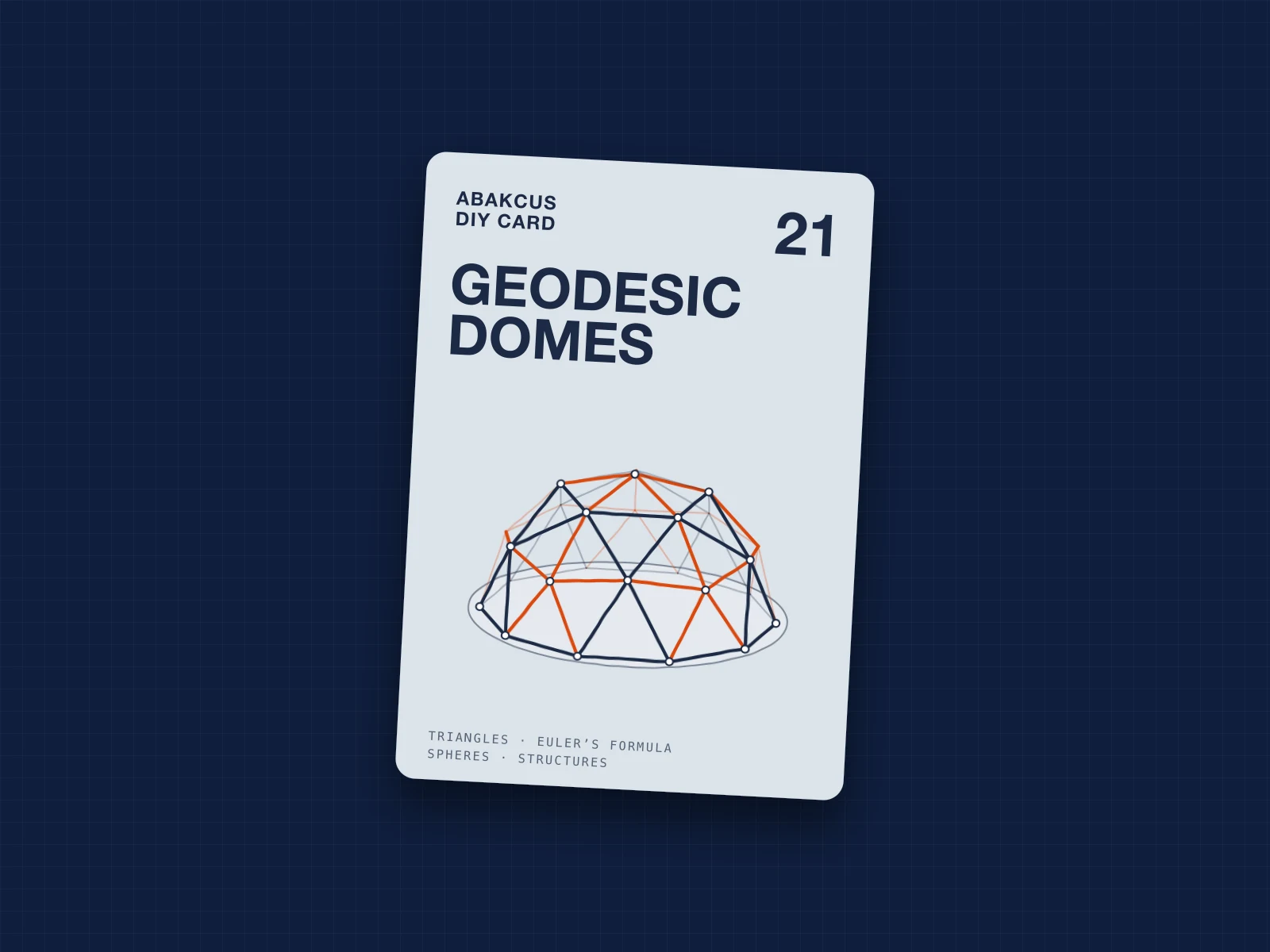
How to Build a Geodesic Dome From Newspaper
Sixty-five rolled-up newspapers, two lengths, a lot of tape: a dome two metres across that you can sit inside. Triangles can’t change shape, and that one fact holds the whole thing up.
Open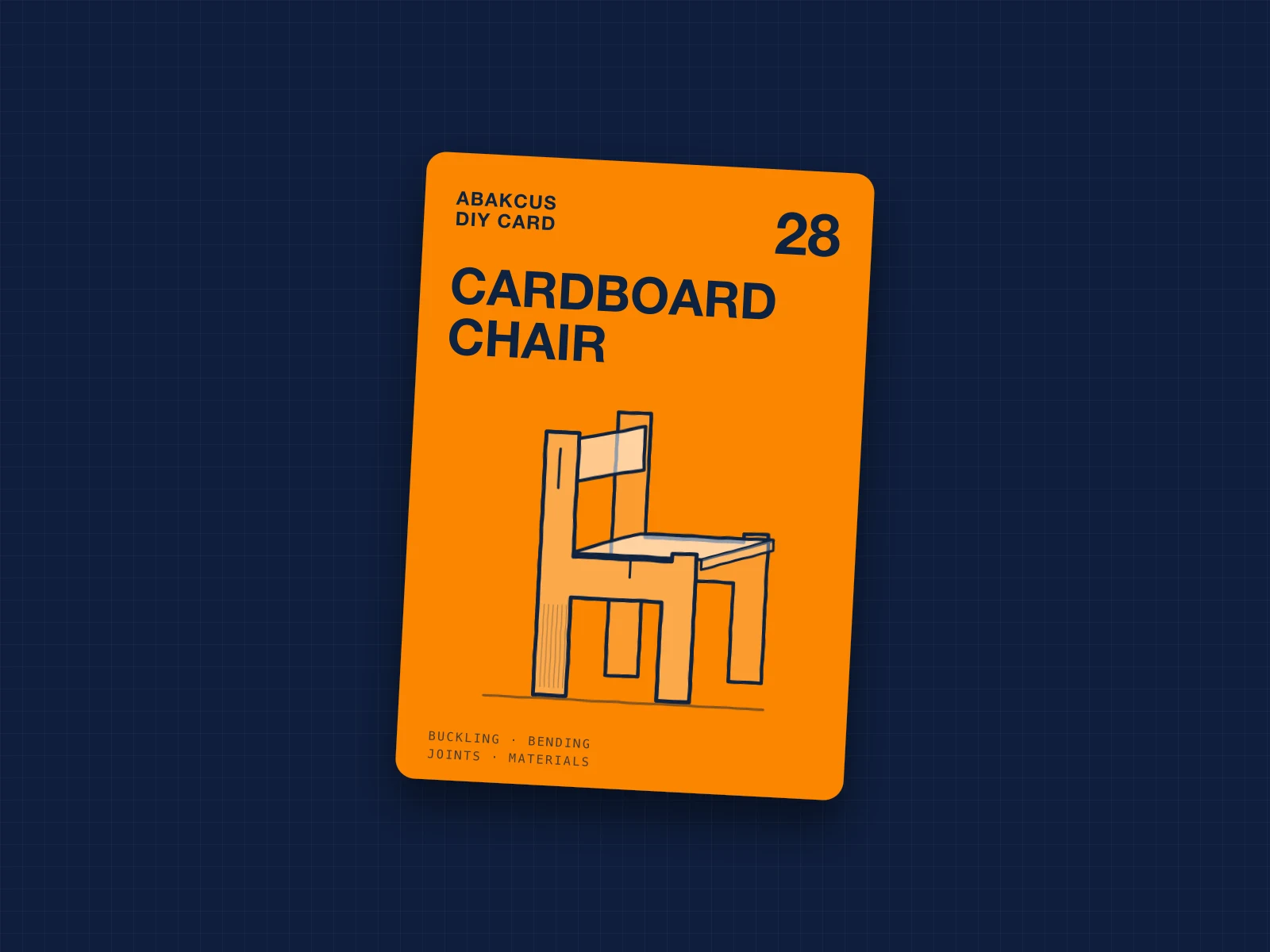
How to Make a Cardboard Chair That Holds Your Weight
Nothing but cardboard: no glue, no tape, no screws. Just slots, folds and the flutes the right way up, and a chair that holds a grown-up.
Open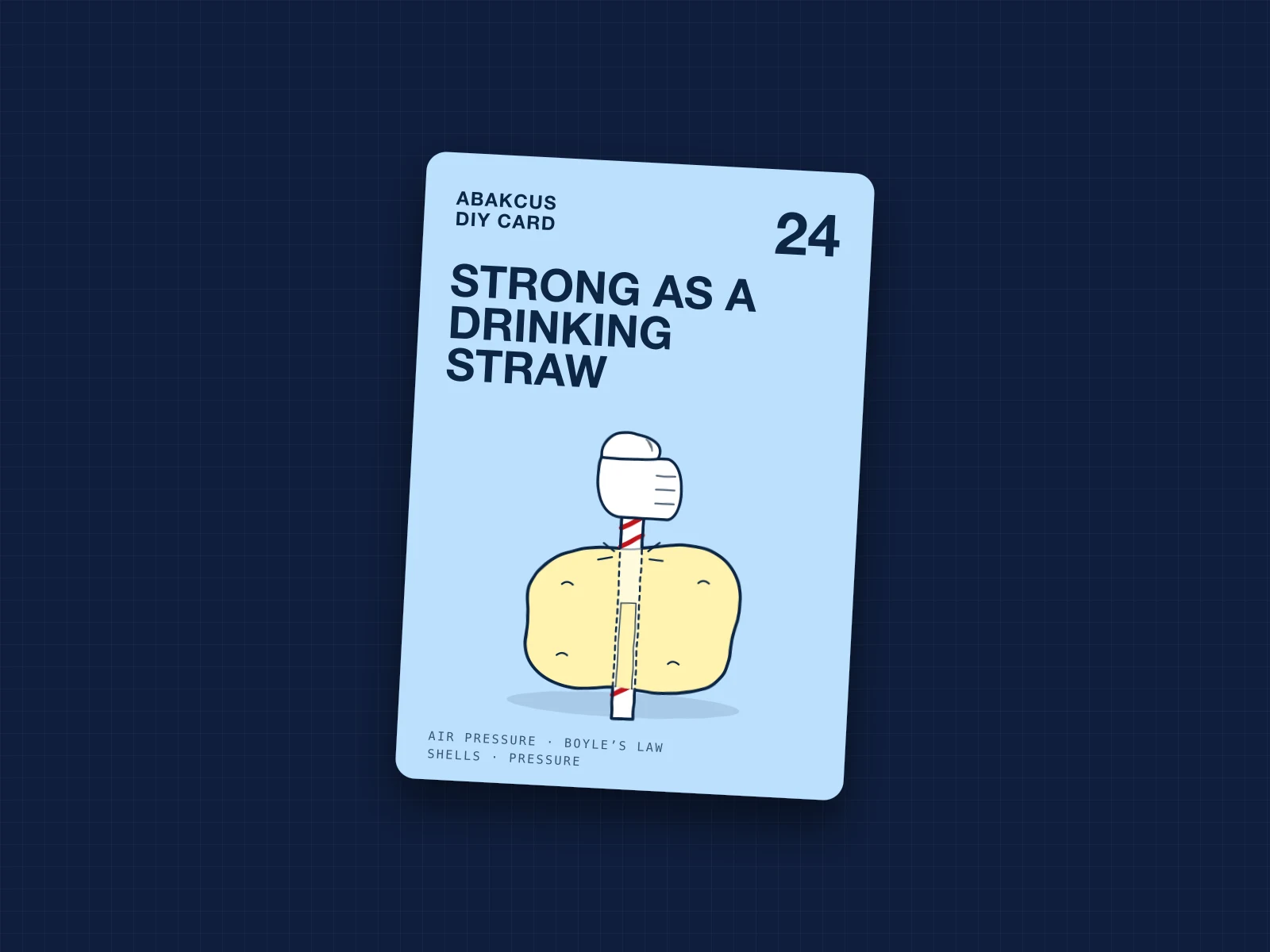
How to Push a Straw Through a Raw Potato
Stab a potato with a plastic straw and the straw crumples. Put your thumb over the top first and it goes straight through. The air trapped inside can’t get out, so the straw can’t cave in.
Open
How to Build a Spaghetti Bridge (and Why Pasta Buckles)
One strand of dry spaghetti can hang five kilograms from its end, then buckles under less than two hundred grams pushed along it. A good bridge pulls where pasta is strong and keeps the pushes short.
Open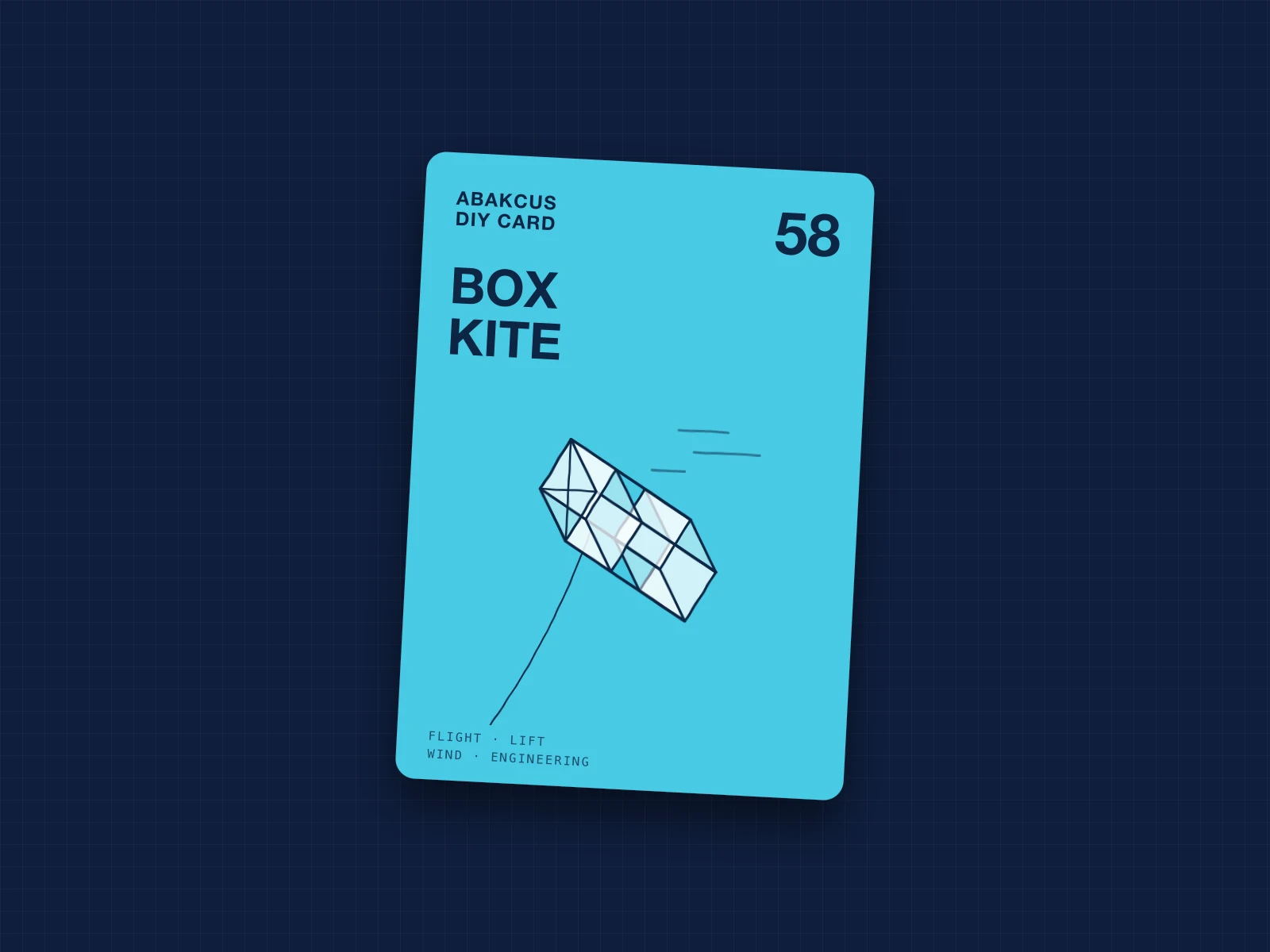
How to Make a Box Kite That Flies Without a Tail
Eight dowels, eight bits of tube and two bands of sail. Snap them into two open boxes and you have the kite that lifted a man off a beach in 1894.
Open
How to Make a Rocket Man: A Cardboard Box Rocket for Kids
A big packing box, yogurt pots and cotton reels become a rocket a child can climb inside, and a way into the equation that makes real rockets almost all fuel.
Open