
DIY · Card 58 · Engineering · Flight
Eight dowels, eight bits of tube and two bands of sail. Snap them together into two open boxes and you have the kite that lifted a man off a beach in 1894 and carried weather instruments miles into the sky.
01The brief
Build a kite that needs no tail.
2
open boxes of sail, with a gap between them
15–30
km/h, the steady breeze a box kite likes
1894
the year Lawrence Hargrave’s box kites lifted him off the ground
Most kites are flat, and most need a tail to stop them spinning. In 1893 an Australian engineer, Lawrence Hargrave, tried something different: two open-ended boxes of fabric on a light frame. It flew steadily, pulled hard and needed no tail at all.
The box kite went on to carry weather instruments high into the sky and to shape the first aeroplanes. You can build one in an hour from dowels, plastic tubing and two bands of sail. It is engineering you can feel tugging on the line, a sky-going relative of the paper helicopter and the geodesic dome, another strong, light frame.
02Kit
A hardware-shop and craft-shop kite. Everything snaps together without glue.
Tick off what you have
0 of 6 ready
03Method
Square, tight cells and a balanced frame make a kite that flies straight.
Step 1 of 8 · Minute 0
You need four 5 mm wooden dowels 91 cm long (the spars), four 52 cm long (the spreaders), eight 4 cm pieces of clear plastic tubing that fit snugly over the dowels, two sheets of light plastic, Tyvek or strong paper 30 × 152 cm, two twist ties, tape and at least 30 m of kite line.
The kite won’t leave the ground.
Why
Not enough wind, or the kite is too heavy.
Fix
Wait for a steadier breeze, launch from higher ground, and trim extra tape and heavy joins.
It spins or dives.
Why
The kite is out of balance, or the line is tied in the wrong place.
Fix
Check the sails are equally tight and the spreaders equal. Move the line attachment a little forward or back.
The sails flap.
Why
The spreaders are too short, so the cells aren’t tight.
Fix
Push the spreaders further into the connectors, or cut slightly longer ones, until the sails are drum-tight.
04Physics
The line holds the kite tilted against the wind. The moving air hits the sloping sails and is pushed downwards, and in return the air pushes the kite up and back. The upward part is lift; the backward part is drag. When the lift is bigger than the kite’s weight, it climbs.
Change the wind, the size and the weight, and see whether your kite would fly:
Lift
2.77 N
Weight
1.28 N
Lightest wind
11 km/h
Pull on the line
2.4 N
It flies: the lift beats the weight by 1.50 N. Double the wind and the lift goes up four times.
Where you tie the line sets the angle the kite meets the wind. Too flat or too steep and it flies badly:
Lift
4.33 N
Drag
2.92 N
Line angle
46° up
A good angle: plenty of lift, modest drag, so the kite climbs high on a steep line. The three forces, lift, drag and weight, are balanced by the pull of the line.
05The big idea
Turn wind
into lift.
A kite is a wing held still while the air moves past it. An aeroplane does the opposite: it moves the wing through still air. The physics is identical, which is why the first aircraft builders studied kites so closely.
Hargrave’s boxes were stable, strong and light, everything an early flying machine needed. Look at a photograph of a 1906 aeroplane and you can see his box kite in its wings.
06The math
1 · Lift
L = ½ ρ v² A C_L
Air density ρ ≈ 1.2 kg/m³, wind speed v, sail area A, lift coefficient C_L.
2 · Lightest wind
v = √(2mg ⁄ ρ A C_L)
Lift just equal to weight mg.
3 · Line angle
tan θ = (L − mg) ⁄ D
Lift minus weight up, drag back.
Your kite weighs about 130 g, so gravity pulls with 1.3 N. Its sails present about 0.45 m² to the wind, and at 30° they give a lift coefficient of roughly 0.5. The lightest wind that holds it up is then √(2 × 1.3 ⁄ (1.2 × 0.45 × 0.5)) ≈ 3 m/s, about 11 km/h.
At 20 km/h the lift is about 4.3 N, more than three times the weight, with about 2.9 N of drag, so the line rises at around 45°. Double the wind to 40 km/h and every force is four times bigger: a 17 N lift, and a pull on the line you will definitely feel.
07Real life
Into the clouds, into the first aeroplanes and across a gorge.
Weather kites
From the 1890s, weather services flew box kites carrying instruments to measure temperature, humidity and wind high above the ground. The US Weather Bureau ran kite stations for decades before balloons and aircraft took over.
The first aeroplanes
Early aircraft borrowed Hargrave’s cells. Alberto Santos-Dumont’s 14-bis, which made the first public powered flight in Europe in 1906, was built from box-kite cells, as were early Voisin biplanes.
Bell’s tetrahedral kites
Inspired by Hargrave, Alexander Graham Bell built giant kites from hundreds of small triangular cells. In 1907 one of them, the Cygnet, lifted a man into the air above a lake in Nova Scotia.
A bridge begins with a kite
In 1848, to start building a suspension bridge over the Niagara gorge, engineers offered a prize to the first person to fly a kite line across. A teenager, Homan Walsh, did it, and the line pulled across ever thicker ropes and cables.
Kitesurfing
A kitesurfer’s kite obeys the same equation as yours: the pull grows with the square of the wind speed and the area of the sail. Riders choose a smaller kite on windy days so the pull stays manageable.
On the money
Australia was so proud of Lawrence Hargrave that his portrait, with drawings of his kites and flying machines, appeared on the twenty-dollar note from 1966 to 1994.
1894
On 12 November 1894, on the beach at Stanwell Park south of Sydney, Lawrence Hargrave tied four of his box kites in a train, clipped himself to a sling beneath them and let the wind take him. He rose almost 5 metres into the air, showing that a kite could lift a person safely and steadily.
He published everything and never took out a patent, believing ideas about flight should be shared. Within a few years his box kites were flying over weather stations worldwide, and in 1919 a train of them reached a recorded 9,740 metres above Germany.
08Is and isn’t
Kites fly because they are light.
They fly because the moving air pushes up on the tilted sails harder than gravity pulls down. Heavy kites fly too, in enough wind: lift grows with the square of the wind speed.
The stronger the wind, the better.
Up to a point. In a strong breeze the pull on the line and the strain on the frame become too much. Box kites like a steady 15–30 km/h.
The air only pushes on the bottom of the kite.
Air flowing over the top of a tilted sail also lowers the pressure there, adding to the lift. Kites and wings both work this way.
The line just holds the kite down.
The line is what makes it fly. Without its pull, the kite would simply blow away downwind; the line holds it tilted against the wind so the air can lift it.
09Go further
A
Measure the angle
Hold a protractor up against the line while the kite flies. How steep is it in light wind, and in strong wind?
B
Feel the pull
Hook the line to a luggage scale. Read the pull in a light breeze and a strong one. Does it go up about four times when the wind doubles?
C
Close the gap
Tape paper over the gap between the cells. Does the kite still fly as steadily?
D
A kite train
Build a second box kite and tie it to the line a few metres below the first, as Hargrave did. Do they fly higher together?
E
Triangles
Build a small triangular cell kite from straws and tissue paper, like one of Bell’s tetrahedral cells. Does it fly?
10Questions
Cut four long dowels for the spars and four shorter ones for the spreaders. Wrap two bands of light sail round the spars, one at each end, and tape them. Push the spreaders into small tube connectors on the spars so they cross in an X and pull each cell square and tight. Tie the line to a front spar and fly it in a steady breeze.
Its shape keeps it steady. The side panels act like the fins of an arrow, keeping it pointed into the wind, and the gap between the two cells lets air flow through and damps any wobble. Flat kites often need a tail to stop them spinning; a box kite doesn’t.
Box kites are fairly heavy for their size, so they need a steady breeze, roughly 15 to 30 km/h, a gentle to moderate breeze on the Beaufort scale. Lift rises with the square of the wind speed, so a kite that won’t leave the ground at 8 km/h may climb easily at 16.
The Australian engineer Lawrence Hargrave, in 1893. On 12 November 1894 he lifted himself almost 5 metres off the beach at Stanwell Park, New South Wales, hanging from a train of four box kites. He never patented his inventions, and his design spread quickly to weather bureaus and early aircraft builders.
Very high. On 1 August 1919, a train of eight modified Hargrave box kites flown from the weather observatory at Lindenberg in Germany is recorded as reaching 9,740 metres, higher than Mount Everest, on many kilometres of steel wire. Your home-made kite will be happy at 30 metres.
Safety · Never fly near power lines, roads, airports or in thunderstorms. Wear gloves in strong wind, as the line can cut fingers, and have a grown-up nearby.
All DIY cards →Keep wandering
A few more pieces in the same spirit — math, design, and slow attention.
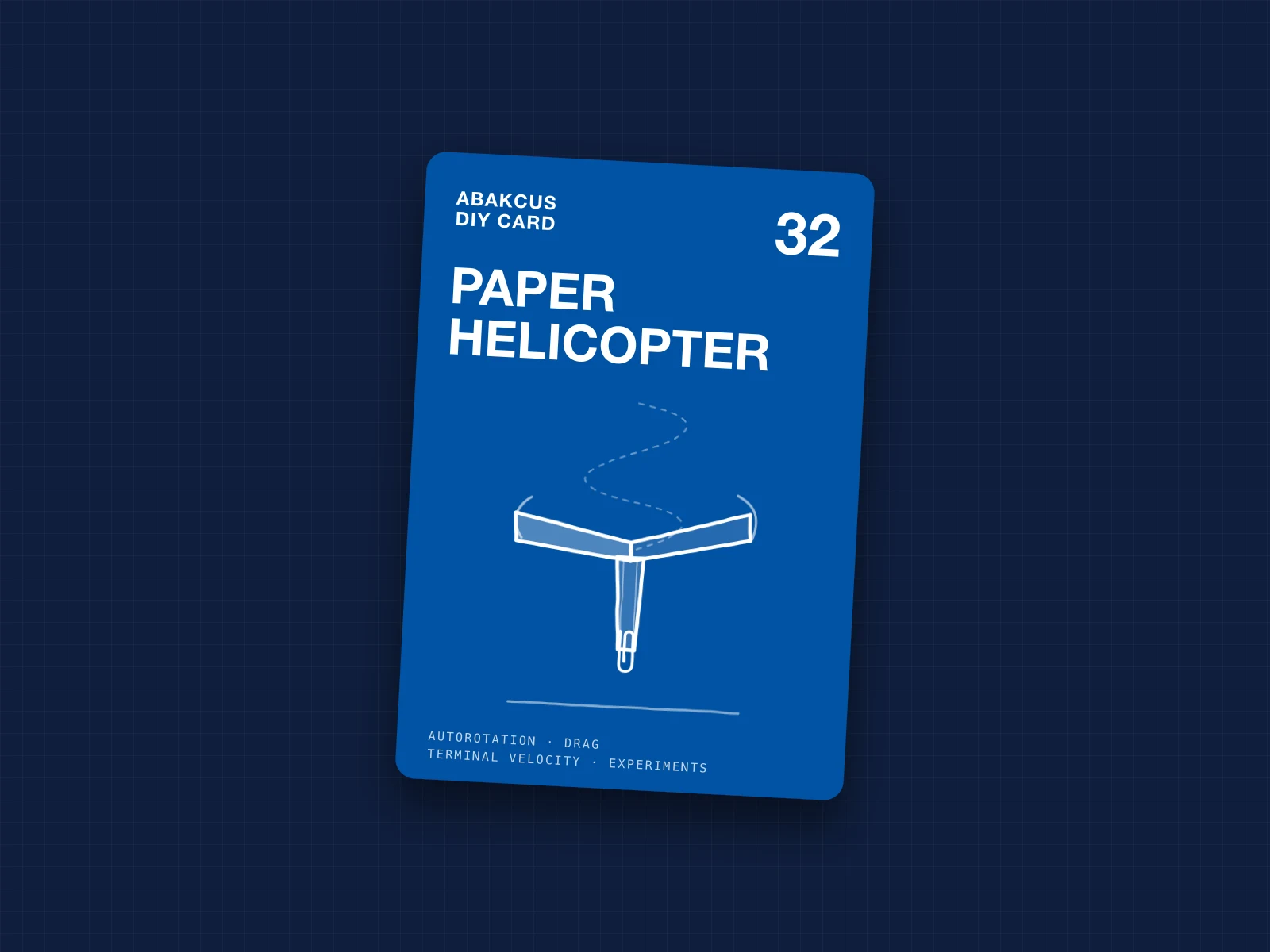
How to Design and Build a Paper Helicopter That Spins
A strip of paper, three snips and a paper clip. Drop it from up high and it doesn’t fall: it whirls, spinning its way gently to the floor like a sycamore seed.
Open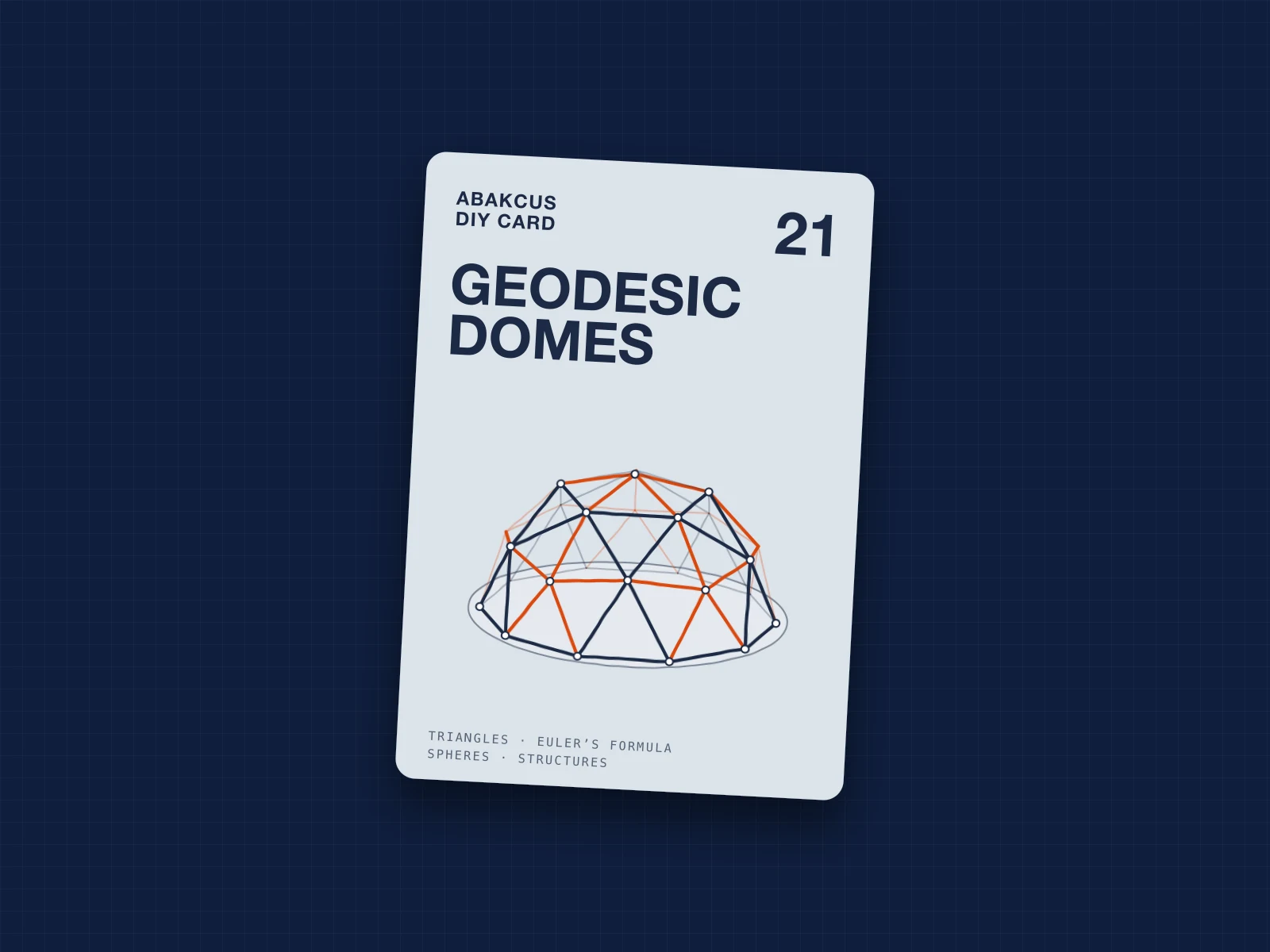
How to Build a Geodesic Dome From Newspaper
Sixty-five rolled-up newspapers, two lengths, a lot of tape: a dome two metres across that you can sit inside. Triangles can’t change shape, and that one fact holds the whole thing up.
Open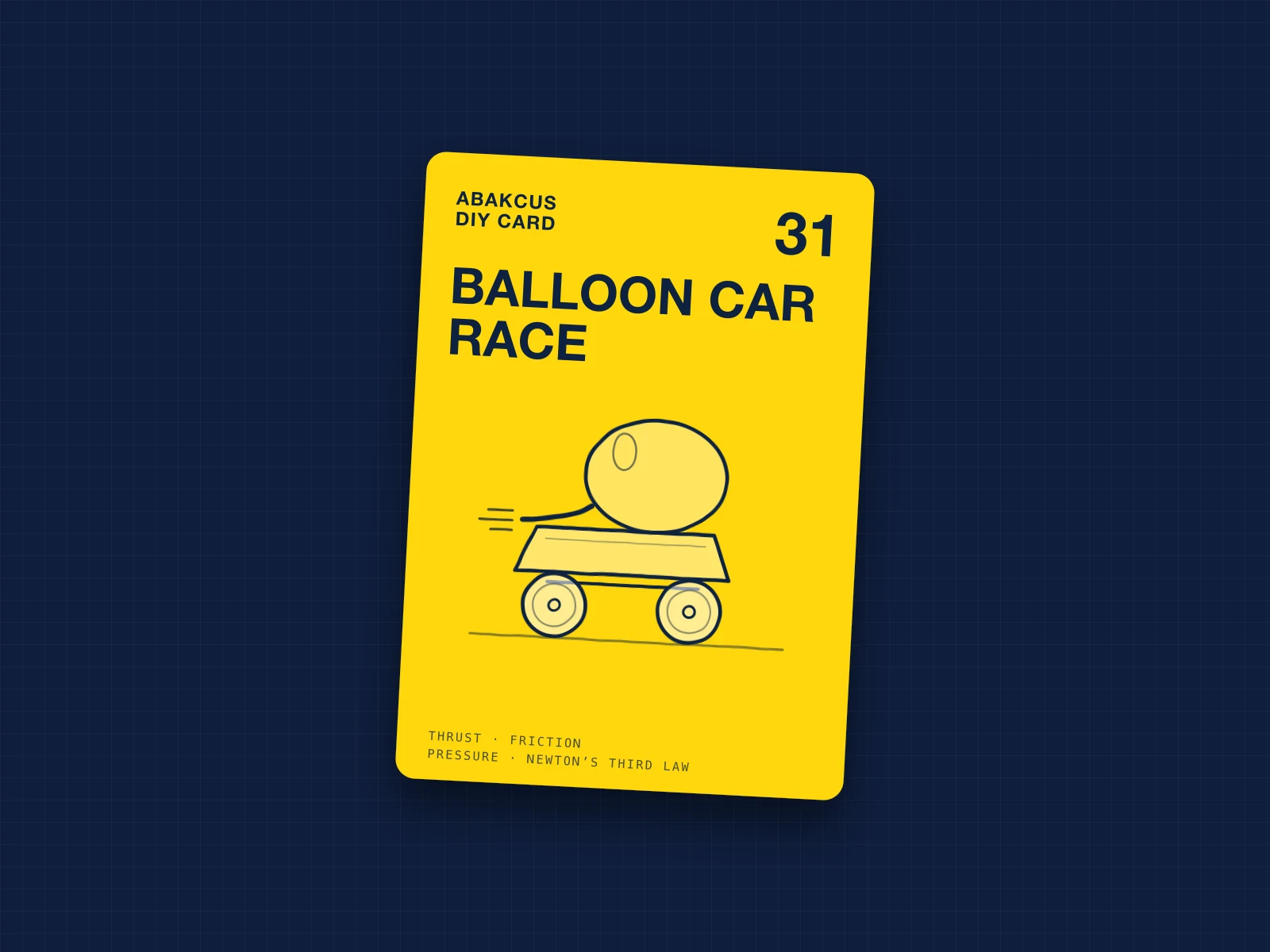
Balloon Car Race: How to Make a Balloon-Powered Car
Half a cup, four bottle tops, two skewers and one balloon. Blow it up, let it go, and a jet of your own breath sends the car racing across the floor.
Open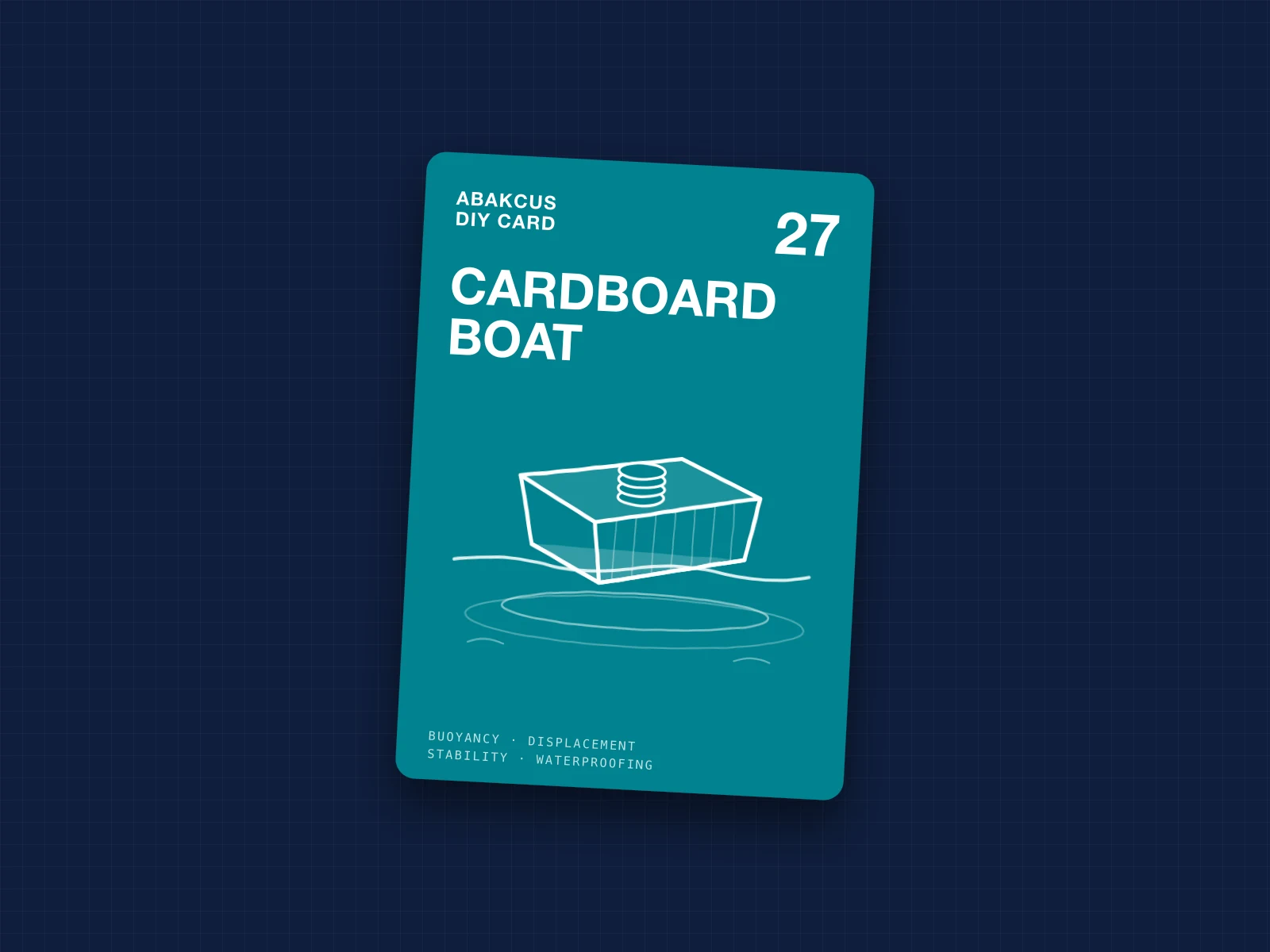
How to Make a Cardboard Boat That Floats (and Carries Coins)
One sheet from an old box, folded into a tray and sealed with tape and wax. Then the test: how many coins can it carry before the water comes over the side?
Open
How to Build a Spaghetti Bridge (and Why Pasta Buckles)
One strand of dry spaghetti can hang five kilograms from its end, then buckles under less than two hundred grams pushed along it. A good bridge pulls where pasta is strong and keeps the pushes short.
Open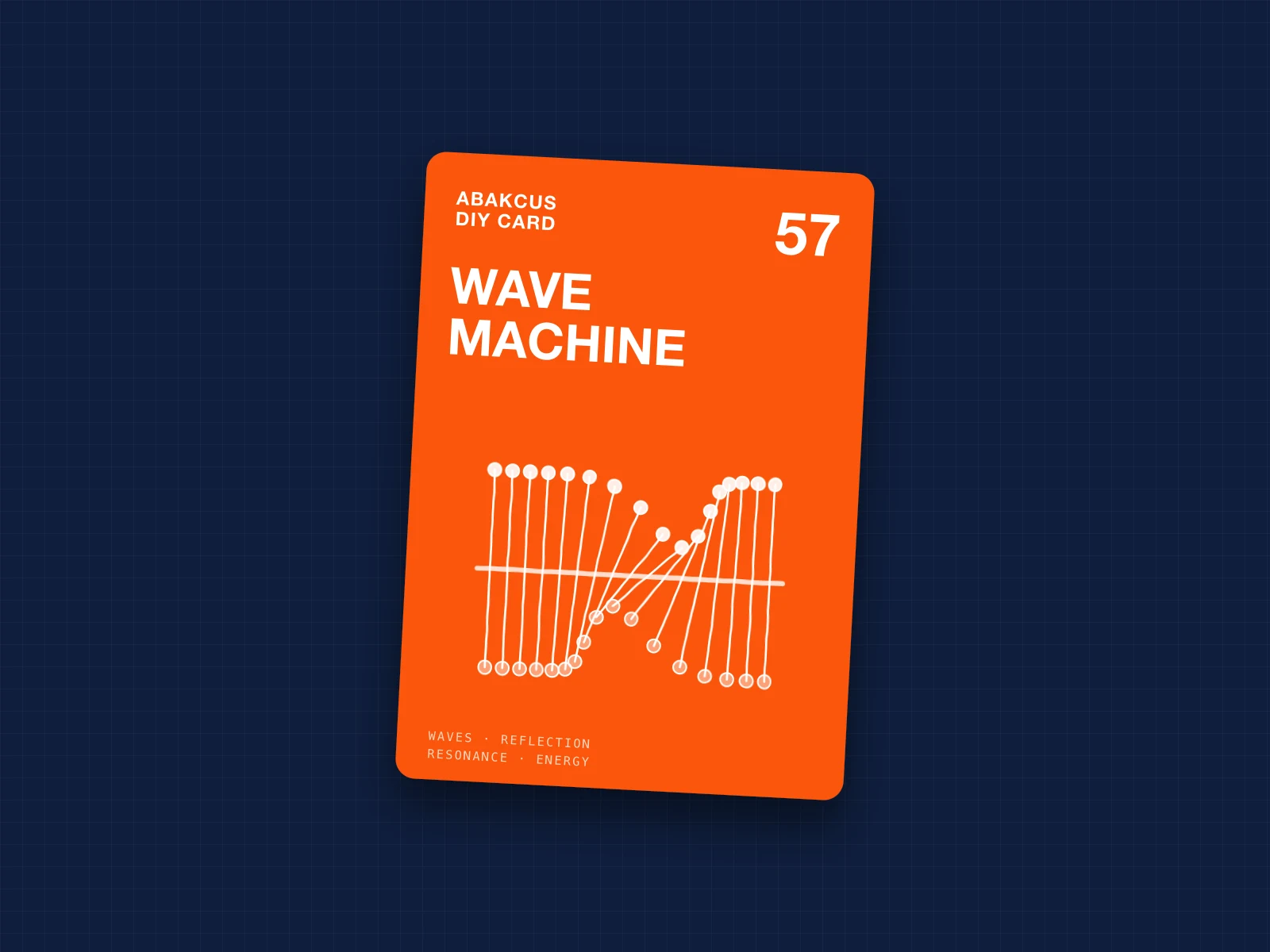
How to Make a Wave Machine From Skewers, Tape and Sweets
Two stools, a strip of duct tape, fifty skewers and a bag of jelly sweets. Tap one end and a wave you can watch ripples down the line and bounces back.
Open