
DIY · Card 31 · Engineering · Motion
Half a cup, four bottle tops, two skewers and one balloon. Blow it up, let it go, and a jet of your own breath sends the car racing across the floor.
01The brief
Build a car that runs on one breath of air, and make it go as far as it can.
4 kPa
about the highest pressure inside a party balloon, reached just after the first puff
50 m/s
roughly how fast the air leaves the straw, faster than a car on the motorway
763 mph
the land speed record, set in 1997 by a car pushed by jet engines
Let go of a blown-up balloon and it zips around the room. Tie it to a car and you have harnessed that zip. The whole race is decided by one breath: how much push it holds, how fast it lets it out, and how much of that push the car wastes on the way.
That makes it a perfect engineering problem. The engine is fixed; the design is everything. Wheels that rub, a nozzle that points up, or a gram of extra tape all steal distance. It works on the same push as the fizz-powered boat, and fights the same friction as the cotton reel tank.
02Kit
Party leftovers and kitchen recycling. The balloon is the engine; everything else is the car.
Tick off what you have
0 of 5 ready
03Method
Cut the body, fit bearings, axles and wheels, seal a balloon to a straw, mount it, and race.
Step 1 of 8 · Minute 0
You need a balloon, a plastic or paper cup, two or three drinking straws, two wooden skewers, four bottle tops or cotton reels for wheels, small rubber bands, sticky tape and scissors.
The balloon empties and the car doesn’t move.
Why
Friction: the wheels rub the cup, or the axles bind in the straws.
Fix
Space the wheels off the body, straighten the straws, and check each wheel spins when you flick it.
It curves off to one side.
Why
The straws aren’t parallel, or the nozzle points sideways.
Fix
Re-tape the straws square to the body, and line the nozzle up straight down the middle.
Air leaks out around the balloon’s neck.
Why
The rubber band isn’t tight enough on the straw.
Fix
Wrap the band several more times, or add a strip of tape over it.
04Physics
When you blow up a balloon, you stretch the rubber, and the stretched rubber squeezes the air back. That squeeze is the car’s fuel. Strangely, it is strongest when the balloon is small. A tightly curved skin needs more pressure inside to hold it out, so the first puff is the hardest, and after that it gets easier. Blow one up:
Pressure inside
+4.00 kPa
Push through a straw
181 mN
Past the peak it gets easier: as the balloon grows, its curve flattens and the thinner rubber pulls with less pressure.
Let the air out through a straw and it leaves backwards at around 50 metres a second. Newton’s third law says the air pushes the balloon forwards just as hard as the balloon pushes the air back. That push has three things to beat: the car’s own weight to get it moving, friction in the wheels, which never stops, and air drag, which grows with speed. Race it:
Distance
5.9 m
Top speed
2.4 m/s
Push lasts
3.3 s
Car weighs
60 g
The same balloon of air holds the same total push. What decides the distance is how much of it friction and air drag take on the way.
The race uses a 60 g car, a typical party balloon and simple friction and drag. Real cars wobble, leak and steer; the way each change pushes the result is the real one.
05The big idea
The engine is fixed.
Waste less.
Every balloon car has roughly the same engine: one breath. The winner is rarely the one with the most air. It is the one that loses least of it to rubbing wheels, wobbling axles and a crooked nozzle.
Real engineering is like this most of the time. A car’s fuel, a phone’s battery and a plane’s engines are all limited. The gains come from cutting friction, weight and drag, a little at a time, until the same energy takes you further.
06The math
1 · Jet speed
v = √(2P ⁄ ρ)
Air driven out by a pressure P leaves at this speed, whatever the size of the straw. ρ is the density of air.
2 · Thrust
F = ṁ v ≈ 2 P A
The mass of air leaving each second times its speed works out to about twice the pressure times the straw’s area.
3 · Rolling friction
F = μ m g
Friction is a fraction μ of the car’s weight, and it acts all the time the car moves.
A big balloon pushes at about 1.6 kPa. The air leaves at √(2 × 1600 ⁄ 1.2) ≈ 52 m/s. Through a straw 6 mm across, area 28 mm², the push is about 2 × 1600 × 0.000028 ≈ 0.09 N, the weight of nine grams.
A 60 g car with wheels that turn with a friction of μ = 0.1 needs 0.1 × 0.06 × 9.8 ≈ 0.06 N just to keep rolling. So most of the push goes on friction, and what is left over makes the car speed up. Halve the friction and the car has twice as much spare push. That is why free-spinning wheels matter more than anything else.
07Real life
Airliners, spacesuits and record-breaking cars all run on the push you get from a balloon.
Jet airliners
A jet engine swallows air at the front, squeezes it, burns fuel in it and blasts it out of the back far faster than it went in. The airliner is pushed forward by exactly the same rule as your car: throw air backwards, go forwards.
Astronaut jetpacks
In 1984 Bruce McCandless flew untethered from the Space Shuttle in a backpack that pushed him around with little jets of nitrogen gas. Like your balloon, it simply let squeezed gas out of nozzles: no burning, just pressure.
Hovercraft
A hovercraft blows air down into a skirt to float on a cushion, cutting friction almost to nothing, then uses big propellers to push air backwards. In 1959 the first full-size one crossed the English Channel. Less friction, the same lesson as your free-spinning wheels.
Ball bearings
Nearly every wheel, fan and motor turns on bearings: rings of steel balls or rollers that let an axle spin with very little friction. Your straw is a simple sliding bearing. Swap it for a better one and the same push takes the car much further.
Racing aerodynamics
At speed, air drag grows with the square of how fast you go, so racing cars are shaped to slip through the air. Your balloon is a big round sail that catches air the faster you go, which is one reason a gigantic breath isn’t always best.
Rockets
A rocket is a balloon car with its own fire. Instead of rubber squeezing air, burning fuel makes hot gas at huge pressure, and a nozzle shaped to speed it up throws it backwards. It works in space, because it pushes on its own exhaust, not on the air.
1997
On 15 October 1997, on the dry lake bed of the Black Rock Desert in Nevada, the RAF pilot Andy Green drove ThrustSSC to an average of 763 miles an hour over two runs. It was the first car to go faster than sound, and its record still stands.
ThrustSSC had no driven wheels at all. Two jet engines from a fighter plane threw air backwards at enormous speed, and the car went forwards: a balloon car with over 200,000 newtons of push, more than two million times your balloon’s. Its engineers fought the same enemies you do, drag and friction, and the same wobble when the push isn’t perfectly straight.
08Is and isn’t
The air coming out pushes against the air behind the car.
It doesn’t need anything to push on. The balloon pushes the air out backwards, and the air pushes the balloon, and the car, forwards. A balloon car would work in a vacuum, if the balloon didn’t burst.
A thinner straw shoots the air out faster.
The jet’s speed is set by the pressure in the balloon, not the width of the straw. A thinner straw lets out less air each second, so it pushes more gently. It only feels faster because it lasts longer.
The biggest possible breath always wins.
More air means more push in total, but a huge balloon catches more air as the car speeds up, and the extra push comes at a low pressure. Past a point, extra breath adds little distance.
A balloon is hard to start because your lungs aren’t warmed up.
It is physics, not lungs. The pressure needed to stretch a balloon is highest when it is still small and tightly curved, then falls as it grows. Everyone finds the first puff the hardest.
09Go further
A
Breath test
Blow the balloon up to 10, 15, 20 and 25 cm across, and measure how far the car goes each time. Does twice the size give twice the distance?
B
Straw trial
Make nozzles from a thin straw, a normal one and a wide one, or two straws side by side. Which goes furthest on the same breath?
C
Wheel swap
Try bottle tops, cotton reels and old CDs as wheels. Do bigger wheels go further? Why might they?
D
Floor test
Race the same car on a wooden floor, a rug and a tiled floor. Which surface steals the most of the balloon’s push?
E
Cargo
Tape coins to the car, one at a time. How much can it carry and still cross the room? Plot distance against weight.
10Questions
Cut a plastic cup in half lengthways and tape two straws across its underside as bearings. Push a skewer through each straw and fit bottle-top wheels on the ends. Seal a balloon onto a straw with a rubber band, tape it on top pointing backwards, blow it up through the straw, and let it go on a smooth floor.
The stretched rubber squeezes the air inside the balloon. Let it out through the straw and it rushes out backwards. Pushing air backwards pushes the car forwards, by Newton’s third law. The car speeds up while that push is bigger than friction, then coasts to a stop.
Cut friction first: make sure every wheel spins freely and nothing rubs the body. Keep the car light, point the straw straight back, and seal the balloon so no air leaks. A bigger breath helps too, but less than you might think, because a big balloon also catches more air.
Because a small balloon is tightly curved, and a tightly curved skin needs a higher pressure inside to stretch it. The pressure peaks when the balloon is only a little bigger than when it was empty, and then falls as it grows. That is why the first puff takes the most effort.
Not usually. The speed of the air leaving the straw is set by the pressure in the balloon, not by the straw. A thinner straw lets less air out each second, so it pushes more gently for longer. Against friction, a stronger, shorter push often gets further.
Safety · A grown-up should cut the cup and make holes in the bottle tops. Skewers are sharp: snip off the points. Keep burst balloons away from small children, who can choke on the pieces.
All DIY cards →Keep wandering
A few more pieces in the same spirit — math, design, and slow attention.
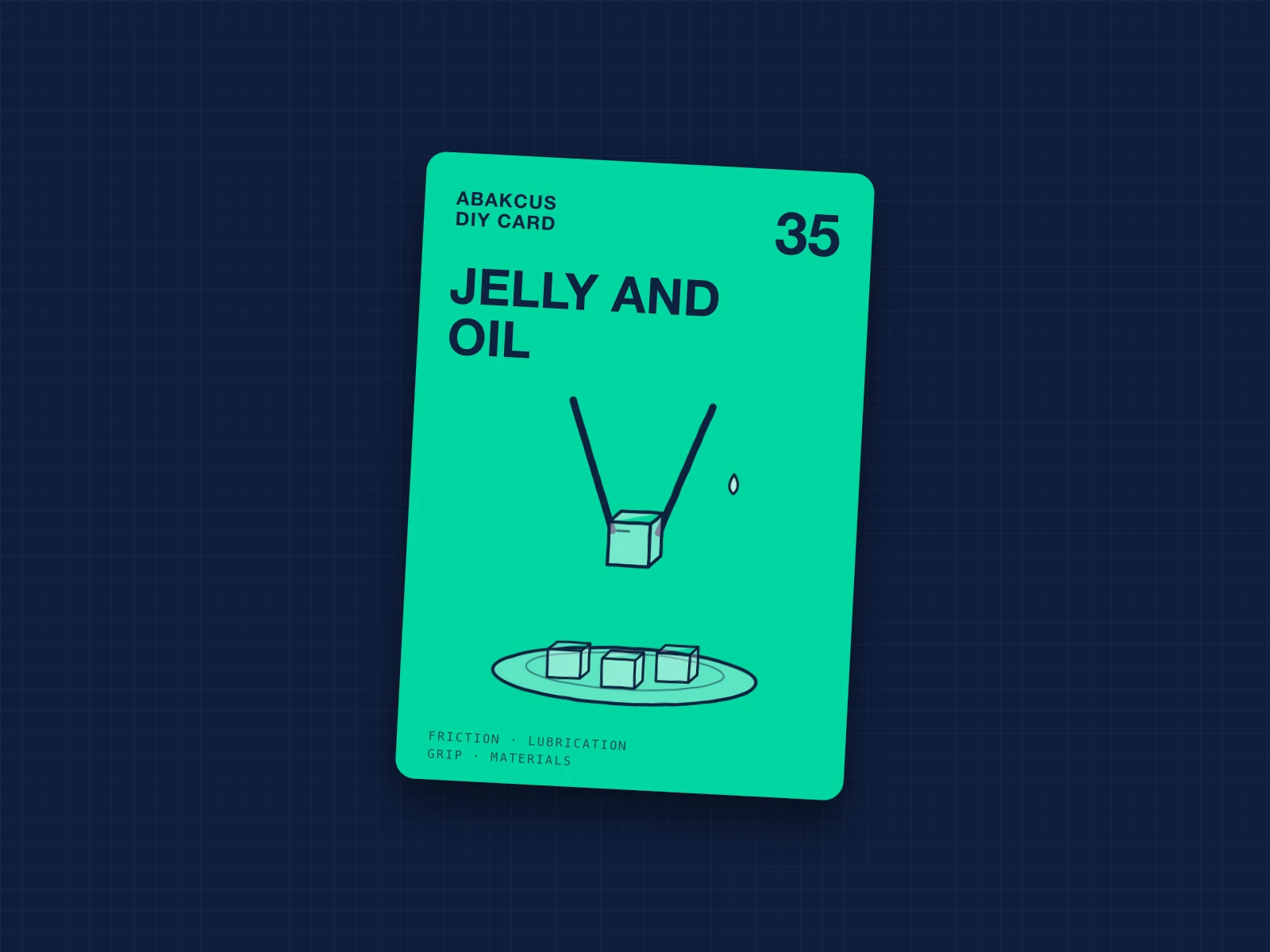
Jelly and Oil: A Friction Experiment With Chopsticks
Move cubes of jelly from one plate to another with chopsticks. Easy. Now coat them in oil and try again, and find out how much of everything you hold depends on friction.
Open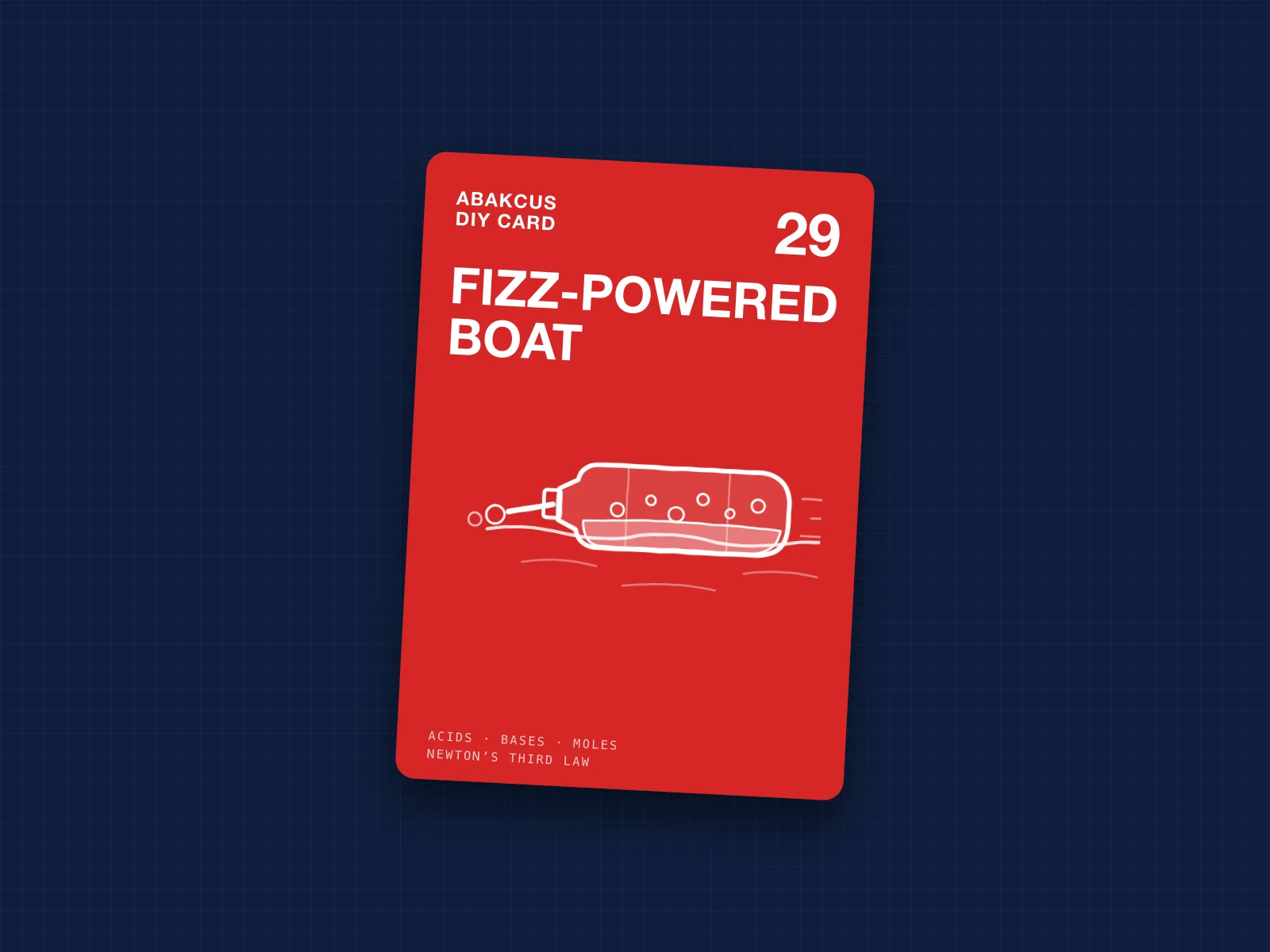
How to Build a Boat Powered by a Chemical Reaction
A bottle, a straw, a spoonful of baking soda and a splash of vinegar. The fizz has only one way out, and when it rushes out the back the boat shoots off the other way, like a tiny rocket.
Open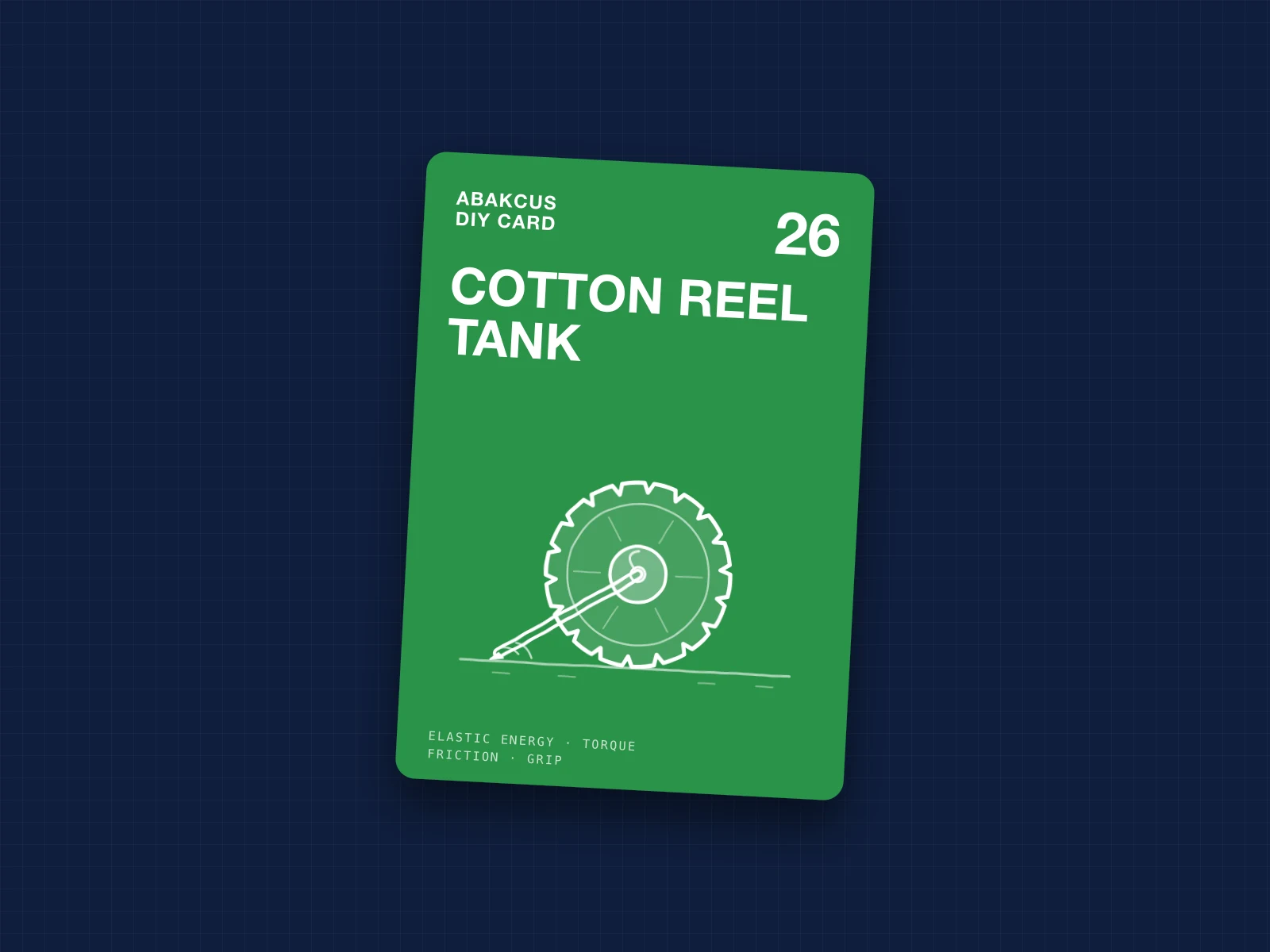
How to Build a Cotton Reel Tank (Thread Spool Tank)
An empty cotton reel, a rubber band, a pencil and a slice of candle. Wind it up and it crawls across the floor and over books, slowly giving back every turn you put in.
Open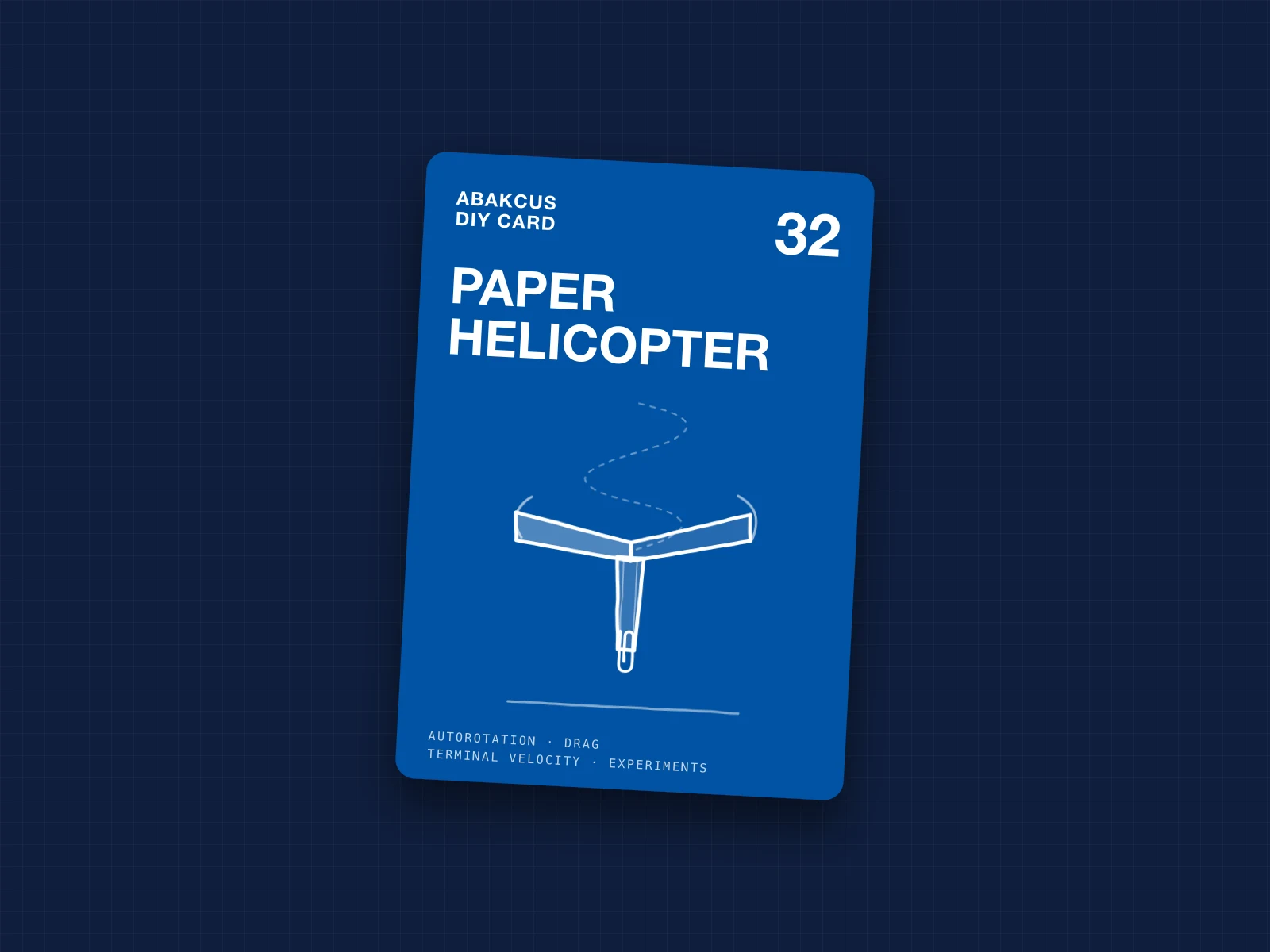
How to Design and Build a Paper Helicopter That Spins
A strip of paper, three snips and a paper clip. Drop it from up high and it doesn’t fall: it whirls, spinning its way gently to the floor like a sycamore seed.
Open
How to Build a Marble Run From Cardboard Tubes
Split tubes, a wall and some tape: a zigzag run that keeps a marble busy for half a minute on a one-metre drop it could fall in less than half a second. Height is the fuel; the trick is spending it slowly.
Open
How to Make a Simple Electric Motor (Homopolar Motor)
A battery, a magnet and a bent piece of copper wire: three parts, no coils, and the wire spins on its own. It is the same push that drives every electric motor, found by Faraday in a single afternoon in 1821.
Open