
DIY · Card 35 · Engineering · Friction
Move cubes of jelly from one plate to another with chopsticks. Easy. Now coat them in oil and try again, and find out how much of everything you hold depends on friction.
01The brief
Move the jelly with chopsticks, then do it again with oil, and work out why it is so much harder.
8 g
the weight of a 2 cm jelly cube, held up by nothing but friction at two chopstick tips
7×
less grip on oily jelly than on fresh jelly, by the tilt test
35 °C
about where gelatine melts, which is why jelly melts in your mouth
Picking up a jelly cube with chopsticks is a small act of engineering. The chopsticks never get underneath it. All that holds the cube up is friction, the grip between the wooden tips and the jelly’s sides, and you control it with how hard you squeeze.
Oil takes that grip away. Coat the cubes and they squirt out of the tips; squeeze harder and the soft jelly splits before it lifts. It is the same battle against slipping as keeping the cotton reel tank from spinning its wheels, and the same friction that slows the balloon car.
02Kit
Jelly made the night before, chopsticks, oil and a stopwatch.
Tick off what you have
0 of 5 ready
03Method
Make and cut the jelly, race it dry, race it oiled, then engineer a better grip.
Step 1 of 8 · The day before
Make up a packet of jelly, or gelatine, following the instructions, in a flat tray so it sets about 2 cm deep. Leave it in the fridge overnight.
The cubes break up when you pick them.
Why
The jelly is too soft, or you are pinching too near an edge.
Fix
Use a little less water when you make it, so it sets firmer, and grip each cube across its middle.
The dry cubes are already hard to hold.
Why
Fresh jelly is wet on the surface.
Fix
Pat the cubes dry with kitchen paper for the first race, so the oil makes a clear difference.
The jelly melts.
Why
Gelatine melts at about body temperature, from your warm hands or a hot room.
Fix
Keep the cubes in the fridge until the race, and touch them only with the chopsticks.
04Physics
Look closely at any surface and it is rough: hills and valleys far too small to see. Press two surfaces together and their bumps touch and catch. Try to slide one past the other and those catching bumps resist. That resistance is friction, and the harder you press, the more bumps touch and the more it resists.
For a pair of materials, the most friction you can get is a fixed fraction of the push between them, written μ. Each chopstick tip can hold up to μ times your pinch, and the two tips together must beat the cube’s weight. Oil gets between the bumps and holds them apart, making μ tiny. Now jelly’s weakness matters: pinch it too hard and it splits. Find the pinch that works:
Cube weighs
8.4 g
Grip, μ
0.45
Pinch to hold it
0.14 N
Pinch that splits it
0.60 N
Got it · Held. Each tip grips with friction equal to μ times your pinch, and the two together beat the cube’s weight.
You can measure μ with a plate. Tilt it slowly with a cube on top. As the slope steepens, more of the cube’s weight pulls it down the slope and less presses it into the plate. At one exact angle the two balance, and the cube slides. Find that angle:
Slides at
21°
So μ = tan θ =
0.38
It stays put: friction is holding it. Tilt slowly, and note the exact angle at which it starts to move.
The friction coefficients and jelly strengths are typical values for gelatine, wood and cooking oil, not measurements. Your own jelly will differ; the tilt test lets you measure it.
05The big idea
Grip, not
force.
When something slips through your fingers, the instinct is to squeeze harder. With fragile things, that is exactly wrong. Better grip, from rougher, stickier or grooved surfaces, holds the same weight with a gentler squeeze.
Robot hands that pick fruit, surgeons’ instruments and the treads of your shoes are all designed around that idea. The jelly is the perfect teacher, because it punishes force and rewards grip.
06The math
1 · Friction
F ≤ μ N
The most grip a surface can give is a fraction μ of the normal force N pressing it.
2 · The chopstick grip
2 μ N ≥ m g
Two tips, each pinching with force N, must hold the cube’s weight mg.
3 · The tilt test
μ = tan θ
On a slope at angle θ, the cube starts to slide when the slope’s pull beats friction.
A 2 cm cube of jelly weighs about 8.4 g, so its weight is 0.082 N. Allowing for the jolts of moving it, say 0.12 N. With bamboo on fresh jelly, μ ≈ 0.45, so you need N = 0.12 ⁄ (2 × 0.45) ≈ 0.14 N: the weight of about 14 grams, a gentle pinch.
Oil drops μ to around 0.06. Now N = 0.12 ⁄ (2 × 0.06) = 1.0 N, seven times harder. Soft jelly under a chopstick tip splits at something like 0.6 N, so no pinch works at all. Firmer jelly, or grooved tips that raise the grip, open the window again.
07Real life
Engines, knees, tyres and brakes all live on one side or the other of the jelly’s problem.
Engine oil
Inside a car engine, steel pistons slide up and down steel cylinders thousands of times a minute. A film of oil thinner than a hair keeps the metal surfaces apart. Without it they would grind, overheat and seize within minutes.
Your joints
The ends of the bones in your knees are capped with smooth cartilage and bathed in a slippery synovial fluid. The friction in a healthy joint is lower than ice sliding on ice, and it keeps working for decades.
Tyres in the rain
A film of water between a tyre and the road can lift the tyre clear, so it slides like an oily jelly cube: aquaplaning. Tread grooves channel the water away so rubber can touch road, the job your grooved chopstick tips do.
Brakes and grips
Friction isn’t only a nuisance. Brake pads, climbing shoes, tennis-racket grips and the soles of your trainers are all designed to have as much of it as possible, and they fail just as the jelly does if oil or water gets in the way.
Bike chains
A bicycle chain has hundreds of little pins turning in their bushes. A drop of oil on each one makes pedalling noticeably easier and stops the chain wearing out. Too much oil, though, collects grit, which grinds like sandpaper.
Chopsticks themselves
People in China have eaten with chopsticks for at least three thousand years, and their shape is a lesson in friction. Many are tapered and textured at the tips, and slippery foods like noodles and tofu are the traditional test of skill.
c. 1900 BC
On the wall of the tomb of Djehutihotep, an Egyptian governor who lived nearly four thousand years ago, a painting shows a huge statue being dragged on a sledge by teams of men. At the front of the sledge, one man is pouring water onto the sand.
In 2014, physicists at the University of Amsterdam dragged a model sledge over dry and damp sand. With the right amount of water, the pulling force fell by half. The water doesn’t lubricate, though: it binds the grains into a firmer surface, so the sand stops piling up in front of the sledge. Friction, it turns out, is never just one thing.
08Is and isn’t
Squeeze harder and you can always hold it.
Only if the thing you are holding can take it. Grip is friction, and friction is a fraction of how hard you squeeze. Oil shrinks that fraction so much that the squeeze you’d need splits soft jelly first.
Bigger contact means more friction.
For most solids, area hardly matters. A brick slides just as easily on its side as on its end. What matters is what the surfaces are made of and how hard they are pressed together.
Oil is slippery because it is slippery.
Oil works by getting between surfaces. Solid surfaces are rough at a tiny scale, and their bumps catch on each other. A film of oil holds the bumps apart, so they slide over the liquid instead.
Friction is always the enemy.
Without friction you couldn’t walk, hold a pen, tie a knot or stop a bicycle. Engineers spend as much effort adding friction where it is wanted as removing it where it isn’t.
09Go further
A
Three races
Race with dry cubes, wet cubes and oily cubes. Plot the number moved in a minute against each. How big is the difference?
B
Other lubricants
Try washing-up liquid, butter and water instead of oil. Which one makes the cubes hardest to pick up?
C
Chopstick trial
Compare wooden, plastic and metal chopsticks, and wooden ones with a rubber band at the tips. Which gives the best grip on oily jelly?
D
Tilt angles
Measure the slip angle of a cube on a dry plate, a wet plate and an oily plate. Work out μ for each with tan θ.
E
Firm and soft
Make two batches of jelly, one with half the usual water. Is the firm jelly easier to carry when it is oily? Why?
10Questions
It shows how friction lets us grip things, and how a lubricant takes it away. With chopsticks, you can pick up a jelly cube because friction at the tips holds it. Coat the cube in oil and the friction falls so far that you can’t squeeze hard enough to hold it without splitting the jelly.
Oil spreads a thin film between the jelly and the chopsticks, so the two surfaces barely touch. The friction at each tip is a fraction μ of your pinch, and oil makes that fraction several times smaller. To hold the cube you must squeeze much harder, and soft jelly splits before you get there.
A lubricant is anything that goes between two surfaces to reduce friction between them: oil, grease, water, graphite, even a layer of air. It keeps the surfaces apart, so their tiny bumps don’t catch on each other. Engines, bike chains and our own joints all depend on one.
Put an object on a board and tilt the board slowly until the object just starts to slide. Measure the angle. The coefficient of friction is the tangent of that angle: about 0.36 at 20 degrees, 0.18 at 10 degrees and 0.05 at 3 degrees.
For most everyday solids, hardly at all. Friction depends on the materials and how hard they are pressed together, not on how big the touching faces are. Leonardo da Vinci noticed this around 1500, and Guillaume Amontons made it a law in 1699.
Safety · A grown-up should handle the hot water when making the jelly. Wipe up spilled oil straight away, because an oily floor is as slippery as an oily cube. Don’t eat jelly that has been handled and left out.
All DIY cards →Keep wandering
A few more pieces in the same spirit — math, design, and slow attention.
How to Build a Cotton Reel Tank (Thread Spool Tank)
An empty cotton reel, a rubber band, a pencil and a slice of candle. Wind it up and it crawls across the floor and over books, slowly giving back every turn you put in.
Open
Balloon Car Race: How to Make a Balloon-Powered Car
Half a cup, four bottle tops, two skewers and one balloon. Blow it up, let it go, and a jet of your own breath sends the car racing across the floor.
Open
How to Make Oobleck: The Liquid That Turns Solid
Cornflour and water, stirred together in a bowl. Stir slowly and it pours like cream; punch it and it cracks like a brick. The grains inside are doing something physicists only pinned down in the last fifteen years.
Open
How to Build a Compass With a Needle, a Magnet and Water
A sewing needle, a magnet and a bowl of water. Fifty strokes turn the needle into a magnet, and floated on the water, it swings round to feel the invisible field of the whole Earth.
Open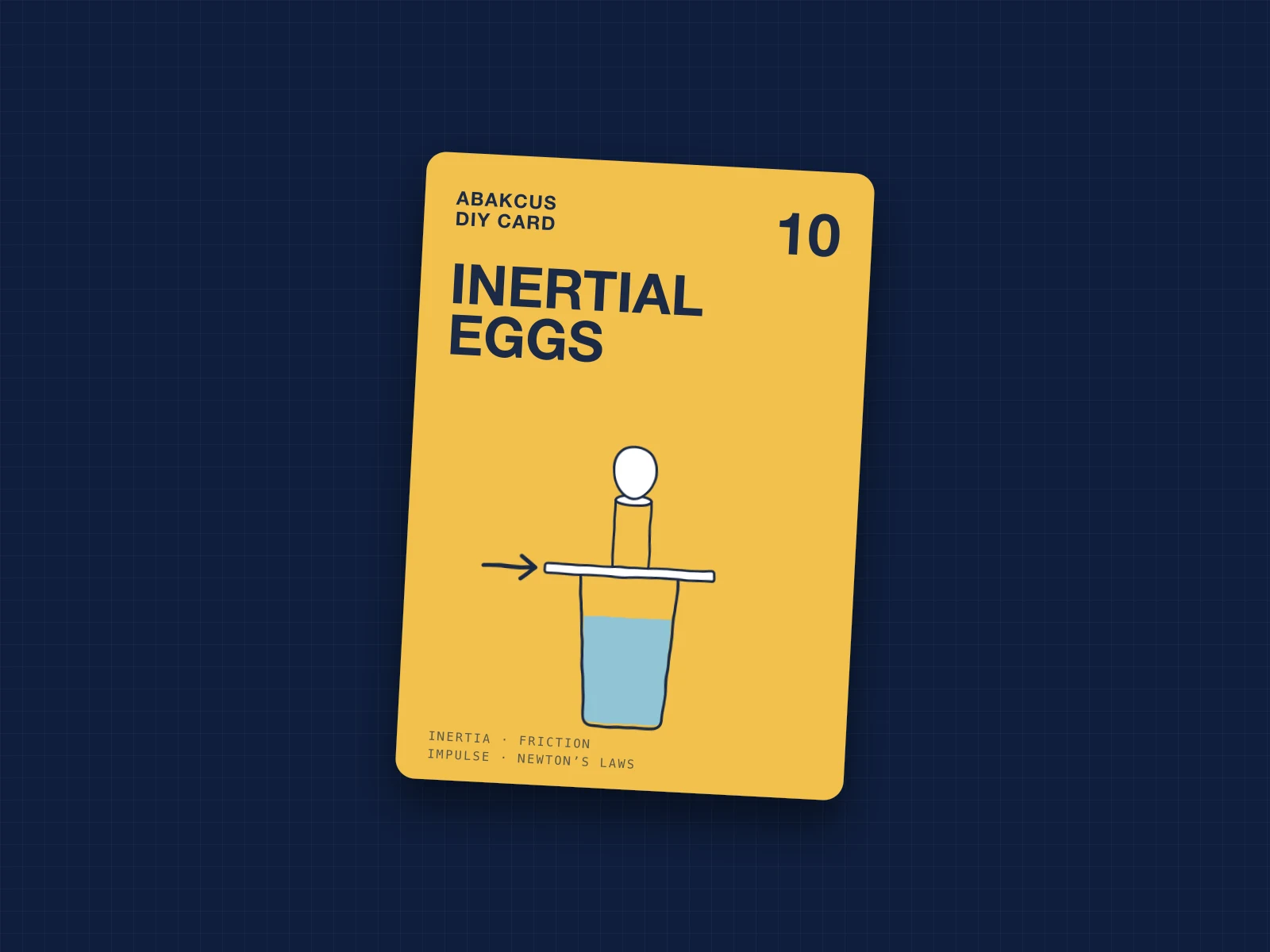
How to Do the Egg Drop Inertia Trick: Newton’s First Law
Knock a tray out from under an egg and the egg drops straight down into a glass of water. The trick is speed, not strength, and the egg’s weight turns out not to matter at all.
Open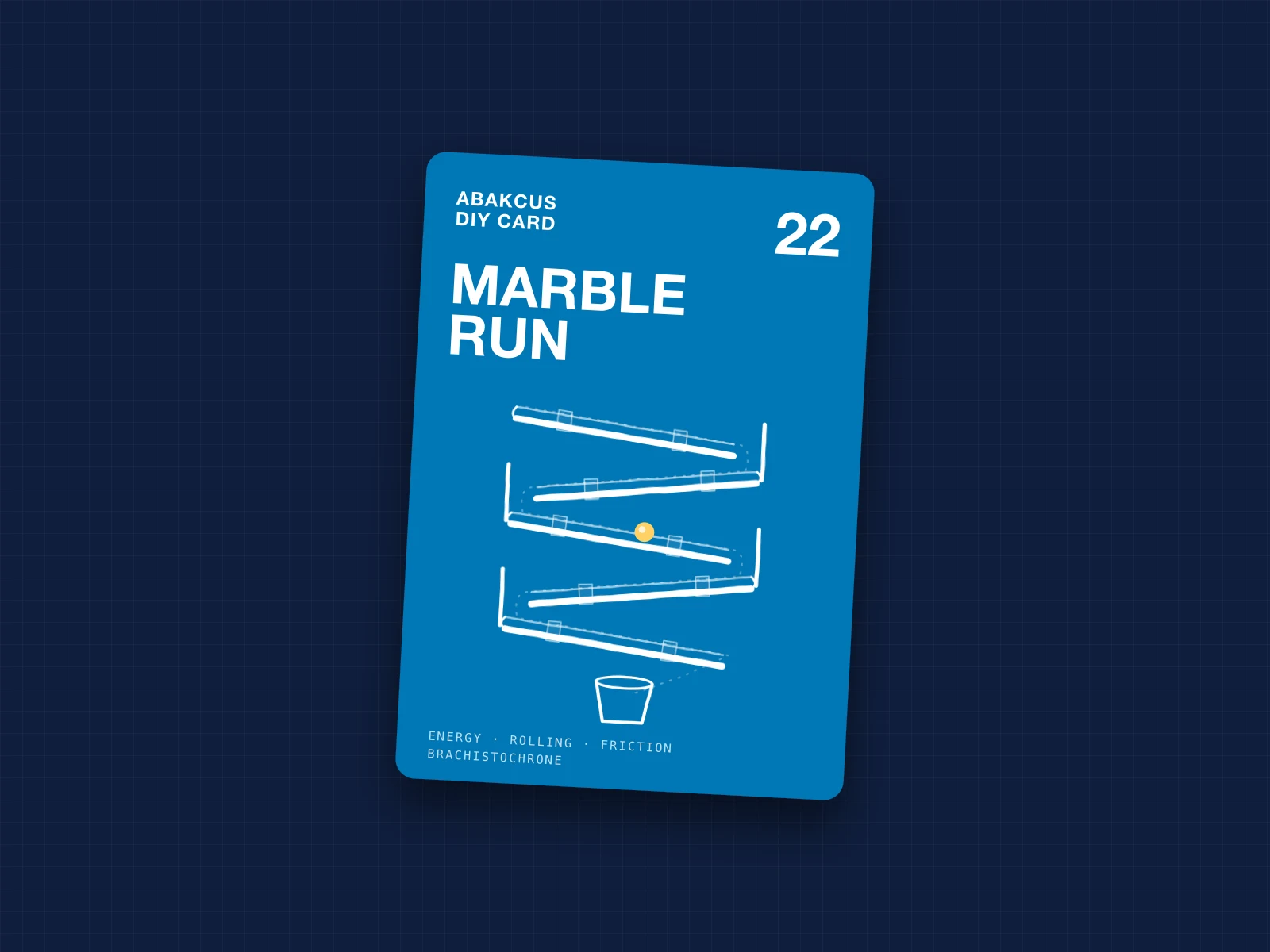
How to Build a Marble Run From Cardboard Tubes
Split tubes, a wall and some tape: a zigzag run that keeps a marble busy for half a minute on a one-metre drop it could fall in less than half a second. Height is the fuel; the trick is spending it slowly.
Open