
DIY · Card 83 · Physics · Forces
An old CD, a bottle cap and a balloon. Open the cap and the disc lifts a hair’s breadth off the table, then glides away at the faintest touch, riding on a cushion of air.
01The brief
Lift a disc on air, and friction almost vanishes.
14 Pa
the extra pressure it takes to lift a 16 g CD
30×
less friction on a cushion of air than plastic on a table
1959
the year a hovercraft first crossed the English Channel
Push a CD across a table and it stops almost at once. Put a balloon on top, let the air flow underneath, and the same push sends it gliding all the way to the edge. Nothing about the disc has changed except what it is sitting on.
That cushion of air is the whole idea behind the hovercraft, and behind air hockey tables and the bearings of precision machines. It sits nicely next to the balloon car race and the jelly and oil friction experiment.
02Kit
A disc, a cap and a balloon.
Tick off what you have
0 of 5 ready
03Method
Glue the cap, fit the balloon, open the valve.
Step 1 of 8 · Minute 0
You need an old CD, a push-pull sports-bottle cap (the kind you pull up to drink), a round party balloon, and a glue gun or strong glue. Sticky tack works as a seal.
It doesn’t lift.
Why
Air is leaking round the cap.
Fix
Seal every gap with glue or sticky tack, and check the cap is open all the way.
The balloon empties in a second.
Why
The opening is too wide.
Fix
Use a cap with a smaller hole, or put a small disc of card with a pinhole under the cap to slow the air.
It tips over.
Why
The balloon is too big and wobbly for the disc.
Fix
Use a slightly smaller balloon, or tape a second CD underneath to add weight low down.
04Riding on air
Friction comes from two surfaces rubbing. Lift one on a thin layer of air and the rubbing stops; only the air itself, slippery and thin, drags on the disc.
Push both discs and see how far they go:
Plain disc slides
11 cm
Hovercraft glides
3.3 m
Friction cut by
30×
Friction slows a sliding object at μ g, so it stops after v² ⁄ 2μg. Plastic on a table has μ around 0.3; riding on a thin cushion of air, with nothing but air rubbing against it, μ drops to about 0.01 in this simple model. Thirty times less friction means thirty times further, until the balloon runs out of air.
The balloon is the engine. Here is how much lift it gives and how long it lasts:
Air speed out
65 m/s
Hover time
15 s
Pressure to lift
14 Pa
To lift a 16 g CD, the air under it needs only about 14 pascals more than the room, about one ten-thousandth of atmospheric pressure. A balloon pushes at well over a hundred times that, so lifting is easy; the real question is how long the air lasts. A 3 mm opening lets air out at about 0.27 litres a second, so 4 litres last roughly 15 seconds in this simple model (real ones often last a good deal longer, because the thin gap under the disc also holds the air back).
05The big idea
Pressure
times area.
A tiny pressure spread over a big area makes a real force. Fourteen pascals is nothing you could feel on your hand, but over the whole underside of a CD it adds up to exactly the disc’s weight.
Real hovercraft work the same way. A craft weighing tonnes needs only a modest extra pressure under its skirt, because that pressure acts over the whole of its large base.
06The math
1 · Lift
p = m g ⁄ A
m the mass, g gravity, A the area underneath.
2 · Glide distance
d = v² ⁄ (2 μ g)
v the push speed, μ the friction coefficient.
3 · Air flow
Q ≈ 0.6 · a · √(2ΔP ⁄ ρ)
ΔP the balloon pressure, a the hole area.
A CD weighs about 16 g and covers π × 0.06² ≈ 0.0113 m², so it needs 0.016 × 9.81 ⁄ 0.0113 ≈ 14 Pa. A party balloon pushes at roughly 2,500 Pa: plenty.
Pushed at 1 m/s, a plain disc with μ = 0.3 slides 1 ⁄ (2 × 0.3 × 9.81) ≈ 17 cm. On air, with μ ≈ 0.01, it would glide 5.1 m, off the end of most tables.
07Real life
From air hockey tables to ferries and water drops on a hot pan.
Air hockey
An air hockey table blows air up through hundreds of tiny holes. The puck rides on that film of air, so it slides almost without friction, just like your CD, but with the air supply built into the table.
Passenger hovercraft
A hovercraft service has run across the Solent, between Southsea and the Isle of Wight, since the 1960s. The craft glide straight from the water up onto the beach.
Air bearings
Precision machines, from chip-making equipment to large telescopes, often move on air bearings: thin films of pressurised air that let heavy parts slide with almost no friction or wear.
Skating water drops
Flick water onto a very hot pan and the drops skitter around for ages. They float on a cushion of their own steam, the Leidenfrost effect, a hovercraft made of water.
Landing craft
Military hovercraft can carry tanks from ships straight over the water, across the beach and inland, crossing mud, sand and shallows that would stop a boat or a truck.
Maglev trains
Magnetic-levitation trains float too, but on magnetic fields instead of air. The idea is the same: no wheels touching the track means almost no friction and a very smooth, fast ride.
1959
Christopher Cockerell, a British engineer who ran a boat-hire business, wanted boats to skim over the water instead of ploughing through it. In 1955 he tested the idea with a cat-food tin inside a coffee tin, an air blower and a pair of kitchen scales.
Blowing air down the gap between the two tins lifted far more than blowing through a single tin. Four years later his full-size SR.N1 crossed the English Channel from Calais to Dover on 25 July 1959, fifty years to the day after Louis Blériot first flew across it.
08Is and isn’t
Hovercraft fly.
They float only a little above the surface, on a cushion of air trapped underneath. Lift them too high and the air simply escapes.
Lifting takes a huge blast of air.
A CD needs only about 14 pascals of extra pressure underneath: about one ten-thousandth of normal air pressure.
The air also pushes it forwards.
Your balloon only lifts. Real hovercraft use separate propellers for moving forwards.
With the cushion, friction disappears.
It gets very small, but air still rubs on the disc and the table. That is why your hovercraft slowly stops even on a perfect surface.
09Go further
A
Time the hover
Time how long it floats with different balloon sizes. Does twice the air give twice the time?
B
Surface test
Try a table, a tiled floor, a book cover and a carpet. Rank them by how far the hovercraft glides.
C
Add cargo
Tape coins to the disc one by one. How much can it carry before it no longer lifts?
D
A bigger craft
Make one from a paper plate or a pizza-box lid with a hairdryer for air (a grown-up holds the dryer, on cool).
E
Friction race
Push a plain CD and the hovercraft with the same flick. Measure how far each one goes.
10Questions
Glue a push-pull sports-bottle cap over the centre hole of an old CD and seal it. Blow up a balloon, stretch its neck over the closed cap, put the CD on a smooth table and pull the cap open. Air flows under the disc and it glides at the slightest push.
It pushes air underneath itself faster than the air can escape, building up a cushion of slightly higher pressure. That pressure, spread over the whole underside, lifts the craft, so it rides on air instead of rubbing on the ground.
Friction is what normally stops a sliding object. On a cushion of air there is almost no friction, perhaps thirty times less than plastic on a table, so the same push carries it about thirty times as far.
Usually somewhere between ten seconds and a minute, depending on the size of the balloon, how wide the cap opens and how smooth the surface is. A smaller opening hovers for longer.
The British engineer Christopher Cockerell, who tested the idea in 1955 with a cat-food tin inside a coffee tin and an air blower. His full-size SR.N1 crossed the English Channel on 25 July 1959.
Safety · A grown-up should handle the glue gun, which gets hot. Burst balloons are a choking hazard: keep the pieces away from young children, and avoid latex balloons if anyone has a latex allergy.
All DIY cards →Keep wandering
A few more pieces in the same spirit — math, design, and slow attention.
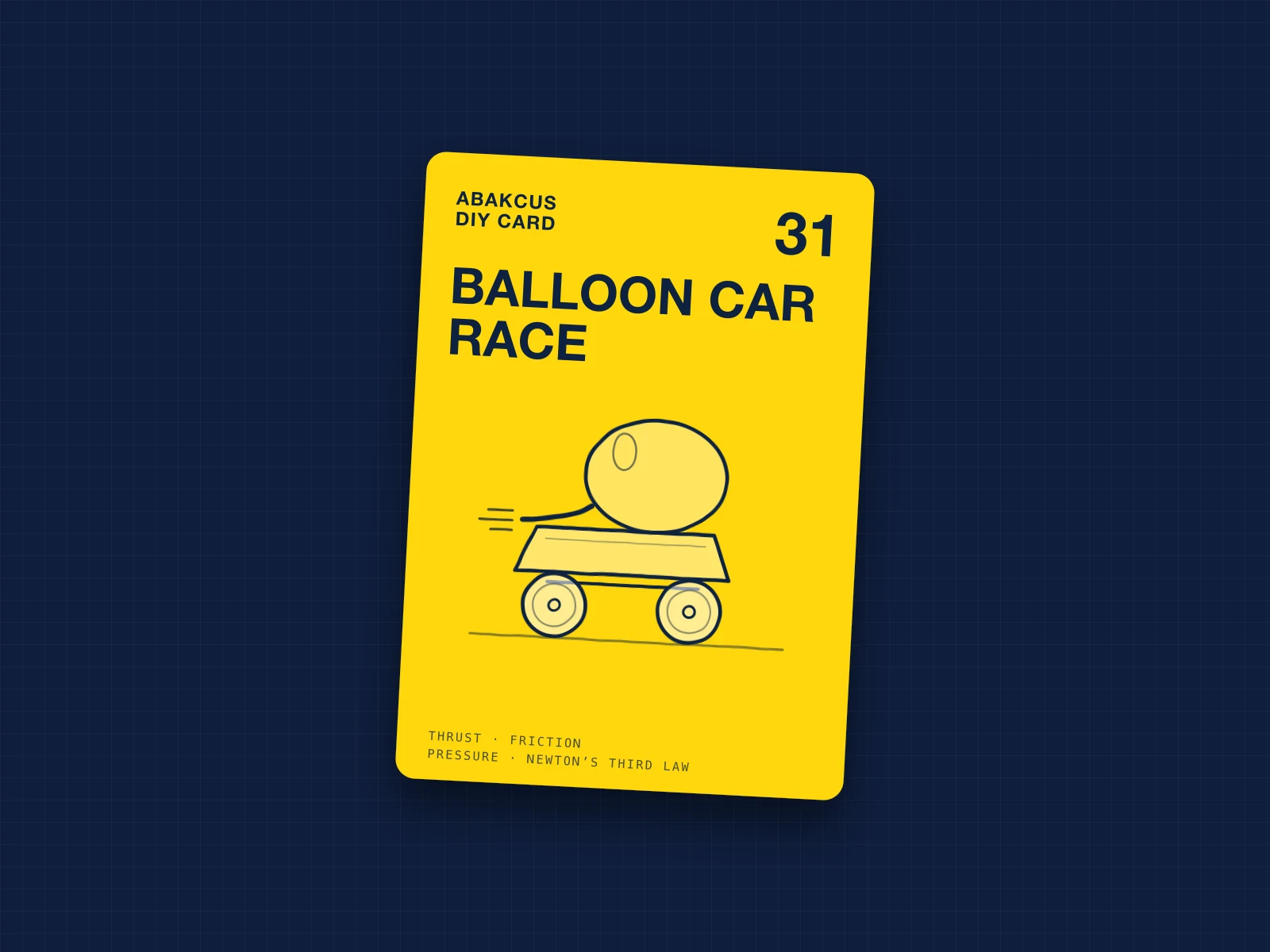
Balloon Car Race: How to Make a Balloon-Powered Car
Half a cup, four bottle tops, two skewers and one balloon. Blow it up, let it go, and a jet of your own breath sends the car racing across the floor.
Open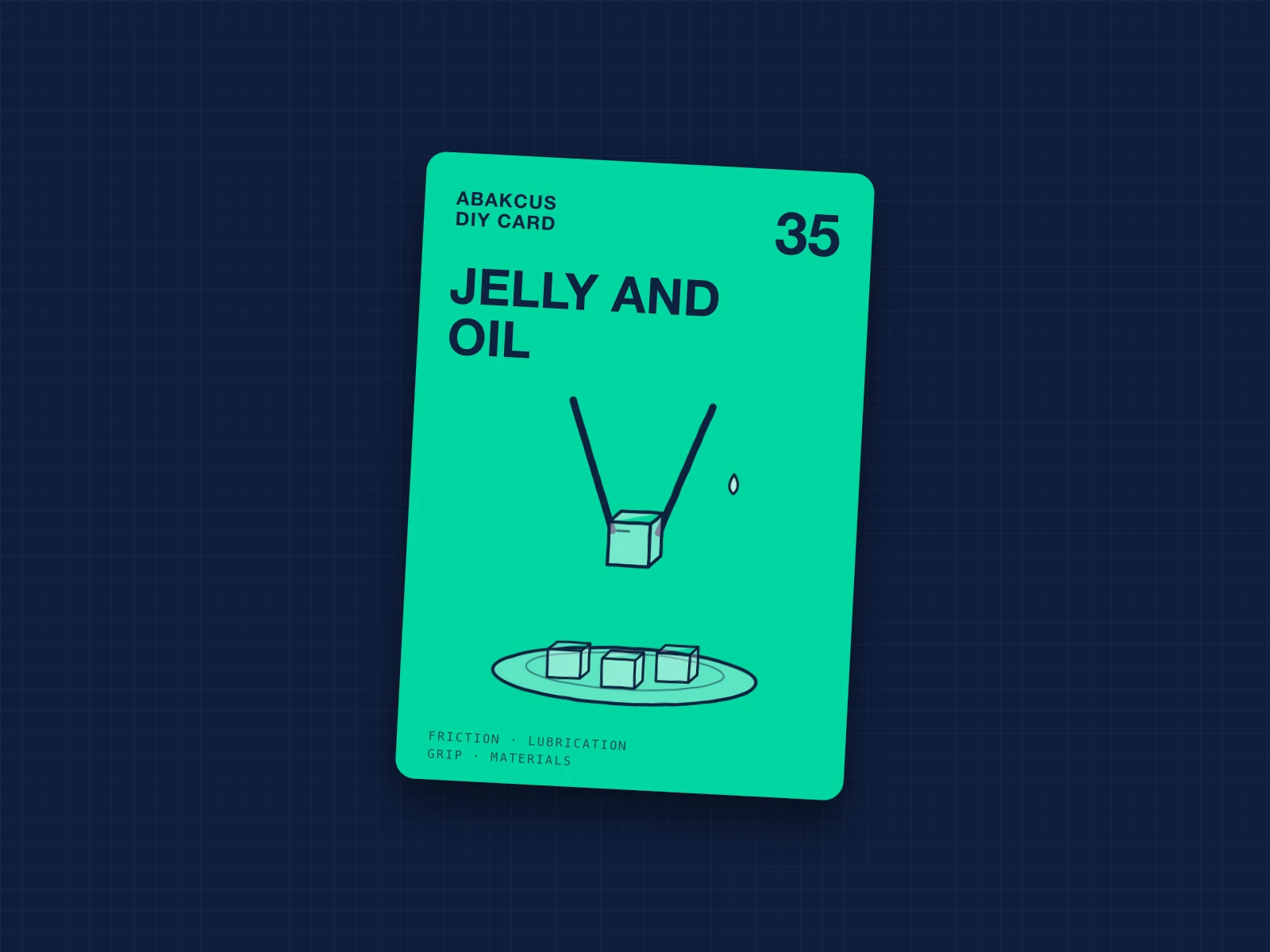
Jelly and Oil: A Friction Experiment With Chopsticks
Move cubes of jelly from one plate to another with chopsticks. Easy. Now coat them in oil and try again, and find out how much of everything you hold depends on friction.
Open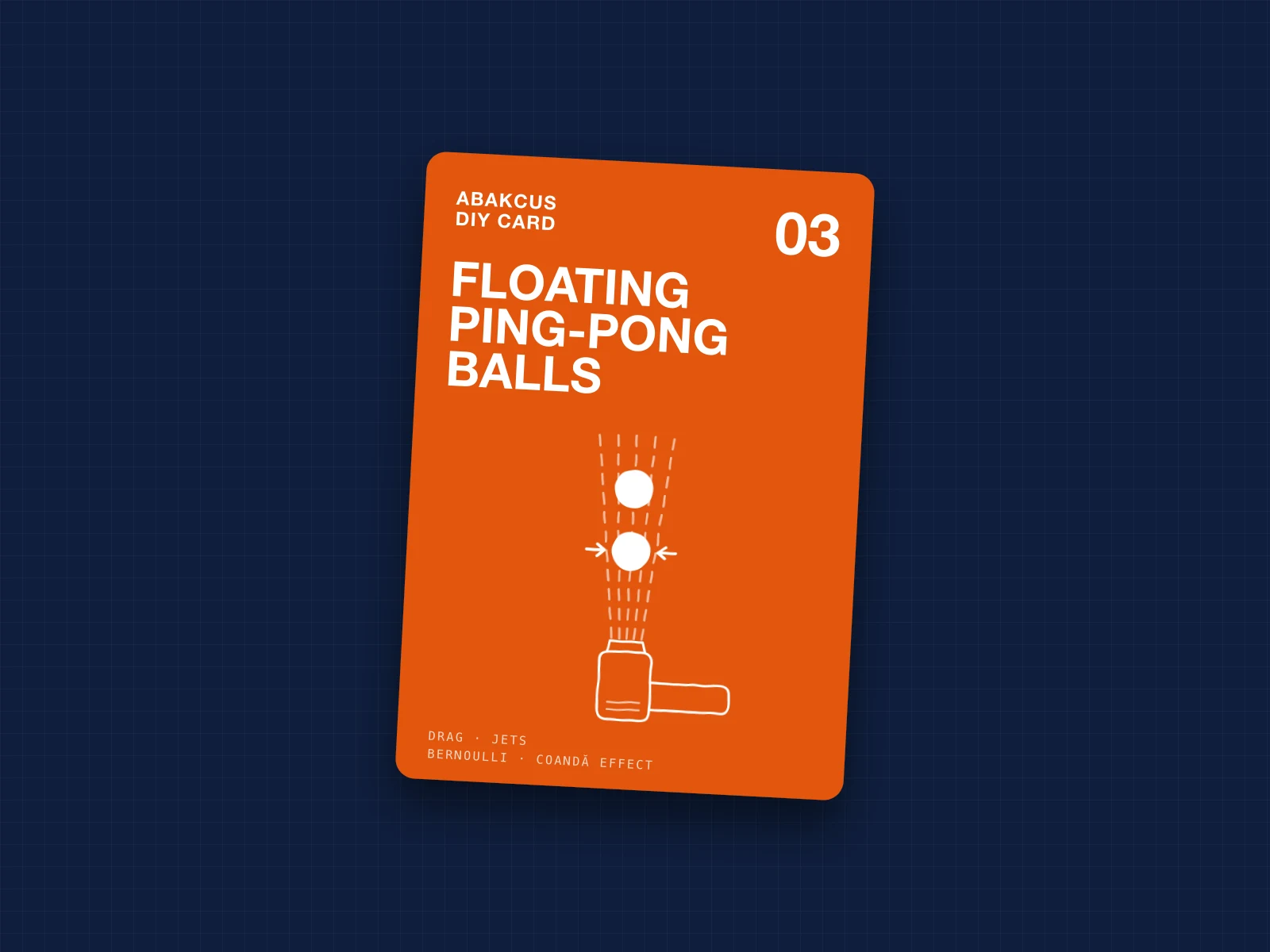
How to Make a Ping-Pong Ball Float With a Hair Dryer
Point a hair dryer at the ceiling and a ping-pong ball sits in mid-air, wobbling but never falling out. Most explanations of why are wrong, and the real one is better.
Open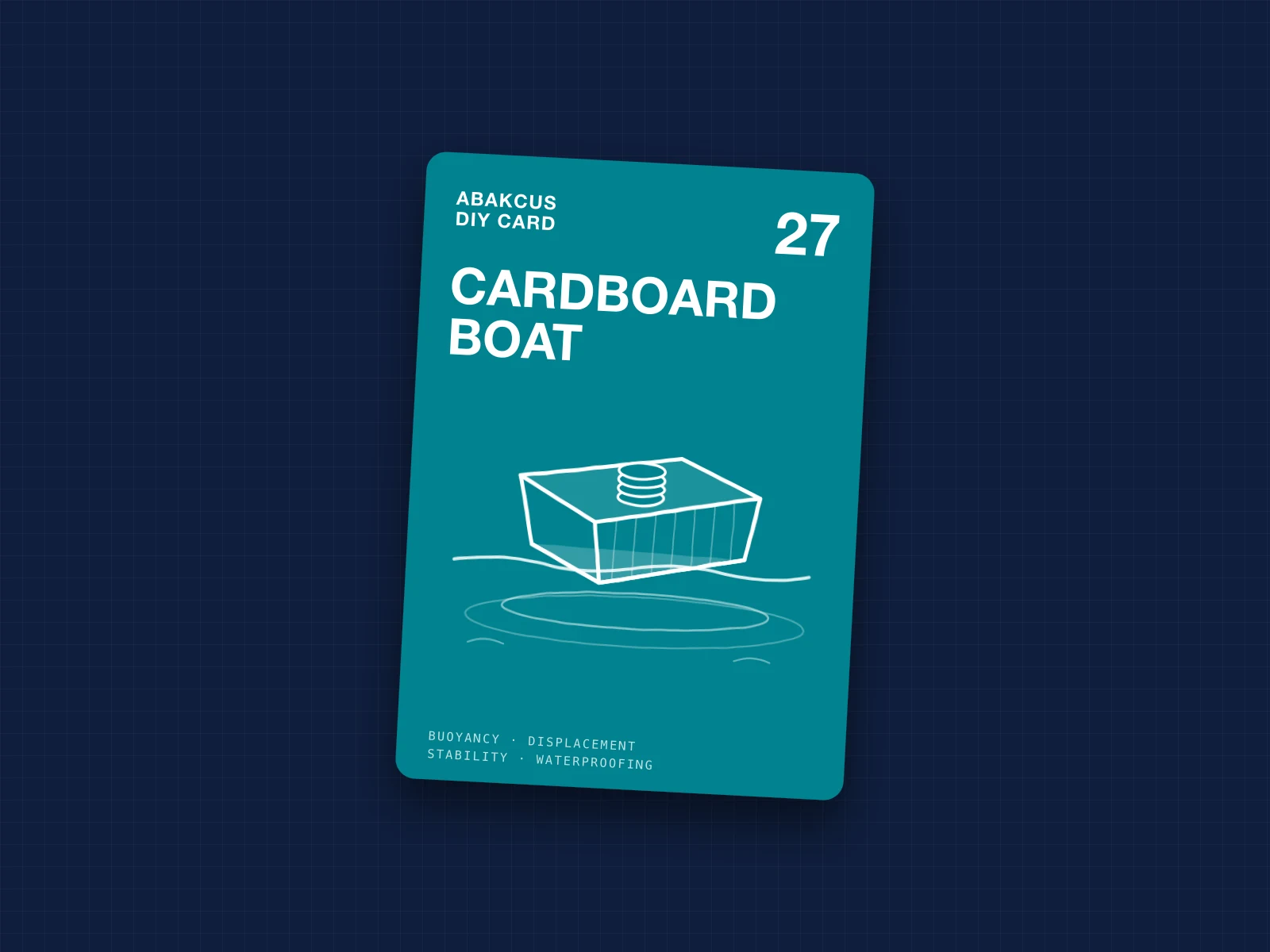
How to Make a Cardboard Boat That Floats (and Carries Coins)
One sheet from an old box, folded into a tray and sealed with tape and wax. Then the test: how many coins can it carry before the water comes over the side?
Open
How to Make a Rocket Toy From the Recycling Bin That Flies
A plastic bottle, a scrap of paper and a corner of a cereal box. Roll a rocket, give it fins and a clay nose, then squeeze and watch it streak across the garden.
Open
How to Blow Up a Balloon With Hot Water: Charles’s Law
Put a balloon on an empty bottle, stand the bottle in hot water, and the balloon lifts itself up. The air didn’t get any more of itself. It just needs more room, and from that one fact you can find absolute zero.
Open