
DIY · Card 99 · Physics · Air
A square cut from a plastic bag, four strings and a toy. Drop it, and instead of crashing, it floats down, held up by nothing but the air it pushes out of the way.
01The brief
Catch the air. Fall slowly.
≈ 2 m/s
terminal speed of a 30 g toy under a 40 cm canopy
2× wider
means 4× the area and half the speed
1797
the first parachute jump from a balloon, over Paris
Drop a toy and it hits the floor in under a second. Tie it under a square of plastic and it drifts down, slowly and steadily. Nothing is holding it up. The canopy simply has to shove so much air aside that the air pushes back as hard as gravity pulls down.
This is the same air that lifts a box kite and slows a paper helicopter. Here you can measure exactly how hard it pushes.
02Kit
A bag, some string and a brave toy.
Tick off what you have
0 of 5 ready
03Method
Cut, tape, tie, drop.
Step 1 of 8 · Minute 0
You need a plastic carrier bag, thread or thin string, sticky tape, scissors, a ruler, a hole punch or pencil, and a small toy figure (or a paper clip with a couple of washers).
It drops like a stone.
Why
The canopy didn’t open, or the load is too heavy for it.
Fix
Fold it loosely, not tightly, and drop from higher up, or use a lighter toy.
It falls sideways.
Why
The strings are different lengths.
Fix
Measure and retie all four strings to exactly the same length.
It swings wildly.
Why
Air is spilling out from under the edges in bursts.
Fix
Cut a 2 cm spill hole in the centre of the canopy.
04Drag
Gravity pulls with the same force all the way down. Drag starts at zero and grows with the square of the speed. The toy speeds up until the two are equal, then falls steadily. Drop two toys side by side:
Fall time, no chute
0.93 s
Fall time, parachute
2.18 s
Terminal speed
2.0 m/s
Lands like a jump from
20 cm
At first both toys speed up together. Then air pushes back on the canopy, harder the faster it goes, until drag equals weight and the parachute stops speeding up: that is its terminal speed. A rough model with typical drag numbers; real canopies sway, spin and drift.
How big does a canopy need to be? It depends on what hangs underneath:
Canopy area
0.159 m²
Terminal speed
1.5 m/s
That is
6 km/h
Terminal speed falls as the canopy grows, but more and more slowly: it goes as 1 ⁄ width. Double the width and you get four times the area and half the speed. A skydiver with no canopy open falls at around 55 m/s (200 km/h); a round canopy about 7 m across brings that down to a few metres per second.
05The big idea
Air is
stuff.
We walk through air without noticing it, but a cubic metre of it weighs more than a kilogram. Move fast enough, or present a big enough surface, and you have to push a lot of it aside every second.
A falling object is always balancing two forces: its weight, which never changes, and drag, which grows with speed. Every falling thing, from a raindrop to a skydiver, ends up at the speed where the two are equal.
06The math
1 · Drag
D = ½ ρ Cd A v²
ρ air density, Cd drag coefficient, A area, v speed.
2 · Terminal speed
v = √(2 m g ⁄ (ρ Cd A))
Where drag equals the weight m g.
3 · Bigger canopy
2 × width → ½ × v
Area grows with the square of the width.
A 30 g toy weighs 0.03 × 9.81 ≈ 0.29 N. A flat 40 cm canopy has A = 0.16 m² and, roughly, Cd ≈ 0.8. So v = √(2 × 0.29 ⁄ (1.2 × 0.8 × 0.16)) ≈ 2 m/s, about walking pace. Landing at that speed is like jumping off something only 20 cm high.
Because A is under the square root, area is costly. To halve the speed you need four times the area, which means twice the width. To land at a quarter of the speed you need sixteen times the area.
07Real life
From dandelion seeds to Mars.
Skydivers
Falling belly-down, a skydiver reaches about 200 km/h. Opening the canopy multiplies the drag area many times and brings the speed down to a gentle landing.
Landing on Mars
Mars’s air is about a hundred times thinner than Earth’s, so the parachute that slowed NASA’s Perseverance rover in 2021 was 21.5 metres across, and rockets had to do the rest.
Dandelion seeds
A dandelion seed hangs under a tuft of fine bristles. In 2018 scientists found that air flowing through the bristles forms a stable ring of swirling air above it, keeping the seed aloft for kilometres.
Space capsules
Apollo crews splashed down under three big striped parachutes. Spacecraft still return this way, using air to shed the last of their speed.
Drag racing
Top drag-racing cars reach more than 500 km/h in a few seconds. Brakes alone can’t stop them quickly, so they throw out parachutes at the finish.
Air drops
Food and medicine are dropped by parachute to places with no roads, such as remote mountain villages after an earthquake.
1797
On 22 October 1797, a crowd in Paris watched André-Jacques Garnerin rise beneath a hydrogen balloon, sitting in a basket under a folded silk canopy. High above the Parc Monceau, he cut himself free.
The canopy opened and he came down safely, though swinging so violently that he was sick. His parachute had no spill hole; the astronomer Jérôme Lalande later suggested adding one to steady it. Two years later his wife, Jeanne Geneviève Labrosse, became the first woman to make a parachute jump.
08Is and isn’t
Heavy things always fall faster.
In a vacuum, everything falls together. In air, what matters is weight compared with drag area: a heavy toy under a big canopy can fall slower than a light one under a small one.
A parachute stops you falling.
It never stops you. It only limits how fast you can go, to its terminal speed.
A hole in the canopy makes it useless.
A small spill hole barely changes the speed, but it makes the parachute much steadier. Many real canopies have one.
Bigger is always better.
Bigger is slower, but a huge canopy is heavy, slow to open and pushed around by the wind. Designers choose the size to land safely, not as slowly as possible.
09Go further
A
Size test
Make canopies 20, 30, 40 and 50 cm across. Time each from the same height. Does doubling the width halve the speed?
B
Shape test
Try a square, a circle, a triangle and a hexagon of the same area. Which falls slowest? Which falls straightest?
C
Material test
Try a bin bag, a paper napkin, a cotton handkerchief and tissue paper. Which works best, and why?
D
Egg drop
Use a bigger parachute to land a raw egg in a cup safely. Pair it with the inertia egg drop!
E
Measure terminal speed
Film the drop next to a tape measure on the wall and step through the video. When does the speed stop changing?
10Questions
Cut a 40 cm square from a plastic bag, tape and punch each corner, and tie a 40 cm string to each one. Knot the four strings together and tie a small toy below the knot. Drop it from a safe height and it floats down.
As it falls, the canopy pushes air out of the way, and the air pushes back. That push, called drag, grows with speed. When drag equals the weight, the parachute stops speeding up and falls at a steady, slow speed: its terminal speed.
A bigger canopy, a lighter load, and a shape that traps air, like a dome. Doubling the canopy’s width gives four times the area and halves the speed.
Air trapped under the canopy spills out of one side, then the other, rocking it. A small hole in the centre, a spill hole, lets air out steadily and makes the fall straighter.
André-Jacques Garnerin, on 22 October 1797, jumped from a hydrogen balloon high above the Parc Monceau in Paris under a silk canopy, and landed safely.
Safety · Never lean out of windows or over balconies; a grown-up should choose the drop spot. Keep plastic bags away from small children’s faces.
All DIY cards →Keep wandering
A few more pieces in the same spirit — math, design, and slow attention.
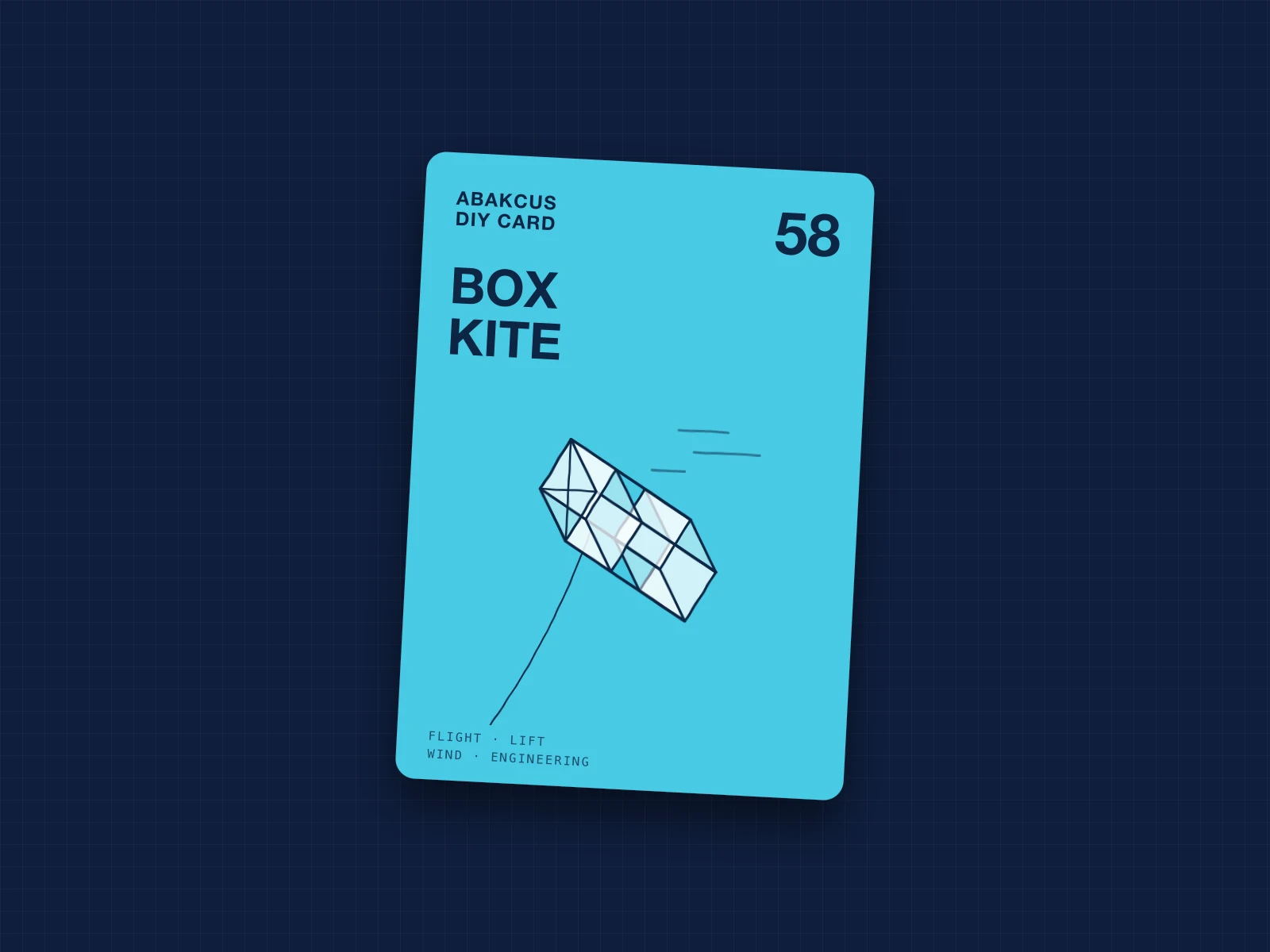
How to Make a Box Kite That Flies Without a Tail
Eight dowels, eight bits of tube and two bands of sail. Snap them into two open boxes and you have the kite that lifted a man off a beach in 1894.
Open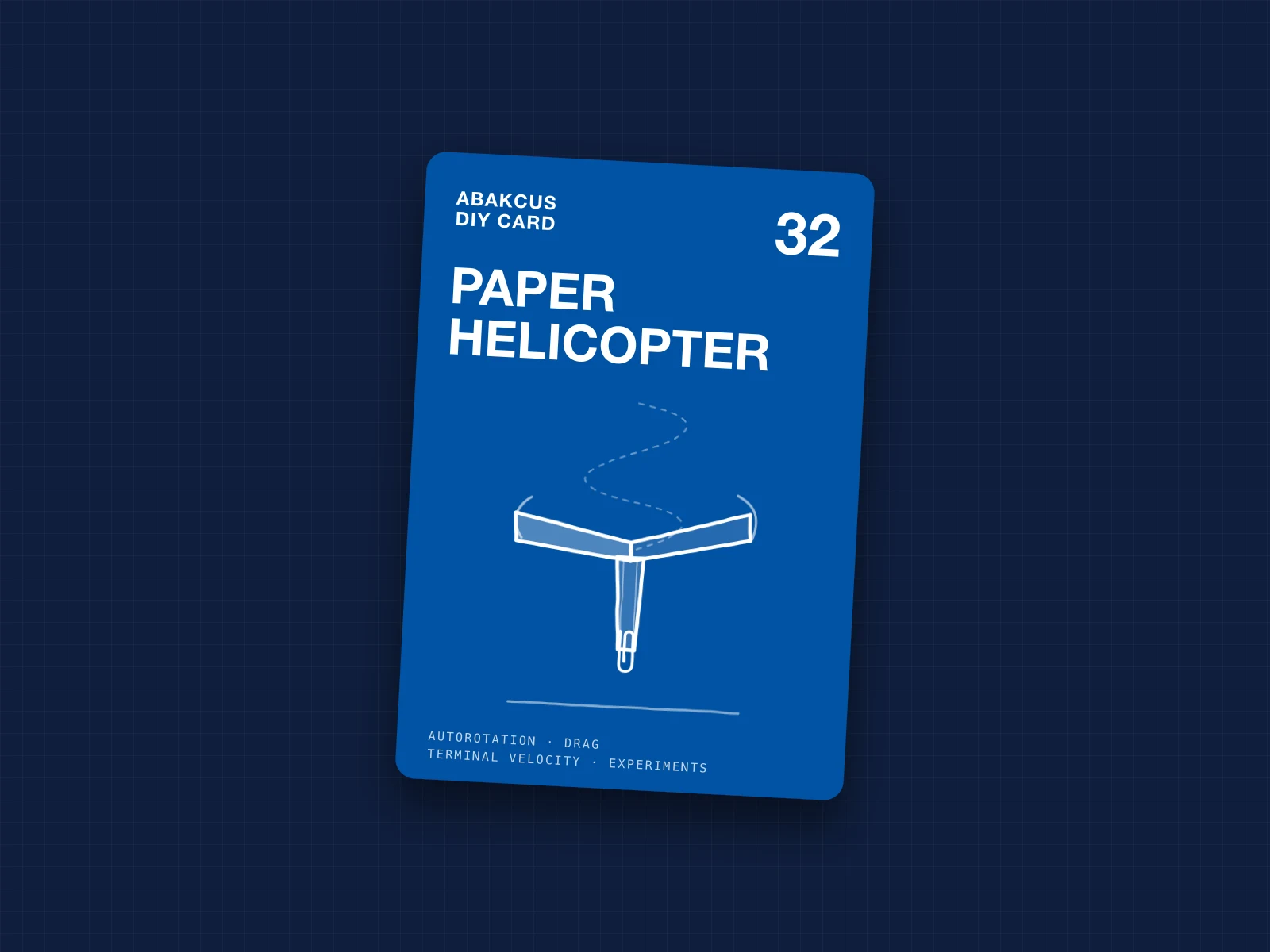
How to Design and Build a Paper Helicopter That Spins
A strip of paper, three snips and a paper clip. Drop it from up high and it doesn’t fall: it whirls, spinning its way gently to the floor like a sycamore seed.
Open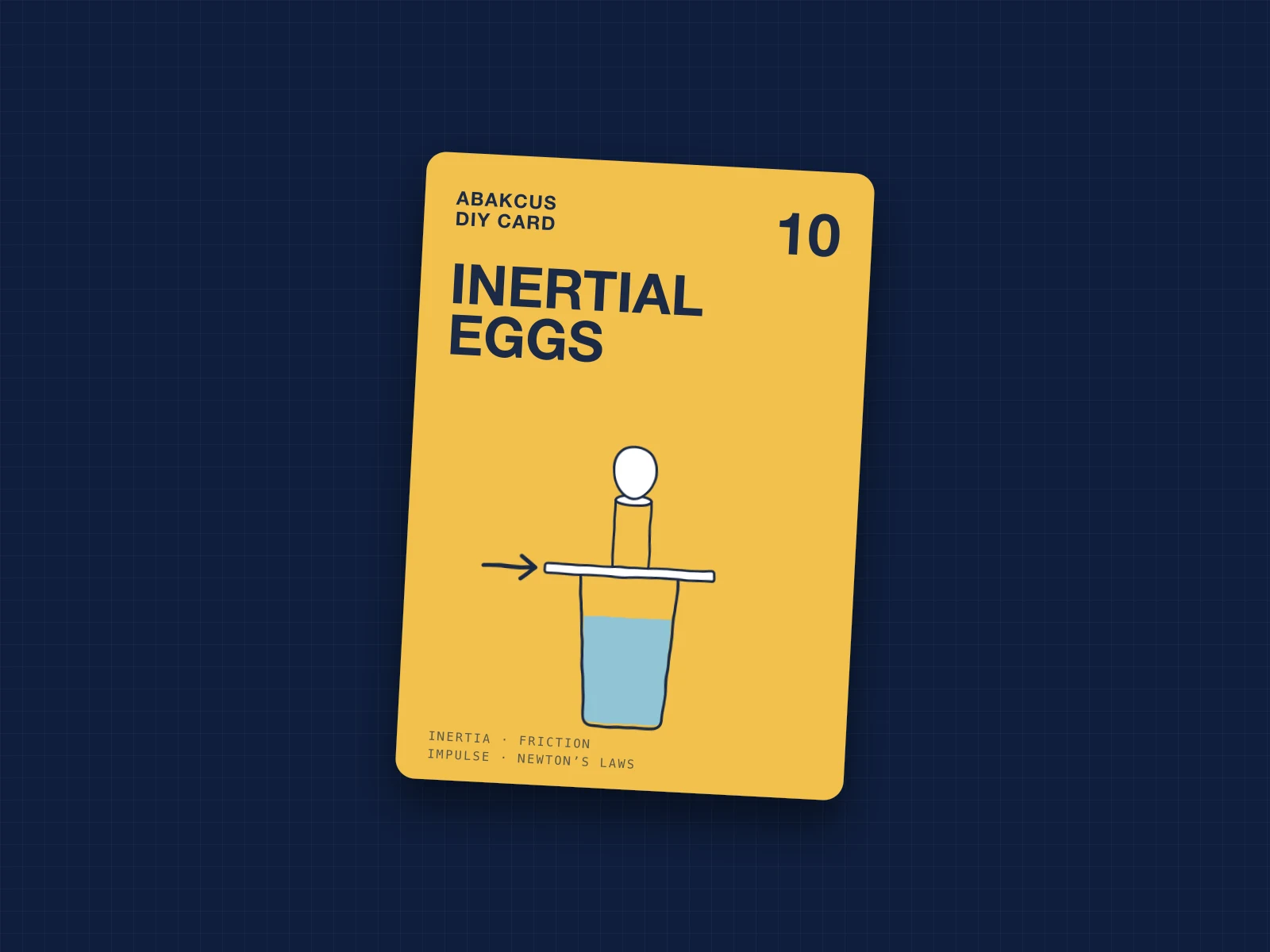
How to Do the Egg Drop Inertia Trick: Newton’s First Law
Knock a tray out from under an egg and the egg drops straight down into a glass of water. The trick is speed, not strength, and the egg’s weight turns out not to matter at all.
Open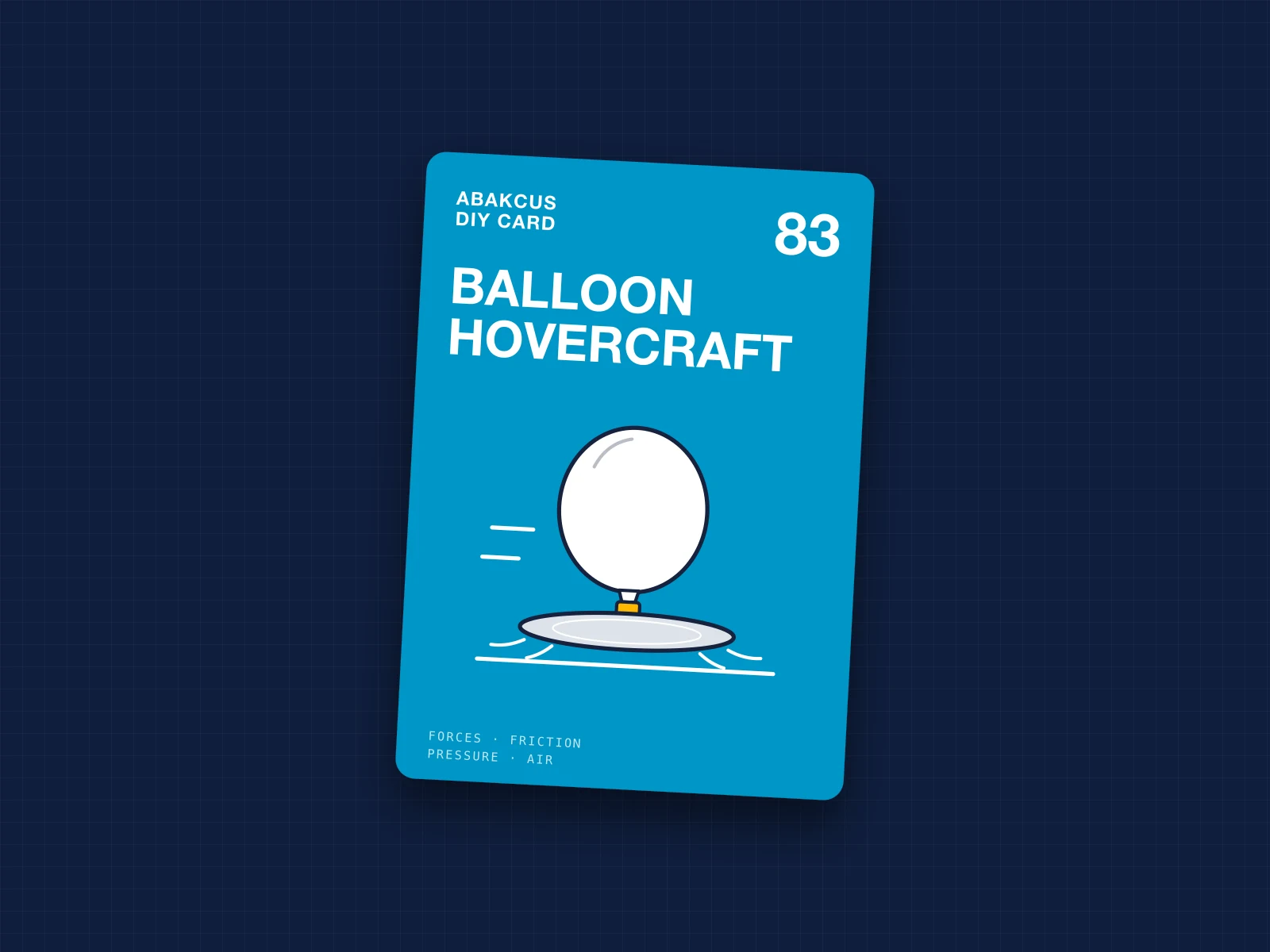
How to Make a Balloon Hovercraft From an Old CD
An old CD, a bottle cap and a balloon. Open the cap and the disc lifts a hair’s breadth off the table, then glides away at the faintest touch.
Open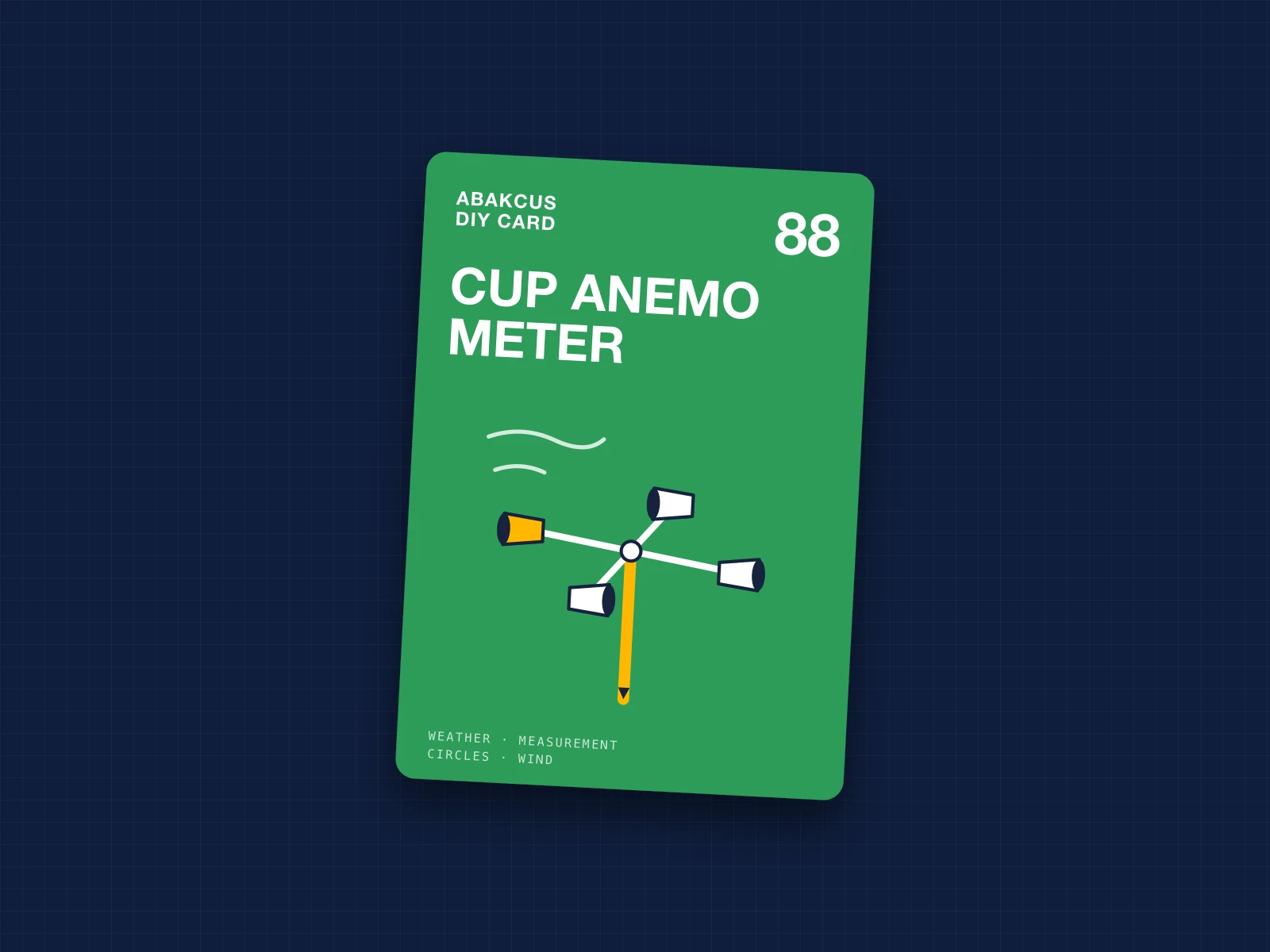
How to Make a Cup Anemometer to Measure Wind Speed
Five paper cups, two straws and a pencil. Set it spinning in the breeze, count the turns for thirty seconds and work out how fast the wind is blowing.
Open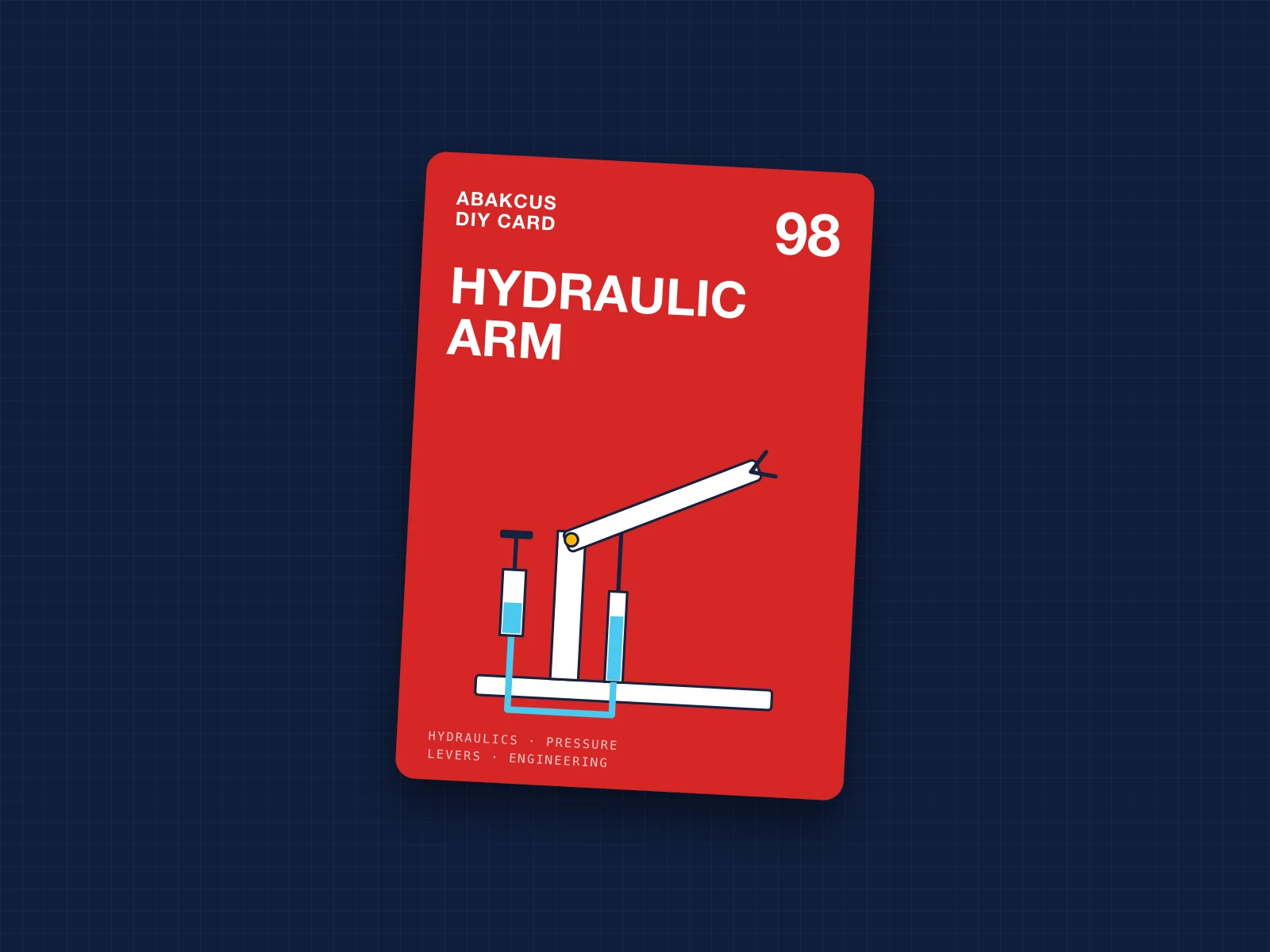
How to Make a Hydraulic Arm With Syringes and Water
A cardboard arm, four syringes and a tube of coloured water. Push one plunger and the arm lifts: a tiny digger driven by water pressure.
Open