
DIY · Card 98 · Engineering · Pressure
A cardboard arm, four syringes and a tube of coloured water. Push one plunger and the arm lifts, the claw closes, and you are driving a tiny digger with nothing but water pressure.
01The brief
Push here. It moves over there.
F ⁄ A
pressure: the same everywhere in the water
≈ 1.7×
the force when a 10 ml syringe pushes a 20 ml one
1795
when Joseph Bramah patented the hydraulic press
Fill a tube with water and put a plunger at each end. Push one, and the other moves at once, as if they were joined by a solid rod. But the tube can bend round corners, and the plungers can be different sizes.
That is hydraulics, and it moves diggers, brakes and aeroplanes. You have met water pressure before in the Cartesian diver and lifted water with the Archimedes screw; now make it do the lifting.
02Kit
Syringes, tubing and a cardboard box.
Tick off what you have
0 of 5 ready
03Method
Cut, pivot, fill, fix, then lift.
Step 1 of 8 · Minute 0
You need four 10 ml syringes (no needles), about 1 m of clear plastic tubing that fits their tips, a cardboard box, split pins, cable ties or strong tape, glue, scissors and water with a little food colouring.
The arm feels spongy and bounces.
Why
There is air in the tube.
Fix
Take the tube off one syringe under water, push out the bubbles and refit it while it’s still submerged.
Water leaks at the joints.
Why
The tube is loose on the syringe tip.
Fix
Use narrower tubing, or wrap the joint tightly with tape or a small cable tie.
The plunger pushes but the arm doesn’t lift.
Why
The syringe is fixed too close to the pivot, or the card is bending.
Fix
Move the plunger’s fixing point a little further from the pivot, and double up the card.
04Pressure
Pressure is force spread over an area. Push on a plunger and you raise the pressure of all the water in the tube by the same amount, right up to the other plunger. Try different syringes, and see what an air bubble does:
Syringe you push
Syringe that lifts
Pressure
121 kPa
Lifting force
35 N
Lift plunger moves
1.73 cm
Stroke lost to air
0.00 cm
Push a small syringe into a big one and the big one pushes harder, by the ratio of the plunger areas, but moves less. Force × distance stays the same on both sides: you never get more work out than you put in. Air spoils it: it squashes before the water moves, and the arm feels spongy.
The arm itself is a lever. Where you fix the syringe changes everything:
Weight of the load
0.98 N
Syringe must push
4.9 N
Tip moves per cm of plunger
5.0 cm
Fix the syringe close to the pivot and the tip swings a long way for a short push, but the syringe has to push hard. Move it out and the push gets easier, but the arm barely moves. Real diggers make the same trade. (A rough model: it assumes the syringe pushes at right angles to the arm.)
05The big idea
Trade distance
for force.
Levers, pulleys, gears, ramps and hydraulics all do the same deal. You can push gently over a long distance and get a strong push over a short one, or the other way round. What you can never do is get more work out than you put in.
Hydraulics are special only because the ‘rod’ is a liquid. It can bend round corners, split to many places and carry huge forces down a thin pipe, which is why the biggest machines on Earth run on it.
06The math
1 · Pascal
F₁ ⁄ A₁ = F₂ ⁄ A₂
Same pressure on both plungers.
2 · Same water
A₁ s₁ = A₂ s₂
The volume pushed in equals the volume pushed out.
3 · The lever
F × a = W × L
Load W at L from the pivot, syringe at a.
A 10 ml syringe has a barrel about 14.5 mm across, so its plunger area is π × 0.725² ≈ 1.65 cm². A 20 ml barrel is about 19 mm across, about 2.9 cm². Push the small one with 20 N and the pressure is about 120 kPa; the big plunger pushes with 20 × 2.9 ⁄ 1.65 ≈ 35 N. But push the small one 3 cm and the big one moves only 3 × 1.65 ⁄ 2.9 ≈ 1.7 cm. Multiply: 20 × 3 = 60 and 35 × 1.7 ≈ 60. The same work.
The lever does the opposite trade. With the syringe 5 cm from the pivot and a 100 g load at 25 cm, the syringe must push 0.98 × 25 ⁄ 5 ≈ 4.9 N, five times the load’s weight, but every centimetre of plunger swings the tip 5 cm.
07Real life
From your car’s brakes to a spider’s legs.
Diggers
An excavator’s arm is your arm made of steel: oil-filled cylinders push its boom, its stick and its bucket, each worked by a lever in the cab.
Car brakes
Your foot pushes a small piston; brake fluid carries the pressure to bigger pistons at each wheel, which squeeze the brake pads hard enough to stop a tonne of car.
Garage lifts
A hydraulic jack lets one person lift a car. Many pumps of a small piston slowly push up one big piston: small force, long distance, turned into big force, short distance.
Tower Bridge
When London’s Tower Bridge opened in 1894, its roadways were raised by hydraulic power: steam engines pumped water under pressure into big storage tanks that drove the lifting engines.
Spider legs
Spiders have no muscles to straighten some of their leg joints. They pump body fluid into their legs, and the pressure pushes them straight: a hydraulic animal.
Aircraft
Big airliners move their flaps, rudders and landing gear with hydraulics, because a thin pipe of fluid can carry a huge force a long way.
1795
In the 1600s the French mathematician Blaise Pascal showed that pressure on a trapped liquid is passed on equally in every direction. More than a century later, the Yorkshire-born inventor Joseph Bramah, already famous for a lock nobody could pick, put the idea to work.
In 1795 he patented the hydraulic press: a small pump piston forcing water into a cylinder with a much larger piston. A worker on the pump handle could press with the force of many tons. Bramah’s press shaped industry, and every syringe arm, car jack and digger since works the same way.
08Is and isn’t
Hydraulics give you free energy.
They trade. A bigger force always comes with a shorter movement. Force × distance going in equals force × distance coming out, minus a little lost to friction.
Water can’t be squashed at all.
It can, just very slightly: about 0.005 % for each extra atmosphere of pressure. For a syringe arm, that is as good as nothing.
Air works just as well.
Air squashes a lot before it pushes back, so an air-filled arm is spongy and bouncy. Machines that use air, called pneumatics, are built for speed, not precision.
The pressure is bigger in the bigger syringe.
The pressure is the same everywhere in the water. The bigger plunger pushes harder only because it has more area for that pressure to push on.
09Go further
A
Swap the sizes
Push a 10 ml syringe into a 20 ml one. Is the arm stronger? Is it slower? Measure both.
B
Add a turntable
Mount the whole tower on a paper plate pinned at the centre, and drive it round with a third syringe pair.
C
Air versus water
Fill one pair with air and one with water. Lift the same load with each. Which one holds it steady?
D
Weigh the push
Press your syringe down on a kitchen scale while the arm lifts a load. Compare your push with the weight lifted.
E
Build a scissor lift
Cross craft sticks into a lazy-tongs shape and push its bottom joint with a syringe. How far does the top rise?
10Questions
Build a cardboard arm that pivots on a tower. Join two syringes with a water-filled tube, fix one under the arm and hold the other. Push your syringe and the water pushes the other plunger out, lifting the arm. A second syringe pair can work a claw.
Water hardly squashes, so pressure you put on it at one end is passed on to every part of it, including the plunger at the other end. That is Pascal’s principle. The pressure pushes the far plunger out and moves the arm.
Air squashes before it pushes, so an air-filled arm feels spongy and bounces. Water passes the push on almost at once, which gives smooth, precise control.
Push a small syringe into a big one and the big one pushes harder, by the ratio of the plunger areas, but it moves less. Force times distance is the same on both sides, so you never get extra energy.
Joseph Bramah, an English inventor, patented the hydraulic press in 1795. It used Pascal’s principle, described by Blaise Pascal more than a century earlier.
Safety · Use syringes without needles only. A grown-up should pierce the holes in the card. Work over a tray, as food colouring stains.
All DIY cards →Keep wandering
A few more pieces in the same spirit — math, design, and slow attention.
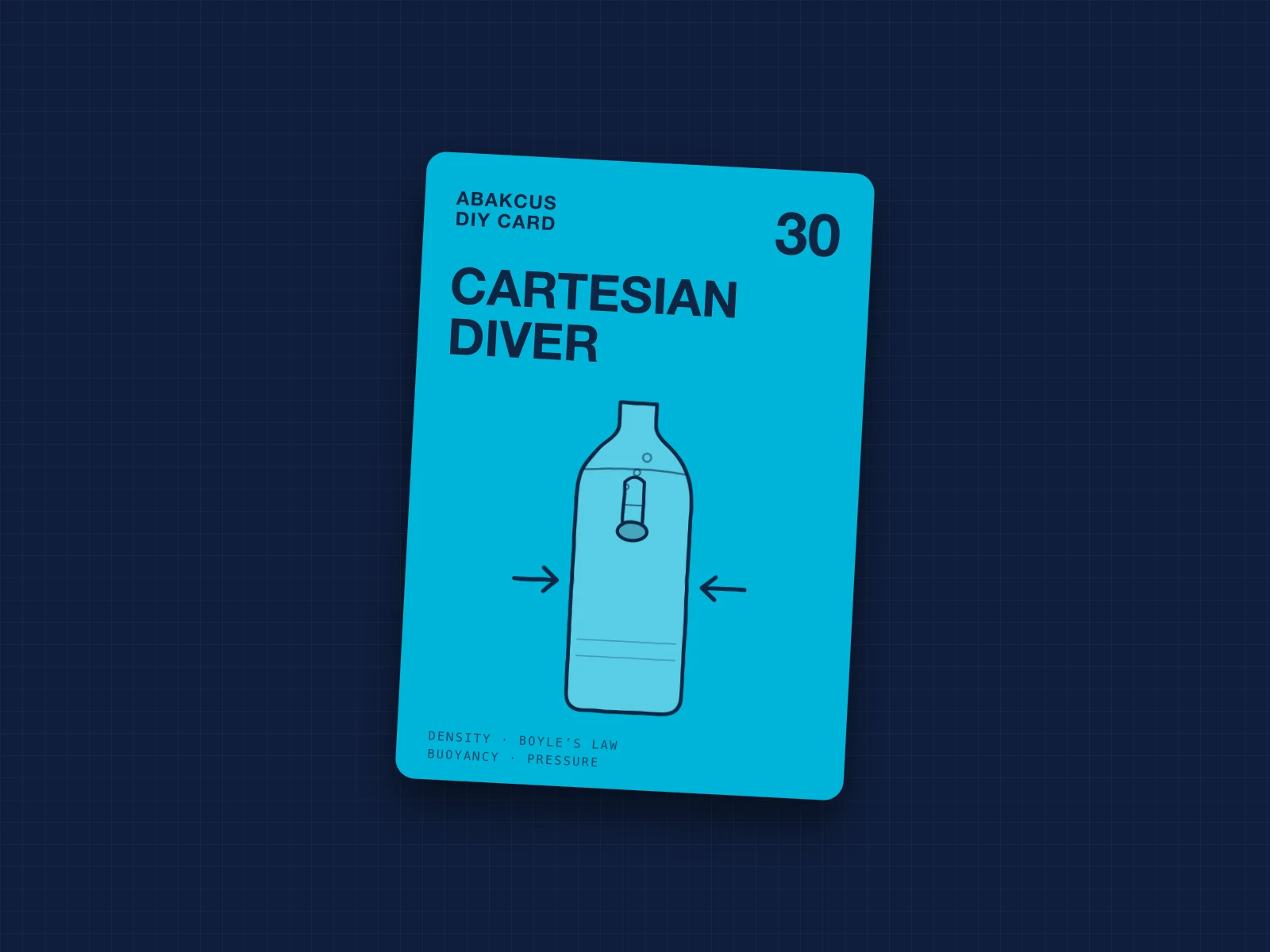
How to Make a Cartesian Diver With a Straw and a Bottle
A scrap of straw, a pinch of plasticine and a bottle of water. Squeeze the bottle and the diver sinks; let go and it floats back up, without ever being touched.
Open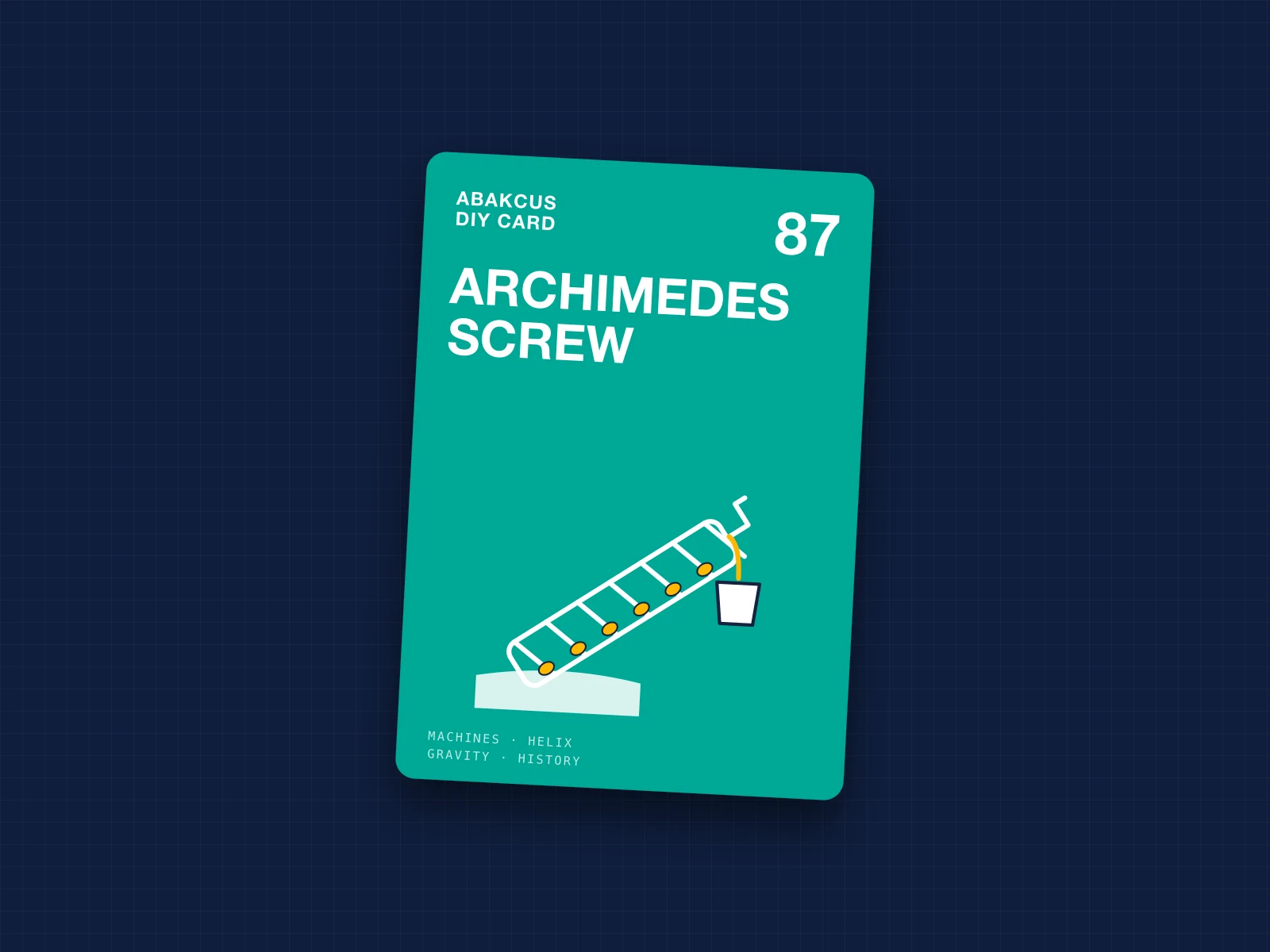
How to Make an Archimedes Screw That Lifts Water
A plastic bottle wrapped in a spiral of tubing. Dip one end in water, turn it, and water climbs up and pours out at the top, though not a drop flows uphill.
Open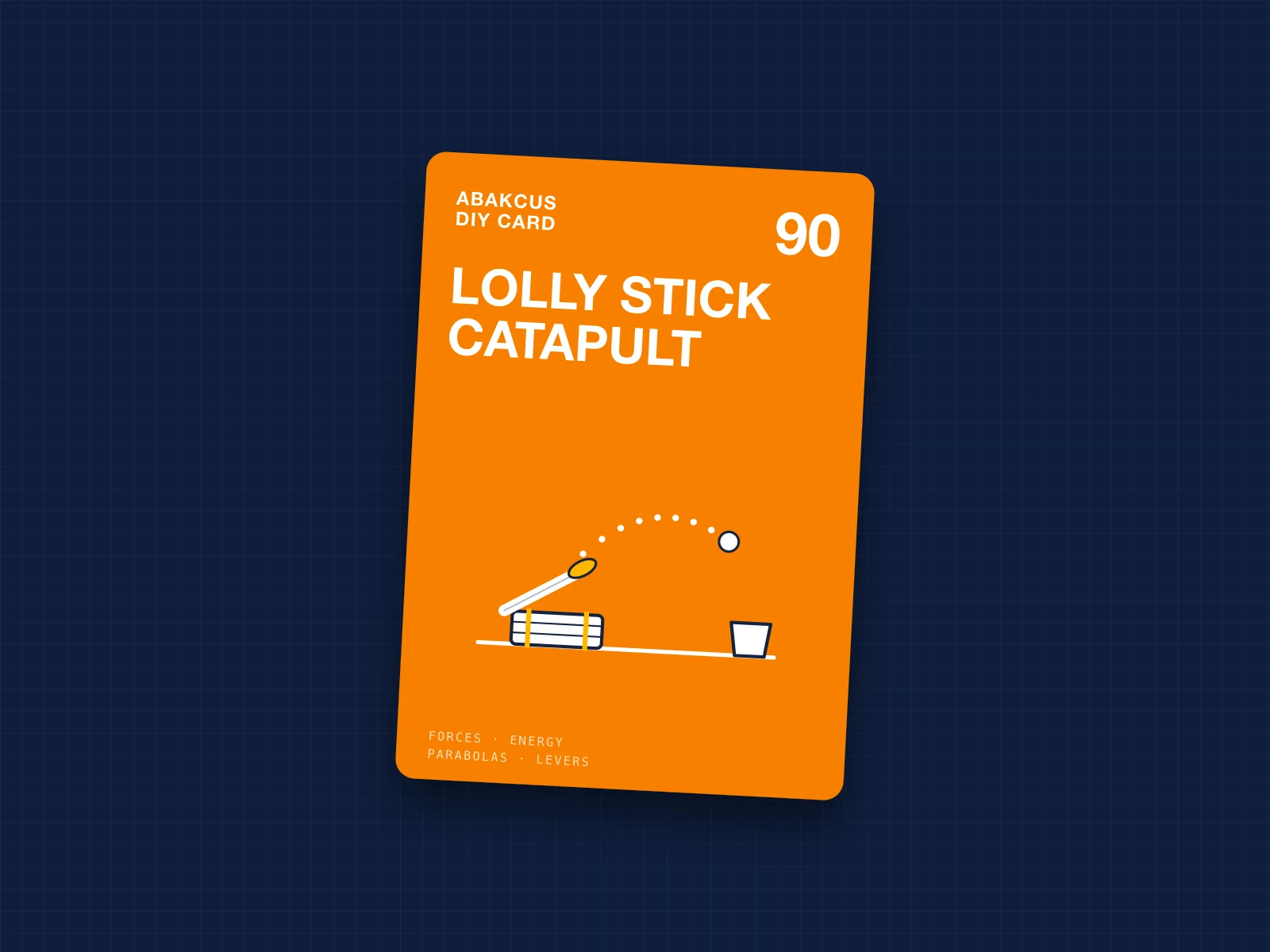
How to Make a Popsicle Stick Catapult That Hits the Target
Nine lolly sticks, a few rubber bands and a plastic spoon. Press, let go, and a marshmallow sails across the room on a perfect parabola, straight into a cup.
Open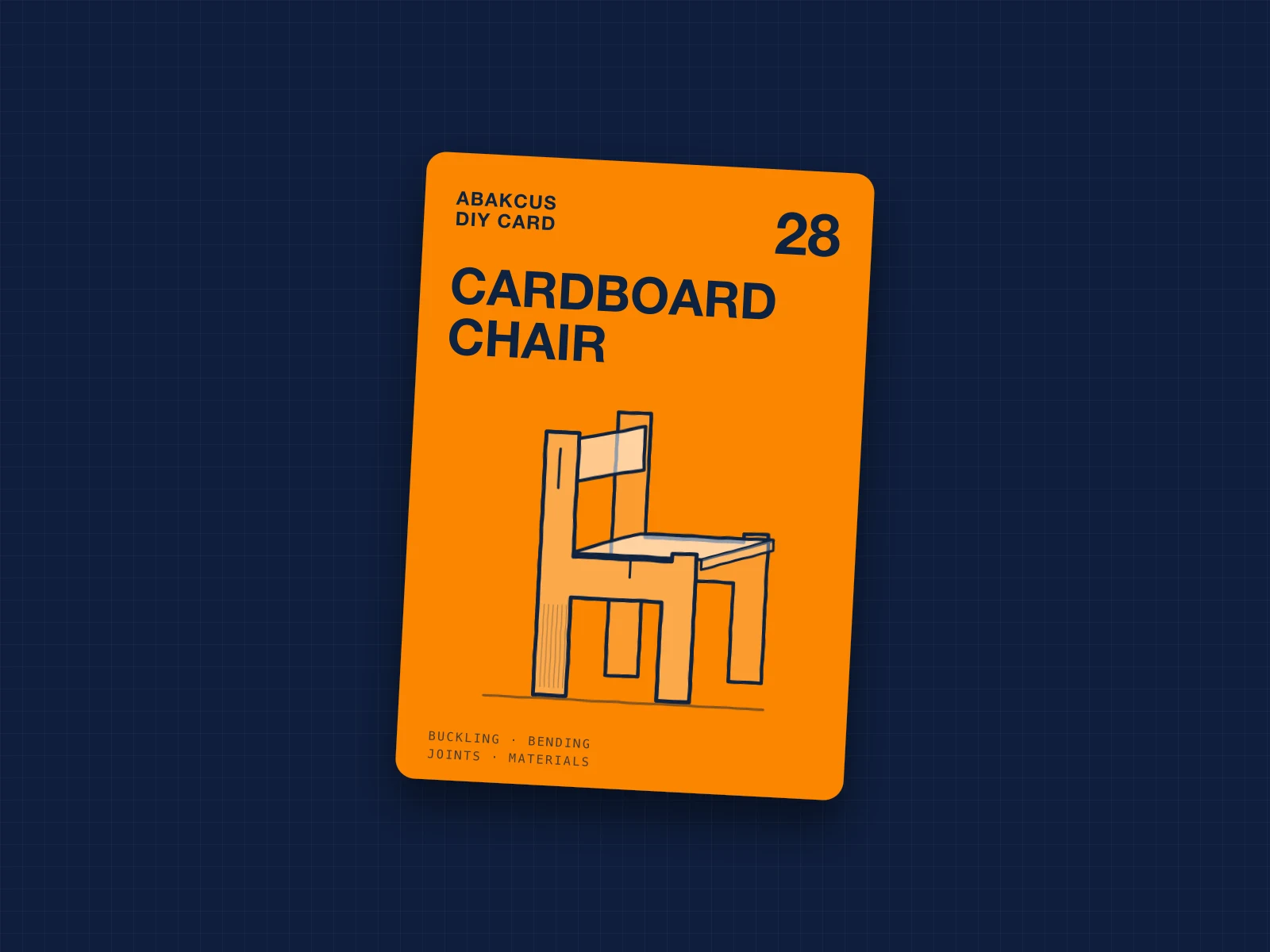
How to Make a Cardboard Chair That Holds Your Weight
Nothing but cardboard: no glue, no tape, no screws. Just slots, folds and the flutes the right way up, and a chair that holds a grown-up.
Open
How to Make a Balloon Hovercraft From an Old CD
An old CD, a bottle cap and a balloon. Open the cap and the disc lifts a hair’s breadth off the table, then glides away at the faintest touch.
Open
How to Make a Barometer With a Jar and a Balloon
Stretch a balloon over a jar, glue on a straw, and the straw tips up and down as the air presses harder or softer. It is a real barometer, with one catch every homemade one shares: it is also a surprisingly good thermometer.
Open