
DIY · Card 25 · Engineering · Electromagnetism
A battery, a magnet and a bent piece of copper wire. No coils, no switches, no moving parts but the wire itself, and it spins on its own.
01The brief
Build a working electric motor from three parts, and find out what makes it turn.
3
parts: a battery, a magnet and a piece of wire. Nothing else
~4 A
flowing through the wire, a rough estimate: nearly a short circuit
1821
the year Michael Faraday first made a wire spin round a magnet
Every electric motor, from the one in a phone’s buzzer to the ones in a high-speed train, runs on one effect: a wire carrying a current, in a magnetic field, is pushed sideways. This card strips a motor down to just that. The battery makes the current, the magnet makes the field, and the wire is free to move.
It is called a homopolar motor, and it is the oldest kind there is. It is also a good place to meet the idea that tied electricity, magnetism and in the end light itself together, the thread that runs through the speed of light card too. Build it in twenty minutes; spend longer working out why it turns.
02Kit
Three parts. The magnet is the one to get right: it must be a strong neodymium disc.
Tick off what you have
0 of 4 ready
03Method
Stand the battery on the magnet, shape the wire, balance it on top, then turn the magnet over and watch it reverse.
Step 1 of 8 · Minute 0
You need a fresh AA alkaline battery, a neodymium disc magnet about as wide as the battery, and 20 to 25 cm of bare copper wire about 1 mm thick. Pliers help.
Nothing happens at all.
Why
No circuit: coated wire, a coated magnet, or ends that don’t touch.
Fix
Sand the wire’s ends and the pivot shiny. Check the magnet conducts: most are nickel-plated, but some have a plastic coating.
The wire falls off.
Why
A shallow pivot or a lopsided shape.
Fix
Make the dip deeper and the two sides the same. Hang it from the pivot on a finger to check it balances.
It twitches but won’t keep spinning.
Why
The ends grip the magnet, or the battery is flat or hot.
Fix
Open the ends so they only brush the magnet. Let the battery cool, or use a fresh one.
04Physics
Follow the current. It leaves the battery’s + terminal, runs down both sides of the wire, crosses into the magnet at its rim, and flows through the magnet back into the battery’s − end. Near the magnet, the wire and the magnet are full of magnetic field.
Moving charges in a magnetic field are pushed sideways, at right angles to both the way they are moving and the way the field points. It is called the Lorentz force. Around the magnet, the geometry is the same on every side, so the push on the wire always points the same way round the battery: not towards the magnet or away from it, but around it. The wire turns, and keeps turning.
Reverse the current, by turning the battery over, or reverse the field, by turning the magnet over, and the push reverses. Reverse both and it is back where it started. Try it:
Current
4.2 A
Push on wire
34 mN
Heat
6.3 W
Spin
as at start
Turn either the magnet or the battery over and the wire spins the other way; turn both over and it goes back. The push is tiny, about the weight of a few paper clips, but the wire weighs only a gram or two and pivots on a point, so it is enough. Nearly all the battery’s power ends up as heat, which is why the cell gets warm in seconds.
05The big idea
Current × field
= motion.
Electricity and magnetism look like two different things: one flows in wires, the other sticks things to the fridge. Put them together and you get a force out of nowhere, at right angles to both, with no contact and no fuel but the current.
That one fact is how the modern world moves. Every fan, pump, lift, drill and electric car is a cleverer arrangement of exactly what is spinning on your battery.
06The math
1 · The Lorentz force on a wire
F = I L × B
Current I along a length L of wire in a field B. The cross product makes the force perpendicular to both.
2 · Ohm’s law
I = V / R
Current is voltage divided by the resistance round the whole loop: battery, contacts and wire.
3 · Heat
P = I² R
Power turned into heat in a resistance R carrying current I.
Estimate it. A fresh AA gives 1.5 V; take the battery’s inside resistance and the two sliding contacts together as about 0.35 Ω, and the wire as almost nothing. Then I ≈ 1.5 / 0.35 ≈ 4 A. In a field of about 0.4 T, on 2 cm of wire, F = BIL ≈ 0.4 × 4 × 0.02 ≈ 0.03 N: the weight of about three grams. That is plenty for a wire of a gram or two balanced on a point. Meanwhile P = I²R ≈ 16 × 0.35 ≈ 6 W goes into heat, which is why the battery gets hot so fast.
The direction comes from the cross product. For two arrows, I × B points at right angles to both, and which of the two right angles is fixed by the right-hand rule: point your fingers along I, curl them towards B, and your thumb gives the force. If I and B are parallel, there is no force at all. Pick directions and check:
Current I flows
Magnetic field B points
Force F = I × B points out, at right angles to both the current and the field.
Swap the current and the field and the force flips: in a cross product, order matters.
07Real life
From the speaker in your phone to the lights in the polar sky, the same sideways push of a magnetic field on moving charge.
Loudspeakers
Behind every speaker cone is a coil of wire sitting in the gap of a strong magnet. The music arrives as a current that changes direction thousands of times a second, and the same push that spins your wire drives the coil, and the cone, in and out.
Electric cars and trains
An electric motor is many wires in a magnetic field, arranged so the pushes all turn one shaft. They convert most of the electrical energy they take in into motion, which is why electric trains and cars are so efficient.
Hard drives
The arm that swings a hard drive’s read head across the spinning disc is driven by a voice-coil motor: a flat coil between magnets, pushed one way or the other by the Lorentz force, thousands of times a second.
Power stations
Run a motor backwards and it becomes a generator: move a wire through a magnetic field and a current flows in it. Faraday found this too, in 1831, and almost all of the world’s electricity is still made that way.
Auroras
Charged particles streaming from the Sun are pushed sideways by the Earth’s magnetic field, the same Lorentz force, and spiral along the field lines towards the poles, where they make the air glow.
Old televisions
In a tube television, a beam of electrons was steered across the screen by coils of wire round the neck of the tube. Their magnetic field pushed the beam sideways, line by line, many times a second.
1821
In 1820, Hans Christian Ørsted noticed that a wire carrying a current made a compass needle swing. Within a year, everyone was trying to understand it. On 3 September 1821, in the basement laboratory of the Royal Institution in London, Michael Faraday stood a magnet upright in a bowl of mercury and hung a wire so that its end dipped into the liquid. When he passed a current through, the wire swung round and round the magnet.
Faraday called it electromagnetic rotation. It did no useful work, but it was the first time electricity had been turned into continuous motion: the first electric motor, and a homopolar one, just like yours. Ten years later he turned the idea round, spinning a copper disc between the poles of a magnet to make a current: the first generator. Like the straw and the potato, it is a reminder that the biggest ideas often fit on a kitchen table.
08Is and isn’t
The magnet pulls the copper wire round.
Copper isn’t magnetic: hold the wire against the magnet without the battery and nothing happens. The push is on the current flowing through the wire, not on the copper itself.
A motor needs coils and a commutator.
Most practical motors use them, to turn a lot of current into a lot of torque. But the push itself only needs a current crossing a magnetic field, and this motor has nothing else.
A bigger battery would make a better motor.
More voltage means more current and far more heat, and the speed is limited mainly by friction at the contacts. Lithium and rechargeable cells can deliver dangerous currents into a short circuit like this one.
Once it’s spinning, it could go on for ever.
It is running the battery down the whole time, and fast. Almost all of the battery’s power becomes heat; a fresh AA is drained in minutes of continuous running.
09Go further
A
Shape race
Make three wires: a heart, a rectangle and a spiral. Time ten turns of each. Which shape spins fastest, and why?
B
Count the turns
Film the motor in slow motion on a phone and count turns per second. Then multiply by 60 for revolutions per minute.
C
Stack the magnets
Put two or three magnets under the battery instead of one. Does a stronger field mean a faster spin?
D
The rolling motor
A battery with a magnet on each end, on kitchen foil, is a motor on wheels. Which way does it roll, and what reverses it?
E
Motor hunt
Count the electric motors in your home: fans, fridges, phones that vibrate, toothbrushes. Most homes have dozens.
10Questions
Stand an AA alkaline battery, negative end down, on a neodymium disc magnet. Bend 20 to 25 cm of bare copper wire into a symmetrical heart with a small dip in the middle. Balance the dip on the battery’s + terminal so the wire’s ends lightly touch the sides of the magnet, and it spins.
Current flows from the battery’s top, down the wire, through the magnet and back into the battery. A current crossing a magnetic field feels a sideways push, the Lorentz force, at right angles to both. Around the magnet, that push always points the same way round, so the wire keeps turning.
The motor is very nearly a short circuit: there is almost nothing to limit the current but the battery’s own resistance and the contacts. Several amps flow, and most of the battery’s power becomes heat. Run it for ten seconds at a time and use alkaline cells, never lithium or rechargeable ones.
A motor in which the current always flows the same way and never has to be switched. Ordinary DC motors use coils and a commutator to reverse the current every half turn; a homopolar motor needs neither, because the force on its wire points the same way round all the time.
Michael Faraday made the first device to turn electric current into continuous motion on 3 September 1821, at the Royal Institution in London: a wire that circled a magnet standing in a cup of mercury. Practical motors that could do useful work followed in the 1830s.
Safety · This motor is a short circuit: the wire and battery get hot quickly. Run it ten seconds at a time, use only alkaline AA cells, never lithium or rechargeable ones, and never put the battery in a pocket with the magnet or wire. Neodymium magnets snap together hard enough to pinch skin and are dangerous if swallowed: keep them away from small children, and from pacemakers, cards and phones.
All DIY cards →Keep wandering
A few more pieces in the same spirit — math, design, and slow attention.
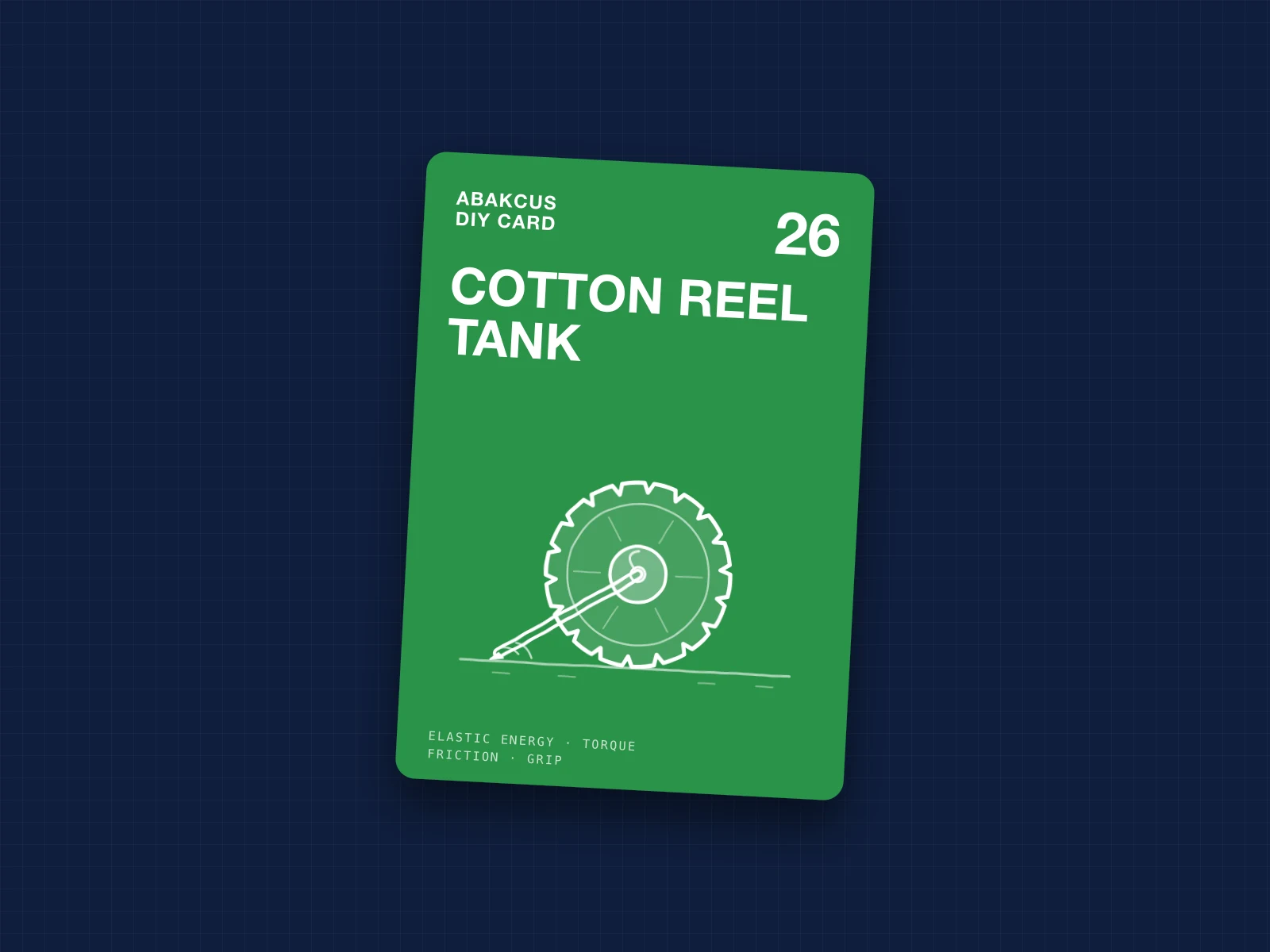
How to Build a Cotton Reel Tank (Thread Spool Tank)
An empty cotton reel, a rubber band, a pencil and a slice of candle. Wind it up and it crawls across the floor and over books, slowly giving back every turn you put in.
Open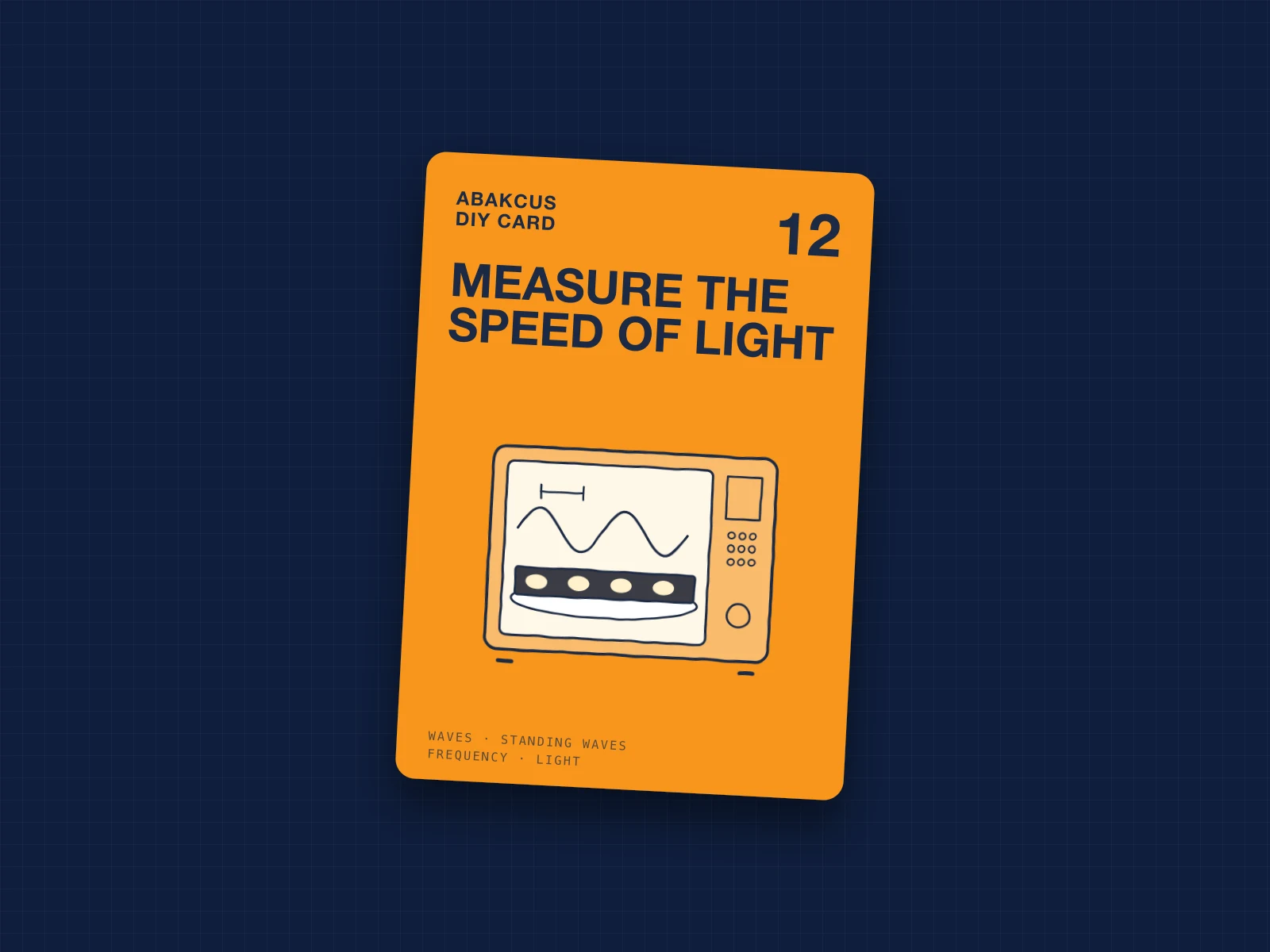
How to Measure the Speed of Light With Chocolate
Take the turntable out of a microwave, heat a bar of chocolate for twenty seconds, and measure the gap between the melted spots. Multiply by the number on the back of the oven and you get the speed of light, give or take a few percent.
Open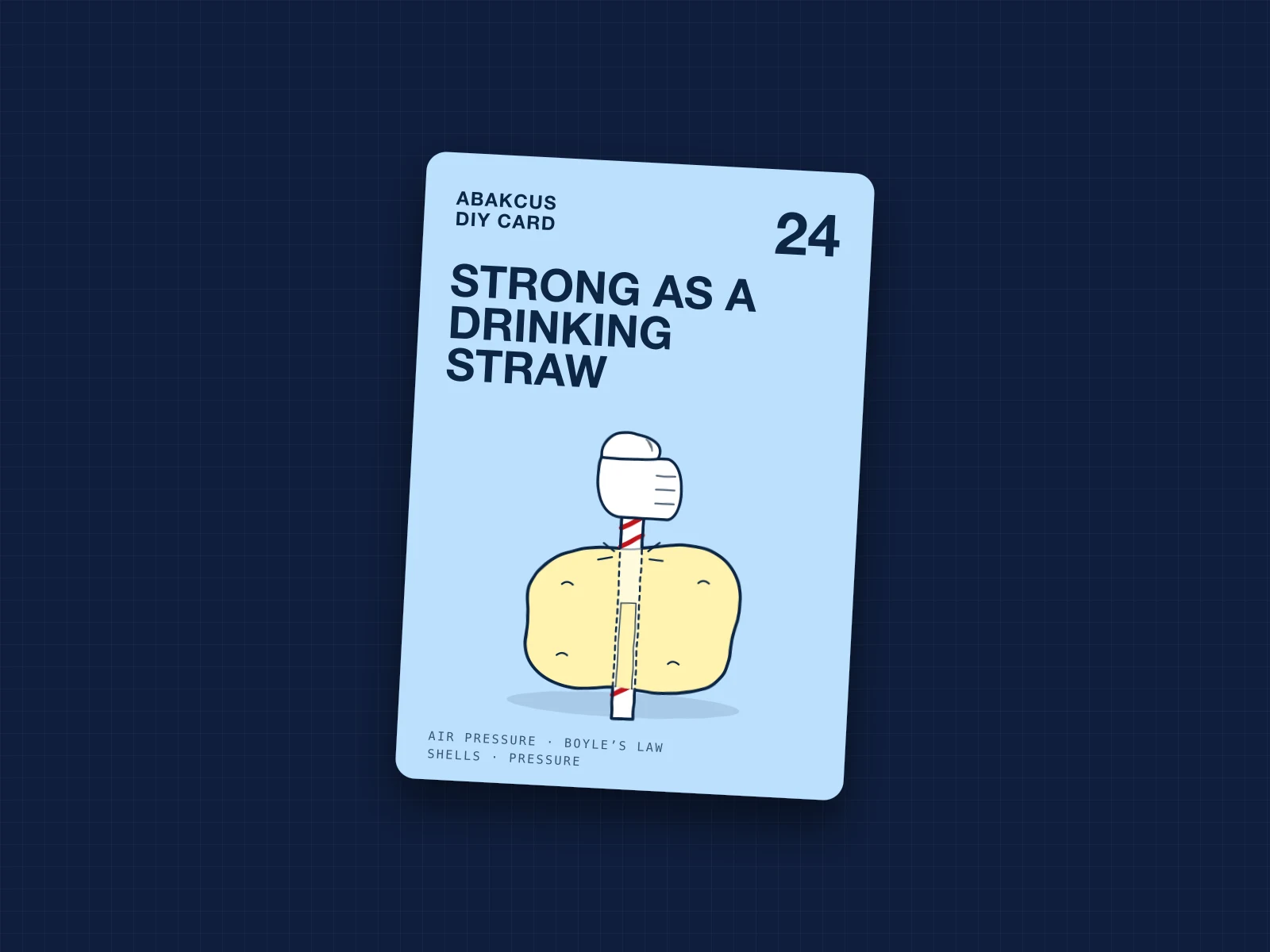
How to Push a Straw Through a Raw Potato
Stab a potato with a plastic straw and the straw crumples. Put your thumb over the top first and it goes straight through. The air trapped inside can’t get out, so the straw can’t cave in.
Open
How to Build a Spaghetti Bridge (and Why Pasta Buckles)
One strand of dry spaghetti can hang five kilograms from its end, then buckles under less than two hundred grams pushed along it. A good bridge pulls where pasta is strong and keeps the pushes short.
Open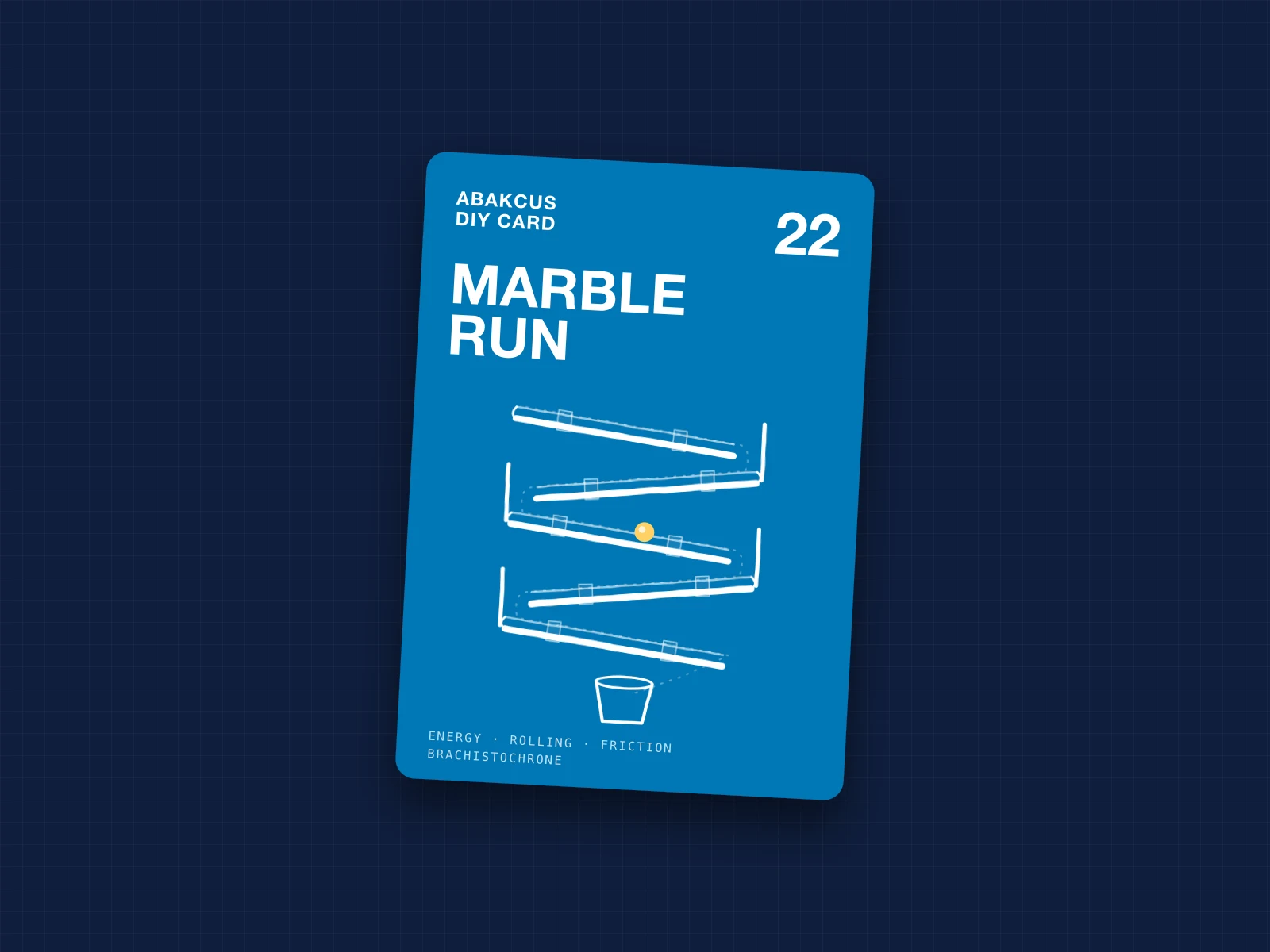
How to Build a Marble Run From Cardboard Tubes
Split tubes, a wall and some tape: a zigzag run that keeps a marble busy for half a minute on a one-metre drop it could fall in less than half a second. Height is the fuel; the trick is spending it slowly.
Open
How to Clean a Penny: Cola, Vinegar and Salt Compared
Leave a dull penny in cola overnight and it comes out shining. Drop it in vinegar with a pinch of salt and it shines in seconds. The difference is one ingredient, and the same chemistry turned the Statue of Liberty green.
Open