
DIY · Card 71 · Design · Electricity
If the cords have to show, they might as well look good. A few rolls of washi tape and some leather scraps turn a grey extension lead into a cheerful one, and along the way you meet the helix and the heat hidden in every wire.
01The brief
Make the ugliest thing in the room into a little piece of design.
38 mm
of tape per band: enough to go round any ordinary cord
I²R
the heat a current makes in a wire: double it, four times the heat
0
bands on the plug, socket or any cord that gets warm
Cords are everywhere: behind the desk, along the skirting board, trailing to the lamp. They’re usually grey or black and nobody chose them. Wrapping them in washi tape takes minutes, costs almost nothing, and peels off cleanly when you change your mind.
Two small leather ties keep the spare length tidy. And because this is a cord that carries electricity, it is worth understanding what goes on inside it: why it can warm up, and why a coiled cord is a hot cord. It pairs well with the potato battery and the simple electric motor.
02Kit
A cord, some tape and a few scraps of leather.
Tick off what you have
0 of 5 ready
03Method
Unplug first, wrap the bands, then make the leather ties.
Step 1 of 8 · Minute 0
You need an extension cord or any cable that has to stay on show, a few rolls of washi tape, leather scraps, sew-on snaps, a needle and strong thread, paper, scissors, glue and some flat-backed embellishments.
The tape keeps peeling off.
Why
The cord is greasy or dusty, or the pieces are too short.
Fix
Wipe the cord with a damp cloth, let it dry, and make each piece long enough to overlap itself by at least a centimetre.
The snap won’t close.
Why
Both halves are on the same side of the strap.
Fix
Put one half on the front at one end and the other on the back at the other end, so they meet when the strap is wrapped round.
The cord feels warm.
Why
It is carrying too much, or it is coiled up while in use.
Fix
Unplug it, uncoil it fully and unplug the biggest appliance. If it still gets warm, replace the cord. Never cover a warm cord with tape.
04Current and helices
Every appliance draws a current, I = P ⁄ V. The copper wires inside the cord have a tiny resistance, and the current turns some of its energy into heat in them. Usually that heat is too small to notice. Plug in a kettle and a heater together, or leave a long cord coiled up, and it isn’t.
Plug things in and see what the cord has to carry:
3 % of the cord’s limit (10.0 A)
Power drawn
73 W
Current
0.32 A
Heat in the cord
0.01 W
Voltage lost
0.0 V
Fine. The current is I = P ⁄ V = 73 ⁄ 230 = 0.32 A, and the copper turns I²R = 0.01 W of it into heat, spread along 3 m of cord. Heat grows with the square of the current: double the load and the cord warms four times as fast.
Typical ratings for illustration only. Always follow the rating printed on your own cord and appliances.
On the outside, the tape has a geometry of its own. Wrap it in a spiral and you have made a helix:
Tape per metre
1.49 m
Tape in all
4.5 m
15 mm × 10 m rolls
1
Unrolled, the spiral is a straight strip crossing the cord at 48° to its length. Each turn uses √((π × 7)² + 20²) = 29.7 mm of tape: Pythagoras on the flattened cord. The turns just touch.
05The big idea
A helix is
a straight line, rolled up.
Slit a cord’s surface along its length and unroll it flat. The spiral of tape becomes a straight diagonal strip, and its length is just the long side of a right-angled triangle.
That is why screws, springs, staircases and DNA are so simple to describe: wrap a straight line round a cylinder and you get the most useful curve in engineering.
06The math
1 · Current
I = P ⁄ V
Power in watts over the supply voltage.
2 · Heat in the cord
P = I² R
R = ρ × 2L ⁄ A for copper of area A, out and back.
3 · One turn of tape
√((πd)² + p²)
d the cord’s thickness, p the cord per turn.
A 2,200 W kettle on a 230 V supply draws 2200 ⁄ 230 ≈ 9.6 A. Through 3 m of cord with 1.0 mm² copper wires, the resistance is 1.72 × 10⁻⁸ × 6 ⁄ 10⁻⁶ ≈ 0.10 Ω, so the cord turns 9.6² × 0.10 ≈ 9.5 W into heat. Stretched out, that warmth escapes easily; wound tightly on a reel, it builds up.
For the tape, a 7 mm cord is π × 7 ≈ 22 mm round. Wrapping a spiral every 20 mm, each turn uses √(22² + 20²) ≈ 29.7 mm of tape, and a metre of cord takes 50 turns: about 1.5 m of tape per metre.
07Real life
In your genes, your screws, your stairs and on the barber’s pole outside.
DNA
In 1953, James Watson and Francis Crick, using X-ray images made by Rosalind Franklin, showed that DNA is a double helix: two spiral strands wound round each other, like two strips of tape round one cord.
Screw threads
A screw thread is a helix cut into a cylinder. Unwrap it and it is a ramp: turning the screw slides it up that gentle slope, which is why a small twist gives such a strong grip.
Archimedes’ screw
A helix wound inside a tilted tube lifts water as it turns. Described in ancient Greece, it is still used to pump water and move grain and sewage today.
Coiled phone cords
The springy cords on old telephones are helices of cable. A short helix can stretch to many times its length, then pull itself back, so the handset never trails across the floor.
Spiral staircases
Every step of a spiral staircase sits on a helix round a central column. Walk up one, and your path traced on the unrolled wall would be a straight sloping line.
Barber’s poles
The stripes on a turning barber’s pole are helices. As it spins, the stripes seem to travel endlessly upwards, though nothing actually moves up at all.
360°
Wind a cable round your hand and elbow and every loop puts a full 360° twist into it. Do that thirty times and you have thirty twists waiting to tangle the moment you uncoil it.
Stage, studio and film crews use the over-under method instead: one loop wound normally, the next with the cable turned the other way. Each loop’s twist cancels the one before, so the cable lies flat, throws out straight across a stage, and lasts years longer.
08Is and isn’t
Washi tape can patch a damaged cord.
Never. It is paper with a light glue and gives no electrical protection. A cracked or cut cord must be replaced.
If a cord has four sockets, you can plug in four of anything.
The cord has one current limit for everything plugged into it. A kettle and a heater together can overload it even with sockets to spare.
A neatly coiled cord is the safest.
For storage, yes. In use, a coil traps heat between its turns. Reels and bundles must be fully unwound before powering anything heavy.
A thick cord carries more power.
What matters is the copper inside, not the plastic outside. The rating printed on the cord, in amps or watts, is the only reliable guide.
09Go further
A
Barber-pole stripes
Wrap two tapes in a double spiral, like DNA. How does the tape needed change when you halve the pitch?
B
Unroll a helix
Draw a diagonal line across a sheet of paper and roll it into a tube. The straight line becomes a perfect spiral.
C
Read the labels
Find the power rating in watts on everything plugged in near you. Add them up for each extension lead.
D
Over-under coiling
Learn the roadie’s over-under method and coil a long cord with it. Does it throw out flat without twisting?
E
A colour code
Give every charger in the house its own tape pattern, so no one ever unplugs the wrong one again.
10Questions
Unplug the cord, wipe it clean and let it dry. Cut washi tape into pieces about 1.5 inches (38 mm) long and wrap them round the cord at irregular spacing, overlapping some. Keep the tape off the plug and socket ends.
On the outer sheath of an undamaged cord that doesn’t get warm, yes: the tape is purely decorative and the cord’s own insulation does the safety work. Never tape over plugs, sockets, chargers or damaged cords, and never use washi tape as a repair.
Cut leather strips about 1 inch wide and 5 to 7 inches long with rounded ends. Sew half a snap on the front 1.5 inches from one end and the matching half on the back 1.5 inches from the other. Wrap it round a coiled cord and snap it shut.
The copper wires have a small resistance, and current flowing through them turns power into heat at a rate of I²R. Doubling the current makes four times the heat. If the cord is coiled, the heat is trapped between the turns, which is why reels must be fully unwound for heavy loads.
For a spiral, each turn uses √((πd)² + p²) of tape, where d is the cord’s thickness and p the length of cord per turn. A 7 mm cord wrapped every 20 mm needs about 1.5 m of tape per metre of cord. Bands use far less.
Safety · Always unplug a cord before decorating it. Tape only the outer sheath of undamaged cords, never plugs, sockets, chargers or anything that gets warm. Don’t run cords under rugs, and fully unwind reels before using them for heaters, kettles or other heavy loads.
All DIY cards →Keep wandering
A few more pieces in the same spirit — math, design, and slow attention.
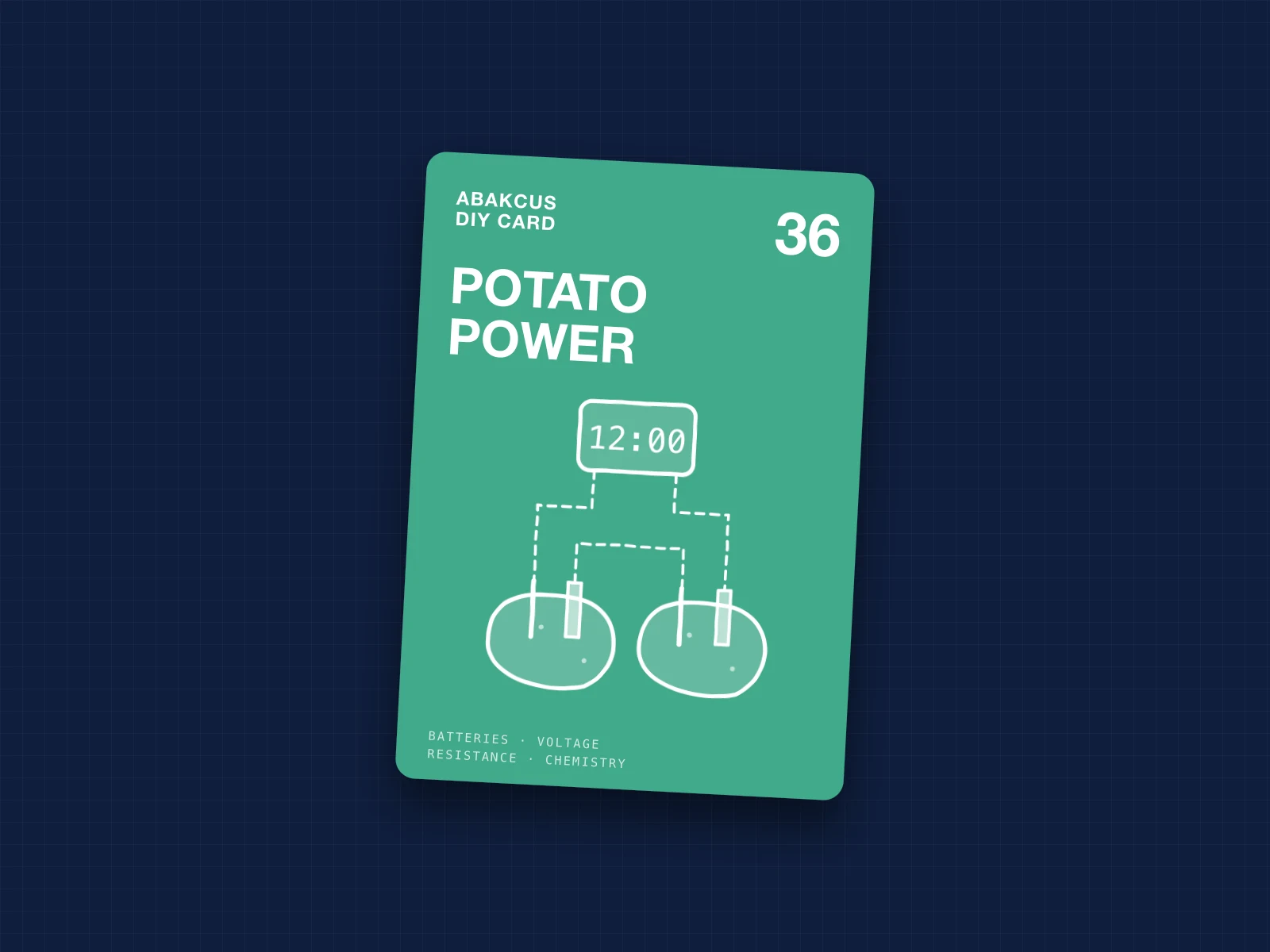
How to Make a Potato Battery That Powers a Clock
Two potatoes, two nails and two scraps of copper. Wire them in a row and a clock with no battery starts ticking, powered by metal slowly dissolving inside a vegetable.
Open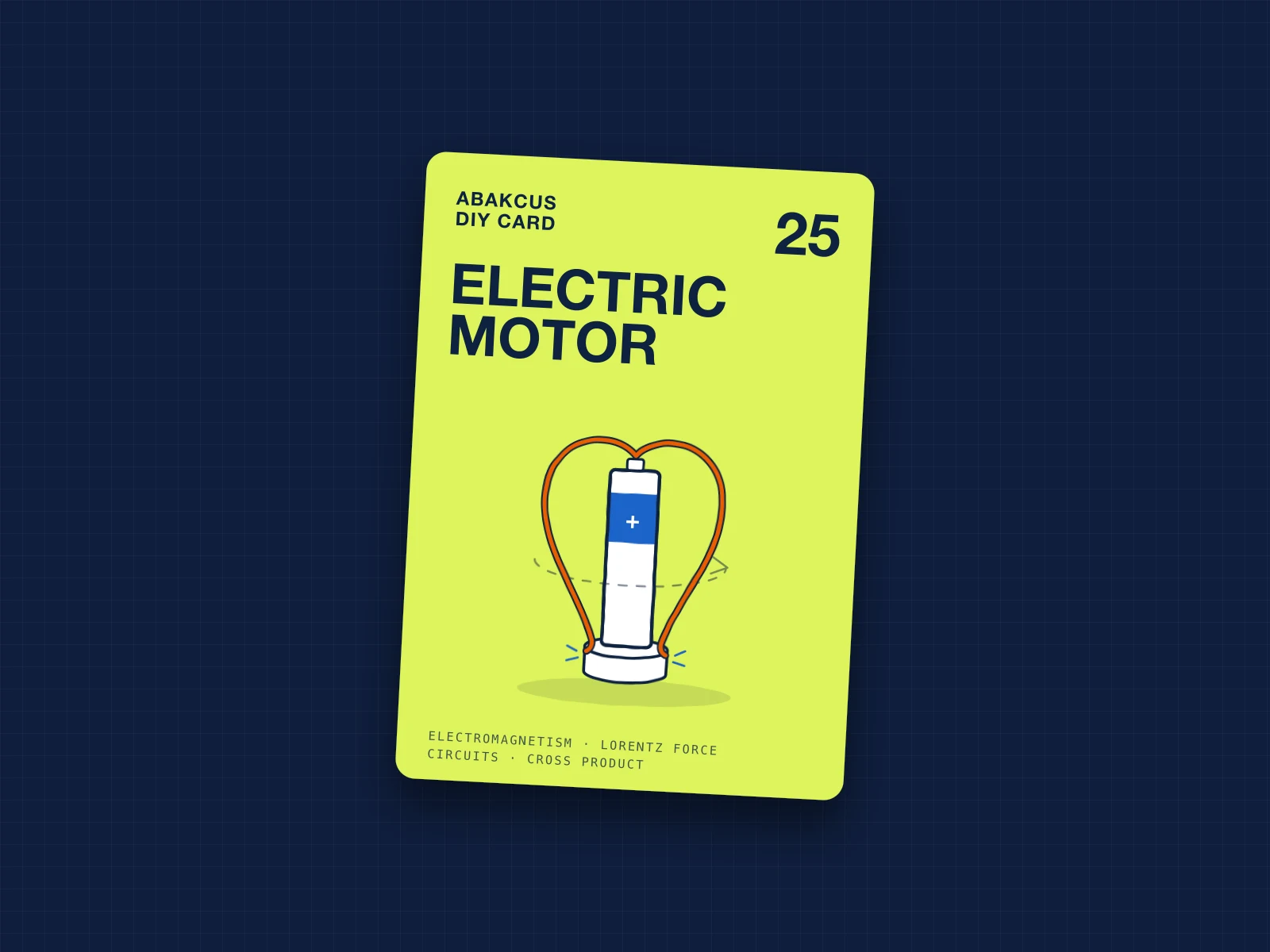
How to Make a Simple Electric Motor (Homopolar Motor)
A battery, a magnet and a bent piece of copper wire: three parts, no coils, and the wire spins on its own. It is the same push that drives every electric motor, found by Faraday in a single afternoon in 1821.
Open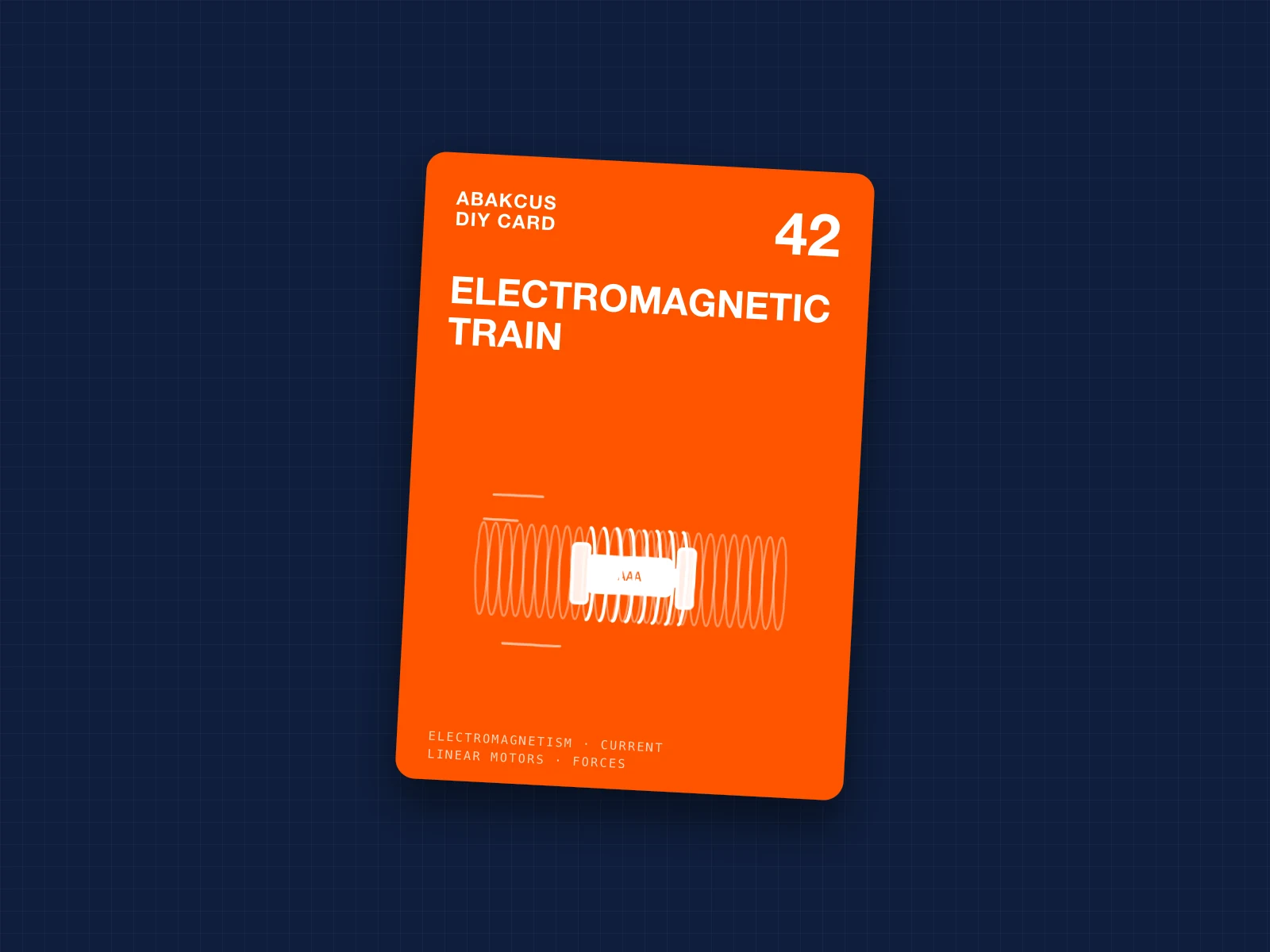
How to Make an Electromagnetic Train With a Battery
A coil of bare copper wire, a battery and six magnets. Push the battery into the coil and it shoots off on its own, carrying its own electromagnet with it.
Open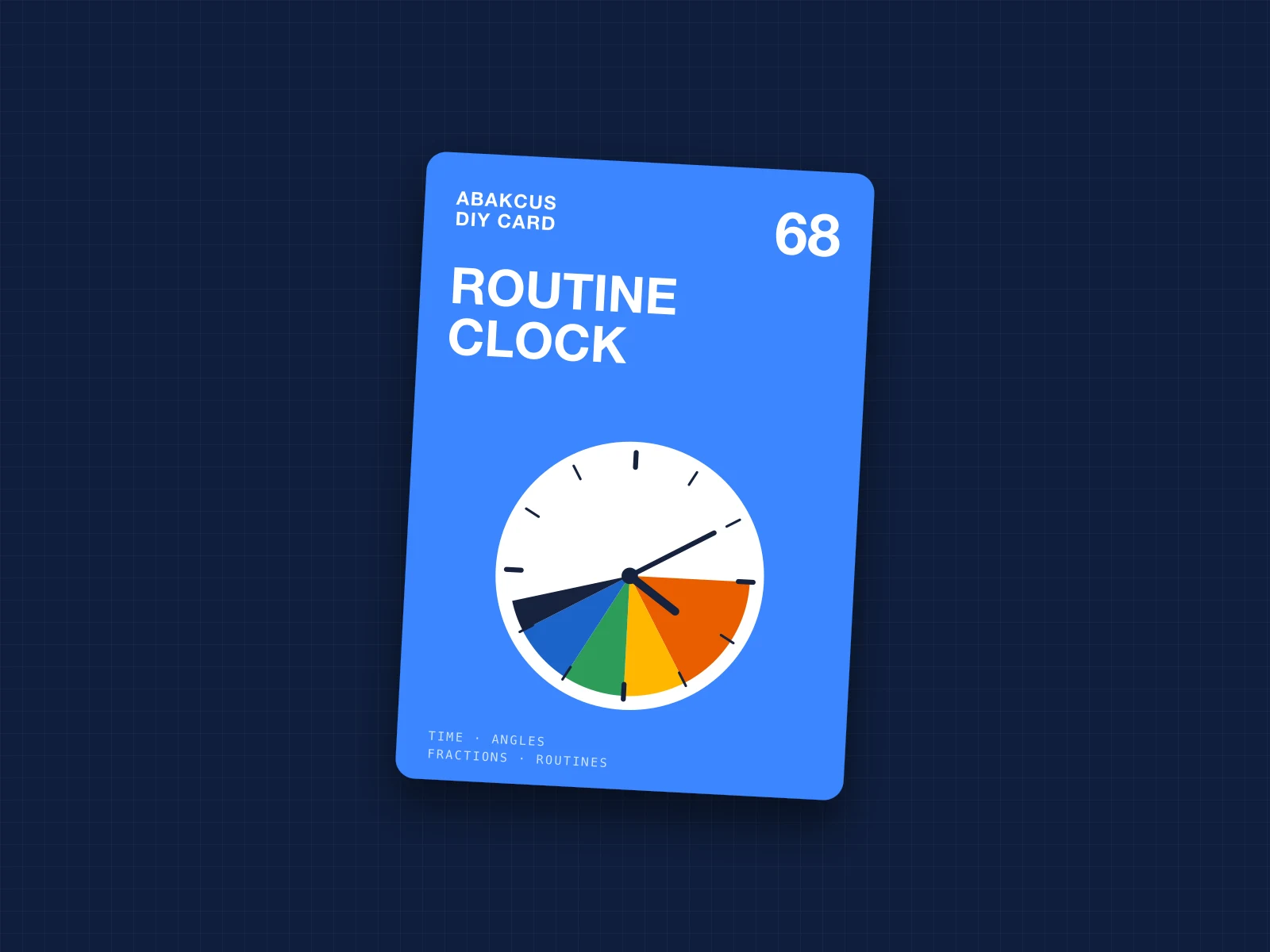
How to Make a Color-Coded After-School Routine Clock
A plain white wall clock and five pots of paint. Paint each part of the afternoon as a slice of the face and the hour hand shows what comes next.
Open
How to Make Melted Crayon Art With a Hair Dryer
A row of crayons glued to a canvas and a hair dryer on its hottest setting. The wax melts, gravity takes over, and streams of colour run down until they set.
Open
How to Make Geometric Paper Wall Art From Folded Triangles
Square sheets of coloured paper, one classic origami fold and a board. Fold two dozen identical triangles, turn them this way and that, and a pattern takes over the wall.
Open