
DIY · Card 68 · Mathematics · Time
A plain white wall clock and five pots of paint. Paint each part of the afternoon as a slice of the face and the hour hand shows what comes next, while you learn the geometry hidden in every clock.
01The brief
Turn the afternoon into a pie chart that ticks.
30°
of the clock face for every hour
½°
that the hour hand moves each minute
22
times a day the two hands overlap
A clock face is a circle cut into twelve equal slices, one per hour. Paint a few of those slices in colours, one colour for each part of the afternoon, and the clock stops just telling the time: it shows what to do with it.
As the hour hand sweeps through the colours, everyone can see when playtime ends and homework begins, even before they can read a clock. Underneath it all is some lovely geometry: degrees, fractions and a race between two hands. It is a companion to the moon clock and the water clock.
02Kit
A cheap clock, some paint and a ruler.
Tick off what you have
0 of 5 ready
03Method
Plan the afternoon first, then turn every hour into 30° of colour.
Step 1 of 8 · Minute 0
You need a simple white wall clock whose front cover can be removed, acrylic paints or paint pens in five colours, a fine brush, a ruler, a pencil, paper and a printer or pens for the key.
The paint smudges when the hands go back on.
Why
It hasn’t fully dried.
Fix
Leave acrylic at least an hour, or overnight, before refitting the hands and cover.
The hands catch on each other.
Why
They were pushed back on unevenly.
Fix
Press each hand straight down on its shaft and check they don’t touch as the minute hand passes the hour hand.
The routine doesn’t fit.
Why
It is more than 12 hours long.
Fix
A 12-hour face can show only 12 hours. Split the day into two clocks, or keep the routine to the afternoon and evening.
04Clock angles
The hour hand goes once round, 360°, in 12 hours, so it turns 30° an hour and half a degree every minute. That makes the slices easy to plan: an activity’s slice is half as many degrees as it lasts in minutes.
Plan your own afternoon and see the clock face it makes:
The whole afternoon takes 5 h 30 min, 165° of the dial, from 15:00 to 20:30. Every minute of time is half a degree of the clock face, so the slices are exactly the right size for the hour hand to sweep through.
The minute hand moves twelve times faster, and the two hands play a never-ending game of catch-up:
Angle between hands
35.0°
Hour hand at
95.0°
The minute hand turns 6° a minute, the hour hand only half a degree. So the minute hand gains 5.5° a minute and laps the hour hand every 720 ⁄ 11 ≈ 65.45 minutes: 11 overlaps in 12 hours, 22 in a day. The hands are at right angles twice in every lap, 44 times a day.
05The big idea
Time is
an angle.
A clock turns time into turning. Every moment of the day has its own angle for each hand, and every stretch of time becomes a slice of the circle.
It is the same idea as a pie chart, a compass and the turning Earth itself, which rotates 15° every hour. Once time is an angle, you can measure it with a protractor, and plan your afternoon with paint.
06The math
1 · Hour hand
30h + 0.5m degrees
At h hours and m minutes.
2 · Minute hand
6m degrees
Six degrees for every minute.
3 · Angle between
|30h − 5.5m|
Take the smaller way round.
At 3:00 the angle is |90 − 0| = 90°. At 3:10 it is |90 − 55| = 35°. The hands overlap when 30h = 5.5m: between 3 and 4 that is m = 90 ⁄ 5.5 ≈ 16.4 minutes, about 3:16:22.
For the routine, a two-hour playtime from 3 to 5 takes 2 × 30 = 60°; half an hour of bedtime routine from 8:00 to 8:30 is a slim 15°. The whole afternoon from 3:00 to 8:30 covers 5.5 × 30 = 165°, a little under half the face.
07Real life
From Babylonian numbers to railway timetables and tomato timers.
Counting in sixties
The Babylonians, over 4,000 years ago, counted in sixties. Sixty divides by 2, 3, 4, 5, 6, 10, 12, 15, 20 and 30, so it splits neatly into many parts. We still use it for minutes, seconds and the degrees of a circle.
Egypt’s twelve hours
The ancient Egyptians split the day into twelve hours of daylight and twelve of darkness, tracked with shadow clocks by day and water clocks and stars by night. That is where our 24-hour day comes from.
Why clockwise?
In the northern hemisphere, a sundial’s shadow moves round from west to east, left to right across the top. Early mechanical clocks, made in Europe, copied that direction, which is why we call it clockwise.
Ten-hour days
After the French Revolution, France briefly made the day ten hours long, each of a hundred minutes of a hundred seconds. Decimal clocks were made, but the idea was dropped in 1795.
Railway time
Until the 1840s every British town kept its own local time, set by the Sun. Railways needed timetables that worked everywhere, so they adopted one standard time, Greenwich time, and the rest of the country followed.
The Pomodoro method
In the late 1980s a student, Francesco Cirillo, used a tomato-shaped kitchen timer to split his work into 25-minute bursts with short breaks. Slicing time into coloured blocks is the same idea as your clock.
1793
In 1793, revolutionary France decided that time, like length and weight, should be decimal. The day was split into 10 hours, each of 100 minutes of 100 seconds, and clockmakers produced elegant dials numbered 1 to 10.
People found it confusing, and their old clocks didn’t fit. In 1795 the law was relaxed and the experiment faded away, while metres and kilograms survived. Our clocks still run on the twelves and sixties of Egypt and Babylon.
08Is and isn’t
The hands overlap 24 times a day, once an hour.
Only 22. Between 11 and 1 o’clock they meet just once, at 12, so each 12 hours has 11 overlaps, not 12.
At quarter past three the hands line up exactly.
Not quite: by 3:15 the hour hand has moved a quarter of the way to 4, so the hands are 7.5° apart.
A routine clock needs a special clock.
Any clock with a removable cover works. The ordinary hour hand does all the work, moving through the coloured slices.
Twelve hours was chosen at random.
Twelve divides evenly by 2, 3, 4 and 6, which made it a natural choice for dividing the day and the year.
09Go further
A
A morning clock
Make a second key for the morning routine using the same colours in a different order. Does one painted face work for both?
B
Angle hunt
Find the exact times between 3 and 4 when the hands are at right angles, overlap, or point in opposite directions.
C
A 24-hour dial
Draw a clock face where the hour hand goes round once a day. How many degrees is each hour now?
D
A sundial
Push a stick into the ground on a sunny day and mark the tip of its shadow every hour. Which way does it move?
E
Time pie chart
Make a pie chart of a whole school day. What fraction is spent sleeping, at school, eating, playing?
10Questions
Take the cover and hands off a plain white wall clock. With a ruler, draw a line from the centre to the edge at each activity’s start time, then paint each slice a different colour. Put the hands and cover back, set the time and make a key showing what each colour means.
A clock face is 360° divided into 12 hours, so each hour is 30° and each minute of time moves the hour hand half a degree. A two-hour activity takes a 60° slice of the face; half an hour takes 15°.
22 times. The minute hand gains 5.5° a minute on the hour hand, so it catches up with it every 720 ⁄ 11 ≈ 65.45 minutes: 11 times in 12 hours. They are at right angles twice in each of those laps, 44 times a day.
The ancient Egyptians divided daylight and night into 12 hours each, and the Babylonians counted in sixties, which gave us 60 minutes and 60 seconds. Both numbers divide neatly into many parts, which makes them handy for telling the time.
Many children who can’t yet read the time can follow a colour: when the hour hand moves into the green slice, it is homework time. A clock like this makes the shape of the afternoon visible, so there are fewer reminders and surprises.
Safety · Safe and simple. Keep the clock battery away from small children, and use water-based paints in a ventilated room.
All DIY cards →Keep wandering
A few more pieces in the same spirit — math, design, and slow attention.
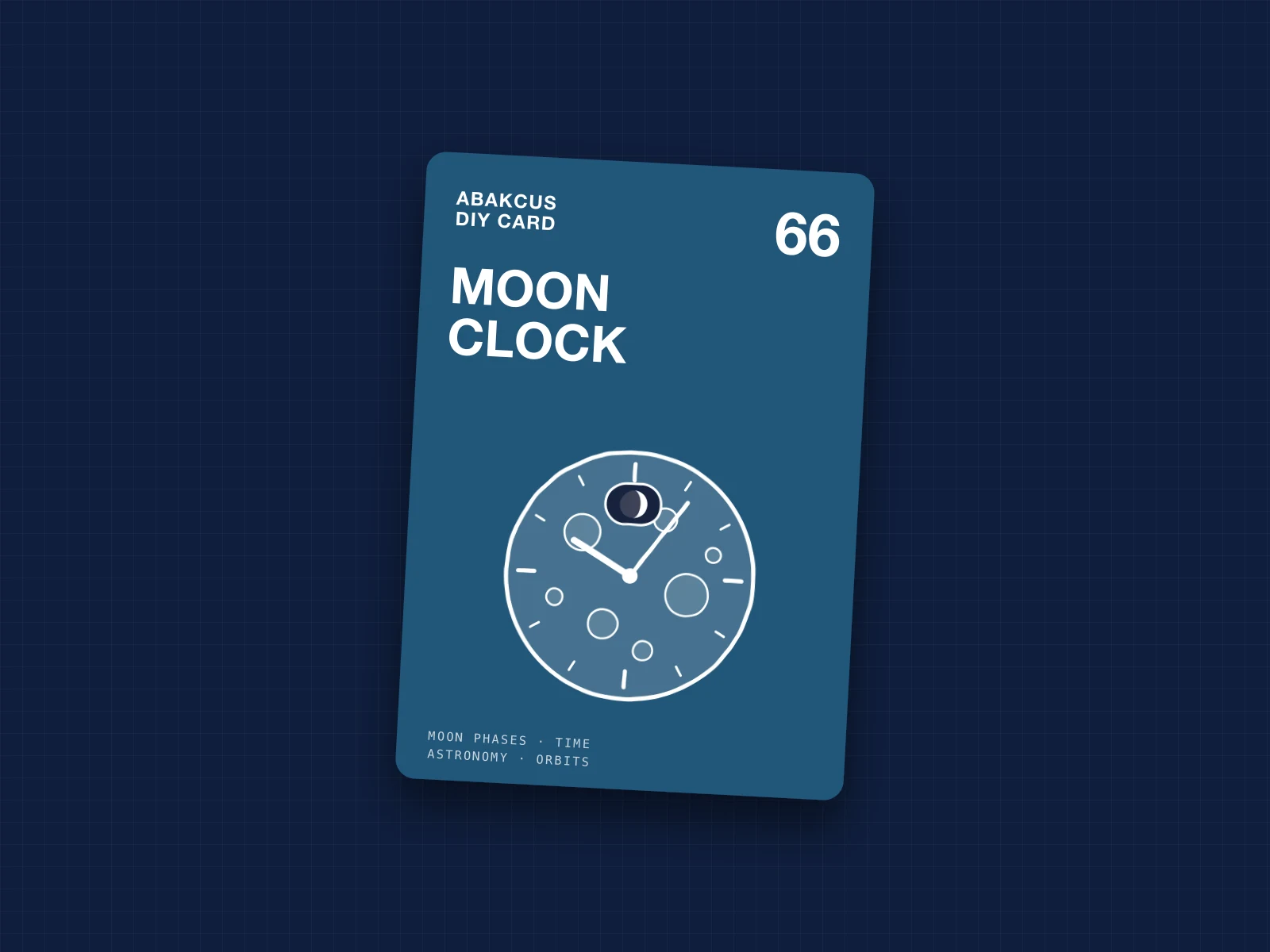
How to Make a Moon-Themed Clock With a Moon Phase Window
A full moon for a clock face, a battery movement and a hand-turned phase window. It keeps the time to the second and, with a nudge every few days, keeps pace with the Moon.
Open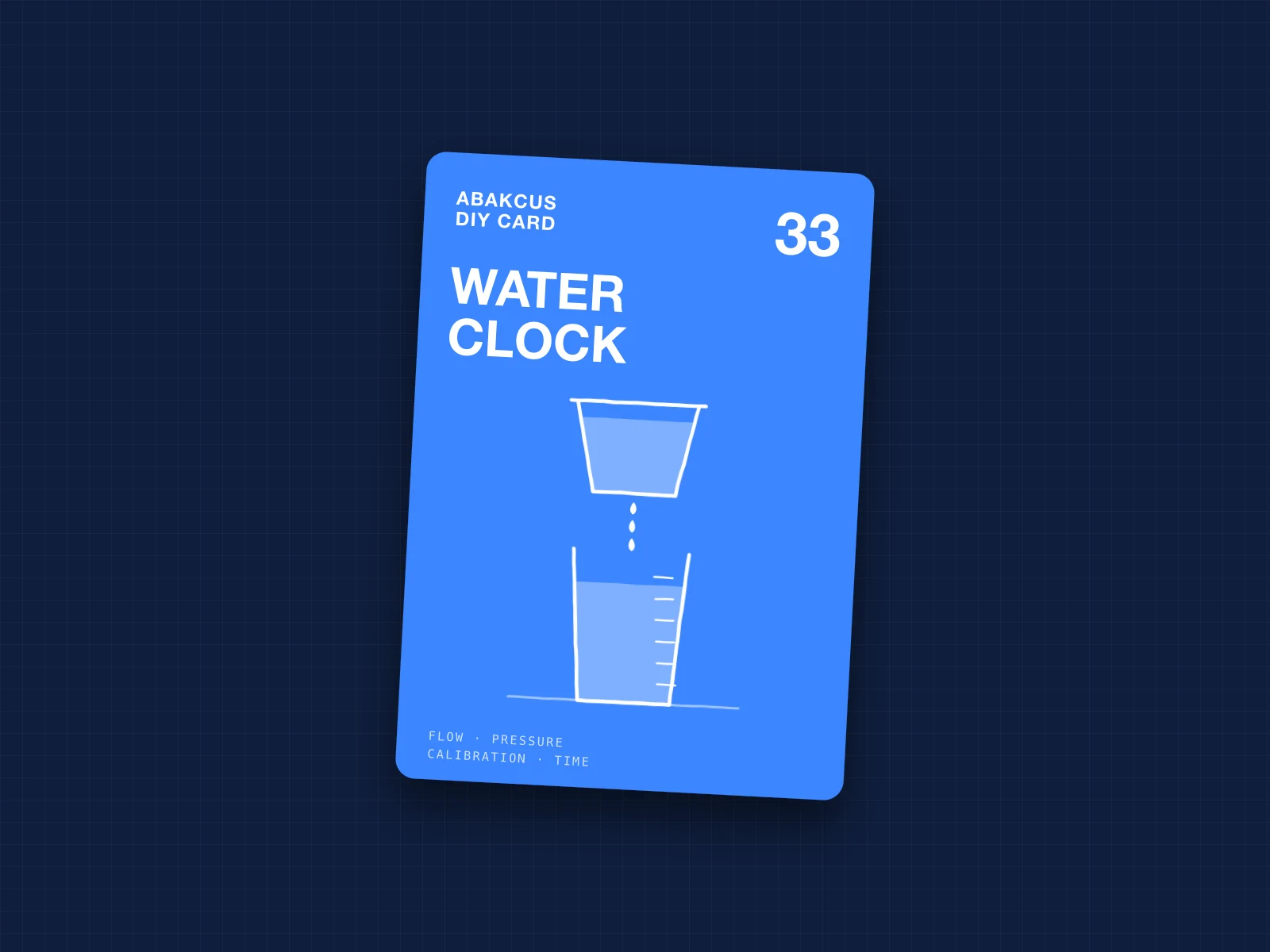
How to Make a Water Clock That Times Exactly One Minute
Two plastic cups, a pinhole and three-quarters of a cup of water. Tune the hole until it runs dry in exactly sixty seconds, and you have built the oldest kind of clock there is.
Open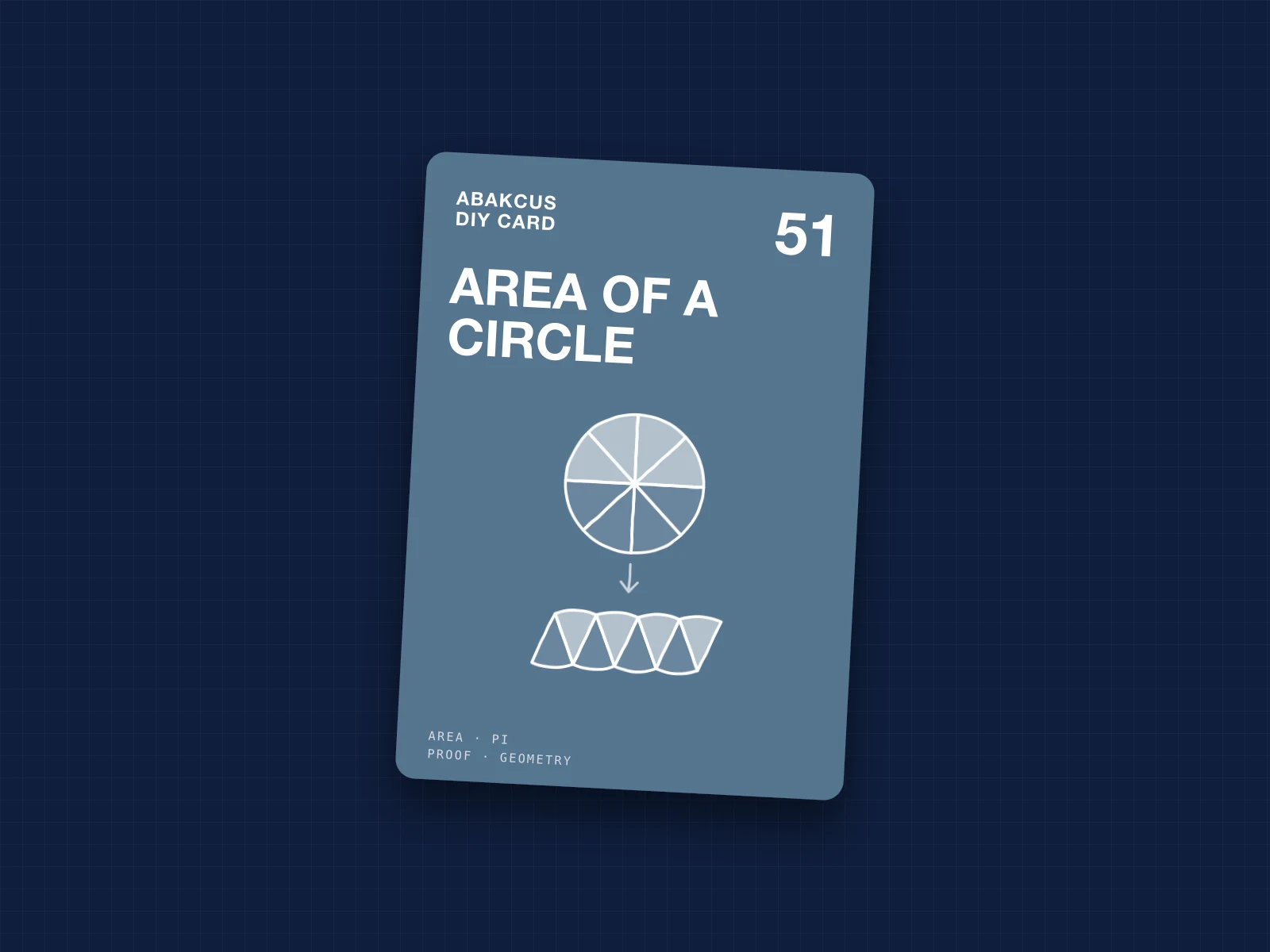
How to Show the Area of a Circle Is πr² With Paper Slices
A paper circle, three folds and a pair of scissors. Cut it into slices, lay them top to tail, and the circle becomes a rectangle that shows why its area is πr².
Open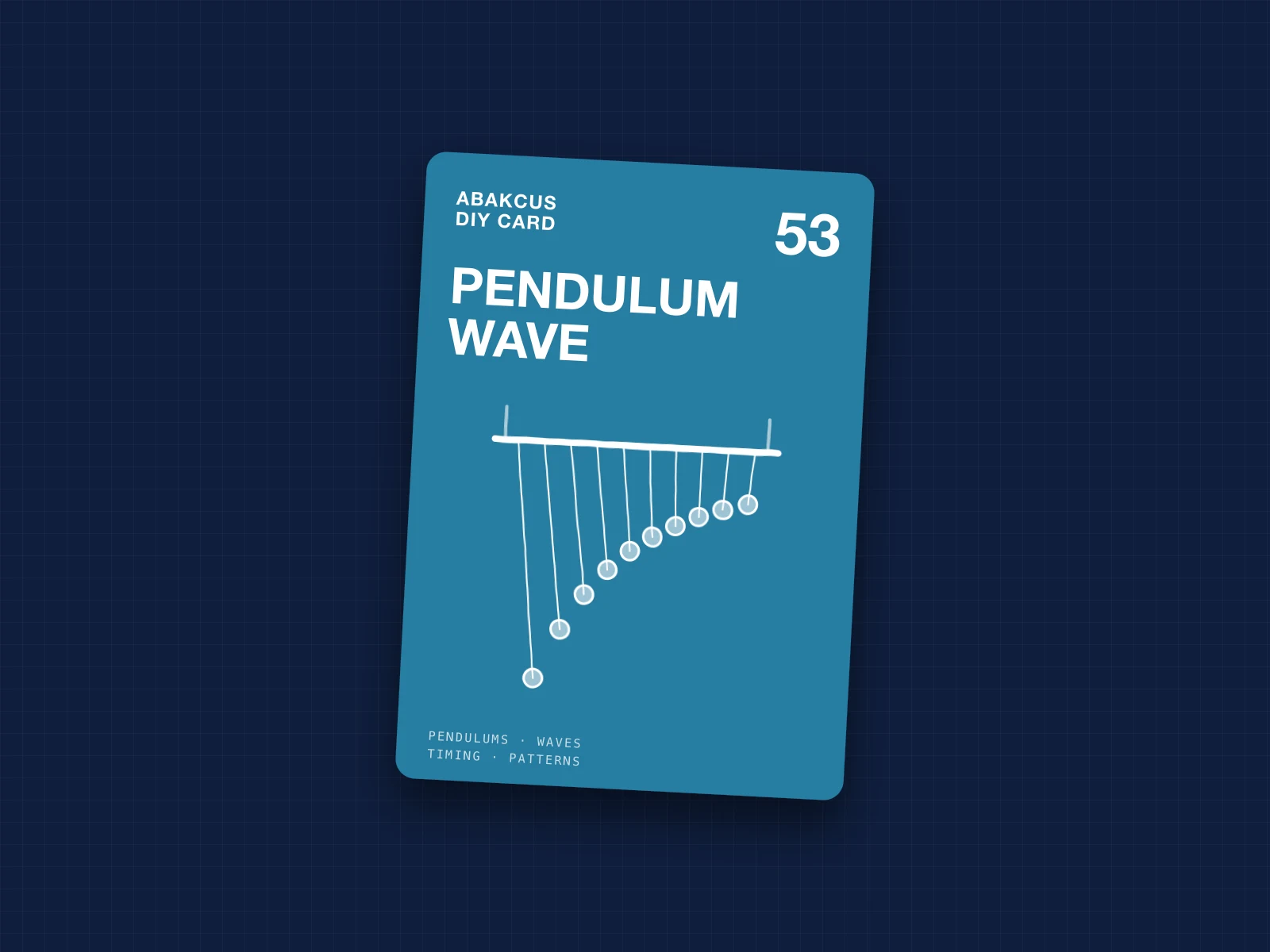
How to Make a Pendulum Wave Toy From Nuts and String
Twelve nuts on twelve strings, each a little shorter than the last. Let them go together and they weave waves and snakes, then swing back into a perfect line.
Open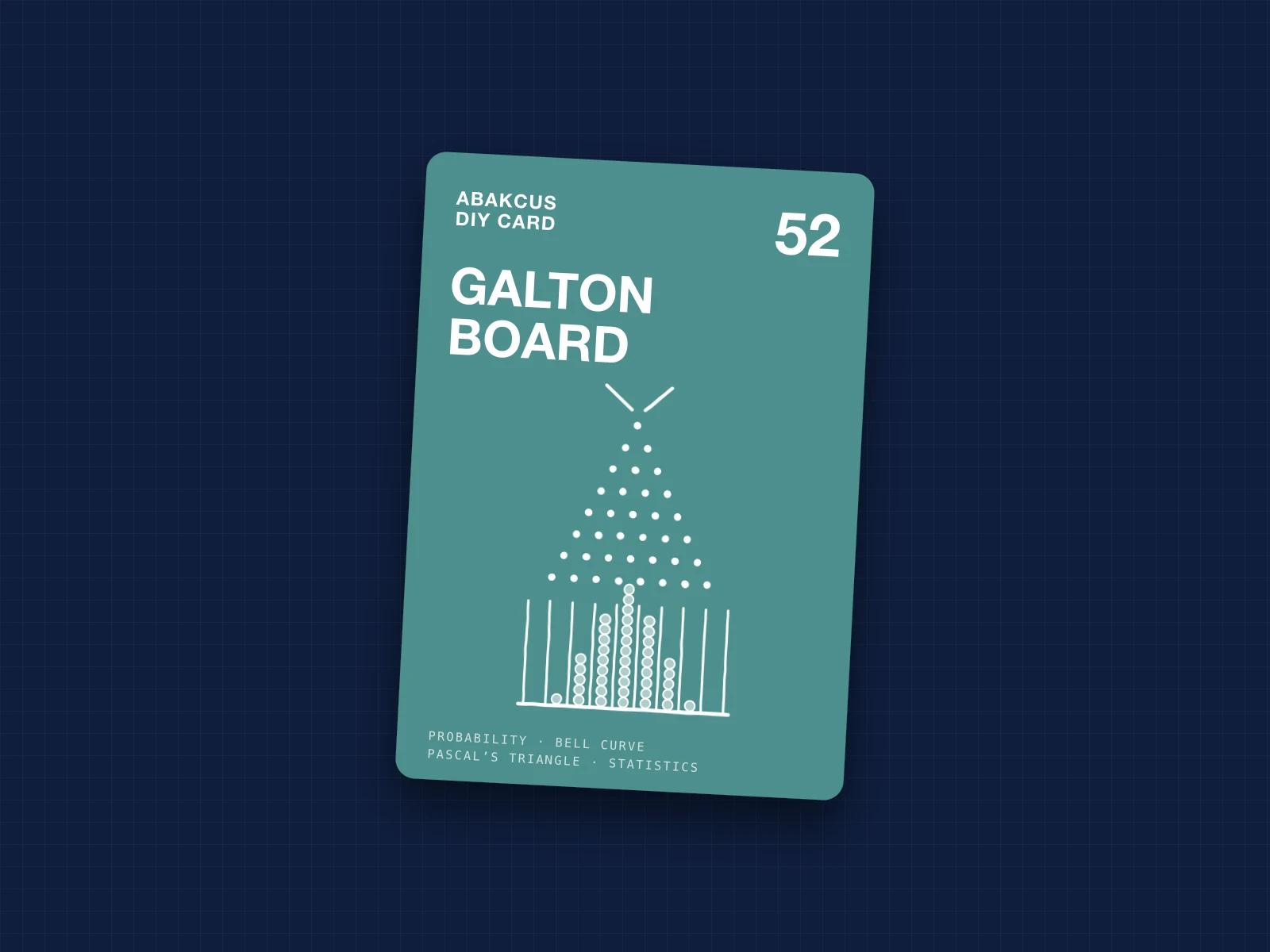
How to Make a Galton Board That Draws a Bell Curve
A board, forty pins and a handful of beads. Every bead zigzags at random, yet together they pile into the same graceful hump every time: the bell curve.
Open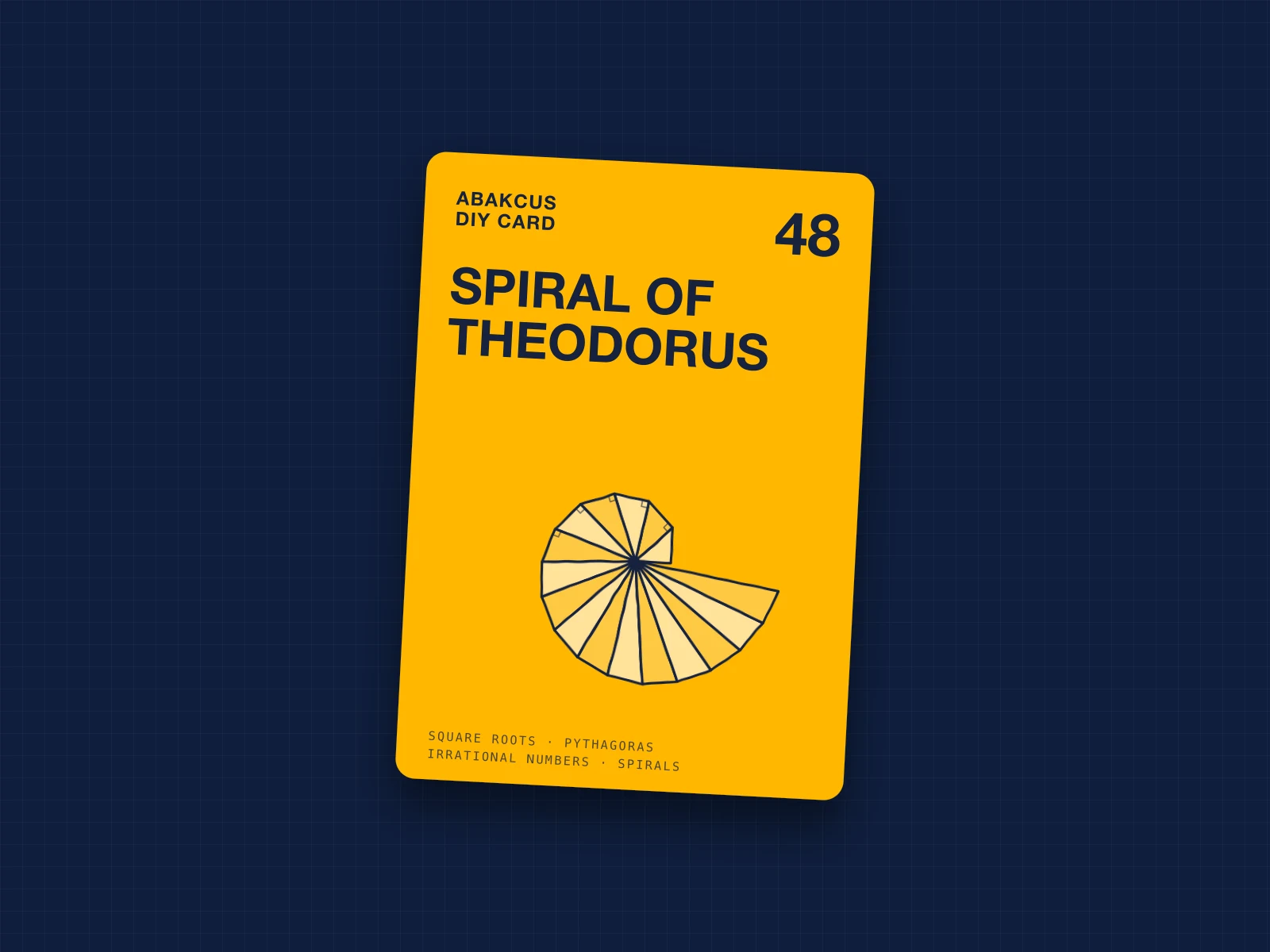
How to Construct the Spiral of Theodorus With a Ruler
A ruler, a square corner and a pencil. Build one right triangle on another and draw every square root from √2 to √17, curled into a snail shell.
Open