
DIY · Card 66 · Astronomy · Time
A full moon for a clock face, a battery movement and a hand-turned phase window. It keeps the time to the second, and, with a nudge every few days, keeps pace with the Moon too.
01The brief
A clock for the day, and one for the month.
29.5
days from one new moon to the next
~50 min
how much later the Moon rises each day, on average
8
phases on your disc, one about every 3.7 days
Long before clocks, people told the time of month by the Moon. Every night it changes a little: a thin crescent, a half, a full bright disc, then shrinking back to nothing, over and over, every twenty-nine and a half days.
This clock wears the full moon as its face and has a little window, like the date window on a watch, that shows the phase. The hands tell you the hour; the window tells you where we are in the Moon’s month. It is a slow cousin of the water clock and the pendulum wave, other ways to keep time.
02Kit
A clock kit, a moon picture and two circles of card.
Tick off what you have
0 of 6 ready
03Method
The clock is quick; keeping its phase window in step with the sky is the fun part.
Step 1 of 8 · Minute 0
You need a battery clock movement kit with hands, a print of the full moon about 25 cm across, a circle of stiff card or a cork board the same size, a second circle of thin card a little bigger, glue, scissors, a craft knife for a grown-up, and an AA battery.
The hands catch on the face.
Why
The face is too thick for the shaft, or the hands are bent.
Fix
Use a thinner board, or a movement with a longer shaft, and gently straighten the hands so they clear each other.
The phase disc turns with the hands.
Why
It is gripped too tightly on the shaft.
Fix
Widen the disc’s centre hole a little so it sits loose and turns only when you move it.
The window shows two phases at once.
Why
The window is too wide for the spacing of the pictures.
Fix
Make the window narrower, or space the phase pictures further apart round the disc.
04The Moon
The Moon makes no light of its own. Sunlight always lights exactly half of it, the half facing the Sun. As the Moon travels round Earth, we see that lit half from different angles: face on at full moon, side on at the quarters, from behind at new moon.
Play through a month and watch the phases come and go:
Lit
46 %
Rises about
11:41
Next full moon
in 7.8 days
The Sun always lights half the Moon. At new moon that half faces away from us; at full moon it faces us; in between we see part of it. Each day the Moon moves about 12° further round its orbit, so it rises about 50 minutes later than the day before.
The phase also tells you when to look. Choose a phase and a time and see where the Moon is:
The first quarter is up. A full moon rises around sunset and stays up all night; a first-quarter moon is high in the south at sunset; a last-quarter moon rises around midnight and is still up after sunrise. This is a simplified sky for the middle latitudes, with the Sun rising at six.
05The big idea
The sky
is a clock.
Earth’s spin gives us the day. The Moon’s orbit gives us the month; the very word comes from ‘moon’. Earth’s orbit round the Sun gives us the year. Every calendar on Earth is built from those three clocks.
They don’t fit together neatly: a year is about 12.4 lunar months, not a whole number. Calendar-makers have wrestled with that leftover for thousands of years, and your clock shows both rhythms side by side.
06The math
1 · Daily step
360° ⁄ 29.53 ≈ 12.2°
The Moon’s move round the sky, relative to the Sun, each day.
2 · Daily delay
12.2 ⁄ 15 h ≈ 49 min
Earth turns 15° an hour, so the extra turn takes:
3 · Lit fraction
(1 − cos(2πd ⁄ 29.53)) ⁄ 2
d days after new moon.
Eight phase pictures spread over 29.53 days means moving the disc on one picture every 29.53 ⁄ 8 ≈ 3.7 days. Seven days after new moon the Moon is about 45 % lit, almost exactly half: first quarter. At 14.8 days it is full.
Against the stars the Moon goes round in only 27.32 days. The extra 2.2 days come from Earth moving about 29° round the Sun meanwhile, so the Moon has to travel a bit further to line up with the Sun again. A year holds 365.25 ⁄ 29.53 ≈ 12.37 lunar months.
07Real life
In the oceans, on calendars and in the oldest computer ever found.
The tides
The Moon’s gravity raises two bulges in the oceans, and Earth spins under them, so most coasts get two high tides about 12 hours 25 minutes apart, a little later each day, in step with the Moon.
Lunar calendars
The Islamic calendar follows the Moon: each month begins with a new crescent, and a year of twelve lunar months is about 354 days, so its festivals move through the seasons.
The date of Easter
Easter Sunday is set by the Moon: it falls on the first Sunday after the first full moon on or after 21 March, which is why its date jumps around from year to year.
The Antikythera mechanism
This bronze gear machine, made in ancient Greece over 2,000 years ago and found in a shipwreck, modelled the heavens, including a little ball, half dark and half pale, that turned to show the Moon’s phase.
Moon-phase watches
Many fine watches have a small window where a painted disc of two moons slowly turns, showing the phase. Your phase window is the same idea, moved by hand instead of gears.
Earthshine
Next to a thin crescent you can often see the rest of the Moon glowing faintly. That is sunlight bounced off Earth onto the Moon, an effect explained by Leonardo da Vinci around 1510.
1901
In 1901 sponge divers off the Greek island of Antikythera brought up a lump of corroded bronze from a Roman-era shipwreck. Inside were dozens of interlocking gears: a machine, built over 2,000 years ago, that tracked the Sun, the Moon and the planets.
One of its dials carried a small ball, half pale and half dark, that turned to show the Moon’s phase, the ancestor of your phase window. Turn your disc every few days and you are doing by hand what those ancient gears did by clockwork.
08Is and isn’t
Phases are caused by Earth’s shadow.
Earth’s shadow only falls on the Moon during a lunar eclipse. Phases are simply how much of the Moon’s sunlit half we can see from here.
The Moon only comes out at night.
It is up in daylight about as often as at night. A first-quarter Moon is easy to spot in the afternoon sky.
The Moon has a dark side that never sees the Sun.
It has a far side we never see, but every part of the Moon gets sunlight for about two weeks of each month.
A full moon looks bigger near the horizon because it’s closer.
It is the same size, or even very slightly further away. The ‘Moon illusion’ is a trick of the brain, not of distance.
09Go further
A
A moon diary
Draw the Moon every clear evening for a month and note the time. Does it really rise about 50 minutes later each day?
B
Ball and lamp
In a dark room, hold a ball at arm’s length and turn slowly round a lamp. Watch its phases appear, exactly like the Moon’s.
C
Sixteen phases
Draw sixteen phases instead of eight on your disc, for a step every two days or so.
D
Find the far side
Look up photographs of the Moon’s far side, first seen by the Soviet probe Luna 3 in 1959. How is it different?
E
Tide times
If you live near the coast, look up the tide times for a week. Do high tides arrive later each day, like the Moon?
10Questions
Glue a print of the full moon onto stiff card or cork, make a hole in the centre and fit a battery clock movement and hands. For a phase window, draw the eight phases of the Moon round a slightly larger card disc, fit it loosely on the shaft behind the face, and cut a small window in the face so one phase shows at a time.
The Sun always lights half of the Moon. As the Moon travels round Earth, we see different amounts of that lit half: none at new moon, half of it at the quarters, all of it at full moon. The cycle takes about 29.5 days.
While Earth spins once, the Moon moves about 12° further along its orbit. Earth has to turn a little extra, about 50 minutes on average, before the Moon comes back over the horizon. The exact delay varies from about half an hour to over an hour.
The Moon spins once on its axis in exactly the time it takes to go once round Earth. Earth’s gravity locked it into that rhythm long ago, so the same face always points towards us. This is called tidal locking.
From one new moon to the next is about 29.53 days, the synodic month. Measured against the stars, the Moon goes once round Earth in about 27.32 days; the extra two days are needed because Earth has moved round the Sun in the meantime.
Safety · A grown-up should cut the centre hole and the window. Keep the clock battery away from small children.
All DIY cards →Keep wandering
A few more pieces in the same spirit — math, design, and slow attention.
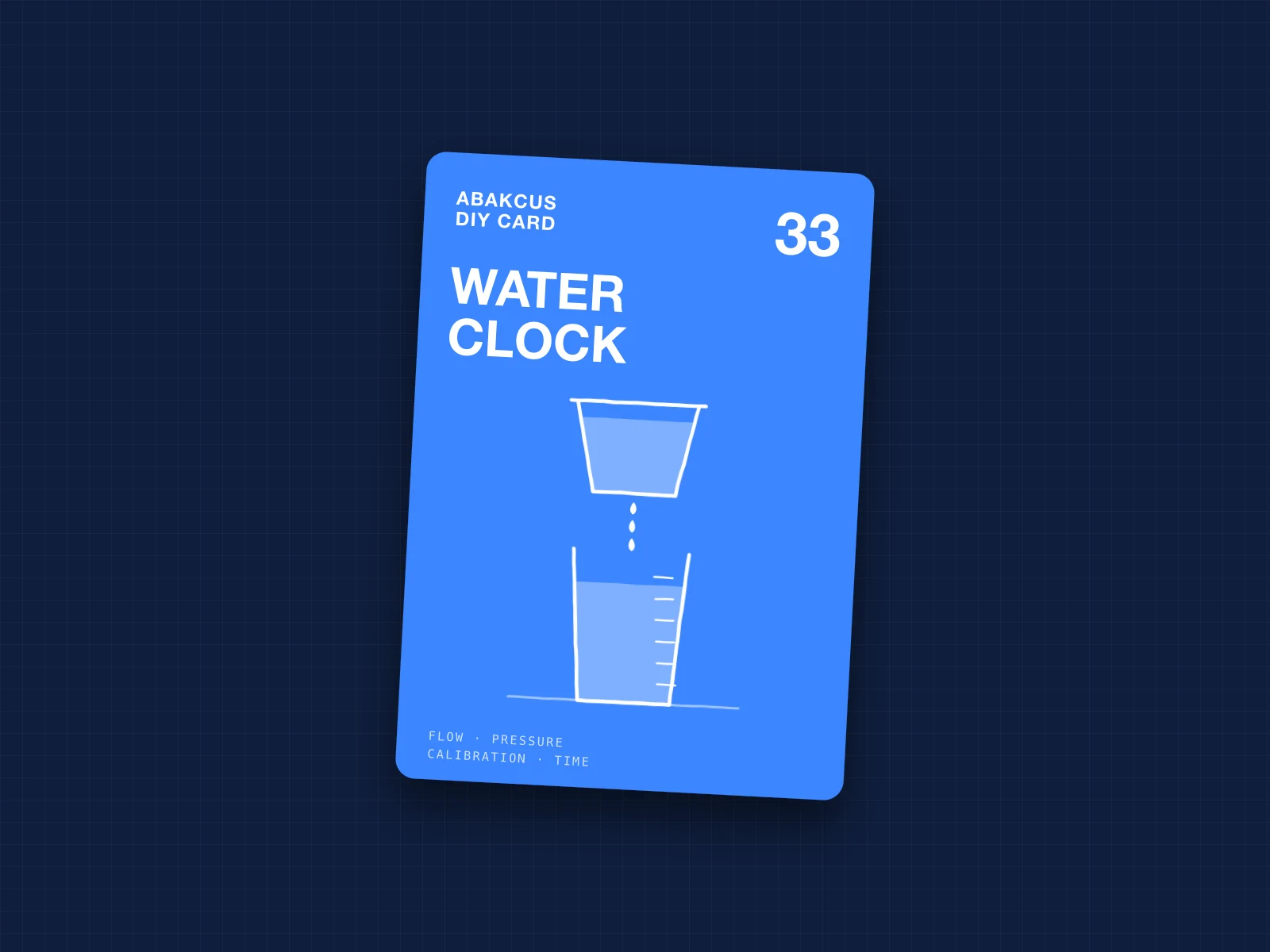
How to Make a Water Clock That Times Exactly One Minute
Two plastic cups, a pinhole and three-quarters of a cup of water. Tune the hole until it runs dry in exactly sixty seconds, and you have built the oldest kind of clock there is.
Open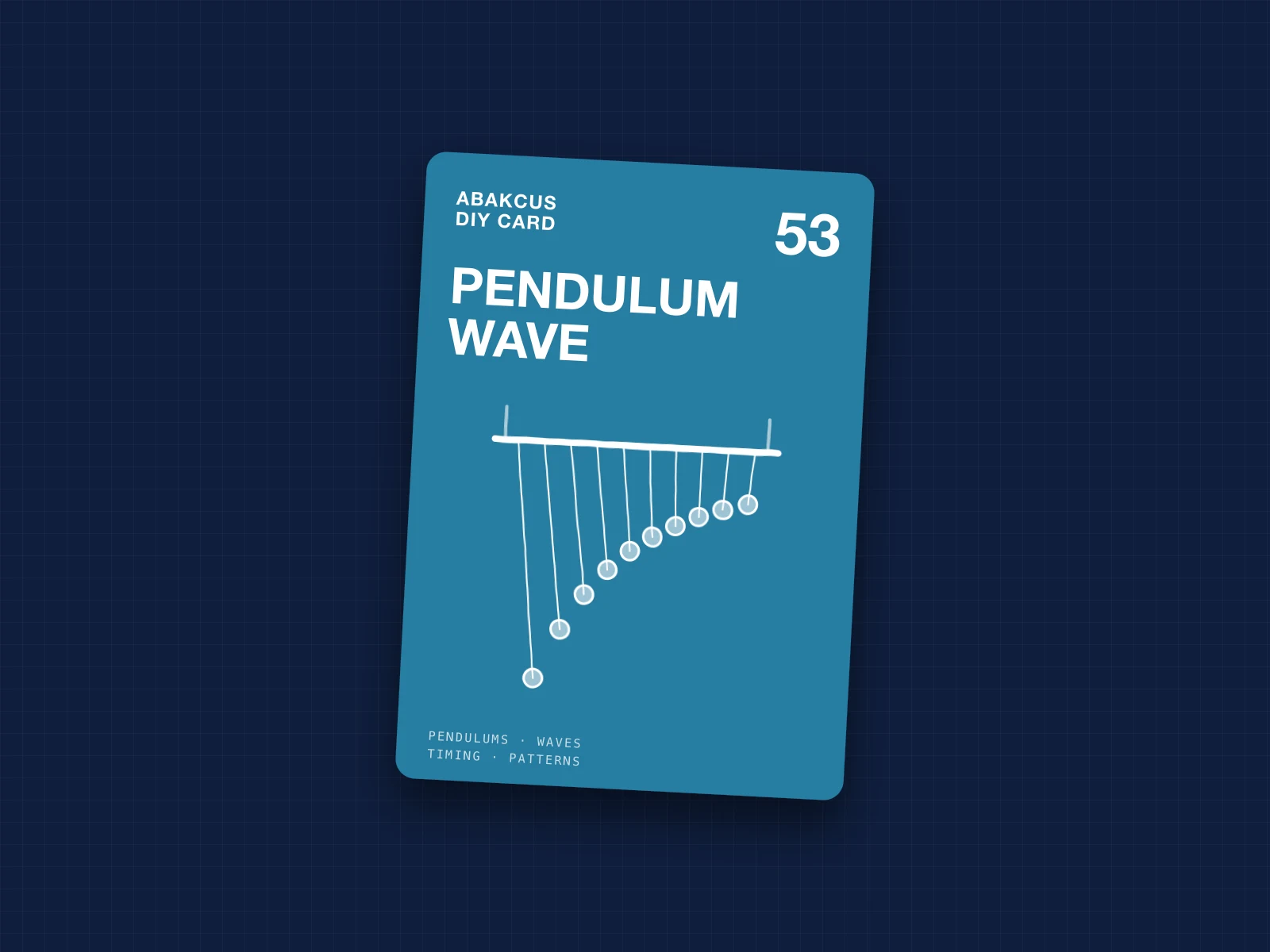
How to Make a Pendulum Wave Toy From Nuts and String
Twelve nuts on twelve strings, each a little shorter than the last. Let them go together and they weave waves and snakes, then swing back into a perfect line.
Open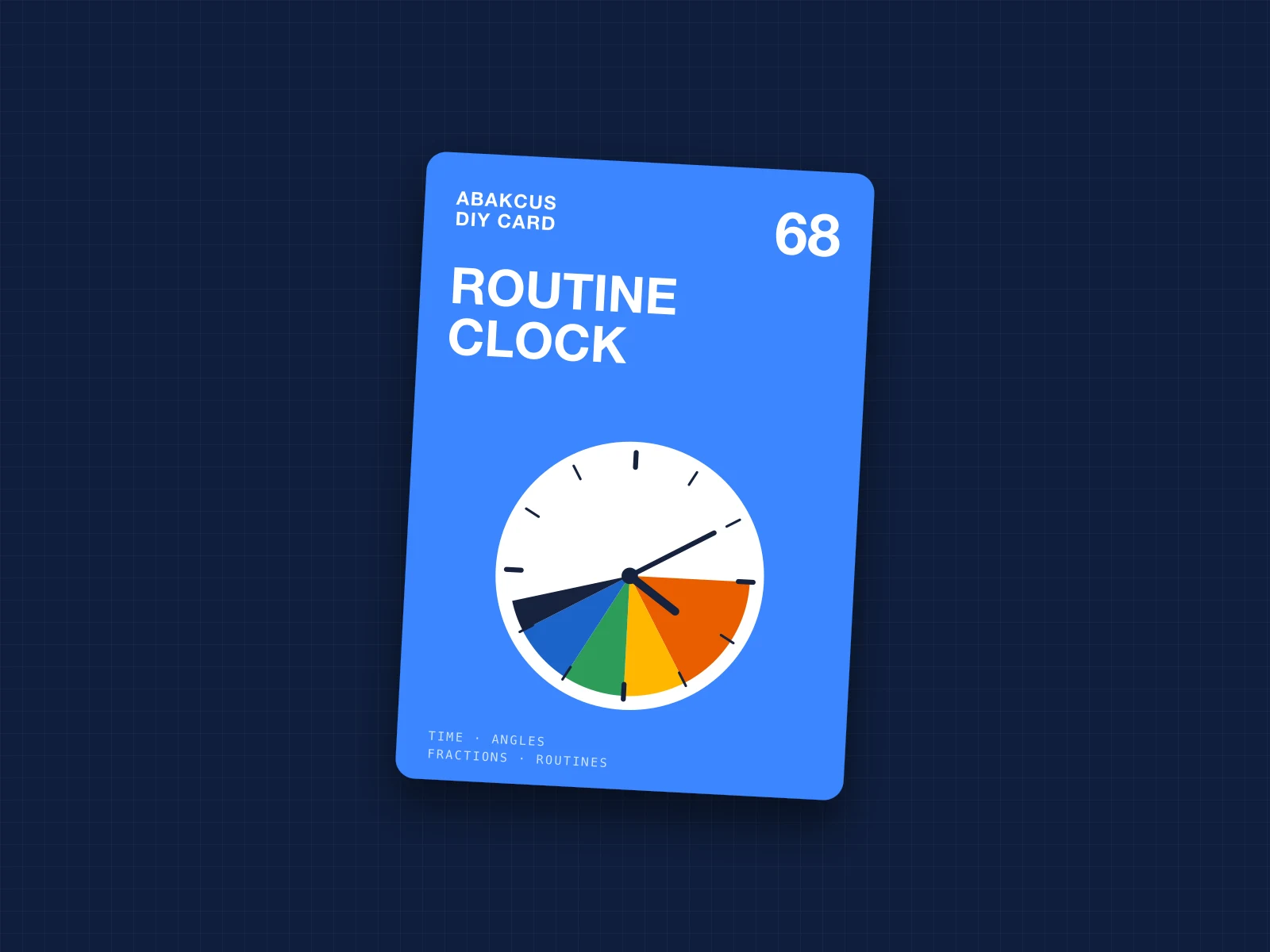
How to Make a Color-Coded After-School Routine Clock
A plain white wall clock and five pots of paint. Paint each part of the afternoon as a slice of the face and the hour hand shows what comes next.
Open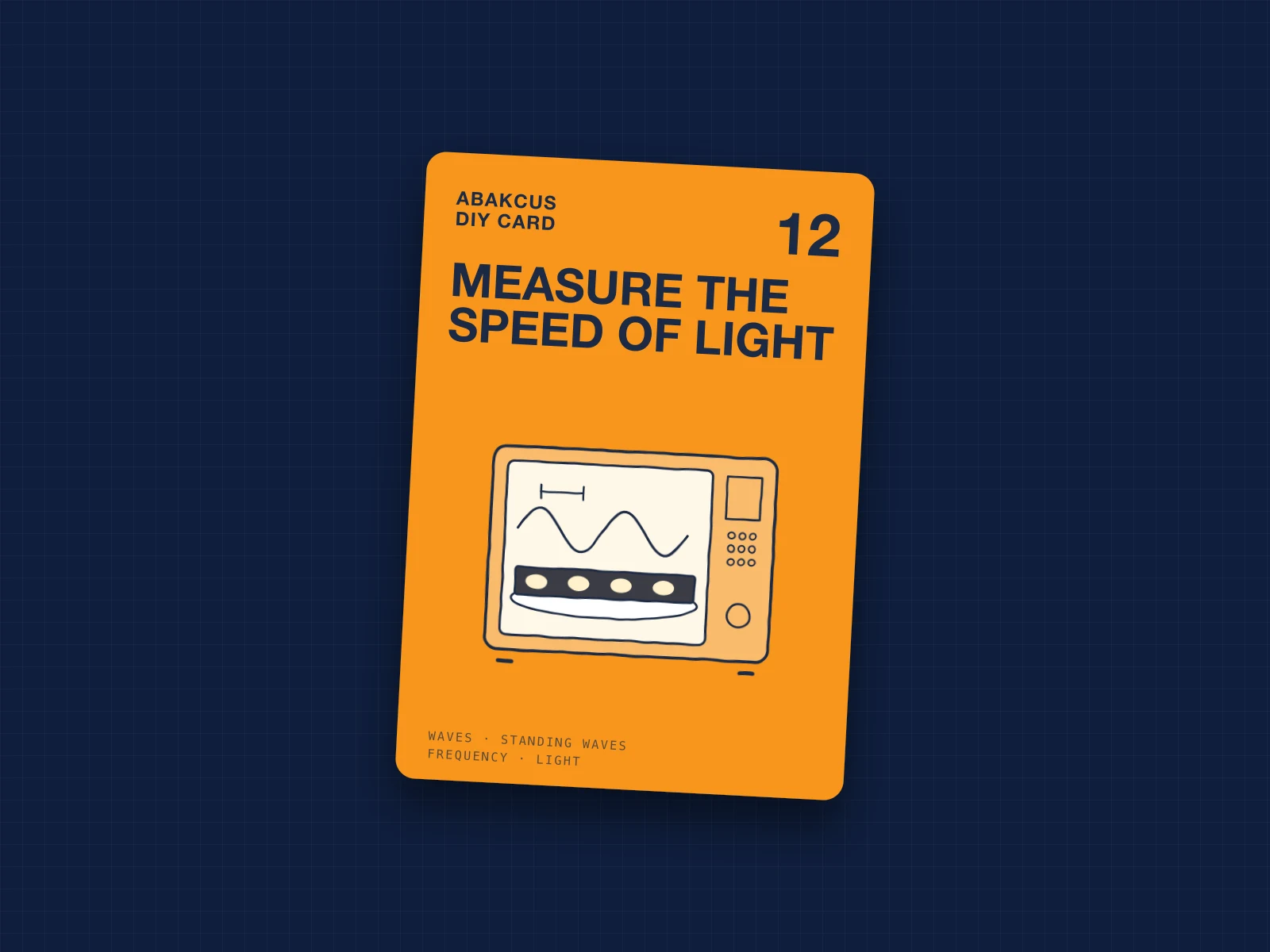
How to Measure the Speed of Light With Chocolate
Take the turntable out of a microwave, heat a bar of chocolate for twenty seconds, and measure the gap between the melted spots. Multiply by the number on the back of the oven and you get the speed of light, give or take a few percent.
Open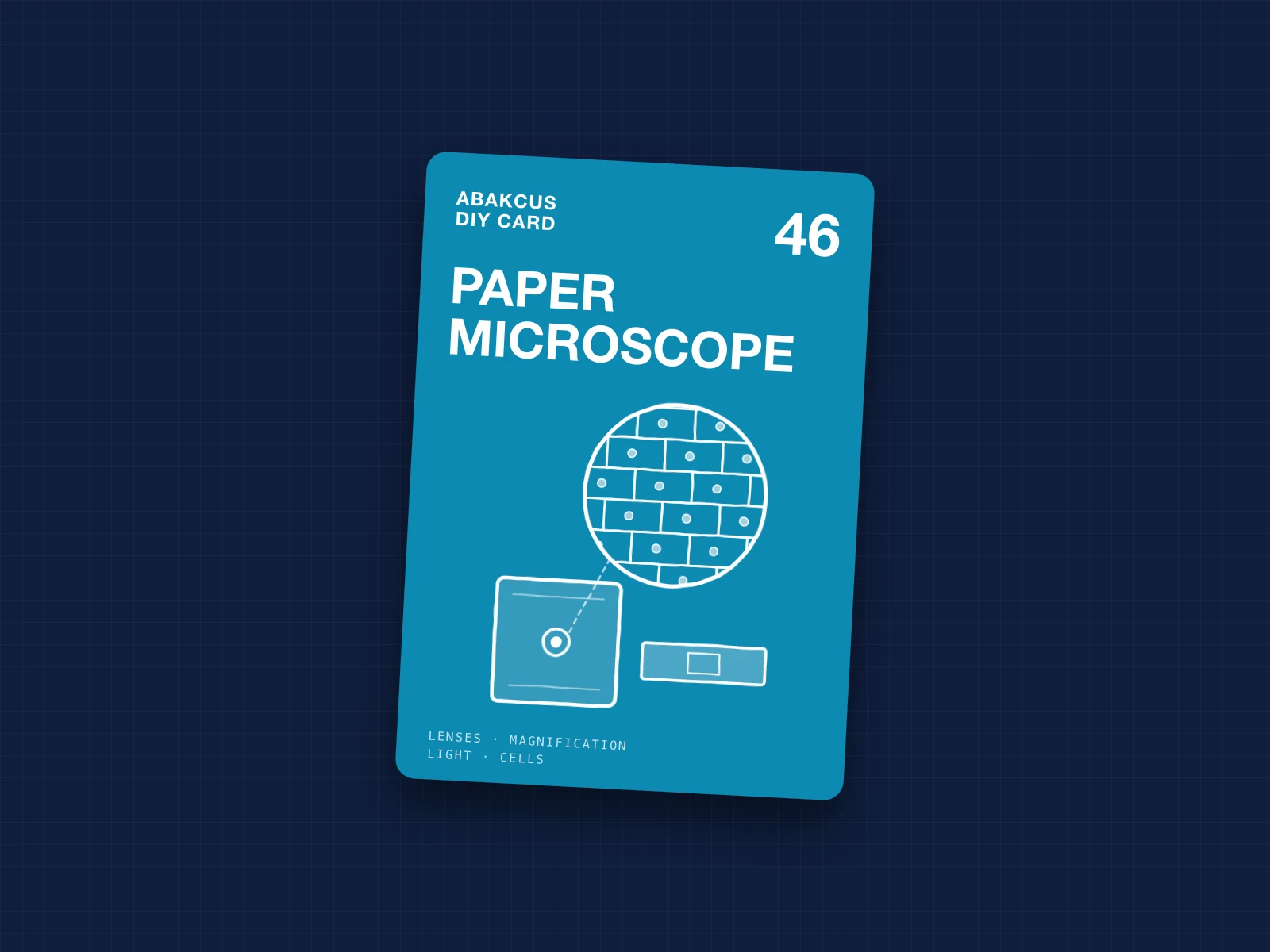
How to Make a Paper Microscope With a Glass Bead Lens
A strip of card, a glass bead the size of a grain of sand and a slip of sticky tape. Hold it to your eye and an onion skin becomes a wall of cells.
Open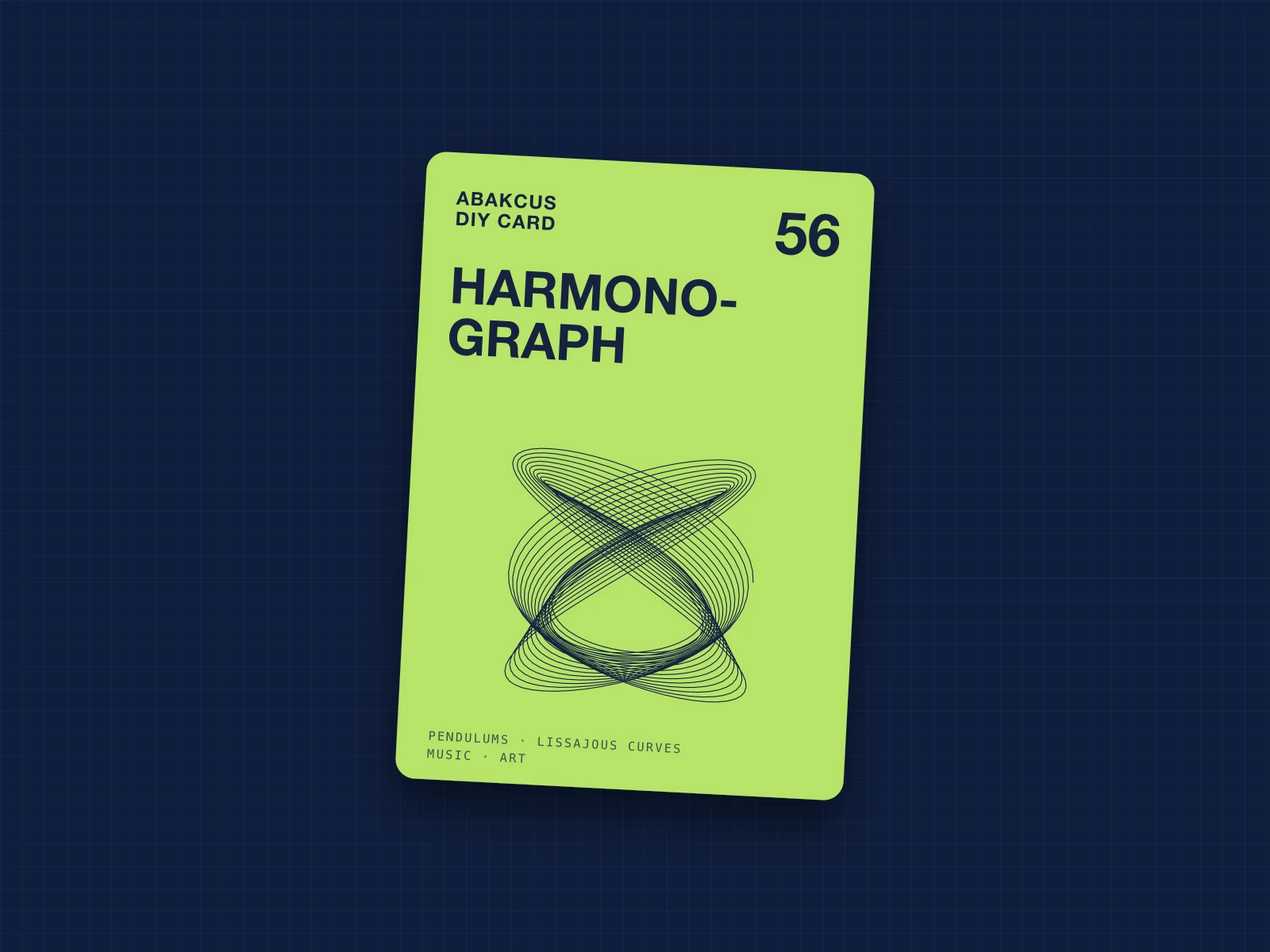
How to Make a Harmonograph That Draws With a Pendulum
A broom handle, a board on a Y of string and a felt-tip pen. Set it swinging and the pen draws figures of eight and woven shells, the shapes of musical harmony.
Open