
DIY · Card 51 · Mathematics · Proof
A paper circle, three folds and a pair of scissors. Cut it into slices, lay them top to tail, and the circle turns into a rectangle that shows you, in ten minutes, why its area is πr².
01The brief
Turn a circle into a rectangle, and read off its area.
8
slices from three folds, enough to see the rectangle appear
πr × r
the rectangle’s base times its height: half the circumference times the radius
250 BC
roughly when Archimedes first proved it
Everybody learns that the area of a circle is πr². Far fewer people are ever shown why. Where does the π come from, and why is the radius squared?
You can see the answer with a paper circle. Slice it like a pizza, lay the slices side by side, pointing alternately up and down, and the round shape turns into something very close to a rectangle. Measure it and the formula falls out. It is the same idea, slicing something into pieces and putting them together differently, that lies behind the spiral of Theodorus and, in its grown-up form, behind all of calculus.
02Kit
A pencil-case proof: paper, compass, scissors.
Tick off what you have
0 of 5 ready
03Method
Fold, colour, cut and rearrange. No paper is lost along the way.
Step 1 of 8 · Minute 0
You need a sheet of paper, a compass, a ruler, a pencil, scissors and two colours of marker. A sheet of card to stick the pieces on is nice too.
The slices don’t match.
Why
The folds didn’t pass exactly through the centre.
Fix
Line up the edges carefully every time you fold, and check that every crease goes through the centre mark.
The shape looks nothing like a rectangle.
Why
Only 8 slices: the curved edges and slanted ends are large.
Fix
Fold once more for 16 slices, or draw 32 with a protractor. The thinner the slices, the straighter the shape.
The rectangle comes out too long.
Why
Gaps between the slices.
Fix
Push each slice right up against its neighbours, corner to corner, before gluing.
04The proof
The key is that cutting and moving pieces doesn’t change how much paper there is. So the strip has exactly the circle’s area. Its height is a slice’s length, the radius r. Its long edges are made of the slices’ curved ends: half of them along the top, half along the bottom. Each long edge is half the circumference, half of 2πr, which is πr.
With eight slices the strip is bumpy. Add slices and watch it straighten:
Strip width
3.4442 r
π
3.1416 r
Bumpiness of edges
7.61 % of r
However you slice it, the area never changes: it is the same paper. What changes is the shape. With more, thinner slices the scalloped edges flatten and the slanting ends stand up straight, until the strip is a rectangle r tall and πr wide. Its area, and the circle’s, is πr × r = πr².
The formula still needs π, the number of times a diameter fits round its circle. Archimedes found it by squeezing the circle between two polygons, one inside and one outside, whose areas he could work out. Double their sides and the squeeze tightens:
Inside polygon
2.59808 r²
Circle, π r²
3.14159 r²
Outside polygon
3.46410 r²
With 6 sides, π is trapped between 2.598 and 3.464. Double the sides to tighten the squeeze.
05The big idea
Slice it thin,
add it up.
A curved shape is hard to measure. Cut it into pieces thin enough and each piece is almost straight, almost simple. Rearrange them, add them up, and the hard problem becomes an easy one.
Archimedes used this idea more than two thousand years ago. Kepler used it on wine barrels; Newton and Leibniz turned it into calculus. Your paper circle is where it all begins.
06The math
1 · Circumference
C = 2πr
The definition of π: circumference over diameter.
2 · The rectangle
A = ½C × r = πr²
Half the circumference long, one radius tall.
3 · Archimedes’ squeeze
3 10⁄71 < π < 3 1⁄7
From the 96-sided polygons inside and outside.
For your 8 cm circle the circumference is 2 × π × 8 ≈ 50.3 cm, so the rectangle should be about 25.1 cm long and 8 cm tall, an area of about 201 cm². With eight slices you’ll measure a little more, because the strip has slanted ends and bumpy edges; the slanted ends add half a slice’s width.
Archimedes’ bounds were astonishing for work done by hand: 3 10⁄71 ≈ 3.1408 and 3 1⁄7 ≈ 3.1429, with the true value π ≈ 3.14159 in between. He stated the area result another way: a circle equals a right triangle with legs r and 2πr, whose area is ½ × 2πr × r, again πr².
07Real life
From pizza to telescopes, area grows with the square of the radius.
Pizza maths
Because area grows with the square of the radius, one 18-inch pizza has about 254 square inches of pizza, more than two 12-inch pizzas put together, at about 226. Double the width and you get four times the pizza.
Pipes and hoses
How much water a pipe can carry depends on the area of its cross-section, πr². Double a pipe’s diameter and its opening is four times as large.
Telescope mirrors
A telescope gathers light over the area of its mirror. The James Webb Space Telescope’s 6.5-metre mirror collects about six times as much light as Hubble’s 2.4-metre one.
Wine barrels
In 1615 Johannes Kepler, buying wine for his wedding, worked out barrel volumes by imagining them sliced into countless thin pieces, the same idea as cutting a circle into slices.
Calculus
Slicing a shape into infinitely thin pieces and adding them up is integration, the heart of calculus. The paper circle is one of the simplest examples of the idea that Newton and Leibniz later made into a method.
Round tables and lids
Ordering a round tablecloth, a pond liner or paint for a circular floor: every one of them needs πr². A circle 2 metres across covers about 3.14 square metres.
96
In Syracuse, around 250 BC, Archimedes wrote a short work called Measurement of a Circle. In it he proved that a circle’s area equals a triangle’s whose height is the radius and whose base is the circumference, then set about finding π itself.
He started with hexagons inside and outside a circle and doubled their sides to 12, 24, 48 and finally 96, working out every square root by hand. The result trapped π between 3 10⁄71 and 3 1⁄7, and for centuries nobody did better.
08Is and isn’t
π equals 22⁄7.
22⁄7 = 3.142857… is a good approximation, Archimedes’ upper bound. π itself is irrational: 3.14159… with decimals that never repeat.
The slicing trick is only an approximation.
Each version with a finite number of slices is bumpy, but the area is always exactly the circle’s. As the slices get thinner the shape becomes a rectangle in the limit, and that limit is exact.
πr² is just a formula you have to memorise.
It can be seen with scissors in ten minutes. Once you know the circumference is 2πr, the area follows: half of it times the radius.
Double the radius, double the area.
Double the radius and the area is four times as big, because r is squared. Triple it and the area is nine times as big.
09Go further
A
Sixteen slices
Do it again with 16 or 32 slices. Measure the length of your rectangle and divide it by the radius. How close to 3.14 is it?
B
Count squares
Draw a circle of radius 10 squares on squared paper and count the squares inside. Compare with π × 10 × 10 = 314.
C
Onion rings
Imagine the circle as rings, like an onion. Cut along one radius and unroll them into a triangle, r tall and 2πr wide. What is its area?
D
Measure π
Wrap string round a tin and measure it, then measure across. Divide the first by the second. Try different tins.
E
Archimedes’ method
Draw a hexagon inside a circle of radius 1. Its perimeter is exactly 6, so π is more than 3. Can you get a better bound with 12 sides?
10Questions
Cut a circle into many thin slices and lay them top to tail, alternately pointing up and down. They form a shape that gets closer and closer to a rectangle as the slices get thinner. Its height is the radius r and its length is half the circumference, πr. So the area is πr × r = πr².
Draw a circle, fold it three times to crease 8 equal slices, colour one half and cut the slices out. Arrange them in a row, points alternately up and down, and cut the end slice in half to square off the ends. The near-rectangle is r tall and πr long.
Archimedes, around 250 BC, in a short work called Measurement of a Circle. He showed that a circle has the same area as a right triangle whose two short sides are the radius and the circumference, which is ½ × 2πr × r = πr². He then trapped π between 3 10⁄71 and 3 1⁄7 using 96-sided polygons.
It becomes one when you go to the limit. With n slices the shape differs from a rectangle by bumps that shrink as n grows, while its area never changes. Taking ever thinner slices is exactly the idea behind integral calculus, which turns it into a rigorous proof.
2πr is the circumference, the distance round the edge, measured in centimetres. πr² is the area, the amount of surface inside, measured in square centimetres. The slicing proof links them: the area is half the circumference times the radius.
Safety · Safe for all ages with a little care: mind the compass point, and let younger children use round-ended scissors.
All DIY cards →Keep wandering
A few more pieces in the same spirit — math, design, and slow attention.
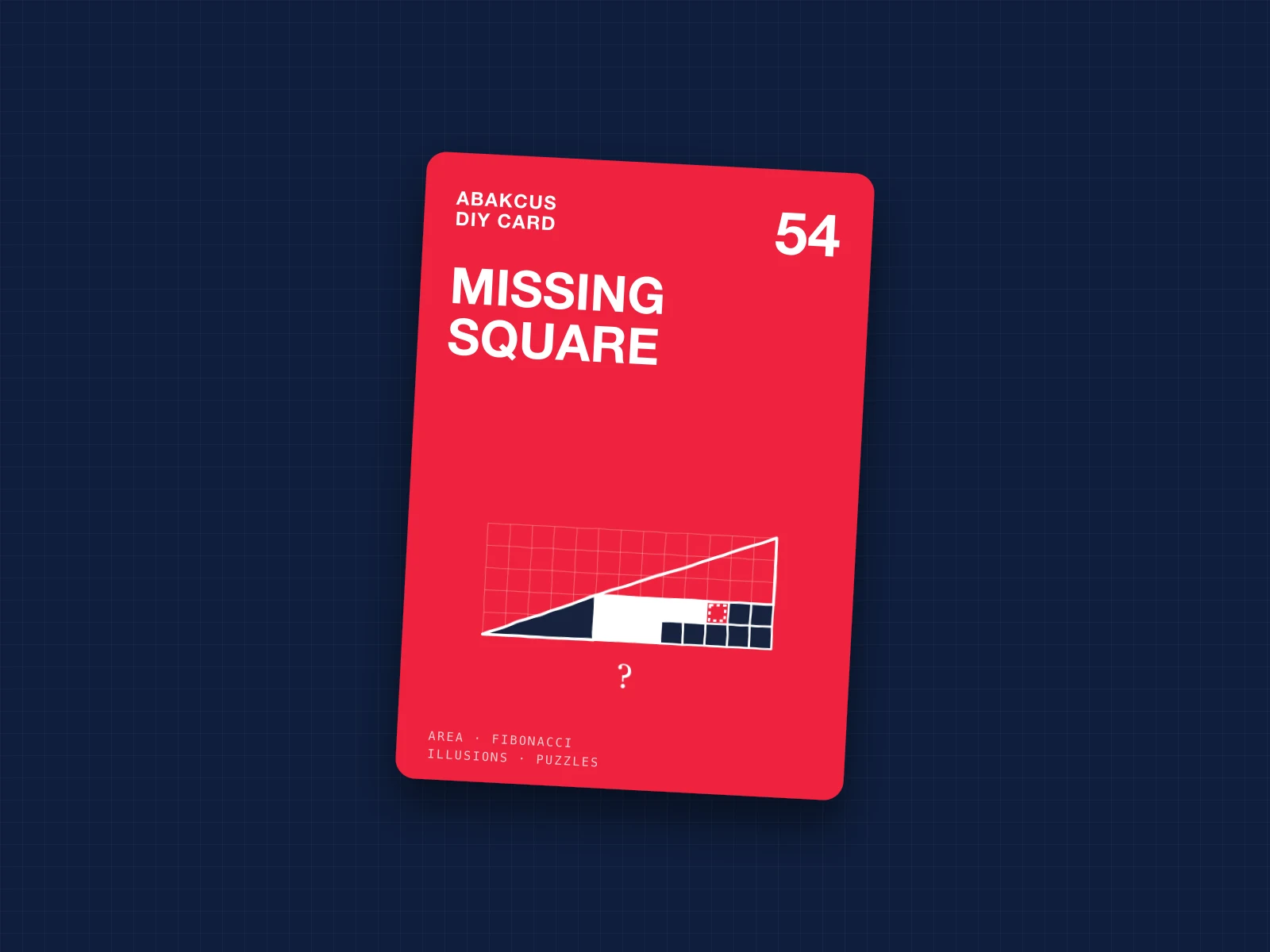
How to Make the Missing Square Puzzle and Find the Trick
Four pieces of card make a triangle. Swap two of them round and the same pieces make the same triangle, with a square missing. Where did it go?
Open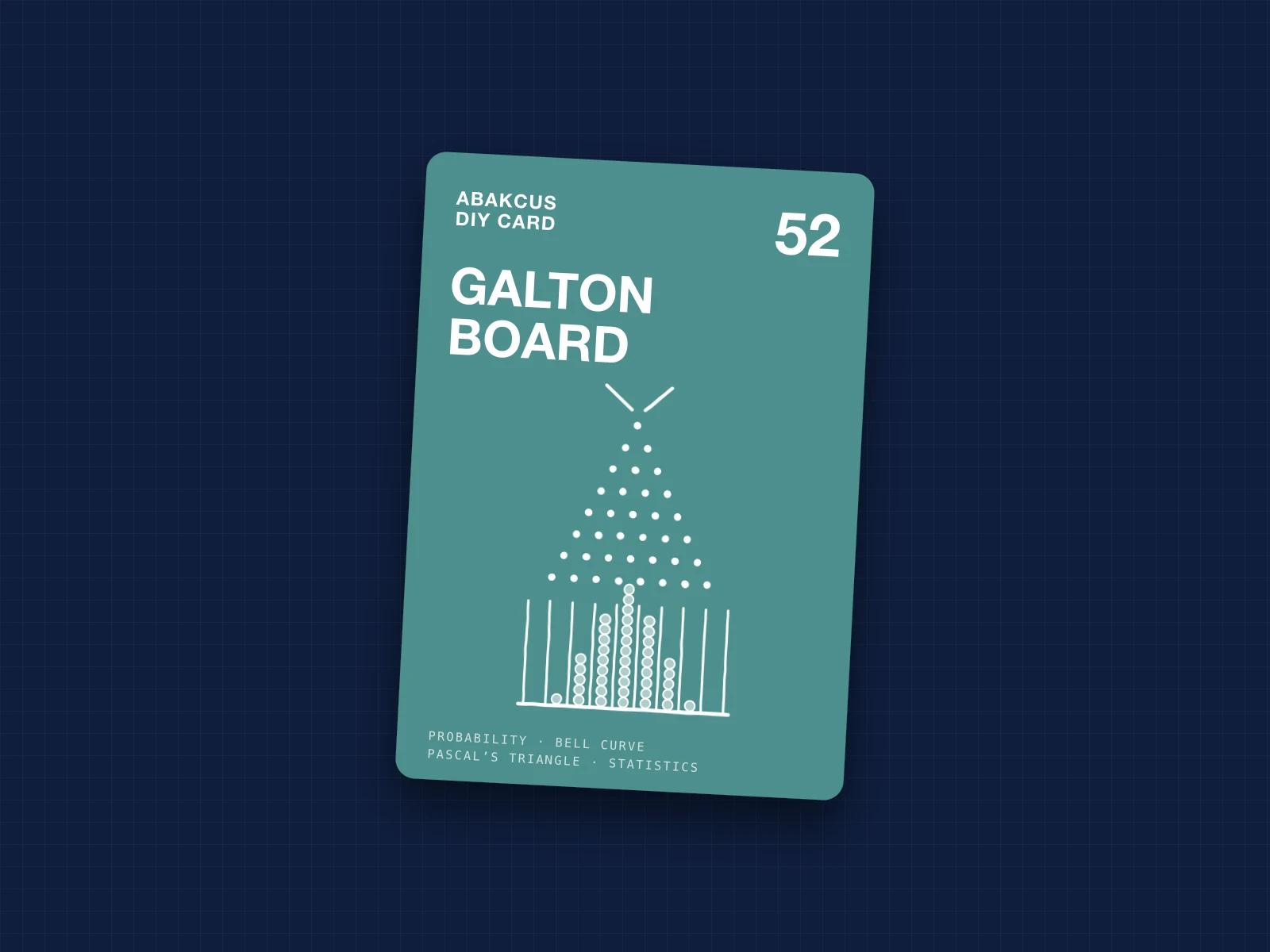
How to Make a Galton Board That Draws a Bell Curve
A board, forty pins and a handful of beads. Every bead zigzags at random, yet together they pile into the same graceful hump every time: the bell curve.
Open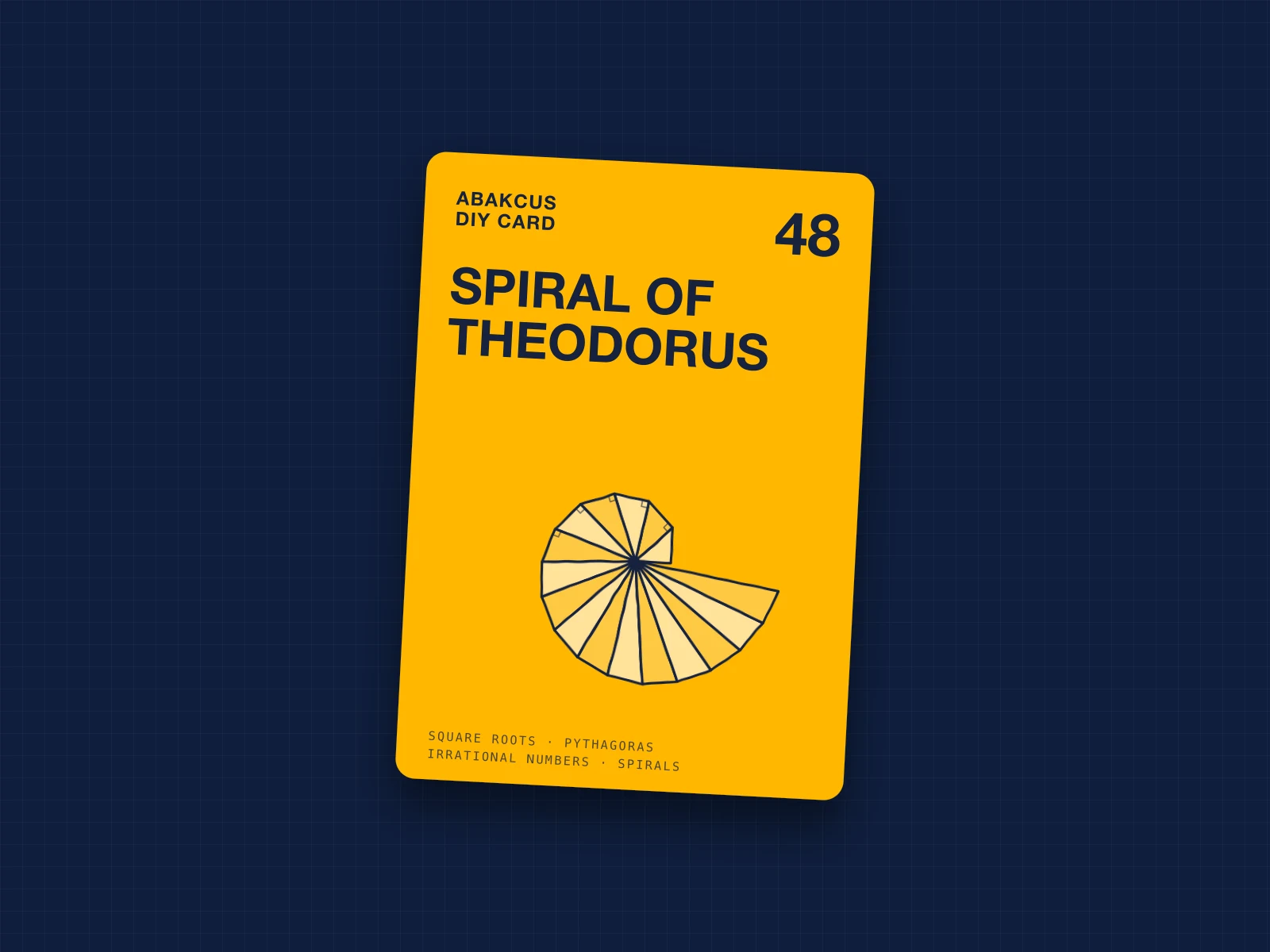
How to Construct the Spiral of Theodorus With a Ruler
A ruler, a square corner and a pencil. Build one right triangle on another and draw every square root from √2 to √17, curled into a snail shell.
Open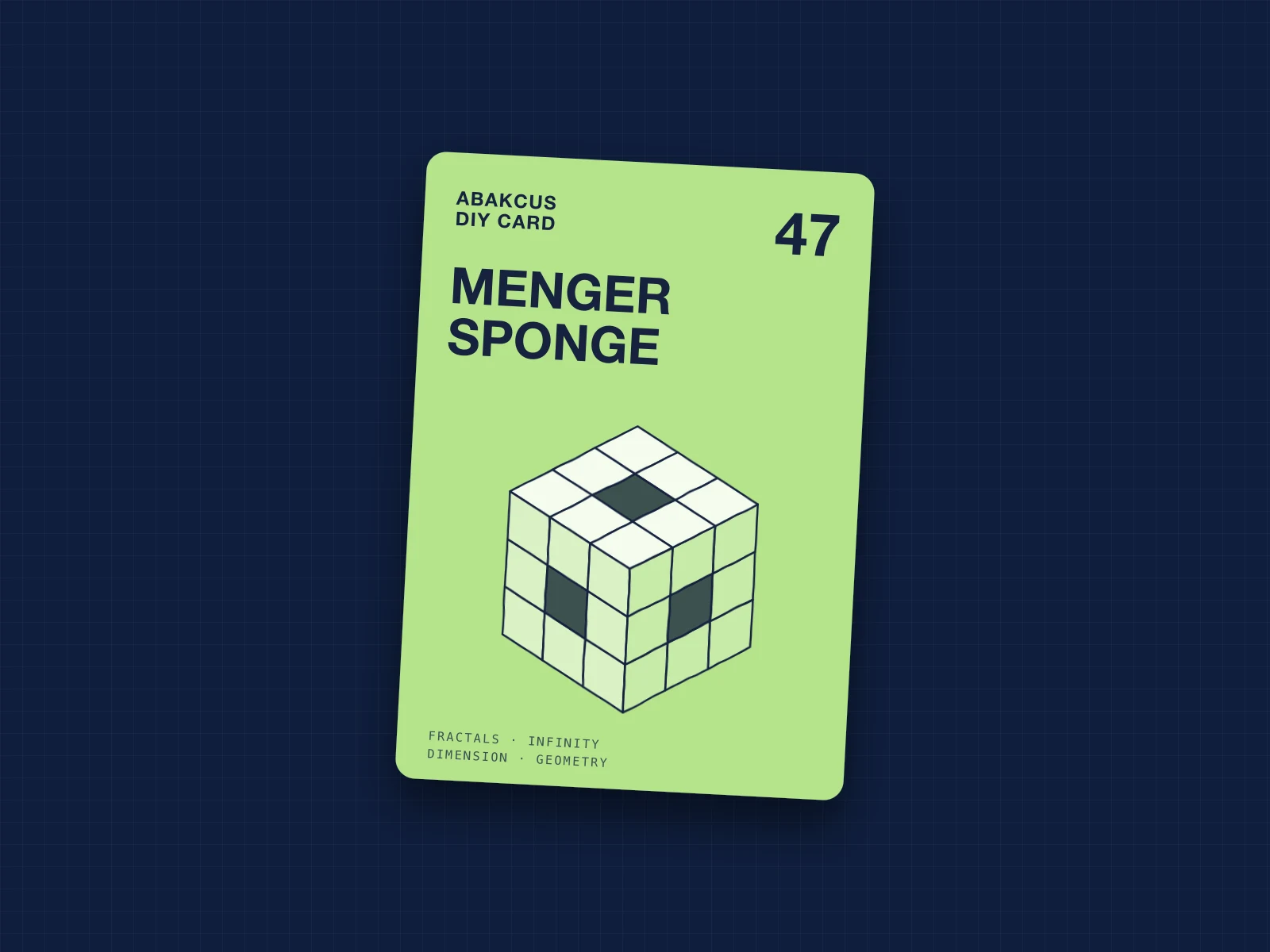
How to Build a Level-One Menger Sponge From Business Cards
A hundred and twenty business cards, folded into twenty cubes and locked together without glue. The first step of a shape with no volume and an infinite surface.
Open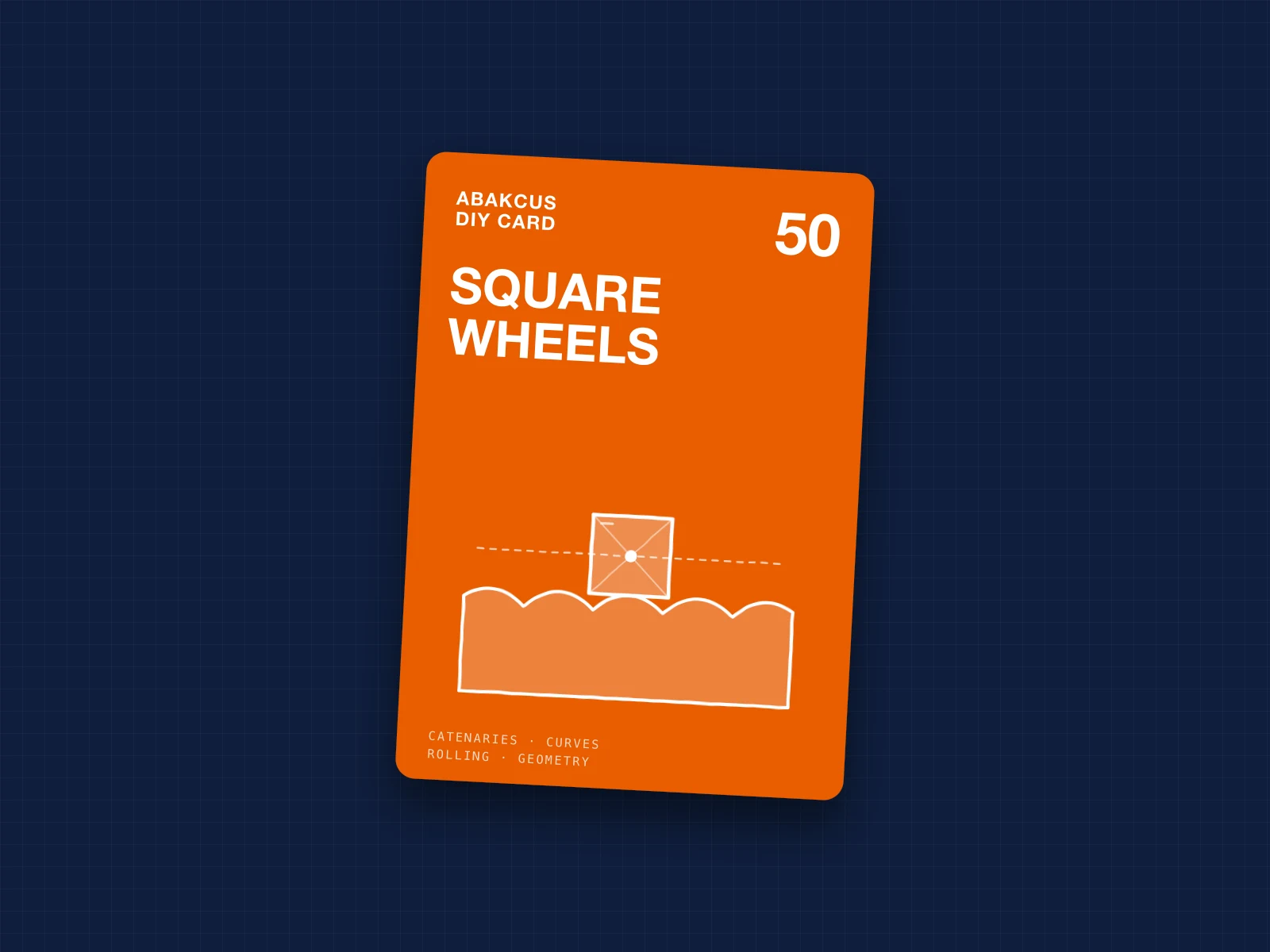
How to Make Square Wheels That Roll Smoothly on a Bumpy Road
Two cardboard squares, a skewer and a necklace. Trace a hanging chain, turn it upside down for a road, and square wheels roll as smoothly as round ones.
Open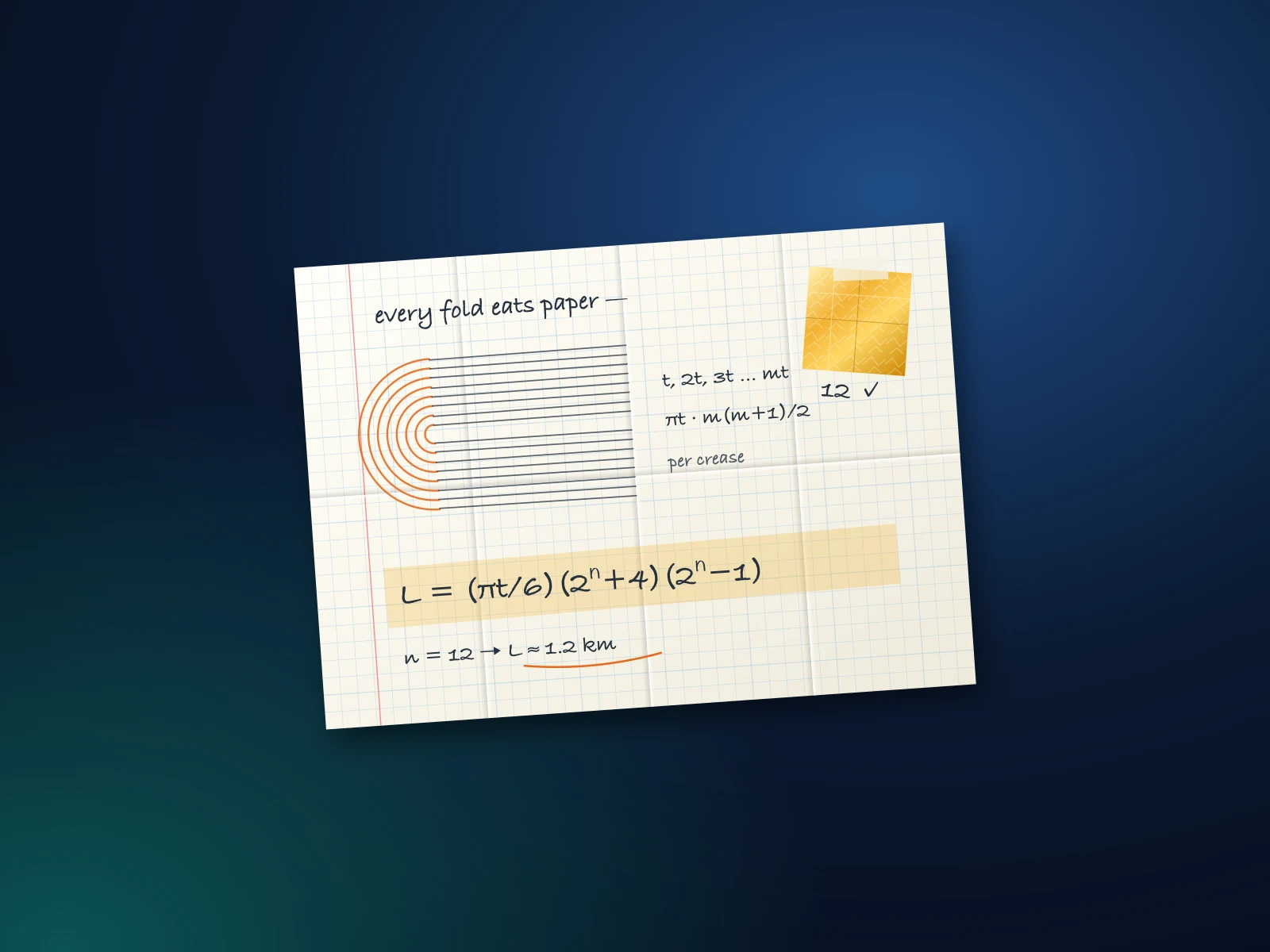
How Many Times Can You Fold Paper? Britney Gallivan's 12 Folds
Forty-two folds reach the Moon, yet paper quits at seven. A high-school junior worked out why — then folded a 1.2 km roll twelve times.
Open