
DIY · Card 37 · Engineering · Materials
A bag of Brazil nuts and a nutcracker. Squeeze one flat and it shatters; squeeze one on its ridge and the shell falls open around a perfect kernel. Same nut, same tool: the difference is where you press.
01The brief
Crack a Brazil nut’s shell and get the kernel out without a single break.
50 m
the height a Brazil nut pod can fall from, without splitting open
4×
the force at the jaws, for a nut a quarter of the way along a nutcracker
1987
the year physicists explained why the biggest nuts always end up on top
Anyone can break a Brazil nut. The challenge is breaking only the shell. Squeeze it the obvious way and you get a palmful of crumbs; turn it a little and the shell splits cleanly, as if it had been waiting to.
It is a lesson in how materials break. Every shell has strong places and weak ones, and force goes where you put it. Find the weak line, put the force there, and stop the moment it gives. It is the same thinking as building the cardboard chair and protecting the egg in the inertia egg drop, turned around: here you want something to break, but only exactly where you choose.
02Kit
A bag of nuts in their shells and an ordinary nutcracker. The rest is careful squeezing.
Tick off what you have
0 of 4 ready
03Method
Try it the wrong ways first, then turn the nut onto a ridge, squeeze slowly, and stop at the crack.
Step 1 of 8 · Minute 0
You need a bag of Brazil nuts in their shells, a nutcracker, a tea towel, a bowl and a pencil and paper to keep score. Safety glasses are a good idea: bits of shell fly.
Every kernel comes out in crumbs.
Why
The nut is lying flat, or you squeeze too fast and too far.
Fix
Turn the nut onto a ridge, squeeze slowly, and stop at the first crack.
The nut slips out of the jaws.
Why
Its curved side is skidding on the smooth metal.
Fix
Hold it in place with your fingertips until the jaws grip, keeping your fingers clear of the jaws themselves.
The shell cracks but won’t come off.
Why
The kernel is still stuck to the inside of the shell.
Fix
Squeeze gently once more on a different ridge, then lever the pieces apart with your thumbnail.
04Physics
A nutcracker is a lever. The hinge is at one end, the nut sits near it, and your hand squeezes the far end of the handles. Because your hand moves much further than the jaws do, the force at the jaws is larger than your squeeze, by the ratio of the two distances. Slide the nut along and see:
A child’s firm squeeze is about 100 N; an adult’s, two or three times that.
The lever multiplies your squeeze by 3.2: the handle is 16 cm long, the nut 5 cm from the hinge. Move the nut closer to the hinge and you need less effort, but the jaws close less far, so big nuts won’t fit.
Where the force lands matters as much as how big it is. A flat face spreads the push over a wide area and passes it straight into the kernel. The arched ends turn the push into squeezing all the way round the shell, which shells resist very well. A ridge concentrates it along a thin line exactly where two sections of the shell meet, and the shell splits there at a much smaller force. Then comes the last trap: the instant the shell gives, the jaws lunge forward. Try each way:
Shell gives way at
420 N
Kernel feels
—
The kernel crumbles above about 160 N. Choose how to hold the nut, and how to squeeze, then squeeze.
The cracking forces in both widgets are plausible guesses for a Brazil nut, not measurements; real nuts vary a lot. What the widgets get right is the order: ridge, then face, then ends, and slow beats fast.
05The big idea
Not harder.
Smarter.
The same nut can resist a huge force or give way to a small one. It depends on where the force goes and what the material is doing there: being squeezed, being bent, or being split along a line that was already weak.
Engineers use this both ways. They design bridges and domes so that loads squeeze rather than bend, and they build weak lines into packets, cans and stamps so that things break exactly where they should and nowhere else.
06The math
1 · The lever
F_nut = F × L ⁄ d
Your squeeze F at a handle of length L becomes this force on a nut a distance d from the hinge.
2 · Pressure
p = F ⁄ A
The same force spread over a smaller area A makes a bigger pressure on the shell.
3 · The work
F × s = F_nut × s_nut
The lever doesn’t give you energy: your hand moves further than the jaws, by the same ratio.
Squeeze with 100 N at the end of 16 cm handles on a nut 4 cm from the hinge, and the jaws push with 100 × 16 ⁄ 4 = 400 N, the weight of 40 kilograms.
Now the pressure. Flat against a jaw, the nut touches over roughly 10 mm × 30 mm = 300 mm²: 400 ⁄ 300 ≈ 1.3 N/mm². On a ridge, the contact is a line perhaps 1 mm wide: 30 mm², and ten times the pressure, 13 N/mm², right on the seam. That is why the ridge cracks first, at a force the kernel can survive.
07Real life
Rodents, crows, monkeys and engineers all solve the problem of breaking something hard in the right place.
Agoutis
The Brazil nut’s pod is so hard that almost the only animal able to open it is the agouti, a large rodent with chisel-sharp teeth. Agoutis bury the seeds they can’t eat and forget some of them, and those forgotten seeds grow into new Brazil nut trees.
Crows and cars
In Japan, carrion crows have been seen dropping walnuts onto roads at traffic lights, letting cars drive over them, and collecting the cracked nuts when the lights turn red. They let a car do the work of a nutcracker.
Capuchin monkeys
Wild capuchins in Brazil crack hard palm nuts with stone hammers on stone anvils, choosing heavy stones and turning each nut to the best position before striking. Archaeologists have found their worn stone tools going back at least 3,000 years.
Score and snap
A glazier scratches a line on glass and it snaps cleanly along it. Chocolate bars have grooves, stamps have perforations, and packets have ‘tear here’ notches. Each one makes a weak line so that a material breaks exactly where you want it to, like a nut’s seam.
Arches and domes
The reason a nut won’t crack end to end is the reason stone bridges and cathedral domes stand for centuries. A curved shell turns a push into squeezing all the way round it, and stone, like nutshell, is far stronger squeezed than bent.
Seeds that must open
A shell has two jobs that pull against each other. It must protect the seed from falls, weather and hungry animals, yet split along its seams when the seed inside is ready to sprout. Seams are how nature builds in a planned way out.
1987
Open a tin of mixed nuts that has been shaken on its way home, and the Brazil nuts, the biggest, are almost always on top, even though they are heavier. In 1987 four physicists published a paper in Physical Review Letters with the title ‘Why the Brazil nuts are on top’.
Their computer simulations showed that each shake lifts a big nut a little, and small pieces trickle into the gap beneath it, so it can never fall back down. The Brazil nut effect turns out to matter well beyond the snack tin: in mixing medicines, in landslides, and on small asteroids, whose surfaces are strewn with the biggest boulders.
08Is and isn’t
The harder you squeeze, the better.
Harder only matters if you are pressing in the wrong place. On a ridge, the shell gives way at a modest force. What ruins kernels is force that keeps going after the crack.
Shells are strongest where they are thickest.
Shape matters more. The arched ends resist enormous forces; the seams along the ridges, where the shell’s sections meet, are weak whatever their thickness.
A bigger nutcracker always makes it easier.
Longer handles multiply your force, but they also make it harder to feel the moment the shell gives, so the jaws are more likely to run on into the kernel.
Brazil nuts are nuts.
Botanically they are seeds. Ten to twenty-five of them grow packed inside each heavy, round pod, which falls from the top of a rainforest tree.
09Go further
A
The tally
Crack ten nuts each way and record whole, broken and crumbled. Draw a bar chart. Which method wins, and by how much?
B
Hinge distance
Crack nuts at different distances from the nutcracker’s hinge. Where is the effort smallest? Where is it easiest to control?
C
Cold nuts
Freeze some nuts overnight and compare them with room-temperature ones. Does cold make the shell easier to crack, or the kernel harder to save?
D
Seam hunt
Find the seams on a walnut, a hazelnut and an almond. Does pressing on the seam always give the cleanest crack?
E
Brazil nut effect
Shake a jar of mixed nuts, or rice with a ping-pong ball buried in it. Watch the biggest pieces rise to the top.
10Questions
Put the nut in the nutcracker on its side, so that one of its long ridges presses against a jaw, and squeeze slowly. Stop the moment you hear the shell crack, then peel the pieces away. Pressed on a ridge, the shell splits along its seam before much force reaches the kernel.
Usually because they are squeezed flat across the middle. The jaws then push straight through the shell into the kernel, which takes most of the force. And when the shell finally gives way, a fast squeeze carries on into the kernel before you can stop.
End to end, the shell curves like an arch. An arch spreads a push around itself, so every part of the shell is squeezed rather than bent, and shells are very strong in compression. It takes a huge force to break one that way.
It is a lever with the hinge at one end, the nut near the hinge and your hand at the far end. The force on the nut is your squeeze multiplied by the length of the handle divided by the nut’s distance from the hinge, so a gentle squeeze becomes a big crushing force.
Botanically, no. They are the seeds of the Brazil nut tree, which grow packed like orange segments inside a hard, round pod the size of a grapefruit. The pod falls from trees up to 50 metres tall, and only a few animals can get into it.
Safety · Check first that nobody taking part has a nut allergy. Keep fingers clear of the jaws, wear glasses against flying shell, and keep whole nuts away from small children, who can choke on them.
All DIY cards →Keep wandering
A few more pieces in the same spirit — math, design, and slow attention.
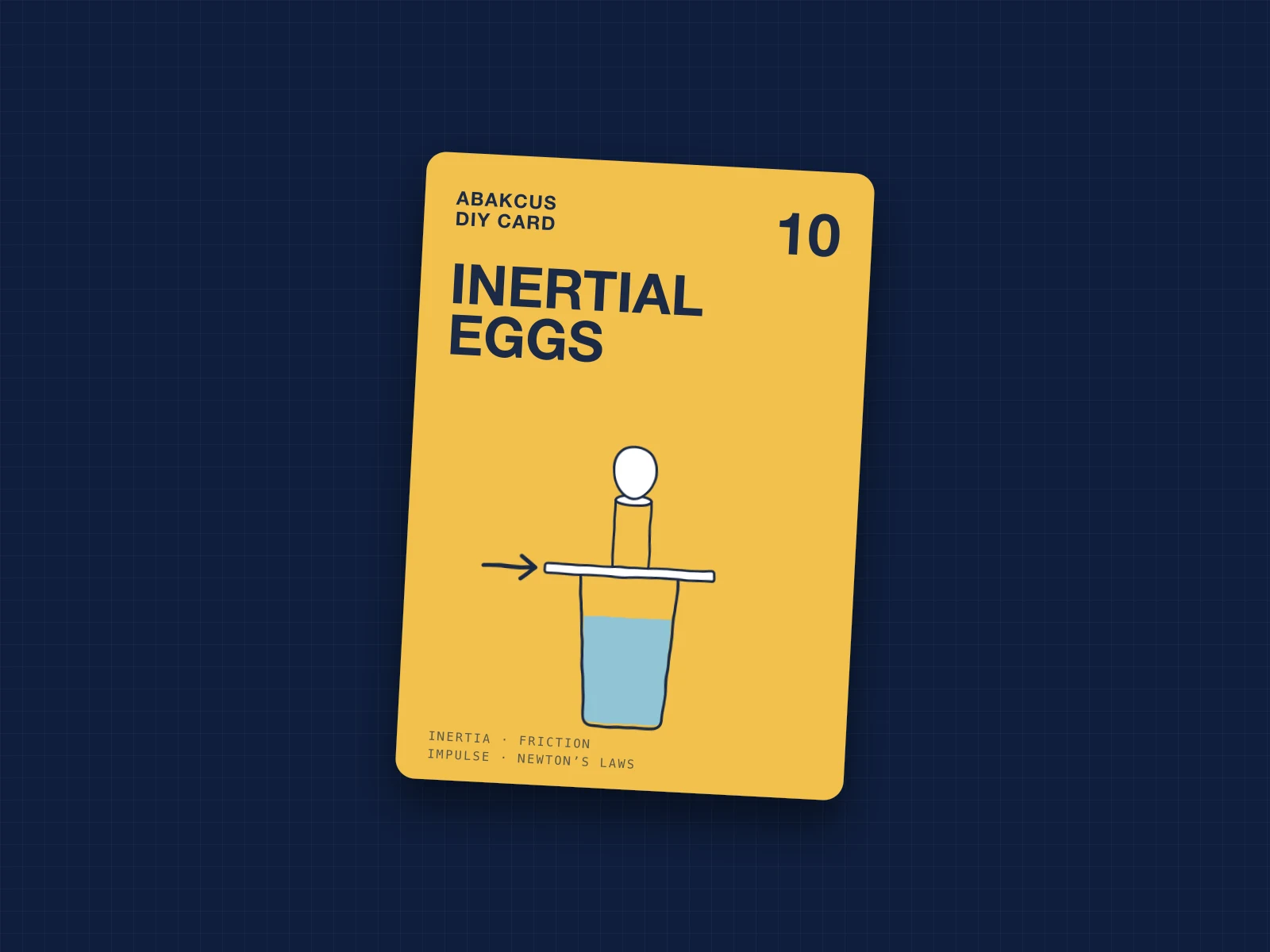
How to Do the Egg Drop Inertia Trick: Newton’s First Law
Knock a tray out from under an egg and the egg drops straight down into a glass of water. The trick is speed, not strength, and the egg’s weight turns out not to matter at all.
Open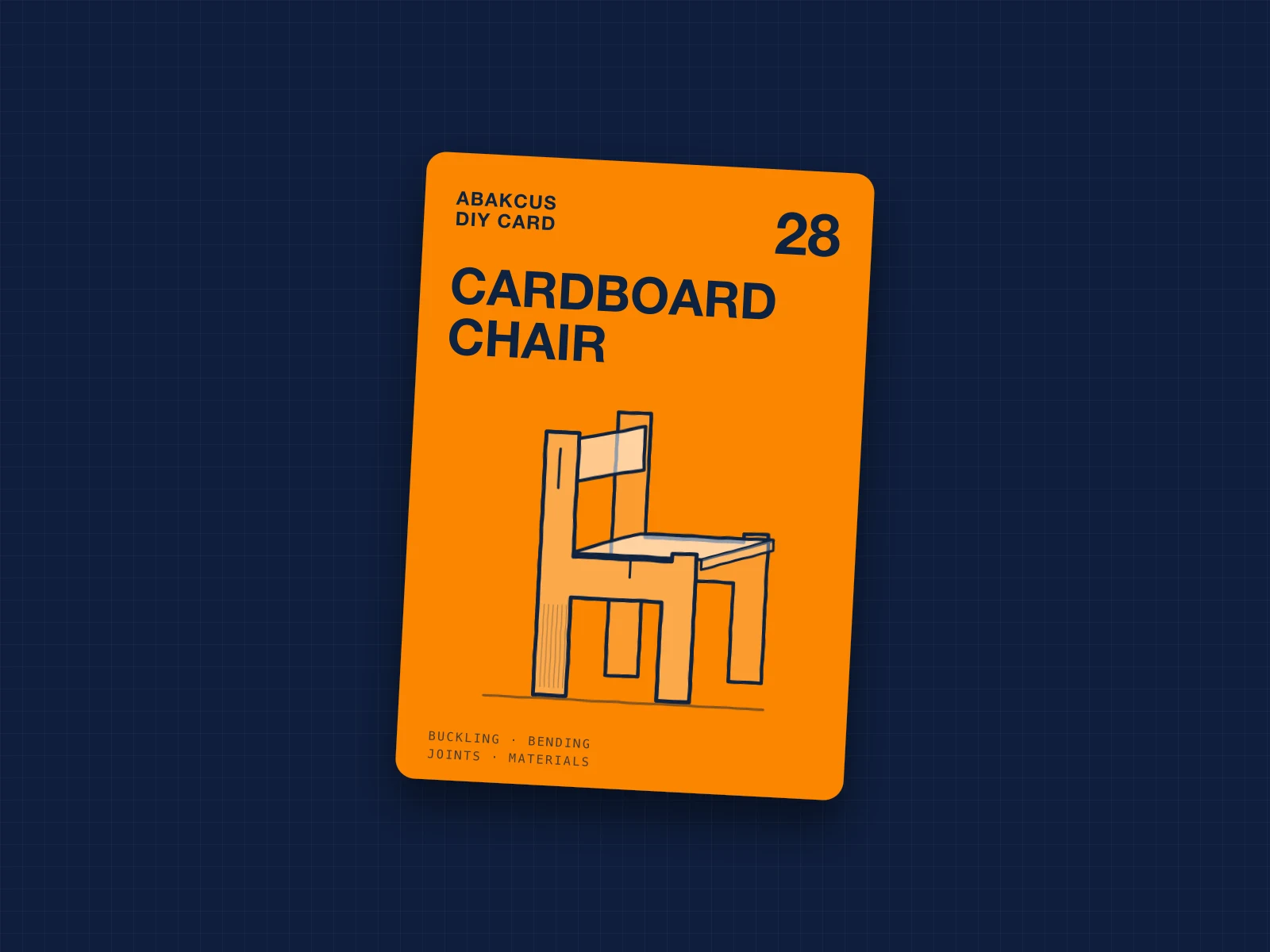
How to Make a Cardboard Chair That Holds Your Weight
Nothing but cardboard: no glue, no tape, no screws. Just slots, folds and the flutes the right way up, and a chair that holds a grown-up.
Open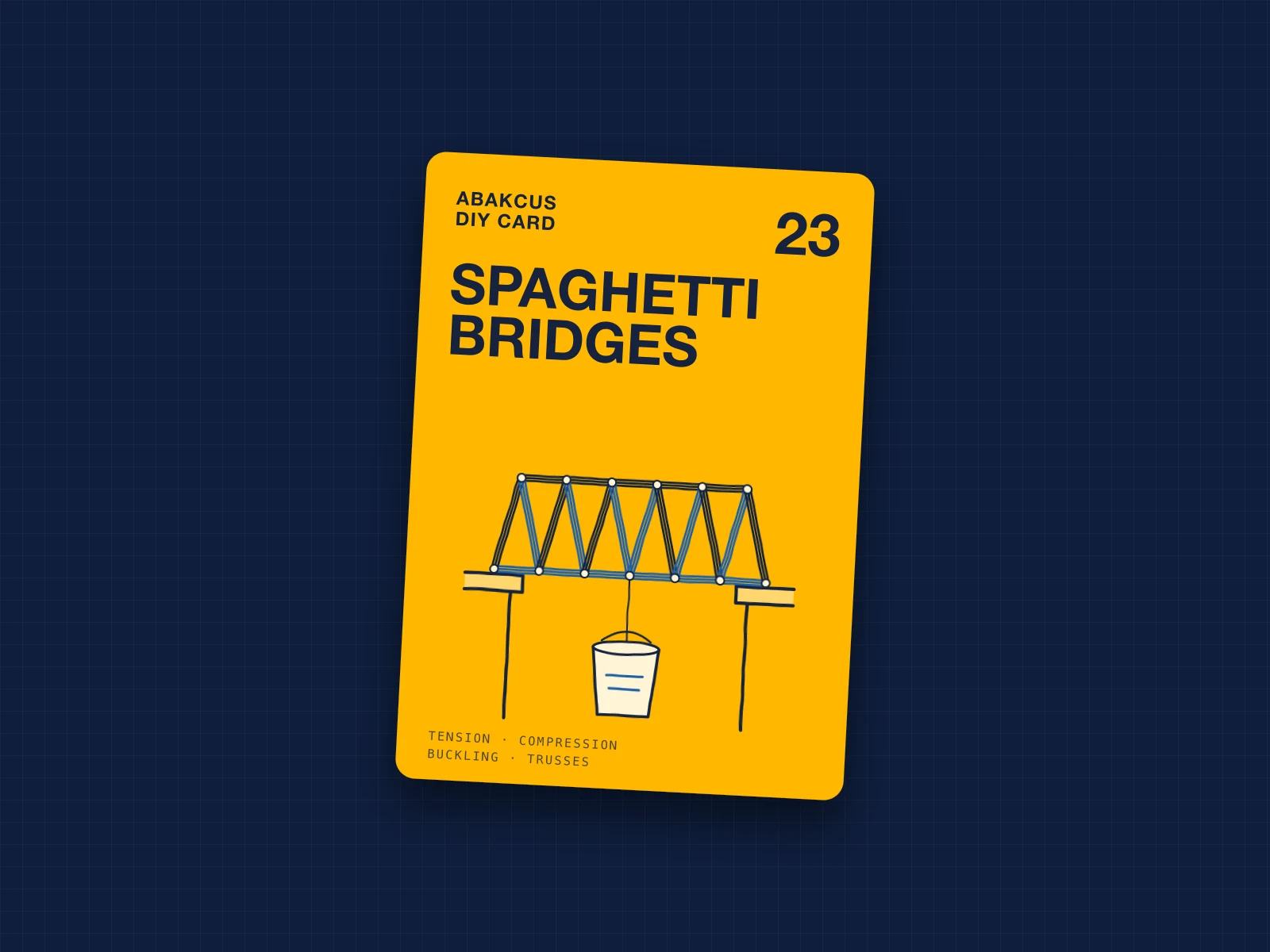
How to Build a Spaghetti Bridge (and Why Pasta Buckles)
One strand of dry spaghetti can hang five kilograms from its end, then buckles under less than two hundred grams pushed along it. A good bridge pulls where pasta is strong and keeps the pushes short.
Open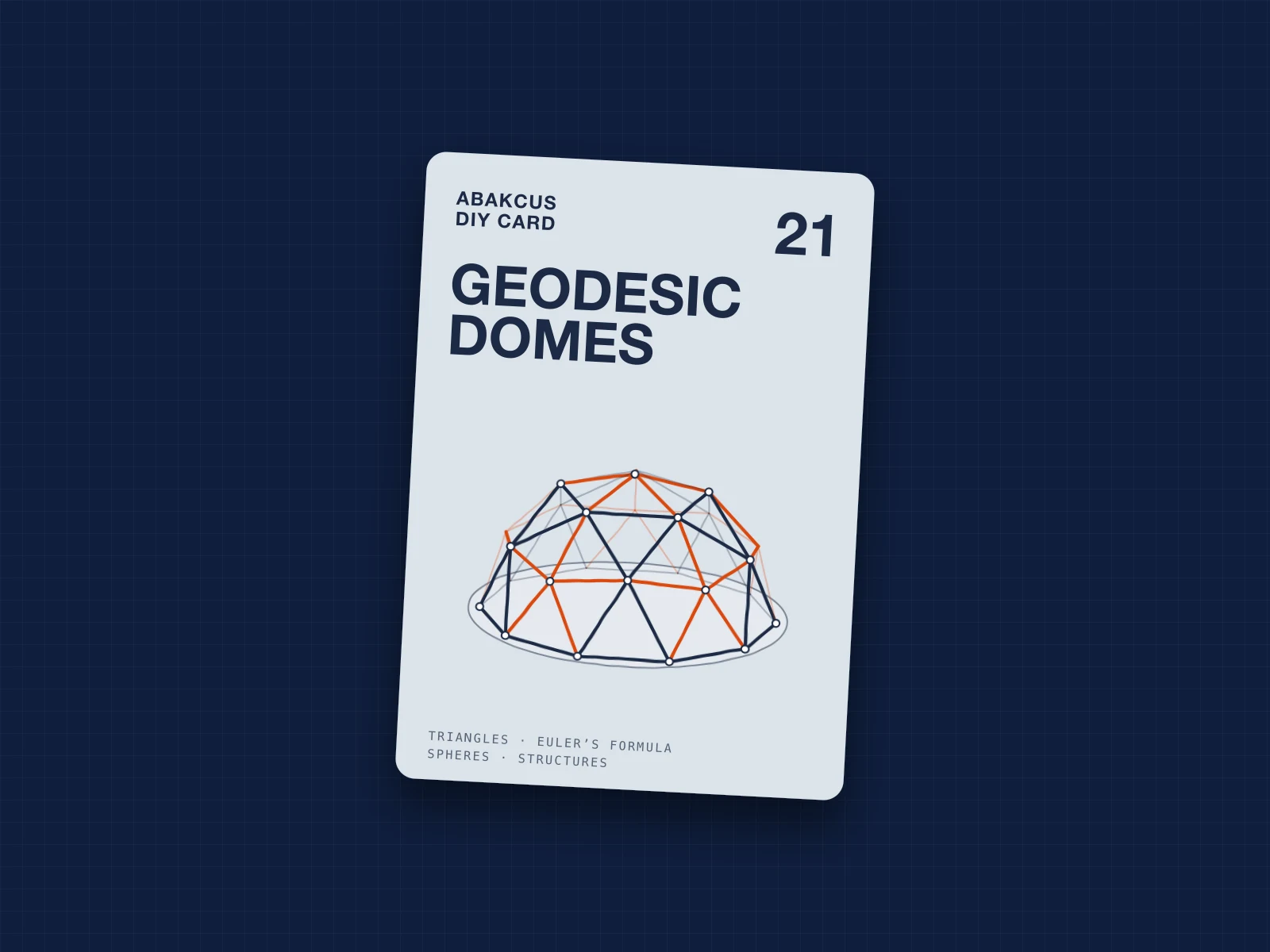
How to Build a Geodesic Dome From Newspaper
Sixty-five rolled-up newspapers, two lengths, a lot of tape: a dome two metres across that you can sit inside. Triangles can’t change shape, and that one fact holds the whole thing up.
Open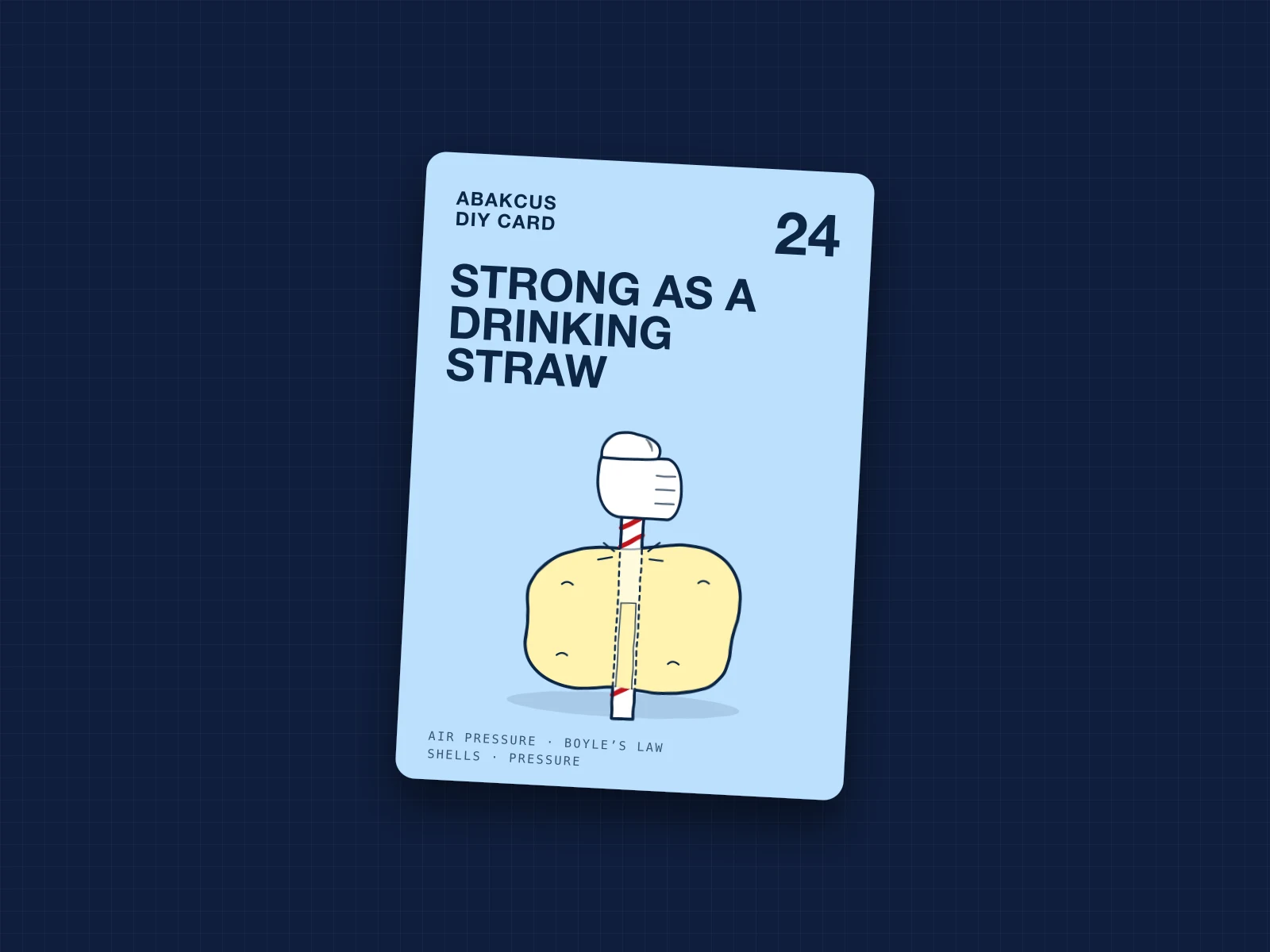
How to Push a Straw Through a Raw Potato
Stab a potato with a plastic straw and the straw crumples. Put your thumb over the top first and it goes straight through. The air trapped inside can’t get out, so the straw can’t cave in.
Open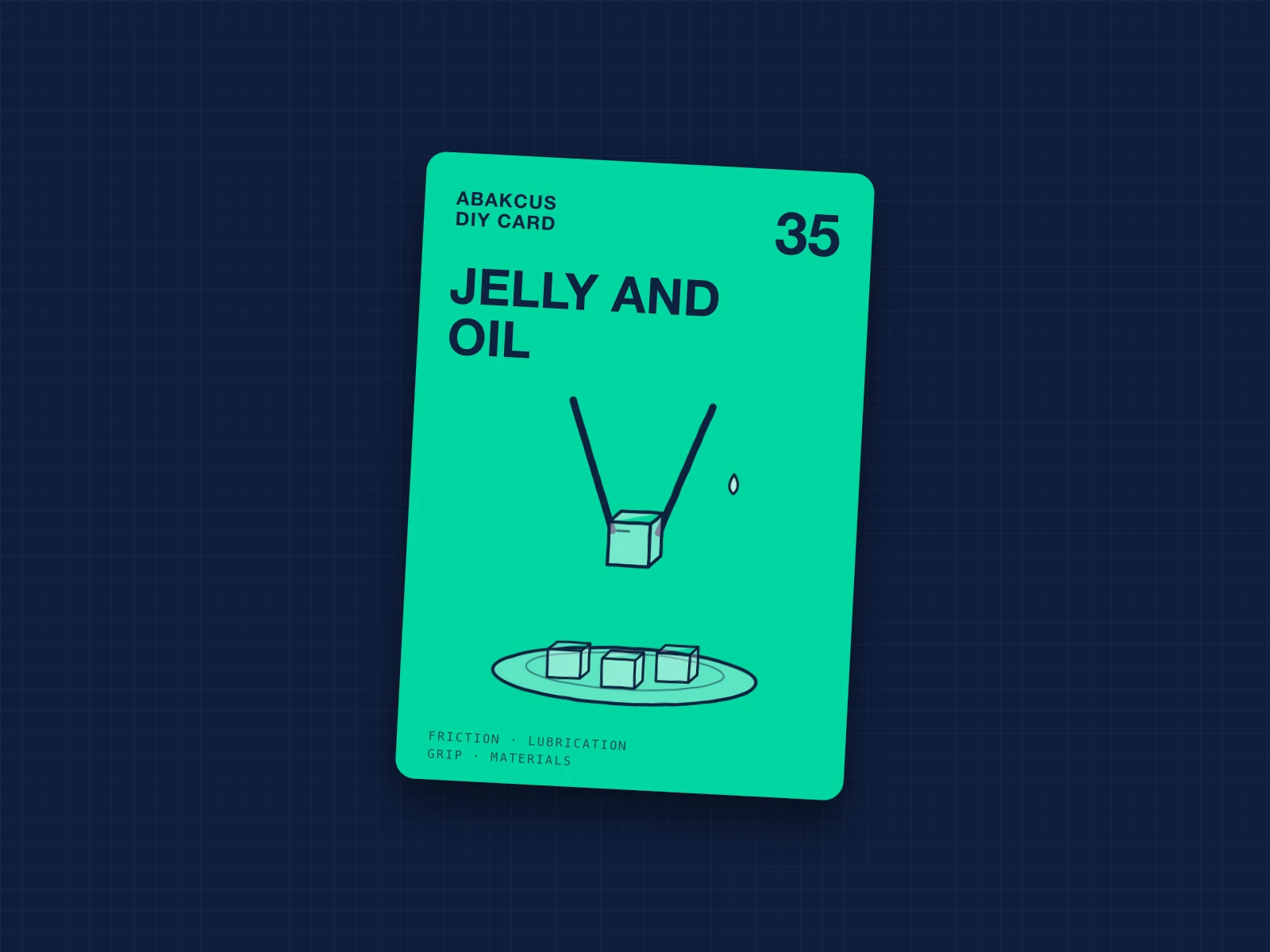
Jelly and Oil: A Friction Experiment With Chopsticks
Move cubes of jelly from one plate to another with chopsticks. Easy. Now coat them in oil and try again, and find out how much of everything you hold depends on friction.
Open