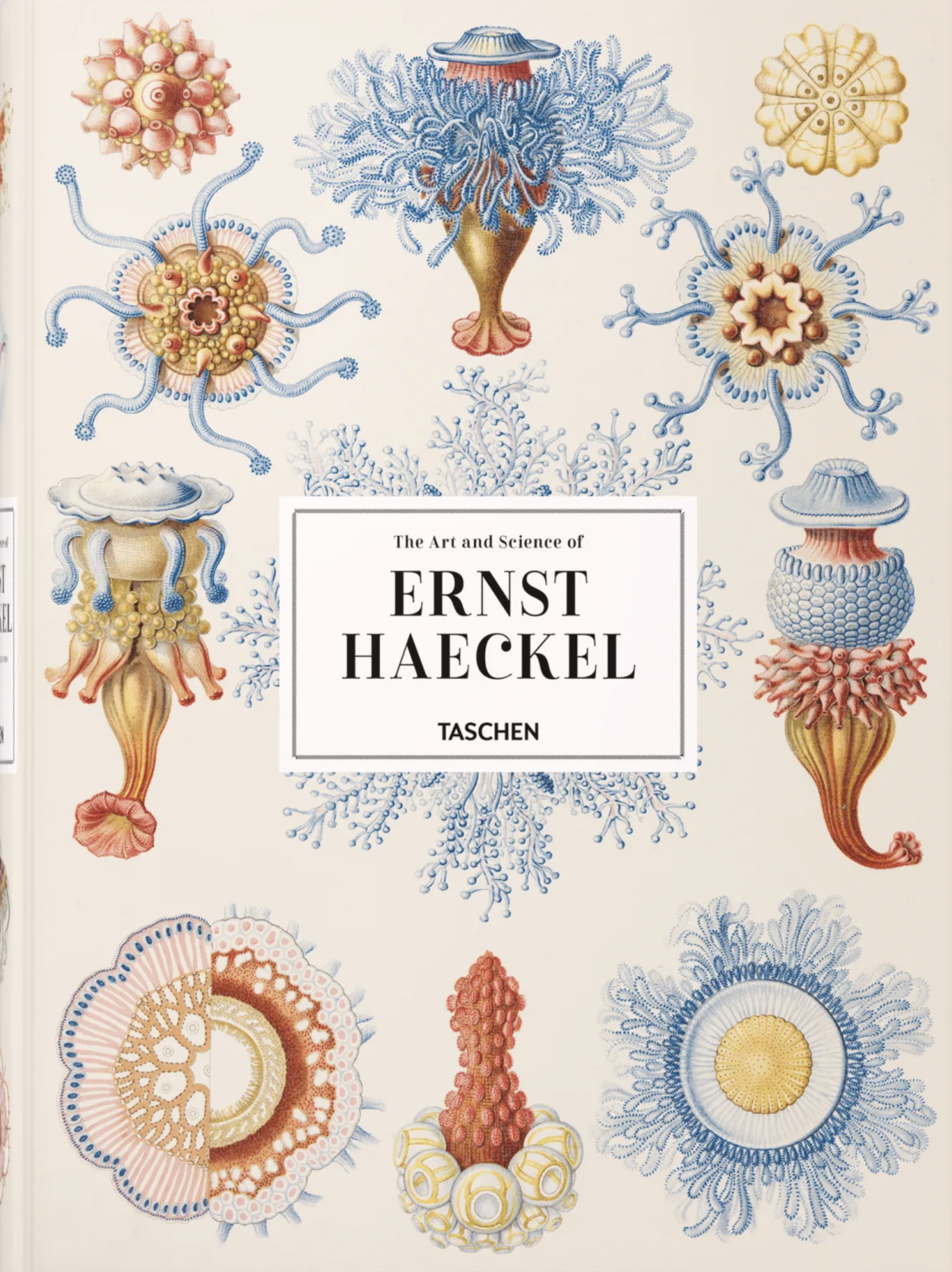
In 1866, while drawing the arms of an octopus, Ernst Haeckel was probably the luckiest man alive — because he could see those arms both through a microscope and through the eyes of an artist. And as he translated what he saw onto paper, he was asking a question science had barely thought to pose: why is nature's beauty so perfectly systematic?
ASCHEN's monumental volume brings together the visual evidence of that question: over 450 lithographs, watercolors, and drawings. Radiolarians, corals, jellyfish, ferns, butterflies. Each rendered with such painstaking care that deciding whether you're looking at science or art becomes genuinely impossible.
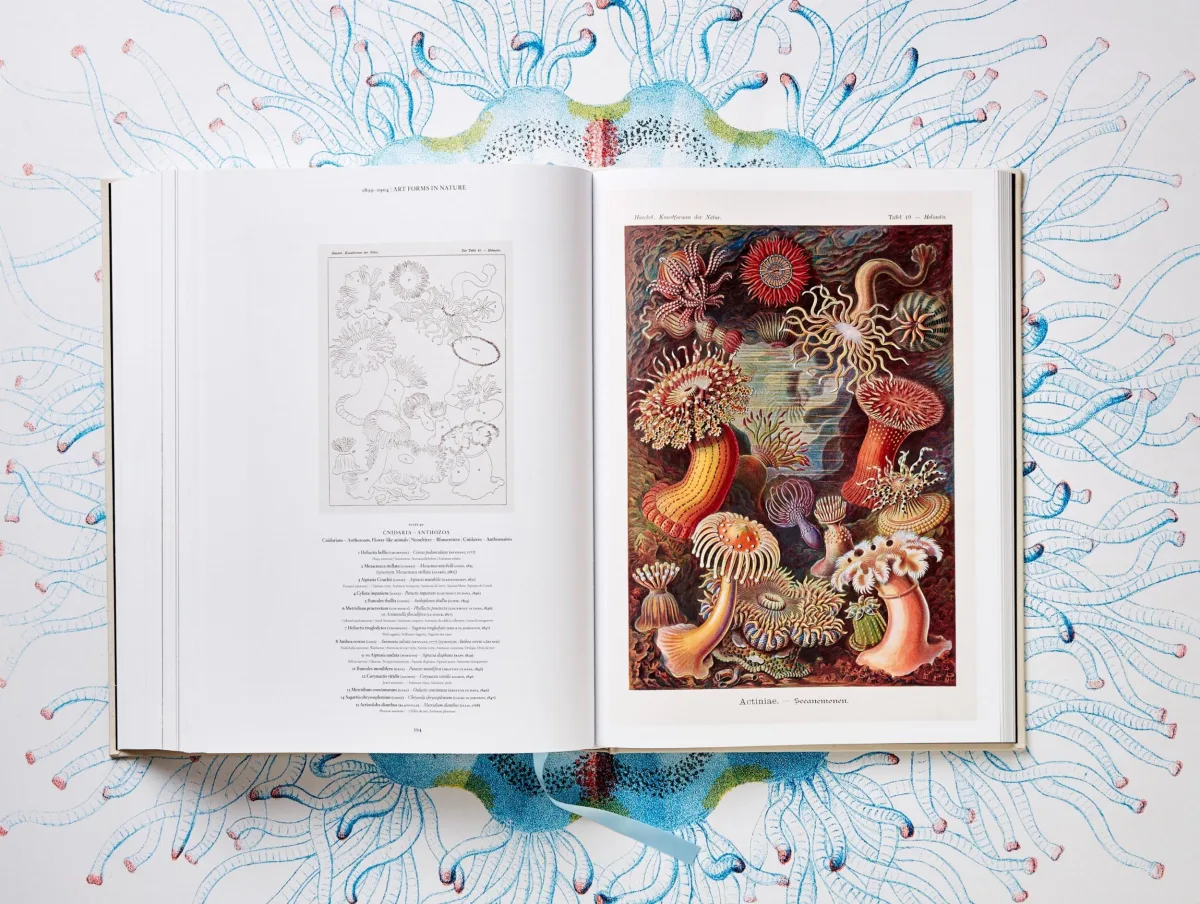
From the plates
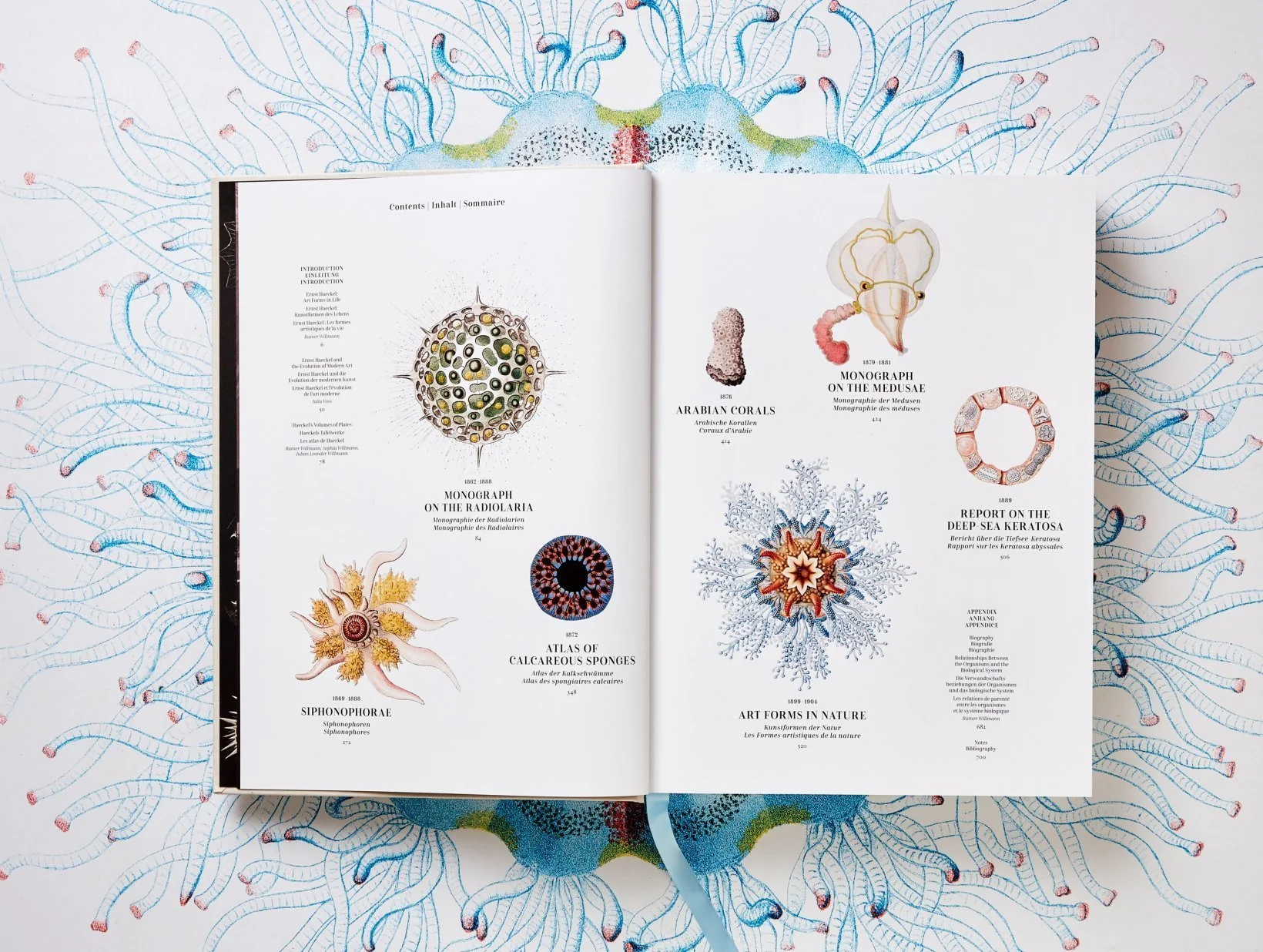
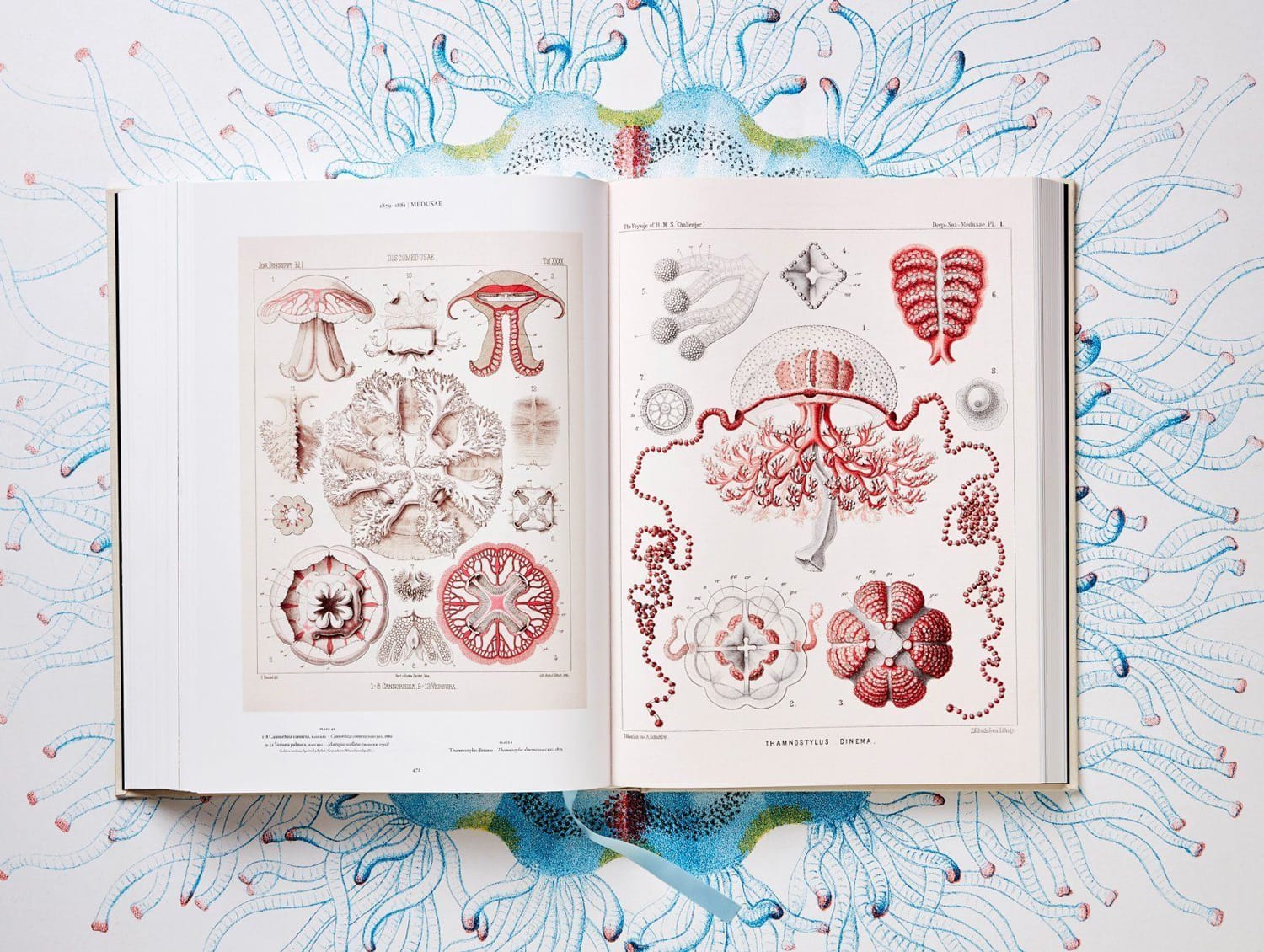
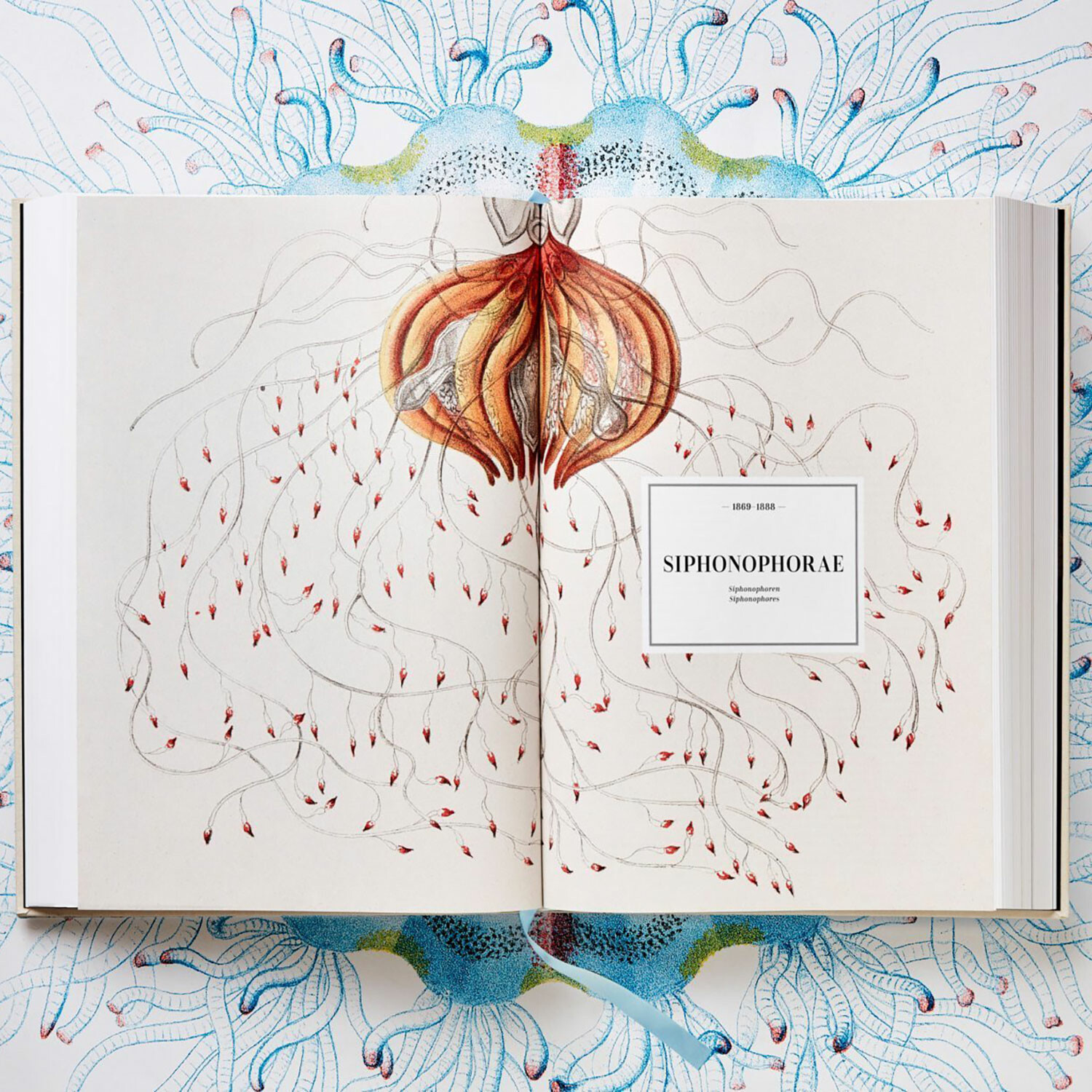
Not an observer — an interpreter
What set Haeckel apart from other natural history illustrators was that he was not an observer but an interpreter. When drawing the skeletons of single-celled organisms under the microscope, he idealized them — slightly rounder, slightly more symmetrical, slightly more perfect than they actually were. This infuriated scientists. But those same drawings went on to nourish the Art Nouveau movement, shaping Émile Gallé's glasswork, Hector Guimard's Paris Métro entrances, René Lalique's jewellery.
Haeckel's lines entered the DNA of an entire artistic movement. And he never planned any of it.
The artists Haeckel unknowingly inspired
Glasswork
Émile Gallé
His nature-inspired glass vessels echo Haeckel's organic forms directly.
Architecture
Hector Guimard
The sinuous iron curves of Paris Métro entrances owe a quiet debt to Haeckel's radiolarians.
Jewellery
René Lalique
Insect and plant motifs rendered with scientific precision — unmistakably Haeckelian.
The scale is the argument
When you first open this book, the shock of its scale hits you before anything else. TASCHEN's large format is not vanity here — it is necessity. Compressing Haeckel's work onto A4 would be like printing a fresco on a business card. You get lost in the pages. You study the twelve-armed symmetry of a radiolarian and somewhere at the back of your mind a quiet awe rises — for the organism, and for the man who could see it this way.
The texts by Rainer Willmann and Julia Voss offer breathing room between the visual intensity. Haeckel's biography, the scientific debates of his era, the controversies over the accuracy of his drawings — it's all here. But honestly: you don't open this book for the words.
A note on accuracy
Some of Haeckel's theories have since been questioned or disproved, and certain drawings are documented to diverge from strict reality. TASCHEN does not look away from these shadows — the book presents Haeckel as a human being with contradictions, not a legend frozen in amber. That honesty makes it more valuable, not less.
This is not a book that lives on a shelf. It is the kind that stays open on a table — the kind where, glancing at a random page some idle afternoon, you feel something shift quietly inside you. In Haeckel's world, nature is simultaneously data and poetry, observation and aesthetics.
And perhaps that is when the biggest question arrives: were they ever really separate to begin with? If you have ever wondered the same thing, this is the kind of question worth following.
In short
One of the most visually overwhelming books you can own. Haeckel's drawings don't illustrate the natural world so much as argue for its strangeness — and TASCHEN gives that argument the scale it deserves.
Rainer Willmann & Julia Voss — The Art and Science of Ernst Haeckel
TASCHEN, 2017 · abakcus.com