Twelve men, six landings, three and a half years. Who they were, where they stood, and how many of them are still here.
1
2
3
4
5
6
7
8
9
10
11
12
Between July 1969 and December 1972, twelve people climbed down a ladder onto another world. Then the ladders stopped. More than half a century later the list is still twelve names long, every one of them an American man, and every one of them born between 1923 and 1935. You can fit it on an index card. This page tries to fit a little more.
There is a site that does nothing but tell you how many people are in space right now, and that number hasn’t touched zero since October 2000. The number of people on the Moon has been zero since 14 December 1972. The space station they live on circles about 400 kilometres up — close enough to walk through in Street View. The Moon is nearly a thousand times farther.
12
people
6
landings
80 h
outside, all together
382 kg
of Moon brought home
4
still living (2026)
The list
All twelve, in the order they stepped down
Each landing carried two people to the surface — the commander and the lunar module pilot — while a third stayed in orbit in the command module. The commander went out first. So the list runs in pairs, and each pair shares a date.
#
Name
Mission
On the Moon
Age
Lived
1
Neil Armstrong
A11
20 July 1969
38
1930–2012
2
Buzz Aldrin
A11
20 July 1969
39
1930–living
3
Pete Conrad
A12
19 November 1969
39
1930–1999
4
Alan Bean
A12
19 November 1969
37
1932–2018
5
Alan Shepard
A14
5 February 1971
47
1923–1998
6
Edgar Mitchell
A14
5 February 1971
40
1930–2016
7
David Scott
A15
30 July 1971
39
1932–living
8
James Irwin
A15
30 July 1971
41
1930–1991
9
John Young
A16
21 April 1972
41
1930–2018
10
Charles Duke
A16
21 April 1972
36
1935–living
11
Eugene Cernan
A17
11 December 1972
38
1934–2017
12
Harrison Schmitt
A17
11 December 1972
37
1935–living
One detail trips people up: Armstrong’s first step came at 02:56 UTC on 21 July 1969. In Houston, and across the Americas, it was still the evening of the 20th. Both dates are right; it depends where you were standing on Earth.
Where they stood
Six landing sites, all on the side that faces us
Every Apollo landing came down on the near side, within reach of radio contact with Earth, and four of the six landed within ten degrees of the equator. The later missions pushed into rougher, older ground — mountains, highlands, a valley wedged between massifs — because by then the question had changed from can we land to what is this place made of.
The near side · schematic maria · tap a site
Apollo 11 · 20 July 1969
Sea of Tranquility
0.67° N · 23.47° E
No. 1 · CDR
Neil Armstrong
No. 2 · LMP
Buzz Aldrin
In orbit overhead, alone in Columbia: Michael Collins. Lander: Eagle.
Time outside2 h 31 min
Rock brought home21.5 kg
The first landing came down with well under a minute of descent fuel to spare. The only moonwalk of the mission lasted two and a half hours.
1969–1972
The twelve, one by one
Ten were military pilots. One was a civilian test pilot who had flown combat missions for the Navy. One was a geologist. Several held doctorates. All twelve had trained for years for walks that lasted, at most, about seven and a half hours at a time. Here is what each of them is remembered for, beyond the fact of having been there.
Apollo 11
20 July 1969 · Sea of Tranquility · 1 EVA, 2 h 31 min
1
Apollo 11 · Commander
Neil Armstrong
The first bootprint
Born
5 August 1930
From
Wapakoneta, Ohio
Age on the Moon
38
Died
25 August 2012
He had a pilot’s licence before he had a driver’s licence, flew the rocket-powered X-15 to the edge of space, and took over Eagle by hand when the computer was steering it into a boulder field. After the flight he taught aerospace engineering in Cincinnati and turned down almost every request to talk about the Moon.
Civilian (former US Navy aviator)
2
Apollo 11 · Lunar Module Pilot
Buzz Aldrin
Orbital rendezvous, worked out on paper
Born
20 January 1930
From
Glen Ridge, New Jersey
Age on the Moon
39
Today
Living, age 96
Aldrin wrote his MIT doctorate on how two spacecraft find each other in orbit, which earned him the nickname ‘Dr. Rendezvous’ and, a few years later, a seat on the flight that depended on exactly that maths. He stepped down 19 minutes after Armstrong and called what he saw ‘magnificent desolation’. He is the oldest living astronaut.
US Air Force
Apollo 12
19 November 1969 · Ocean of Storms · 2 EVAs, 7 h 45 min
3
Apollo 12 · Commander
Pete Conrad
A long step for a short man
Born
2 June 1930
From
Philadelphia, Pennsylvania
Age on the Moon
39
Died
8 July 1999
At 1.68 metres, Conrad had bet a journalist $500 that NASA did not script astronauts’ words. His first line on the surface: ‘Whoopie! Man, that may have been a small one for Neil, but that’s a long one for me.’ He was killed in a motorcycle accident at 69.
US Navy
4
Apollo 12 · Lunar Module Pilot
Alan Bean
A paintbrush and a pinch of Moon dust
Born
15 March 1932
From
Wheeler, Texas
Age on the Moon
37
Died
26 May 2018
Bean accidentally pointed the first colour TV camera on the Moon at the Sun and burned it out. Later he left NASA to paint, and spent nearly four decades making canvases of the Moon, pressing his old moon boots and hammer into the paint and mixing in specks of dust from his patches.
US Navy
Apollo 14
5 February 1971 · Fra Mauro · 2 EVAs, 9 h 22 min
5
Apollo 14 · Commander
Alan Shepard
Two golf balls and a six-iron head
Born
18 November 1923
From
Derry, New Hampshire
Age on the Moon
47
Died
21 July 1998
The first American in space in 1961, then grounded for years by an inner-ear disorder until surgery cleared him. At 47 he became the oldest moonwalker, and before climbing back in he clipped a six-iron head onto a sample-scoop handle and hit two golf balls. Neither went as far as he claimed on air.
US Navy
6
Apollo 14 · Lunar Module Pilot
Edgar Mitchell
Earth from a quarter of a million miles
Born
17 September 1930
From
Hereford, Texas
Age on the Moon
40
Died
4 February 2016
An MIT doctor of aeronautics and astronautics, Mitchell said the trip home, watching the Earth turn in the window, changed him more than the Moon did. Two years later he founded the Institute of Noetic Sciences to study consciousness, and spent the rest of his life talking about that view.
US Navy
Apollo 15
30 July 1971 · Hadley–Apennine · 3 EVAs, 18 h 35 min
7
Apollo 15 · Commander
David Scott
A hammer and a falcon feather
Born
6 June 1932
From
San Antonio, Texas
Age on the Moon
39
Today
Living, age 94
Scott was the first to drive on the Moon. Near the end of his last walk he held a geology hammer in one hand and a falcon feather in the other, let go, and in vacuum they hit the dust together: Galileo’s experiment, three centuries late and on live television. ‘Mr. Galileo was correct in his findings,’ he said.
US Air Force
8
Apollo 15 · Lunar Module Pilot
James Irwin
The Genesis Rock
Born
17 March 1930
From
Pittsburgh, Pennsylvania
Age on the Moon
41
Died
8 August 1991
On the slope of Mount Hadley Delta, Irwin and Scott spotted a white crystal sitting on a dust-covered pedestal: a piece of anorthosite about four billion years old, soon called the Genesis Rock. Irwin came home a preacher and led several expeditions up Mount Ararat in eastern Turkey to look for Noah’s Ark. He was the first moonwalker to die.
US Air Force
Apollo 16
21 April 1972 · Descartes Highlands · 3 EVAs, 20 h 14 min
9
Apollo 16 · Commander
John Young
The jump salute
Born
24 September 1930
From
San Francisco, California
Age on the Moon
41
Died
5 January 2018
Young flew six times over 18 years — Gemini, Apollo 10 around the Moon, Apollo 16 onto it, and the very first Space Shuttle flight in 1981. On the Moon he saluted the flag in mid-air, leaping about 40 centimetres off the ground in one-sixth gravity.
US Navy
10
Apollo 16 · Lunar Module Pilot
Charles Duke
A family photo left in the dust
Born
3 October 1935
From
Charlotte, North Carolina
Age on the Moon
36
Today
Living, age 91
Duke was the voice in Houston during the first landing — ‘You got a bunch of guys about to turn blue. We’re breathing again.’ Three years later he went himself, the youngest person ever to walk there, and left a photograph of his wife and two sons on the surface with a note on the back.
US Air Force
Apollo 17
11 December 1972 · Taurus–Littrow · 3 EVAs, 22 h 04 min
11
Apollo 17 · Commander
Eugene Cernan
TDC, traced in the dust
Born
14 March 1934
From
Chicago, Illinois
Age on the Moon
38
Died
16 January 2017
Cernan had already flown to within 15 kilometres of the surface on Apollo 10. On Apollo 17 he traced his nine-year-old daughter Tracy’s initials in the regolith, and on 14 December 1972 he was the last to climb the ladder. For more than half a century nobody has stepped down one since.
US Navy
12
Apollo 17 · Lunar Module Pilot
Harrison Schmitt
Orange soil
Born
3 July 1935
From
Santa Rita, New Mexico
Age on the Moon
37
Today
Living, age 91
The only professional scientist to walk on the Moon, a Harvard-trained geologist. He kicked up a patch of orange soil — tiny beads of volcanic glass from an ancient fire fountain — and the crew’s ‘Blue Marble’ photograph of the whole Earth is usually credited to him. He later served a term as a US senator for New Mexico.
Civilian geologist
A lifetime chart
How long the moonwalkers have been with us
Alan Shepard was born before Mickey Mouse; Charles Duke and Harrison Schmitt were born in the same year as Elvis Presley. Seen as lifelines, the Moon falls almost exactly in the middle of most of them — a single dot, then fifty years of being asked about it.
Neil Armstrong
Buzz Aldrin
Pete Conrad
Alan Bean
Alan Shepard
Edgar Mitchell
David Scott
James Irwin
John Young
Charles Duke
Eugene Cernan
Harrison Schmitt
192019401960198020002020
Each line runs from birth to death, or to 2026. The big dot is the year on the Moon. Grey lines have ended.
James Irwin was the first to die, in 1991, of a heart attack at 61. Since then the line has thinned out steadily. As of 2026, four are alive: Buzz Aldrin, David Scott, Charles Duke and Harrison Schmitt. The youngest of them is 91.
14 December 1972 · the end of the last moonwalk
“We leave as we came and, God willing, as we shall return, with peace and hope for all mankind.”
Eugene Cernan, the last words spoken on the Moon
So close
The ones who went to the Moon and never touched it
Walking on the Moon and going to the Moon are two different lists. Twenty-four people flew there during Apollo; twelve of them stayed in the spacecraft the whole time. Some circled alone in the command module while their crewmates walked below. Some flew on missions that were never meant to land. And three of them were on Apollo 13, which was supposed to.
Frank BormanApollo 8
Jim LovellApollo 8, Apollo 13went twice, never landed
William AndersApollo 8took ‘Earthrise’
Thomas StaffordApollo 10
Michael CollinsApollo 11alone behind the Moon
Richard GordonApollo 12
Jack SwigertApollo 13
Fred HaiseApollo 13was to be the sixth
Stuart RoosaApollo 14carried tree seeds
Alfred WordenApollo 15
Ken MattinglyApollo 16
Ronald EvansApollo 17
Two names cross both lists. John Young and Eugene Cernan flew to the Moon twice — first on Apollo 10, the dress rehearsal that went down to about 15 kilometres above the surface and turned back, then again on their own landings. Jim Lovell also went twice and never landed: Apollo 8 was an orbiting mission, and Apollo 13 lost an oxygen tank on the way. Lovell died in 2025.
In April 2026 the second list finally grew. Artemis II carried Reid Wiseman, Victor Glover, Christina Koch and Jeremy Hansen around the far side and back, the first people beyond low Earth orbit in 53 years — and with them the list of people who have flown to the Moon now includes its first woman, its first Black astronaut and its first non-American. They did not land. The list on this page is still twelve.
Next
Will there be a thirteenth?
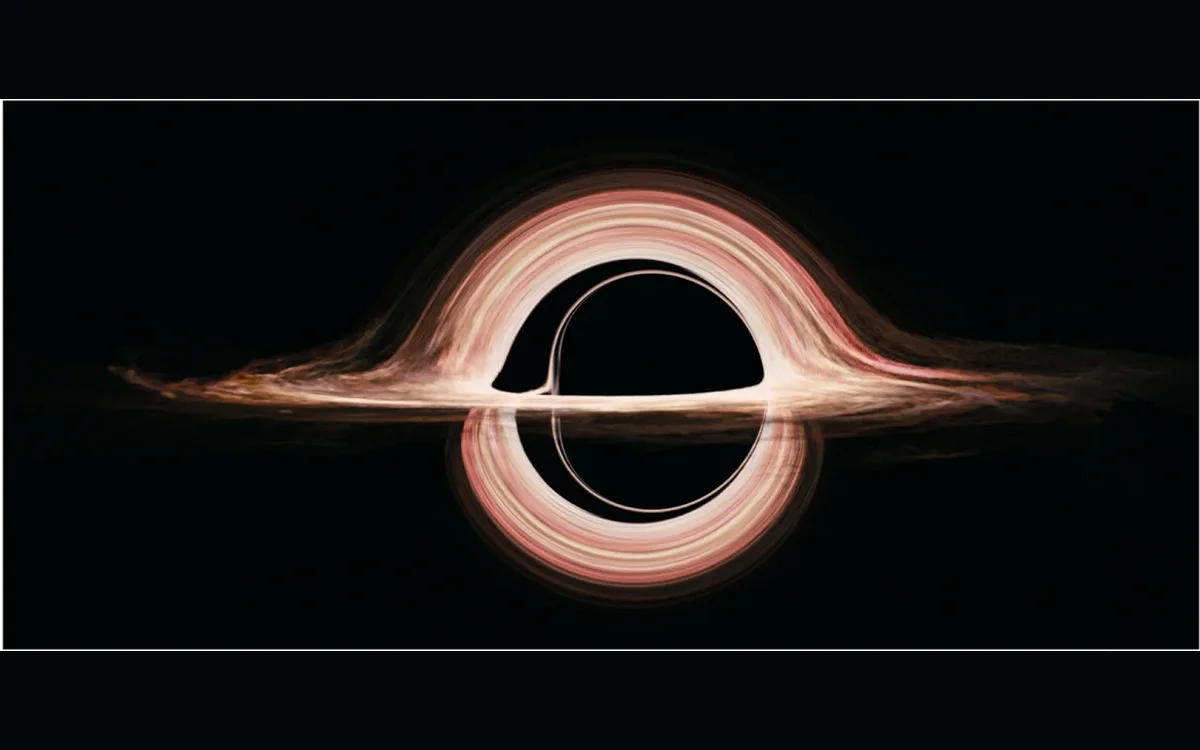
NASA’s plan is to land the next crew near the lunar south pole, where shadowed craters may hold water ice, before the end of the decade. Whoever steps down first will be the thirteenth name here, and the first new one since 1972. It will probably not look like the drawings people made before Apollo — compare the 1963 Polish space stamps, which imagined the whole programme before a single landing — or the slow, careful physics of a film like Interstellar. But it will start the same way: a ladder, a footpad, a bootprint that, with no wind and no rain, could still be there in a million years.
Questions
Quick answers
How many people have walked on the Moon?
Twelve. All of them landed during six Apollo missions between July 1969 and December 1972: Apollo 11, 12, 14, 15, 16 and 17. No one has walked on the Moon since.
Who was the first and who was the last person to walk on the Moon?
Neil Armstrong was first, on Apollo 11 in July 1969. Harrison Schmitt was the twelfth person to step onto the surface, and Eugene Cernan, his commander on Apollo 17, was the last to leave it on 14 December 1972.
How many moonwalkers are still alive?
As of 2026, four: Buzz Aldrin (Apollo 11), David Scott (Apollo 15), Charles Duke (Apollo 16) and Harrison Schmitt (Apollo 17). The other eight have died, the first being James Irwin in 1991.
Who was the youngest and the oldest person to walk on the Moon?
Charles Duke was the youngest, at 36, on Apollo 16 in 1972. Alan Shepard was the oldest, at 47, on Apollo 14 in 1971.
Did Artemis II land on the Moon?
No. Artemis II flew four astronauts around the Moon in April 2026 without landing. It added four names to the list of people who have flown to the Moon, but the list of people who have walked on it is still twelve.
Sources
NASA History Office, Apollo mission pages and the Apollo Lunar Surface Journal.
NASA Astromaterials Acquisition and Curation Office, lunar sample totals by mission.
NASA astronaut biographies for each of the twelve.
NASA Artemis II mission coverage, April 2026.
✦Read more✦
Keep wandering
A few more pieces in the same spirit — math, design, and slow attention.