Architecture · History · James Stewart · 7 min read
The House That Calculus Paid For
What does the author of the world's best-selling calculus textbook do with the money? He builds a five-storey concert hall into the slope of a Toronto ravine, with door handles cast in the shape of the integral sign, and lives inside it.
Two students' idea
James Drewry Stewart was born in Toronto on March 29, 1941. He earned his master's at Stanford, his doctorate at the University of Toronto, and spent time as a postdoctoral fellow at the University of London. His real field was harmonic and functional analysis. He spent most of his career at McMaster University in Hamilton and was known as a teacher his students loved.
The book wasn't even his own idea. Two of his students said he should write a calculus book, so he did. When Calculus reached the market in 1987, there were four major university-level calculus textbooks and the market was split roughly evenly. Within a few years Stewart's book left all of them behind. It was translated into more than a dozen languages, sold millions of copies, and held its place as the undisputed leader of its category for nearly thirty years. In the year he died, book sales had passed 26 million dollars. In the words of one publishing historian, Stewart was the most published mathematician in history. And yet no one recognized his face on the street.
If you remember that thick book with a violin or a bridge on the cover that never left your hands as a first-year student, then you too made a small contribution to Stewart. The sum of those contributions paid for the house this piece is about.
The mathematician with a violin
Stewart's second life was music. He took up the violin as a child, rose to become concertmaster of the McMaster Symphony Orchestra, and played professionally in the Hamilton Philharmonic Orchestra. His close friend, pianist and mathematician William Ralph, describes him this way: in conversation he was calm, organized, and rational, but the moment he picked up the violin, none of that remained. Arthritis forced him to stop playing in the last two years of his life, and so he chose to have others play instead of playing himself.
This is exactly where the house comes in. In the late 1990s Stewart began imagining a house built around two conditions.
There were two basic requirements for the house. I wanted the performance space and I wanted curves.
James Stewart
Curves and a stage
Stewart drew up a list of architects he admired and in 1999 gave the commission to Brigitte Shim and Howard Sutcliffe of Toronto's Shim-Sutcliffe Architects. In 2002 he bought the lot at 194 Roxborough Drive in the Rosedale neighbourhood, along with the house on it, for 5.4 million dollars, and had the existing house demolished. Planning and permits took two years, construction four more. When the house was completed in 2009, cost estimates ranged from 24 to 32 million Canadian dollars. Architectural Digest had already included the house in its annual Toronto tour before it was even finished. Shim-Sutcliffe won a Governor General's Medal in Architecture for the project.
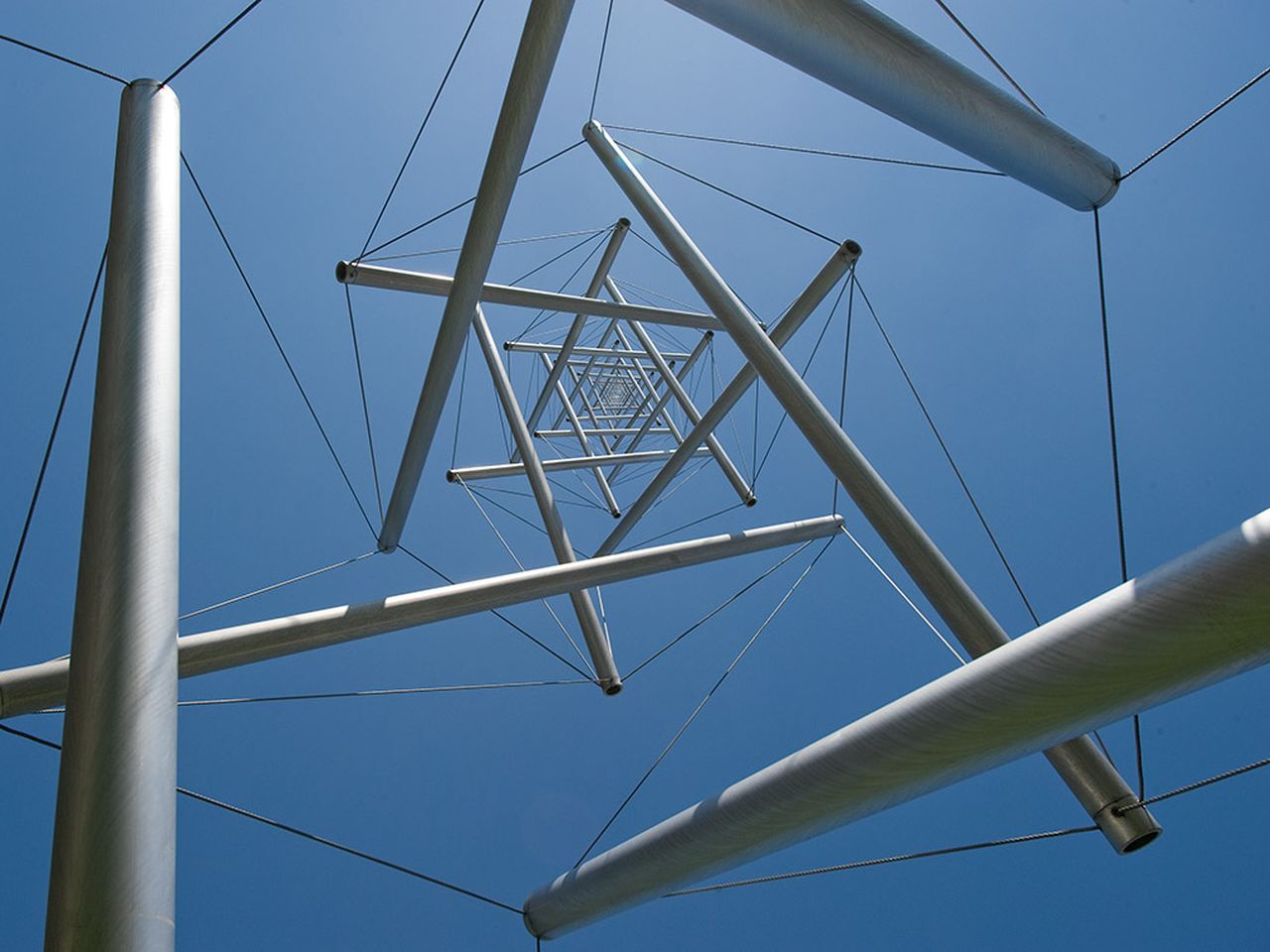
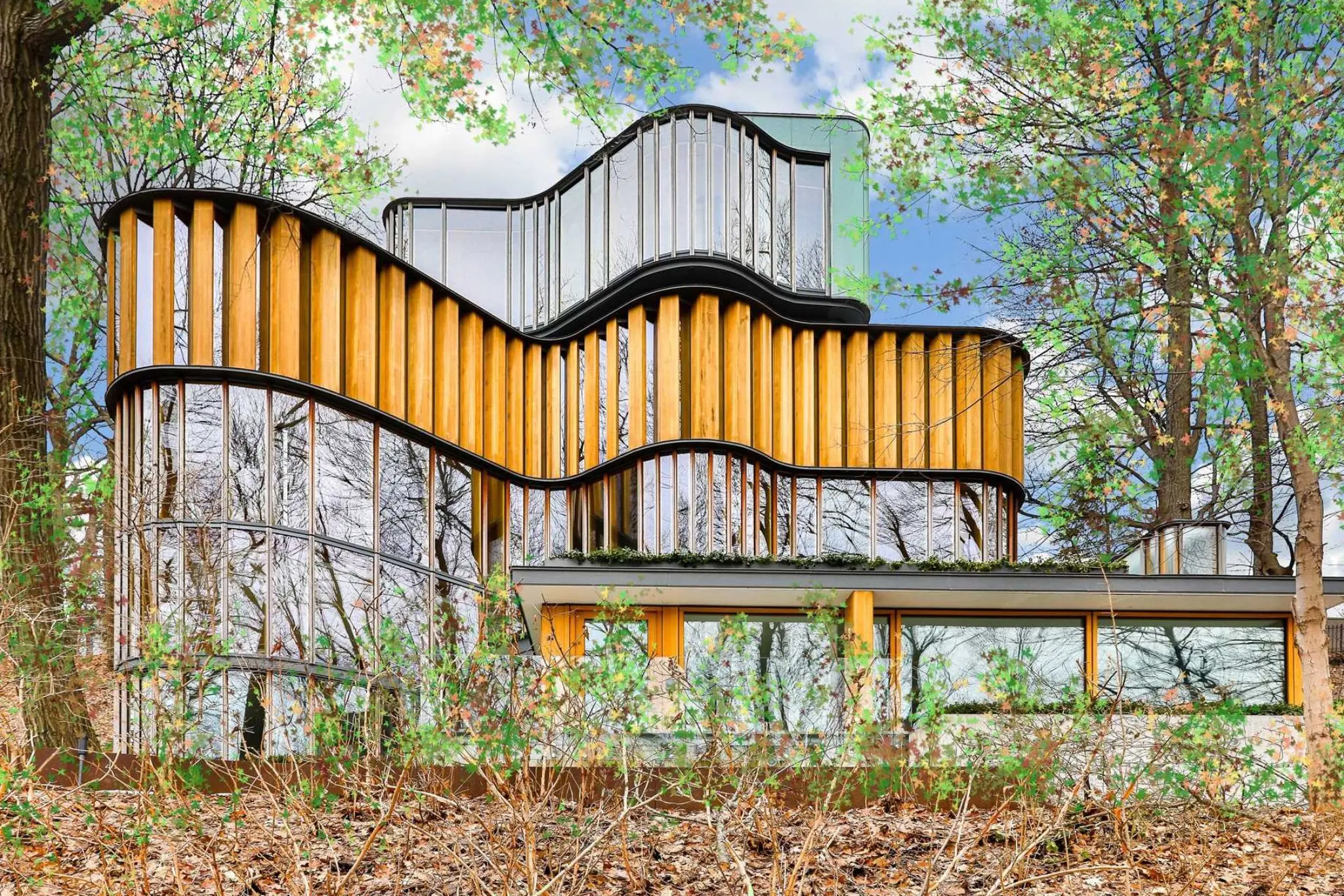
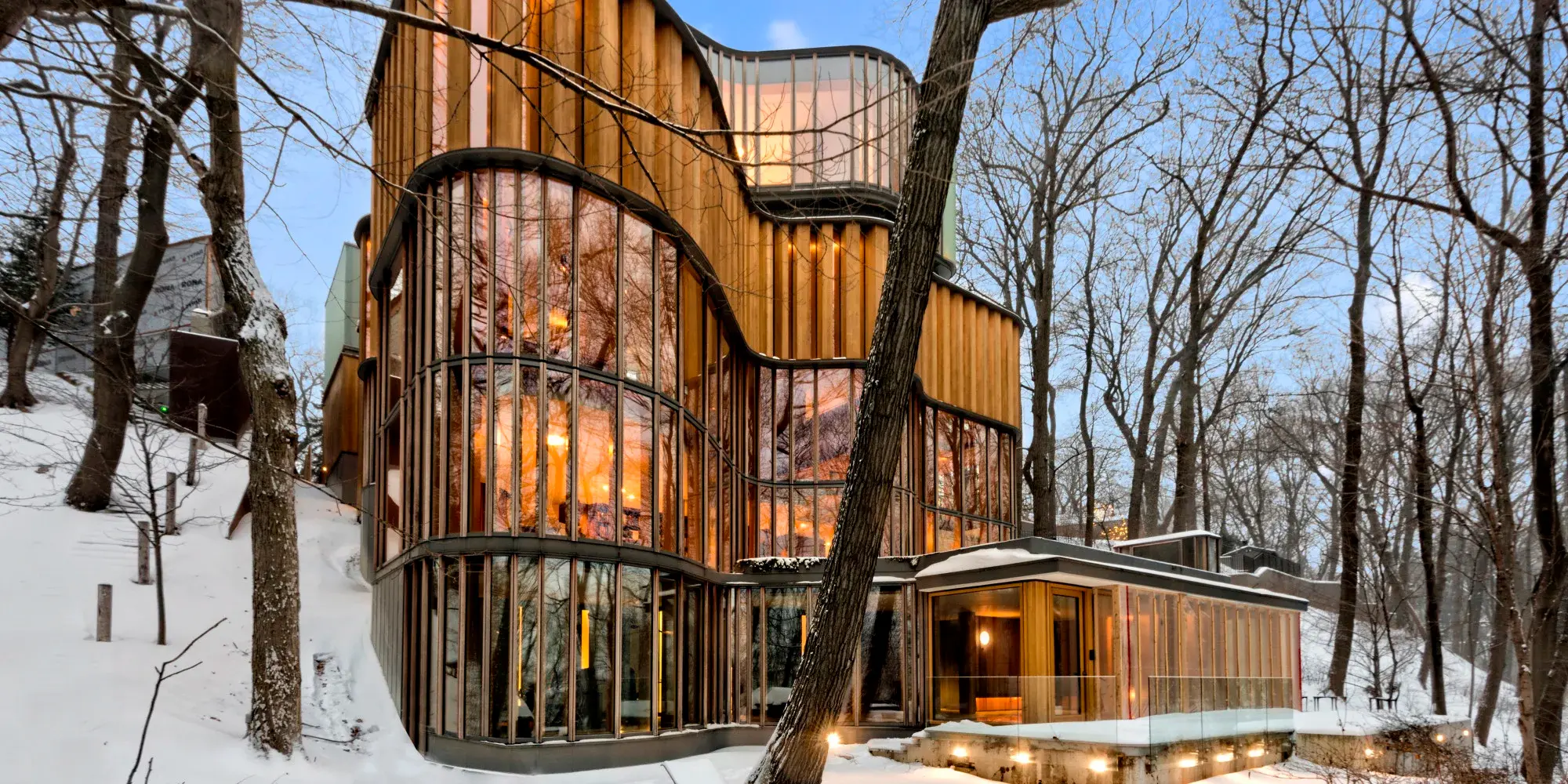
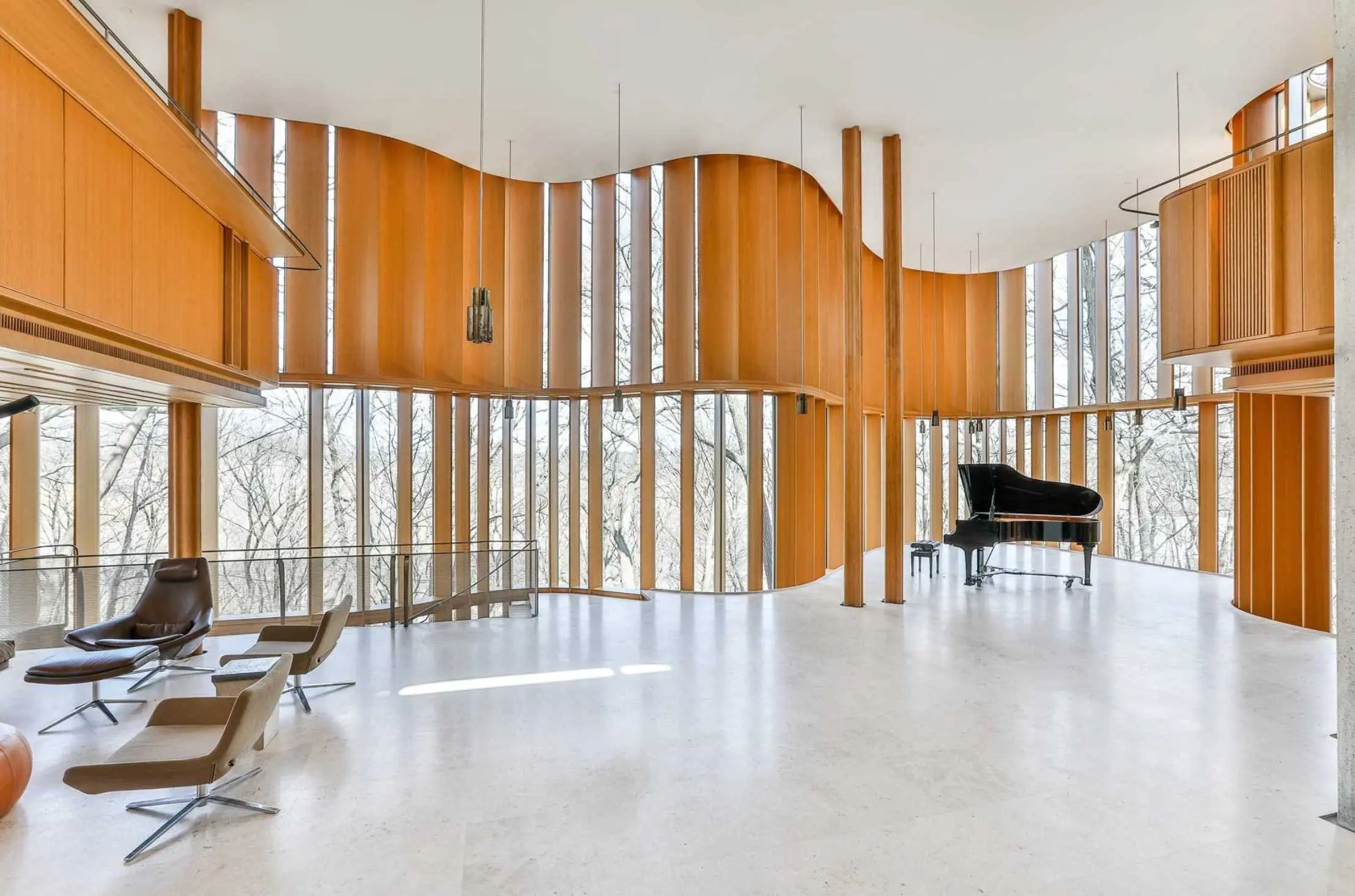
From the street the house is nearly invisible: a modest, two-storey entrance. But the building descends five storeys down the ravine slope. The roughly 17,000 square feet of interior are fronted by floor-to-ceiling glass, and in front of the glass, vertical white oak slats ripple. These slats break the sunlight and give the façade its famous curved rhythm. Inside there is a two-storey living room with limestone floors. This room is also a concert hall, able to seat 150, with room for 200 counting the guests watching from the upper galleries. Its acoustics were calculated for the purpose from the start. (Kenneth Snelson's Needle Tower is a different kind of structure held up by nothing but geometry — a stranger companion piece.)
The list of details runs long: an elevator to all levels, an indoor pool with blue glass walls and a spa, walls that recede to open the pool onto the garden, geothermal heating and cooling, a planted roof, heated floors, even a heated driveway, three wood-burning fireplaces, an art gallery, and a study tucked out of sight so paperwork stays hidden. And of course the door handles: each one custom-cast in the shape of the integral symbol.
The house's name comes from all this. Integral House is a layered pun. The integral sign is a curve, and the house is made of nothing but curves. In English integral also means essential, inseparable, and music was an integral part of Stewart's life. And the house was designed to integrate into the ravine. A name of exactly the precision you would expect from a calculus author.
The salon's guests
Stewart had conceived the house as a somewhat larger venue for his own chamber music evenings. It quickly outgrew that. Steve Reich premiered a new work in this hall. Philip Glass played here. When José Antonio Abreu, founder of Venezuela's El Sistema music-education program, won the Glenn Gould Prize in 2008, members of the Simón Bolívar Youth Orchestra performed in this house. Stewart counted that night among the greatest thrills of his life. The house came to host eight or ten benefit concerts a year and turned into a semi-official concert hall in Toronto's cultural life. MoMA director Glenn Lowry called it one of the most important private houses built in North America in a long time.
Stewart also looked after young musicians. He put promising talents on stage at his house concerts and took a personal hand in matters of instruments. For the 20-year-old violinist Blake Pouliot, who performed at his final concert, Stewart was trying to arrange the purchase of a Guarneri violin.
The man who emceed his own funeral
In the summer of 2013 Stewart was diagnosed with multiple myeloma. He tracked the course of the illness with a mathematician's composure. On the evening of November 16, 2014, he held one last music evening, its invitations stating plainly that he had just weeks left to live. He put on a red brocade jacket, stood before 200 guests, and opened the evening with a single line.
Good evening, ladies and gentlemen, and welcome to my wake.
November 16, 2014
He hosted the program himself and introduced the performers himself. His reasoning made it into the record too: with a lineup like that, there was no way he was going to miss it. Having already said his goodbye, he asked for no funeral and no visitation. On December 3, 2014, he died at home at the age of 73. Per his wishes, his ashes were scattered over the grounds of Integral House.
Shortly before his death he had said of his book and his house that they were his twin legacies, and that if he had not commissioned the house, he was not sure what he would have spent the money on.
The house's second life
The matter of his legacy turned out to be harder than it looked on paper. Stewart considered leaving the house to a foundation so the concerts could continue, but the legal and financial complexity was daunting, and the model would only hold as long as book royalties stayed strong. The house went on the market in 2015 with an asking price of 28 million Canadian dollars. Finding a buyer was difficult, because the house had been cut entirely to fit a single person's life. Across 18,000 square feet there were only four bedrooms, two of them in a separate guest suite. The price dropped first to 22.9 million, then to 19.5 million. In 2016 the house sold for 14.95 million dollars to Mark Machin, then head of the Canada Pension Plan Investment Board, and his family. Per Stewart's wishes, part of the proceeds was donated to institutions including the University of Toronto and St. Michael's Hospital. In 2019 the Machin family relisted the house asking 21.5 million, and in 2020 it changed hands for around 18 million. The new owners left the concert hall untouched.
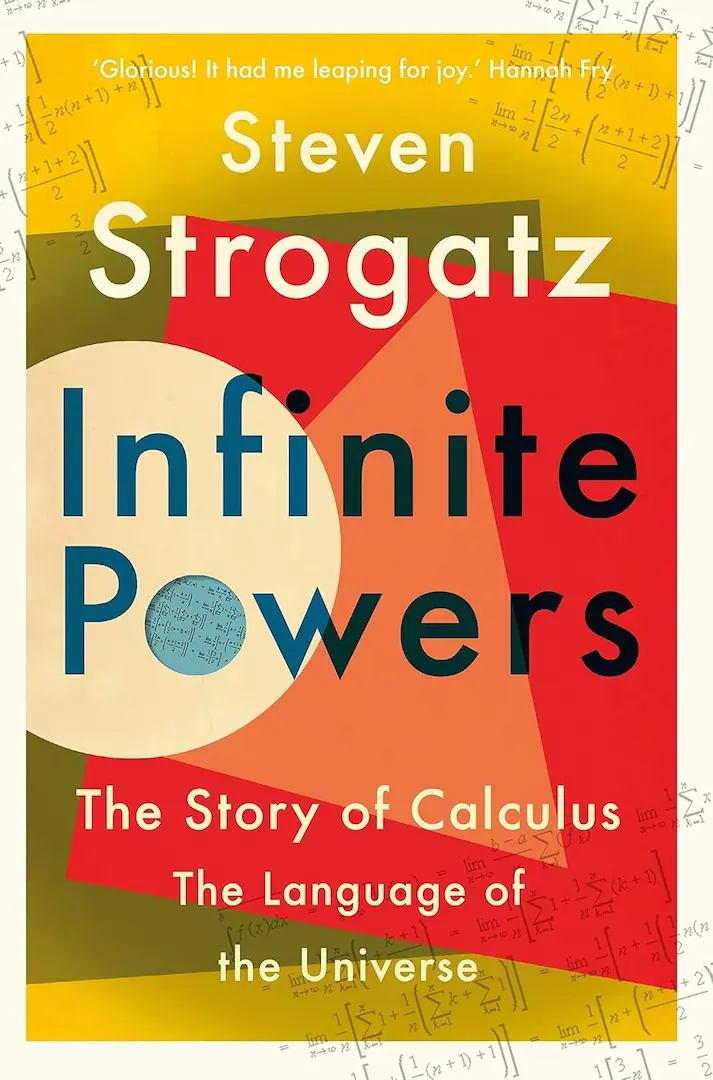
Stewart's story became the subject of Joseph Clement's 2017 documentary Integral Man. The title fits, because the real structure of this story is not the house but the equation: a man built a fortune teaching derivatives to first-year students, and poured that fortune, down to the last cent, into two things, architecture and music. Millions of students cursing Stewart's book during exam week around the world were, without knowing it, paying the installments on a hall on the slope of a Toronto ravine where Philip Glass played the piano. (Not every calculus book asks so little in return — Steven Strogatz's Infinite Powers is free of charge to admire.)
If anyone claims calculus is useless, they can be shown 194 Roxborough Drive.