A proof without words is a picture that does the whole job of an argument. There is no “let x be” and no “therefore”. You look at it, something clicks, and after that you cannot unsee why the statement is true. Mathematicians have drawn such pictures for as long as there has been mathematics, and the best of them are short enough to fit on a postcard.
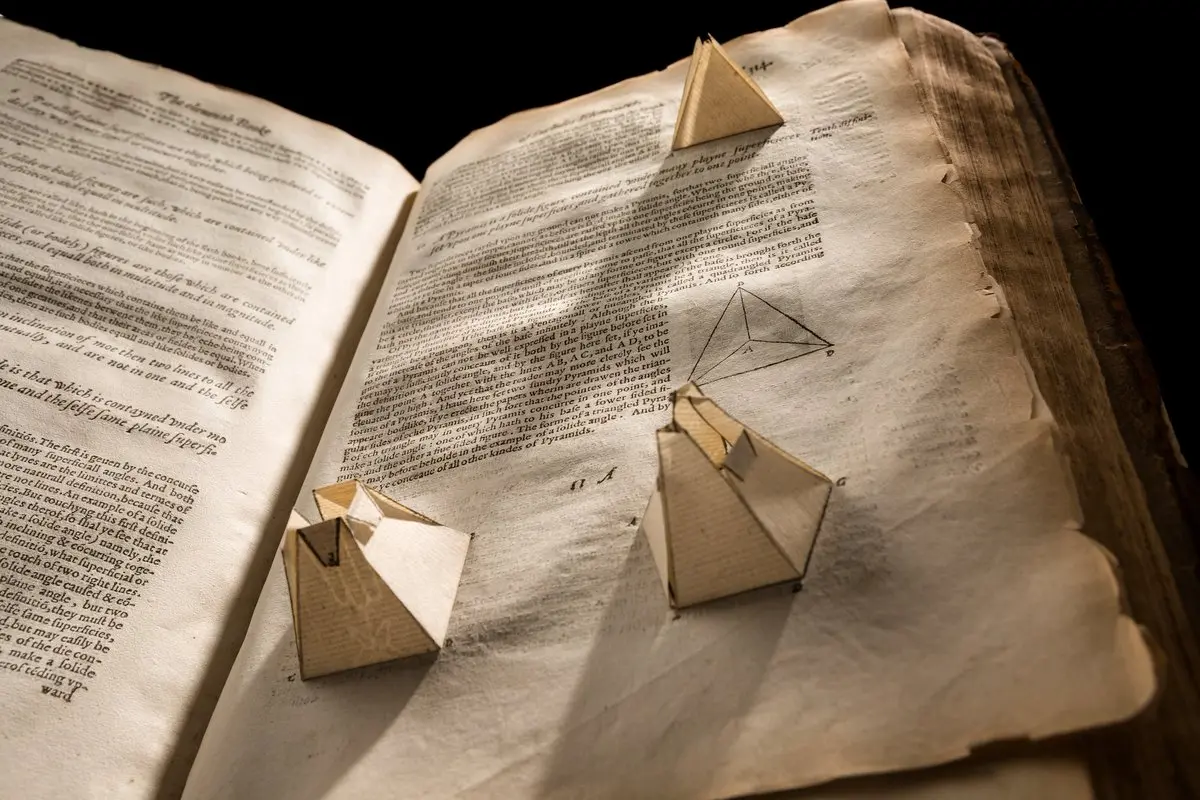
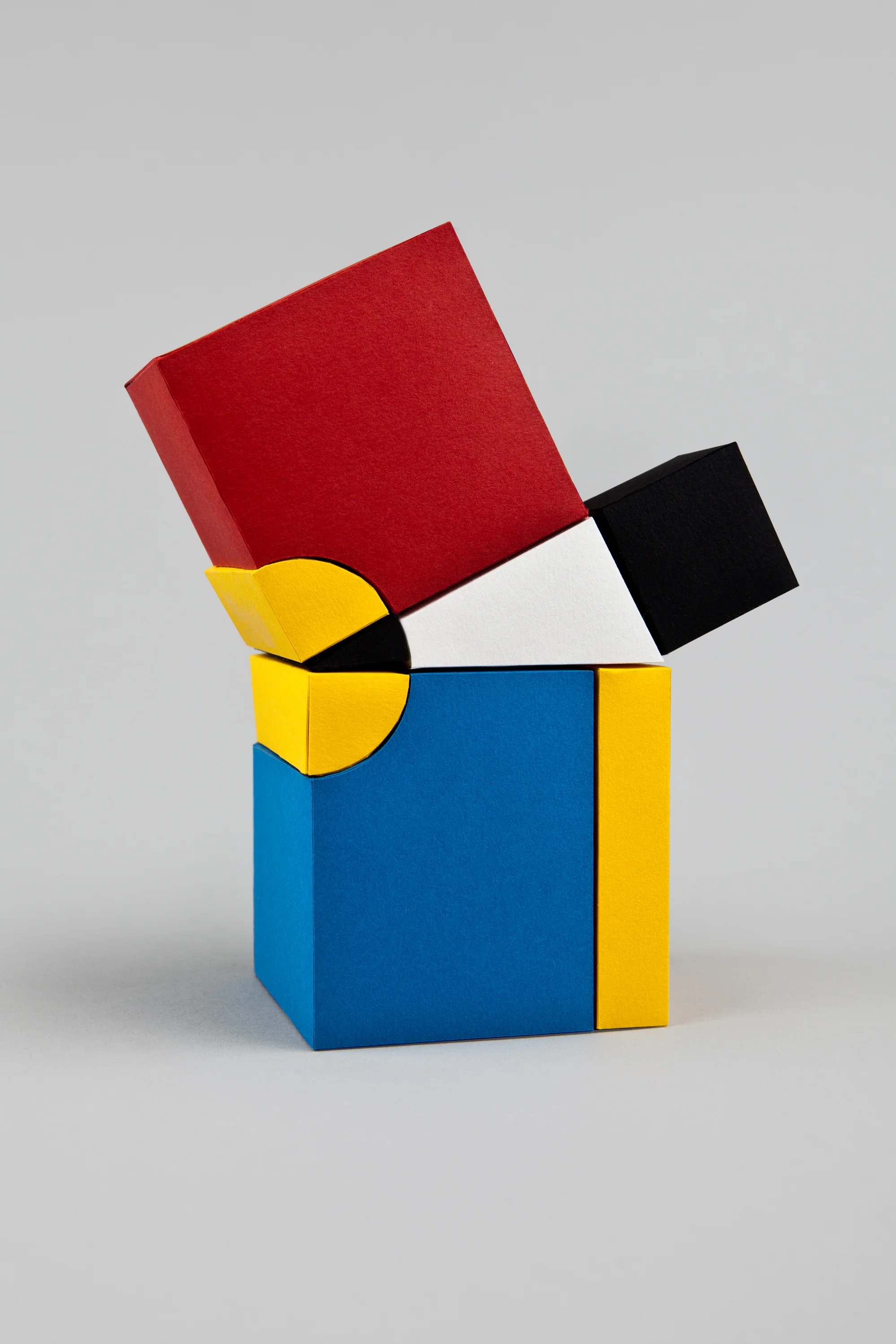
The name is modern. In the mid-1970s the journal Mathematics Magazine began printing small diagrams under the heading “Proof Without Words” to fill the blank space at the end of articles, and readers liked the fillers more than some of the papers. Roger B. Nelsen later gathered them into a book, Proofs Without Words: Exercises in Visual Thinking (1993), which now has two sequels. The habit itself is ancient: the diagrams in Euclid carry so much of the argument that people have kept redrawing them, from the pop-up paper solids of the 1570 English Euclid to Byrne’s colored proofs folded into paper sculpture.
The binomial cube is one of the best of them, and one of the few you can pick up and hold. The drawing comes first here and the words second, for anyone who wants to check what their eyes just told them.
Reading the picture
Three Cuts, Eight Blocks
Every algebra student meets the expansion of (a + b)3 and most learn it as a string of symbols to memorize, with a pair of threes that seem to come from nowhere. The picture above says where they come from. Take a cube whose edge is a + b and slice it once along each of its three directions, at distance a from one corner. Three cuts, eight blocks.
Each block is long (a) or short (b) along each of the three axes, and that choice is all that distinguishes one block from another. Sort the eight by how many short sides they have:
1
a × a × a
long on every axis
3
a × a × b
short on one axis
3
a × b × b
short on two axes
1
b × b × b
short on every axis
That is the whole proof. The volume of the big cube is (a + b)3 because it is a cube. It is also the sum of its eight blocks, because cutting neither creates nor destroys volume. So
(a + b)3 = a3 + 3a2b + 3ab2 + b3
The threes are a count of places. A block with exactly one short side can be short in width, in depth, or in height, so there are three of them. The same goes for a block with exactly one long side. The numbers 1, 3, 3, 1 are the fourth row of Pascal’s triangle for precisely this reason: they count the ways to pick which of three axes get the b.
Take it apart yourself
| a3 | 3 × 3 × 3 | 27 | |
| 3a2b | 3 × 3 × 3 × 2 | 54 | |
| 3ab2 | 3 × 3 × 2 × 2 | 36 | |
| b3 | 2 × 2 × 2 | 8 | |
| (a + b)3 | 5 × 5 × 5 | 125 |
A fair objection to any proof by picture is that a drawing shows one case. The cube above has a particular a and a particular b, and a theorem has to hold for all of them. Move the sliders and the answer is in front of you: nothing about the cutting depends on the lengths. Whatever a and b are, three cuts give the same eight blocks in the same four kinds, and the totals in the table always agree. A good proof without words is one where the picture is clearly a stand-in for every picture of its kind.
One dimension down
Every Face Is a Smaller Proof
Look at any face of the assembled cube and you will find a second theorem printed on it. The face is a square of side a + b, cut by two lines into one large square, one small square and two identical rectangles.
This is the square of a binomial, and it is Proposition 4 in Book II of Euclid’s Elements, written about 2,300 years before anyone used the letters a and b for it. The cube is the same idea with one more dimension. The pattern continues upward too, to four dimensions and beyond, where the pieces can no longer be drawn but can still be counted: 1, 4, 6, 4, 1.
In the classroom
A Puzzle for Three-Year-Olds
The binomial cube is also a toy. Montessori classrooms keep one in a hinged wooden box: eight painted blocks that a child of three or four takes out and rebuilds, matching faces by color. Nobody mentions algebra. The child simply learns, by hand, that these eight shapes make a cube and how they sit together. A decade later the formula turns up on a blackboard, and for those children it is a description of something they have already held.
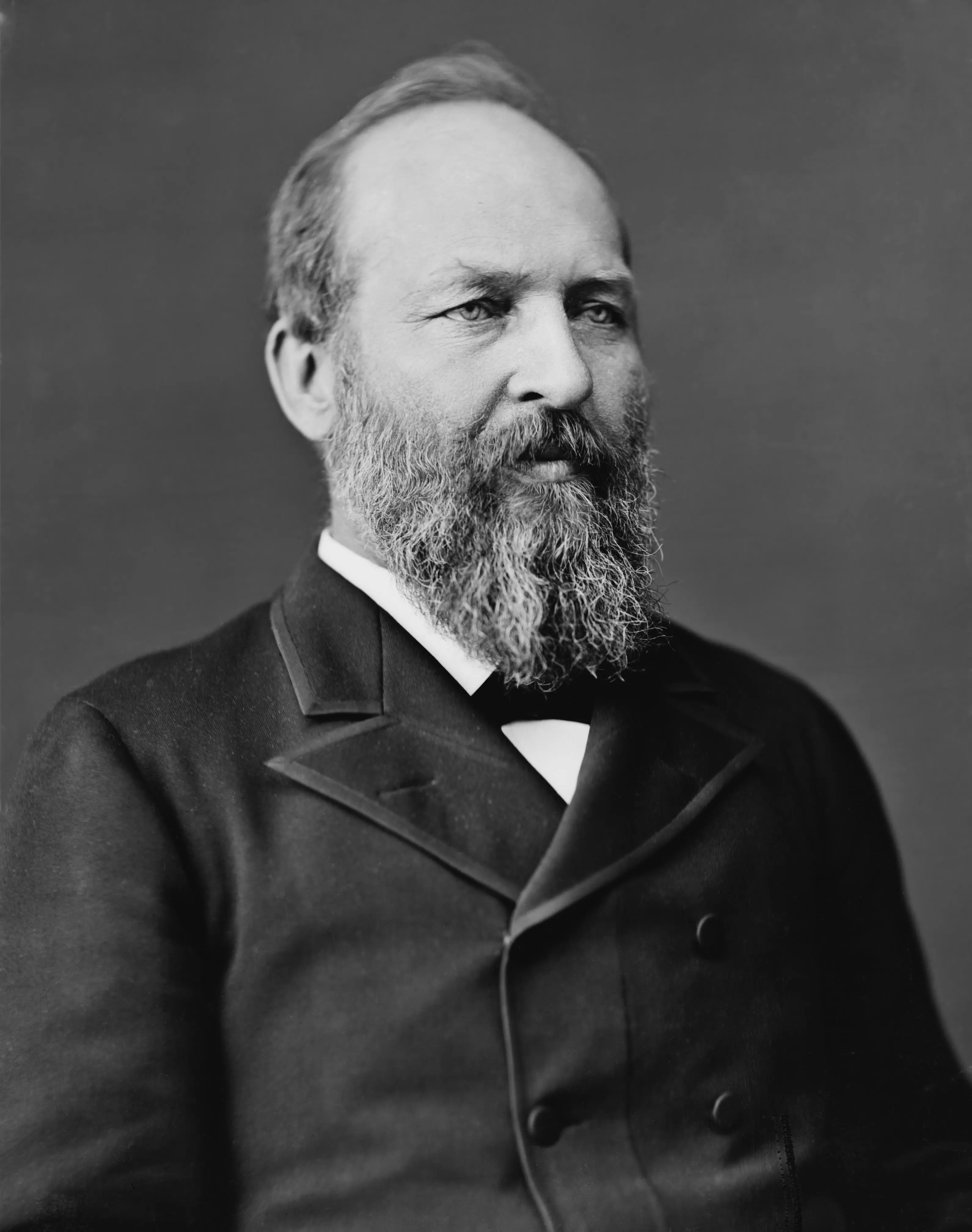
That is the real argument for proofs like this one. A symbolic proof convinces you that a statement is true. A good picture also shows you why, and makes it hard to forget. The same is true of the trapezoid James Garfield used to prove the Pythagorean theorem, which needs only a few lines of algebra once the figure is drawn.
Sources
- Roger B. Nelsen, Proofs Without Words: Exercises in Visual Thinking, Mathematical Association of America, 1993.
- Euclid, Elements, Book II, Proposition 4.
- Binomial cube drawing after a visual shared by @funfunfunctions.