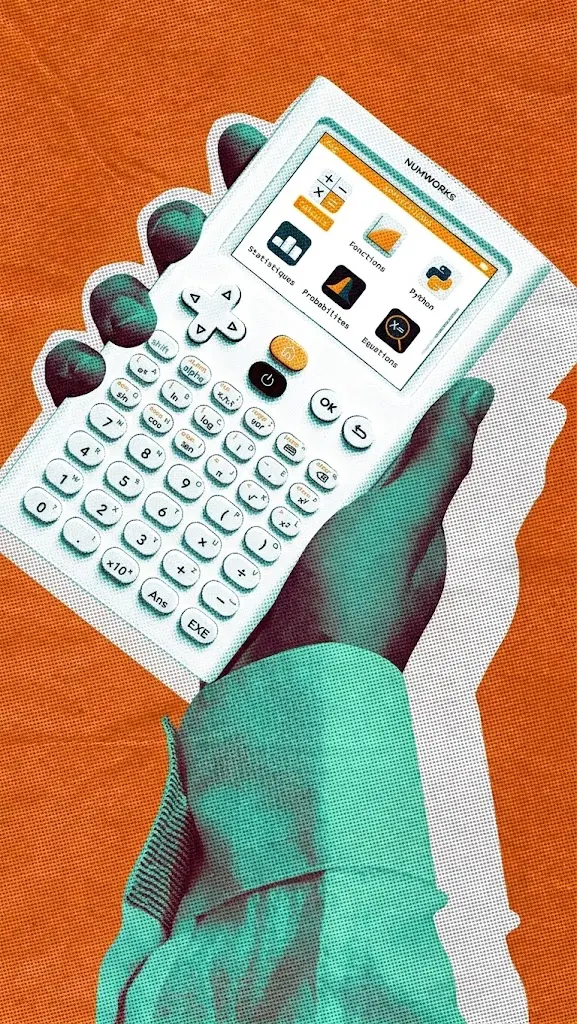
We all learned this somewhere. In a maths lesson, through a nudge from the back row, when somebody handed us a calculator held upside down. I learned it in Turkey, children do the same thing in America, and in the forty years between the rules of the game have not changed at all.
The lovely part is that none of it is a trick. The resemblance between digits and letters is not some hidden nod left behind by a designer, it is an unavoidable consequence of how the display works.
An alphabet of nine letters
Here is exactly what you have to work with.
Read those letters in order and you get beghilos, which is what the whole thing is called. The nine letters map to 836417052 in that order, and you have to enter the word backwards, because you will be turning the calculator a hundred and eighty degrees to read it.
On the vowel side you get e, i and o and nothing else. That is why the list below is as short as it is. No a, no u, so your vocabulary is cut down before you even begin.
The display below actually works
Type a word into the box, let the display convert it into digits, then press the flip button. The segments genuinely rotate, so the letters you see are not written in afterwards, they are the rotated digits themselves. The list runs alphabetically from bee to sills — type in the search box to filter it, and click any word to send it to the display.
Note: only the letters b, e, g, h, i, l, o, s and z work.
Nobody designed this
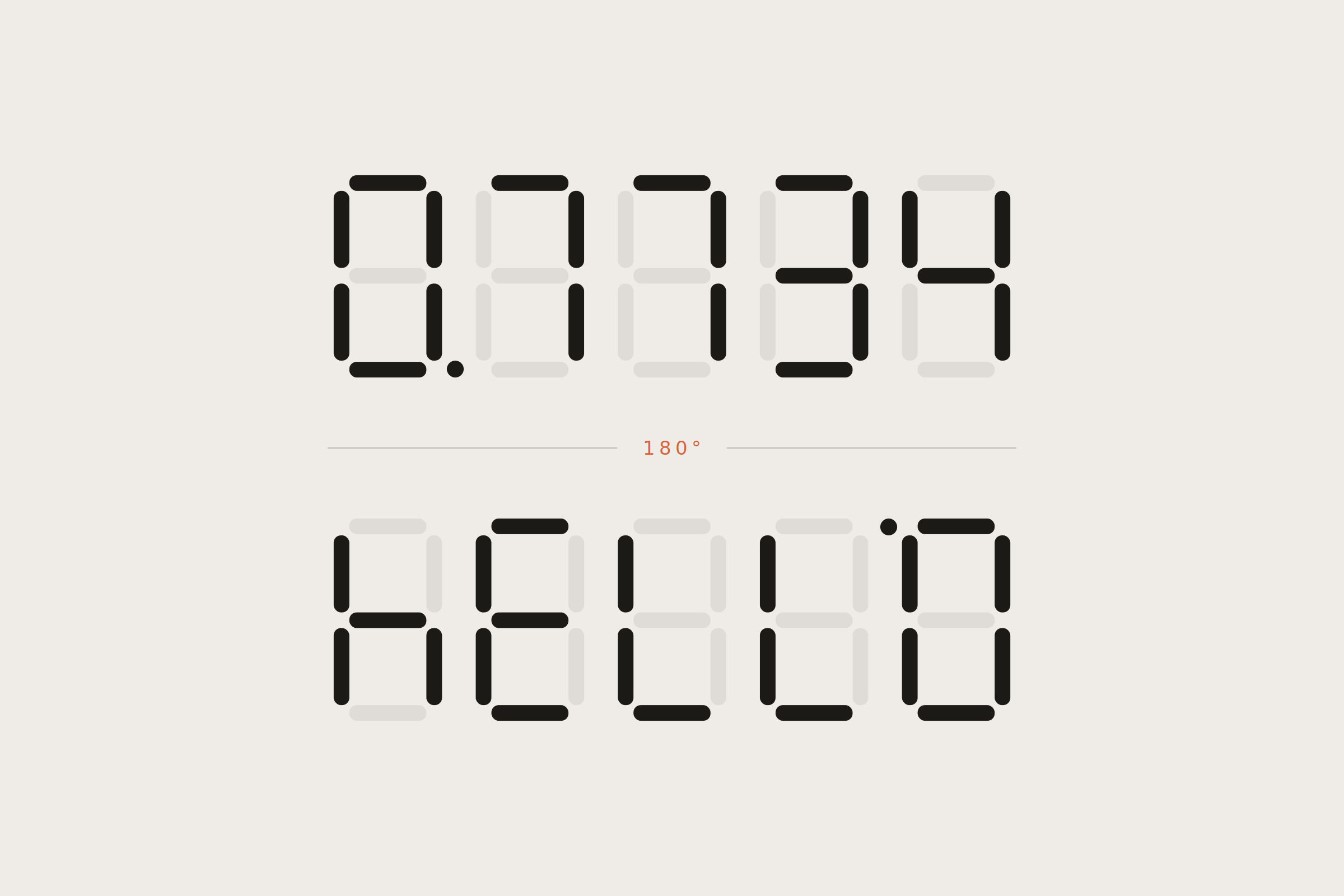
A seven-segment display is, as the name says, seven bars arranged in the shape of an eight, and every digit is written by lighting some of them. Turn the display a hundred and eighty degrees and the top bar goes to the bottom, the right-hand ones go to the left. The middle bar stays where it is. The entire secret of digits turning into letters is that simple.
The result is not perfect either. The digit 4 in particular can look blocky or incomplete as an h depending on how a display draws its segments, and that ambiguity is what invites people to improvise. Some machines draw their digits slightly differently too. Certain displays leave off the bottom bar of the 9, which turns the word from beghilos into bebhilos.
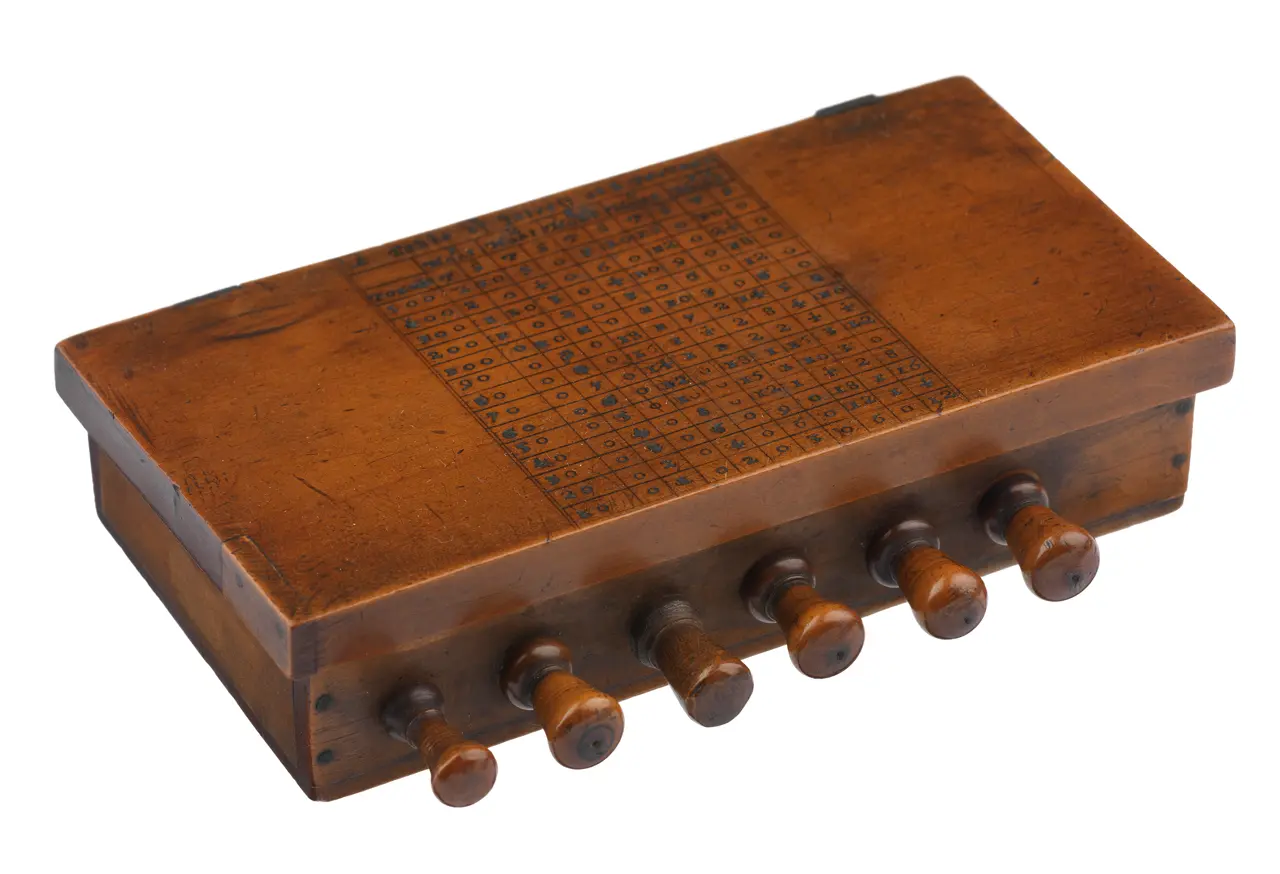
There is also this. The game does not work on every display. Dot-matrix, fourteen-segment and sixteen-segment displays can already render most characters properly, which defeats the entire point of playing with a restricted alphabet. So the game exists thanks to the inadequacy of the screen — the same accidental generosity that let Napier’s bones turn multiplication into sliding sticks four centuries earlier.
Fifty years of jokes
The game is exactly as old as the calculator. Children have been playing with this since the machines appeared in the seventies, and it did not take long for someone to discover that 0.7734 reads as hello upside down. The point at the front is no accident either, it is there so the machine does not swallow the leading zero.
What followed is a proper subculture. The Hollies put out an album in 1979 called 5317704, which in calculator spelling means hollies. The Swedish metal band Sabaton have a song called 7734, which comes out as hell. According to a 2010 episode of The Simpsons the show is set in ZIP code 80085, because flipped over that reads boobs. One of the earliest known examples of the game is in exactly this register, the sort of thing a thirteen-year-old would find.
Other languages play it too
This is my favourite part, because every language found its own joke inside the same restricted alphabet. In German, 38317 reads as Liebe.
The Dutch example is even better, because there is arithmetic inside it. A child tells a friend to multiply 6 by 2182189, and the result 13093134 turned upside down reads heleboel, Dutch for “a whole lot”. The joke is hidden in the answer to a sum.
The French one is openly political. In the early seventies students in France would ask a friend whether they knew the phone number of Giscard d’Estaing, the finance minister at the time, then type 3771350 and hand the calculator over, where upside down it gives oseille, French slang for money.
Turkish has no chance of joining this game, which I find funny in its own right. None of ş, ı or ü appear among the nine letters, and the vowels stop at e, i and o. You get close to something like “bilgisi” and then you are stuck.
The appeal of a restricted alphabet
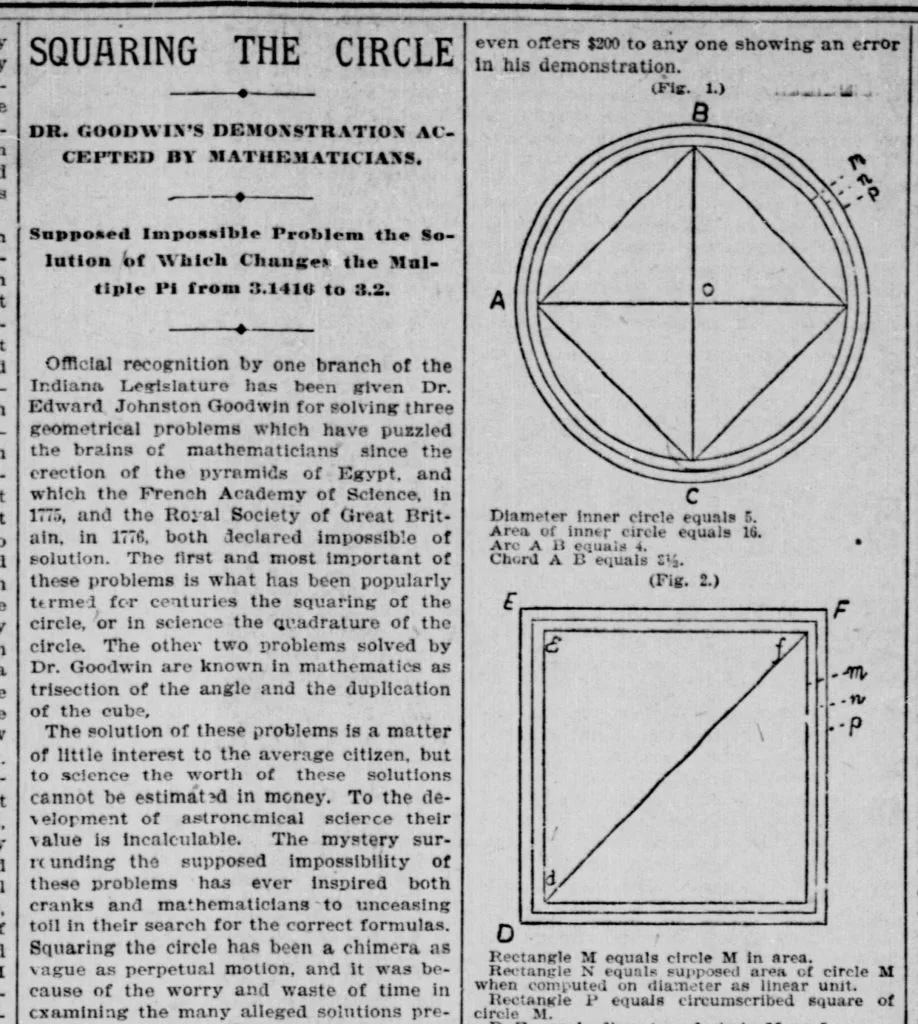
Here is what strikes me looking at this list. Building words out of twenty-six letters counts as no achievement at all, but drop to nine and finding an eleven-letter word like hillbillies suddenly becomes one. The constraint is the very thing that makes the game a game — which is also why a Sudoku with twenty-three clues is harder and better than one with forty, and why a legislature trying to legislate π is funny rather than merely wrong.
Nobody sat down and thought about letters. They put seven bars in the right places, and for fifty years children have been pulling an alphabet out of them.
And there is this side of it. The engineers who designed this display were only trying to show digits legibly. Nobody added this as a feature. The alphabet was lying there the whole time, waiting for somebody to turn the machine around.
Sources
- Michael Quinion, World Wide Words — on calculator spelling and its multilingual variants.
- dCode, Beghilos Spelling.
- The word list itself is an Abakcus compilation.