alomé Jashi first saw the photograph by accident: a full-grown tree, ancient and enormous, standing upright on a flat barge moving slowly along the Black Sea coast. No person in frame. No visible reason. Just a tree on water, where trees do not belong, going somewhere it did not choose to go.
She said it felt like something that should never have existed. She went to find out where it came from, and discovered that there were hundreds of them — trees up to fifteen floors tall, centuries old, pulled from village land all along Georgia's coastline and transported at extraordinary expense to the private estate of Bidzina Ivanishvili, the country's richest man and its former prime minister. She made a documentary about what she found.
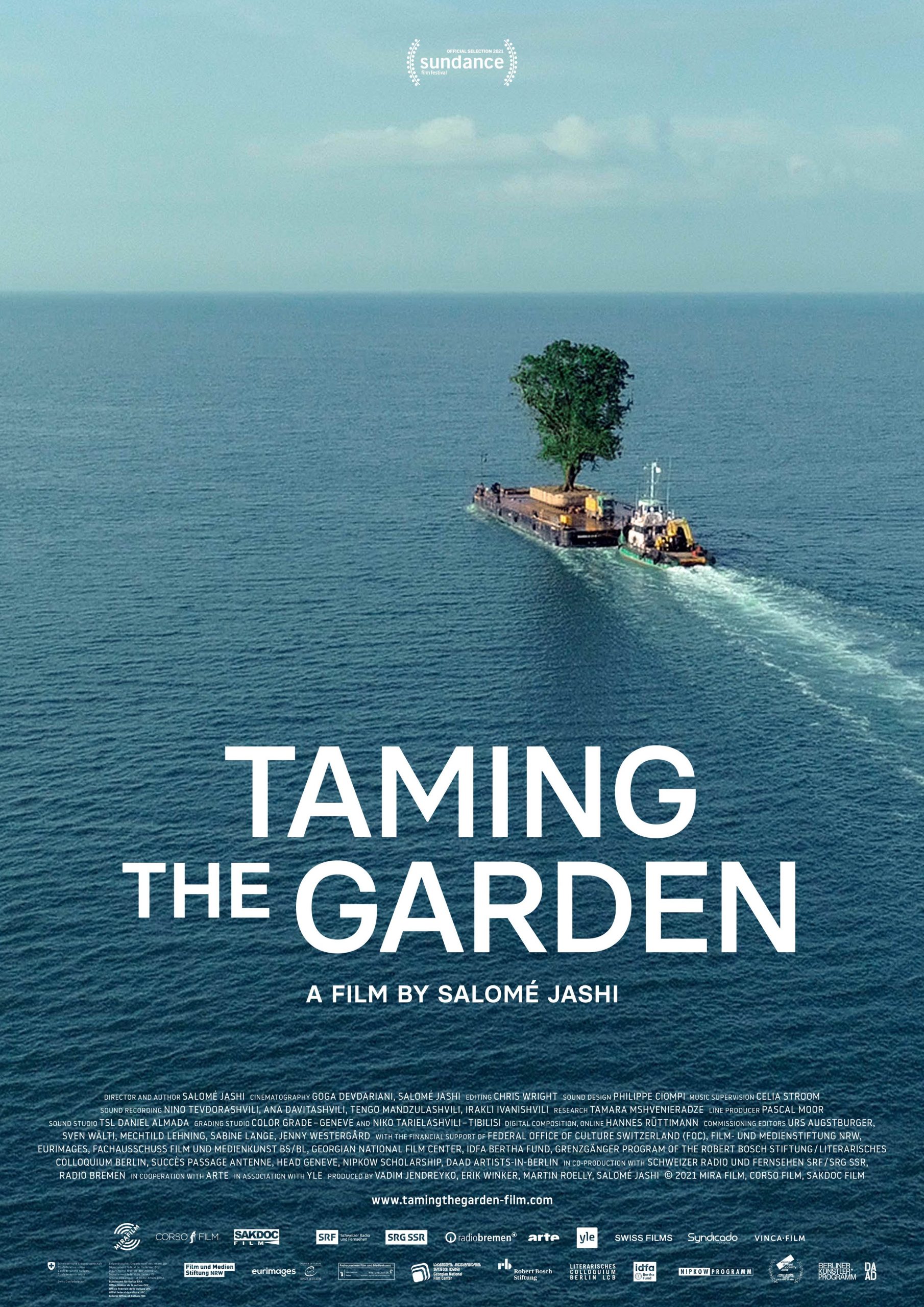
The film runs 91 minutes. Jashi shoots in long, static takes — the camera doesn't follow the action, it waits for the action to pass through its frame.
Moving a tree that has grown for a century is not a simple transaction. To extract one of these trees from the ground, other trees must first be felled to clear the machinery's path. Electric cables have to be relocated. New roads are cut through mandarin orchards. The tree travels in an enormous ball of its own earth, sealed in a steel cage, loaded onto a purpose-built truck. The whole exercise is repeated, for each tree, dozens of times.
“Peter Bradshaw called it a Fitzcarraldo operation — une folie de grandeur of staggering proportions. Herzog's madman wanted to drag a steamship over a mountain. Ivanishvili moves the mountain's trees to his garden.”
The film does not present a simple story of theft. The trees are purchased — the landowners and communities are paid. In some cases, the money is substantial. Roads get built as part of the deal. There are scenes of genuine negotiation, of people weighing the sum offered against something harder to name. The Faustian quality of the exchange comes not from coercion but from the moment of settlement: when the trucks finally arrive and the thing a family has watched grow for generations begins to be pulled from the ground, the money in hand turns abstract and the loss becomes concrete.
The Man Who Never Appears
Ivanishvili does not appear on screen. There is no interview, no confrontation, no moment where the film turns to face him directly. His garden appears near the end — manicured, enormous, serene — and the trees are there, apparently surviving their transplantation. The camera holds on it for a long time. Then the film ends.
This restraint is the film's most deliberate formal choice and its most politically loaded one. Jashi refuses to personalise the story into a portrait of one man's excess — she insists instead on showing the mechanism as the subject. The man at the centre remains absent, which makes him feel, paradoxically, more present.
Whole villages move through what Jashi captures as a kind of collective confusion — angry, desolate, and also oddly electrified by the spectacle of the extraction. Some people cry. Others photograph it on their phones. The tree disappears down the road and the village stands in a gap where something used to be.
Ancient trees along a coastline are common land in the most literal sense — they predate every owner, every border, every transaction. Uprooting them and moving them behind a private wall is not eccentric. It is a definition of what power does when it has run out of ordinary things to acquire. If Jashi's patient camera and its subject — nature bent to private will — interests you, the story of Rambo the fox is another study in what wild things do when humans decide to rearrange them.
In short
A documentary that trusts the image completely. A tree on a barge, alone on water, going nowhere it chose to go. Ninety-one minutes of Jashi knowing she was right.
Taming the Garden (2021), dir. Salomé Jashi · Guardian review: Peter Bradshaw, January 25, 2022. · abakcus.com