
Ages 3–6
Ten Black Dots
Donald Crews
Counting
Simple, bold pictures counting from one to ten. A perfect first counting book, and a great prompt to make your own dot pictures.
See it on Amazon ↗
Real stories where math is part of the adventure. Perfect for read-aloud time, bedtime, car rides and the kid who’s decided math is boring. Sorted by age, from picture books to teen favorites.
Some links on this page are affiliate links. If you buy through them, Abakcus earns a small commission at no extra cost to you. It never changes what we recommend.
“Living books” is a Charlotte Mason idea: instead of dry textbooks, kids learn from books written with passion by people who love their subject. Living math books do that for numbers, shapes and ideas. They don’t replace a curriculum. They make kids care about what the curriculum is teaching.
Read them aloud with the little ones, hand them to older kids for quiet reading time, or keep a basket by the sofa. And don’t skip the last section: a few books for you, the parent, that can change how you see math at home.
Start here
One for every age. If you only buy a few, start here.
Counting, shapes and early number sense, wrapped in a good story.
Donald Crews
Counting
Simple, bold pictures counting from one to ten. A perfect first counting book, and a great prompt to make your own dot pictures.
See it on Amazon ↗
Mitsumasa Anno
Counting · patterns
A wordless book where a village grows through the year. Every page hides groups to count. Kids keep finding new things on every read.
See it on Amazon ↗
Pat Hutchins
Sharing · early division
Cookies have to be shared again every time the doorbell rings. The friendliest introduction to division there is. Act it out with real cookies.
See it on Amazon ↗
Laura Overdeck
Everyday math
Fun facts with short math questions at three levels. Turns bedtime into a cozy daily math moment, with questions for every age in the family.
See it on Amazon ↗
Marilyn Burns
Shapes
A triangle keeps adding sides to become new shapes. Shapes and their names, with a funny story and a nice ending.
See it on Amazon ↗Addition, multiplication, measurement and fractions, all with a twist.

Greg Tang
Grouping · mental math
Rhyming riddles that ask you to count pictures the clever way. Teaches kids to group and see patterns instead of counting one by one. A homeschool favorite.
See it on Amazon ↗
Jon Scieszka and Lane Smith
Math everywhere
A girl wakes up to find that everything has become a math problem. Hilarious, and it shows that math really is everywhere. Kids love the wild illustrations.
See it on Amazon ↗
Rolf Myller
Measurement
A king orders a bed measured with feet, but whose feet? The perfect story for why we need standard units. Try measuring the room with everyone’s feet afterwards.
See it on Amazon ↗
Demi
Doubling · big numbers
A clever girl asks for rice that doubles every day. A gorgeous folk tale that makes doubling and big numbers unforgettable.
See it on Amazon ↗
Elinor J. Pinczes
Division · remainders
A bug keeps getting left out when the army lines up. Division and remainders through a story kids actually feel for.
See it on Amazon ↗Chapter books and adventures with bigger ideas: geometry, number tricks and puzzles.

Cindy Neuschwander
Geometry · circles
The first in a funny series about knights solving geometry problems. The whole series turns radius, diameter, angles and more into pun-filled adventures. Start here and kids will ask for the rest.
See it on Amazon ↗
Mitsumasa and Masaichiro Anno
Factorials · big numbers
One jar holds an island, which holds countries, which hold mountains… A beautiful, quiet introduction to how fast numbers grow. Mind-blowing for curious kids.
See it on Amazon ↗
Theoni Pappas
Math ideas · puzzles
A cat explores math ideas in short, illustrated stories. Bite-sized chapters on fractals, number patterns and more. Great for independent reading.
See it on Amazon ↗
Hans Magnus Enzensberger
Number patterns
A boy who hates math meets a devil in his dreams who shows him the magic of numbers. Probably the most loved math novel for kids. Primes, Fibonacci, infinity, all in a dream adventure.
See it on Amazon ↗
Norton Juster
Words and numbers
A bored boy drives through a tollbooth into a land of words and numbers. A classic adventure with a whole kingdom of numbers. Great as a family read-aloud.
See it on Amazon ↗Funny, a bit cheeky, and great for kids who think they don’t like math.

Kjartan Poskitt
Everything · humor
Silly, gory-ish, cartoon-filled books on every topic. Kids who would never pick up a math book read these for fun. Lots of tricks and puzzles inside.
See it on Amazon ↗
Danica McKellar
Middle school math
A friendly guide to middle school math, written like a magazine. Especially popular with middle school girls who’ve lost confidence. Clear explanations and real encouragement.
See it on Amazon ↗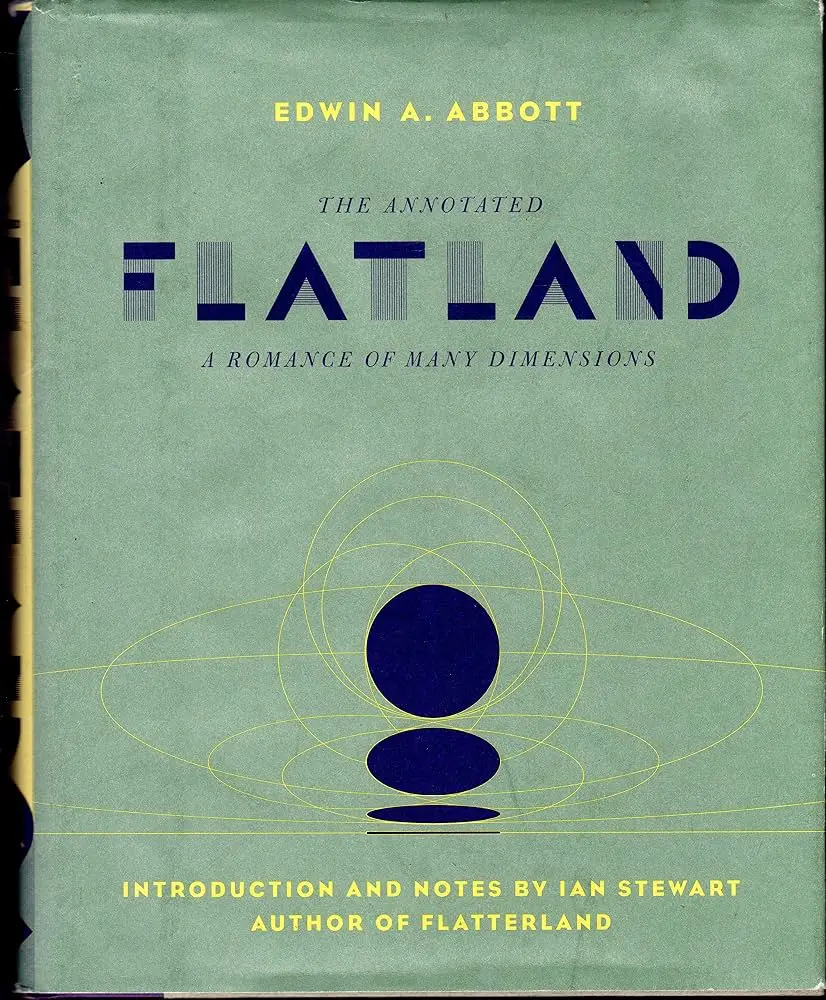
Edwin A. Abbott
Dimensions · geometry
A square living in a two-dimensional world meets a sphere. A short classic that makes kids think about dimensions in a whole new way.
See it on Amazon ↗Popular math books that show teens why math is interesting, not just required.
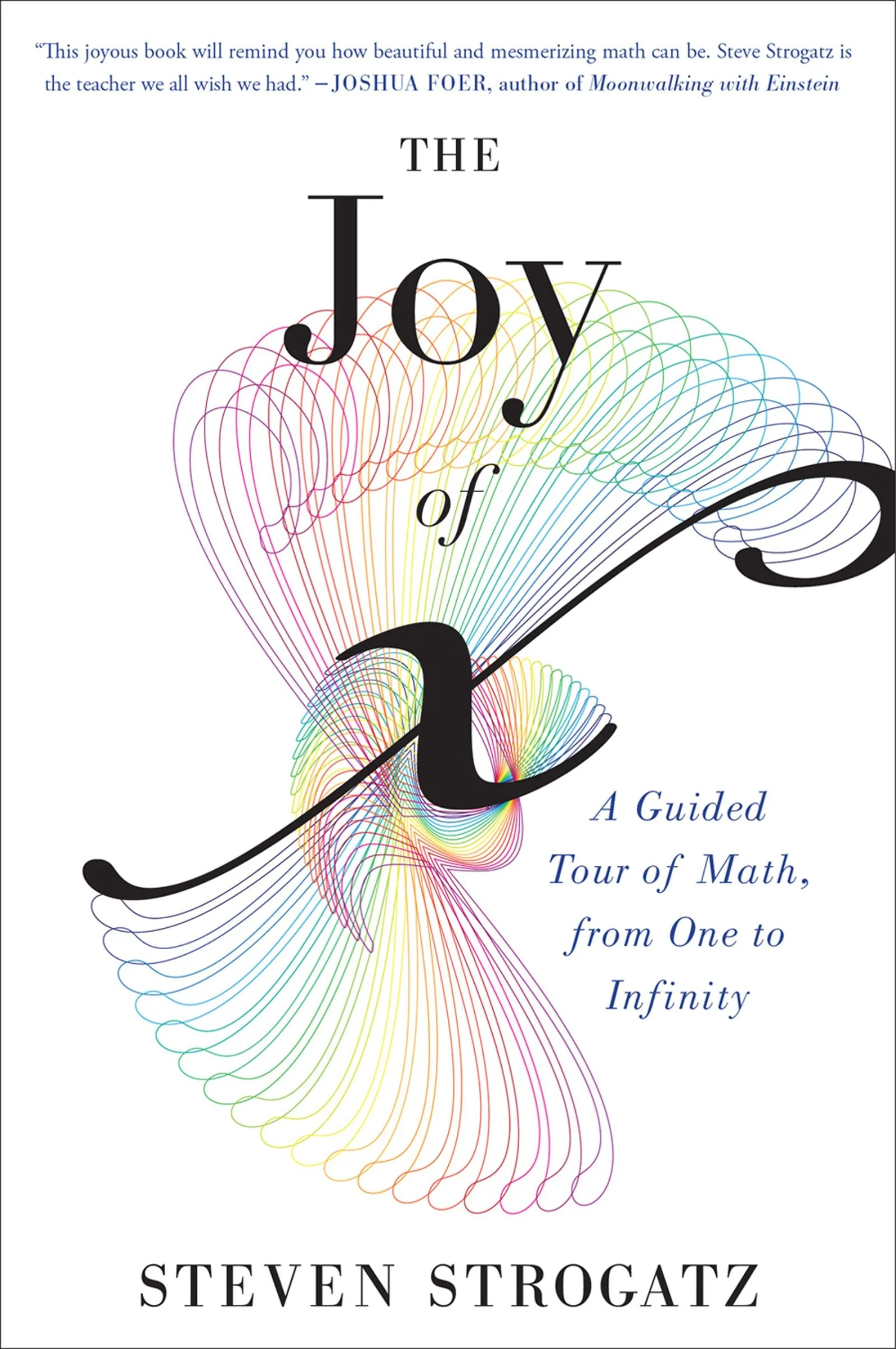
Steven Strogatz
Big ideas
A guided tour of math from numbers to infinity, in short chapters. Each chapter stands alone and connects school math to real life. Perfect for a reluctant teen.
See it on Amazon ↗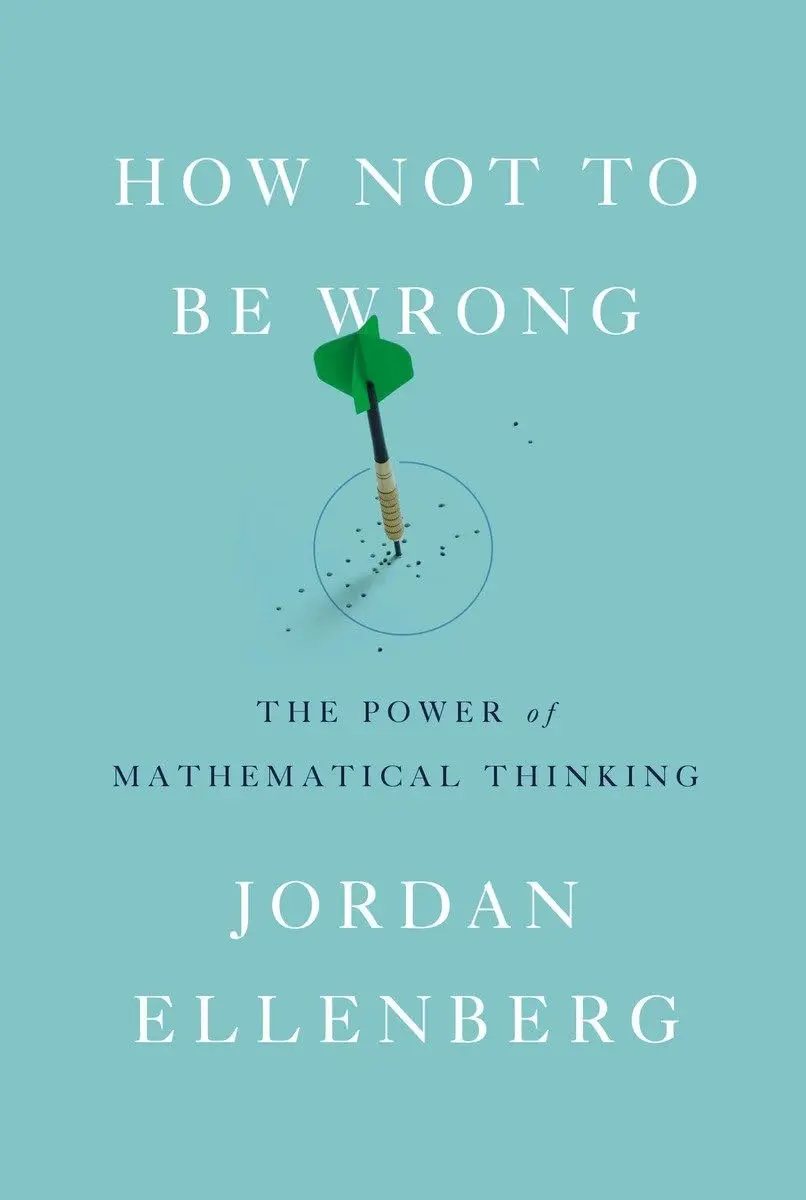
Jordan Ellenberg
Math thinking
How mathematical thinking helps in everyday life, from lotteries to elections. Funny and smart. Answers “when will I ever use this?” better than anything else.
See it on Amazon ↗
Matt Parker
Math mistakes
Real-world disasters caused by math mistakes. Hilarious and a little scary. Teens suddenly care about checking their work.
See it on Amazon ↗Books that can change how you see math, and how you teach it at home.

Jo Boaler
Mindset · confidence
Why some kids decide they’re “bad at math”, and how to undo it. Practical and encouraging. Especially good if math anxiety runs in the family.
See it on Amazon ↗
Denise Gaskins
Homeschool · games
Written by a homeschool mom for homeschool families. Warm, practical, and full of games and ideas you can use the same day.
See it on Amazon ↗
Alexander Zvonkin
Early math · math circles
A mathematician’s diary of running a math circle with his own little kids. Shows how deep and playful math with young children can be.
See it on Amazon ↗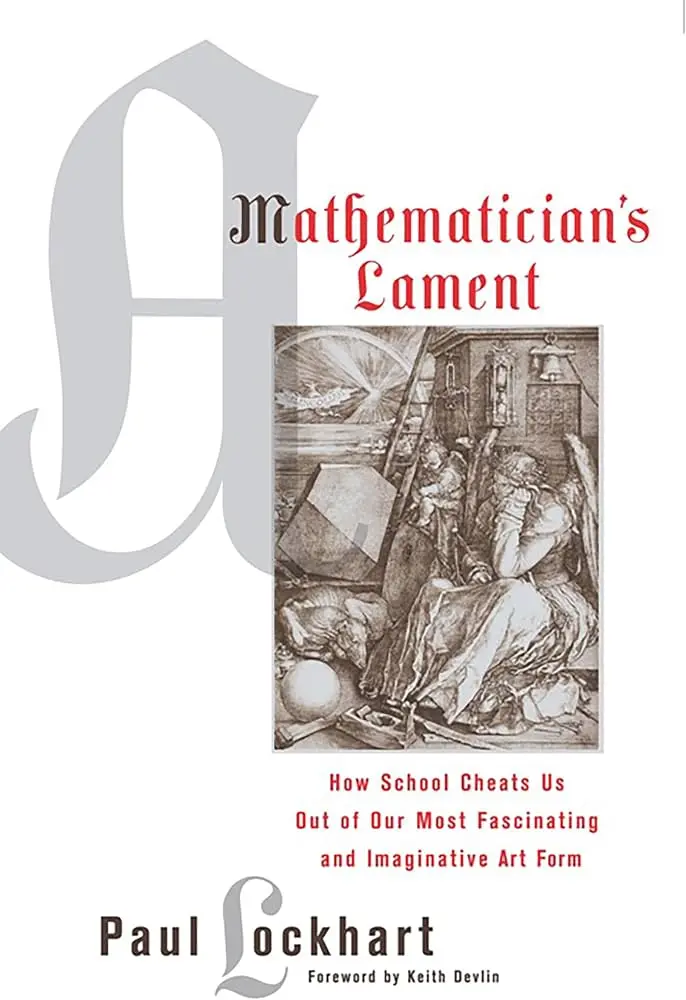
Paul Lockhart
What math really is
A short, passionate essay on how school gets math wrong. Will make you rethink everything about worksheets. A quick, powerful read.
See it on Amazon ↗
Liping Ma
Deep understanding
A study of what it really means to understand elementary math. For the parent who wants to truly understand what they’re teaching. Eye-opening.
See it on Amazon ↗A few simple ways to fold them into your week.
Read-aloud basket
Keep a basket of math books by the sofa and read one a few times a week.
Act it out
After The Doorbell Rang, share cookies. After How Big Is a Foot?, measure the room with feet.
Friday book day
Swap a lesson for a chapter of a math novel and a chat about it.
Library first
Most of these are in libraries. Buy the ones your kids ask for again and again.
Teens read alone
Hand older kids a popular math book and ask for a two-minute summary at dinner.
Narrate it back
Charlotte Mason style: ask your kid to tell you what happened, including the math.
Living math books are engaging books, often stories, written by people who love math. They come from the Charlotte Mason approach and help kids see math as part of real life, alongside a regular curriculum.
Family favorites include The Grapes of Math by Greg Tang, Math Curse by Jon Scieszka, The Doorbell Rang by Pat Hutchins, One Grain of Rice by Demi and the Sir Cumference series.
Usually not on their own. Most families use them alongside a core curriculum to build interest and understanding, especially in the early years.
The Joy of x by Steven Strogatz, How Not to Be Wrong by Jordan Ellenberg and Humble Pi by Matt Parker are popular with teens.
Keep wandering
A few more pieces in the same spirit — math, design, and slow attention.
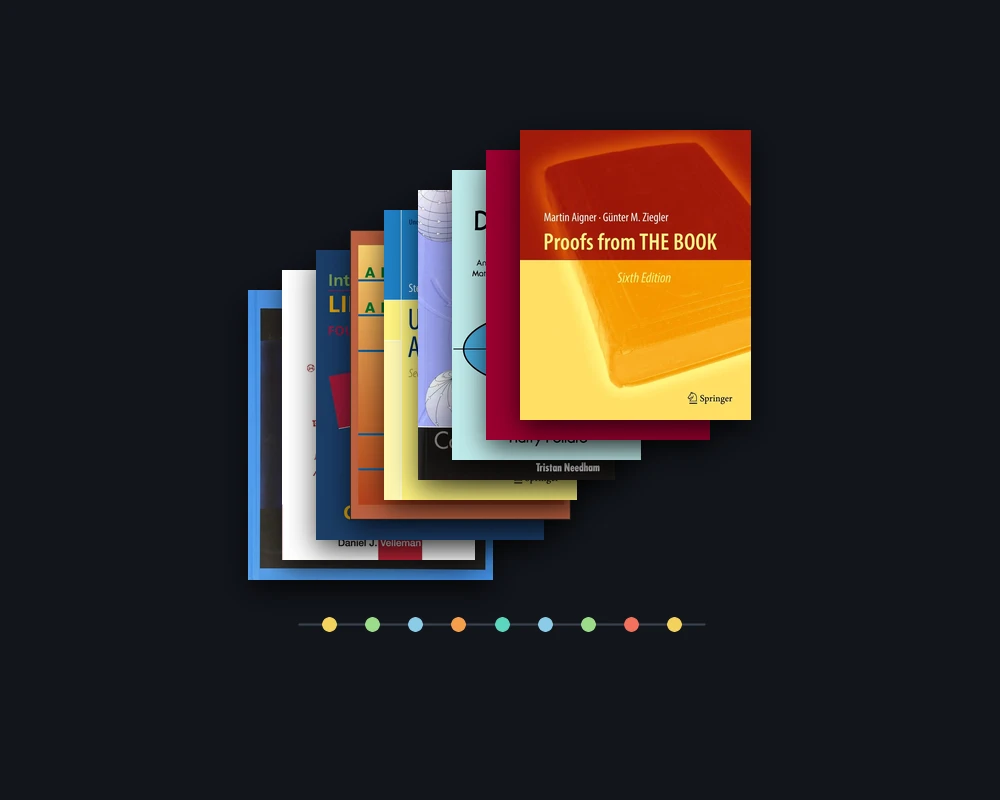
How to Learn Mathematics: A Self-Study Roadmap
A course-by-course, book-by-book roadmap for learning undergraduate mathematics on your own, with a prerequisite map, a readiness check and a study planner.
Open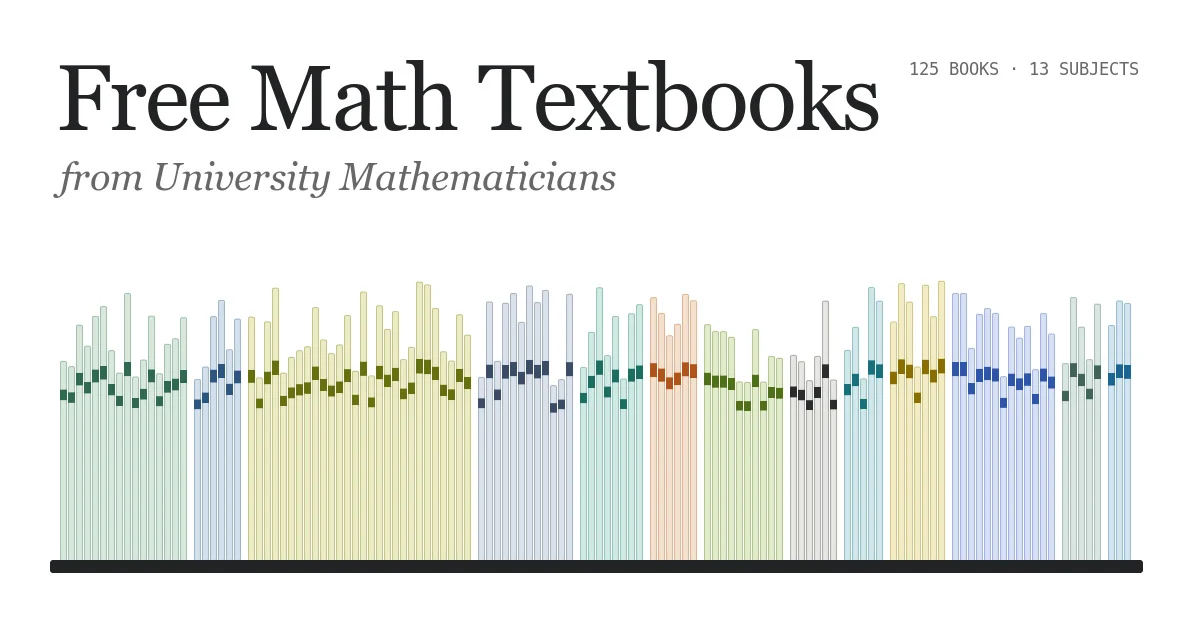
Free Math Textbooks from University Mathematicians
125 textbooks that mathematicians give away on their own pages, from high school algebra to graduate analysis, sorted by subject, level and format.
Open
A Self-Learner's Roadmap Through 30+ Great Math Books
Not a pile of recommendations. A path — the order to read in, the choices to make, and the places people quietly give up.
Open
25 Beautiful Math Documentaries to Make Students Love Mathematics
A Trip to Infinity, The Proof, N Is a Number — 25 documentaries that show the other face of mathematics: obsession, beauty, and the particular madness of chasing a question.
Open
The Feynman Technique: A Complete Guide
The four-step learning method developed by Nobel Prize-winning physicist Richard Feynman. How it works, why it works, and how to apply it to anything.
Open
Free Math Courses on Coursera: The 26 Worth Taking
Twenty-six Coursera math courses from Stanford, Penn, Imperial and Johns Hopkins, sorted into a curriculum, with what free really means on Coursera now.
Open