
DIY · Card 84 · Physics · Sound
Two cups, a long piece of string and a friend at the far end of the garden. Whisper into one cup and your voice arrives at the other, carried by nothing but a shaking thread.
01The brief
A telephone with no wires, batteries or signal.
343 m/s
the speed of sound in air at room temperature
~5×
faster along a tight nylon line, roughly
1665
when Robert Hooke wrote of sound carried along a wire
Before radio, before electric telephones, children were already sending messages along strings. It feels like a trick: you speak into a paper cup and a friend twenty metres away hears you clearly, even when they can barely hear you through the air.
The secret is that sound is a vibration, and a tight string is a superb road for vibrations. It is the solid-state cousin of the straw pan pipes and the wave machine.
02Kit
Two cups, a long string and someone to talk to.
Tick off what you have
0 of 5 ready
03Method
Holes, string, clips, then walk apart and talk.
Step 1 of 8 · Minute 0
You need two paper or plastic cups, 5 to 20 metres of string (thin fishing line or kitchen string), a sharp pencil, two paper clips and a friend.
Nothing comes through.
Why
The string is slack or touching something.
Fix
Step back until it is tight, and make sure it doesn’t rub on furniture, fences or door frames.
The string pulls out of the cup.
Why
The knot slipped through the hole.
Fix
Tie it firmly round a paper clip or a matchstick laid across the inside of the base.
The voice is faint and muffled.
Why
The string is thick or fluffy.
Fix
Use fishing line or thin waxed thread, and cups with stiff, flat bottoms.
04Sound on a string
Sound is a vibration passed from particle to particle. In air the particles are far apart; in a string they are packed tightly and pulled on hard, so the vibration passes along quickly and with little loss, as long as the string is tight and nothing is touching it.
Talk, let the string sag, and pinch it:
String
tight
Pinched
no
Listener hears
clearly
The dots are bits of string, slowed down enormously. Your voice makes the cup bottom bulge in and out, so the string is tugged and released hundreds of times a second, and the squeezes race along it to the other cup. A tight string passes every tug on; a slack one wastes them waving about, and a finger pinching it soaks them up completely.
And here is how much faster the string is than the air:
Through the air
58 ms
Along nylon line
11.8 ms
Line wins by
47 ms
Over 20 m both arrive within a fraction of a second, but the string still wins. The speeds are rough: sound runs at about 343 m/s in air and roughly five times faster along a nylon line, because its molecules are packed tightly and pull back hard when squeezed. Stretch a steel wire and it is faster still.
05The big idea
Sound needs
something to shake.
Sound isn’t a thing that flies through the air: it is the air, or the string, or the rock, being shaken. Each bit pushes the next, and the push travels while the material stays put.
That is why sound is faster in stiff, tightly packed materials, why it stops dead in the vacuum of space, and why a single finger on a string can silence a whole conversation.
06The math
1 · Travel time
t = L ⁄ v
Distance over speed.
2 · Speed in a solid
v ≈ √(E ⁄ ρ)
E the stiffness, ρ the density of the material.
3 · Wave rule
v = f · λ
f the pitch, λ the wavelength.
Over 20 m, sound through the air takes 20 ⁄ 343 ≈ 58 ms. Along a nylon line at roughly 1,700 m/s it takes about 12 ms. Steel, very stiff for its weight, carries it at about 5,100 m/s: under 4 ms.
A voice at 200 Hz has a wavelength of 343 ⁄ 200 ≈ 1.7 m in air, but about 8.5 m along the line: the same pitch, stretched out because the wave moves faster.
07Real life
From doctors’ stethoscopes to whale songs and earthquakes.
The stethoscope
In 1816 the French doctor René Laennec rolled a sheet of paper into a tube to listen to a patient’s heart. Solids and tubes carry sound well, and his invention became the stethoscope.
Ear to the rail
Steel carries sound about fifteen times faster than air, and loses it far more slowly. A train can be heard humming in the rails well before its sound arrives through the air.
Whale songs
Sound travels about four times faster in water than in air and can carry for hundreds of kilometres. Some whales call to each other across whole ocean basins.
Earthquake waves
The first waves from an earthquake to reach a distant seismometer are squeeze-and-stretch waves through rock, exactly like the waves along your string, travelling at several kilometres a second.
Bone-conduction headphones
Some headphones sit on your cheekbones and shake the bone instead of the air. The vibration travels through your skull straight to the inner ear, leaving your ears open.
The real telephone
Alexander Graham Bell’s 1876 telephone replaced the string with electricity: a thin skin vibrated by the voice changed an electric current, and the current shook a skin at the far end.
1665
Robert Hooke, curator of experiments at London’s Royal Society, was fascinated by sound. In his book Micrographia of 1665, best known for its giant drawings of a flea and a louse, he described carrying sound along a stretched wire over a long distance in an instant.
He even imagined hearing sounds from far away through such wires. Two centuries later, the ‘lover’s telephone’ of cups and string was a popular toy, and soon after that, electric telephones did what Hooke had dreamed of.
08Is and isn’t
Sound travels along the string as electricity.
No electricity at all: the string itself is squeezed and stretched, passing the vibration along from one end to the other.
Sound travels fastest through air.
Air is slowest. Sound moves several times faster through solids and liquids, where the particles are packed tightly together.
Shouting works better.
Speak normally, close to the cup. Shouting just distorts the sound, and your friend’s ear is right at the other cup anyway.
Sound can travel through space.
Sound needs something to travel through: air, water, string or rock. In the empty space between planets there is nothing to carry it.
09Go further
A
String test
Try wool, kitchen string, fishing line and thin wire, the same length each time. Which carries a whisper best?
B
Cup test
Swap paper cups for plastic cups, yoghurt pots or tin cans. Which make the loudest telephone?
C
Round the corner
Can you make the string go round a corner? Try looping it over a smooth pencil held loosely, then held tightly.
D
A spoon gong
Tie a metal spoon to the middle of a string, wrap the ends round your fingers, put your fingers in your ears and let the spoon bump a table.
E
Measure the speed
Over a very long line, can you hear the difference between a clap through the air and the same clap down the string?
10Questions
Poke a small hole in the bottom of two paper or plastic cups, thread a long piece of string through each from the outside, and tie each end to a paper clip inside the cup. Walk apart until the string is tight, then talk into one cup while a friend listens at the other.
Your voice makes the bottom of the cup vibrate. The vibrating base tugs the string back and forth, sending squeezes along it to the other cup, whose base vibrates in the same pattern and pushes the air into your friend’s ear.
A tight string passes each tug straight on to the far end. A slack string flops sideways instead and wastes the energy, so little or no sound arrives.
Thin, stiff, light string such as fishing line or waxed thread carries vibrations best. Thick, fluffy wool soaks them up. Thin wire works very well too.
With a tight, light line and nothing touching it, tens of metres. The sound fades with distance as the string loses a little energy all along its length.
Safety · Keep long strings away from roads, stairs and young children, and never wrap string round anyone’s neck or fingers tightly. A grown-up should poke holes in plastic cups.
All DIY cards →Keep wandering
A few more pieces in the same spirit — math, design, and slow attention.
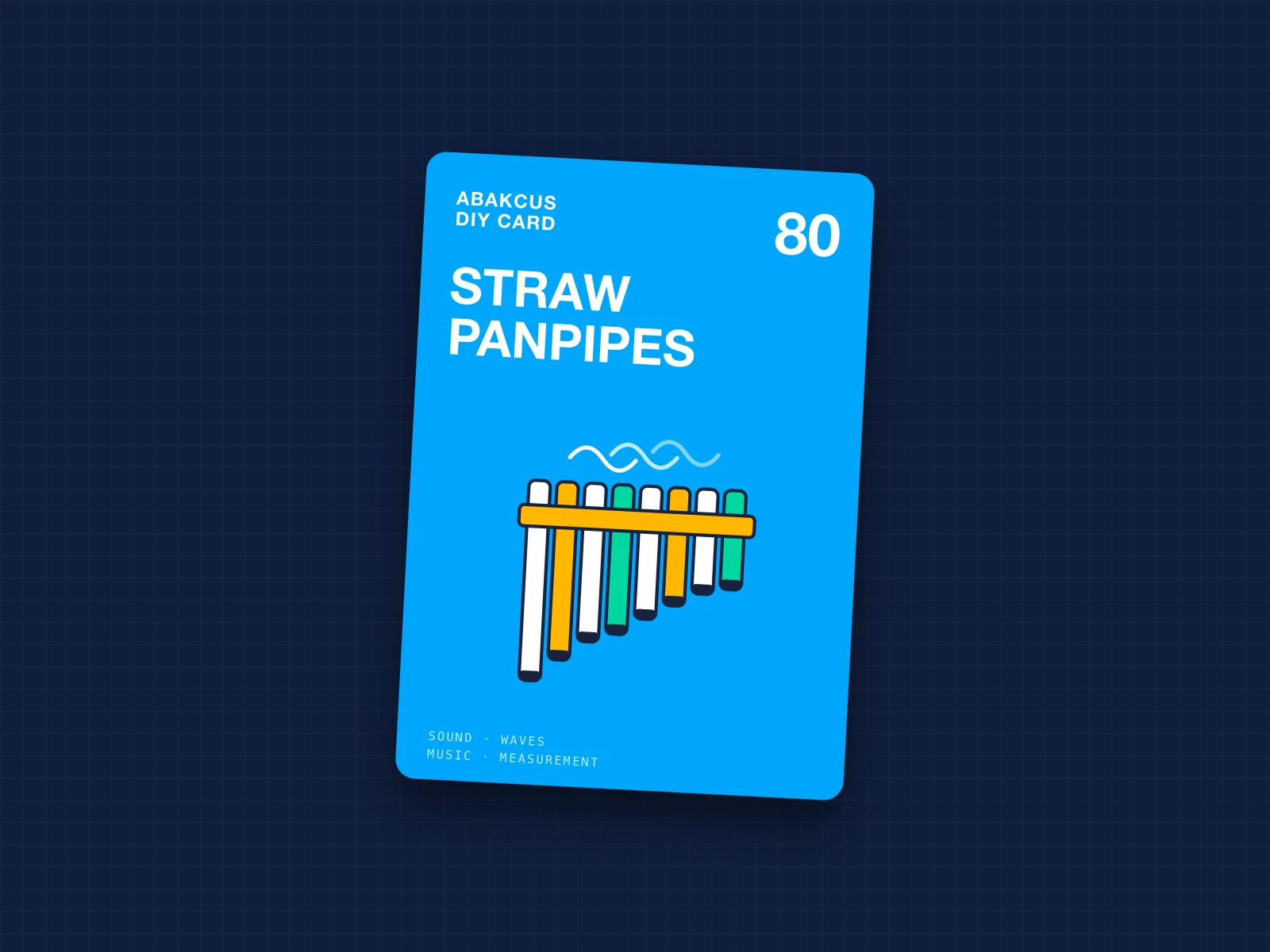
How to Make Straw Pan Pipes That Play a Real Scale
Eight straws, a ruler and a lump of clay. Cut them to length, seal the bottoms and blow: a whole octave, tuned by nothing but the speed of sound.
Open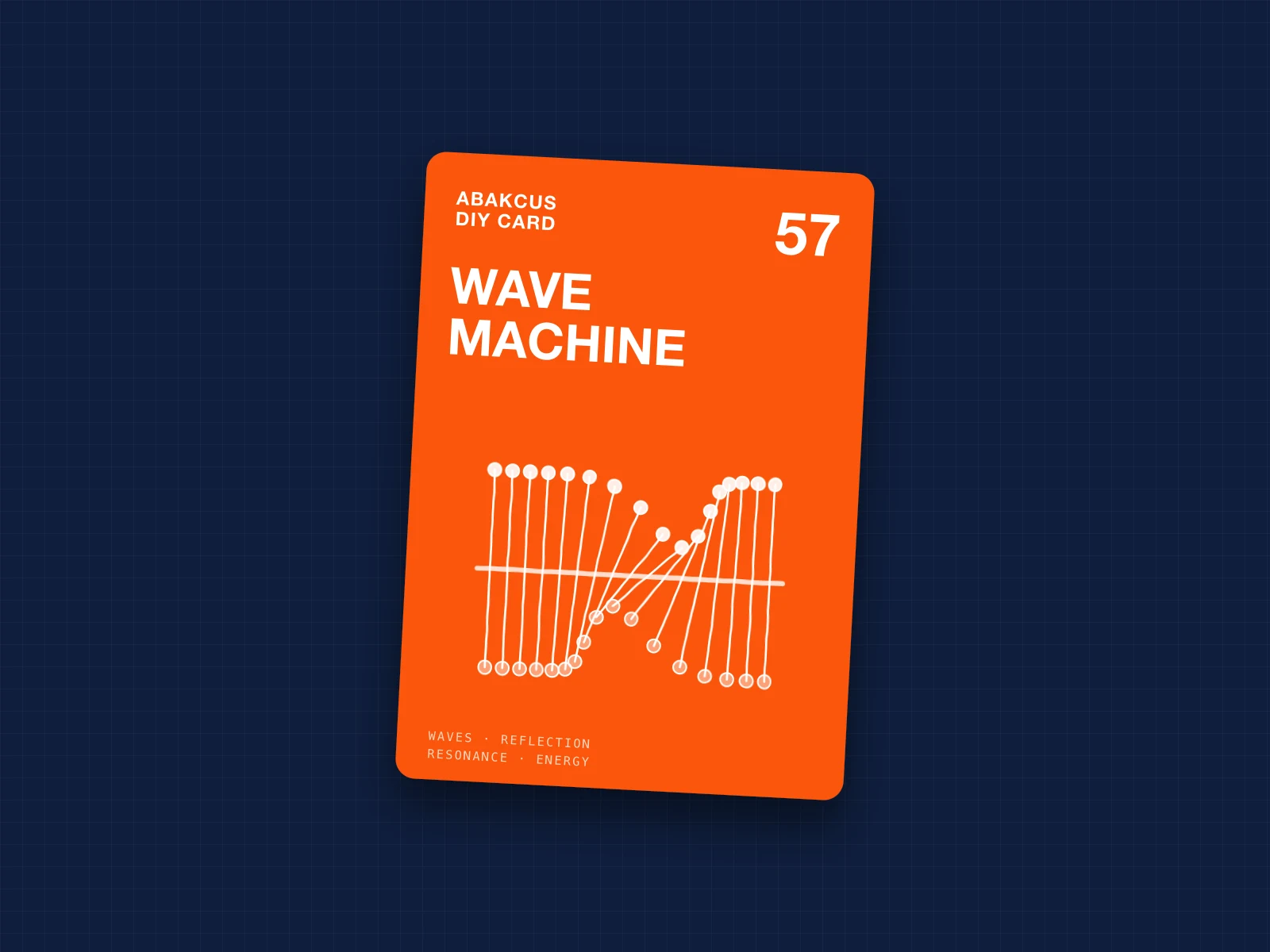
How to Make a Wave Machine From Skewers, Tape and Sweets
Two stools, a strip of duct tape, fifty skewers and a bag of jelly sweets. Tap one end and a wave you can watch ripples down the line and bounces back.
Open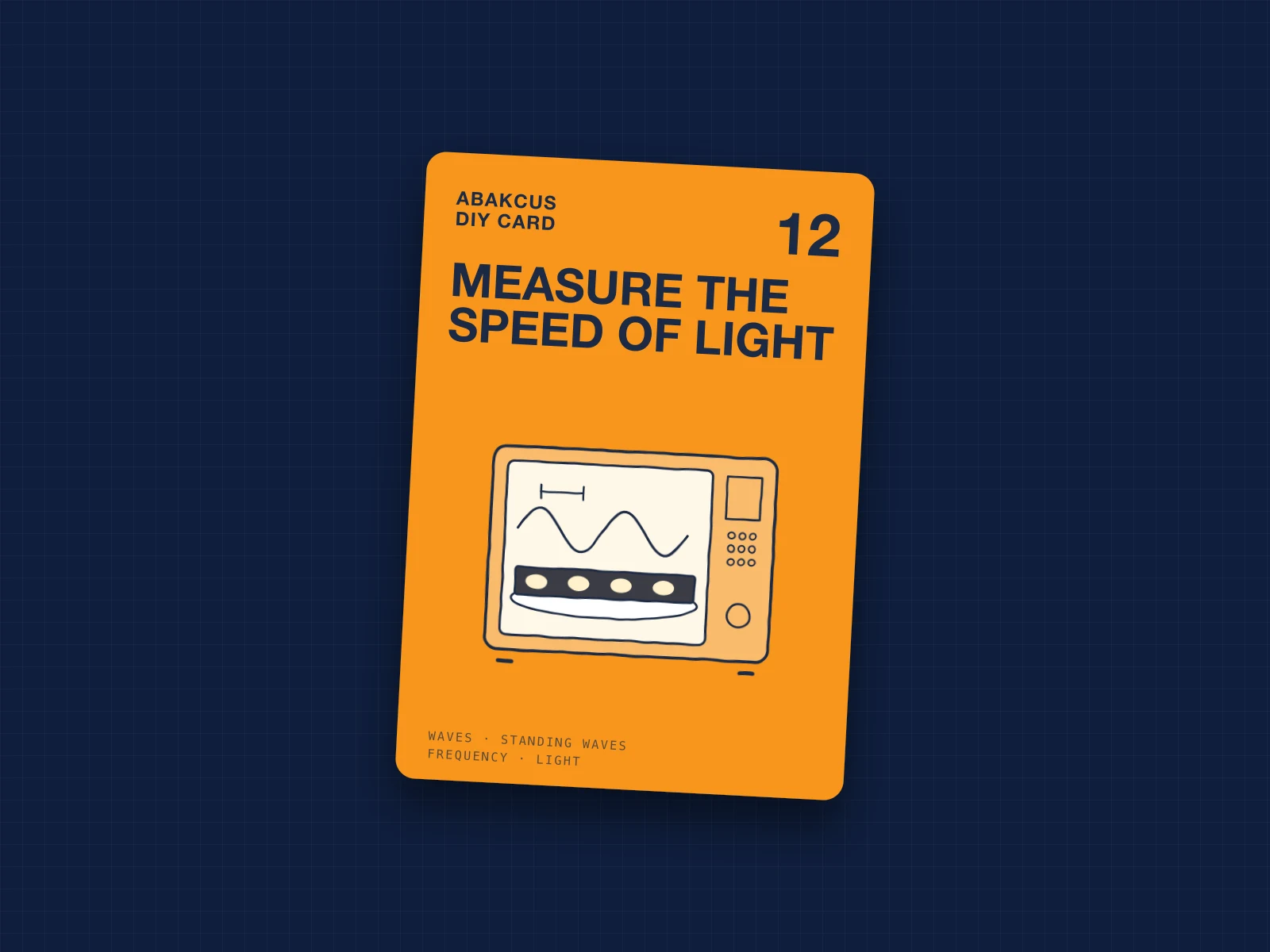
How to Measure the Speed of Light With Chocolate
Take the turntable out of a microwave, heat a bar of chocolate for twenty seconds, and measure the gap between the melted spots. Multiply by the number on the back of the oven and you get the speed of light, give or take a few percent.
Open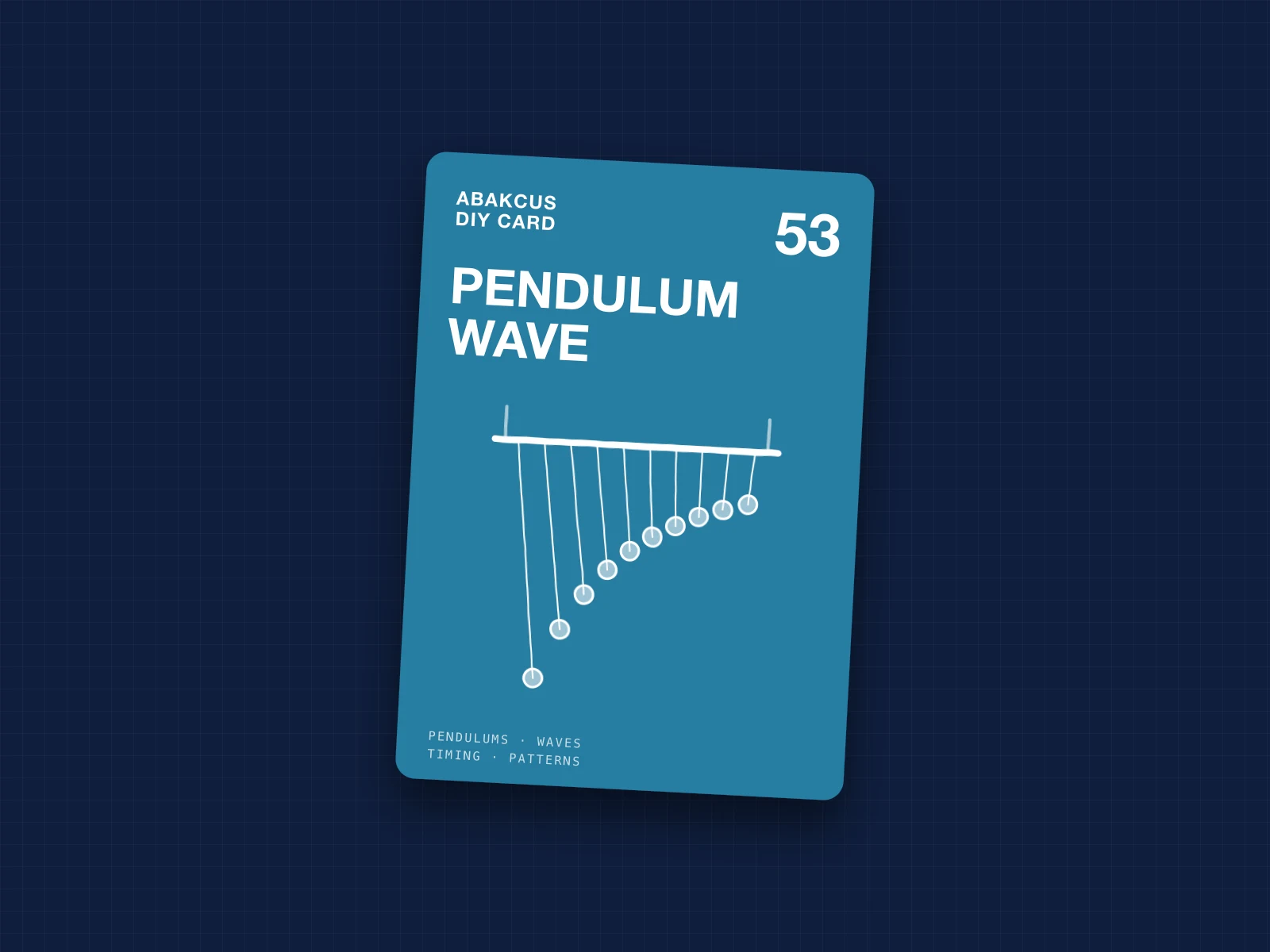
How to Make a Pendulum Wave Toy From Nuts and String
Twelve nuts on twelve strings, each a little shorter than the last. Let them go together and they weave waves and snakes, then swing back into a perfect line.
Open
How to Make a Balloon Hovercraft From an Old CD
An old CD, a bottle cap and a balloon. Open the cap and the disc lifts a hair’s breadth off the table, then glides away at the faintest touch.
Open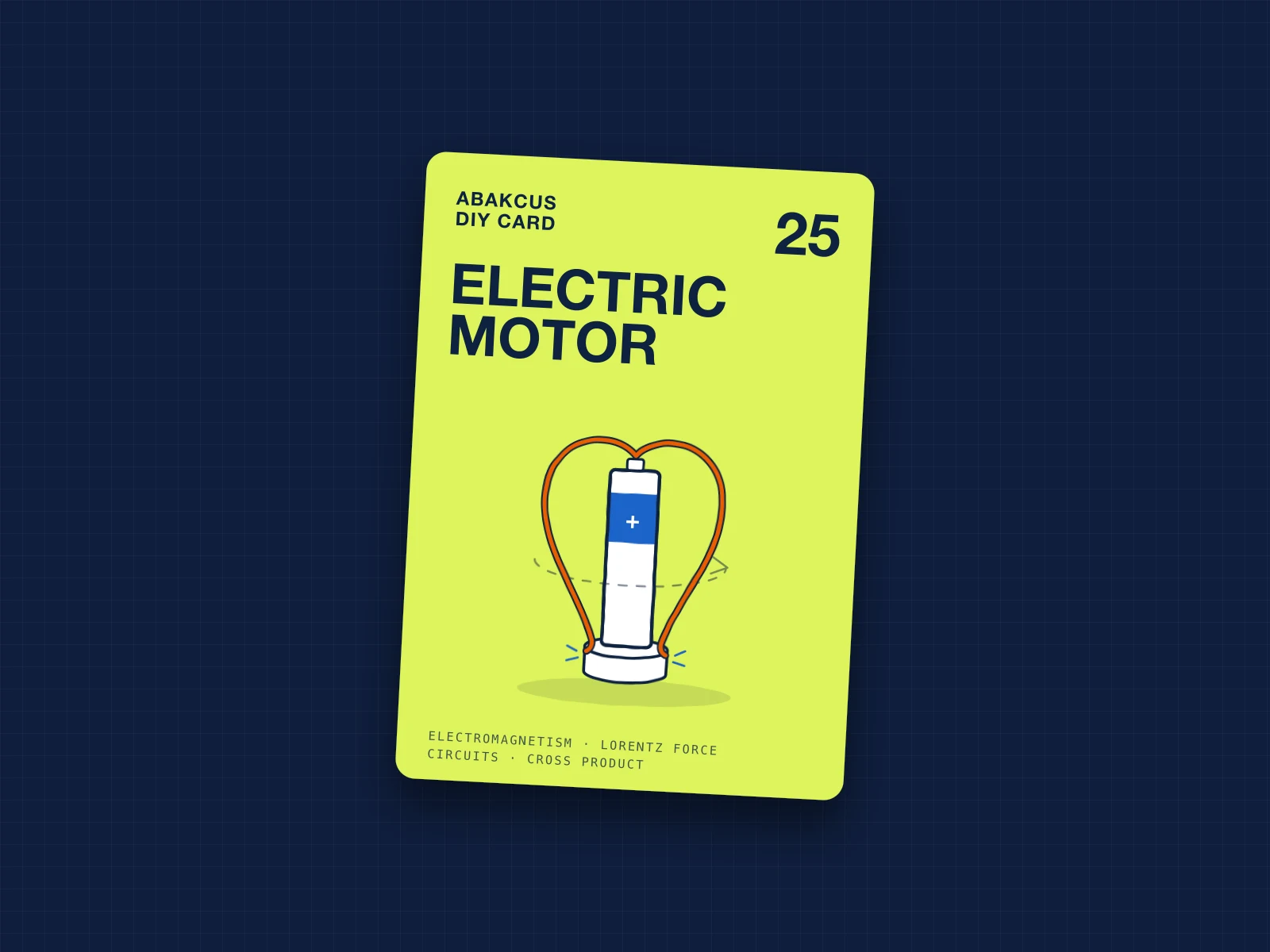
How to Make a Simple Electric Motor (Homopolar Motor)
A battery, a magnet and a bent piece of copper wire: three parts, no coils, and the wire spins on its own. It is the same push that drives every electric motor, found by Faraday in a single afternoon in 1821.
Open