
DIY · Card 80 · Sound · Waves
Eight straws, a ruler and a lump of clay. Cut them to the right lengths, seal the bottoms and blow across the tops: a whole octave, tuned by nothing but the speed of sound.
01The brief
An instrument tuned with a ruler and the speed of sound.
16.2 cm
the straw for the C above middle C, 523 Hz
½
the length for a note an octave higher
343 m/s
the speed of sound at room temperature, which sets every length
Blow across the top of a straw sealed at the bottom and it hoots. Cut it shorter and the hoot goes up. That is the whole principle of the pan pipes, one of the oldest instruments in the world.
The clever part is that you can work out every length in advance with one formula, then check it with your ears. It sits well beside the wave machine and the harmonograph.
02Kit
Straws, a ruler and a lump of clay.
Tick off what you have
0 of 5 ready
03Method
Measure, cut, seal, tune, tape.
Step 1 of 8 · Minute 0
You need eight wide plastic or paper drinking straws, a ruler, a pen, scissors, sticky tack or modelling clay to seal the ends, and strong tape. A tuner app on a phone is a bonus.
A straw makes no sound at all.
Why
The seal leaks, or you are blowing into it instead of across it.
Fix
Press the plug in firmly, and blow a gentle, flat stream of air across the top edge, not down the straw.
A note is flat.
Why
The pipe is too long.
Fix
Trim a millimetre off the top and test again. Small cuts make a surprising difference at the short end.
A note is sharp.
Why
The pipe is too short, often because the plug went in too far.
Fix
Push the plug out a little to make the air column longer, or cut a new straw.
04Pipes and waves
Each pipe rings at the frequency whose sound wave fits inside it. Work out that frequency for each note you want, and you have your cut-list. Here it is for a full octave of C major:
Tap the pipes to hear them:
Tap a pipe to hear it. Lengths are in centimetres, measured from the sealed end to the open top. A straw sealed at one end sounds when a quarter of a wavelength fits inside it, so L = v ⁄ 4f, minus a couple of millimetres for the air that bulges past the open end. The top C is exactly half the length of the bottom one: an octave. Warm air carries sound faster, so the same note needs a slightly longer straw: straws cut in a cold room play sharp in a warm one.
What is actually happening inside the straw? The air is sloshing back and forth:
This note
531 Hz
Wavelength
64.7 cm
Lowest note
531 Hz
The blue dots are parcels of air, slowed down millions of times. They can’t move at the sealed end, so the wave must have a still point there and its biggest swing at the mouth. The simplest fit is a quarter of a wave; the next is three quarters, at three times the frequency. Even multiples never fit, which is why a sealed pipe sounds hollow and woody, like a clarinet.
05The big idea
Pitch is
a length.
Every musical note is a frequency, and every frequency in air is a wavelength: speed divided by frequency. An instrument is just a way of holding a particular length of air, string or wood still enough to ring.
Halve the length and you double the frequency: an octave. Shorten it to two-thirds and you get a fifth. The Pythagoreans discovered these simple ratios with strings two and a half thousand years ago; your straws obey exactly the same rule.
06The math
1 · Closed pipe
f = v ⁄ 4(L + 0.6 r)
L the pipe length, r its radius, v the speed of sound.
2 · Speed of sound
v ≈ 331 + 0.6 T m/s
In air, at temperature T in °C.
3 · Equal steps
2^(1⁄12) ≈ 1.0595
Each semitone up multiplies the frequency by this.
At 20 °C, sound travels at about 343 m/s. For C at 523.25 Hz: 343 ⁄ (4 × 523.25) ≈ 0.164 m, minus 0.6 × 3 mm ≈ 1.8 mm for the open end, leaves 16.2 cm. The G above it, at 784 Hz, needs 10.8 cm: two-thirds of the length, the ratio of a perfect fifth.
The pipe also rings at 3, 5 and 7 times its lowest frequency, never at even multiples, because a sealed end must always be a still point. An open straw of the same length would sound at v ⁄ 2L: twice the frequency, an octave higher.
07Real life
From the Andes and church organs to a bottle on the table.
Andean pan pipes
In the Andes, the siku is split into two rows of pipes holding alternate notes, played by two musicians who weave a single melody between them, note by note.
Organ pipes
A big church organ has thousands of pipes. The longest, about 10 metres for a 32-foot stop, sound notes so low you feel them more than hear them.
The clarinet
A clarinet behaves like a pipe closed at one end: the reed end acts sealed. That is why it sounds mostly odd harmonics, giving its dark, hollow tone, like your straws.
Bottle music
Blow across a bottle and the note gets higher as you add water, because the air space shrinks. Tap the same bottle instead and adding water makes the note lower: it is the glass and water vibrating now.
Helium voices
Sound travels nearly three times faster in helium. Breathe it in and the resonances of your throat and mouth jump up, though your vocal cords vibrate just as before. (Never breathe helium from a tank: it can be dangerous.)
The didgeridoo
Played for thousands of years in northern Australia, the didgeridoo is a long tube hollowed out by termites. The player’s buzzing lips seal one end, so it too is a closed pipe, with a deep drone.
40,000
In the Hohle Fels cave in southern Germany, archaeologists found a flute carved from the wing bone of a griffon vulture, with five finger holes and a notched mouthpiece. It is around 40,000 years old.
It is among the oldest musical instruments known, made by some of the first modern humans in Europe. People were already turning tubes of air into music, choosing lengths and holes to make the notes they wanted, long before anyone could write a single word.
08Is and isn’t
Longer pipes play higher notes.
The opposite. A longer pipe holds a longer wave, which vibrates fewer times a second: a lower note.
Helium makes your vocal cords vibrate faster.
Your vocal cords are unchanged. Helium shifts the resonances of your throat and mouth, which changes the quality of the sound.
The thickness of the straw sets the note.
Mostly it’s the length. Width only adds a small end correction, a couple of millimetres for a drinking straw.
Sealed or open makes no difference.
Sealing one end drops the note by a whole octave and removes the even harmonics, giving a softer, hollow sound.
09Go further
A
Open versus closed
Make a second, unsealed straw the same length as your lowest pipe. How much higher does it sound?
B
A two-octave set
Use the cut-list rule to make pipes from 32 cm (wide tubing) down to 8 cm. How far can you go?
C
Temperature test
Play your lowest pipe outside on a cold day and inside in a warm room, checking with a tuner. Does the note shift?
D
A pentatonic set
Make only C, D, E, G and A. Any order of these five notes sounds pleasant: try improvising.
E
Slide whistle
Put a pencil wrapped in tape inside a straw as a plunger. Slide it while blowing to bend the note up and down.
10Questions
Cut eight straws to the lengths of a scale, from about 16 cm down to 8 cm, seal the bottom of each with a little sticky tack or clay, and tape them side by side with their tops level. Blow gently across the tops to play.
For a straw sealed at the bottom, the length is about the speed of sound divided by four times the frequency: L = v ⁄ 4f. For the C above middle C (523 Hz) that is about 16.2 cm, and every note an octave higher needs half the length.
The note is set by the sound wave that fits inside the pipe. A shorter pipe holds a shorter wave, and shorter waves vibrate more often each second, which we hear as a higher pitch.
A sealed straw is a closed pipe: it rings when a quarter of a wave fits inside, so it plays an octave lower than an open straw of the same length. Without the seal the notes are higher and weaker.
The stream of air flickers back and forth across the sharp edge of the straw. The air column inside picks out its own natural frequency from that flicker and rings at it, like a swing pushed at the right moments.
Safety · Keep sticky tack and small straw offcuts away from children under three. Blow gently: lots of hard blowing can make you light-headed, so take breaks.
All DIY cards →Keep wandering
A few more pieces in the same spirit — math, design, and slow attention.
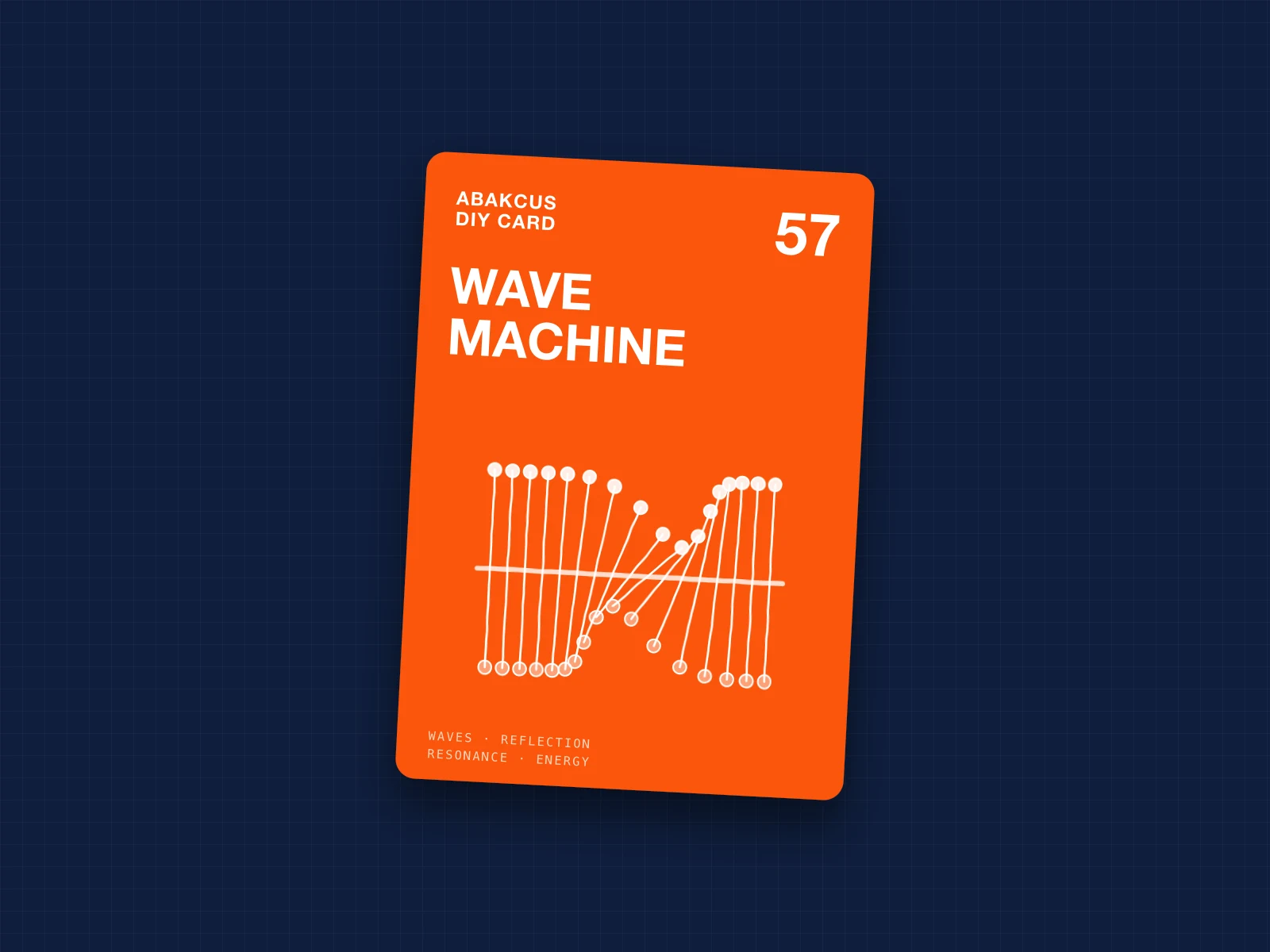
How to Make a Wave Machine From Skewers, Tape and Sweets
Two stools, a strip of duct tape, fifty skewers and a bag of jelly sweets. Tap one end and a wave you can watch ripples down the line and bounces back.
Open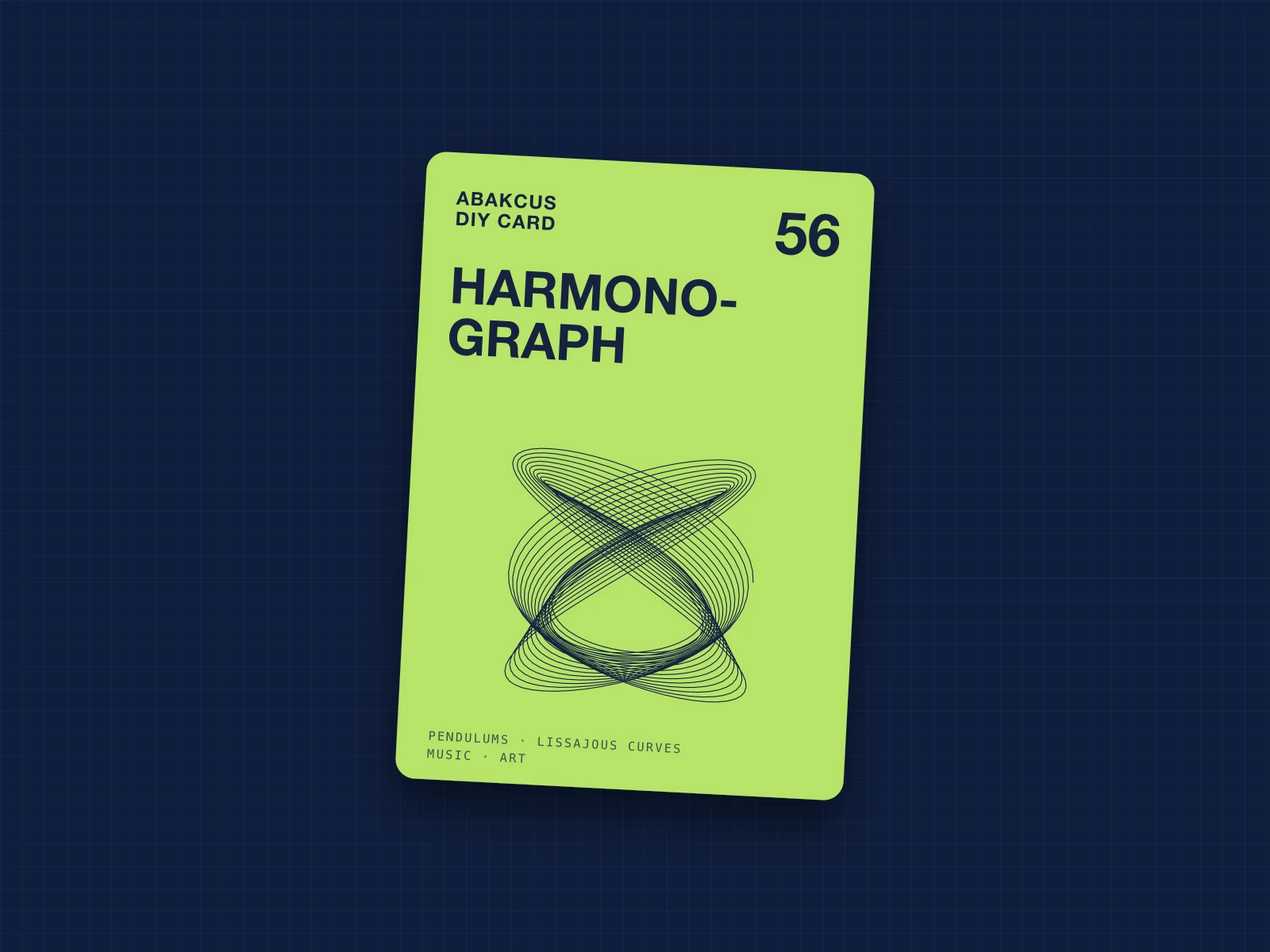
How to Make a Harmonograph That Draws With a Pendulum
A broom handle, a board on a Y of string and a felt-tip pen. Set it swinging and the pen draws figures of eight and woven shells, the shapes of musical harmony.
Open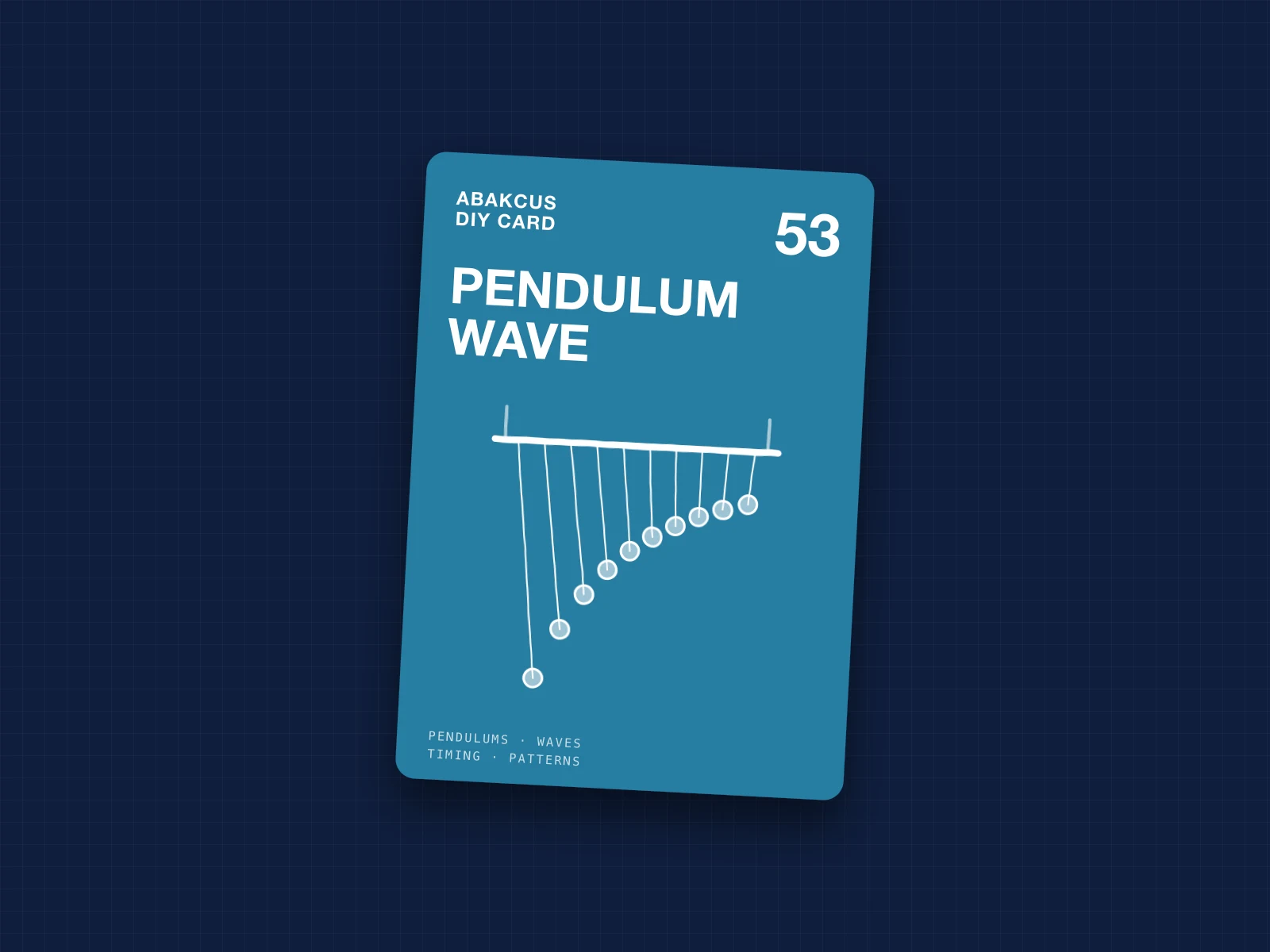
How to Make a Pendulum Wave Toy From Nuts and String
Twelve nuts on twelve strings, each a little shorter than the last. Let them go together and they weave waves and snakes, then swing back into a perfect line.
Open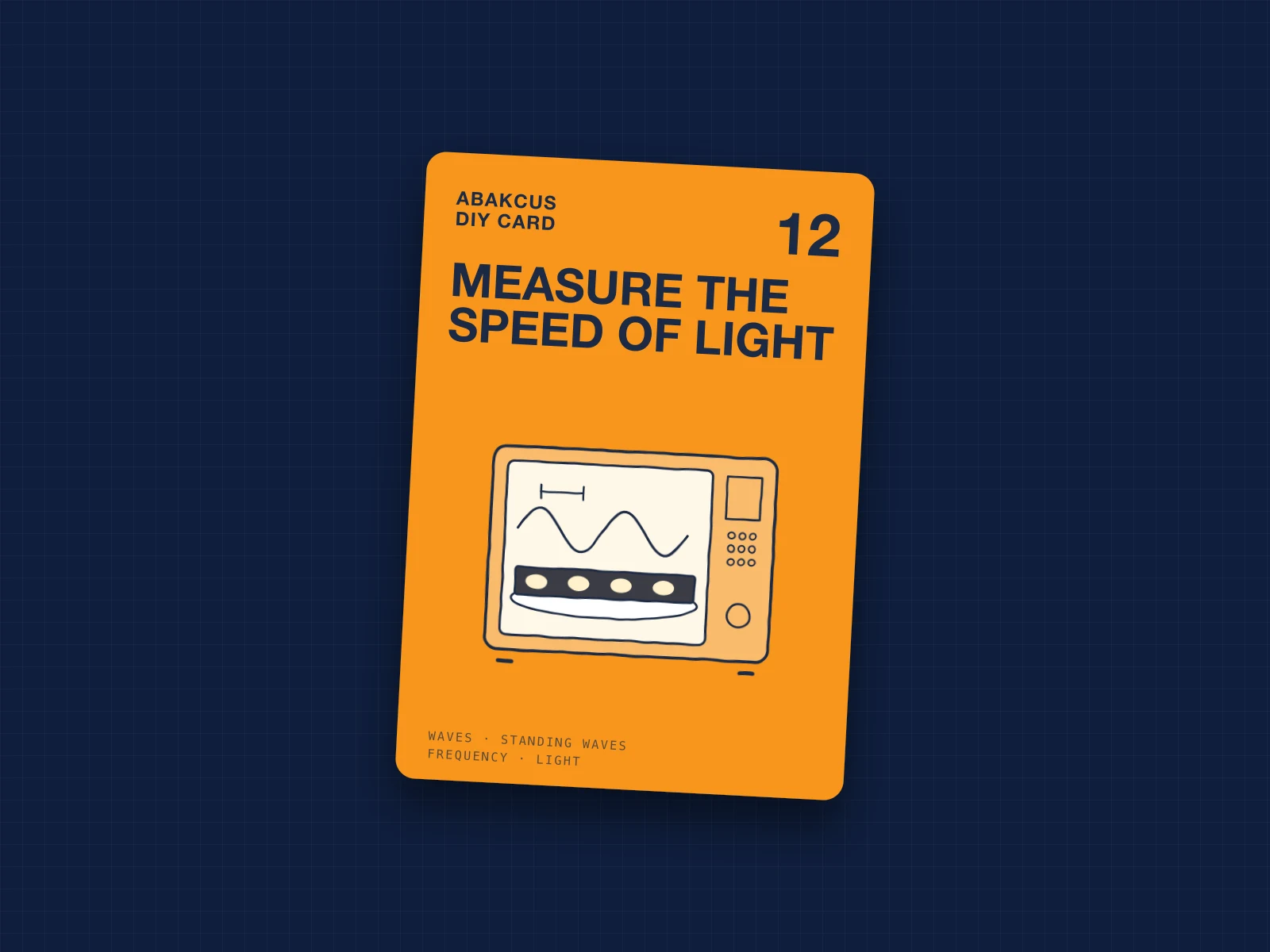
How to Measure the Speed of Light With Chocolate
Take the turntable out of a microwave, heat a bar of chocolate for twenty seconds, and measure the gap between the melted spots. Multiply by the number on the back of the oven and you get the speed of light, give or take a few percent.
Open
How to Make a Kaleidoscope From a Kitchen-Roll Tube
Three strips of mirror in a kitchen-roll tube and a pinch of beads. Turn it to the light and a jumble of sequins becomes a perfect, ever-changing pattern.
Open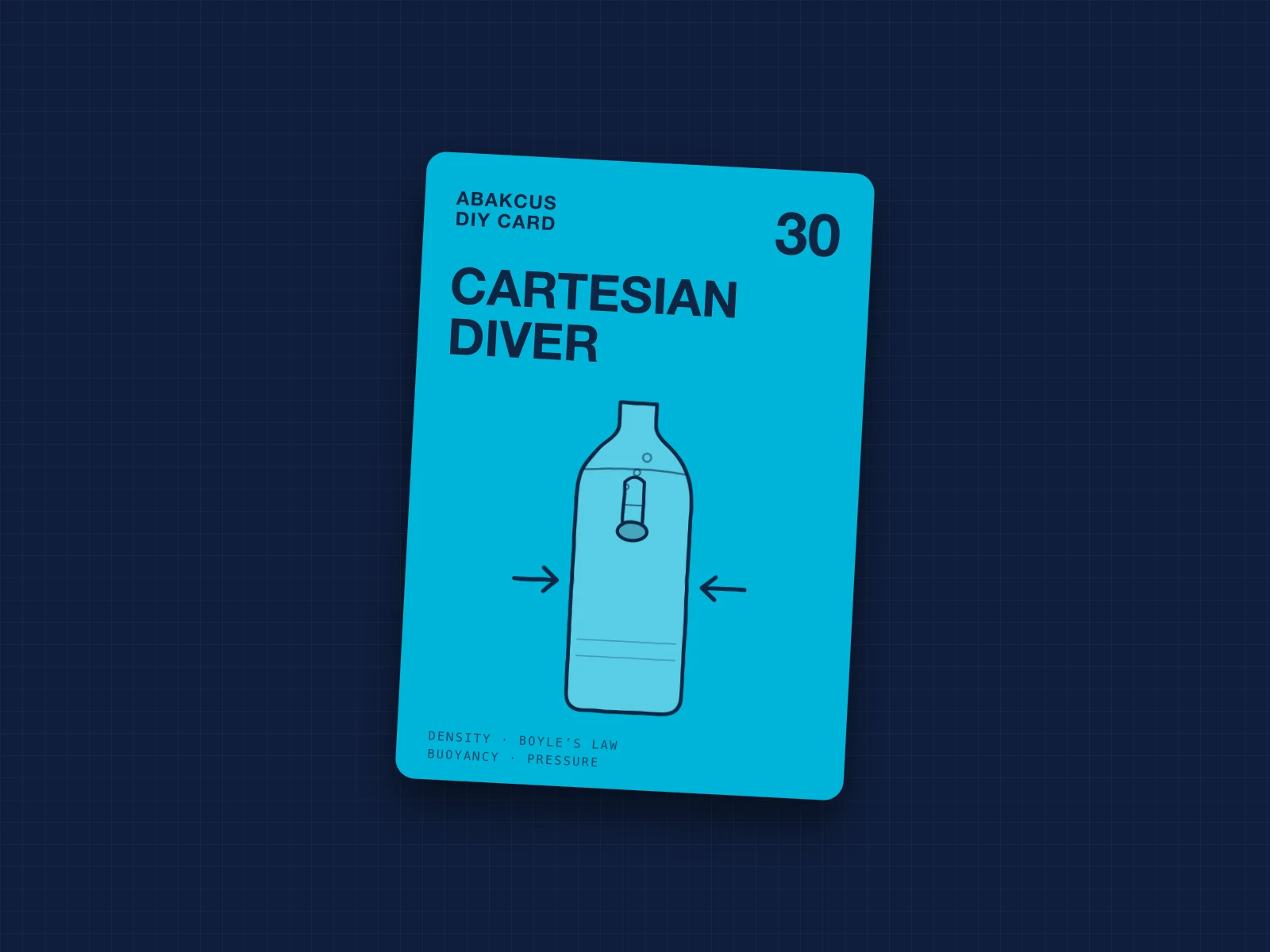
How to Make a Cartesian Diver With a Straw and a Bottle
A scrap of straw, a pinch of plasticine and a bottle of water. Squeeze the bottle and the diver sinks; let go and it floats back up, without ever being touched.
Open