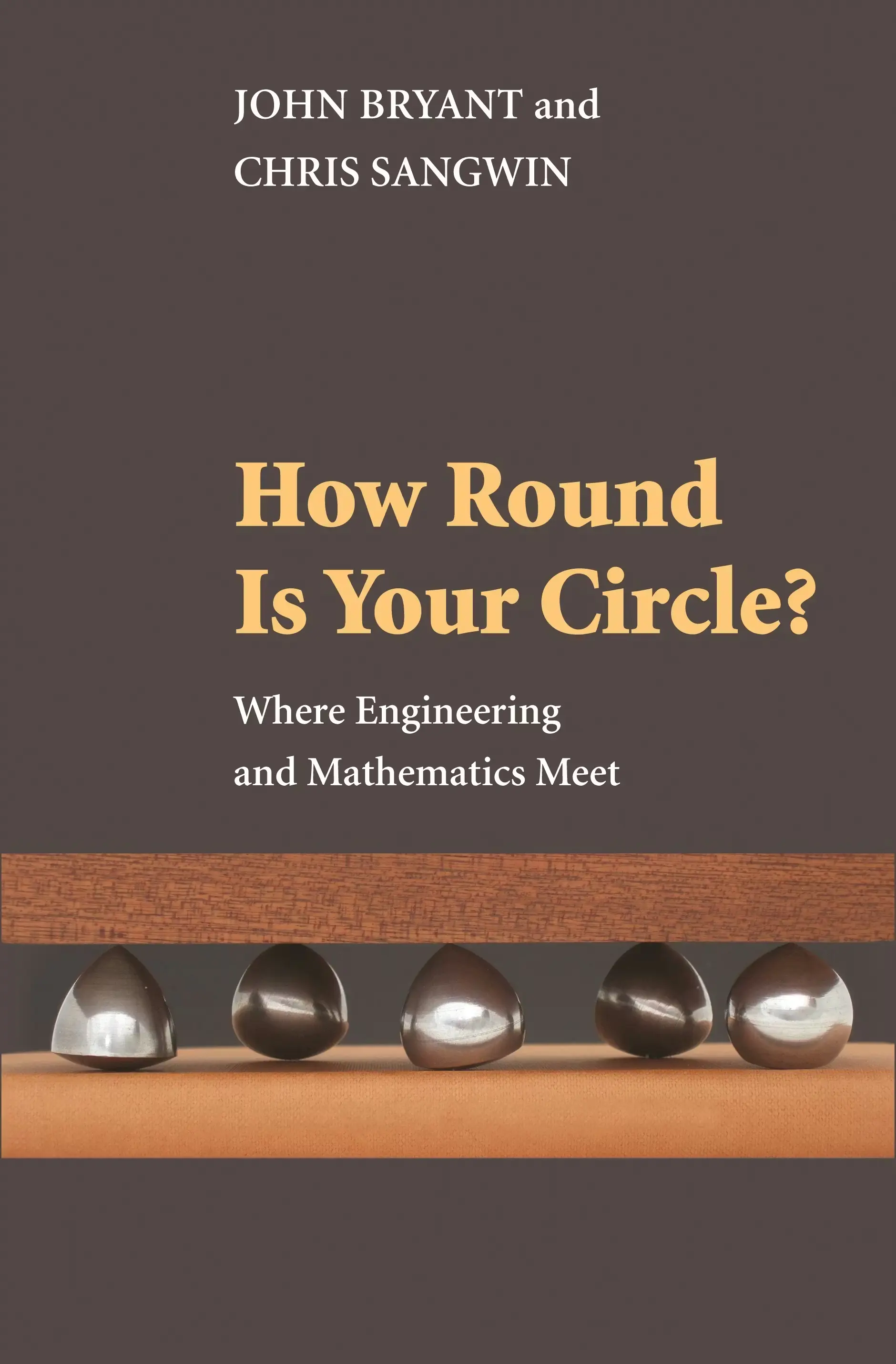
You think you know what a circle is. You drew one with a compass, it looks right, you move on. This book dismantles that confidence slowly, pleasurably, and without any possibility of getting it back.
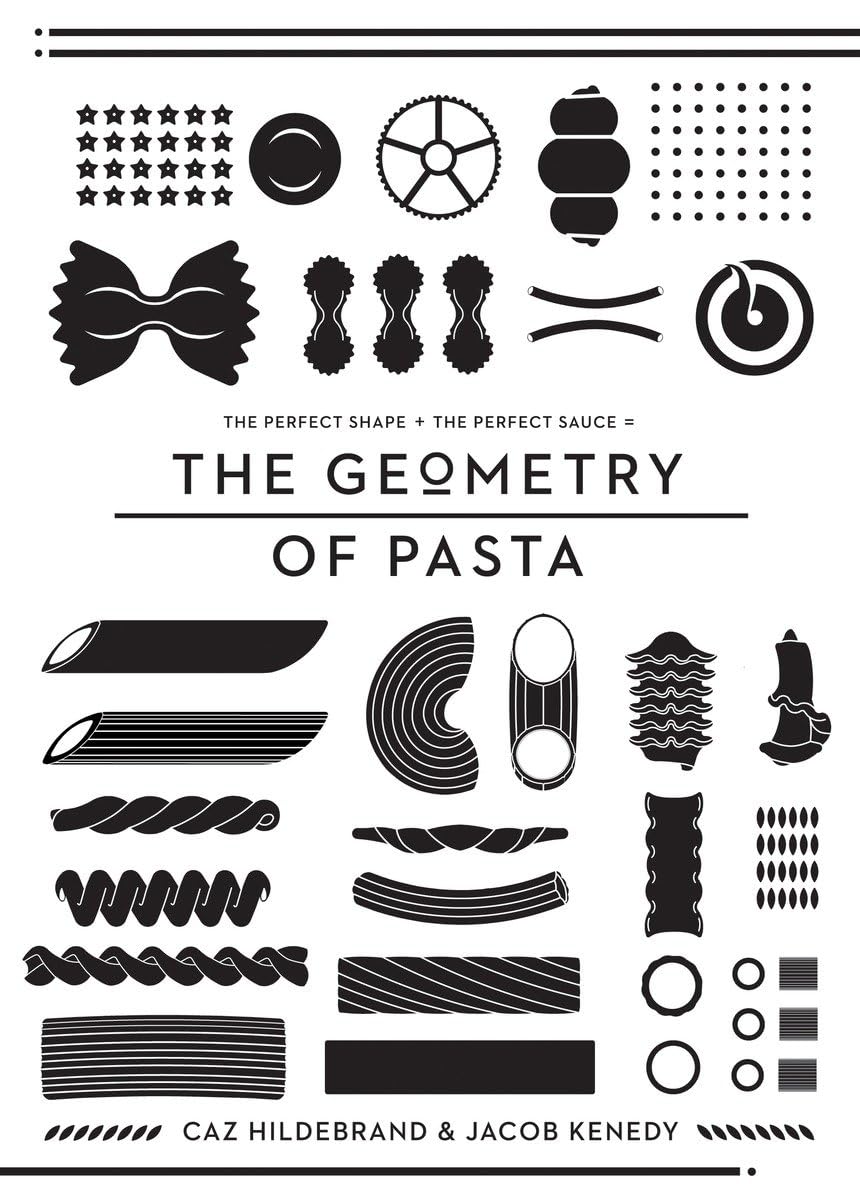
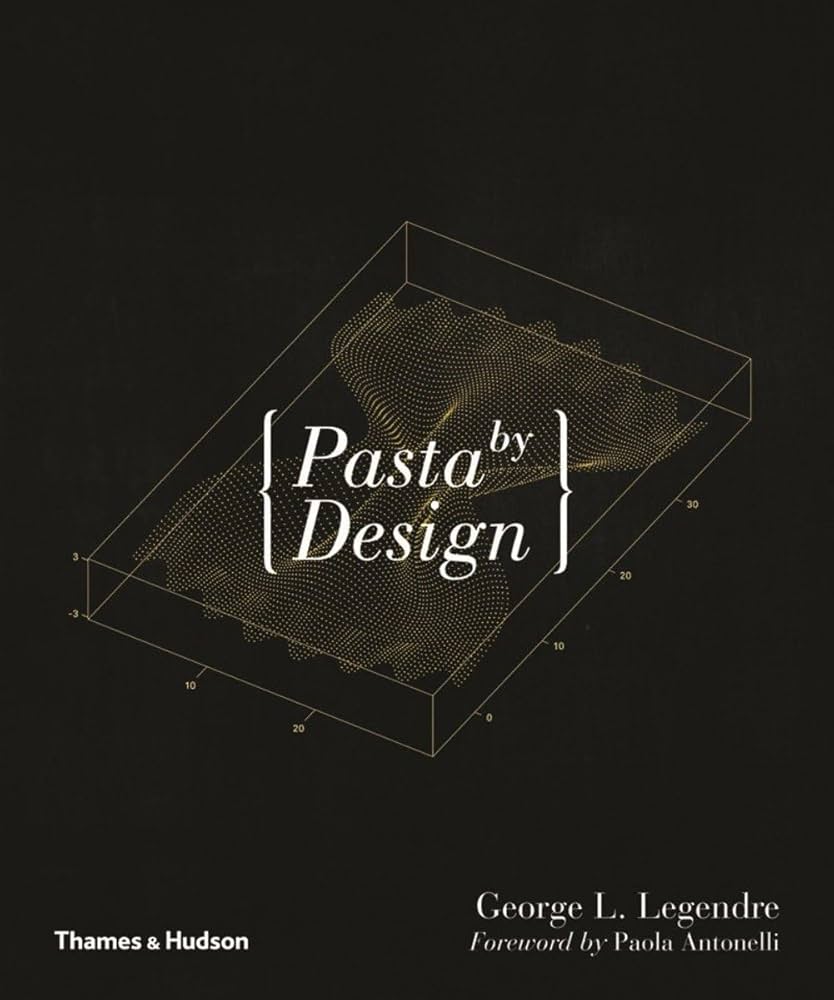
Because "round" means one thing in mathematics and something else entirely in engineering — and the distance between those two meanings turns out to be where most of the interesting problems live. This tension is exactly what makes The Geometry of Pasta and Pasta by Design both so fascinating — they ask similar questions about form, but from completely different angles.
The book is written by two people from different worlds: John Bryant, a retired chemical engineer who spent his career making things that had to work, and Chris Sangwin, a mathematician whose instinct is to prove things that have to be true. This is not a decorative pairing. The book depends on the tension between them — one keeps asking "but does this actually work?" while the other keeps asking "but why does it work?" — and neither question can be dismissed without losing half the point.
The questions that built the world
The questions the book poses sound deceptively elementary. How do you draw a straight line? Not approximately — exactly. How do you verify that a manufactured object is truly round, without assuming the instrument you're using to measure it is already round? When does the width of a saw blade affect the outcome of a calculation? When is an approximation acceptable and when does it cause a piston to seize or a driveshaft to fail?
These are not thought experiments. They are the questions that working engineers have faced for two centuries, and the answers to them produced some of the most elegant mechanisms in the history of technology.
How do you draw a straight line? These may sound like simple or even trivial mathematical problems, but to an engineer the answers can mean the difference between success and failure.
— Bryant & Sangwin
Drawing a straight line
The chapter on drawing a straight line is the book at its best. Watt's steam engine required the piston rod to move in a true straight line — but the beam it connected to moved in an arc. Connecting them directly would destroy the engine. The solution required a mechanism that could convert circular motion to linear motion with no slippage.
Chebyshev worked on this for years. So did Peaucellier and Hart. The Peaucellier–Lipkin linkage, finally discovered in 1864, was the first exact solution — and when it was demonstrated at a lecture by James Sylvester, the audience apparently applauded the mechanism. Bryant and Sangwin explain why they were right to.
The planimeter's unexpected elegance
Chapter eight is titled In Pursuit of Coat-Hangers. A planimeter is an instrument for measuring area — you trace the boundary of a shape and the device tells you the area enclosed. Professional planimeters are precision instruments. But the hatchet planimeter — a degenerate version requiring nothing but a straight rod with a sharpened end — can be made from a wire coat hanger and a pair of washers.
It works because of Green's theorem. Bryant and Sangwin prove why, build one, and show you how to build your own. One reviewer wrote: "I was up until midnight making a hatchet planimeter out of a coat hanger and washers." The book does this consistently — each chapter ends with something you can build.
This is not a metaphor for the book's approach. It is the book's approach.
Selected Chapters
01
Hard Lines — The thickness of physical lines and the limits of theory
02
How to Draw a Straight Line — Linkage mechanisms and the problem of linearity
03
Four-Bar Variations — The geometry of constrained motion
04
Building the World's First Ruler — What a ruler actually assumes
08
In Pursuit of Coat-Hangers — Building a planimeter from wire and washers
10
How Round Is Your Circle? — The measurement of roundness
13
Finding Some Equilibrium — Curves of constant width and their applications
On the Reuleaux Triangle
The simplest shape with constant width is not a circle. A Reuleaux triangle — formed by replacing each side of an equilateral triangle with a circular arc centered on the opposite vertex — also has constant width. It can roll inside a channel, rotate inside a hole, pass through a gauge in any orientation. British 50p and 20p coins use this geometry. The book gives the full geometric proof and explains how to construct one. This is also the shape behind the "drill bit that cuts square holes" — a mechanism Bryant and Sangwin dissect in full.
The book requires only basic geometry and trigonometry — the authors are honest about this, and honest about the fact that some sections are dense enough to reward rereading. It is, as one reviewer put it, "great for dipping into" — each chapter is largely self-contained and opens onto its own landscape. You can start anywhere and find something that shouldn't be as interesting as it turns out to be.
Princeton University Press included 33 color plates of the models Bryant and Sangwin built themselves: wood and metal linkages, planimeters, slide rules, balance mechanisms. This detail matters. The book is not a record of things that could be built. It is a record of things that were. The difference between those two things is, in a sense, what the entire book is about.
If Euclid had been an engineer, or if engineers could write proofs as elegantly as mathematicians, this book would be the result.
Abakcus · May 2026
In short
A book that restores wonder to the simple questions. Bryant and Sangwin prove that "roundness" and "straightness" are far richer concepts than we thought, and that the mechanisms built to achieve them are themselves works of genius. Essential reading for anyone who has ever wondered why engineering is a form of mathematics.
John Bryant & Chris Sangwin — How Round Is Your Circle?
Princeton University Press, 2008 · abakcus.com