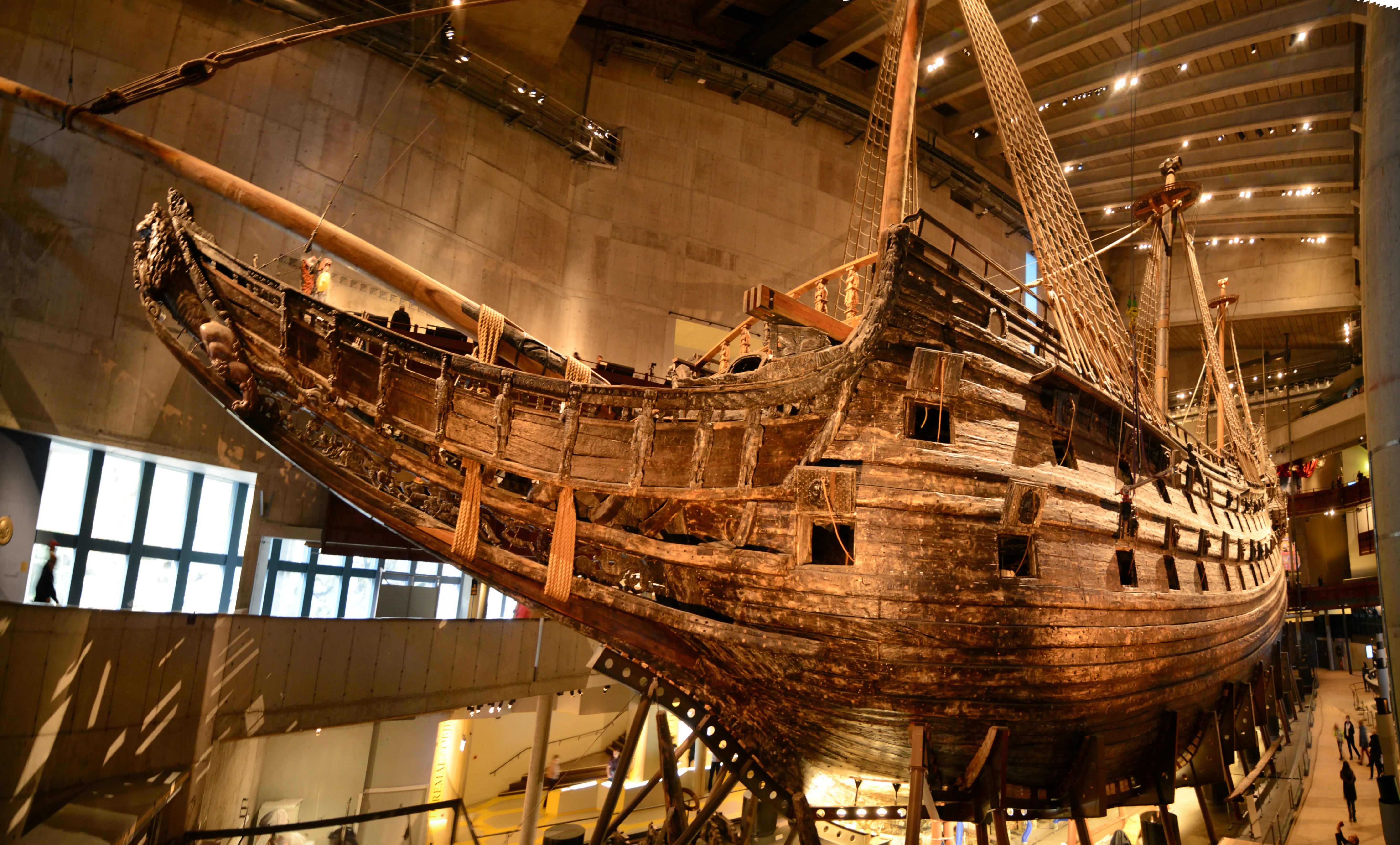
On the afternoon of 10 August 1628, a crowd gathered along the Stockholm waterfront to watch the pride of the Swedish navy leave on her first voyage. Vasa was the most heavily armed ship in the Baltic: 64 guns, two full decks of bronze cannon, a stern covered in hundreds of painted and gilded sculptures. She fired a salute, set four of her ten sails, and moved off across the harbour. She got about 1,300 metres. A gust caught her, she leaned, water rushed in through the open gunports, and she went down in front of everyone, flags still flying.
The question of why has been asked ever since, first by a royal inquiry that same year and then, once the ship came back up in 1961, by the archaeologists who could finally measure her. Most of the answer is well known. One part of it is stranger, and it starts with four wooden sticks found in the wreck.
01
The last 1,300 metres
Schematic, not a survey map. Vasa was hauled along the waterfront to the south side of the harbour, heeled in a first gust under the Södermalm cliffs, recovered, and then went over in a second gust off Beckholmen.
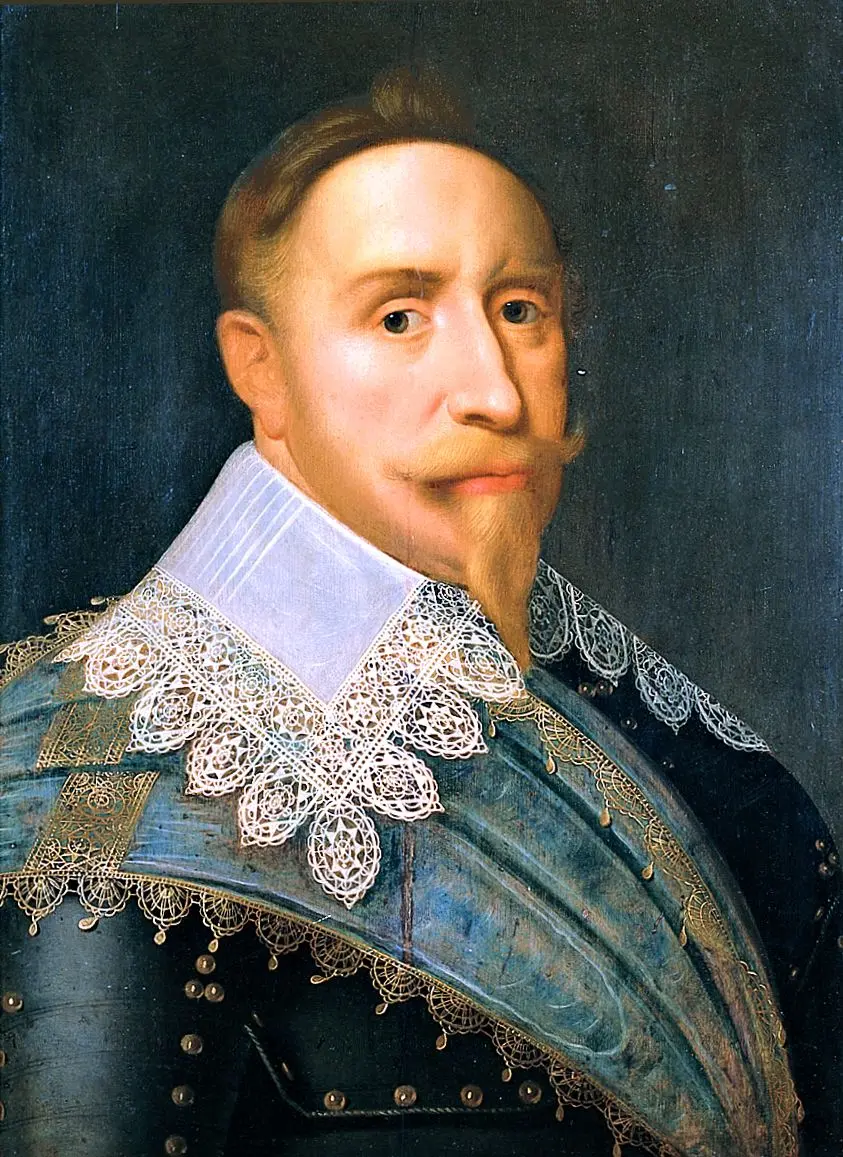
The ship was ordered in 1625 by King Gustav II Adolf, who was at war with Poland and wanted a navy to match his ambitions. The contract went to Henrik Hybertsson, a Dutch master shipwright working in Stockholm, and to the shipyard he ran with his business partner. Dutch shipbuilders were the best in Europe, and Stockholm’s yard was full of them, working side by side with Swedish carpenters.
While she was being built, the plans grew. The king, following the war from the other side of the Baltic, kept asking for more guns. Vasa ended up with two complete gun decks, unusual for a Swedish ship of her day, on a hull that had not been designed for them. Then, in 1627, Hybertsson fell ill and died. Others finished the ship from his plans and from whatever was in their heads.
02
Thirty men run across the deck
Before she sailed, Vasa was given the only stability test anyone had: thirty sailors ran together from one side of the deck to the other, and back, while Admiral Klas Fleming watched. After three runs she was rolling so far that the admiral had the test stopped. Nobody knew how to fix it, the king wanted his ship, and the matter was dropped.
The test as described at the inquiry: three runs, then a halt. The angles drawn here are illustrative; nobody wrote them down.
The physics behind that test is simple to state. A ship floats upright because its weight pulls down through a centre of gravity while the water pushes up through the centre of the hull below the waterline. When she leans, that upward push moves sideways and levers her back. The higher the weight sits, the shorter that lever becomes. Vasa carried her heaviest cargo, two decks of guns, high above a hull that was narrow and shallow underwater, with only about 120 tonnes of stone ballast in the bottom.
Adding ballast was the obvious cure and it was not available. More stone would sink her deeper, and the lower gunports already sat only a little more than a metre above the water. Every bit of steadiness bought with ballast brought those openings closer to the sea. Try it:
03
The gust and the gunports
The lower gunports dip under. Water pours in, the heel grows, and the ship goes over.
A toy model of the dilemma, not a reconstruction. The shape is a rough midship section; the numbers only show how the two choices pull against each other.
The inquiry that followed questioned the captain, the surviving shipwright and the crew. No one was punished. The ship had been built to the dimensions the king approved, the ballast was what there was room for, and nobody had a way to calculate stability in 1628. That would take more than another century of mathematics. For more than 300 years that was where the story stopped.
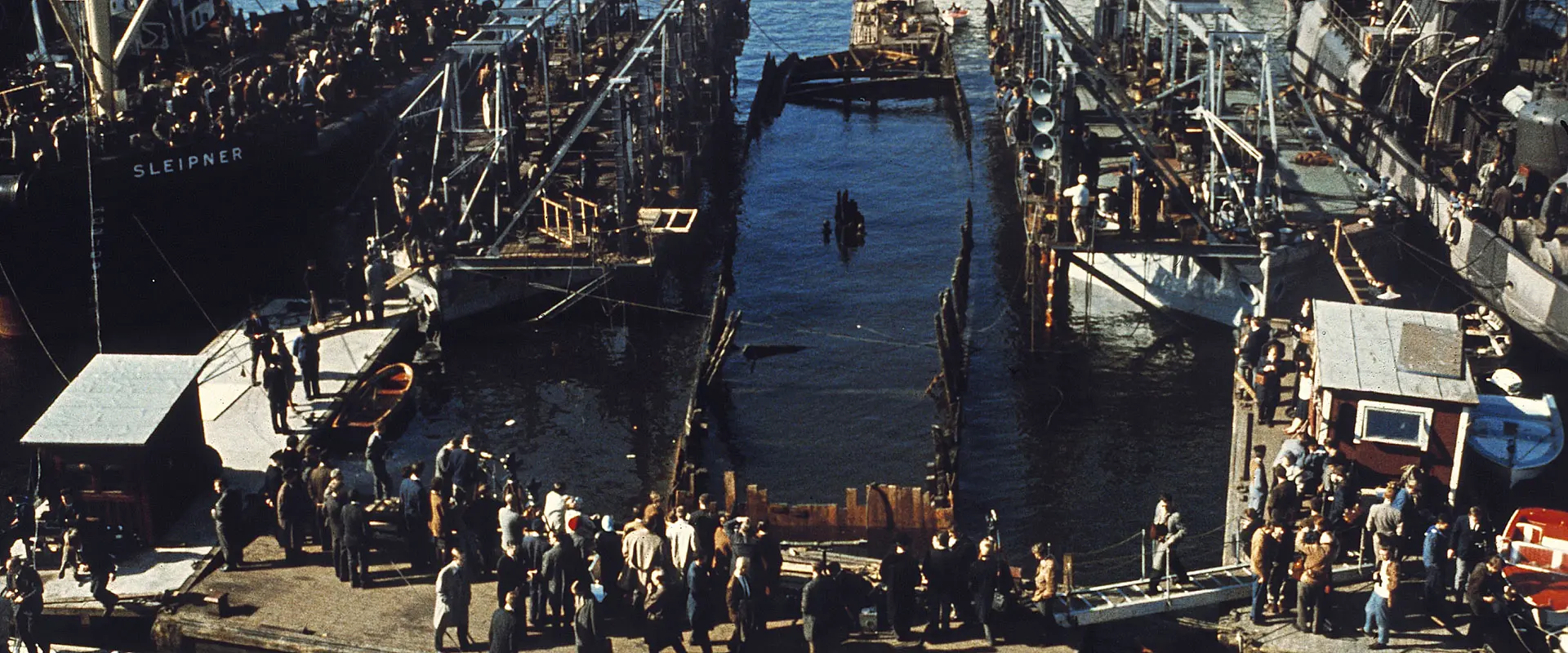
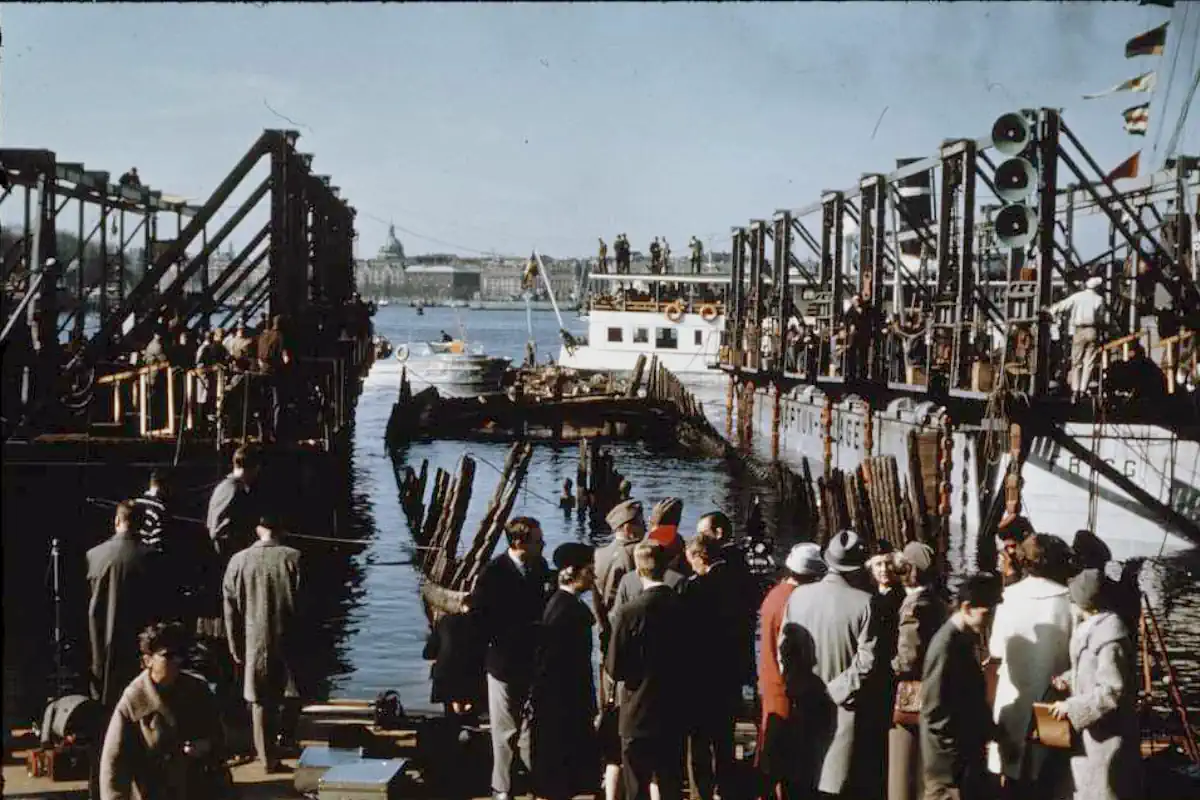
In 1956 a private researcher, Anders Franzén, pulled up a plug of blackened oak from the bottom of the harbour with a coring tool. Divers confirmed it was Vasa, sitting upright in the mud. The cold, brackish water of the Baltic had kept out the shipworm that eats wrecks in saltier seas. Over the next years divers tunnelled under the hull and passed steel cables beneath it, and on 24 April 1961 she broke the surface again.
04
Four rulers, two feet
With the ship in a hall instead of the harbour, the museum’s archaeologists could do what no one in 1628 could: measure her, timber by timber. Among the tools found in the wreck were four rulers used by the carpenters. Two are marked in Swedish feet, each divided into twelve inches. The other two are marked in Amsterdam feet, each divided into eleven.
Both were called a foot. They were not the same length. A Swedish foot is about 29.7 centimetres; an Amsterdam foot about 28.3. And because one is cut into twelve and the other into eleven, the inches go the other way: the Amsterdam inch is the longer of the two.
Ask two carpenters for 10 feet and the swedish one hands you a piece 13.8 cm longer.
Swedish foot 29.69 cm in 12 inches, Amsterdam foot 28.31 cm in 11 inches. A carpenter working from an instruction like “a beam of 30 feet” would cut two different beams depending on which stick he carried.
The rulers would be a curiosity if the hull were perfectly symmetrical. It isn’t. Careful surveys of Vasa show that her two halves are not mirror images: the port side is built more heavily than the starboard side, and timbers on one side do not match their partners on the other. Fred Hocker, the museum’s director of research, has suggested an explanation that fits both clues. A yard full of Dutch and Swedish carpenters may have split the work by side, each gang building its half with its own idea of what a foot was.
05
Two gangs, two halves
The two feet differ by 4.6%. Dashed gold: the starboard half, mirrored.
Exaggerated on purpose. At true scale a few percent is invisible to the eye, which is exactly why it could slip through. The heel figure is illustrative.
A hull heavier on one side sits with a slight list before anything else happens. On a stiff, well ballasted ship that would hardly matter. On Vasa, with almost no margin, it would have meant starting the voyage already leaning a little to port, the side she heeled over to. Hocker is careful about this, and so should we be: the asymmetry did not sink the ship on its own. The ship was top-heavy, and would have been dangerous with two perfect halves. The two rulers may simply have taken away the last few degrees she had to spare.
Nobody on the yard did anything wrong by the standards of his own ruler.
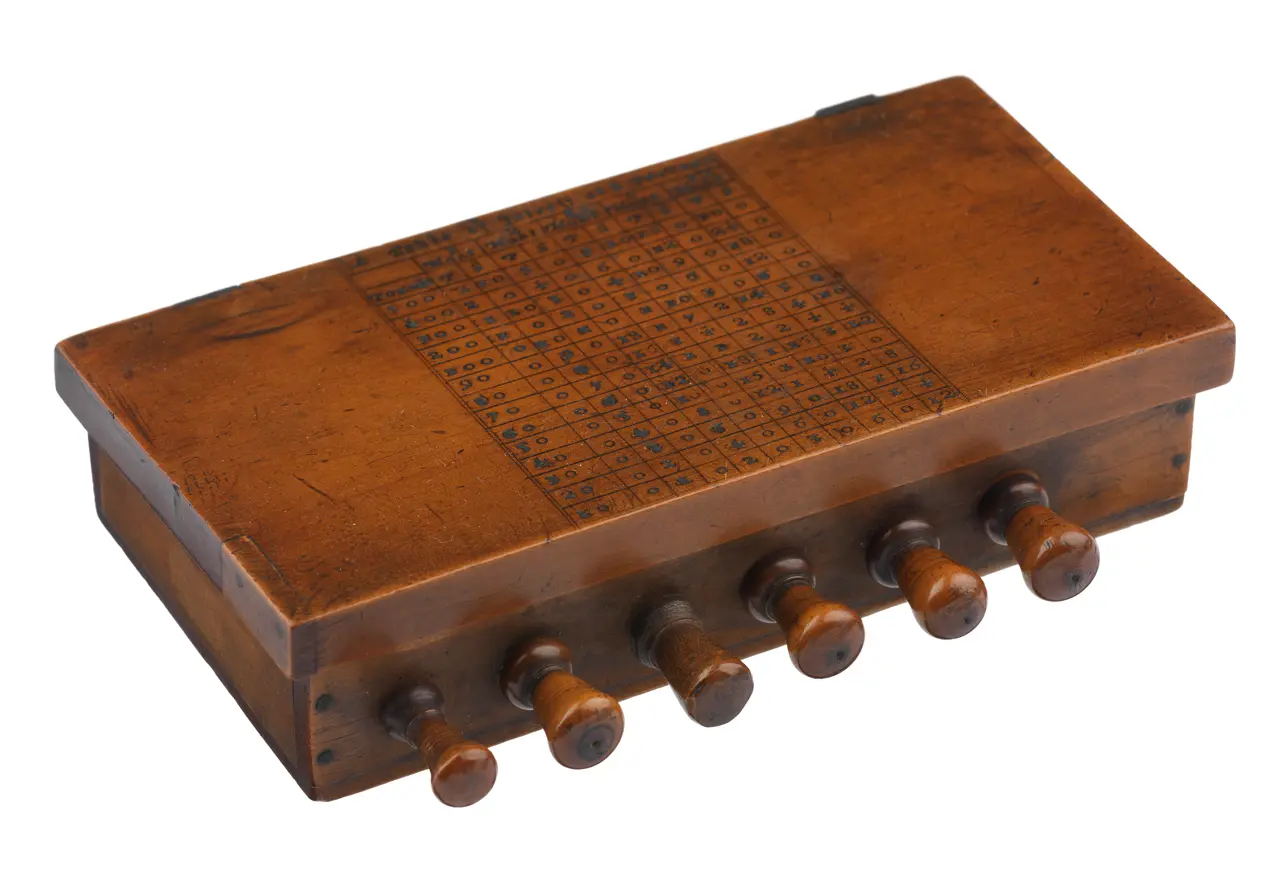
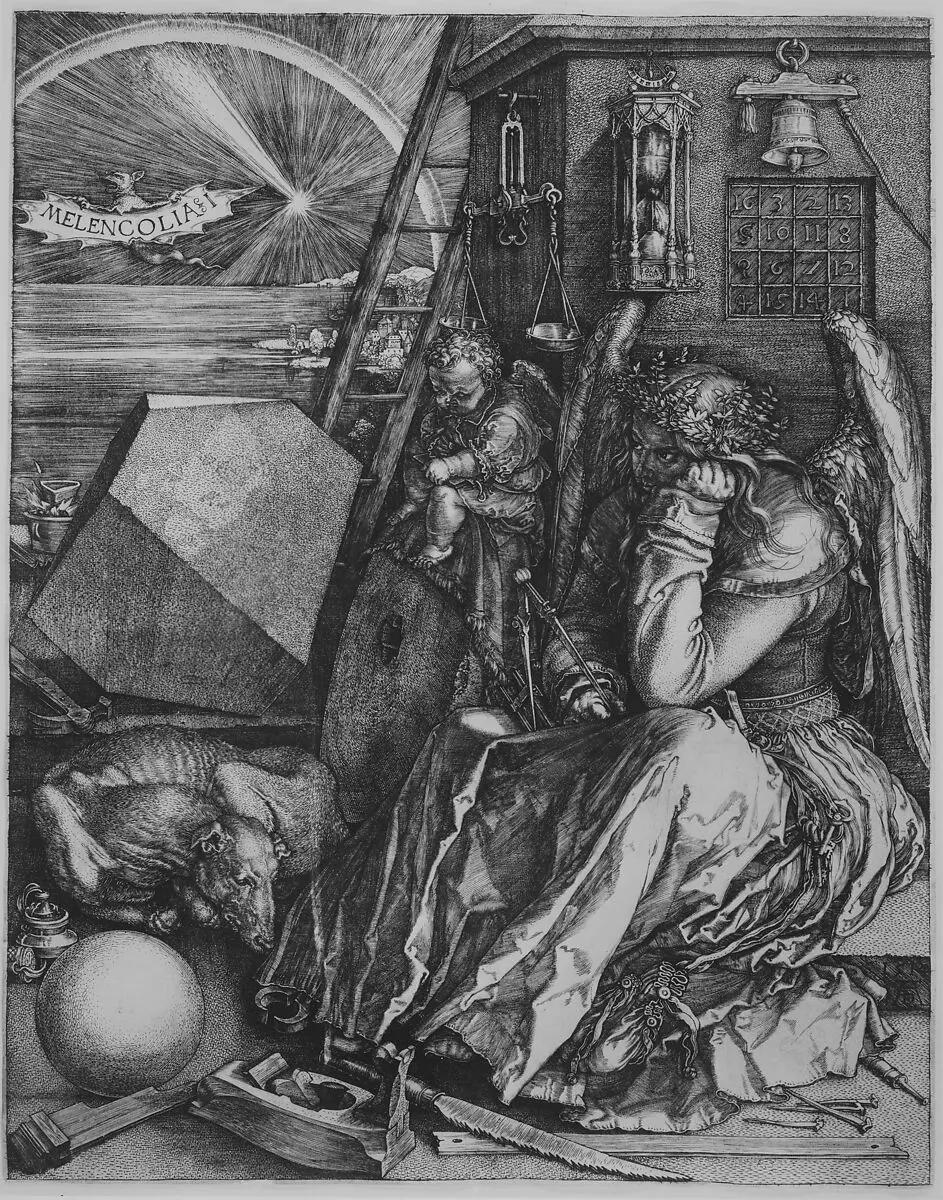
It is an old failure that keeps coming back in new materials. In 1999 NASA lost the Mars Climate Orbiter because one team’s software reported thrust in pound-seconds and another’s expected newton-seconds. Small, consistent differences compound, the way a fold doubles a stack of paper in Britney Gallivan’s twelve folds. And Vasa was built at the exact moment Europe was trying to make calculation trustworthy: only a decade earlier, John Napier had published the rods that became Napier’s bones, and a century before that Dürer had filled Melencolia I with the compasses and scales of a craftsman’s measuring world.
06
From the yard to the museum
1625
Gustav II Adolf orders new warships. The Dutch master shipwright Henrik Hybertsson starts on the largest.
1626–27
The king asks for more firepower; Vasa gets a second full gun deck. Hybertsson dies in 1627 and others finish her.
1628
Thirty men run across the deck in a stability test. It is stopped. On 10 August she sails anyway.
1664
Divers working from a diving bell bring up most of her guns. The hull stays in the mud.
1956
Anders Franzén finds the wreck with a core sampler in 32 metres of water.
1961
24 April: after 333 years on the bottom, Vasa breaks the surface.
1990
The Vasa Museum opens around her. Almost all of what you see is original timber.
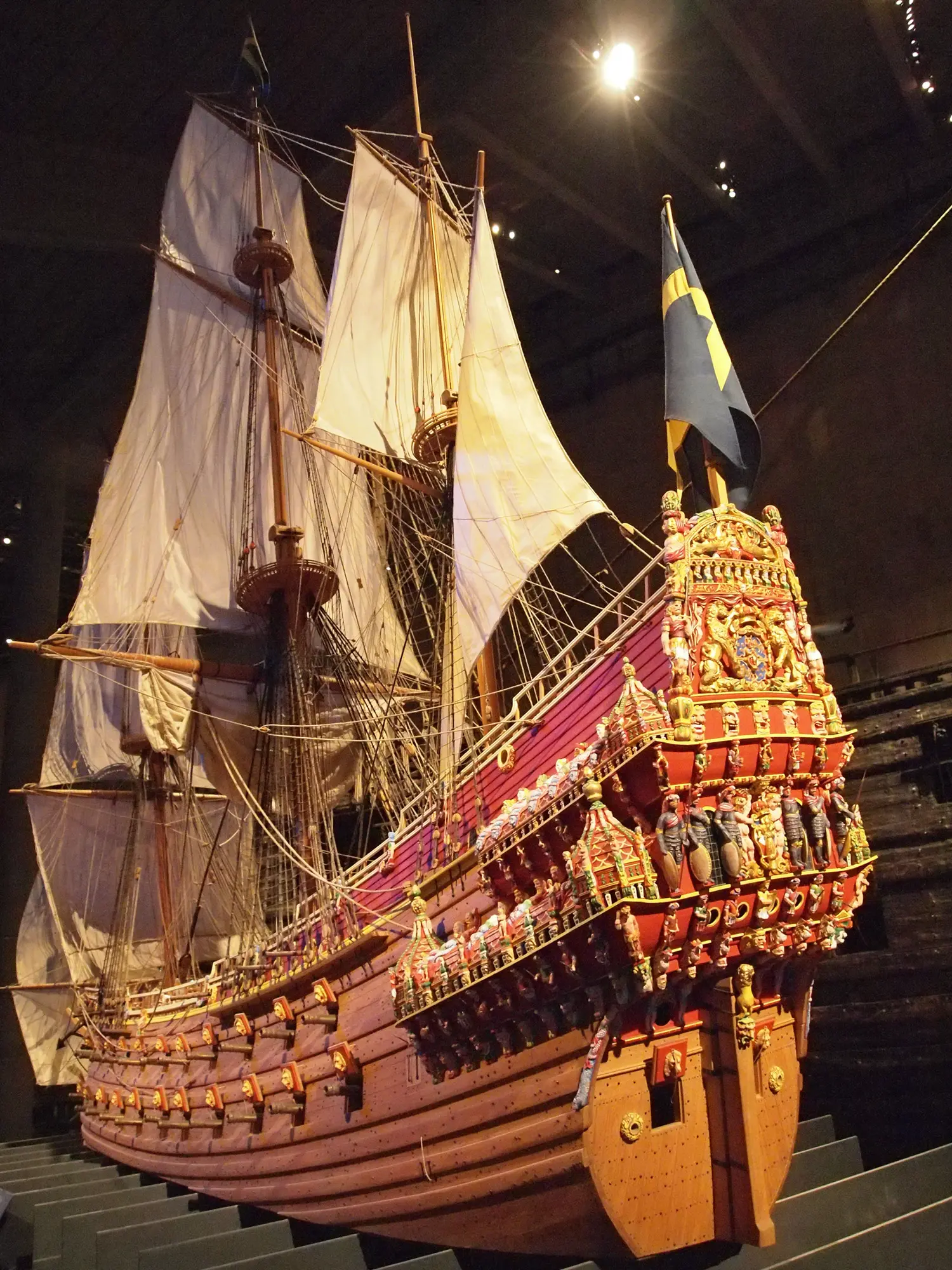
Today Vasa stands in a museum built around her on Djurgården, the most visited museum in Scandinavia. She is the best preserved ship of her century anywhere, precisely because she failed so quickly: she never fought, never wore out, never got broken up for timber. Walk around her and the asymmetry is invisible. You need a tape measure, and some idea of which foot it is counting in.
Swedish foot
29.69 cm
12 inches of 2.47 cm
Amsterdam foot
28.31 cm
11 inches of 2.57 cm
Same word, two lengths. One shipyard, two halves.
Questions people ask
Why did the Vasa sink?
Vasa was top-heavy. Her two gun decks of heavy cannon sat high above a narrow, shallow hull with too little ballast, so a moderate gust heeled her until water poured in through the open lower gunports. She sank about 1,300 metres into her maiden voyage on 10 August 1628.
Was the Vasa ship asymmetrical?
Yes. Measurements of the hull show that the port side and the starboard side are not mirror images; the port side is built more heavily. Researchers think different teams of carpenters worked on the two sides, possibly with different measuring systems.
What rulers were found on the Vasa?
Archaeologists found four carpenter’s rulers in the wreck. Two are marked in Swedish feet, divided into 12 inches, and two in Amsterdam feet, divided into 11 inches. The two feet differ by about 1.4 centimetres.
How long was the Vasa underwater?
333 years. She sank in August 1628 and was raised on 24 April 1961, after Anders Franzén located the wreck in 1956.
Where is the Vasa ship today?
In the Vasa Museum on Djurgården in Stockholm, which opened in 1990 and was built around the ship. About 98 percent of the hull on display is original.
Sources
- Vasa Museum (Statens maritima och transporthistoriska museer), Stockholm.
- Fred Hocker, Vasa: A Swedish Warship, Medströms, 2011.
- Sveriges Radio, “Vasa ship was lopsided”, 2012.
- Archaeology magazine, July/August 2012.