The source
The exact words
“Le savant n'étudie pas la nature parce que cela est utile ; il l'étudie parce qu'il y prend plaisir et il y prend plaisir parce qu'elle est belle. Si la nature n'était pas belle, elle ne vaudrait pas la peine d'être connue, la vie ne vaudrait pas la peine d'être vécue.”
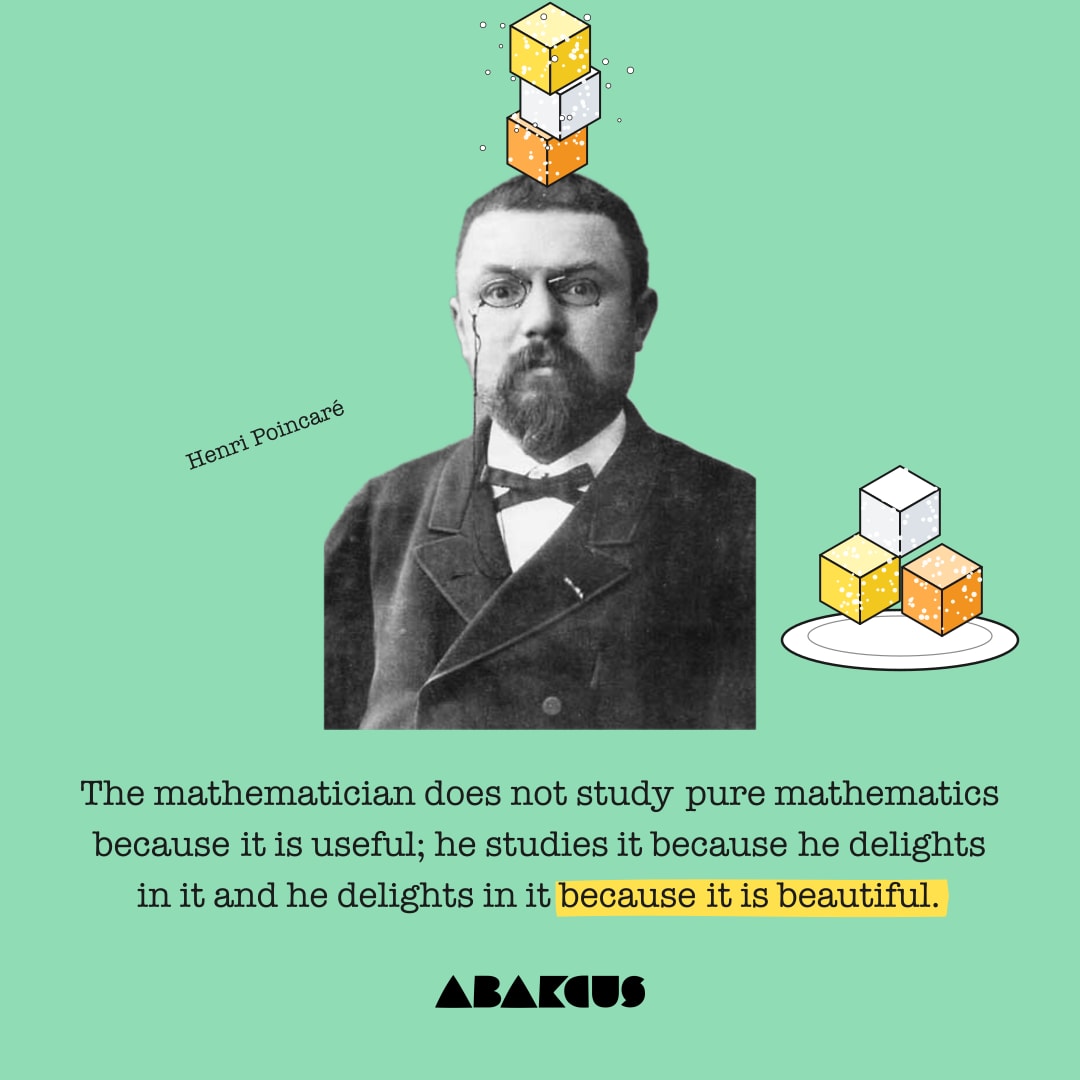
“The scientist does not study nature because it is useful; he studies it because he delights in it, and he delights in it because it is beautiful. If nature were not beautiful, it would not be worth knowing, and life would not be worth living.”
Science et méthode (Science and Method). Book I, Chapter I, “Le choix des faits” (The Choice of Facts), Paris: Flammarion, 1908.
The popular version swaps two words. Poincaré wrote “the scientist” (le savant), not “the mathematician”, and “nature”, not “pure mathematics”. The idea carries over to mathematics, and Poincaré made that point himself, but the sentence on the page is about science and the natural world.
The story
Why Poincaré said it
Science and Method opens with a problem. There are infinitely many facts in the world, and no one can collect them all. So how does a scientist decide which ones are worth studying? Poincaré starts from Leo Tolstoy, who had attacked science pursued for its own sake as idle, and who joked that a scientist might as well count ladybugs.
Poincaré's first answer is practical. The facts worth having are the simple ones that recur, the ones that let a little experience and thought stand in for a great deal. A small physics book, he says, holds countless past experiments and a thousand times more possible ones whose results are known in advance.
Then he turns the argument around: the scientist does not study nature because it is useful, but because it is beautiful. He is careful about which beauty he means. Not the beauty that strikes the senses, but a more intimate beauty that comes from the harmonious order of the parts, which only pure intelligence can grasp. For that beauty, perhaps more than for the future good of humanity, the scientist accepts long and difficult work.
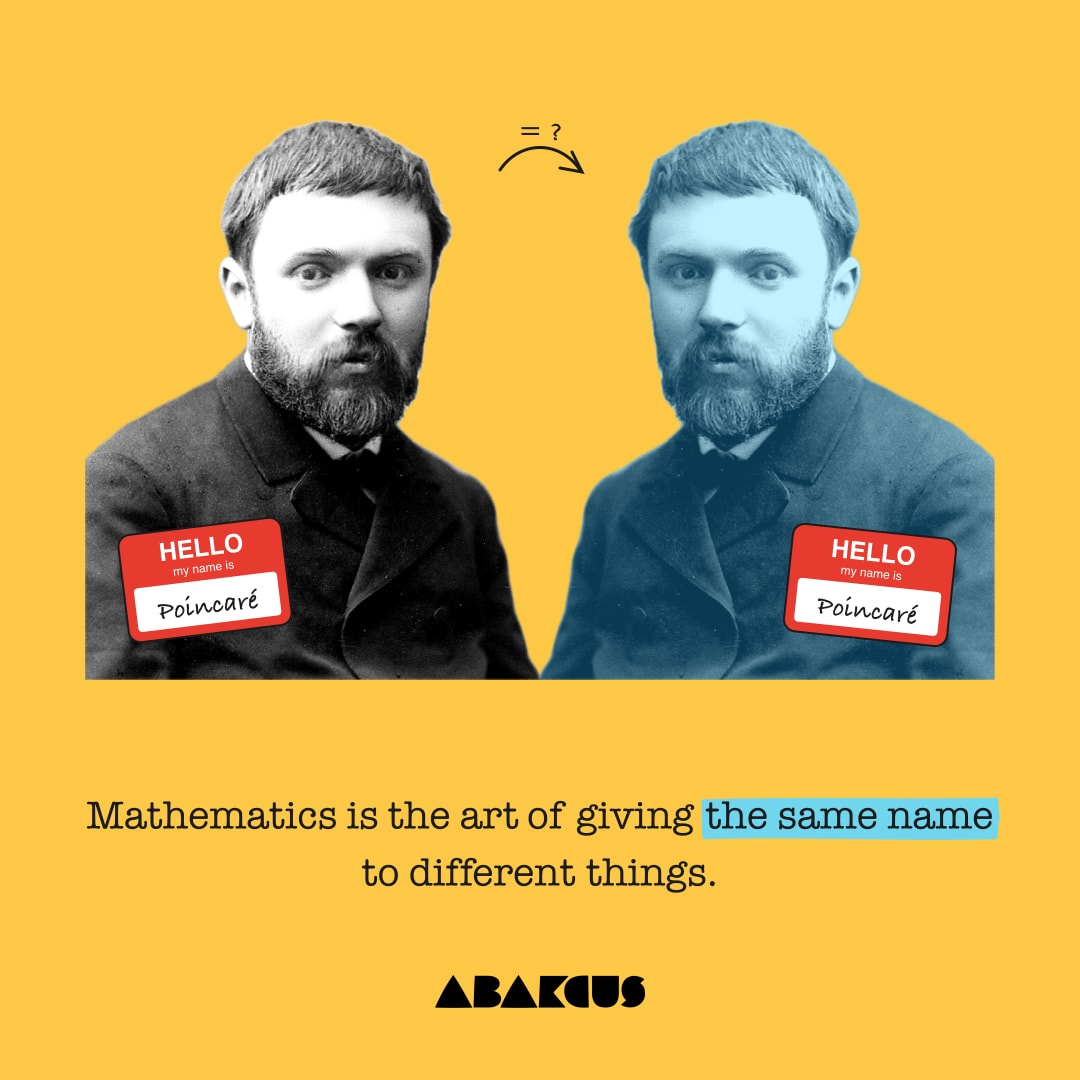
That is why the line drifted so easily to mathematics. The beauty Poincaré describes, order and harmony grasped by the mind, is exactly what mathematicians mean by an elegant proof. His other famous line, that mathematics is the art of giving the same name to different things, comes from the next chapter of the same book.
Mathematician
Who was Henri Poincaré?
- Born
- 29 April 1854, Nancy
- Died
- 17 July 1912, Paris
- Known for
- Topology, chaos, relativity
- Wrote it
- Science and Method, 1908
Henri Poincaré was born in Nancy and trained as a mining engineer before becoming the leading French mathematician of his age. His prize-winning work on the three-body problem in 1889 led to the first glimpse of chaos.
He founded algebraic topology, worked out much of the mathematics of special relativity alongside Lorentz and Einstein, and wrote three popular books on the philosophy of science, Science and Hypothesis (1902), The Value of Science (1905) and Science and Method (1908), that are still read today.
Read next
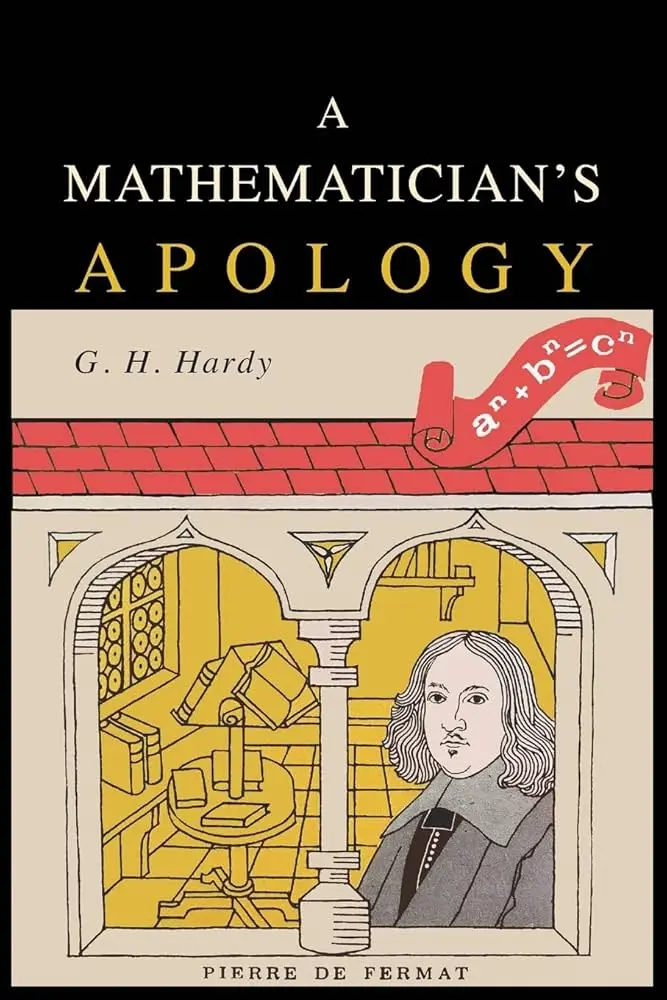
A Mathematician's Apology
G. H. Hardy · 1940
If you came for the popular version, about pure mathematics and its uselessness, this is its true home. Hardy's short book argues that the best mathematics is beautiful and useless, and that “beauty is the first test.”
Questions
About this quote
Did Poincaré say “The mathematician does not study pure mathematics because it is useful”?
Not in those words. In Science and Method (1908) he wrote that the scientist does not study nature because it is useful, but because he delights in it, and he delights in it because it is beautiful. The mathematical version is a later adaptation.
Where is the original quote?
In Science et méthode, Book I, Chapter I, “The Choice of Facts” (Le choix des faits), published in Paris in 1908.
What beauty did Poincaré mean?
Not beauty of the senses but “a more intimate beauty which comes from the harmonious order of the parts” and which only pure intelligence can grasp.