
DIY · Card 39 · Engineering · Light
Two juice cartons and two small mirrors. Set the mirrors at exactly 45° and you can see over walls, round corners and above a crowd, without ever showing your head.
01The brief
Build a periscope that lets you see over a wall without looking over it.
45°
the angle of each mirror: the only one that sends the light out level
2×
the view tilts by twice as much as a mirror is out of line
1647
the year an astronomer described a periscope for seeing over walls
Light travels in straight lines, which is why you can’t see round corners. But light bounces. Give it two mirrors in the right places and it will travel over a wall, down a tube and into your eye, carrying a picture of whatever is on the other side.
A periscope is the simplest optical instrument there is: a box and two mirrors. Yet the same idea, made of steel and glass, let submarines look above the waves and soldiers see out of trenches and tanks. It uses light the way the speed of light card measures it: as something that travels straight until it meets something in its way.
02Kit
Two cartons, two mirrors and a set square to get the angle right.
Tick off what you have
0 of 5 ready
03Method
Make a long tube, cut two windows, fix two mirrors at 45°, seal it and look.
Step 1 of 8 · Minute 0
You need a long, narrow box: two clean juice or milk cartons, or a tube made by folding stiff card. You also need two small flat mirrors that fit inside it, scissors or a craft knife, tape, a ruler, a pencil and a set square.
You see the inside of the tube, or the ceiling.
Why
A mirror isn’t at 45°, or one is facing the wrong way.
Fix
Check both shiny sides face each other, and re-set the slots with a set square.
The picture is dim and washed out.
Why
Light is leaking in through gaps and seams.
Fix
Tape over every gap, and make the inside dark if you can.
You can see only a tiny patch of the scene.
Why
The tube is long and narrow, or your eye is far from the window.
Fix
Put your eye right up to the bottom window, or make the tube wider or shorter.
04Physics
When light hits a mirror, it bounces off at the same angle it arrived: the angle of reflection equals the angle of incidence. Light arriving level at a mirror tilted at 45° leaves at 90° to where it came from, straight down. A second mirror at 45° turns it level again.
Tilt a mirror and the light leaving it tilts by twice as much, so small errors matter. And the tube itself limits the view: only light that can get through both windows reaches your eye. Change the tube and the mirrors, and follow the light:
View tilted by
0°
Field of view
7°
A long, narrow tube is like looking through a drinking straw: you see straight ahead, but only a sliver of the world. Make it wider or shorter to see more.
A mirror also flips the picture. Look at writing in a bathroom mirror and it reads backwards. A periscope has two mirrors, and two flips make no flip at all. Count the reflections and see:
2 flips · A periscope.
The right way round. The second mirror undoes the flip of the first, so a periscope shows writing you can read.
05The big idea
Light goes straight.
Mirrors steer it.
Light can’t turn corners on its own. Everything a periscope does comes from a rule simple enough to draw with a ruler: the angle in equals the angle out.
With that one rule, engineers send light down submarine masts, through camera prisms, along optical fibres under the oceans, and into the giant mirrors of telescopes. Steering light is one of the oldest and most useful tricks in physics.
06The math
1 · Reflection
θ_out = θ_in
Light leaves a mirror at the same angle to the surface as it arrived.
2 · Turning a mirror
Δ = 2 δ
Rotate a mirror by δ and the reflected light turns by twice that.
3 · The view
FOV ≈ 2 arctan(w ⁄ 2L)
Roughly, a tube of width w seen down a length L shows this angle of the world.
A mirror at 45° meets level light at 45° and sends it off at 45° on the other side: a total turn of 90°. Two such turns, one down and one back, bring the light out level. If the top mirror were at 42°, the light would leave 2 × 3 = 6° off level, and across a 10 m garden you would be looking about a metre too low.
For a tube 7 cm wide with about 57 cm of light path, the view is about 2 × arctan(3.5 ⁄ 57) ≈ 7°. At 10 m that is a patch of the world just over a metre across. Halve the length and the view nearly doubles.
07Real life
From trenches to submarines to the camera in your hand, light steered by mirrors has kept people safe and shown them more.
Submarine periscopes
A submarine’s periscope is a long steel tube that pokes above the waves while the boat stays hidden below. Prisms do the job of your mirrors, and lenses inside magnify the view. The newest submarines are replacing them with masts of cameras.
Trench periscopes
In the First World War, soldiers in trenches peered over the top with simple box periscopes, often made of wood and two mirrors, just like yours. Raising your head above the parapet was deadly; raising a periscope was not.
The periscope rifle
At Gallipoli in May 1915, Lance Corporal William Beech, an Australian builder’s foreman, fixed a rifle to a wooden frame with a periscope below it. A soldier could aim and fire over the trench without ever showing his head.
Tank periscopes
In 1936 the Polish engineer Rudolf Gundlach designed a periscope for tanks that could be turned in any direction and tilted, letting the crew see all around without opening a hatch. Versions of it were used in tanks around the world.
Camera viewfinders
In a single-lens reflex camera, a mirror behind the lens sends the picture up into a five-sided glass prism, which bounces it several more times until it reaches your eye upright and the right way round. It is a periscope folded into a box.
Seeing inside
Mechanics inspect the inside of engines, and doctors the inside of the body, with long, thin scopes that carry light round bends. The simplest use mirrors and lenses like a periscope; modern ones use bundles of glass fibres or tiny cameras.
1647
In 1647 Johannes Hevelius, a brewer and astronomer in Gdańsk, published Selenographia, the first detailed atlas of the Moon. Among its pages on telescopes and lens-grinding he described an instrument of his own: a tube with mirrors set at an angle, for looking at things out of the line of sight. He called it the polemoscope, the war-viewer.
He meant it for soldiers peering over fortifications, and he presented one to the Polish king. It took nearly three centuries, and the trenches of the First World War, before his idea was made by the hundred thousand. Your carton periscope is Hevelius’s war-viewer, built in half an hour.
08Is and isn’t
A periscope shows everything back to front.
One mirror reverses a picture; two reverse it back. A periscope’s two mirrors give you a view that is the right way round and the right way up.
The light bends to get round the corner.
Light travels in straight lines. It goes round corners only by bouncing off the mirrors, leaving each one at the same angle it arrived.
A longer periscope lets you see more.
It lets you see from higher up, but through a narrower view. Looking down a long tube is like looking through a straw: the further away the top window, the smaller the patch of world it shows.
Any angle of mirror will do.
Only 45° sends light out level. Tilt a mirror by 5° and the view swings by 10°, so you end up looking at the sky or the floor.
09Go further
A
Measure the view
Stand a metre from a wall and look through your periscope. Mark the edges of what you can see. Compare it with a periscope twice as long.
B
Read through it
Write a word on a card and read it through the periscope, then through one mirror alone. Which way round is it each time?
C
Round the corner
Turn the top section a quarter turn. Can you spy round a doorway? Where does the view now come from?
D
Three mirrors
Add a third mirror at the top to look sideways. Is the view now reversed? Work out why from the number of reflections.
E
Kaleidoscope
Tape three mirror strips into a triangular tube and look through it. How many reflections can you count?
10Questions
Make a long, closed tube from two juice cartons or folded card. Cut a window near the top of the front face and another near the bottom of the back face. Fix a small mirror at 45° behind each window, shiny sides facing each other, tape everything in place, and look into the bottom window.
Because a mirror at 45° turns light through exactly 90°. The top mirror turns level light from the scene straight down the tube; the bottom mirror turns it level again towards your eye. If a mirror is a few degrees off, the view tilts up or down by twice that.
No. Each mirror flips the picture once, but a periscope has two mirrors, and the second flip undoes the first. You see the scene the right way round, and you can read writing through it.
Light from what you are looking at enters the top window and hits a mirror, which reflects it down the tube. At the bottom a second mirror reflects it out through the lower window into your eye. The light obeys the law of reflection at each mirror: it leaves at the same angle it arrived.
The astronomer Johannes Hevelius described a mirror device for seeing over walls, which he called a polemoscope, in his book Selenographia in 1647. Periscopes became common in the First World War trenches and in submarines, where they grew lenses, prisms and lengths of many metres.
Safety · A grown-up should do the cutting and handle glass mirrors; plastic mirrors are safer. Never look at the Sun through a periscope: the mirrors send its light straight into your eye.
All DIY cards →Keep wandering
A few more pieces in the same spirit — math, design, and slow attention.
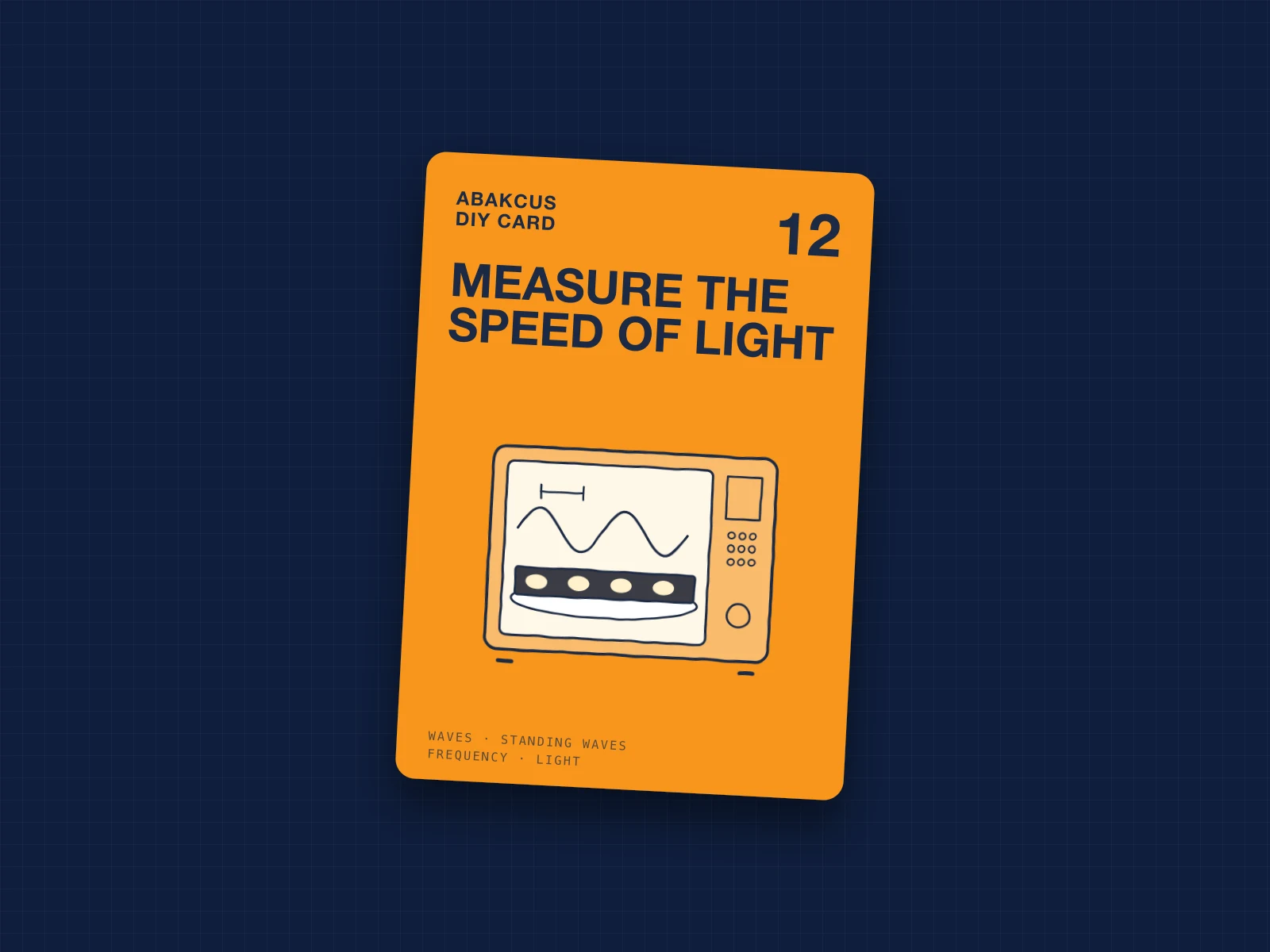
How to Measure the Speed of Light With Chocolate
Take the turntable out of a microwave, heat a bar of chocolate for twenty seconds, and measure the gap between the melted spots. Multiply by the number on the back of the oven and you get the speed of light, give or take a few percent.
Open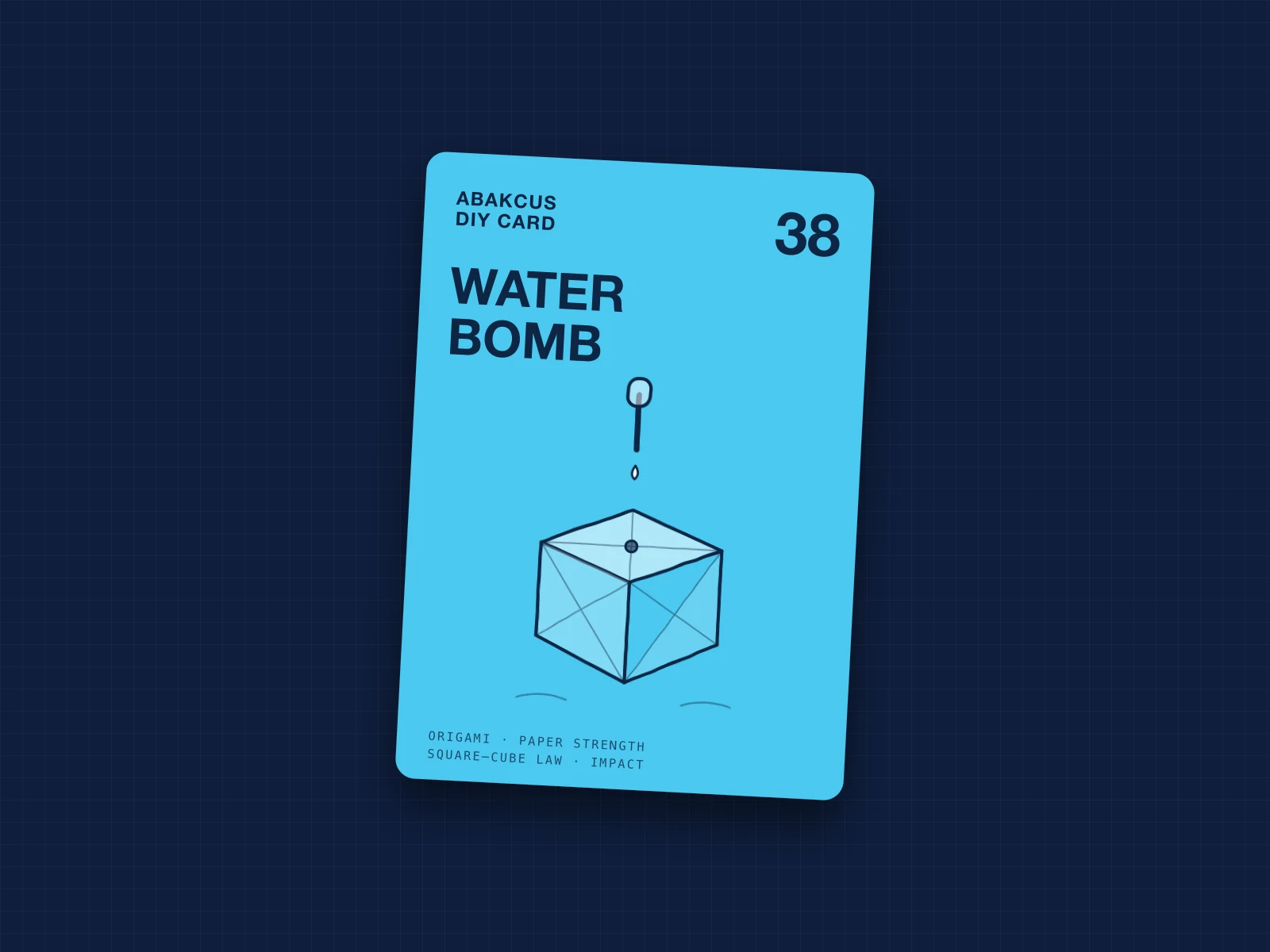
How to Make a Homemade Paper Water Bomb (Origami)
One square of paper, no glue, no scissors. A dozen folds and a puff of breath turn it into a cube that holds a cupful of water, for just long enough to drop it.
Open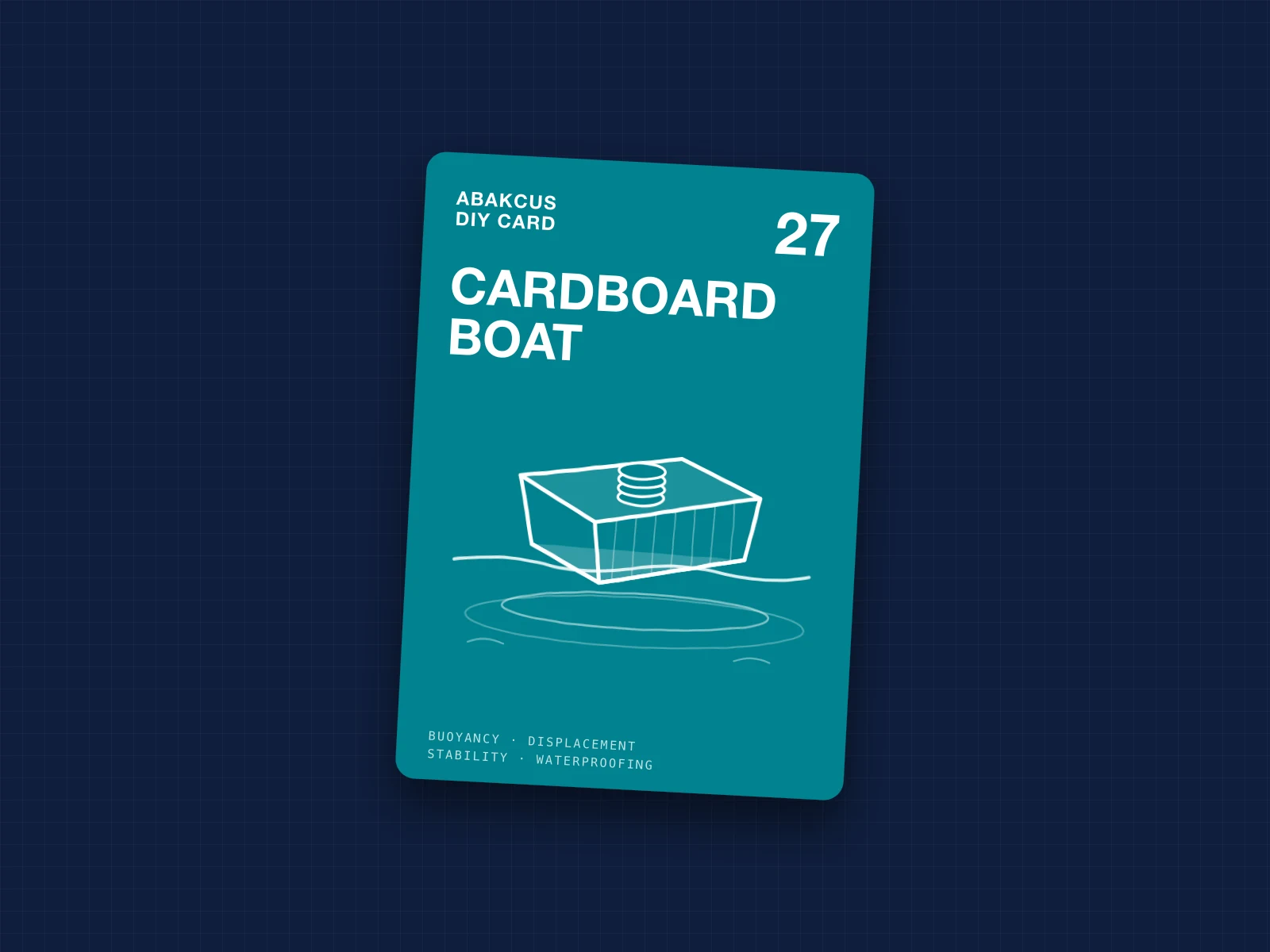
How to Make a Cardboard Boat That Floats (and Carries Coins)
One sheet from an old box, folded into a tray and sealed with tape and wax. Then the test: how many coins can it carry before the water comes over the side?
Open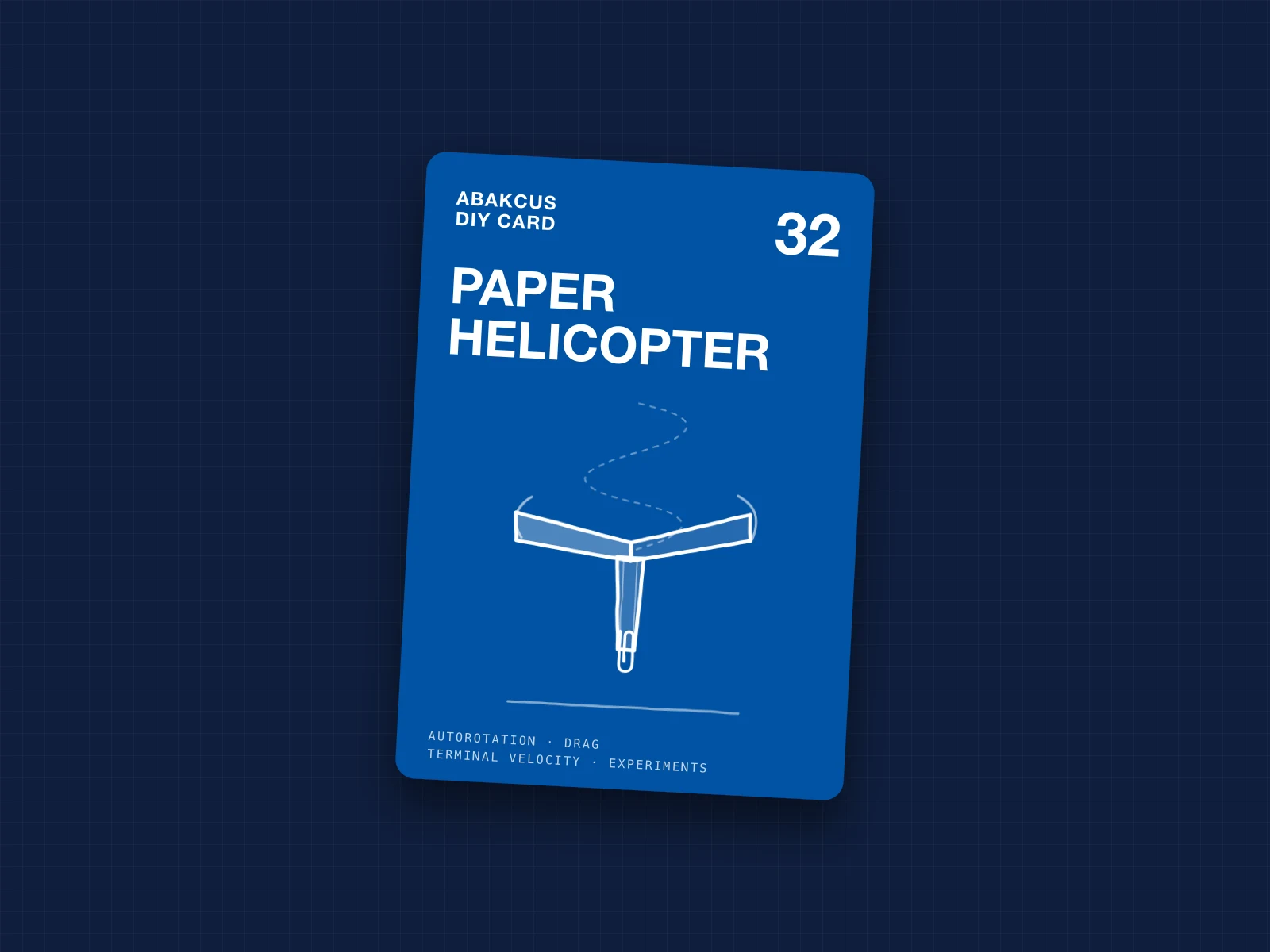
How to Design and Build a Paper Helicopter That Spins
A strip of paper, three snips and a paper clip. Drop it from up high and it doesn’t fall: it whirls, spinning its way gently to the floor like a sycamore seed.
Open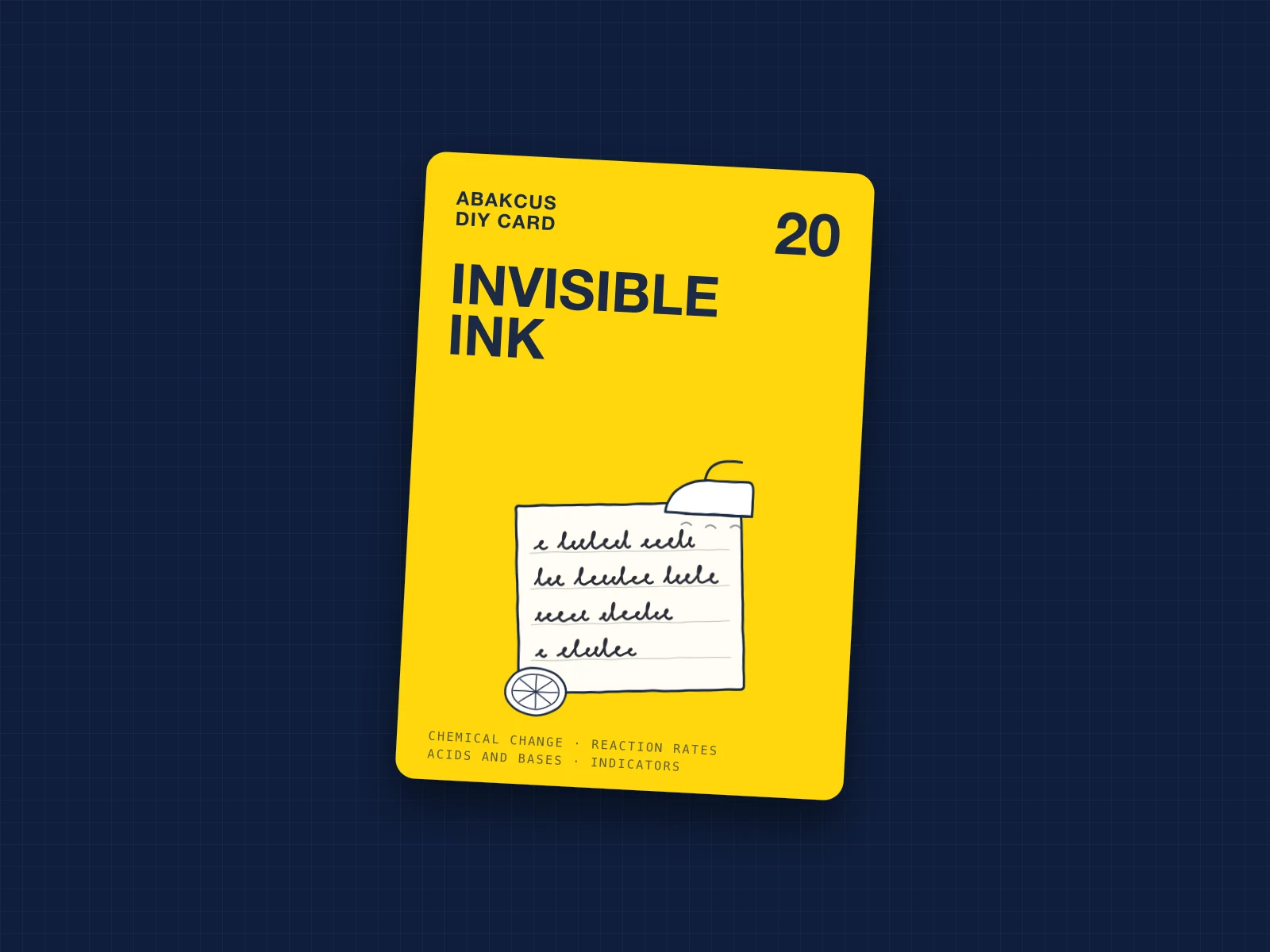
How to Make Invisible Ink With Lemon Juice, and Reveal It
Write with lemon juice, let it dry, and the page looks blank. Warm it and the message darkens into view, because the juice scorches long before the paper does. Spies used the same idea for centuries.
Open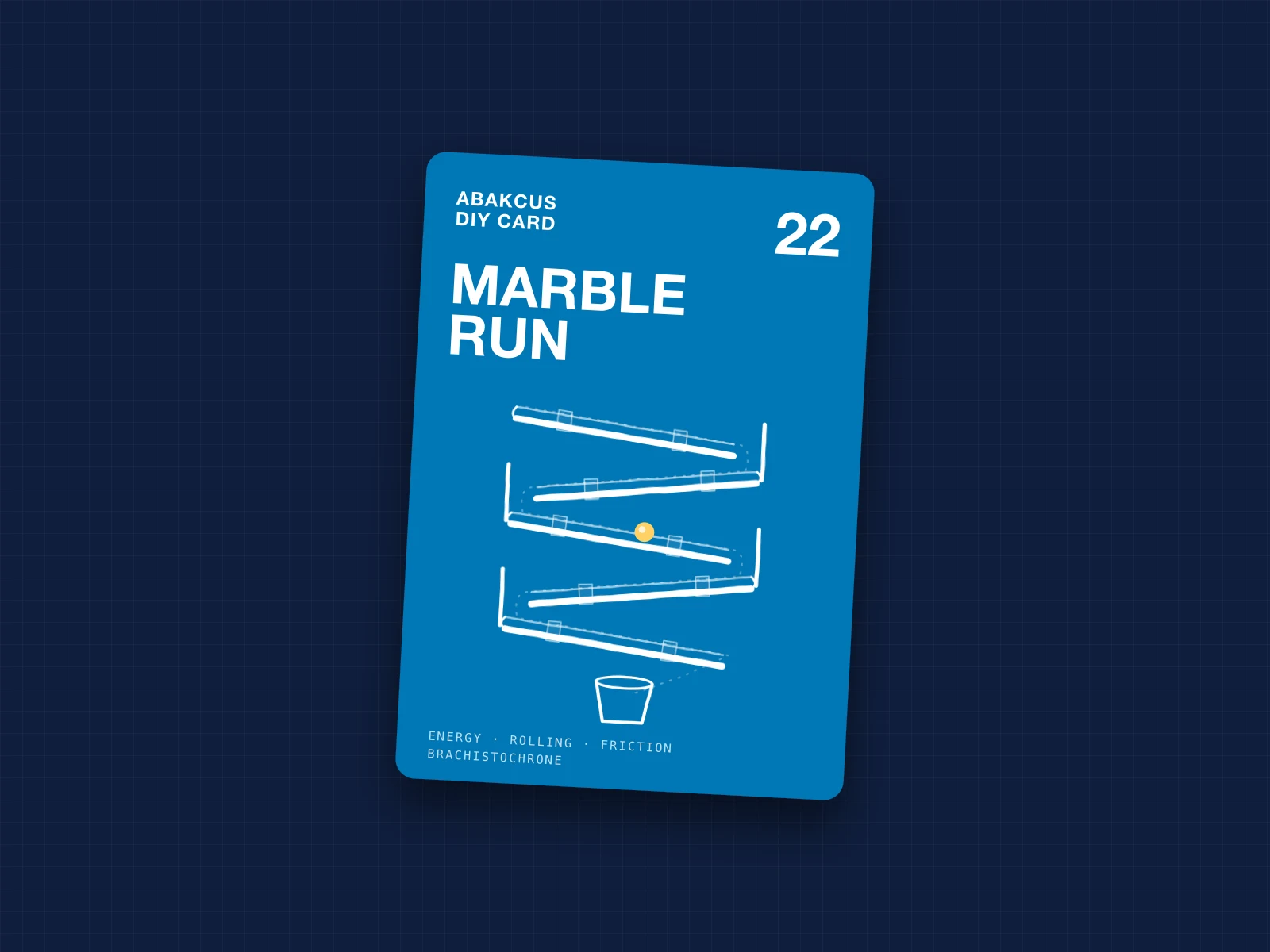
How to Build a Marble Run From Cardboard Tubes
Split tubes, a wall and some tape: a zigzag run that keeps a marble busy for half a minute on a one-metre drop it could fall in less than half a second. Height is the fuel; the trick is spending it slowly.
Open