
DIY · Card 97 · Math · Trigonometry
A protractor, a straw and a piece of thread. Sight the top of a tree, read one angle, pace one distance, and trigonometry tells you how tall it is, without climbing a single branch.
01The brief
One angle, one distance. Any height.
tan 45° = 1
at 45°, a tree is as tall as you are far from it
30°–50°
the best angles: steeper ones magnify every mistake
29,002 ft
Everest’s height in 1856, measured with angles from India
You can’t put a tape measure up a tree. But you can stand on the ground, look up at its top, and measure the angle. That angle, and how far away you are, pin down a right-angled triangle, and the tree is one of its sides.
The tool is called a clinometer, and the maths is trigonometry. If you liked tracking the Sun with the sundial, or looking around corners with the periscope, this one is for you.
02Kit
A protractor and a few odds and ends.
Tick off what you have
0 of 5 ready
03Method
Build it, sight it, read it, work it out.
Step 1 of 8 · Minute 0
You need a protractor with a hole in the middle of its straight edge, a drinking straw, about 30 cm of thread, a metal washer or paper clip, and sticky tape.
The answer is far too big.
Why
You used the thread’s reading instead of 90 minus it.
Fix
Subtract the reading from 90 to get the angle of elevation.
The thread won’t settle.
Why
Wind, or a weight that’s too light.
Fix
Use a heavier washer, and pinch the thread against the scale once it stops swinging.
Different tries give different heights.
Why
The ground slopes, or you measured to the wrong point.
Fix
Measure on level ground, to the centre of the trunk, and average three readings.
04Measure it
Your eye, the point straight across on the trunk, and the top of the tree make a right-angled triangle. You know one side, the distance, and one angle. Change them and watch the height:
Thread reads 50°, so the angle is 90 − 50 = 40°
Tree height
14.1 m
tan of the angle
0.839
1° wrong changes it by
0.45 m
Height = distance × tan(angle) + eye height. At 45°, tan is exactly 1, so the tree is as tall as you are far away, plus your eyes. Steep angles magnify every small mistake, so step back until the angle is between about 30° and 50°.
What if you can’t get to the foot, like with a mountain? Take two angles from two places in a line, and measure only the distance between them:
Height
2555 m
B to the summit’s foot
7.02 km
A to the summit’s foot
12.02 km
h = b ⁄ (cot α − cot β). You never set foot on the mountain: two angles and one measured distance are enough. Real surveys also correct for the curve of the Earth and the bending of light in the air, which matter over long distances.
05The big idea
Measure what
you can’t reach.
Every right-angled triangle with the same angles has the same shape, only bigger or smaller. So the ratio of its sides depends only on the angle. Someone worked those ratios out once and wrote them in tables; we call them sine, cosine and tangent.
With them, an angle you can measure turns into a length you can’t: the height of a tree, the width of a river, the distance to the Moon.
06The math
1 · Tangent
tan θ = opposite ⁄ adjacent
In a right-angled triangle.
2 · Tree height
h = d tan θ + e
d your distance, e your eye height.
3 · Two stations
h = b ⁄ (cot α − cot β)
b between the stations, angles α (far) and β (near).
Standing 15 m away and sighting at 40°: tan 40° ≈ 0.839, so the part of the tree above your eyes is 15 × 0.839 ≈ 12.6 m. Add your eyes at 1.5 m and the tree is about 14 m tall.
Misread by one degree and you get tan 41° ≈ 0.869, or about 13 m above your eyes: an error of roughly half a metre. Stand only 3 m away and the same treetop is at about 77°; there, one degree costs about a metre. That is why surveyors stand well back.
07Real life
From forests to flight paths.
Foresters
Foresters still measure tree heights with clinometers, exactly as you just did, to work out how much timber a forest holds and how fast it is growing.
Navigators
The angle from the horizon up to the Pole Star is roughly your latitude. Sailors measured it with a sextant to find how far north they were.
Landing planes
Airliners come in to land along a glide path about 3° steep. Lights beside the runway show the pilot if the angle is too high or too low.
Avalanche safety
Most avalanches start on slopes between about 30° and 45°. Mountain guides carry small clinometers to measure a slope before they cross it.
Building ramps
Wheelchair ramps and roads are designed to a set steepness, written as a gradient: rise divided by run, which is tan of the slope angle.
Thales and the pyramid
An old story says Thales of Miletus measured the Great Pyramid by waiting until his shadow was as long as he was tall. At that moment, the pyramid’s shadow equalled its height too: the 45° trick, with the Sun as the sight line.
1856
For decades, the Great Trigonometrical Survey of India measured the subcontinent with chains, theodolites and triangles. In 1849 and 1850, surveyors took angles to a Himalayan summit they called Peak XV from stations on the plains, well over 100 miles away.
Around 1852 Radhanath Sikdar, the survey’s chief computer in Calcutta, worked through the observations, correcting for the curve of the Earth and the bending of light. In 1856 Peak XV was announced as the highest mountain in the world, 29,002 feet tall. It was later named Everest.
08Is and isn’t
Double the angle, double the height.
No. Height grows with tan of the angle, which grows faster and faster: from the same spot, 60° means a tree 3 times as tall as 30°, and at 90° it would be infinite.
The closer you stand, the more accurate.
Close up, the angle is steep and a one-degree slip changes the answer a lot. Standing back so the angle is 30°–50° is more accurate.
You have to reach the top to measure a height.
Mount Everest was measured from more than 100 miles away. One distance and some angles are all trigonometry needs.
The thread’s reading is the angle.
On a protractor clinometer, the thread reads 90 when level. The angle of elevation is 90 minus the reading.
09Go further
A
The 45° walk
Set your clinometer to read 45° and walk until the top of the tree is in the straw. Your distance + eye height is the answer.
B
Check with a shadow
On a sunny day, measure your shadow and a tree’s shadow. Your height ÷ your shadow = tree height ÷ tree shadow. Do the two methods agree?
C
Two stations
Measure a tall building from two spots in a straight line, a known distance apart, without measuring to its foot. Use the formula from the mountain lab.
D
School map
Measure the heights of five buildings or trees around your school and mark them on a map.
E
Find your latitude
On a clear night, sight the Pole Star (in the northern hemisphere). The angle is about your latitude.
10Questions
Tape a drinking straw along the straight edge of a protractor, tie a thread through the hole at the centre, and hang a washer on the thread. Look at the top of something through the straw; the thread shows the angle.
Stand a measured distance from the tree, sight the top through the straw and work out the angle of elevation (90 minus the thread’s reading). The height is the distance × tan(angle), plus the height of your eyes.
Walk backwards until the angle to the top is exactly 45°. Since tan 45° = 1, the tree’s height is your distance from it, plus your eye height. No calculator needed.
If you can read the angle to about a degree, you can usually get a tree’s height to within a few percent. The error grows fast at steep angles, so stand back until the angle is between 30° and 50°.
By the same trigonometry. Surveyors of the Great Trigonometrical Survey measured angles to the summit with theodolites from stations more than 100 miles away in India. In 1856 the peak was announced as 29,002 feet, the highest in the world.
Safety · Never look at the Sun through the straw. Watch where you walk while pacing out distances, and keep away from roads.
All DIY cards →Keep wandering
A few more pieces in the same spirit — math, design, and slow attention.
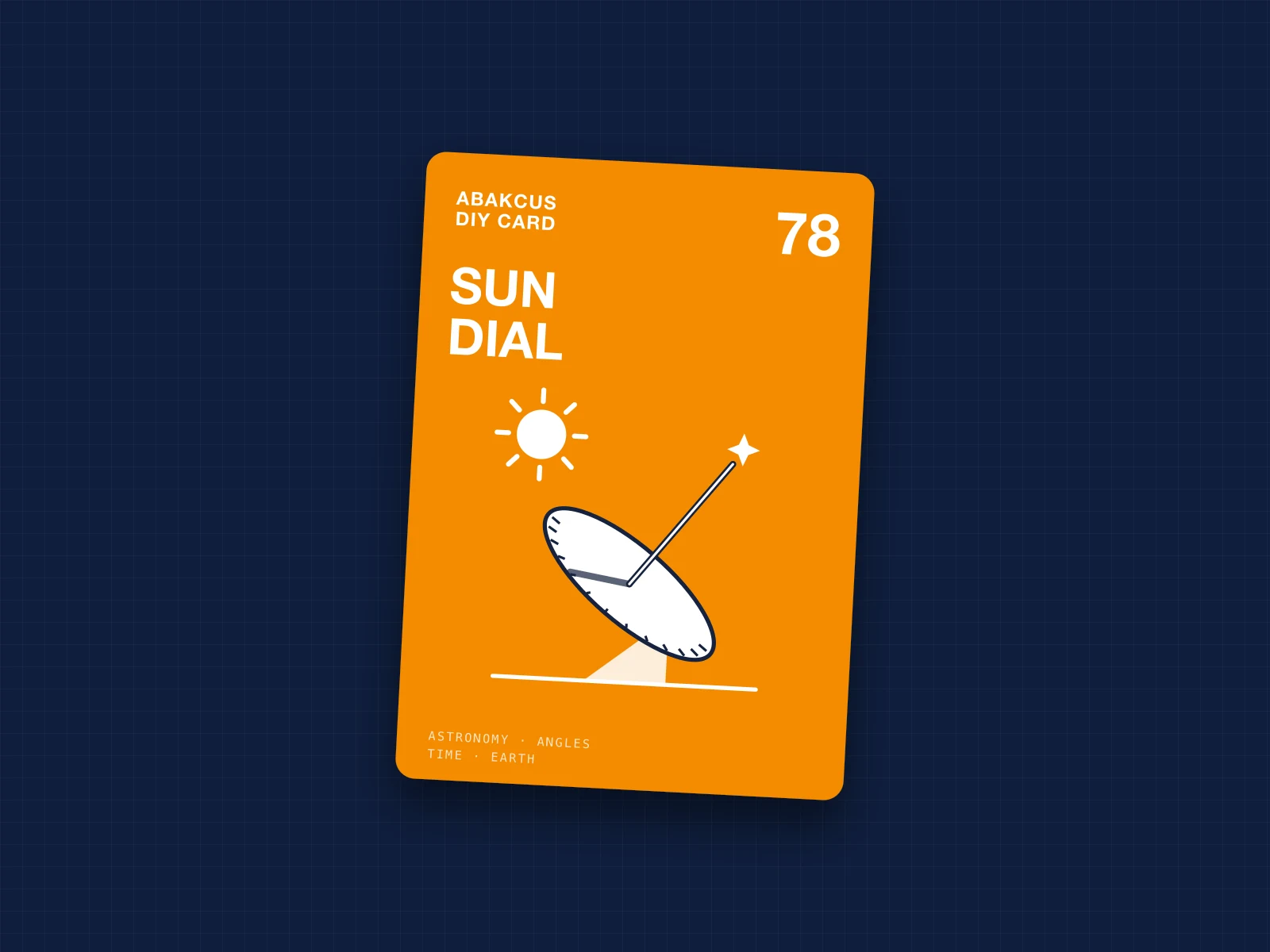
How to Make a Sundial From a Paper Plate
A paper plate, a pencil and the turning Earth. Tilt the plate to your latitude, point the pencil at the pole star, and the shadow turns 15° every hour.
Open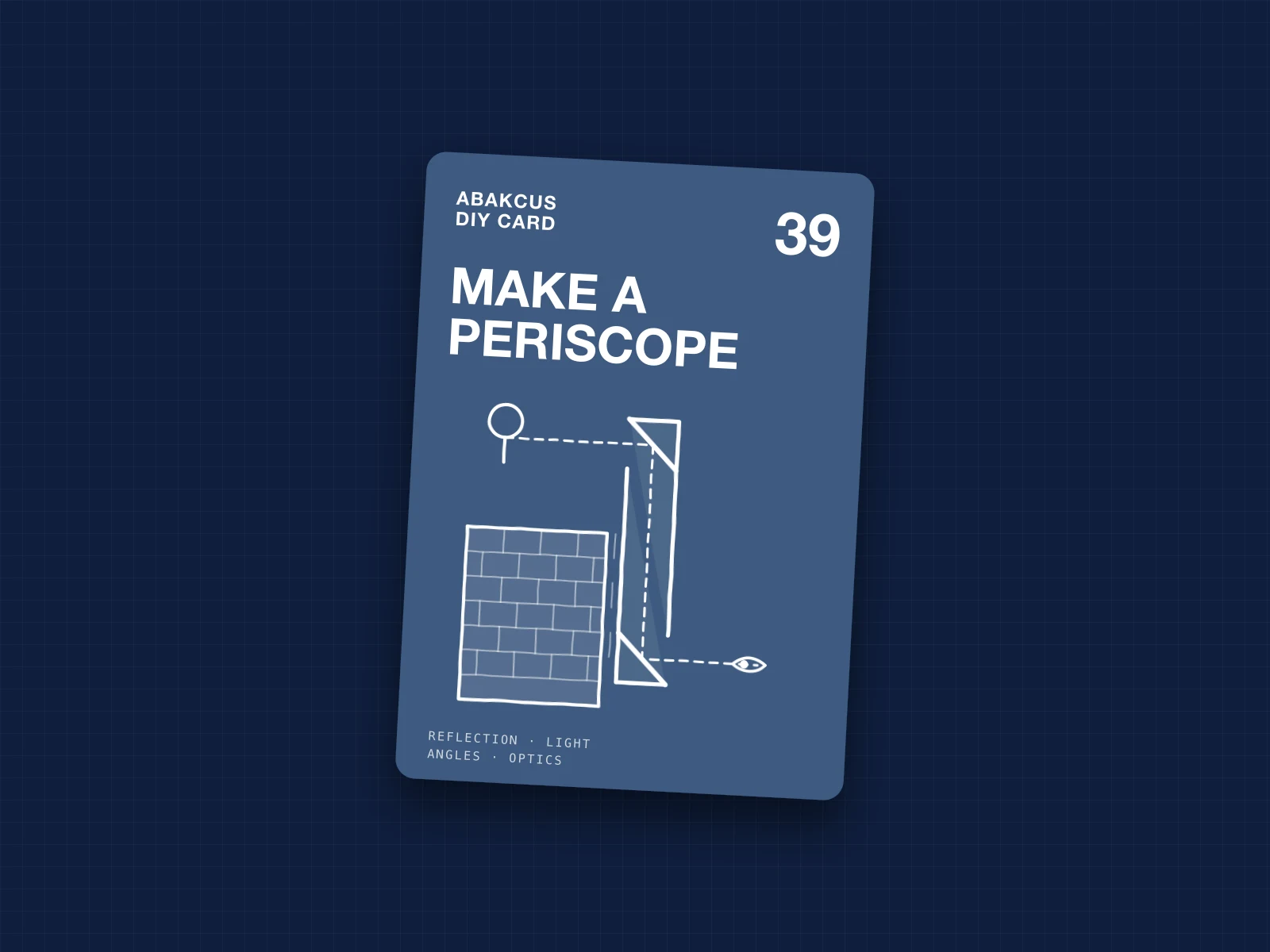
How to Make a Periscope With Two Mirrors and a Box
Two juice cartons and two small mirrors. Set the mirrors at exactly 45° and you can see over walls, round corners and above a crowd, without ever showing your head.
Open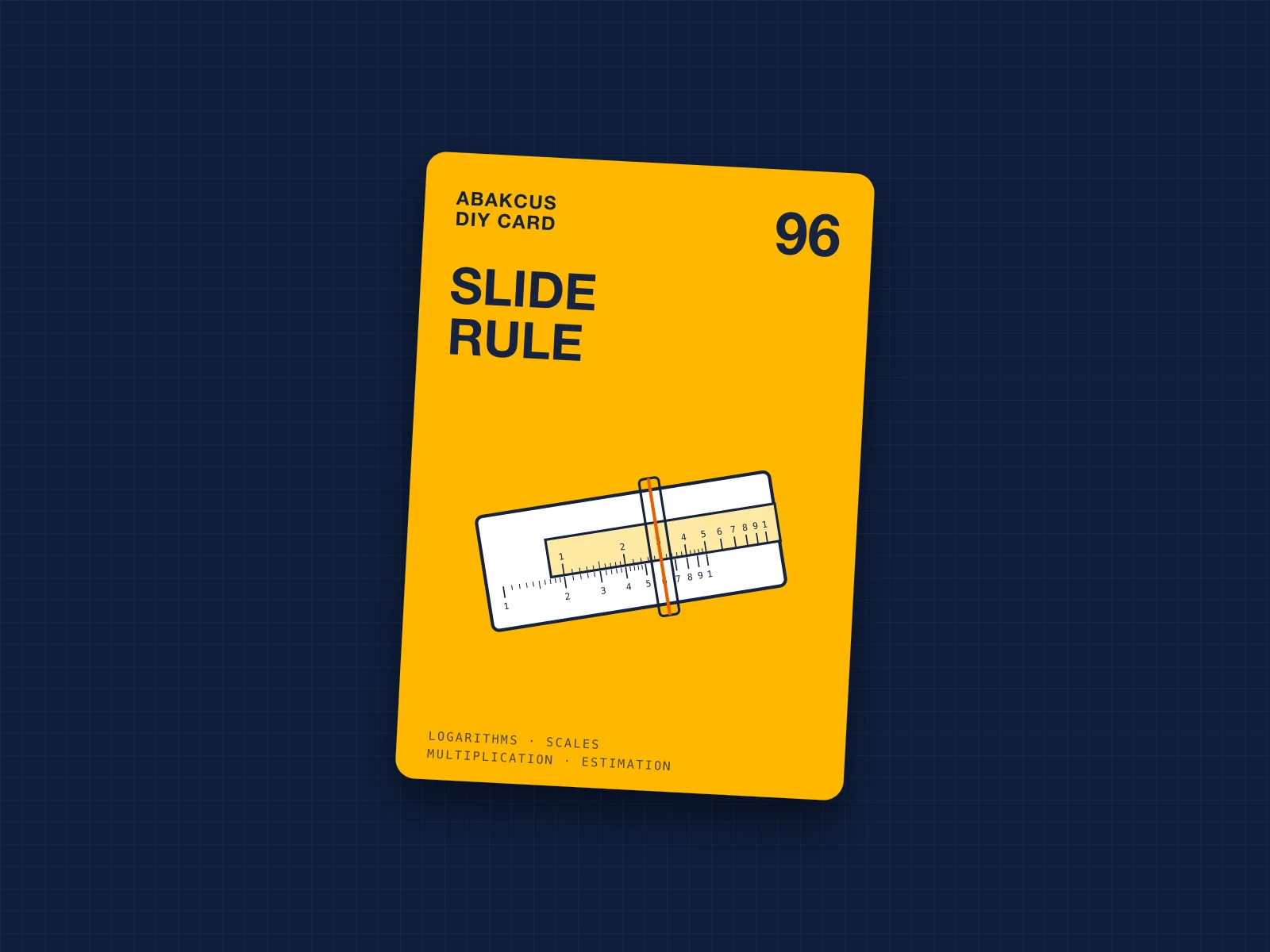
How to Make a Slide Rule That Multiplies With Logs
Two strips of card marked with logarithmic scales. Slide one along the other and they multiply and divide, the way engineers calculated for 350 years.
Open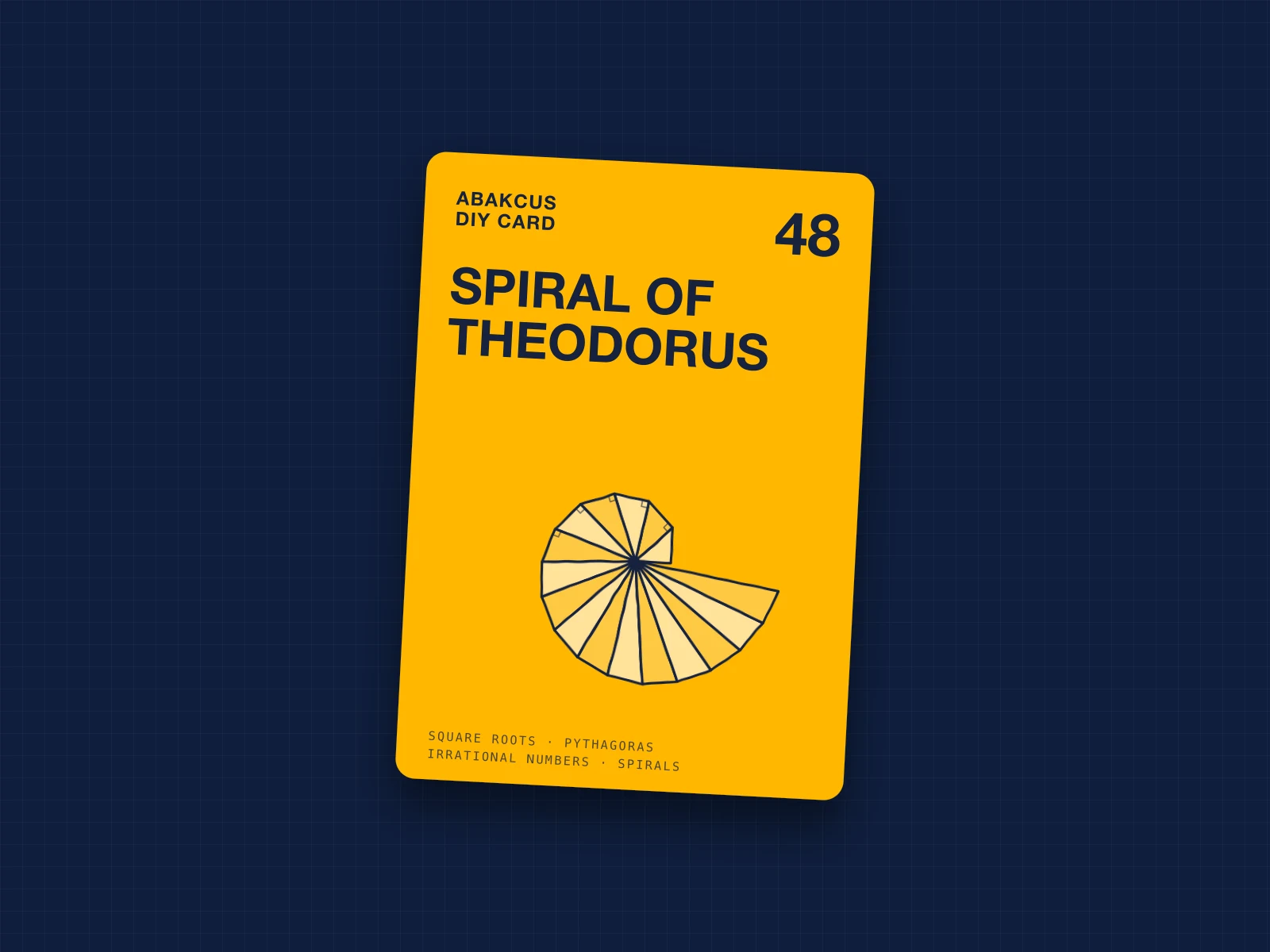
How to Construct the Spiral of Theodorus With a Ruler
A ruler, a square corner and a pencil. Build one right triangle on another and draw every square root from √2 to √17, curled into a snail shell.
Open
How to Make a Pinhole Camera From a Shoebox
A shoebox, a square of foil and a needle. Prick one tiny hole and the world outside appears on a paper screen, in colour, moving and upside down.
Open
How to Make a Cup Anemometer to Measure Wind Speed
Five paper cups, two straws and a pencil. Set it spinning in the breeze, count the turns for thirty seconds and work out how fast the wind is blowing.
Open