
By Ali Kaya
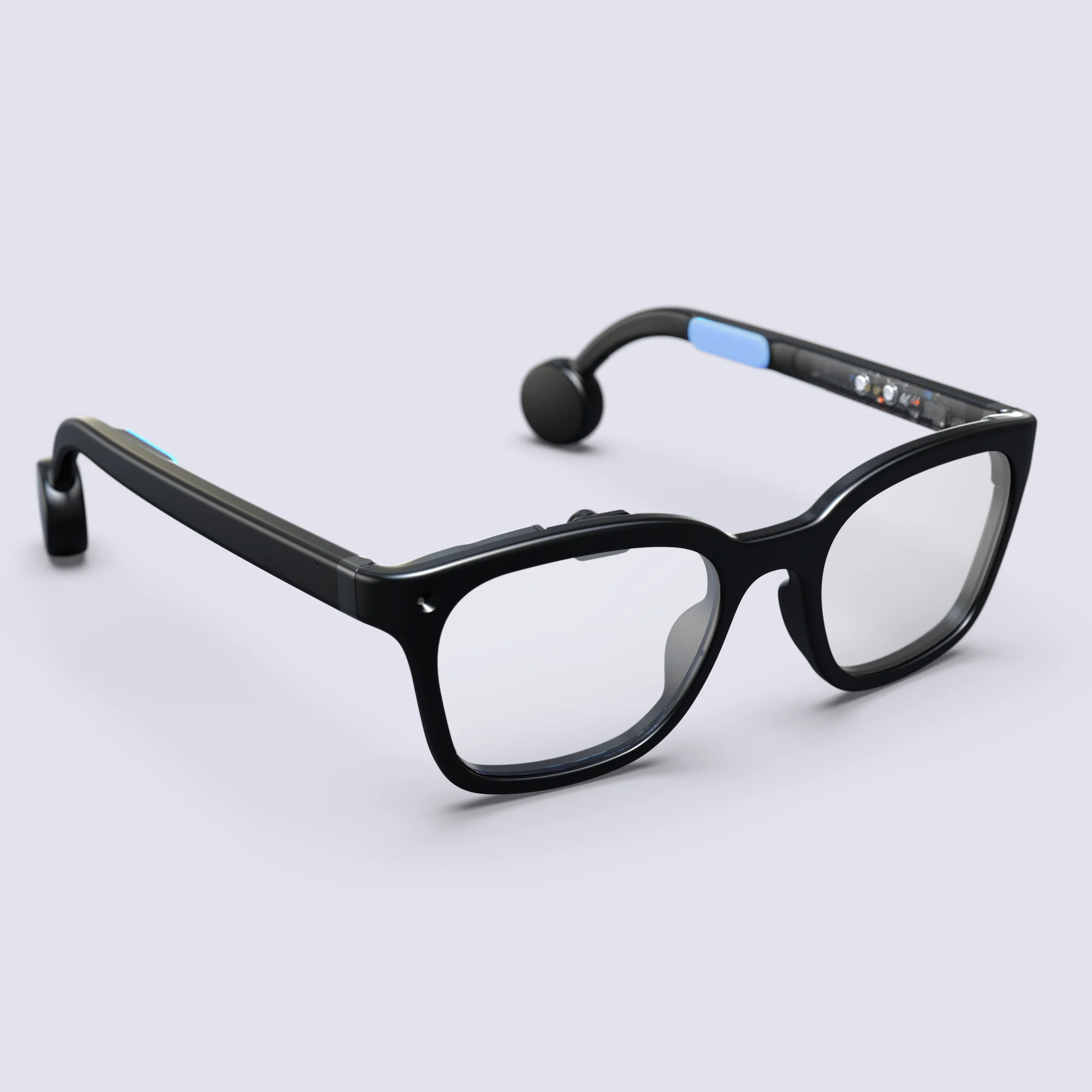
itting on a desk, Halo is hard to tell apart from an ordinary pair of glasses. A little over forty grams, a plastic frame, two lenses, two arms. But the corner of the lens carries a color display, the frame holds a low-power optical sensor for on-device AI, two microphones, and two bone-conduction speakers at the tips of the arms. The idea of a device you hear without putting anything in your ear and see without looking anywhere is one I find quietly delightful.
What pleases me most is the optics. The focus of the display inside can be adjusted between +2 and −6 diopters, so anyone who wears prescription glasses can set the screen to their own eyes. Brilliant Labs also state plainly that Halo is built for an interpupillary distance of 58 to 72 millimeters and suggest you measure your own before buying. A hardware company admitting on its own page that the product may not fit everyone is a rare kind of honesty.
What sets Halo apart for me is that it is open source. The design files and code sit on GitHub and the developer docs are open to everyone, so nothing stops you from taking the glasses apart and putting your own idea inside. Next to smart glasses sold as sealed boxes, that is a very different posture. It is the same spirit that animates Lifelong Kindergarten: you learn a thing by building on it, not by admiring it through a pane of glass.
Nothing stops you from taking the glasses apart and putting your own idea inside.
Specifications
- Maker
- Brilliant Labs
- Display
- Color micro-OLED in the lens corner
- Optics
- Adjustable +2 to −6 diopters
- Fit
- For 58–72 mm interpupillary distance
- Audio
- Dual microphones + bone-conduction speakers
- Compute
- On-device Alif B1 low-power AI processor
- Software
- Noa assistant · Narrative memory · Miniapps
- Openness
- Design files & code on GitHub (open source)
- Weight
- Just over 40 grams
- Price
- $399
Behind the lens sits an assistant called Noa that can talk about what you are looking at and translate what you hear. A memory system they call Narrative promises to keep conversations and things you saw for the long term and bring them back later. Because part of the work runs on the low-power Alif B1 processor on the device itself, it does not have to send everything to the cloud. If the notion of a machine that watches, listens, and reasons on your behalf interests you, the way it actually works is the subject of How Smart Machines Think.
My favorite part is Miniapps. Describe in plain sentences what you want the glasses to do and it builds your own small app, which you can then share with others. A programmable computer folded into a forty-gram frame, and the schematics are out in the open.
Also on Abakcus
For another pair of eyes with a machine behind the glass — one that names the bird you are looking at — see the Swarovski AX Visio. And for a small, hackable machine of a different kind, built by a company that treats its object as something to be opened, there is the Teenage Engineering TP-7.
You can look over Halo on Brilliant Labs' page, and the developer docs and design files are open to everyone. Measure your interpupillary distance first — they ask you to, and they are right to.