A prime number is one that only 1 and itself divide: 2, 3, 5, 7, 11, 13, and on forever. That definition is short enough to fit on a sticky note, yet primes keep turning up with properties nobody asked them to have. Some read the same backwards. Some are made only of ones. Some refuse to stop being prime no matter how you cut them. This is a collection of those odd specimens, one number at a time.
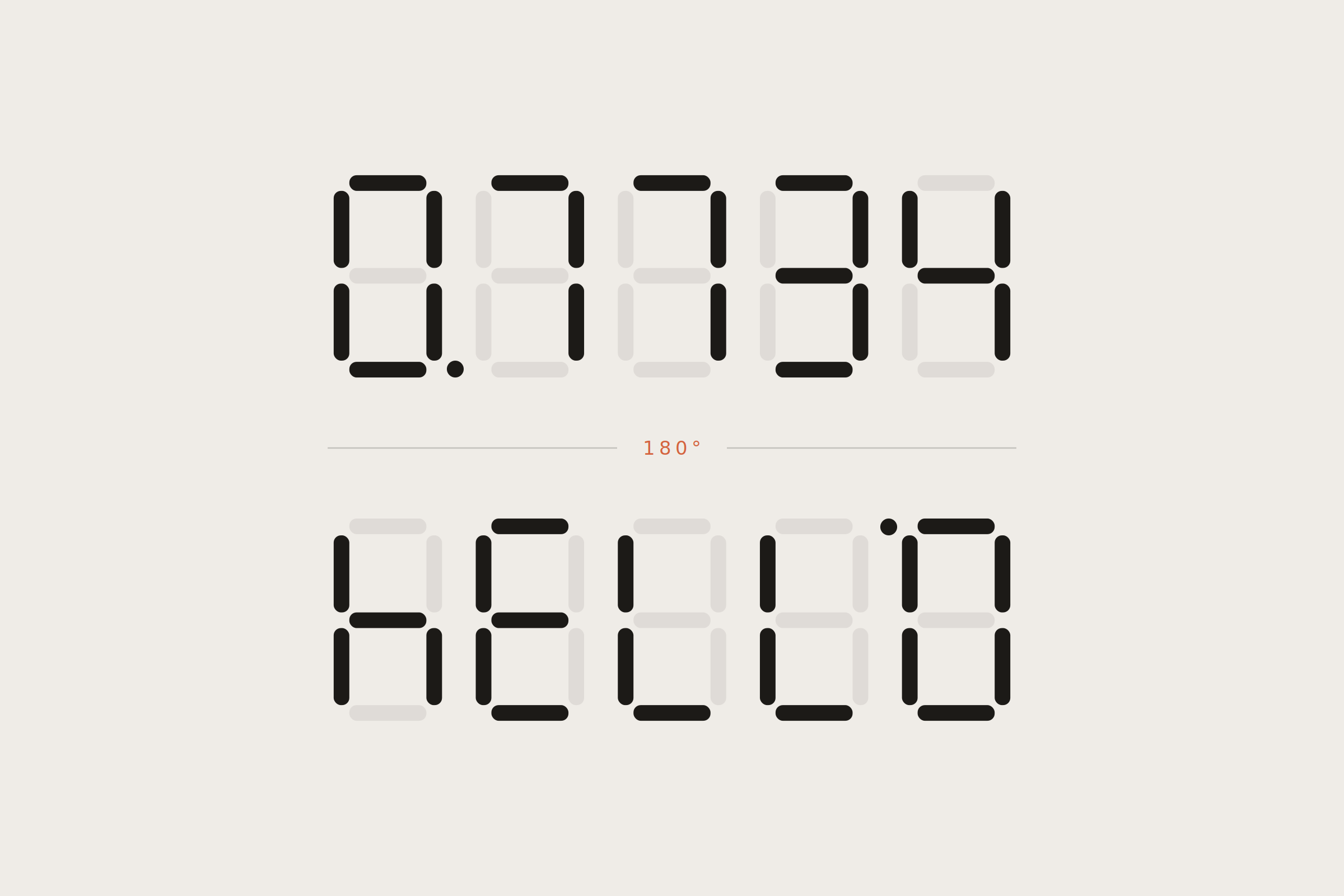
None of this needs more than a calculator and some patience — the same calculator you might use for spelling words upside down. The deep questions about how primes are spread out belong to the Riemann hypothesis; here we just collect the curious ones, the way some authors devote a whole book to a single number.
No. 01 · The largest right-truncatable prime
73,939,133
73,939,133 is prime. Remove the last digit and you get 7,393,913 — also prime. Remove another and 739,391 is prime too. Keep going, all the way down to a single 7, and you never land on a composite number.
- 73939133prime
- 7393913·prime
- 739391··prime
- 73939···prime
- 7393····prime
- 739·····prime
- 73······prime
- 7·······prime
Numbers like this are called right-truncatable primes. There is a simple reason they are rare: once you are past the first digit, the only digits you can ever add on the right are 1, 3, 7 and 9. An even last digit makes the number divisible by 2, and a 5 makes it divisible by 5. So every step up the ladder is a gamble on four choices, and as numbers grow, primes thin out.
The gamble eventually fails for every branch. Start from 2, 3, 5 and 7, try every allowed digit on the right, keep only the primes, and repeat. The tree of survivors stops growing after eight digits. In total there are exactly 83 right-truncatable primes, and 73,939,133 is the last and largest of them. Try to add any digit to its right — 739,391,331, 739,391,333, 739,391,337, 739,391,339 — and none of them is prime.
That “exactly” is the striking part. Most questions about primes have no last answer: there is no largest prime, and nobody knows whether the twin primes ever run out. This one has a finished, complete list, and a computer can check all of it in a fraction of a second.
Sources
- OEIS A024770, Right-truncatable primes.
- Chris K. Caldwell, The Prime Pages, “Truncatable prime” glossary entry.