Have you ever considered learning how to think mathematically? Using math proofs requires logical reasoning, problem-solving skills, and the ability to make connections between concepts. By reading math books to learn mathematical proofs, you can unlock the power of this type of thinking and gain valuable insight into a variety of topics. Below, you will find 70 best math books to learn mathematical proofs.
The Benefits of Learning Math Proofs
Math proofs are used in various fields, such as engineering, economics, computer science, physics, and mathematics. Learning to think mathematically will benefit your studies in these fields and give you an edge in other aspects of life, such as problem-solving, decision-making, and critical thinking. Mathematical proofs provide a systematic way to analyze problems so that you can come up with solutions quickly and accurately.
Math Books to Learn Mathematical Proofs
Math books are essential if you want to learn mathematical proof. These books provide an easy-to-understand approach to understanding the fundamentals behind math proofs. They often include step-by-step instructions on how to solve problems as well as visual demonstrations of how these concepts work together. Reading these books is key to developing your skills in mathematical proof because they provide an accessible entry point into more advanced topics like abstract algebra or number theory.
While math books are great for getting started with learning mathematical proof, they have their limitations when it comes to tackling more complex problems. As you progress further down the road with studying math proofs, you must supplement your knowledge with online resources such as YouTube tutorials or online courses that give you a more comprehensive overview of various areas within mathematics.
Additionally, engaging in practice questions can help solidify your understanding and hone your skills when it comes to using logic and reasoning for problem-solving.
Mathematical proof is an invaluable skill that can be applied across multiple fields. It provides a framework for analyzing problems while helping develop your problem-solving abilities and critical thinking skills, which are transferable across many different domains in life. To get started with learning math proof, reading math books is essential as they provide an easy-to-understand introduction to this field while giving step-by-step instructions on how to solve various types of problems. However, as one progresses further into this area, more advanced resources should be utilized, such as online tutorials or courses along with practice questions which will help hone one’s understanding and application within this area even further!
Below, you can find 70 best math books to learn mathematical proofs. If you enjoy this book list, you should also check 30 Best Math Books to Learn Advanced Mathematics for Self-Learners.
Before I get started, I would like to suggest Audible for those of us who are not the best at reading. Whether you are commuting to work, driving, or simply doing dishes at home, you can listen to these books at any time through Audible.

In our search for self-improvement and life guidance, we often turn to a familiar counsel – our gut feelings. But in “Don’t Trust Your Gut: Using Data to Get What You Really Want in Life,” Seth Stephens-Davidowitz questions the wisdom of such instincts. The former Google data scientist and economist makes a compelling case for relying on big data over intuition when making some of life’s most critical decisions.
The book is artfully structured around the principle idea that contrary to popular belief, our gut instincts are neither as informed nor as unbiased as we like to think. Stephens-Davidowitz takes readers on a data-driven exploration that includes everything from the strategies of successful dating profiles to the best locales for raising a family based on tax records.
He asserts that the trail of data breadcrumbs we leave behind in our digital age can reveal more about the strategies for success and happiness than any self-help book based on anecdotal evidence. With big data research at the helm, Stephens-Davidowitz analyzes patterns and trends, boiling them down to practical advice that is both understandable and surprising.
What stands out in “Don’t Trust Your Gut” is the author’s prowess in translating vast and complex datasets into engaging and actionable insights. He employs the storytelling zeal of a detective, revealing how data has debunked the efficiency of widely held beliefs in areas as diverse as career success and relationship satisfaction.
The book challenges readers to shift their perspectives and trust in the revelatory power of figures and facts. Still, it is worth noting that, while Stephens-Davidowitz makes a robust case for data-led decision-making, he does not entirely dismiss the value of human emotion and experience. Instead, he presents data as a tool to supplement, not replace, the richness of human judgment.
The narrative is rich with anecdotes and humor, ensuring that what could easily become a dry recitation of figures is instead a lively discourse. One might argue whether Stephens-Davidowitz’s enthusiasm for data may sometimes overshadow the complexities of human emotion that cannot be easily quantified. Nonetheless, the book opens up an essential discussion about balancing data and lived experience in decision-making.
“Don’t Trust Your Gut” invites readers to reconsider how they approach self-improvement and life-changing choices. In addition to delivering surprising conclusions about what data can tell us about achieving a better life, it serves as a guide for navigating the endless sea of information that characterizes the modern world.
For anyone interested in the intersection of big data and personal growth, this book offers a fresh perspective that is both thought-provoking and potentially life-changing. Stephens-Davidowitz doesn’t just furnish readers with data; he gives them a new lens through which to view their decisions and their lives. This blend of data, economics, and self-help is a potent combination, making “Don’t Trust Your Gut” a vital read in an increasingly data-driven age.

In “The Man Who Solved the Market,” Gregory Zuckerman offers a detailed account of perhaps the most successful, yet enigmatic figures in the world of finance—Jim Simons. Constructed through extensive research and interviews, this book captivates the reader with the narrative of a mathematician turned finance mogul whose innovative techniques paved the way for the quant revolution that would forever change the industry.
At its core, this book is a testament to human ingenuity and the power of applying mathematical precision to the rough-and-tumble world of investing. It elucidates fundamental themes such as the relentless pursuit of knowledge, the intersection of technology and finance, and the unforeseen consequences of disrupting established industries.
Simons, a distinguished mathematician and a former code breaker, ventures into finance and establishes his firm, Renaissance Technologies. There, he and his team of analysts, mathematicians, and computer scientists craft the Medallion Fund—a fund that achieves unprecedented success through algorithmic trading.
But the plot thickens as Zuckerman unravels how Renaissance’s strategies extend beyond markets. The firm’s executives exert influence on crucial political outcomes, highlighting the often-ignored nexus between financial power and political dynamics. The enigmatic figure of Robert Mercer appears, threading in the controversial twists of the modern political landscape.
Zuckerman’s narrative prowess never diminishes the complexity of financial strategies to simplistic anecdotes. Instead, the reader is treated to a lush mix of Simons’s personal life, mathematical rigor, and the quirkiness of a team that consisted of astronomers and cryptographers alongside traditional market researchers.
The book reads like a thrilling novel, yet it serves as a scholarly record of quantitative analysis’s rise to prominence. For readers interested in the tumultuous years that reshaped financial markets, this text is both an engaging tale and an edifying exposition of quantitative finance.
“The Man Who Solved the Market” is a fascinating portrayal of how one man’s vision transformed the world of finance. Zuckerman triumphs in demonstrating that behind the cold algorithms and data that dictate the pulse of markets are human stories of ambition, curiosity, and unintended consequences.
As much as it is a reflection on success, the story of Renaissance poses ethical questions regarding the role and influence of such firms. The book subtly probes the reader to consider the broader impact of finance on society and how individuals like Simons and firms like Renaissance craft our world, often from the shadows.
Amidst soaring profits and revolutionary approaches, it’s a tale of immense success shadowed by a stark reminder that every action, especially in a high-stakes environment like Wall Street, triggers ripples that resonate far and wide. A recommended read for anyone intrigued by the amalgamation of intellect, technology, and finance, and their role in shaping the modern era.

In an era where data is king, Kaiser Fung’s “Numbers Rule Your World” emerges as a compelling guide to the silent but significant role that statistics and probabilities play in our daily lives. Building upon the lineage of bestsellers like “Freakonomics” and “Super Crunchers,” Fung demystifies the numerical forces shaping everything from our health to our work environment, bringing statistics to life through engaging narrative and real-world examples.
The book’s exploration of key themes offers a profound look at the odds controlling diverse aspects of our existence – from winning the lottery to the functioning of traffic systems. With expert storytelling, Fung draws the reader into the “hidden world of facts and figures,” illuminating how these numbers influence our life without our conscious realization.
One of the book’s most laudable feats is Fung’s ability to articulate complex statistical principles in an understandable and enjoyable manner. His writing resonates with a broad audience, from seasoned statisticians to curious novices. The author eschews dense mathematical formulas in favor of conversational prose filled with insightful anecdotes, making the book an accessible foray into statistical thinking.
Fung doesn’t merely elucidate abstract concepts; he shows how they manifest in real-world applications. From the metrics behind standardized testing fairness to corporations predicting consumer needs, the author reveals the extensive research and data analysis silently but significantly guiding decisions and outcomes.
While the book fascinates and informs, it also doesn’t shy away from the power and potential misuse of statistics. It challenges the reader to consider the implications of reliance on numerical analysis in critical decision-making processes and prompts a thoughtful evaluation of how we interpret the data driving our society.
Critics and thought leaders alike have praised Fung’s work for its clarity and relevance. Fareed Zakaria hailed it as “an easy read with a big benefit,” while others like Daniel Finkelstein commend it as the key to unlocking logical thinking without the trappings of complex equations.
“Numbers Rule Your World” is more than just a book about statistics; it’s a riveting narrative of how numbers configure the tapestry of our lives. It enlightens, entertains, and educates, making us better informed about the unseen statistical mechanisms in play. For anyone seeking to appreciate the myriad ways in which data shapes our reality, Kaiser Fung’s book is an invaluable addition to your library.
For those looking to appreciate the omnipresence of data analytics or to those with trepidation about how it affects our world, Fung’s explorations into the good and bad of predictive analytics will provide much-needed context and insightful discourse. Whether the revelations surprise, amuse, or provoke, there is no denying the central thesis that indeed, numbers rule your world.
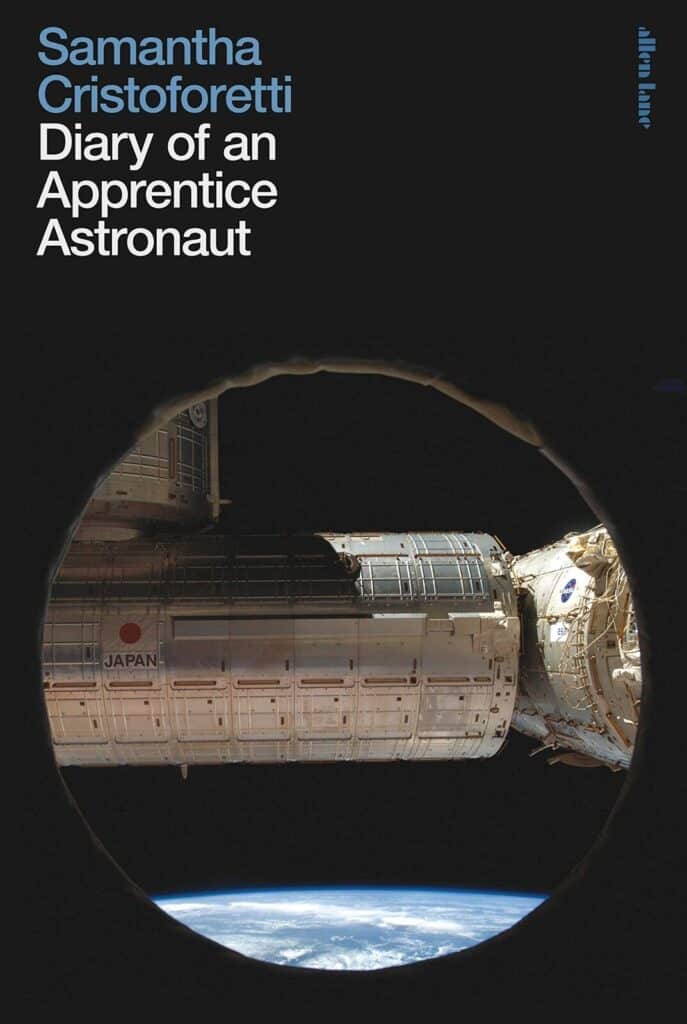
Get ready to embark on a thrilling journey to the International Space Station with Samantha Cristoforetti, a veteran astronaut from the European Space Agency. In her book, Diary of an Apprentice Astronaut, she takes us behind the scenes of her first mission and shares the incredible training process that led up to it.
Cristoforetti’s path to becoming an astronaut was no easy feat. As an Italian Air Force pilot, she saw the opportunity to apply for ESA’s astronaut selection as a once-in-a-lifetime chance, and she seized it. After being chosen among the six selected candidates in 2009, she devoted years to training at ESA and various facilities around the world.
The book delves into her intense training routines, which astronauts fondly refer to as “slow orbits,” as they travel across Europe, Russia, Japan, the US, and Canada. Through Cristoforetti’s vivid descriptions, we witness the friendships she builds along the way, as well as the occasional setbacks she faces, including a health scare that temporarily shook her dreams of space travel.
However, nothing could deter Cristoforetti from her purpose. In November 2014, she boarded the Soyuz spacecraft for her mission to the ISS. Her account of the experience is awe-inspiring. Despite the risks involved, she writes of feeling a sense of calm familiarity, as if she were truly at home in space.
The latter part of the book focuses on Cristoforetti’s life on the space station itself. With captivating speed, she describes her adjustment to microgravity and her interactions with her American and Russian crewmates. Through social media, she shared her experiences in real-time, giving readers a glimpse into the wonders and challenges of life in space.
While her time on the ISS was remarkable, Cristoforetti’s only disappointment was not being able to conduct a spacewalk. She had trained extensively for it, but due to unforeseen circumstances, she was unable to venture outside the station.
Originally released in Italy in 2018 and later in the UK, this US edition includes a recent interview with Cristoforetti as she prepares for her next mission. Her words reflect a deep connection to the space exploration community and an ever-present hope for the future.
Diary of an Apprentice Astronaut is a must-read for anyone captivated by the wonders of space. Its detailed and personal account will leave you inspired and in awe of the incredible journey taken by those who dare to explore the final frontier.

Why do we keep pets? It seems illogical – they make a mess, destroy furniture, and can even be dangerous. But according to scientist John Bradshaw, it’s ingrained in our nature. In fact, he argues that pets might just save the world.
Bradshaw’s theories are backed by solid research. In his previous book, Cat Sense, he debunked myths about cat behavior and suggested ways to improve their lives. Now, in The Animals Among Us, Bradshaw takes a similar approach to pets in general. He questions why we have dogs and cats in our homes and explores the field of anthrozoology, which studies the interactions between animals and humans.
Bradshaw’s engaging writing style makes complex topics accessible. While the book lacks extensive research on pet keeping, it still offers entertaining myth-busting. For example, the idea that people only have pets because they’re lonely is debunked. In fact, larger households are more likely to have pets.
Bradshaw proposes that our love for pets stems from deep-seated characteristics of human nature. We find animals cute, a response developed over millions of years to ensure the care of offspring. Our tendency to anthropomorphize and the pleasure of stroking animals are also factors. Pets in our homes are a legacy of our ancestors’ history.
But the most exciting aspect of Bradshaw’s book is the potential impact of growing up with pets. Research suggests that people who were raised with pets are more likely to be concerned about animal welfare and the environment. Encouraging pet ownership could be the key to fostering a greater sense of responsibility towards the planet.
In a world where the environment needs our attention, The Animals Among Us offers a fresh perspective on why we keep pets and how they might just be the catalyst for change.
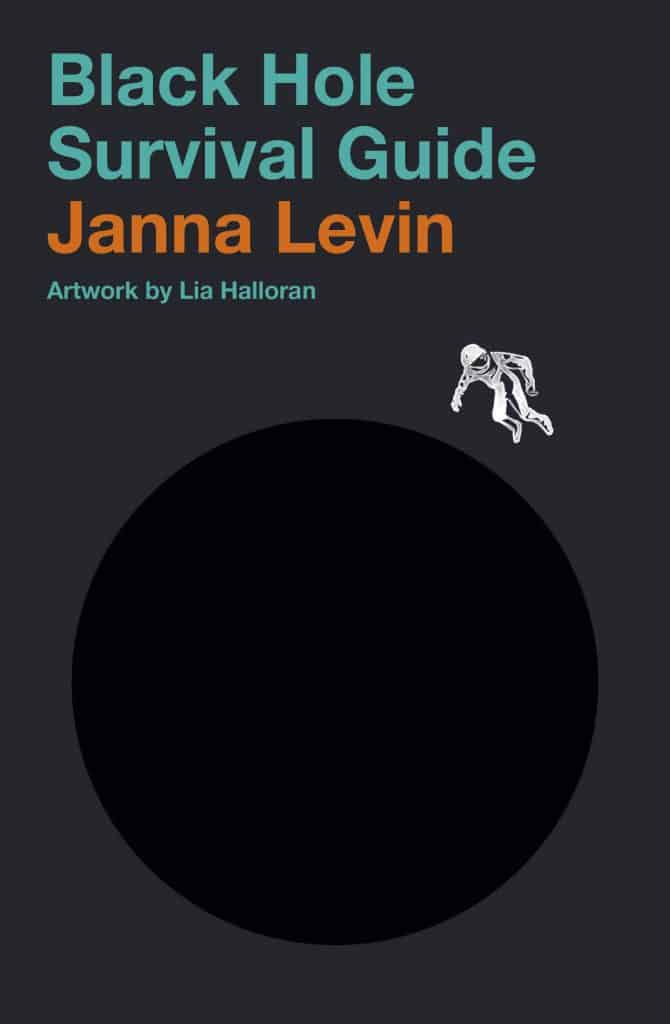
Black Hole Survival Guide
Through her writing, astrophysicist Janna Levin has focused on making the science she studies not just comprehensible but also, and perhaps more important, intriguing to the nonscientist. In this book, she helps us to understand and find delight in the black hole–perhaps the most opaque theoretical construct ever imagined by physicists–illustrated with original artwork by American painter and photographer Lia Halloran. Levin takes us on an evocative exploration of black holes, provoking us to imagine the visceral experience of a black hole encounter.
She reveals the influence of black holes as they populate the universe, sculpt galaxies, and even infuse the whole expanse of reality that we inhabit. Lively, engaging, and utterly unique, Black Hole Survival Guide is not just informative–it is, as well, a wonderful read from first to last.
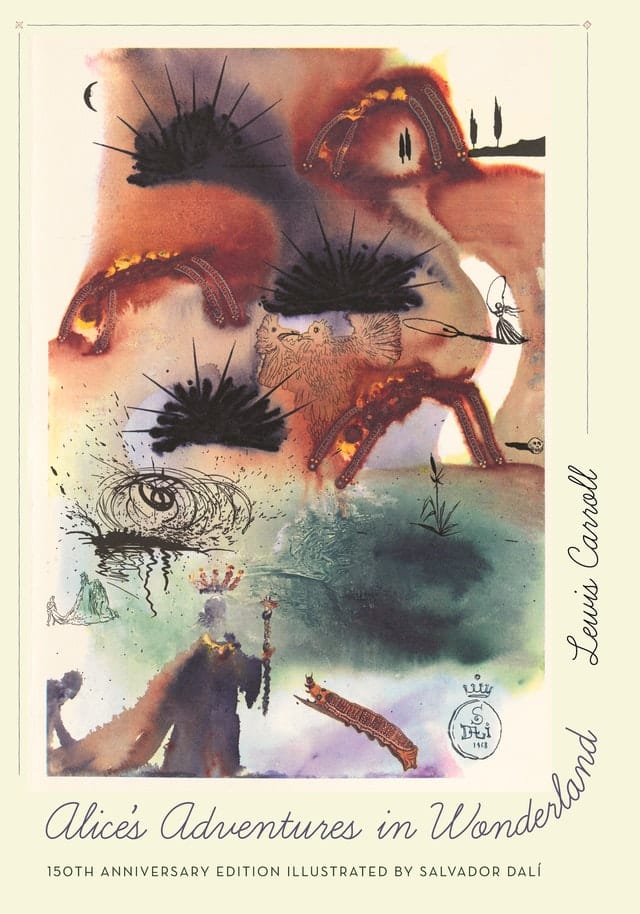
“Alice’s Adventures in Wonderland,” written by Lewis Carroll, is not only a masterpiece of children’s literature but a brilliant concoction of imagination and mathematics. This novel, celebrating its 150th anniversary, reveals itself as much more than just a story of a girl in a fantastical world; it’s a math novel cleverly disguised within the whimsical narrative.
Carroll, with a background in mathematics, weaves abstract thinking and complex ideas into the very fabric of Wonderland. From the enigmatic Cheshire Cat discussing infinity, to the Queen’s croquet game reflecting the randomness of numbers, the reader—whether young or old—is subtly introduced to mathematical concepts throughout Alice’s odyssey.
This special edition is particularly remarkable as it includes Salvador Dalí’s rare and thought-provoking illustrations. His surrealistic touches are in perfect harmony with the narrative, enhancing the reader’s experience by providing a visual feast that echoes the dream-like quality of the text. The result is an extraordinary version of Alice’s tale that bridges art, literature, and science, ensuring that each page turned is a step further down the rabbit hole of curiosity.
Amid its logical conundrums and coded references to mathematics, “Alice’s Adventures in Wonderland” speaks to timeless themes such as the celebration of curiosity, the measure of bravery, and the importance of being resilient and kind. Carroll’s cleverly crafted characters—each embodying different facets of human virtue and vice—serve as guides not only in a young girl’s fantastical escapade but as moral compasses for the readers.
The narrative itself is an adventure in every sense of the word. Alice encounters bizarre and outlandish scenarios, yet they are constructed with such meticulous detail that they seem curiously logical. The world Carroll has created is one that consistently defies expectation and understanding, leading readers to question everything they thought they knew about reality.
Beneath the surface of this supposed children’s book lies a rich layer of complexity that open-minded readers can explore. The use of puns, puzzles, and paradoxes pulls readers of all ages into an exploration of logic, making “Alice’s Adventures in Wonderland” an educational read that stimulates the brain in more ways than one.
In conclusion, “Alice’s Adventures in Wonderland: 150th Anniversary Edition” offers more than just nostalgia—it offers an educational and mesmerizing trip that binds math, morality, art, and storytelling into a single volume. It is an essential addition to any child’s library and a delightful reread for adults who may find new insight within its pages. This novel, and particularly this edition with its extraordinary Dalí illustrations, is a testament to the enduring power of imagination and intellect combined.

Digital Harmony: On the Complementarity of Music and Visual Art
John Whitney’s book, Digital Harmony: On the Complementarity of Music and Visual Art, explores the intricate connection between music and visual art in the digital age. With the rise of new technologies, artists have created a fusion between these two mediums, resulting in a beautiful and harmonious combination. Whitney’s book delves into the history of this relationship, from the early days of animation to the modern use of computer-generated imagery in blockbuster films.
Through insightful analysis and expert knowledge, Whitney demonstrates that music and visual art are complementary and inextricably linked, creating a unique and innovative experience for the audience. Digital Harmony will leave readers with a newfound appreciation for the power of the arts.
The book also includes a description of his computer and peripherals, and the film techniques he uses, as well as listings of programs and descriptions sufficient for anyone beginning to explore this interesting new art field.
You may also find these interesting:

• John Whitney and His Masterwork: Digital Harmony

• 40+ Elegant Books for Designers and Math People
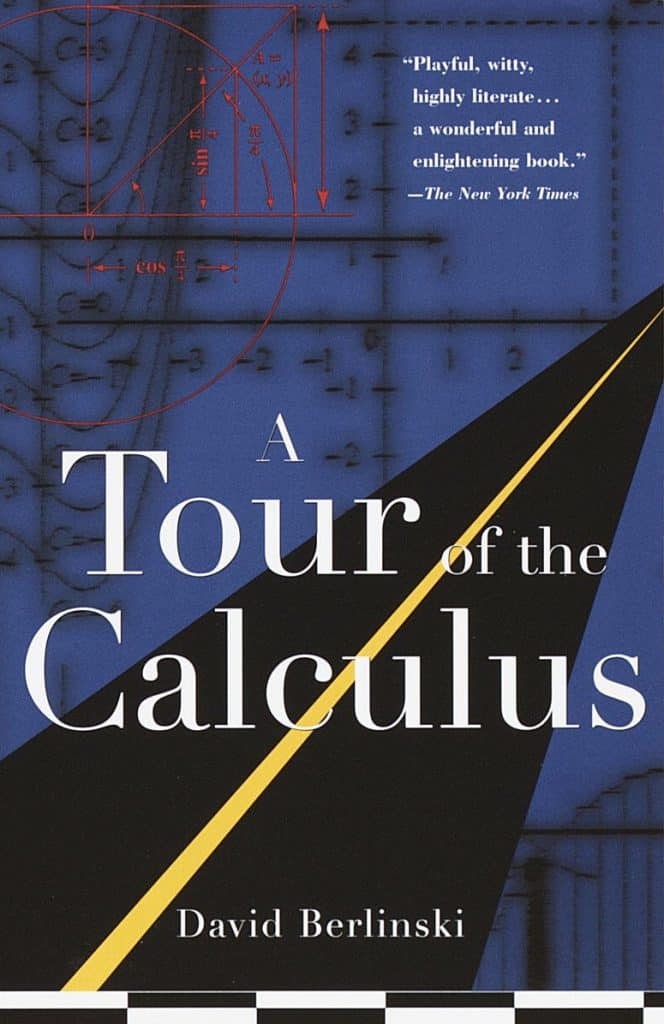
If calculus did not exist, mathematicians would be unable to describe a motorcycle’s acceleration, gravity’s influence on thrown balls and faraway planets, or demonstrate that a person could walk across a room and finally touch the wall on the other side of room. This brilliant book, written by an author with amazing lucidity and stylistic brio, investigates the question of how calculus makes these things conceivable and, in the process, discovers a correlation between real numbers and the real world. The book is a tour de force. At the same time that he is introducing us to the mysteries of real numbers, functions, and limits, Berlinski investigates the most far-reaching consequences of his topic. He shows how calculus can reconcile the exactness of numbers with the fluidity of a universe that is always changing.
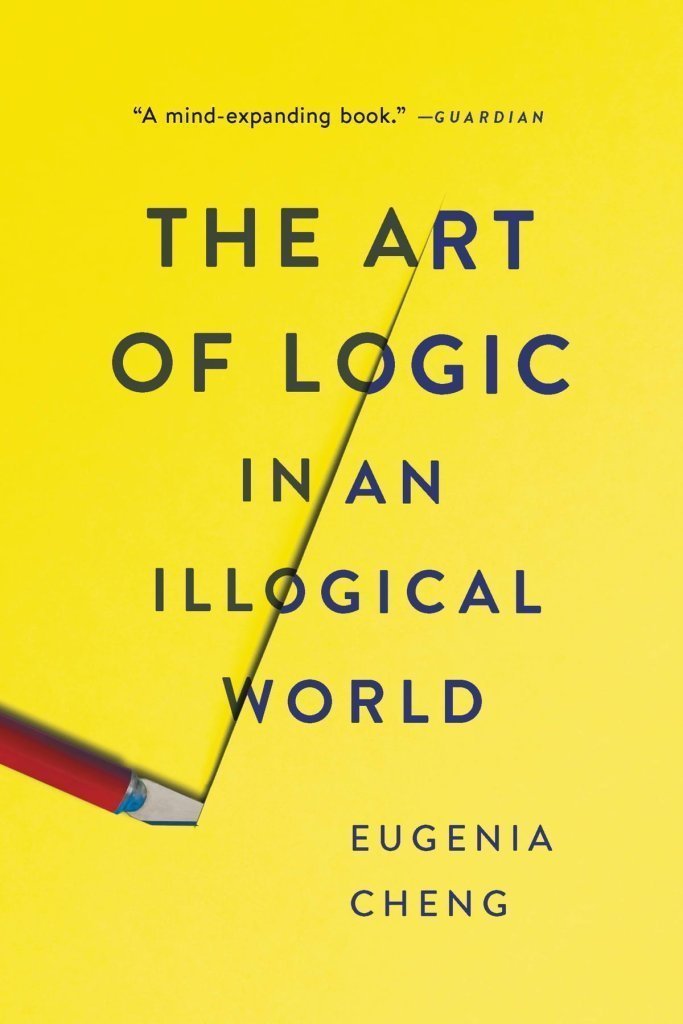
Eugenia Cheng’s The Art of Logic in an Illogical World is a must-listen for anyone struggling to make sense of the irrationality surrounding us. Through her expertise as a mathematician, Cheng provides insights into how logical reasoning alone may not suffice in our post-truth era. Drawing from her own experiences where emotion sometimes wins over logic, Cheng shows that a combination of both is needed to live better in today’s world.
Bringing in the relevance of a logic, or emotions, Cheng outlines how we can use it alongside logic to effectively communicate and navigate tough topics. For those looking for a new way to approach the confusing world around them, this audiobook is a mathematical gem.