Have you ever considered learning how to think mathematically? Using math proofs requires logical reasoning, problem-solving skills, and the ability to make connections between concepts. By reading math books to learn mathematical proofs, you can unlock the power of this type of thinking and gain valuable insight into a variety of topics. Below, you will find 70 best math books to learn mathematical proofs.
The Benefits of Learning Math Proofs
Math proofs are used in various fields, such as engineering, economics, computer science, physics, and mathematics. Learning to think mathematically will benefit your studies in these fields and give you an edge in other aspects of life, such as problem-solving, decision-making, and critical thinking. Mathematical proofs provide a systematic way to analyze problems so that you can come up with solutions quickly and accurately.
Math Books to Learn Mathematical Proofs
Math books are essential if you want to learn mathematical proof. These books provide an easy-to-understand approach to understanding the fundamentals behind math proofs. They often include step-by-step instructions on how to solve problems as well as visual demonstrations of how these concepts work together. Reading these books is key to developing your skills in mathematical proof because they provide an accessible entry point into more advanced topics like abstract algebra or number theory.
While math books are great for getting started with learning mathematical proof, they have their limitations when it comes to tackling more complex problems. As you progress further down the road with studying math proofs, you must supplement your knowledge with online resources such as YouTube tutorials or online courses that give you a more comprehensive overview of various areas within mathematics.
Additionally, engaging in practice questions can help solidify your understanding and hone your skills when it comes to using logic and reasoning for problem-solving.
Mathematical proof is an invaluable skill that can be applied across multiple fields. It provides a framework for analyzing problems while helping develop your problem-solving abilities and critical thinking skills, which are transferable across many different domains in life. To get started with learning math proof, reading math books is essential as they provide an easy-to-understand introduction to this field while giving step-by-step instructions on how to solve various types of problems. However, as one progresses further into this area, more advanced resources should be utilized, such as online tutorials or courses along with practice questions which will help hone one’s understanding and application within this area even further!
Below, you can find 70 best math books to learn mathematical proofs. If you enjoy this book list, you should also check 30 Best Math Books to Learn Advanced Mathematics for Self-Learners.
Before I get started, I would like to suggest Audible for those of us who are not the best at reading. Whether you are commuting to work, driving, or simply doing dishes at home, you can listen to these books at any time through Audible.
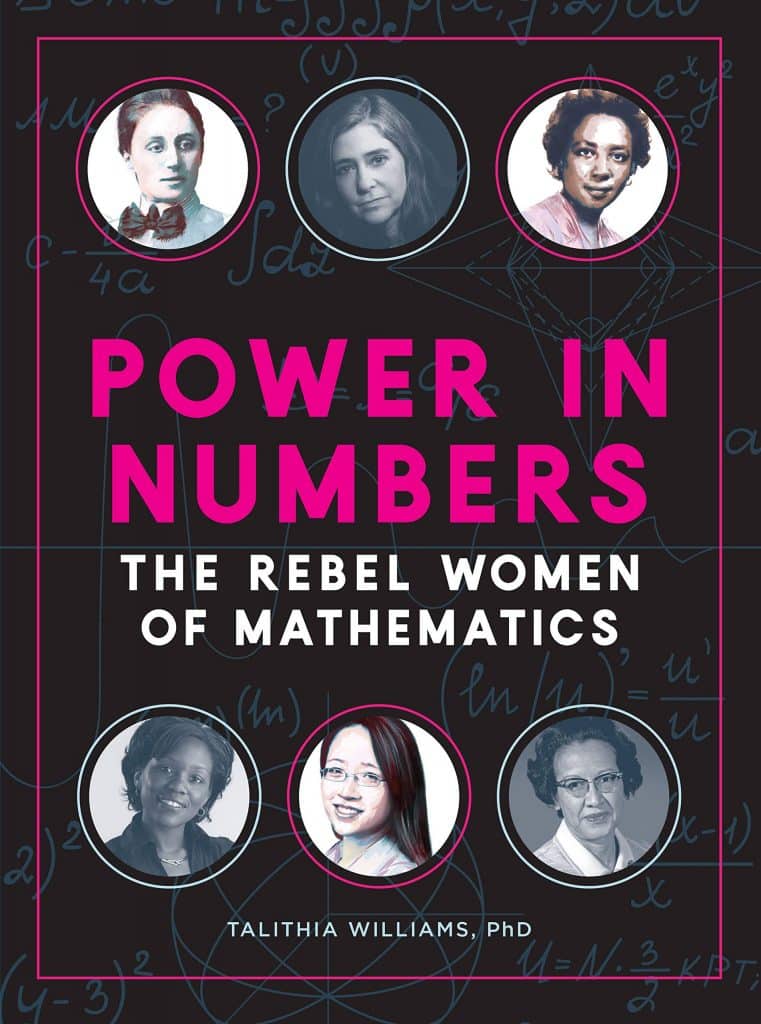
Mathematics may seem like a cold and impersonal subject, but the women celebrated in Power in Numbers: The Rebel Women of Mathematics bring a warmth and vibrancy to the field. From Hypatia, whose deep understanding of mathematics and philosophy helped her become one of the most respected thinkers of her time, to Annie Easley, who used her mathematical prowess to help send rockets into space, these women show that mathematics can be a vital and dynamic force.
The pages of this colorful volume burst with the stories of women who used their mathematical genius to make groundbreaking discoveries and change the course of history. Prepare to be amazed and inspired by the untold stories of these brilliant rebels.
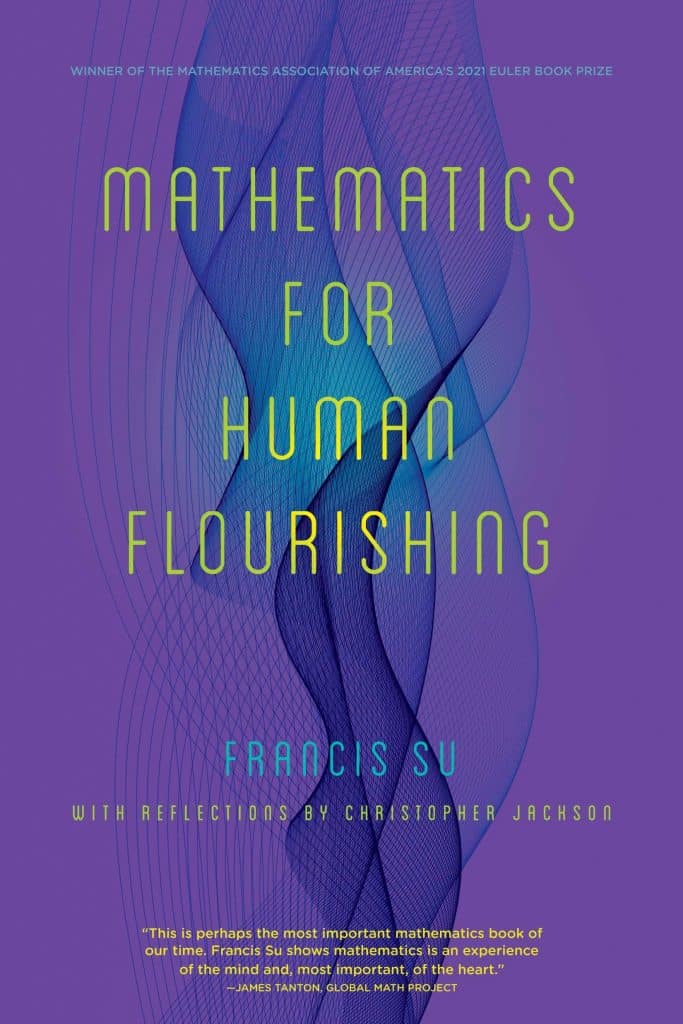
Mathematics may seem like a daunting and impersonal subject to some, but for Francis Su, it is the very key to unlocking a life of true human flourishing. From the joy of playful puzzles to the awe-inspiring beauty of complex equations, math offers us a unique way to tap into some of humanity’s most fundamental desires for freedom, justice, and love.
Su’s book, Mathematics for Human Flourishing, is a masterpiece, crafted to inspire those who may have lost sight of math’s potential to bring us closer to our most essential selves. With parables and personal reflections, Su reminds us how math can be a source of creativity, wonder, and even some much-needed joy in a world that can often seem harsh and unforgiving.

Discover the fascinating world of equations in “In Pursuit of the Unknown: 17 Equations That Changed the World” by Ian Stewart. Whether you’re a math phobe or a research mathematician, this book promises to captivate you with the poetry and beauty of significant equations. Brace yourself for a thrilling journey through the ascent of humanity, as Stewart unravels the secrets behind 17 equations that have truly transformed our world.
Prepare to be amazed as Stewart effortlessly breaks down complex equations from mathematics, physics, information theory, and finance in a way that anyone can understand. From Maxwell’s equations that birthed radio and wireless communication, to Newton’s law of gravity that led to the Hubble telescope and GPS, these equations have shaped our lives in ways we never imagined.
But don’t worry, In Pursuit of the Unknown isn’t all about equations and technical jargon. Stewart incorporates plenty of pictures and engaging prose to keep you hooked. Each chapter focuses on a different equation, giving you a comprehensive history, explanation, and significance of the equation. With helpful graphics and concise answers to key questions, you’ll feel confident in your understanding and eager to learn more.
Delving into the lives of the mathematical greats behind these equations, Stewart adds a touch of human-interest to the mix. You’ll meet fascinating characters like Cardano, the gambling scholar, and uncover how their discoveries have impacted our world.
Even experienced mathematicians will find something new in “In Pursuit of the Unknown.” Stewart’s approach showcases how to write about mathematics for a wide audience while providing deep insights into the profound influence of equations on modern civilization.
Whether you’re studying math, interested in history, or simply seeking an enjoyable read, In Pursuit of the Unknown is a must-have. Stewart’s inviting tone, comprehensive content, and compelling arguments breathe life into those enigmatic mathematical objects we call equations. Get ready to be amazed and inspired by the incredible power these equations possess.
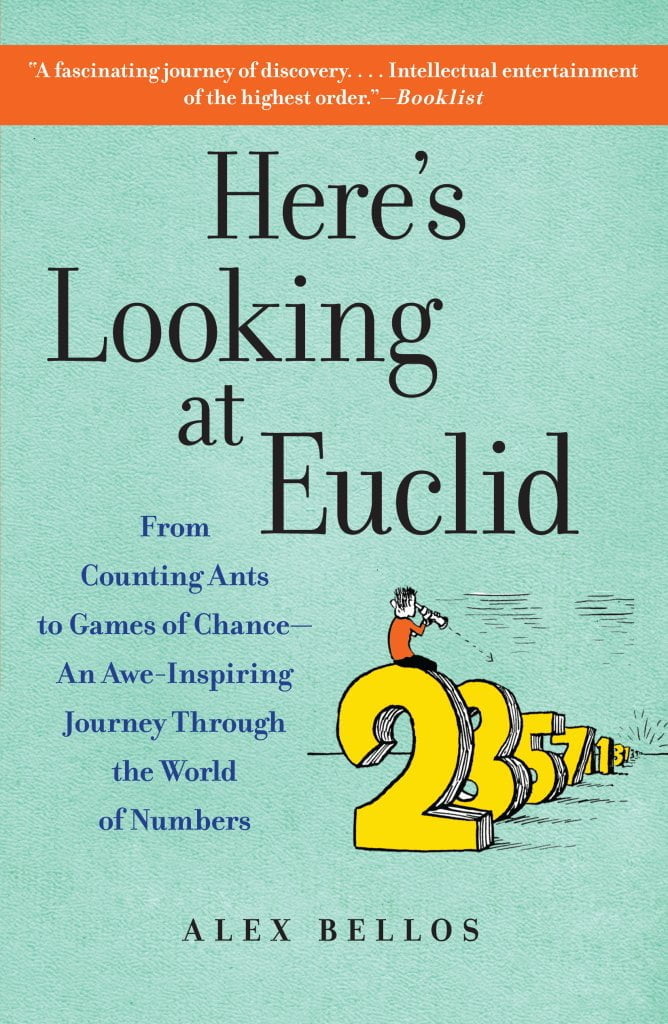
Despite its often-negative reputation, mathematics has the potential to be awe-inspiring and creative. According to Alex Bellos, author of “Here’s Looking at Euclid: From Counting Ants to Games of Chance,” mathematical thought is one of the greatest human achievements, and perhaps even the foundation of all progress. Bellos believes that the world of mathematics is a remarkable place, and one that should be explored and celebrated more often. With its ability to solve complex problems and bring order to chaos, it’s clear that math deserves much more credit than it often receives.
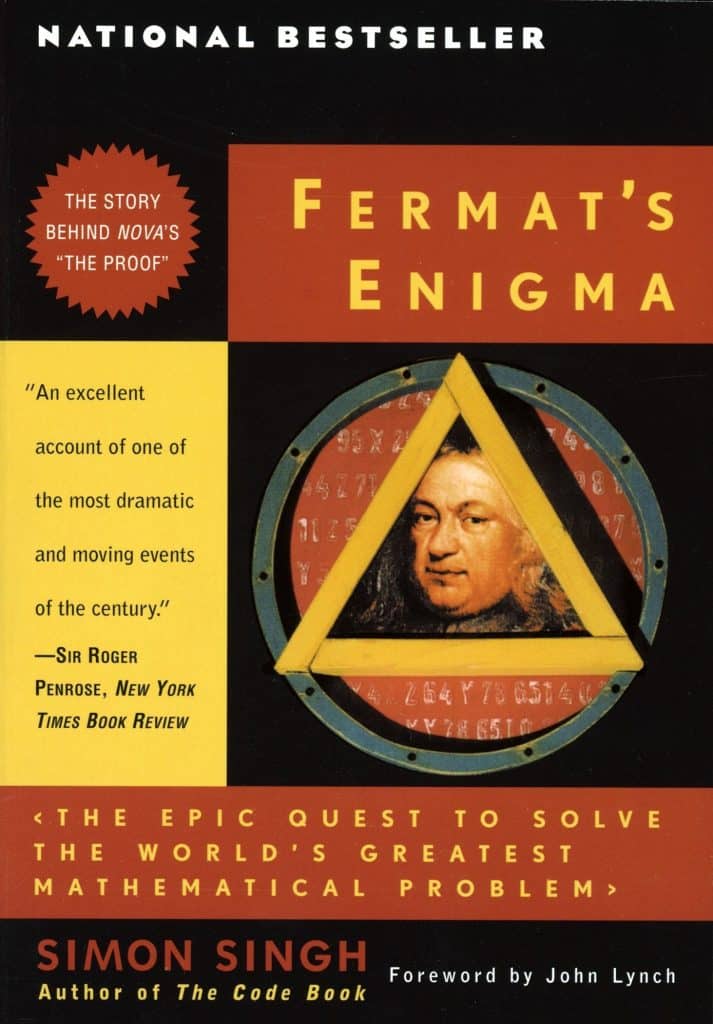
Many people may view mathematics as a dry and unemotional subject, but the pursuit of Fermat’s Last Theorem proved otherwise. This mathematical problem was laid down by Pierre de Fermat in the 17th century and became the ultimate challenge for mathematicians for over 350 years. The complexity of the problem was such that it baffled the finest minds in the field, but their determination to solve it reveals a deeply emotional pursuit.
In his book Fermat’s Enigma, Simon Singh captures the heartbreak and mastery that defined the pursuit of the theorem, weaving a mesmerizing story of sacrifice and devotion. After reading this book, you’ll likely have a newfound appreciation for mathematics as an emotional and captivating pursuit.
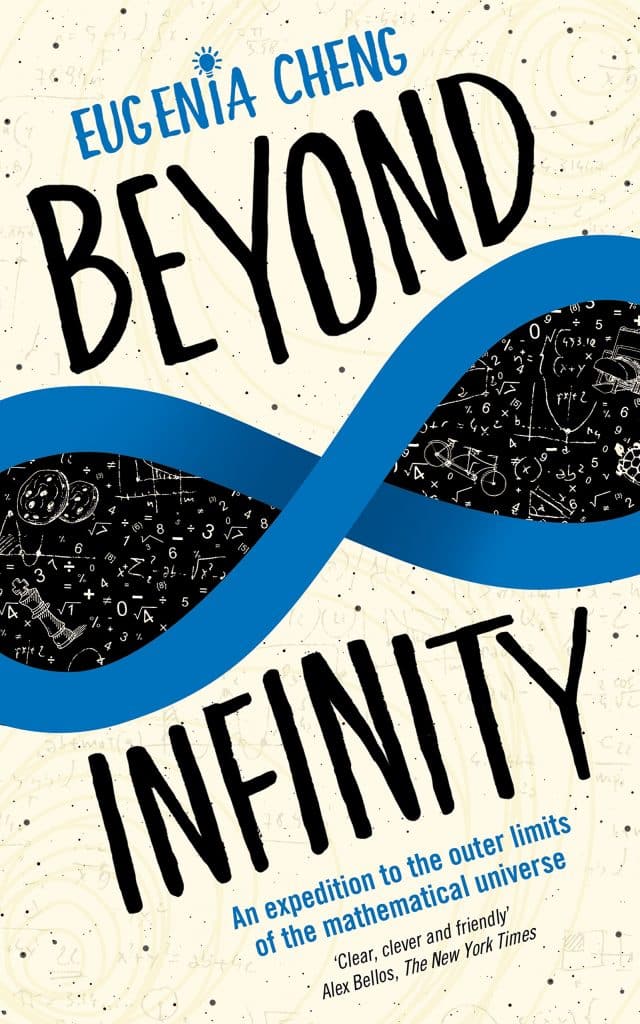
Beyond Infinity is a captivating book that takes readers on a mind-expanding journey into the outer realms of mathematics. With her engaging storytelling style, Eugenia Cheng delves into various mathematical concepts, shedding light on the complex idea of infinity and unraveling its mysteries.
Through clever analogies and thought-provoking examples, Cheng guides readers through the exploration of natural numbers, rational numbers, and real numbers, ultimately showing that infinity defies classification as a “normal type” of number. Along the way, we encounter fascinating topics such as Hilbert Hotels, Cantor’s diagonalization argument, and the different sizes of infinities, all brought to life with vivid storytelling and relatable scenarios.
Once we grasp the concept of infinity, Cheng takes us on a captivating journey into the realms of the incredibly large and the infinitesimally small. We explore growth rates through the lens of folding puff pastry and song shuffles, delve into the idea of dimensions and infinite dimensions, and catch a glimpse of category theory. We also ponder infinite sums of diminishing numbers and the mind-bending paradoxes they create. Cheng expertly fills gaps in our understanding of the real number line, shedding light on the irrational numbers and bringing us closer to a comprehensive definition of the real numbers.
This book is a must-read for anyone curious about infinity, whether they are beginners or seasoned mathematicians. It offers a fascinating introduction to the concept of infinity while showcasing the creative and playful nature of mathematical thinking. Beyond Infinity is an enjoyable and enlightening read that will leave readers longing for more.
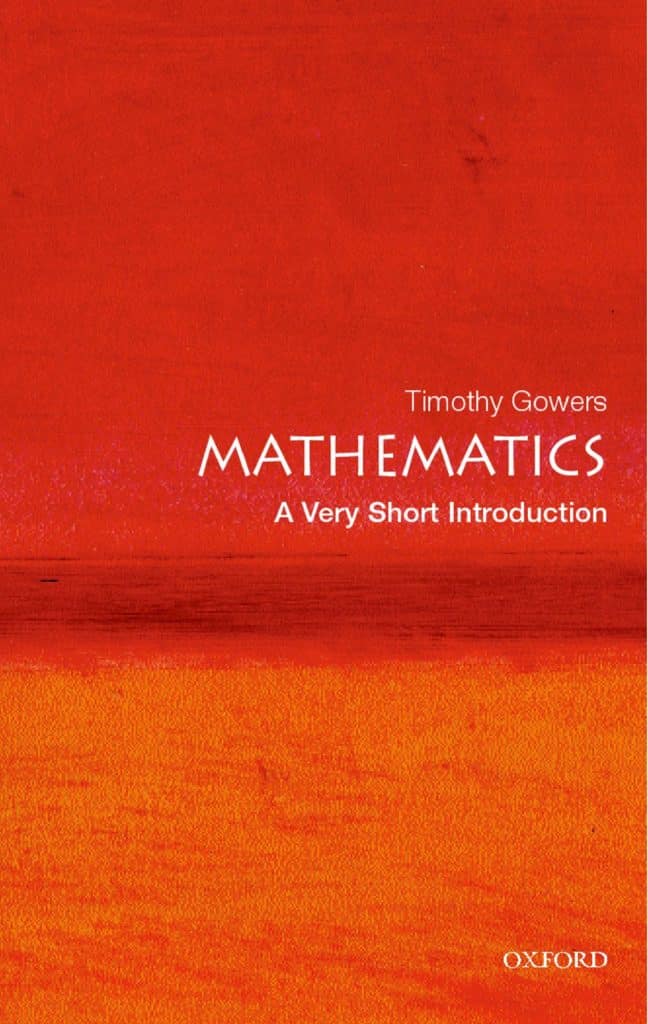
“This book’s goal is to carefully but untechnically illustrate the distinctions between high-level, research-level mathematics and the kind of mathematics we learn in school. Readers of this book will leave with a deeper grasp of seemingly counterintuitive ideas like infinity, curved space, and imaginary numbers since the most fundamental distinctions are philosophical. The opening chapters discuss general facets of mathematical theory. Following these are talks of more specialized subjects, and the book concludes with a chapter that addresses frequently asked social concerns concerning the mathematical community, such as “Is it true that mathematicians burn out at the age of 25?” Anyone who wants to better grasp mathematics should start with this introduction.”
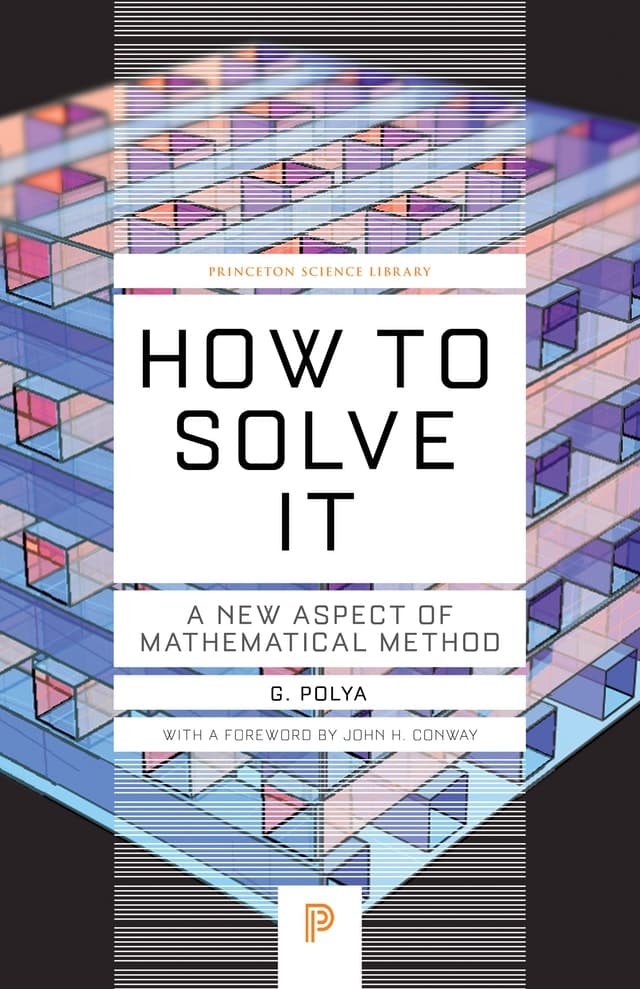
Discover the timeless wisdom of George Polya’s How to Solve It, a must-read for anyone interested in mathematics education. Despite its slightly clumsy writing due to Polya being a mathematician and not a native English speaker, this book offers invaluable insights into problem-solving that transcends the realm of mathematics and can be applied to any field.
Polya’s four-step approach to problem-solving is simple yet profound: understanding the problem, devising a plan, executing the plan, and reflecting on the solution. These steps are universally applicable and can be utilized for both basic and complex problems, making them essential for learning and growth. While different writers have made their own revisions to these steps, the core principles remain unchanged.
One of the highlights of this book is its enduring relevance. Not only can the general framework of Polya’s heuristic be applied to various situations, but the “A Short Dictionary of Heuristic” section offers a plethora of valuable insights. Each entry provides a concise essay on different aspects of problem-solving, shedding light on its nature and history. For instance, the distinction between “Problems to Solve” and “Problems to Prove” is particularly eye-opening and encourages deeper understanding.
With its enduring wisdom and practical resources, How to Solve It is a book that deserves a place on every educator’s shelf. It is a true classic in the field of educational literature that can be revisited time and time again for guidance and inspiration.
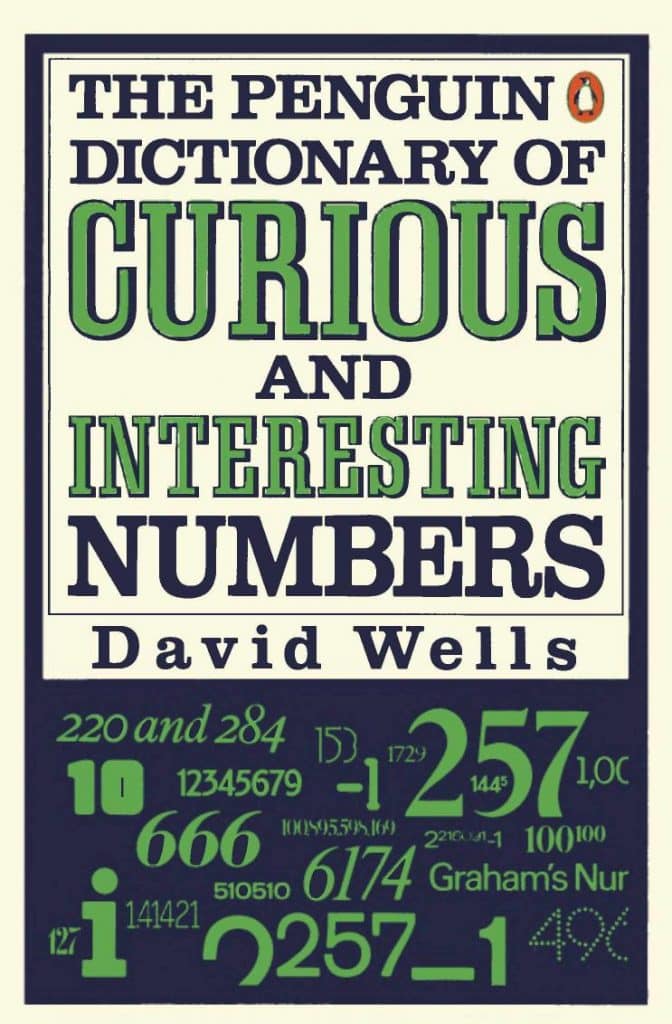
This intriguing and engaging dictionary, which was first published in 1986, is presented in order of magnitude and reveals the fascinating facts about particular numbers and number sequences, such as very large primes, amicable numbers, and golden squares, to name just a few.
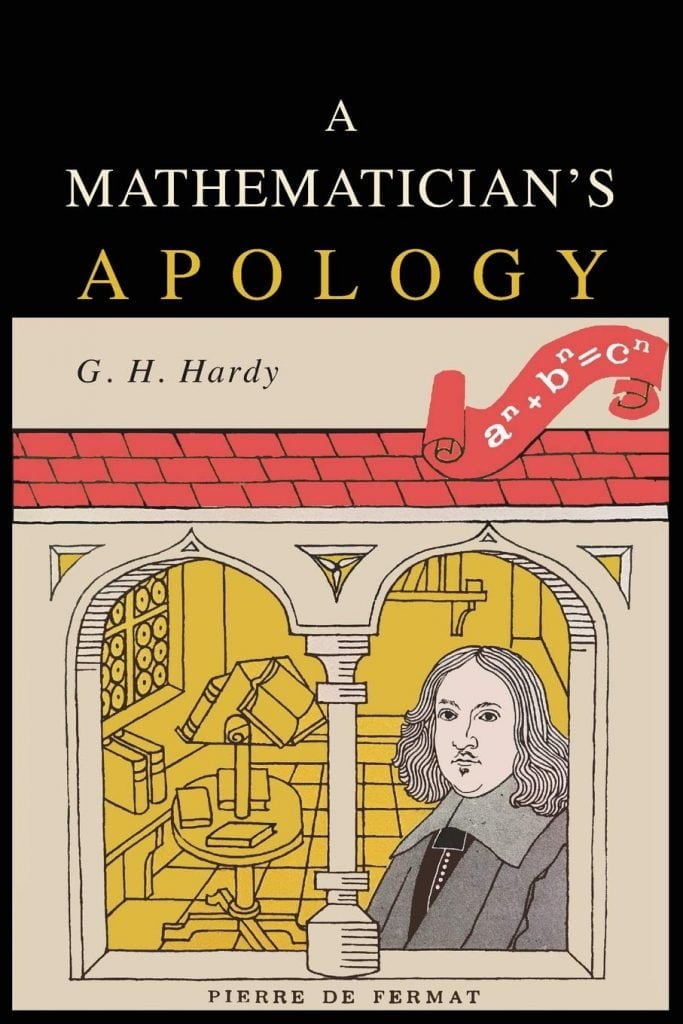
Prepare to be captivated by this thought-provoking book that delves into the world of applied mathematics. In this introspective piece, the author shares their personal journey in the field of numerical analysis, shedding light on the disconnect they feel with present-day mathematicians and mathematics itself.
While reflecting on their career and highlighting biographical details, the author presents a serious and personal contemplation on mathematics, akin to G.H. Hardy’s renowned work. However, A Mathematician’s Apology takes a different path, exploring fascinating new directions.
The author defines numerical analysis as the study of algorithms for continuous mathematics, slightly skirting the boundaries of computer science, which focuses on discrete mathematics. With significant contributions in various areas of numerical analysis, including approximation theory and probability analysis, the author showcases their expertise.
Surprisingly, the author reveals that their work has not been influenced by pure mathematicians, nor have their results impacted the winners of the prestigious Fields Medal. This divide between the theory and proof enthusiasts and the algorithms and computations experts strikes the author as unusual, considering the historical examples of Gauss, Newton, and Euler integrating numerical analysis into their theoretical work.
While acknowledging the productivity of mathematicians on both ends of the spectrum, the author expresses a desire to bridge the gap between them. They find it astonishing that a considerable portion of the mathematical community focuses solely on abstraction and technique, detached from real-world phenomena.
If you yearn for a fresh perspective on applied mathematics and the dynamics of the mathematical community, A Mathematician’s Apology is an absolute must-read.