Have you ever considered learning how to think mathematically? Using math proofs requires logical reasoning, problem-solving skills, and the ability to make connections between concepts. By reading math books to learn mathematical proofs, you can unlock the power of this type of thinking and gain valuable insight into a variety of topics. Below, you will find 70 best math books to learn mathematical proofs.
The Benefits of Learning Math Proofs
Math proofs are used in various fields, such as engineering, economics, computer science, physics, and mathematics. Learning to think mathematically will benefit your studies in these fields and give you an edge in other aspects of life, such as problem-solving, decision-making, and critical thinking. Mathematical proofs provide a systematic way to analyze problems so that you can come up with solutions quickly and accurately.
Math Books to Learn Mathematical Proofs
Math books are essential if you want to learn mathematical proof. These books provide an easy-to-understand approach to understanding the fundamentals behind math proofs. They often include step-by-step instructions on how to solve problems as well as visual demonstrations of how these concepts work together. Reading these books is key to developing your skills in mathematical proof because they provide an accessible entry point into more advanced topics like abstract algebra or number theory.
While math books are great for getting started with learning mathematical proof, they have their limitations when it comes to tackling more complex problems. As you progress further down the road with studying math proofs, you must supplement your knowledge with online resources such as YouTube tutorials or online courses that give you a more comprehensive overview of various areas within mathematics.
Additionally, engaging in practice questions can help solidify your understanding and hone your skills when it comes to using logic and reasoning for problem-solving.
Mathematical proof is an invaluable skill that can be applied across multiple fields. It provides a framework for analyzing problems while helping develop your problem-solving abilities and critical thinking skills, which are transferable across many different domains in life. To get started with learning math proof, reading math books is essential as they provide an easy-to-understand introduction to this field while giving step-by-step instructions on how to solve various types of problems. However, as one progresses further into this area, more advanced resources should be utilized, such as online tutorials or courses along with practice questions which will help hone one’s understanding and application within this area even further!
Below, you can find 70 best math books to learn mathematical proofs. If you enjoy this book list, you should also check 30 Best Math Books to Learn Advanced Mathematics for Self-Learners.
Before I get started, I would like to suggest Audible for those of us who are not the best at reading. Whether you are commuting to work, driving, or simply doing dishes at home, you can listen to these books at any time through Audible.
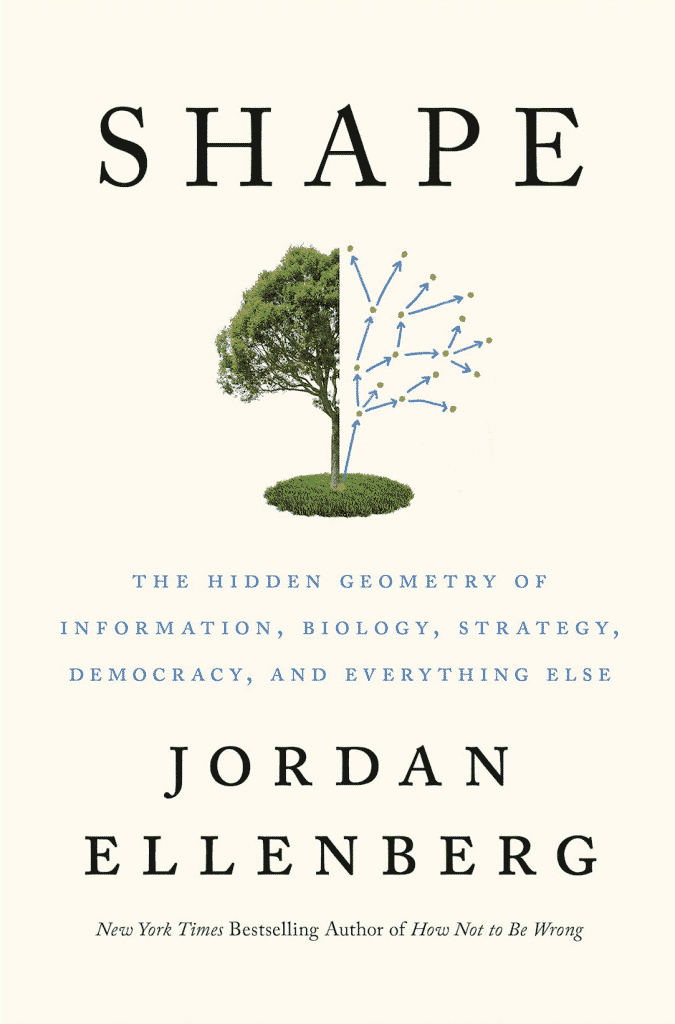
Shape: The Hidden Geometry of Information, Biology, Strategy, Democracy, and Everything Else
How should a democracy choose its representatives? How can you stop a pandemic from sweeping the world? How do computers learn to play Go, and why is learning Go so much easier for them than learning to read a sentence? Can ancient Greek proportions predict the stock market? (Sorry, no.) What should your kids learn in school if they really want to learn to think? All these are questions about geometry. For real.
If you’re like most people, geometry is a sterile and dimly remembered exercise you gladly left behind in the dust of ninth grade, along with your braces and active romantic interest in pop singers. If you recall any of it, it’s plodding through a series of miniscule steps only to prove some fact about triangles that was obvious to you in the first place. That’s not geometry. Okay, it is geometry, but only a tiny part, which has as much to do with geometry in all its flush modern richness as conjugating a verb has to do with a great novel.
Shape reveals the geometry underneath some of the most important scientific, political, and philosophical problems we face. Geometry asks: Where are things? Which things are near each other? How can you get from one thing to another thing? Those are important questions. The word “geometry”comes from the Greek for “measuring the world.” If anything, that’s an undersell. Geometry doesn’t just measure the world—it explains it. Shape shows us how.
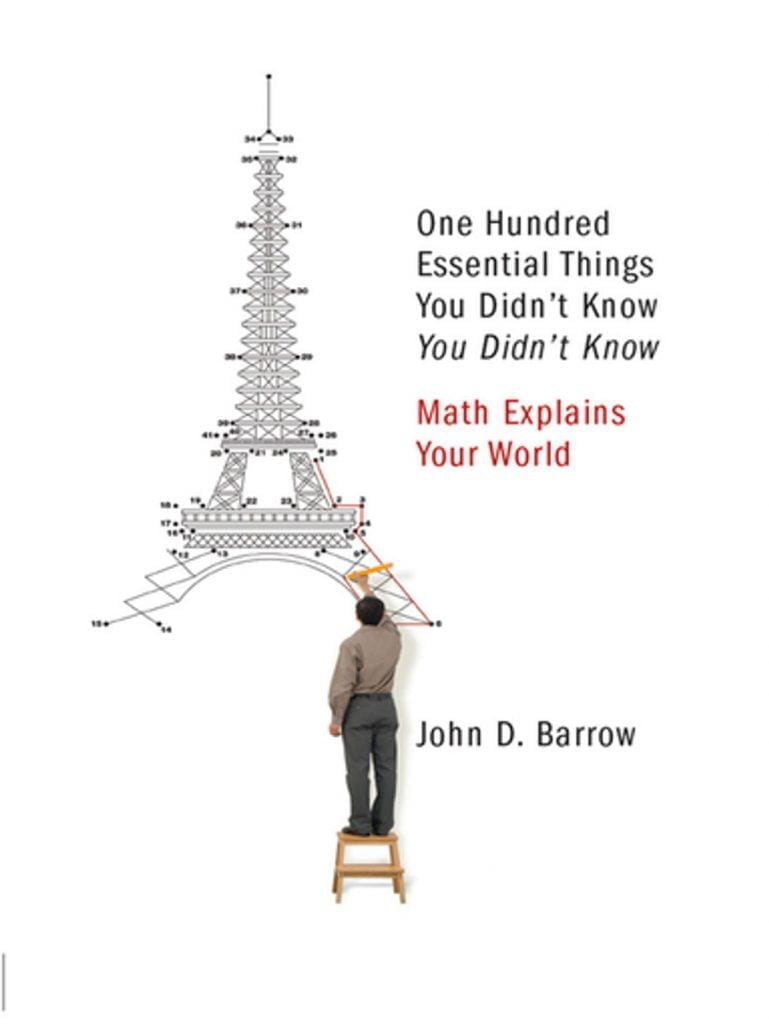
100 Essential Things You Didn’t Know You Didn’t Know: Math Explains Your World
Have you ever considered why you always get stuck in the longest line? Why two’s company but three’s a crowd? Or why there are six degrees of separation instead of seven? In this hugely informative and endlessly entertaining book, John D. Barrow takes the most baffling of everyday phenomena and―with simple math, lucid explanations, and illustrations―explains why they work the way they do. His witty, crystal-clear answers shed light on the dark and shadowy corners of the physical world we all think we understand so well.

Discover the fascinating world of mathematical proof in this beautifully written book, The Story of Proof, by Stillwell. From the origins of proof to its application in different branches of mathematics, this book provides a comprehensive journey through the history and concepts of proof.
As a math teacher, I often struggle to explain the concept of mathematical proof to my students. The Story of Proof not only tackles this challenge head-on but also delves into the significance of definitions, theorems, and axiomatic systems. It breaks down complex topics like geometry and algebra, making them accessible to curious and patient readers.
One of the highlights of this book is its historical perspective. It explores how proofs evolved over time, highlighting the holes in early proofs and how they were eventually filled. This gives readers a profound understanding of the subtleties and intricacies of mathematical concepts.
In addition to history, The Story of Proof also discusses the role of logic, computation, and abstraction in the world of proof. It covers topics like set theory and propositional logic, providing a comprehensive view of the different tools and methods used in proof.
Each chapter focuses on a different mathematical topic, including calculus, topology, and algebraic number theory, showcasing the various approaches to proof in each area. While this approach is effective, a separate chapter emphasizing the differences between these approaches could have been insightful.
Overall, I thoroughly enjoyed The Story of Proof and gained a wealth of knowledge from it. Whether you’re an undergraduate student, an amateur mathematician, or a math teacher looking for classroom resources, this book is a valuable addition to your collection. Dive into the world of mathematical proof and expand your understanding of this fundamental aspect of mathematics.
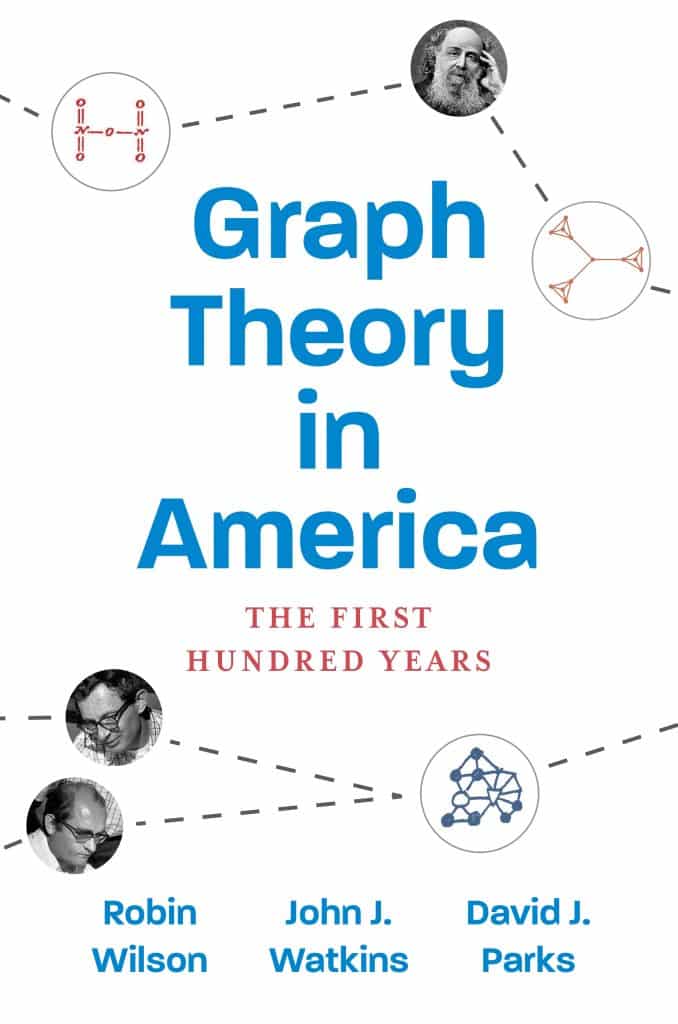
Discover the captivating story of the birth and growth of graph theory in America! From its inception in 1876 to the groundbreaking proof of the four color conjecture in 1976, Graph Theory in America takes you on a journey through the key moments and influential figures that shaped the field.
Rather than simply listing events, the authors weave together the personal stories of these mathematicians, highlighting their contributions to graph theory. Interludes provide a glimpse into the parallel developments in Europe, showcasing the global influence of this evolving field.
Notably, Graph Theory in America includes an extensive chronological timeline, spanning from 1636 to 2021, providing a comprehensive view of the historical context. While prior knowledge of graph theory is not necessary, it can enhance the reading experience.
What sets Graph Theory in America apart is its inclusion of 18 important papers on graph theory, offering deeper insights into pivotal moments. The main text balances formulas and mathematics with a focus on the people and their stories.
At the heart of the narrative lies the four color problem, which dominates the early and concluding chapters of the book. However, the authors also touch on other applications of graph theory, such as logical and electrical circuits, recreational mathematics, and more.
Additionally, Graph Theory in America explores the characters of the mathematicians involved and the impact of world events, like the two World Wars, on the field. It paints a holistic picture of the growth and development of mathematics in America and its integration within the global mathematics community.
In summary, Graph Theory in America: The First Hundred Years provides a wealth of information in an accessible and engaging format. While it delves into technical discussions where necessary, it remains focused on its primary goal: uncovering the history of graph theory in America. It is not designed as an introductory text, but rather as an exploration of the fascinating individuals, key moments, and groundbreaking discoveries within the field.
Love and Math: The Heart of Hidden Reality
What if you had to take an art class in which you were only taught how to paint a fence? What if you were never shown the paintings of van Gogh and Picasso, werent even told they existed? Alas, this is how math is taught, and so for most of us it becomes the intellectual equivalent of watching paint dry.
In Love and Math, renowned mathematician Edward Frenkel reveals a side of math weve never seen, suffused with all the beauty and elegance of a work of art. In this heartfelt and passionate book, Frenkel shows that mathematics, far from occupying a specialist niche, goes to the heart of all matter, uniting us across cultures, time, and space.
Love and Math tells two intertwined stories: of the wonders of mathematics and of one young mans journey learning and living it. Having braved a discriminatory educational system to become one of the twenty-first centurys leading mathematicians, Frenkel now works on one of the biggest ideas to come out of math in the last 50 years: the Langlands Program. Considered by many to be a Grand Unified Theory of mathematics, the Langlands Program enables researchers to translate findings from one field to another so that they can solve problems, such as Fermats last theorem, that had seemed intractable before.
At its core, Love and Math is a story about accessing a new way of thinking, which can enrich our lives and empower us to better understand the world and our place in it. It is an invitation to discover the magic hidden universe of mathematics.
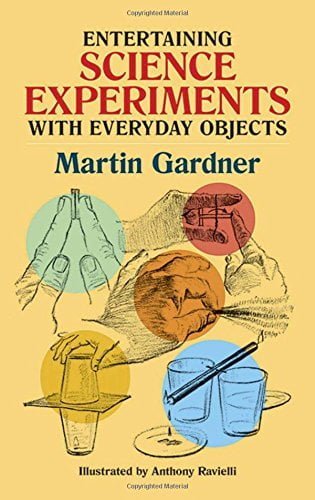
Entertaining Science Experiments with Everyday Objects
To Martin Gardner, seeing is not just believing — it is understanding. This fundamental rule has made him one of the most successful teachers and popularizers of science in America. With the simple instructions in this book and a few commonly available household objects, you or your child can easily learn even the most difficult scientific principles by directly experiencing how they work.
Gardner shows you how to re-create classic experiments with easily obtainable objects. Using just a flashlight, a pocket mirror, and a bowl of water, you can demonstrate the color composition of white light just as Newton did 300 years ago. With cardboard, colored paper, and wax paper you can perform “Meyer’s experiment” with complementary colors. You need only a playing card, a spool, and a thumbtack to demonstrate Bernoulli’s principle of aerodynamics. A soda bottle filled with water, a few paper matches, and a toy balloon elucidate Pascal’s law governing pressure in liquids. And two drinking glasses, some matches, and a piece of wet blotting paper re-create a famous experiment, first performed in 1650 in Magdeburg, Germany, that dramatically reveals the force of ordinary atmospheric pressure.
In language simple enough to be easily understood by an 11-year-old, yet technically accurate and informative enough to benefit adults, and aided by Anthony Ravielli’s clear illustrations, Gardner presents a splendid practical course in basic science and mathematics. While your child perplexes and delights his or her friends with a series of 100 amusing tricks and experiments, he or she is learning the principles of astronomy, chemistry, physiology, psychology, general mathematics, topology, probability, geometry, numbers, optics (light), gravity, static electricity, mechanics, air hydraulics, thermodynamics (heat), acoustics (sound), and inertia. This is a perfect refresher course for adults as well as an ideal introduction to science for youngsters.
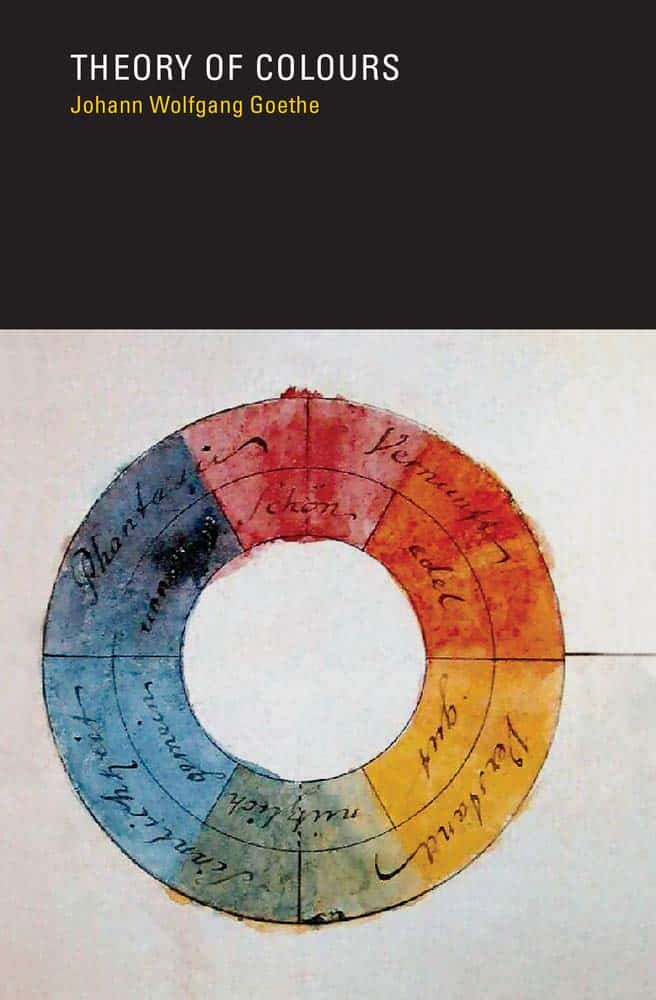
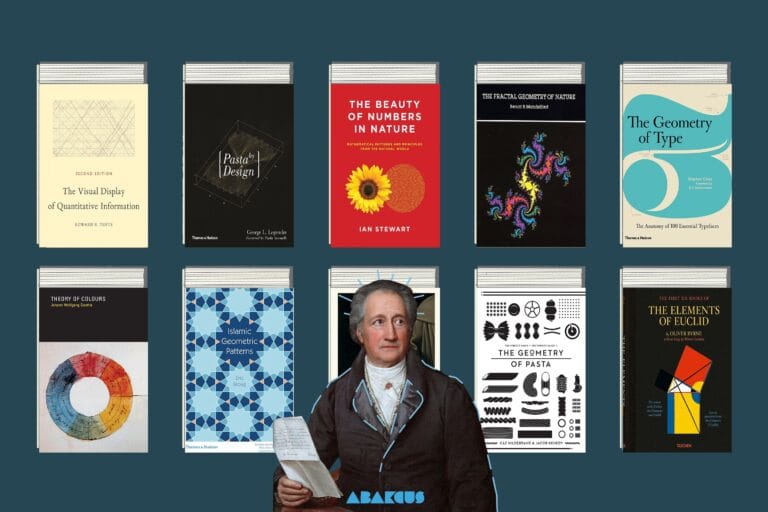
The wavelength theory of light and color was well-established by the time Goethe’s Theory of Colors was published in 1810. In Goethe’s opinion, the hypothesis came forth as a result of mistaking an incidental result for an essential concept. He maintained that knowledge of physics made comprehension more difficult than just seeming to have it. He only drew his conclusions from a careful personal examination of the phenomena of color.
Goethe expressed his utmost confidence in his own theory, saying: “From the philosopher, we believe we merit thanks for having traced the phenomena of colors to their primary sources, to the conditions under which they appear and are, and beyond which no further explanation regarding them is possible.”
The intelligent reader of today may enjoy this work for entirely different reasons, such as the beauty and scope of his hypotheses regarding the relationship between color and philosophical ideas, for an insight into early nineteenth-century beliefs and modes of thought, and for the flavor of life in Europe just after the American and French Revolutions. Of course, Goethe’s scientific conclusions have long since been thoroughly disproved.
It is not necessary to study the book in order to enjoy it. Goethe can most effectively discuss color harmony and aesthetics thanks to his subjective theory of colors. These ideas will elicit a favorable reaction from some readers due to their strengths. Others might consider them to be pure imagination, but they appreciate the elegance and flair of their presentation.
The work can also be interpreted as a reliable manual for the investigation of color phenomena. Although Goethe’s findings have been disproved, no one disputes his account of the observable events. The reader will be guided through a demonstration course using basic objects like containers, prisms, lenses, and the like that will cover both subjectively created colors and the physically detectable aspects of color. By carefully reading Goethe’s descriptions of color phenomena, the reader may become so cut off from the wavelength theory—Goethe never once brings it up—that he may start to think about color theory comparatively free of prejudice, whether old or new.”
The End of Everything
We know the universe had a beginning. With the Big Bang, it expanded from a state of unimaginable density to an all-encompassing cosmic fireball to a simmering fluid of matter and energy, laying down the seeds for everything from black holes to one rocky planet orbiting a star near the edge of a spiral galaxy that happened to develop life as we know it. But what happens to the universe at the end of the story? And what does it mean for us now?
Dr. Katie Mack has been contemplating these questions since she was a young student, when her astronomy professor informed her the universe could end at any moment, in an instant. This revelation set her on the path toward theoretical astrophysics. Now, with lively wit and humor, she takes us on a mind-bending tour through five of the cosmos’s possible finales: the Big Crunch, Heat Death, the Big Rip, Vacuum Decay (the one that could happen at any moment!), and the Bounce. Guiding us through cutting-edge science and major concepts in quantum mechanics, cosmology, string theory, and much more, The End of Everything is a wildly fun, surprisingly upbeat ride to the farthest reaches of all that we know.

How to Think About Abstract Algebra
How to Think about Abstract Algebra provides an engaging and readable introduction to its subject, which encompasses group theory and ring theory. Abstract Algebra is central in most undergraduate mathematics degrees, and it captures regularities that appear across diverse mathematical
structures – many people find it beautiful for this reason. But its abstraction can make its central ideas hard to grasp, and even the best students might find that they can follow some of the reasoning without really understanding what it is all about.
This book aims to solve that problem. It is not like other Abstract Algebra texts and is not a textbook containing standard content. Rather, it is designed to be read before starting an Abstract Algebra course, or as a companion text once a course has begun. It builds up key information on five
topics: binary operations, groups, quotient groups, isomorphisms and homomorphisms, and rings. It provides numerous examples, tables and diagrams, and its explanations are informed by research in mathematics education.
The book also provides study advice focused on the skills that students need in order to learn successfully in their own Abstract Algebra courses. It explains how to interact productively with axioms, definitions, theorems and proofs, and how research in psychology should inform our beliefs about
effective learning.
A Million Random Digits with 100,000 Normal Deviates
A Million Random Digits with 100,000 Normal Deviates is a random number book by the RAND Corporation, originally published in 1955. The book, consisting primarily of a random number table, was an important 20th century work in the field of statistics and random numbers.