Have you ever considered learning how to think mathematically? Using math proofs requires logical reasoning, problem-solving skills, and the ability to make connections between concepts. By reading math books to learn mathematical proofs, you can unlock the power of this type of thinking and gain valuable insight into a variety of topics. Below, you will find 70 best math books to learn mathematical proofs.
The Benefits of Learning Math Proofs
Math proofs are used in various fields, such as engineering, economics, computer science, physics, and mathematics. Learning to think mathematically will benefit your studies in these fields and give you an edge in other aspects of life, such as problem-solving, decision-making, and critical thinking. Mathematical proofs provide a systematic way to analyze problems so that you can come up with solutions quickly and accurately.
Math Books to Learn Mathematical Proofs
Math books are essential if you want to learn mathematical proof. These books provide an easy-to-understand approach to understanding the fundamentals behind math proofs. They often include step-by-step instructions on how to solve problems as well as visual demonstrations of how these concepts work together. Reading these books is key to developing your skills in mathematical proof because they provide an accessible entry point into more advanced topics like abstract algebra or number theory.
While math books are great for getting started with learning mathematical proof, they have their limitations when it comes to tackling more complex problems. As you progress further down the road with studying math proofs, you must supplement your knowledge with online resources such as YouTube tutorials or online courses that give you a more comprehensive overview of various areas within mathematics.
Additionally, engaging in practice questions can help solidify your understanding and hone your skills when it comes to using logic and reasoning for problem-solving.
Mathematical proof is an invaluable skill that can be applied across multiple fields. It provides a framework for analyzing problems while helping develop your problem-solving abilities and critical thinking skills, which are transferable across many different domains in life. To get started with learning math proof, reading math books is essential as they provide an easy-to-understand introduction to this field while giving step-by-step instructions on how to solve various types of problems. However, as one progresses further into this area, more advanced resources should be utilized, such as online tutorials or courses along with practice questions which will help hone one’s understanding and application within this area even further!
Below, you can find 70 best math books to learn mathematical proofs. If you enjoy this book list, you should also check 30 Best Math Books to Learn Advanced Mathematics for Self-Learners.
Before I get started, I would like to suggest Audible for those of us who are not the best at reading. Whether you are commuting to work, driving, or simply doing dishes at home, you can listen to these books at any time through Audible.

Jordan Ellenberg’s How Not to Be Wrong: The Power of Mathematical Thinking is a robust and enlightening exploration of the relevance and necessity of mathematics in our daily lives. Ellenberg, a mathematician himself, argues that a mathematical lens provides clarity and substance to the world around us, from the decisions we make to the phenomena we observe. The book straddles the line between being scholarly and accessible, making profound ideas palpably resonant for those who may have previously seen math as a static, insular field.
Ellenberg contends that the math taught in school is far more integral to the world than we typically acknowledge. Mathematics is not merely a collection of rules but a vital mechanism for understanding life’s complexities. The book dives into practical applications such as optimizing airport arrival times, interpreting public opinion polls, genetics, political forecasts, and even the odds of developing certain diseases.
The author isn’t content with keeping math in the realm of pure theory or within the confines of classrooms. Instead, he advocates for its practical application, presenting it as a tool for critical thinking and problem-solving that spans many disciplines. Mathematics, in Ellenberg’s view, helps us make informed decisions and uncovers the truth beneath muddled data and misinformation.
How Not to Be Wrong cuts through various topics with mathematical threads, discussing everything from sports to politics, from psychological research to the potential existence of God. He bridges abstractions with tangible examples and stories, lending an air of adventure to the subject matter.
Jordan Ellenberg writes with an engaging and narrative-driven style that manages to be witty and forthright. His explanations are laced with humor and relevancy, avoiding the pitfalls of dense jargon that could alienate non-mathematically inclined readers. The book stands out for its ability to relate complex mathematical concepts to a broad audience, encouraging readers to consider the impacts of these concepts in new and varied contexts.
The use of historical anecdotes and modern dilemmas serves to ground mathematical theories in the real world, allowing readers to grasp their implications fully. Ellenberg’s storytelling prowess makes for a compelling read that is both educational and entertaining.
How Not to Be Wrong is a triumph of popular math writing, serving as both an illuminating guide for the layman and a thoughtful reflection for those more familiar with the subject. Whether you’re a math enthusiast, a professional mathematician, or someone who has shied away from numbers since high school algebra, there’s enriching insight to be found in these pages.
This book is not just about mathematics; it’s about how we think and how we can use mathematical thinking to not be wrong—or at least to be wrong less often. It’s an essential read for anyone who wants to understand the significant role math plays in our world and how it can be used to enhance our everyday decision-making.
Jordan Ellenberg’s work is an eloquent reminder of the power and scope of mathematics. It carries an empowering message that mathematical thought is not an elite privilege but an accessible asset ready to amplify humanity’s collective common sense. I wholeheartedly recommend How Not to Be Wrong to anyone and everyone. It is a revelation that the world is indeed “shot through with” math, and understanding it just a little bit more can profoundly affect our perspective on practically everything.
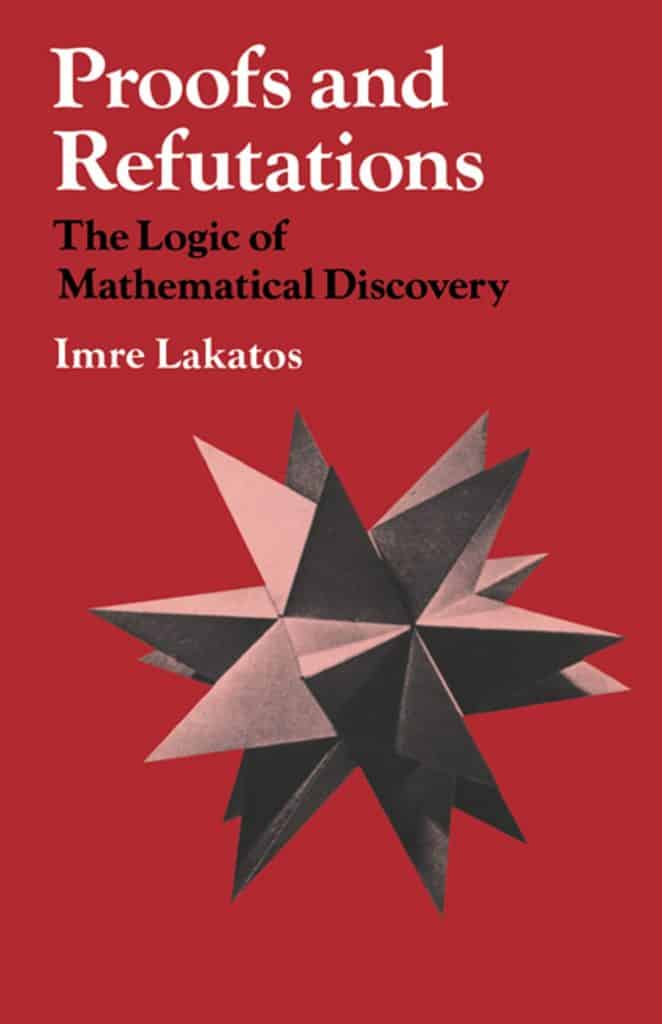
Proofs and Refutations by Imre Lakatos is a timeless classic that has never lost its applicability. The book analyzes numerous solutions to mathematical problems and, in the process, raises crucial questions regarding the nature of mathematical discovery and methodology. It takes the form of a debate between a teacher and some students.
Lakatos’ work continues to motivate mathematicians and philosophers who want to create a mathematics philosophy that considers both the static and dynamic complexity of mathematical practice. Lakatos demonstrates how mathematics improves through attempts at proof and critiques of these attempts. This book has been reissued for a new audience with a Preface by Paolo Mancosu that was expressly commissioned.
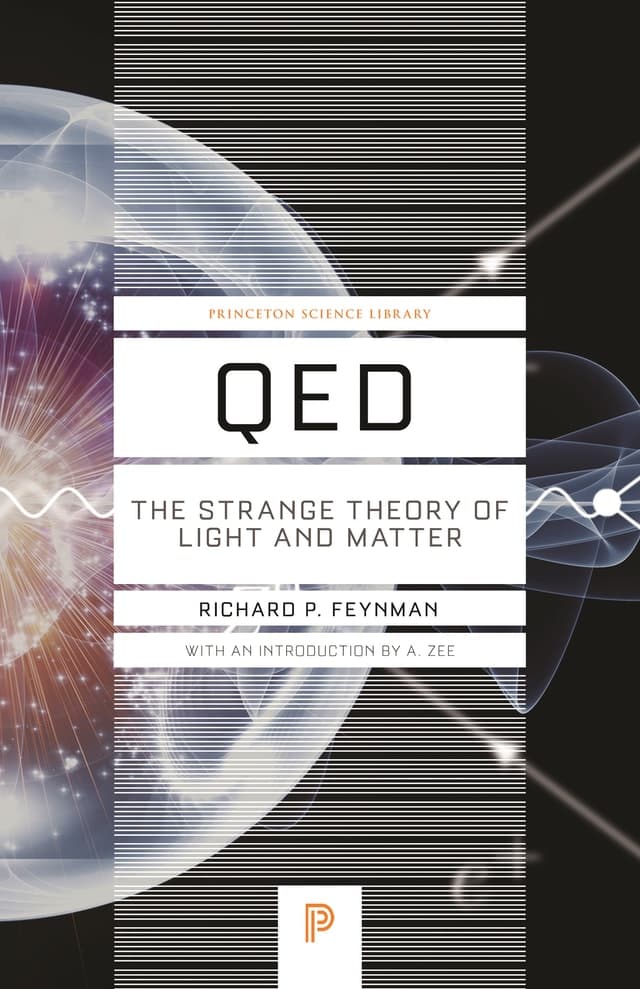
Discover the remarkable world of Quantum Electrodynamics (QED) – the fascinating field that explores the interactions between light and matter. In this must-read book, renowned physicist Richard Feynman offers his unique insights into the subject he has personally contributed to, earning him a Nobel prize.
While Feynman aims to make the concepts accessible, it may not be suitable for absolute beginners. However, for those with a basic understanding of physics, the lucid explanations provide a fresh perspective and “aha” moments of understanding.
At just 150 pages, the book is concise but leaves readers hungry for more. Although it refrains from delving into complex math, some mathematical background would enhance the explanations in certain areas.
Although not perfect, QED is an excellent read for physics enthusiasts and anyone curious about how the world works. Don’t miss out on this enlightening journey!
Foundation
For twelve thousand years, the Galactic Empire has ruled supreme. Now it is dying. Only Hari Seldon, creator of the revolutionary science of psychohistory, can see into the future—a dark age of ignorance, barbarism, and warfare that will last thirty thousand years. To preserve knowledge and save humanity, Seldon gathers the best minds in the Empire—both scientists and scholars—and brings them to a bleak planet at the edge of the galaxy to serve as a beacon of hope for future generations. He calls this sanctuary the Foundation.
But soon, the fledgling Foundation finds itself at the mercy of corrupt warlords rising in the wake of the receding Empire. And humanity’s last best hope is faced with an agonizing choice: submit to the barbarians and live as enslaved people—or take a stand for freedom and risk destruction.
Mathematicians in Love
Mathematicians in Love is a riveting new science fiction novel from the writer who twice won the Philip K. Dick Award for best SF novel. Bela and Paul, two wild young mathematicians, are friends and roommates and in love with the same woman, who happens to be Alma, Bela’s girlfriend. They fight it by changing reality by using advanced math to change who gets the girl.
The contemporary world they live in is not quite this one, but the two graduate students are trying to finish their degrees and get jobs in Berkeley, California. It doesn’t help that their unpredictable advisor Roland is a mad mathematical genius who has figured out a way to predict isolated and specific bits of the future that can cause trouble. He’s starting to see monsters in mirrors. Bela and Paul begin to mess around with reality, and when that happens, all heaven and hell break loose. Those monsters of Roland’s were there, but who were they? This novel is a romantic comedy with a whole corkscrew of SF twists.
Fantasia Mathematica
Clifton Fadiman’s classic collection of mathematical stories, essays, and anecdotes is now available in this beautiful book, Fantasia Mathematica.. Ranging from the poignant to the comical via the simply surreal, these selections include writing by Aldous Huxley, Martin Gardner, H.G. Wells, George Gamow, G.H. Hardy, Robert Heinlein, Arthur C. Clarke, and many others. Humorous, mysterious, and always entertaining, this collection will bring a smile to the faces of mathematicians and non-mathematicians alike.
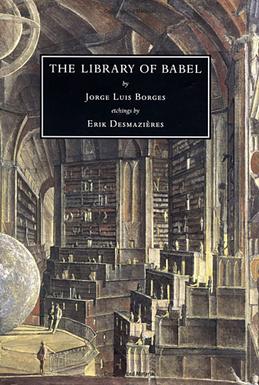
The Library of Babel
“The Library of Babel” is a short story by Argentine author and librarian Jorge Luis Borges, conceiving a universe in the form of a vast library containing all 410-page books of a certain format and character set.
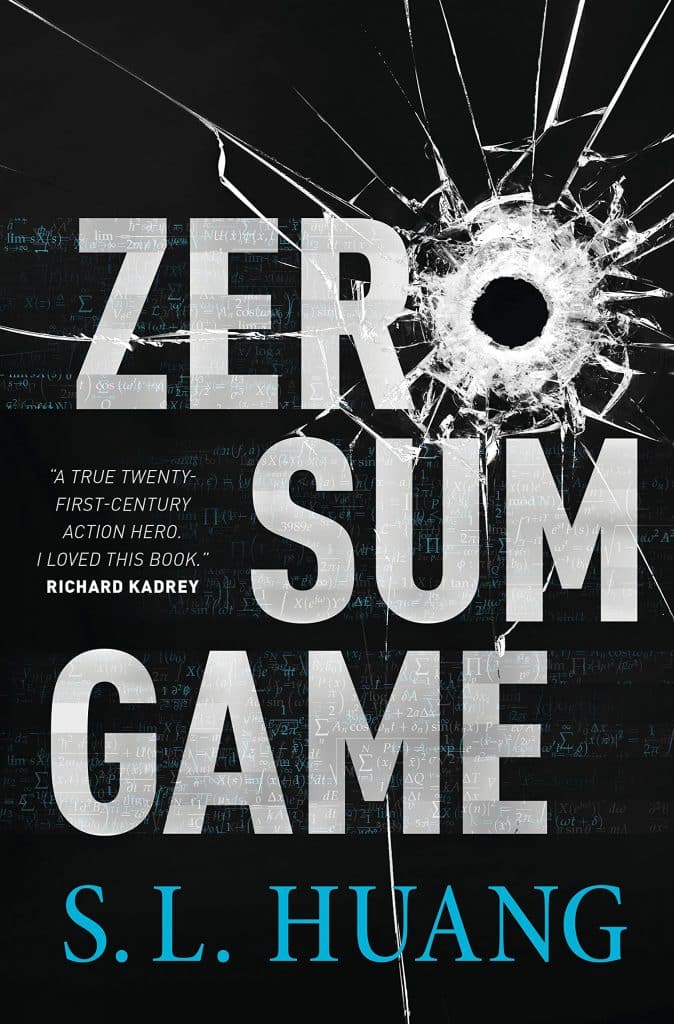
Zero Sum Game
A blockbuster, near-future science fiction thriller, S.L. Huang’s Zero Sum Game, introduces a math-genius mercenary who finds herself being manipulated by someone possessing unimaginable power…
Cas Russell is good at math. Scary good. The vector calculus blazing through her head lets her smash through armed men twice her size and dodge every bullet in a gunfight, and she’ll take any job for the right price.
As far as Cas knows, she’s the only person with a superpower until she discovers someone with a power even more dangerous than her own. Someone who can reach directly into people’s minds and twist their brains into Moebius strips. Someone intent on becoming the world’s puppet master.
Cas should run like she usually does, but for once, she’s involved. There’s only one problem, and she doesn’t know which of her thoughts are her own anymore.
The Magical World of the Cold Seas
For the marine biologist, every sea is like an open book, filled to the brim with incredible stories. We head underwater to search for these stories, to find a new one and tell it to you. In this book, you will read about the creatures which inhabit the icy waters of the White, Barents, Pechora and Okhotsk Seas, the Northern part of the Pacific Ocean and the Sea of Japan. These creatures are unique, and very few people have been lucky enough to see them.
The long polar night, freezing temperatures, the surface of the sea which clasp up under sheets of ice, strong water currents, difficult weather conditions – all these factors mean that field work is only possible for a few short months per year, and only after very rigorous technical and physical training. For precisely this reason, the book you are holding right now is unique. It is the result of many years of work and hundreds of dives. It contains the best photographs of interesting, rare and unusual creatures, as well as the fascinating stories of their lives.

Embark on a thrilling mathematical puzzle journey with KenKen, the latest sensation taking the world by storm. Endorsed by none other than The New York Times, KenKen has surpassed sudoku to become the ultimate game for puzzle enthusiasts. This edition offers 300 captivating puzzles of various difficulties, catering to both beginners and experts.
Experience the thrill of solving mind-bending riddles that involve addition, subtraction, multiplication, and division. Not only will you have hours of entertainment, but you’ll also sharpen your math skills along the way. With an introduction from the esteemed puzzlemaster Will Shortz and step-by-step instructions on how to solve each puzzle, you’re in for a seamless and delightful experience.
Whether you’re a math prodigy or someone seeking a fun and stimulating brain exercise, KenKen is the perfect choice. Get ready to challenge yourself and indulge in the ultimate puzzle-solving adventure with this must-have book.