Have you ever considered learning how to think mathematically? Using math proofs requires logical reasoning, problem-solving skills, and the ability to make connections between concepts. By reading math books to learn mathematical proofs, you can unlock the power of this type of thinking and gain valuable insight into a variety of topics. Below, you will find 70 best math books to learn mathematical proofs.
The Benefits of Learning Math Proofs
Math proofs are used in various fields, such as engineering, economics, computer science, physics, and mathematics. Learning to think mathematically will benefit your studies in these fields and give you an edge in other aspects of life, such as problem-solving, decision-making, and critical thinking. Mathematical proofs provide a systematic way to analyze problems so that you can come up with solutions quickly and accurately.
Math Books to Learn Mathematical Proofs
Math books are essential if you want to learn mathematical proof. These books provide an easy-to-understand approach to understanding the fundamentals behind math proofs. They often include step-by-step instructions on how to solve problems as well as visual demonstrations of how these concepts work together. Reading these books is key to developing your skills in mathematical proof because they provide an accessible entry point into more advanced topics like abstract algebra or number theory.
While math books are great for getting started with learning mathematical proof, they have their limitations when it comes to tackling more complex problems. As you progress further down the road with studying math proofs, you must supplement your knowledge with online resources such as YouTube tutorials or online courses that give you a more comprehensive overview of various areas within mathematics.
Additionally, engaging in practice questions can help solidify your understanding and hone your skills when it comes to using logic and reasoning for problem-solving.
Mathematical proof is an invaluable skill that can be applied across multiple fields. It provides a framework for analyzing problems while helping develop your problem-solving abilities and critical thinking skills, which are transferable across many different domains in life. To get started with learning math proof, reading math books is essential as they provide an easy-to-understand introduction to this field while giving step-by-step instructions on how to solve various types of problems. However, as one progresses further into this area, more advanced resources should be utilized, such as online tutorials or courses along with practice questions which will help hone one’s understanding and application within this area even further!
Below, you can find 70 best math books to learn mathematical proofs. If you enjoy this book list, you should also check 30 Best Math Books to Learn Advanced Mathematics for Self-Learners.
Before I get started, I would like to suggest Audible for those of us who are not the best at reading. Whether you are commuting to work, driving, or simply doing dishes at home, you can listen to these books at any time through Audible.

Overview: A New Perspective of Earth
A stunning and unique collection of satellite images of Earth that offer an unexpected look at humanity, derived from the wildly popular Daily Overview Instagram project.
Inspired by the “Overview Effect”–a sensation that astronauts experience when given the opportunity to look down and view the Earth as a whole–the breathtaking, high definition satellite photographs in OVERVIEW offer a new way to look at the landscape that we have shaped. More than 200 images of industry, agriculture, architecture, and nature highlight incredible patterns while also revealing a deeper story about human impact. This extraordinary photographic journey around our planet captures the sense of wonder gained from a new, aerial vantage point and creates a perspective of Earth as it has never been seen before.
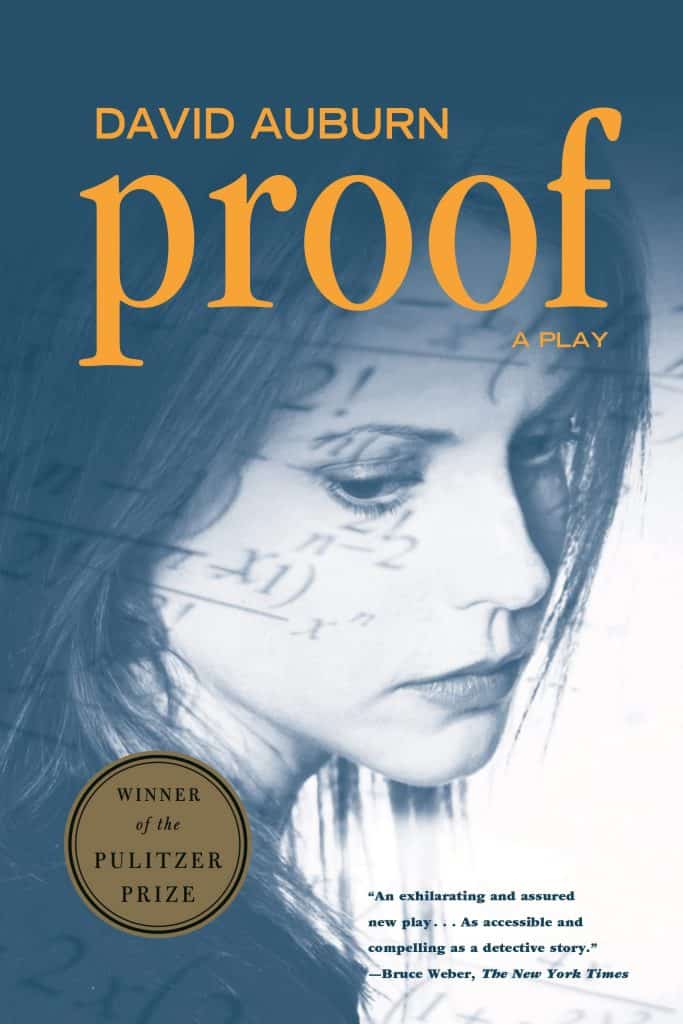
Proof
One of the most acclaimed plays of the 1999-2000 season, Proof is a work that explores the unknowability of love as much as it does the mysteries of science.
It focuses on Catherine, a young woman who has spent years caring for her father, Robert, a brilliant mathematician in his youth who was later unable to function without her help. His death has brought into her midst both her sister, Claire, who wants to take Catherine back to New York with her, and Hal, a former student of Catherine’s father, who hopes to find some hint of Robert’s genius among his incoherent scribblings. Hal’s passion for math both moves and angers Catherine, who, in her exhaustion, is torn between missing her father and resenting the great sacrifices she made for him. For Catherine has inherited at least a part of her father’s brilliance — and perhaps some of his instability. As she and Hal become attracted to each other, they push at the edges of each other’s knowledge, considering the unpredictability of genius and the human instinct toward love and trust.
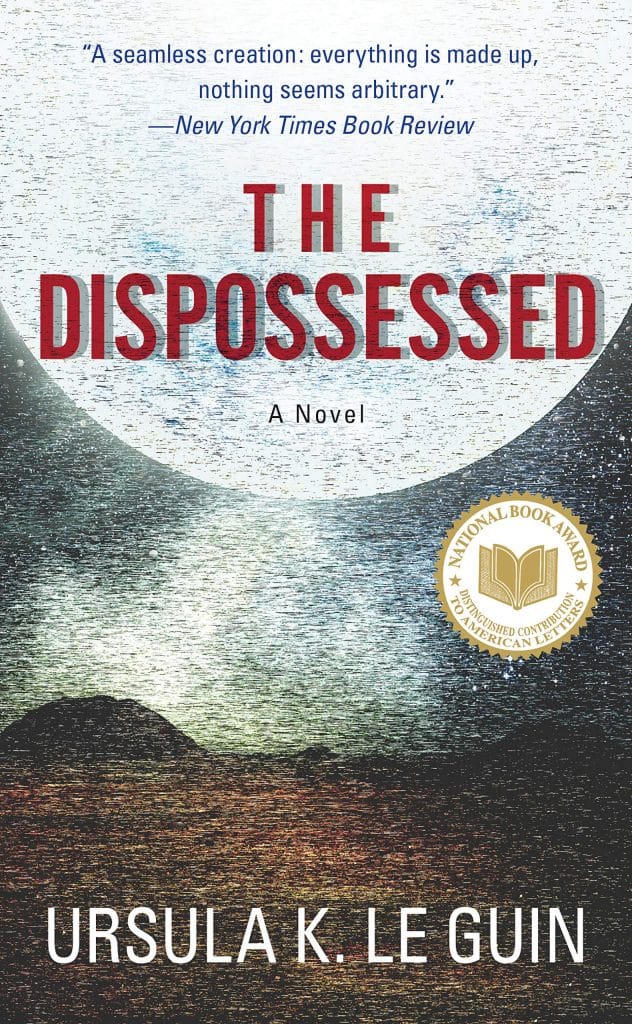
The Dispossessed
The Dispossessed comes a classic tale of two planets torn apart by conflict and mistrust – and the man who risks everything to reunite them.
The Principle of Simultaneity is a scientific breakthrough that will revolutionize interstellar civilization by making possible instantaneous communication. It is the life work of Shevek, a brilliant physicist from the arid anarchist world of Anarres. But Shevek’s work is being stifled by jealous colleagues, so he travels to Anarres’s sister-planet Urras, hoping to find more liberty and tolerance there. But he soon finds himself being used as a pawn in a deadly political game.
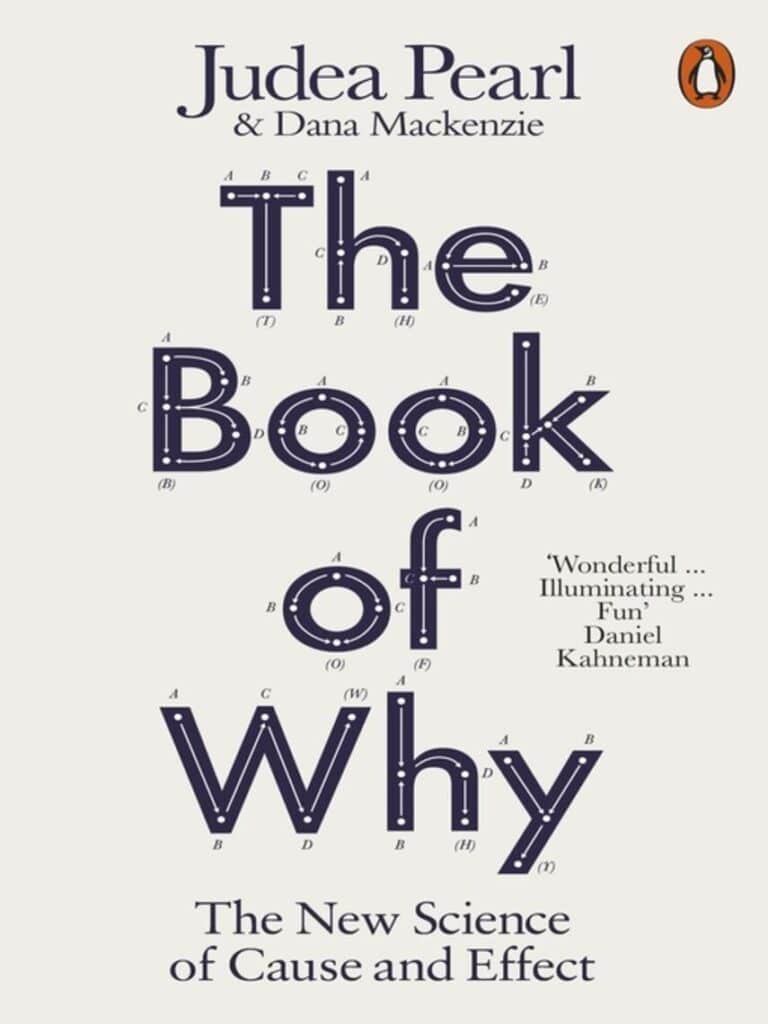
When it comes to statistics, we’ve all heard the phrase “correlation is not the same as causation.” But what does that really mean? Well, if two variables are correlated, it could mean that one causes the other, or maybe they both have a common cause. Figuring out the true cause and effect relationship can be tricky, especially when it’s not possible to conduct controlled experiments.
In “The Book of Why,” Judea Pearl offers a new perspective on causality. He introduces the use of graphical models to represent causal relationships between variables. By analyzing these causal graphs, we can determine if they align with the available data and develop strategies for controlling confounding variables. With this approach, Pearl takes us beyond simple associations and enables us to answer questions like “What would happen if we increased X?” or “How can we adjust X to get more of Y?”
But Pearl’s work isn’t just relevant to statistics and research. In the last chapter, he explores the implications of his approach for artificial intelligence (AI). While AI has made great strides using correlation-based statistical methods, Pearl argues that true AI requires incorporating causal inference. Without causal understanding, AI systems are limited.
“The Book of Why” is written for a general audience, making it accessible to anyone interested in causality. Pearl explains his approach using relatable examples from various fields, making the concepts easy to grasp. Additionally, the use of causal diagrams helps bridge the gap between technical and non-technical audiences.
It’s important to note that while “The Book of Why” provides an excellent introduction to Pearl’s approach, it may not be suitable as a textbook or reference guide. For readers seeking a more in-depth understanding, Pearl’s other works, such as “Causal Inference in Statistics: A Primer” and “Causality: Models, Reasoning and Inference,” offer more detailed explanations. Additionally, for those interested in alternative approaches, “Counterfactuals and Causal Inference” by Morgan and Winship is worth considering.
Overall, “The Book of Why” is a captivating exploration of the challenges of causality and an invaluable resource for those looking to delve into the world of causal inference.

What Is This Thing Called Science? brings Chalmers’ popular text up to date with contemporary trends and confirms its status as the best introductory textbook on the philosophy of science.
This revised and extended edition offers a concise and illuminating treatment of major developments in the field over the last two decades, with the same accessible style which ensured the popularity of previous editions. Of particular importance is the examination of Bayesianism and the new experimentalism, as well as new chapters on the nature of scientific laws and recent trends in the realism versus anti-realism debate.
How much faith should we place in what scientists tell us? Is it possible for scientific knowledge to be fully “objective?” What, really, can be defined as science? In the second edition of this Very Short Introduction, Samir Okasha explores the main themes and theories of the contemporary philosophy of science. He investigates fascinating, challenging questions such as these.
Starting at the very beginning, with a concise overview of the history of science, Okasha examines the nature of fundamental practices such as reasoning, causation, and explanation. Looking at scientific revolutions and the issue of scientific change, he asks whether there is a discernible pattern to how scientific ideas change over time and discusses realist versus anti-realist attitudes towards science. He finishes by considering science today and the social and ethical philosophical questions surrounding modern science.

Paul Feyerabend’s globally acclaimed work, Against Method, which sparked and continues to stimulate fierce debate, examines the deficiencies of many widespread ideas about scientific progress and the nature of knowledge. Feyerabend argues that scientific advances can only be understood in a historical context. He looks at the way the philosophy of science has consistently overemphasized practice over method and considers the possibility that anarchism could replace rationalism in the theory of knowledge.
This updated edition of the classic text includes a new introduction by Ian Hacking, one of science’s most important contemporary philosophers. Hacking reflects on both Feyerabend’s life and personality as well as the broader significance of the book for current discussions.
Discover the groundbreaking insights of Thomas S. Kuhn in his influential book, “The Structure of Scientific Revolutions.” In this captivating read, Kuhn reveals his revolutionary perspective on how scientific knowledge progresses. He introduces the concept of paradigms, which encompass theories, research methods, and standards that define a scientific discipline. Through engaging in “normal science,” researchers refine these paradigms and solve puzzles within their field. However, as unexplainable anomalies accumulate, a crisis ensues, leading to a paradigm shift and a new way of comprehending the world.
Drawing upon historical examples from physics, chemistry, astronomy, and even geology, Kuhn showcases how past scientists approached questions and challenges in vastly different ways. From Aristotle and Newton to Einstein, these pioneers shaped the scientific landscape through their paradigm-shifting discoveries.
Kuhn’s work has popularized the buzzwords “paradigm” and “paradigm shift,” influencing the way we understand and discuss scientific advancements. Throughout his book, Kuhn illuminates three key insights.
Firstly, he highlights the novelty of unifying paradigms in scientific fields. Previously, scientists began with varied principles and ideas before gradually forming shared understandings and refining their pursuits. This shift allowed for specialized communication and progress within limited peer groups, contributing to science’s historical retreat to its ivory tower.
Secondly, Kuhn argues that scientists often cling to old paradigms, creating ad hoc explanations to maintain their validity. However, a new paradigm emerges and presents itself as a more fitting alternative, challenging the old ways of thinking. Kuhn likens this process to natural selection, where survival in the present takes precedence over achieving an ultimate goal. Convincing and converting others to embrace a new paradigm is a slow and human endeavor, with young scientists often at the forefront of novel ideas.
Lastly, Kuhn sheds light on the hidden and forgotten history of scientific revolutions. He critiques textbooks for glossing over the intricate and complex past of scientific disciplines, focusing solely on the current paradigm. This truncation of history fosters the misconception that science progresses linearly through accumulating facts, theories, and methods. Instead, Kuhn reveals that revolutions occur, rewriting textbooks and prompting scientists to approach problems from fresh perspectives.
With its readable prose and intellectually stimulating ideas, “The Structure of Scientific Revolutions” remains a timeless masterpiece by Thomas S. Kuhn. Join the ranks of those inspired by his groundbreaking theories and embark on a journey of scientific discovery.
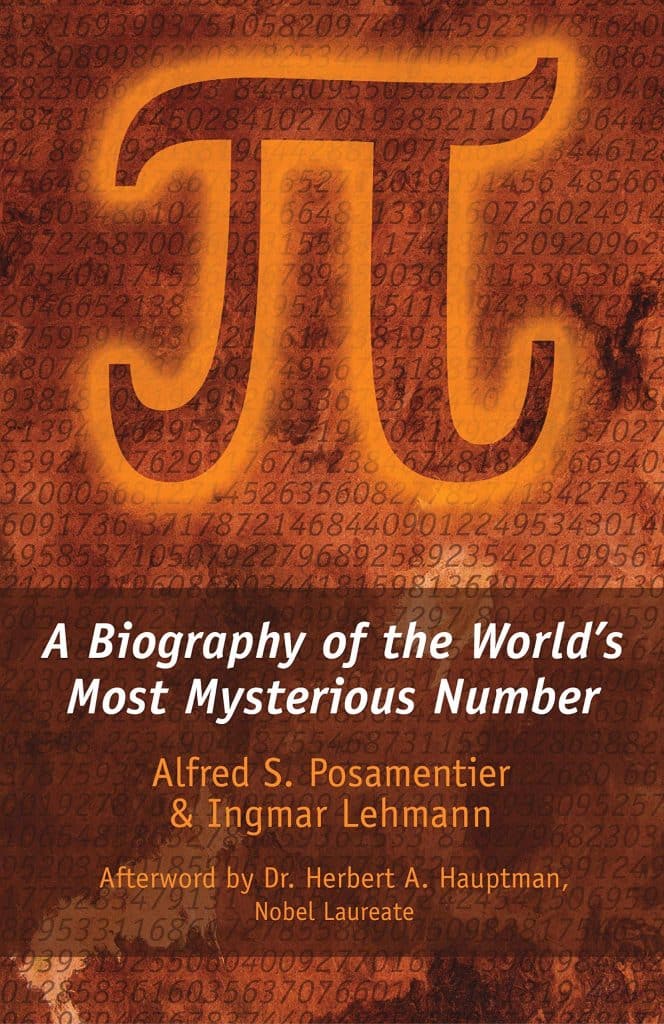
Pi: A Biography of the World’s Most Mysterious Number
We all learned that the ratio of the circumference of a circle to its diameter is called pi and that the value of this algebraic symbol is roughly 3.14. We weren’t told, though, that behind this seemingly mundane fact is a world of mystery, which has fascinated mathematicians from ancient times to the present. Simply put, pi is weird. Mathematicians call it a “transcendental number” because its value cannot be calculated by any combination of addition, subtraction, multiplication, division, and square root extraction.
In this delightful layperson’s introduction to one of math’s most interesting phenomena, Drs. Posamentier and Lehmann review pi’s history from prebiblical times to the 21st century, the many amusing and mind-boggling ways of estimating pi over the centuries, quirky examples of obsessing about pi (including an attempt to legislate its exact value), and useful applications of pi in everyday life, including statistics. This enlightening and refreshing approach to mathematics will entertain lay readers while improving their mathematical literacy.
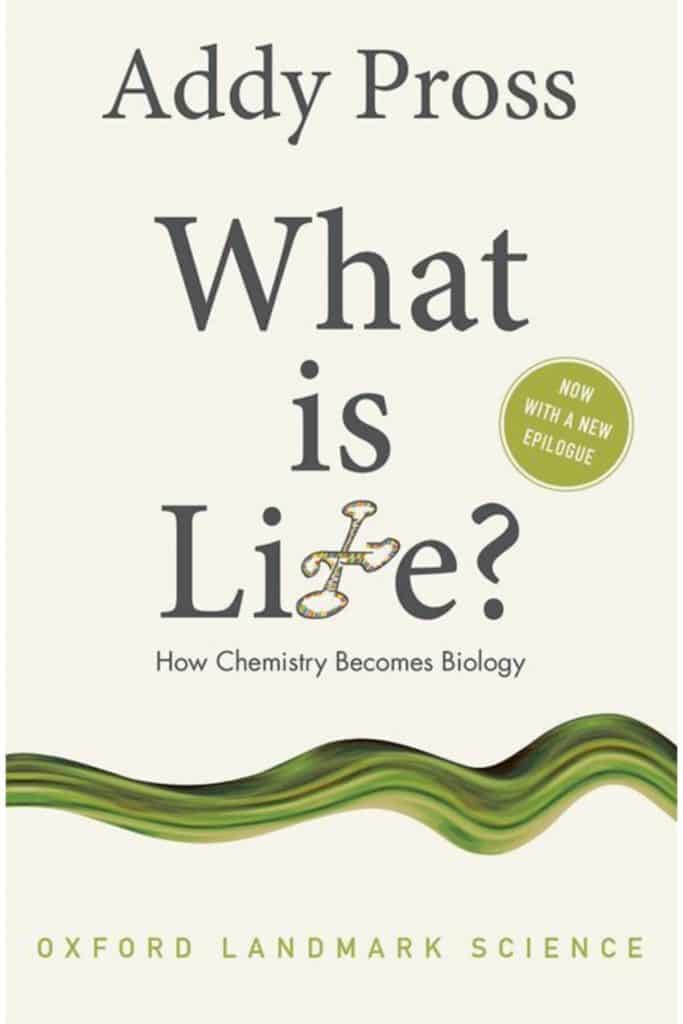
What is Life?: How Chemistry Becomes Biology
Seventy years ago, Erwin Schrödinger posed a profound question: ‘What is life, and how did it emerge from non-life?’ This problem has puzzled biologists and physical scientists ever since.
Living things are hugely complex and have unique properties, such as self-maintenance and purposeful behavior, which we do not see in inert matter. So how does chemistry give rise to biology? What could have led the first replicating molecules up such a path? Now, developments in the emerging field of ‘systems chemistry’ are unlocking the problem. Addy Pross shows how the different kind of stability that operates among replicating molecules results in a tendency for chemical systems to become more complex and acquire the properties of life. Strikingly, he demonstrates that Darwinian evolution is the biological expression of a deeper, well-defined chemical concept: the whole story from replicating molecules to complex life is one continuous process governed by an underlying physical principle. The gulf between biology and the physical sciences is finally becoming bridged.
This new edition includes an Epilogue describing developments in the concepts of fundamental forms of stability discussed in the book and their profound implications.