Have you ever considered learning how to think mathematically? Using math proofs requires logical reasoning, problem-solving skills, and the ability to make connections between concepts. By reading math books to learn mathematical proofs, you can unlock the power of this type of thinking and gain valuable insight into a variety of topics. Below, you will find 70 best math books to learn mathematical proofs.
The Benefits of Learning Math Proofs
Math proofs are used in various fields, such as engineering, economics, computer science, physics, and mathematics. Learning to think mathematically will benefit your studies in these fields and give you an edge in other aspects of life, such as problem-solving, decision-making, and critical thinking. Mathematical proofs provide a systematic way to analyze problems so that you can come up with solutions quickly and accurately.
Math Books to Learn Mathematical Proofs
Math books are essential if you want to learn mathematical proof. These books provide an easy-to-understand approach to understanding the fundamentals behind math proofs. They often include step-by-step instructions on how to solve problems as well as visual demonstrations of how these concepts work together. Reading these books is key to developing your skills in mathematical proof because they provide an accessible entry point into more advanced topics like abstract algebra or number theory.
While math books are great for getting started with learning mathematical proof, they have their limitations when it comes to tackling more complex problems. As you progress further down the road with studying math proofs, you must supplement your knowledge with online resources such as YouTube tutorials or online courses that give you a more comprehensive overview of various areas within mathematics.
Additionally, engaging in practice questions can help solidify your understanding and hone your skills when it comes to using logic and reasoning for problem-solving.
Mathematical proof is an invaluable skill that can be applied across multiple fields. It provides a framework for analyzing problems while helping develop your problem-solving abilities and critical thinking skills, which are transferable across many different domains in life. To get started with learning math proof, reading math books is essential as they provide an easy-to-understand introduction to this field while giving step-by-step instructions on how to solve various types of problems. However, as one progresses further into this area, more advanced resources should be utilized, such as online tutorials or courses along with practice questions which will help hone one’s understanding and application within this area even further!
Below, you can find 70 best math books to learn mathematical proofs. If you enjoy this book list, you should also check 30 Best Math Books to Learn Advanced Mathematics for Self-Learners.
Before I get started, I would like to suggest Audible for those of us who are not the best at reading. Whether you are commuting to work, driving, or simply doing dishes at home, you can listen to these books at any time through Audible.
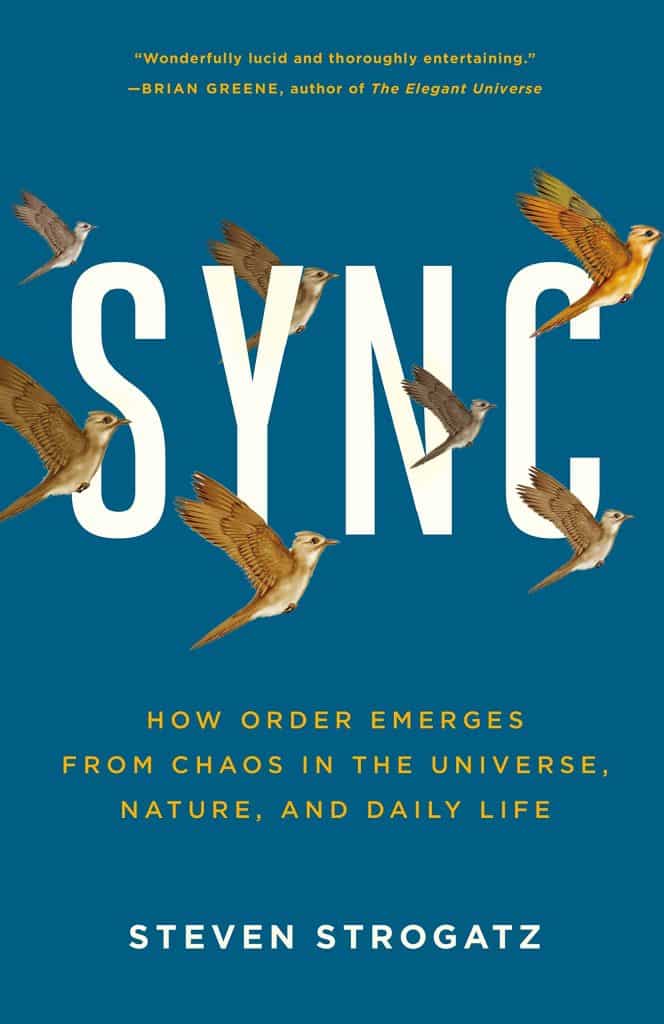
Sync: How Order Emerges from Chaos in the Universe, Nature and Daily Life by Steven H. Strogatz is a captivating exploration into the world of synchrony. This book unravels the complex yet fascinating phenomenon where order emerges from chaos, drawing parallels from the universe down to our daily lives. With an engaging style, Strogatz offers a fresh perspective on how seemingly unrelated events are intricately linked through the magic of synchrony.
At its core, Sync presents the idea that a persistent rhythm is embedded at the heart of the universe. Strogatz illustrates this through vivid examples— from the synchronized flashing of fireflies in Malaysia to the moon’s perfect resonance with Earth. The book further explores how such synchrony is crucial for functions as vital as our heartbeat, orchestrated by the simultaneous firing of thousands of pacemaker cells. Strogatz, a pioneer in the field of synchrony, invites readers to discover how spontaneous order emerges from chaos, providing insights into a nascent science that bridges mathematics and natural phenomena.
Readers can expect a diverse array of topics spanning different geographies and time periods. Strogatz takes us from the depths of Texas caves, where a French scientist meticulously tracked his sleep-wake cycles in isolation, to the home of a Dutch physicist who discovered his pendulum clocks swinging in harmony back in 1665. Each example serves to underline the universal nature of synchrony, connecting disparate elements with elegance and clarity.
While Sync is accessible to a broad audience, it particularly resonates with mathematics lovers and science enthusiasts. It’s a book for those with a curiosity about how the world works at a fundamental level and offers a rewarding read for anyone interested in the intersection of science and nature.
Steven H. Strogatz’s Sync stands as a masterful piece of nonfiction that merges detailed scientific inquiry with engaging storytelling. Its examination of synchrony not only enriches our understanding of this scientific frontier but also reflects on the inherent connectedness of all things. Whether you’re a seasoned math aficionado or a curious mind seeking knowledge, Sync will leave you with a profound appreciation for the hidden rhythms that govern our world.

Step back in time and dive into the captivating world of numbers with this classic book, Number: The Language of Science. Although it was written decades ago, its relevance remains intact, making it a must-read for anyone interested in the fascinating evolution of numbers and their impact on mathematics, philosophy, and science.
Unlike other math-focused books, this gem takes a storytelling approach, making it accessible to a wider audience. While some mathematical proofs are explored, the author skillfully explains them in a way that even non-mathematicians can appreciate. A basic understanding of math could certainly enhance the experience, but it’s not a prerequisite.
Don’t let its age deter you. While the chapter on “Future problems” may no longer hold relevance, it offers an intriguing glimpse into historical math problems and their subsequent solutions. And for those hungry for more, the editors have included additional book recommendations, sure to keep us engaged in further exploration.
Discover the wonders of number theory and embark on a journey that will leave you with a newfound appreciation for the language of science. Number: The Language of Science is the perfect starting point for anyone delving into the realms of mathematics and beyond.
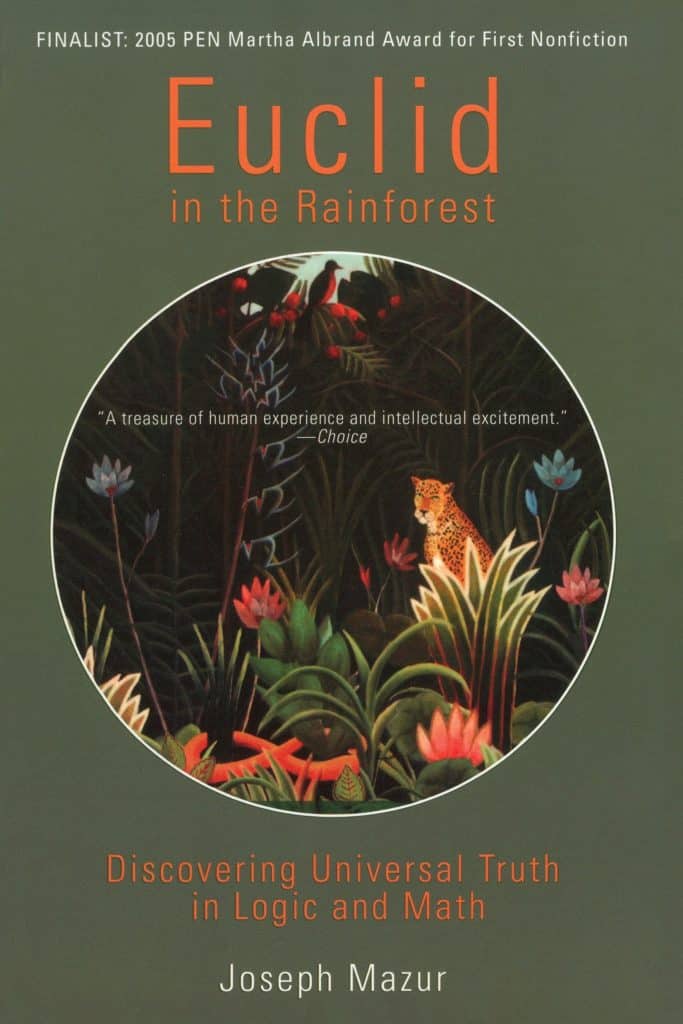
Like Douglas Hofstadter’s Gödel, Escher, Bach, and David Berlinski’s A Tour of the Calculus, Euclid in the Rainforest combine the literary with the mathematical to explore logic—the one indispensable tool in man’s quest to understand the world. Underpinning both math and science is the foundation of every significant advancement in knowledge since the time of the ancient Greeks. Mazur artfully reveals the less-than-airtight nature of logic and the chaotic relationship between math and the real world through adventure stories and historical narratives populated with a rich and quirky cast of characters. Ultimately, Mazur argues, logical reasoning is not purely robotic, and it is a creative process guided by our intuitions and beliefs about the world at its most basic level.

Mathematics may seem intimidating or unimportant to many, but it is a fundamental aspect of our daily lives. From calculating tips to analyzing data, math is like a secret language that helps us understand and navigate the world around us. In his book, The Joy of X, Steven Strogatz takes readers on a guided tour of math, from basic arithmetic to complex concepts like infinity.
With his signature wit and insight, Strogatz illustrates how math connects to every aspect of our lives, including pop culture, medicine, law, philosophy, art, and business. This is not just a book for math enthusiasts or experts, but for anyone who wants to gain a deeper understanding and appreciation of the importance of math. The Joy of X is the perfect guide for readers of all levels, whether you’re a seasoned mathematician or a curious beginner.

Looking for a comprehensive and engaging guide to quantum mechanics? Look no further. “Introduction to Quantum Mechanics” is a game-changer.
What sets this textbook apart is its unique approach. Unlike others, it dives straight into the mathematical formalism from the get-go. Brace yourself for mind-boggling equations right from the first page. But fear not, because author Griffiths expertly breaks down complex concepts into digestible portions.
While the book does involve a fair amount of mathematics (it is quantum mechanics, after all), Griffiths doesn’t dwell on complete derivations for everything. He trusts that you can handle it and provides references for further exploration. And trust me, you’ll appreciate the streamlined approach. Quantum mechanics is complex, and this book focuses on giving you a solid understanding without overwhelming you with unnecessary details.
To truly benefit from this gem, embrace the challenge of problem-solving. The more exercises you tackle, the deeper your grasp of the material will be. A solutions manual is readily available online, making it easier to put your newfound knowledge to the test.
Years later, I still find myself turning to this textbook as a trusted reference in my professional life.
In summary: “Introduction to Quantum Mechanics” is an excellent book that will require dedication and effort. But the rewards? Mind-blowing.
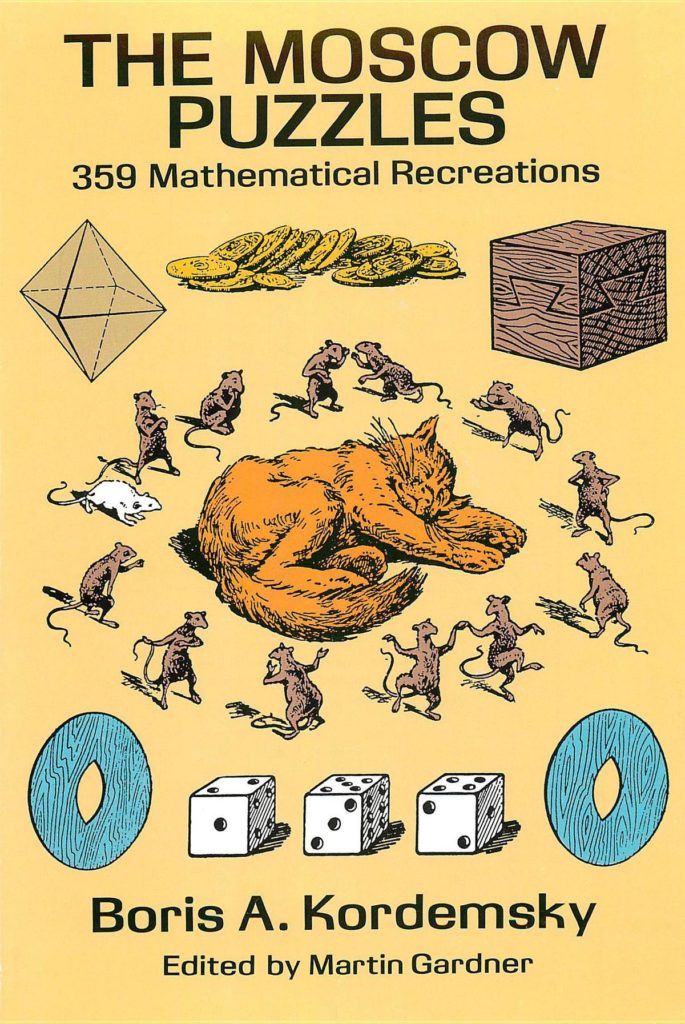
“Simply put, this is the best and most popular puzzle book that has ever been published in the territory formerly known as the Soviet Union. Since it was published for the first time in 1956, there have been a total of eight editions of it, in addition to translations from the original Russian text into Ukrainian, Estonian, Lettic, and Lithuanian. Only the Russian language edition has been published, but it has already sold almost a million copies.
The book contains a fantastically diverse assortment of brainteasers, ranging from easy “catch” riddles to challenging problems, which is one of the reasons why it has been so successful (none, however, requires advanced mathematics). The Western readers will find that many of the puzzles are brand new, while some of the more common problems have been recast in a new light. Most of the time, the riddles are told in the form of endearing stories that offer readers who are not fluent in important Russian insights into the way of life in modern Russia as well as its traditions. In addition, Martin Gardner, formerly the editor of the Mathematical Games Department at Scientific American, has clarified and simplified the book to make it as easy as possible for an English-reading public to comprehend and enjoy. In addition to this, he has ensured that nearly all of the original work’s vivacity, warmth, and humor have been preserved through his careful efforts.
This low-cost edition of the first English translation is lavishly illustrated with over 400 clear diagrams and humorous sketches, and it will provide weeks or even months’ worth of stimulating entertainment. It should be in the collection of any puzzle enthusiast or a person who enjoys recreational mathematics.”
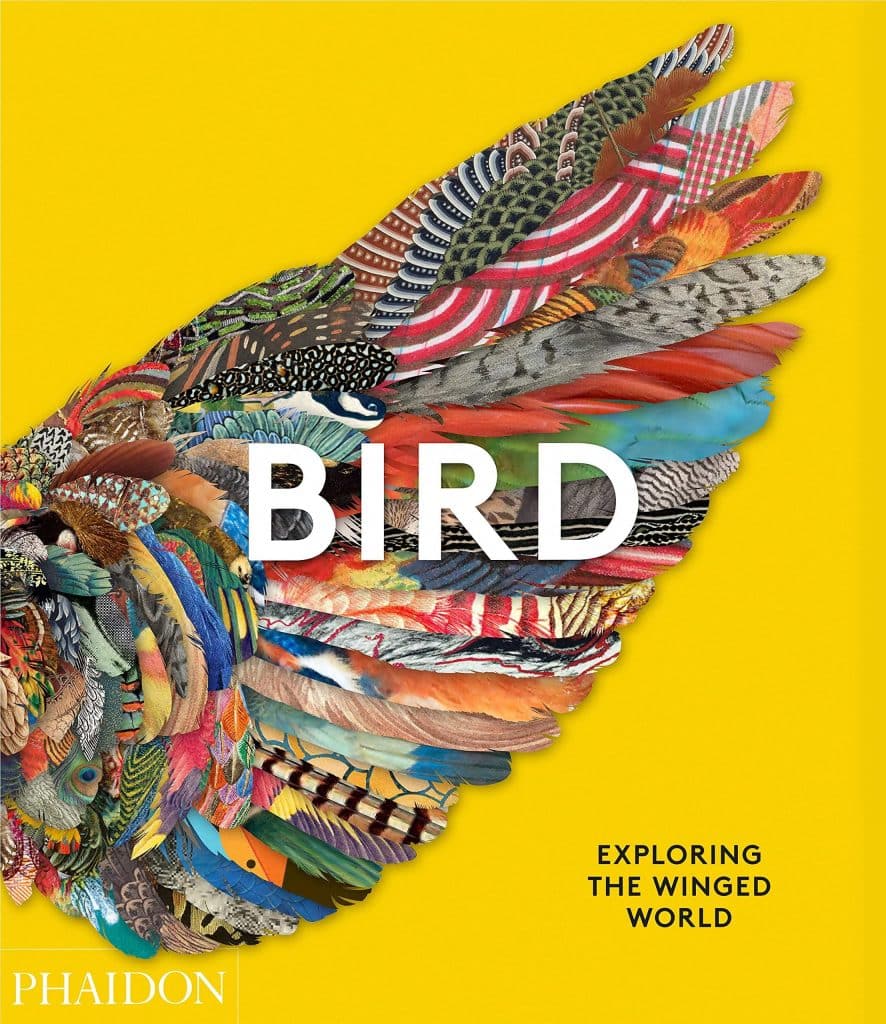
Bird: Exploring the Winged World
This visually stunning survey of birds, chronicling their scientific and popular appeal throughout the ages and around the world, showcases the remarkable diversity of species in the avian kingdom, from tiny hummingbirds to ostriches taller than humans, and icebound penguins to tropical macaws.
With its content curated alongside an international panel of ornithologists, art historians, wildlife photographers, conservationists, and curators, this extraordinary book includes illustrations and artwork of all styles, with works by a diverse and often surprising range of creators from many different backgrounds, including: John James Audubon; Robert Clark; Mark Dion; Charley Harper; Barbara Kruger; Edward Lear; Ustad Mansur; John Ruskin; Joel Sartore; Sarah Stone; and Charles Frederick Tunnicliffe.
Arranged in thoughtfully paired juxtapositions, it reveals how artists, illustrators, ornithologists, and photographers – from ancient Egypt to the present – have captured the spirit, likeness, character, and symbolism of birds. Including Tweety pie paired with the Twitter bird; birds as 300-foot desert carvings or 2-inch-tall ivory statuettes; bird bones, bird bank notes, sculptures and birds shaped as beds, the book’s three hundred visually stunning entries span four thousand years of fine art, photography, ornithological drawings, popular culture, and scientific discovery from all corners of the globe to create the ultimate celebration of the winged world.
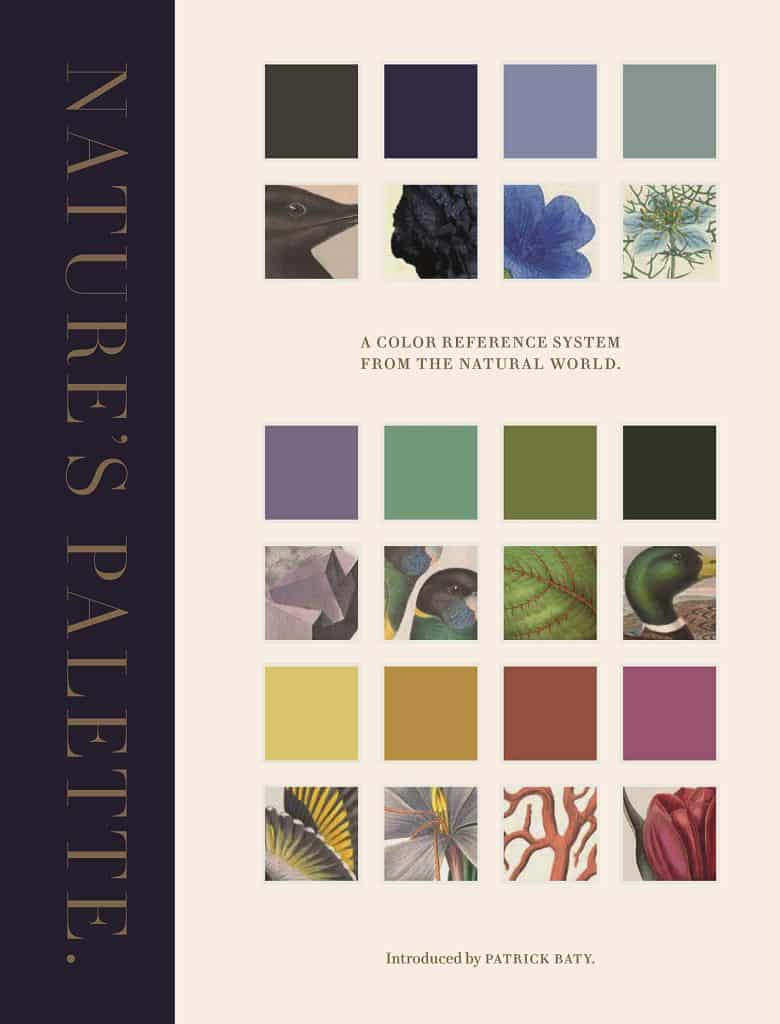
Nature’s Palette: A Color Reference System from the Natural World
A gorgeous expanded edition of Werner’s Nomenclature of Colours, a landmark reference book on color and its origins in nature.
First published in 1814, Werner’s Nomenclature of Colours is a taxonomically organized guide to color in the natural world. Compiled by German geologist Abraham Gottlob Werner, the book was expanded and enhanced in 1821 by Patrick Syme, who added color swatches and further color descriptions, bringing the total number of classified hues to 110. The resulting resource has been invaluable not only to artists and designers but also to zoologists, botanists, mineralogists, anatomists, and explorers, including Charles Darwin on the famous voyage of the Beagle.
Nature’s Palette makes this remarkable volume available to today’s readers, and is now fully enhanced with new illustrations of all the animals, plants, and minerals Werner referenced alongside each color swatch. Readers can see “tile red” in a piece of porcelain jasper, the breast of a cock bullfinch, or a Shrubby Pimpernel. They can admire “Berlin blue” on a piece of sapphire, the Hepatica flower, or the wing feathers of a jay. Interspersed throughout the book are lavish feature pages displaying cases of taxidermy, eggs, shells, feathers, minerals, and butterflies, with individual specimens cross-referenced to the core catalog.
Featuring contributions by leading natural history experts along with more than 1,000 color illustrations and eight gatefolds, Nature’s Palette is the ideal illustrated reference volume for visual artists, naturalists, and anyone who is captivated by color.

For years, I had this book, Gödel, Escher, Bach: an Eternal Golden Braid by Douglas Hofstadter, sitting on my shelf, untouched. Its daunting length and density always kept it at the bottom of my “to read” list. But, on impulse, I decided to give the first chapter a shot. And boy, was I hooked within the first few pages! After a few months of slow progress, I finally finished it. Now, let me give you a brief review.
As the title suggests, Gödel, Escher, Bach delves into the interconnected worlds of Kurt Gödel, M.C. Escher, and Johann Sebastian Bach. What ties these three geniuses together is the concept of strange loops – those self-referential puzzles found in hierarchical systems. Hofstadter begins by exploring intuitive examples of this concept: Bach’s canons, Escher’s mind-bending staircases, and the infamous Epimenides paradox – “I am lying.”
The first half of the book gradually builds up to a deep dive into number theory, ultimately leading to Gödel’s Incompleteness Theorem. This groundbreaking theorem reveals that formal mathematics itself contains a self-referential strange loop. It shows that no system of number theory can be both “complete” and “consistent” – there are always true statements that cannot be proven within the system. Hofstadter takes over 100 pages to unravel the intricacies of the Incompleteness Theorem, so I won’t attempt to do so here!
In the second half of the book, Hofstadter explores the far-reaching implications of this discovery, from artificial intelligence to biology, symbolic reasoning, computer science, and the philosophy of mind.
What sets Gödel, Escher, Bach apart is its unique structure. Each traditional chapter is followed by a fictional dialogue between recurring characters. These dialogues, often allegorical in nature, foreshadow or embody the concepts that the subsequent chapter explores in a more concrete way. Sometimes, the structure of the dialogue itself becomes the “message,” like a fugue, while other times, the dialogue indirectly describes a concept, using tools like a “universal record player” to delve into self-reference and formal undecidability.
Most of the book has stood the test of time remarkably well. However, the last third contains some significant missed predictions, which somewhat detract from an otherwise captivating philosophical exploration of AI and computation. Notably, the author repeatedly emphasizes that a chess program would not surpass a human player until we achieve something close to artificial general intelligence.
Similarly, the sections on AI may feel dated to modern readers. The book predominantly focuses on symbolic AI approaches, which align neatly with the discussion of formal systems. Since its publication, non-symbolic AI has gained popularity, and it seems to be the path that most AI researchers are pursuing. Consequently, many of the author’s predictions about AI fall flat.
If you’re not interested in the latter half, fear not! The first half of the book stands on its own, offering an exciting journey through the proof of Gödel’s incompleteness theorem. Starting with an introduction to formal systems, transitioning to number theory and propositional logic, and culminating in an intuitive proof of the incompleteness theorem, it’s a self-contained adventure worth experiencing.
Personally, I found the sections on number theory quite accessible. Even the description of Gödel’s incompleteness theorem, though complex, made sense to me – but I had some prior exposure to it. For a more concise explanation of Gödel’s theorem, I highly recommend this Quanta article: How Gödel’s Proof Works.
Upon reflection, I realized that the order in which the three figures are mentioned in the title is fitting: Gödel, Escher, and Bach. At its core, this book delves deep into formal systems and the reasoning behind symbols, which falls right into the domain of Gödel. Escher’s works serve as visual metaphors for these concepts – recursion, self-reference, and more. As for Bach, discussing his contributions proves more challenging in a text-based medium, so he is mentioned less frequently, albeit indirectly, with respect to the structural elements of music, rather than its aesthetics or auditory mechanics.
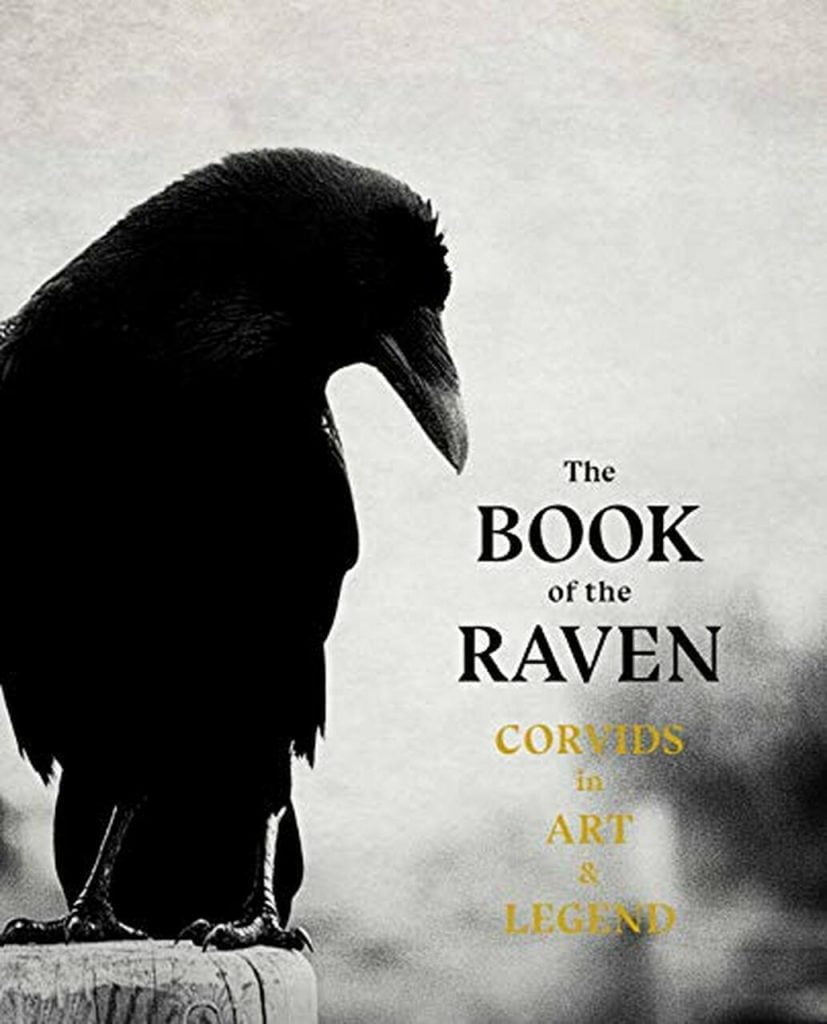
The Book of the Raven
Corvids play an outsize role in the human imagination. We keep ravens in towers, emblazon rooks on banners, find crows in the constellations and make sure to salute solitary magpies. We also see our own behaviour mirrored in this diverse family of birds, who are tricksters and thieves as well as problem-solvers and gift-givers.
This beautifully designed book showcases the visual and literary life of the corvid, from Norse legends to Game of Thrones. It includes beautiful and darkly seductive photographs and paintings as well as texts and poems in which they play a starring role and information about the traits that make them so intriguing to us.