Have you ever considered learning how to think mathematically? Using math proofs requires logical reasoning, problem-solving skills, and the ability to make connections between concepts. By reading math books to learn mathematical proofs, you can unlock the power of this type of thinking and gain valuable insight into a variety of topics. Below, you will find 70 best math books to learn mathematical proofs.
The Benefits of Learning Math Proofs
Math proofs are used in various fields, such as engineering, economics, computer science, physics, and mathematics. Learning to think mathematically will benefit your studies in these fields and give you an edge in other aspects of life, such as problem-solving, decision-making, and critical thinking. Mathematical proofs provide a systematic way to analyze problems so that you can come up with solutions quickly and accurately.
Math Books to Learn Mathematical Proofs
Math books are essential if you want to learn mathematical proof. These books provide an easy-to-understand approach to understanding the fundamentals behind math proofs. They often include step-by-step instructions on how to solve problems as well as visual demonstrations of how these concepts work together. Reading these books is key to developing your skills in mathematical proof because they provide an accessible entry point into more advanced topics like abstract algebra or number theory.
While math books are great for getting started with learning mathematical proof, they have their limitations when it comes to tackling more complex problems. As you progress further down the road with studying math proofs, you must supplement your knowledge with online resources such as YouTube tutorials or online courses that give you a more comprehensive overview of various areas within mathematics.
Additionally, engaging in practice questions can help solidify your understanding and hone your skills when it comes to using logic and reasoning for problem-solving.
Mathematical proof is an invaluable skill that can be applied across multiple fields. It provides a framework for analyzing problems while helping develop your problem-solving abilities and critical thinking skills, which are transferable across many different domains in life. To get started with learning math proof, reading math books is essential as they provide an easy-to-understand introduction to this field while giving step-by-step instructions on how to solve various types of problems. However, as one progresses further into this area, more advanced resources should be utilized, such as online tutorials or courses along with practice questions which will help hone one’s understanding and application within this area even further!
Below, you can find 70 best math books to learn mathematical proofs. If you enjoy this book list, you should also check 30 Best Math Books to Learn Advanced Mathematics for Self-Learners.
Before I get started, I would like to suggest Audible for those of us who are not the best at reading. Whether you are commuting to work, driving, or simply doing dishes at home, you can listen to these books at any time through Audible.

Imagine a time when there weren’t any computers or pocket calculators. A time when statisticians had to rely on good, old-fashioned reasoning and brilliant minds to make sense of the data that was presented to them. This is the time period in which An Introduction to the Theory of Statistics by G. U. Yule and M. G. Kendall was written.
The book is a testament to the brilliant minds that came before us. While we are now blessed with advanced technology and software programs that can calculate complex equations within seconds, this book presents sound and healthy ideas of statistics that are derived from well-reasoned arguments. It’s a wonderful book that every R-lover should read, but sadly, it’s mostly forgotten.
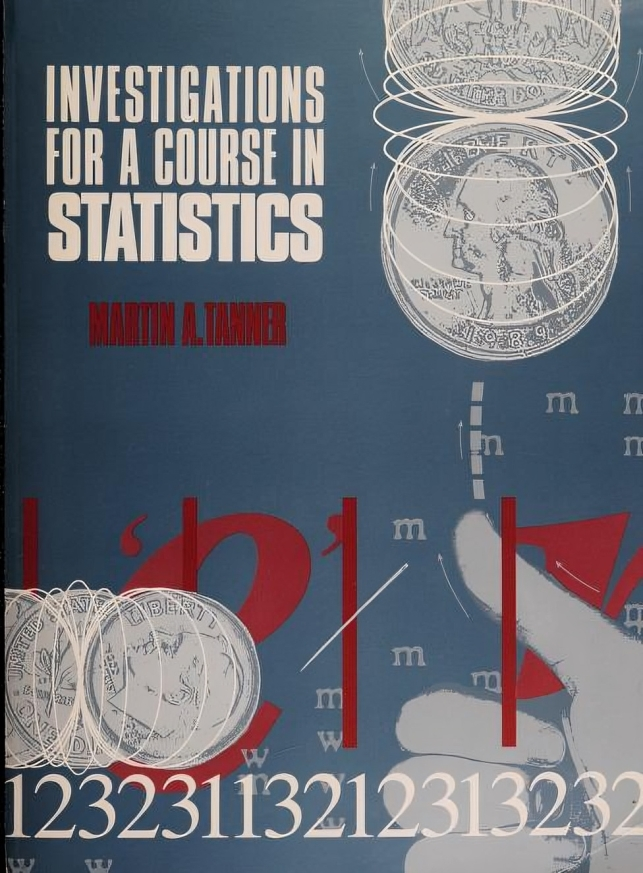
When it comes to studying statistics, students are driven by a variety of interests and goals, united by the belief that statistics plays a crucial role in scientific research. An Investigation for a Course in Statistics aims to reveal the true significance of statistics in the scientific process. While there are many textbooks that cover the basics of design, descriptive statistics, and inference, there is currently no resource available for university students to actively participate in investigations and witness firsthand what statistics can and cannot achieve.
Traditional statistical textbooks don’t create this hands-on environment. However, for those pursuing a career in science, it’s crucial that they view statistics as an integral part of the dynamic investigative process. To cultivate this perspective, students must witness statistics in action.
An Investigation for a Course in Statistics contains a series of investigations that highlight the intersection of science and statistics in key ways. First and foremost, students have the opportunity to don the roles of both scientist and statistician. As scientists, they can observe and engage in the experimental process. This experience is invaluable for understanding how experiment design and data analysis collaborate.
As statisticians, students can examine the data in ways that illustrate and reinforce statistical concepts, methodologies, and the concept of chance variation. Additionally, investigations may encounter common challenges like missing data or outliers. While a comprehensive analysis of these issues goes beyond the scope of an introductory course, it’s important for students to realize that ignoring missing data or outliers can lead to biased conclusions.
Students should inquire about the reasons behind missing data and consider if there are additional variables that should be taken into account. They should also consider if outlying observations should be given less weight or brought to attention. Through investigations, students get to work with real-life data, replicating what they might encounter in their own research or database. By incorporating investigations into introductory statistics courses, students gain a true understanding of how data looks in practice.
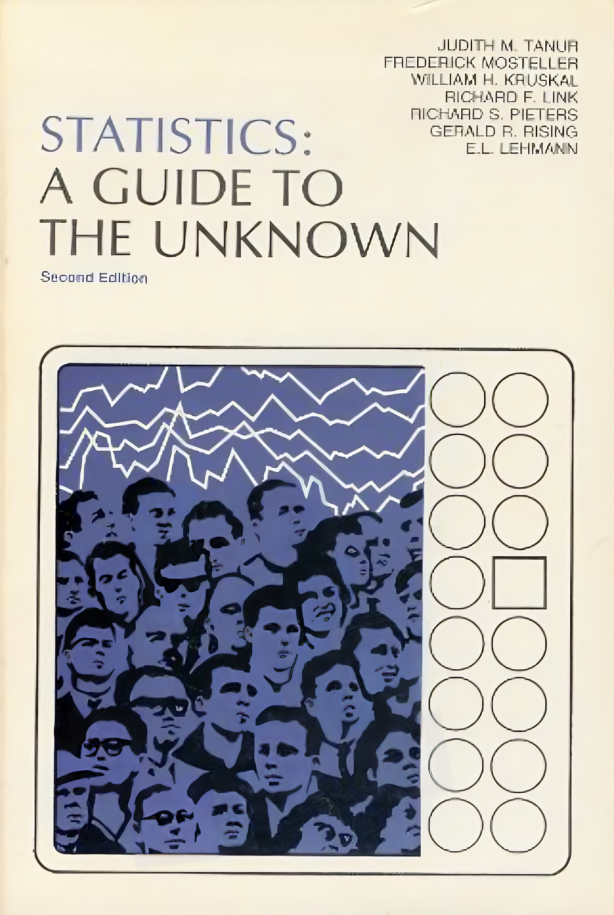
Statistics: A Guide to the Unknown by J.M. Tanur takes readers on a captivating journey through the diverse and practical applications of statistics and probability.
This book was born out of a project initiated by the American Statistical Association and the National Council of Teachers of Mathematics ASA-NCTM Committee. Recognizing the need to incorporate more statistics and probability into the school curriculum, the committee aimed to showcase the broad reach of these tools and their importance in various fields.
Designed for a wide audience, including parents, educators, and young people, Statistics: A Guide to the Unknown goes beyond technical methods and instead explores real-life examples of how statistics and probability have been instrumental in solving important problems. Rather than attempting an exhaustive coverage, the book focuses on a range of fascinating applications, with each essay emphasizing one or a few significant issues within its field.
Through this collection of essays, readers discover the power of statistics in areas as diverse as sun studies, test grading, taxation, and population estimation. Statistics: A Guide to the Unknown also delves into the complexities of experimental design and the art of drawing meaningful conclusions from imperfect data.
What sets Statistics: A Guide to the Unknown apart is its ability to showcase the unity within diversity. While exploring unrelated fields, readers will find surprising overlaps in the statistical techniques used. On the flip side, the essays are grouped according to subject matter, highlighting the different statistical approaches employed in areas like customer satisfaction and disease research.
Overall, Statistics: A Guide to the Unknown serves as a valuable resource for anyone seeking a deeper understanding of statistics and its practical applications. It not only broadens perspectives but also makes statistical concepts accessible to a wider audience. From the sheer range of examples to the thoughtfully chosen essays, Statistics: A Guide to the Unknown is a must-read for anyone interested in unlocking the potential of statistics in their everyday lives.
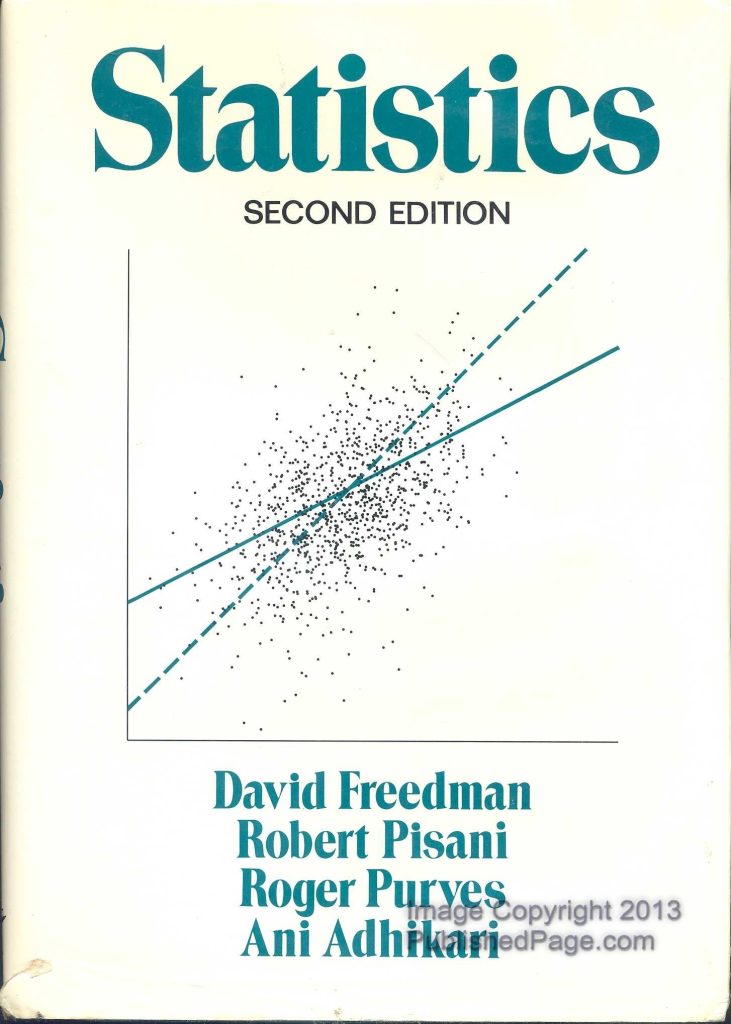
Statistics by David Freedman is a clear and engaging introduction to the world of data.
When it comes to mathematics textbooks, it’s often a challenge to find one that strikes the right balance between clarity and complexity. However, Statistics by David Freedman manages to hit the mark, providing a refreshingly clear and easy-to-understand introduction to the subject.
While some may argue that the book is too simple, there’s a psychological aspect at play here. We tend to associate difficulty with quality, which can lead to under-appreciating something that is presented in a straightforward manner. Think of it like trying to rate a restaurant’s food based on how hard it is to read the menu. It’s a fascinating phenomenon worth considering.
But back to the book itself. Yes, the exercises may be a bit too easy, but that’s precisely what makes it an excellent starting point for anyone looking to delve into the world of statistics. All you need is a basic understanding of high school algebra, and Freedman takes it from there, guiding you through the concepts with ease.
What sets Statistics by David Freedman apart from others is its focus on the “why” behind the equations. It’s not just about mindlessly crunching numbers; Freedman teaches you how to critically analyze experimental design and data sets. You’ll learn how to identify flaws and patterns that deviate from the norm.
Looking ahead, I’m already eager to dive into Freedman’s more advanced textbook, “Statistical Models.” Pairing it with a standard college textbook on mathematical statistics, like Wasserman’s “All of Statistics,” seems like the perfect progression.
In summary, while any statistics book can teach you how to perform calculations, Statistics by David Freedman goes above and beyond. It not only equips you with the tools to analyze data but also teaches you when and how not to apply certain equations. It’s a must-read for anyone seeking a solid foundation in statistics.

If you’ve ever studied mathematics beyond the basics, you’re probably familiar with the name Leonhard Euler. He was a prolific author and versatile mathematician who left a lasting impact on calculus and the study of differential equations. But who was Euler really? What made him so special? Ronald S. Calinger answers these questions and more in his comprehensive biography, “Leonhard Euler: Mathematical Genius in the Enlightenment.”
Calinger, an historian of mathematics and an Euler scholar, delves into Euler’s life and work, meticulously tracing his time at the Imperial Academy of Sciences in St. Petersburg and the Royal Prussian Academy of Sciences in Berlin. He examines Euler’s major contributions to mathematics, from establishing the foundation for differential equations to making pioneering developments in number theory and topology. Through Calinger’s research and writing, we gain a deeper understanding of Euler’s genius and his impact on the field of modern applied mathematics.
But this biography is more than just a collection of facts and accomplishments. Calinger brings Euler to life by exploring the environment in which he lived and worked. We learn about the challenges and frustrations he faced, such as opposition from the Orthodox Church and the aristocracy in Russia and a lack of support from Frederick II in Prussia. We also discover intimate details about Euler’s personal life, such as his love for smoking Virginia tobacco, playing chess, and performing on the clavier. These details humanize Euler and make him relatable to us, the readers.
“Leonhard Euler: Mathematical Genius in the Enlightenment” is not just an informative and well-researched resource, but also a captivating read. Calinger’s writing style makes complex mathematical concepts accessible to all, while still providing a deep dive into Euler’s life and times. This book is a must-read for anyone interested in Euler, mathematics, or the Enlightenment era. It is sure to be a definitive reference for years to come.

Discover the captivating world of mathematics with “The History of Mathematics: A Reader” by John Fauvel. This book takes you on a journey through the ages, from the earliest beginnings of counting to the modern advancements of electronic computers. Experience the diverse perspectives of mathematicians as they reflect on the nature and purpose of their craft, as well as the best ways to teach it. Dive into biographical entries and engaging discussions by historians of mathematics.
With a curated selection of mathematical writings, this math book showcases the evolution of the subject in a chronological order. Witness how Descartes’ methods and approach spread throughout all areas of mathematics, and how Newton’s Principia sparked fascinating debates about the moon’s motion. Many of these writings have been translated into English for the first time, making this collection a valuable source for all math enthusiasts.
Immerse yourself in the fascinating world of mathematics through “The History of Mathematics: A Reader.”

In the world of mathematics, few books can captivate readers even after fifty years of publication. However, Dirk Struik’s A Concise History of Mathematics is an exception. First published in 1948, this remarkable book has undergone four editions and has been translated into eighteen different languages.
What sets A Concise History apart is its unique approach to the subject. Unlike previous standard histories that focused solely on the growth of knowledge, stripped of any social context, Struik delves into the social and political factors that shaped mathematical developments. He brings to light the rich diversity of ideas and cultures that exist within the mathematical realm.
For many budding historians of mathematics, A Concise History was a revelation. It opened their eyes to a world brimming with the interplay of mathematical concepts, institutions, and people. While not everyone may choose to pursue a career in this field, Struik’s impact on those individuals cannot be overlooked.
So, what makes this book so successful and enduring? It can be attributed not only to circumstantial factors but also to the author’s remarkable qualifications and character. Dirk Struik’s deep love for both mathematics and history, instilled in him by his father, a grammar school teacher, shines through in every page.
A Concise History of Mathematics is a must-read for anyone seeking to explore the fascinating world of mathematics and its intricate connection to society. Its enduring freshness will captivate readers from all walks of life.

In “The Quantum Dissidents,” Olival Freire Junior offers an intriguing take on quantum physics. With a mix of academic rigor and captivating storytelling, this book sheds light on the pioneers who questioned the status quo. Their inquiries ultimately paved the way for the development of quantum information, which is now revolutionizing our understanding of computation. As quantum computers surpass classical ones, the influence of these early explorers becomes undeniable. If you’re fascinated by the lesser-known historical aspects of quantum physics, this book is a must-read.

These stories from Quanta Magazine map the routes of mathematical exploration, showing readers how cutting-edge research is done while illuminating the productive tension between conjecture and proof, theory and intuition. The stories show that, as James Gleick puts it in the foreword, “inspiration strikes willy-nilly.”
One researcher thinks of chaotic quantum systems at a bus stop; another suddenly realizes a path to proving a theorem of number theory while in a friend’s backyard; a statistician has a “bathroom sink epiphany” and discovers the key to solving the Gaussian correlation inequality.
According to Quanta editor-in-chief Thomas Lin, readers of The Prime Number Conspiracy are headed on “breathtaking intellectual journeys to the bleeding edge of discovery strapped to the narrative rocket of humanity’s never-ending pursuit of knowledge.”

People were already interested in prime numbers in ancient times, and the first result concerning the distribution of primes appears in Euclid’s Elemen ta, where we find proof of their infinitude, now regarded as canonical. One feels Euclid’s argument has its place in this book, often quoted by the late Paul Erdos, where the ultimate forms of mathematical arguments are preserved.
Proofs of most other results on prime number distribution are still far from their optimal form, and this book aims to present the development of methods with which such problems were attacked over time.
The Development of Prime Number Theory is not a historical book since the author refrains from giving biographical details of the people who have played a role in this development. The author does not discuss the questions concerning why each particular person became in interested in primes. His idea is to present the development of the theory of the distribution of prime numbers in the period starting in antiquity and concluding at the end of the first decade of the 20th century.