Have you ever considered learning how to think mathematically? Using math proofs requires logical reasoning, problem-solving skills, and the ability to make connections between concepts. By reading math books to learn mathematical proofs, you can unlock the power of this type of thinking and gain valuable insight into a variety of topics. Below, you will find 70 best math books to learn mathematical proofs.
The Benefits of Learning Math Proofs
Math proofs are used in various fields, such as engineering, economics, computer science, physics, and mathematics. Learning to think mathematically will benefit your studies in these fields and give you an edge in other aspects of life, such as problem-solving, decision-making, and critical thinking. Mathematical proofs provide a systematic way to analyze problems so that you can come up with solutions quickly and accurately.
Math Books to Learn Mathematical Proofs
Math books are essential if you want to learn mathematical proof. These books provide an easy-to-understand approach to understanding the fundamentals behind math proofs. They often include step-by-step instructions on how to solve problems as well as visual demonstrations of how these concepts work together. Reading these books is key to developing your skills in mathematical proof because they provide an accessible entry point into more advanced topics like abstract algebra or number theory.
While math books are great for getting started with learning mathematical proof, they have their limitations when it comes to tackling more complex problems. As you progress further down the road with studying math proofs, you must supplement your knowledge with online resources such as YouTube tutorials or online courses that give you a more comprehensive overview of various areas within mathematics.
Additionally, engaging in practice questions can help solidify your understanding and hone your skills when it comes to using logic and reasoning for problem-solving.
Mathematical proof is an invaluable skill that can be applied across multiple fields. It provides a framework for analyzing problems while helping develop your problem-solving abilities and critical thinking skills, which are transferable across many different domains in life. To get started with learning math proof, reading math books is essential as they provide an easy-to-understand introduction to this field while giving step-by-step instructions on how to solve various types of problems. However, as one progresses further into this area, more advanced resources should be utilized, such as online tutorials or courses along with practice questions which will help hone one’s understanding and application within this area even further!
Below, you can find 70 best math books to learn mathematical proofs. If you enjoy this book list, you should also check 30 Best Math Books to Learn Advanced Mathematics for Self-Learners.
Before I get started, I would like to suggest Audible for those of us who are not the best at reading. Whether you are commuting to work, driving, or simply doing dishes at home, you can listen to these books at any time through Audible.

Geometry of Grief
An internationally renowned mathematician and famous teacher demonstrate how mathematics can assist all of us—even those opposed to mathematics—in understanding and coping with sorrow in this insightful and hopeful book.
Everyone has experienced the exhilaration of intellectual epiphany—the rush of immediate knowledge. However, that feeling of joy is accompanied by a sense of loss, as a moment of epiphany can never be replicated. The mathematician Michael Frame looks into this twinning of understanding and loss, drawing on a lifetime’s worth of insight—including his collaboration with the pioneer of fractal geometry, Benoit Mandelbrot—and a skill for making the complicated accessible as he does so. Grief, as Frame demonstrates, can be a window of opportunity.
‘Grief’ is an investigation into the emotional response to an irreversible change in one’s circumstances. This reframes us to perceive parallels between the loss of a loved one or the end of a successful career and the loss of the exhilaration that comes with grasping a difficult topic for the first time. Frame constructs a geometric representation of mental states based on this foundation. The magnifying glass may magnify a fractal item and reveal echoes of the original shape. For example, magnifying an image of a mountain or a fern leaf—both fractal—reveals echoes of the original shape.
Similarly, lesser losses might be found nested within larger losses. Frame demonstrates that by modifying this geometry, we may be able to divert our thoughts in ways that aid in the reduction of our discomfort. Small-scale losses, in effect, serve as learning laboratories for how to deal with large-scale losses in the real world.
Frame’s poetic book is a journey through the beautiful complexities of mathematics and life, interweaving original illustrations, clear introductions to advanced topics in geometry, wisdom gleaned from his own experience with illness and others’ remarkable responses to a devastating loss. Wisdom gleaned from his own experience with illness and others’ remarkable responses to a devastating loss. It aids us in understanding how the geometry of grief can offer a channel for bold action by combining human sympathy with geometrical elegance.
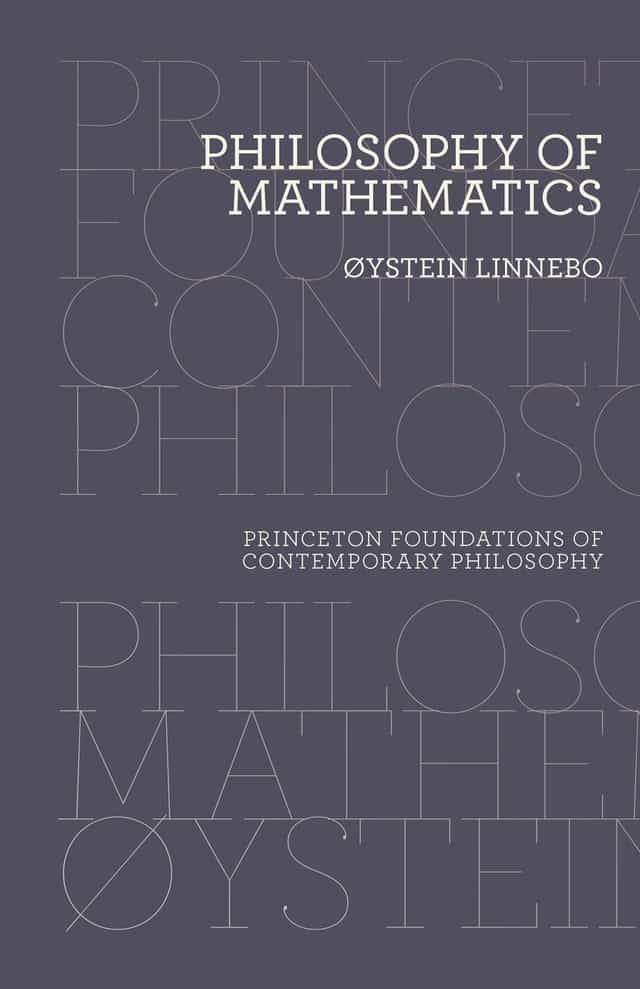
Discover the captivating world of the philosophy of mathematics with Øystein Linnebo‘s groundbreaking book review. As I taught a special topics course on the history of mathematics, I couldn’t help but delve into the deep questions surrounding the nature of mathematics itself. What truly defines mathematics? Do mathematical objects like sets and numbers exist, and if so, in what form?
To my surprise, these philosophical questions had rarely been considered by my students. It was clear that these topics were not commonly explored in mathematics courses. Most students were preoccupied with grasping complex mathematical concepts, leaving little room for philosophical musings.
Given the scarcity of undergraduate-level textbooks on the philosophy of mathematics, Linnebo’s book is a breath of fresh air. It surpasses other introductory texts in sophistication while still being accessible to those new to the subject. Familiarity with philosophical reasoning and writing, as well as a background in logic, will enhance the reading experience.
Unlike other books on the subject, Linnebo’s comprehensive text goes beyond exploring the foundational schools of thought in the philosophy of mathematics. While formalism, logicism, and intuitionism are covered, Philosophy of Mathematics also delves into contemporary issues that have emerged in recent decades. It strikes a perfect balance between the historical and the modern, making it a valuable resource for anyone interested in the philosophy of mathematics.
Join Øystein Linnebo on a journey through the history, concepts, and debates that shape our understanding of mathematics. Whether you’re a mathematics major or a curious mind, this book will challenge your perception of the subject and leave you eager for more.
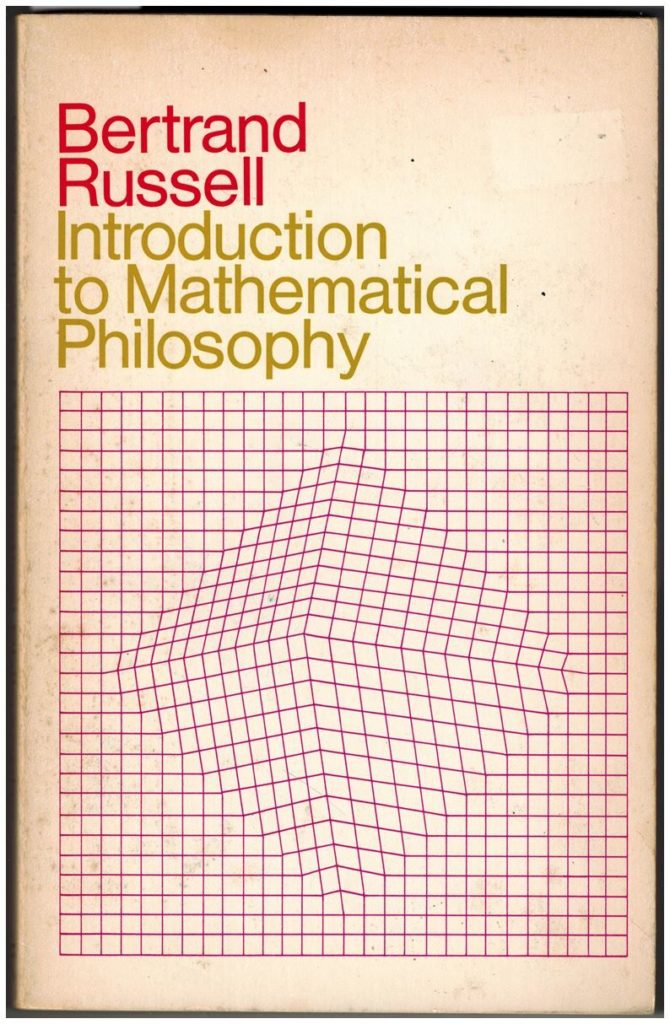
Discover the fascinating world of mathematical logic, philosophy, and mathematical foundations through Russell’s Introduction to Mathematical Philosophy. This timeless book challenges traditional philosophy and offers insights into unsolved problems while exploring the logical foundations of mathematics.
Russell, known for his clarity of thought, carefully places this book within the realm of philosophy, despite its unconventional subject matter. He explores the dual nature of mathematics – one direction leading to increasing complexity, and the other towards greater abstraction and logical simplicity. This unique approach sets mathematical philosophy apart from ordinary mathematics.
While Russell’s informal treatment may make for occasional tedious reading, it caters to philosophers with limited symbolic reasoning abilities. Today, the same material would likely be presented in a more concise manner using standard notation.
Russell’s ideas have sparked a wealth of fruitful research. However, one must ponder whether philosophy’s focus on Russell’s pursuit has caused it to overlook significant aspects of mathematics. To delve deeper into this question, explore David Corfield’s Towards a Philosophy of Real Mathematics.
Immerse yourself in the captivating world of mathematical philosophy with Introduction to Mathematical Philosophy by Russell. Challenge traditional thinking and expand your understanding of mathematics like never before.

Discover the magic of statistical methods with “Statistical Methods” by George W. Snedecor and William G. Cochran. This book is a game-changer for anyone who wants to dive into the world of statistics, whether you’re a self-taught programmer or a curious enthusiast.
Just like how Feynman lectures captivate readers with their insights on physics, Snedecor’s book revolutionizes statistics. He takes you on a journey through various methods, including his famous F test for comparing multiple results. It’s a breath of fresh air for those seeking clarity in statistical analysis.
Even though I once owned a copy of this book, I foolishly let it go. But as fate would have it, I found myself lost without it whenever I needed statistical knowledge. So, I decided to get my hands on a used copy once again, and it’s been a lifesaver.
Whether you’re working in a field that heavily relies on statistics or simply have an interest in the subject, this book is a must-have. It’s highly recommended for graduate level statistics classes, serving as a valuable supplementary text. Personally, I find myself turning to this book time and time again for guidance.
So, if you’re craving a helping hand in understanding and mastering statistical methods, don’t hesitate to grab a copy of “Statistical Methods.” It will undoubtedly be one of the best decisions you’ll make on your statistical journey.

When it comes to learning statistics, it can often feel like you’re drowning in a sea of numbers and formulas. That’s why finding a statistics textbook that strikes the right balance between mathematical principles and approachable language is such a valuable find. Robert L. Winkler’s Statistics: Probability, Inference, and Decision is just such a book.
From cover to cover, Winkler manages to make even the most complex concepts clear and interesting. Whether you’re studying statistics for the first time or looking to brush up on your skills, this book is the perfect self-study companion. Highly recommended for anyone looking to master the art of analyzing data.
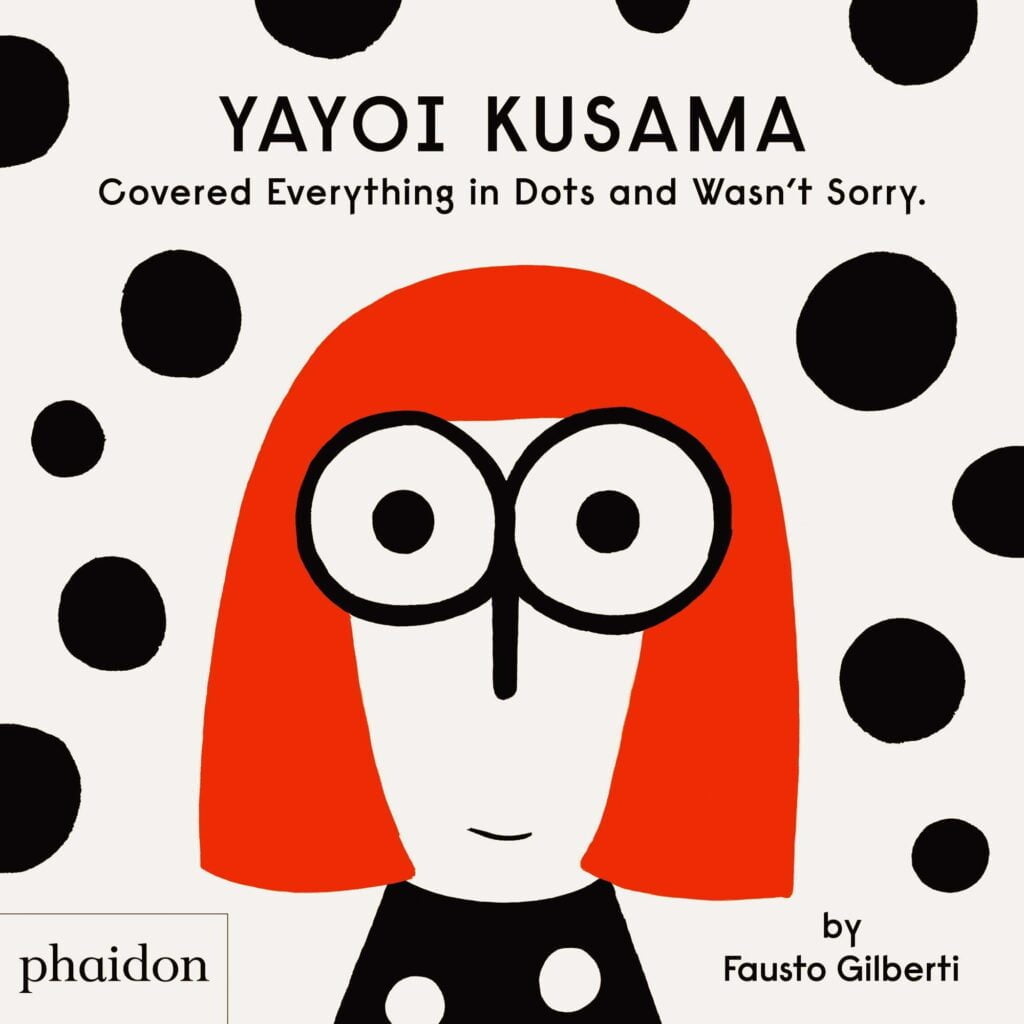
Yayoi Kusama Covered Everything in Dots and Wasn’t Sorry
Yayoi Kusama has an unmistakable signature style – her artwork is characterized by hundreds and hundreds of vibrant dots that cover virtually anything she can possibly find! From dresses to tables, walls to galleries, Yayoi Kusama leaves no surface undotted.
In “Yayoi Kusama Covered Everything in Dots and Wasn’t Sorry,” Fausto Gilberti brings Yayoi’s creative vision to life in a truly witty way, making it one of the best kids’ books on contemporary art out there. Not only does it illustrate Yayoi’s story in vivid color, but readers will also get a glimpse into YK’s mirrored rooms where glittering lights and balls remain suspended in perpetuates the infinity of dots!

Unlike traditional textbooks, The Elements of Statistical Learning offers a unique approach to learning that allows readers to dive into any chapter without having to start at the beginning.
Ideal for beginners, this comprehensive resource covers all the major areas of machine learning and is filled with intuitive explanations, colorful illustrations, and relevant exercises. With a focus on practical applications, you’ll find the information in this book invaluable for real-world use.
Ranked as one of the most popular graduate level textbooks on machine learning, “The Elements of Statistical Learning” is a must-have reference for professionals in the field. Whether you have a background in statistics, mathematics, engineering, or any related field, this book provides the knowledge and insights you need to succeed.
Please note, this book should not be confused with “An Introduction to Statistical Learning: with Applications in R.” While both cover similar topics, “The Elements of Statistical Learning” offers a more mathematical approach, making it ideal for those with a background in statistics or mathematics.
From supervised learning to support vector machines, kernel methods to unsupervised learning, this book covers it all. Each chapter provides a clear and concise overview of the topic, with helpful discussions and warnings along the way. With “The Elements of Statistical Learning,” you’ll have a solid foundation in machine learning that can be applied in a variety of fields.
Introductory Statistics is an amazing resource that perfect for anyone seeking a solid understanding of the fundamentals. Say goodbye to confusing textbooks – Illowsky’s book is written in a clear and engaging style that will make statistics accessible to all.
From probability and statistics to regression and testing, this book covers it all. Each topic is explained with real-life examples, ensuring that readers fully grasp the concepts. With practical applications and useful exercises, Introductory Statistics will transform you into a statistics expert.
Not just for math or engineering students, this book caters to a wider audience. Whether you’re majoring in a different field or just curious about statistics, this book is for you. It assumes some knowledge of intermediate algebra and focuses on the application of statistics rather than overwhelming you with theory.
What sets Introductory Statistics apart is its innovative approach. With collaborative exercises, technology integration problems, and statistics labs, you will truly experience the subject in a practical and hands-on way.
Immerse yourself in the world of probability and random processes with “Probability and Random Processes” by Geoffrey R. Grimmett. This captivating book takes you on a journey through the fascinating realm of probability, offering insight into its practical applications. From the fundamental concepts to advanced topics, Grimmett provides a comprehensive exploration of the subject, emphasizing real-world modeling over abstract ideas.
Whether you’re a math enthusiast, a student, or a professional in a STEM field, this book offers something for everyone. It covers a wide range of important topics, including sampling, Markov chain Monte Carlo, renewal-reward, queueing networks, stochastic calculus, and option pricing in the Black-Scholes model for financial markets.
But the true value of Probability and Random Processes lies in its approachability. You don’t need extensive prior knowledge to dive in. It’s designed to be accessible to readers coming from a STEM background, making it an ideal resource for those looking to expand their understanding of probability and random processes.
Throughout Probability and Random Processes, you’ll find almost 400 exercises and problems, allowing you to practice and reinforce your learning. Plus, if you ever find yourself stuck, you can refer to the solutions provided in “One Thousand Exercises in Probability.”
Whether you’re a curious mind eager to explore the world of probability or a student looking for a comprehensive guide, Probability and Random Processes is a must-read. Get ready to delve into the captivating world of chance and enhance your understanding of this fascinating subject.
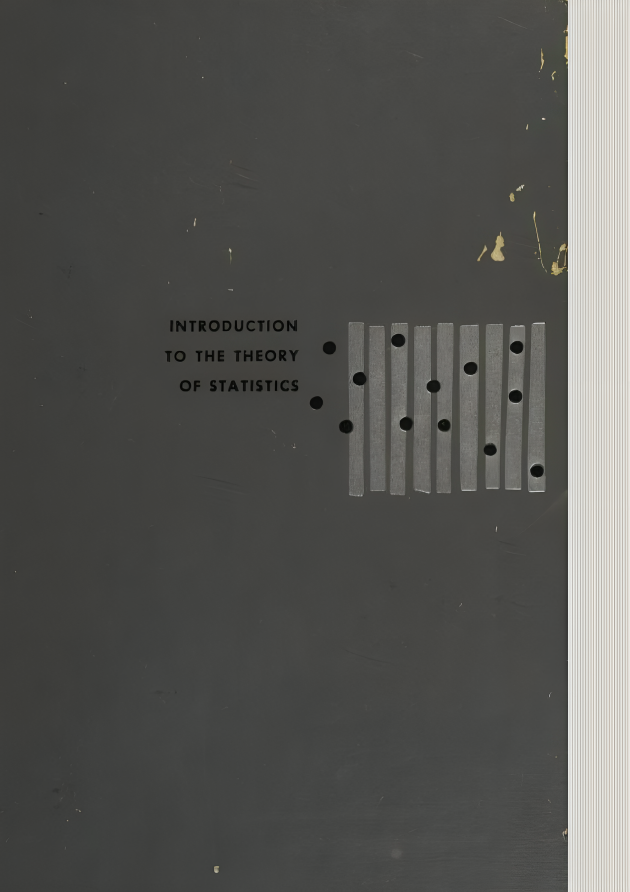
In the world of statistics, Introduction to the Theory of Statistics by Alexander M. Mood stands out as a self-contained guide to classical statistical theory. The best part about this book? It doesn’t require any prior knowledge of statistics or probability – just a one-year course in calculus. Perfect for students who want to dive deeper into the world of statistics without feeling overwhelmed, this book offers a clear and concise introduction to the basic principles of statistics.
From probability distributions to hypothesis testing, Mood covers all the fundamentals in an easy-to-understand way. So if you’re looking for an accessible introduction to statistics, look no further than “Introduction to the Theory of Statistics.“