Have you ever considered learning how to think mathematically? Using math proofs requires logical reasoning, problem-solving skills, and the ability to make connections between concepts. By reading math books to learn mathematical proofs, you can unlock the power of this type of thinking and gain valuable insight into a variety of topics. Below, you will find 70 best math books to learn mathematical proofs.
The Benefits of Learning Math Proofs
Math proofs are used in various fields, such as engineering, economics, computer science, physics, and mathematics. Learning to think mathematically will benefit your studies in these fields and give you an edge in other aspects of life, such as problem-solving, decision-making, and critical thinking. Mathematical proofs provide a systematic way to analyze problems so that you can come up with solutions quickly and accurately.
Math Books to Learn Mathematical Proofs
Math books are essential if you want to learn mathematical proof. These books provide an easy-to-understand approach to understanding the fundamentals behind math proofs. They often include step-by-step instructions on how to solve problems as well as visual demonstrations of how these concepts work together. Reading these books is key to developing your skills in mathematical proof because they provide an accessible entry point into more advanced topics like abstract algebra or number theory.
While math books are great for getting started with learning mathematical proof, they have their limitations when it comes to tackling more complex problems. As you progress further down the road with studying math proofs, you must supplement your knowledge with online resources such as YouTube tutorials or online courses that give you a more comprehensive overview of various areas within mathematics.
Additionally, engaging in practice questions can help solidify your understanding and hone your skills when it comes to using logic and reasoning for problem-solving.
Mathematical proof is an invaluable skill that can be applied across multiple fields. It provides a framework for analyzing problems while helping develop your problem-solving abilities and critical thinking skills, which are transferable across many different domains in life. To get started with learning math proof, reading math books is essential as they provide an easy-to-understand introduction to this field while giving step-by-step instructions on how to solve various types of problems. However, as one progresses further into this area, more advanced resources should be utilized, such as online tutorials or courses along with practice questions which will help hone one’s understanding and application within this area even further!
Below, you can find 70 best math books to learn mathematical proofs. If you enjoy this book list, you should also check 30 Best Math Books to Learn Advanced Mathematics for Self-Learners.
Before I get started, I would like to suggest Audible for those of us who are not the best at reading. Whether you are commuting to work, driving, or simply doing dishes at home, you can listen to these books at any time through Audible.
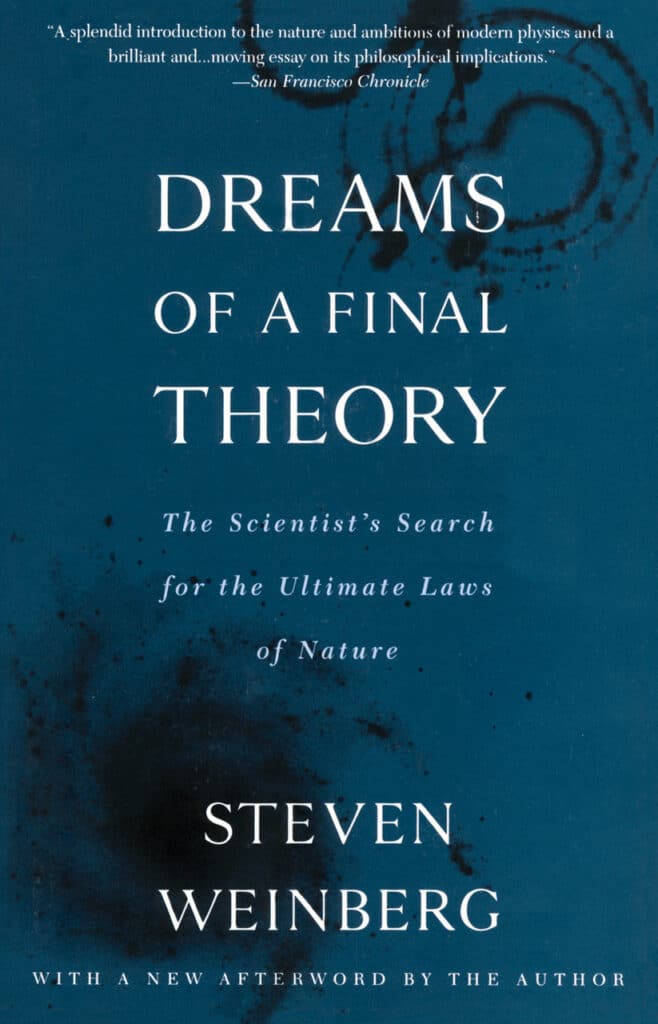
Dreams of a Final Theory is intellectually risky and full of stories and sayings. It takes us to a new universe and helps us understand what we find there. The Nobel Prize-winning physicist and best-selling author of The First Three Minutes talks about the search for a single theory of nature that can explain forces as different as the attraction between the sun and Earth and the cohesion inside an atom.
Wiring with dazzling elegance and clarity, he retraces modern scientists’ steps from relativity and quantum mechanics to the idea of superstrings and the idea that our universe may coexist with others.
But Weinberg asks as many questions as he answers, such as: Why does each explanation of how nature works point to other, deeper explanations? Why do the best theories not only make sense but also look good? And what will a final theory mean for our ideas about life and our beliefs in God?
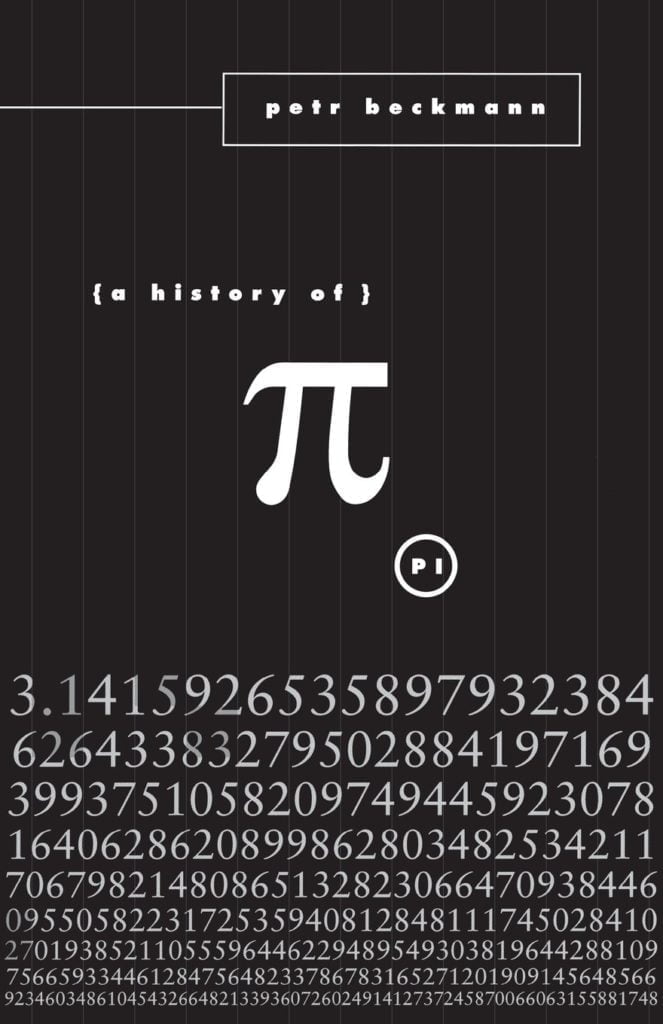
A History of Pi
The history of pi, says the author, though a small part of the history of mathematics, is nevertheless a mirror of the history of man. Petr Beckmann holds up this mirror, giving the background of the times when pi made progress — and also when it did not, because science was being stifled by militarism or religious fanaticism.

Here We Are: Book of Numbers by Oliver Jeffers is one of the best children’s math books available today. This adorable, square board book is ideal for toddlers due to its sturdy construction and engaging content, which can withstand enthusiastic little hands and repeated readings.
The book introduces young readers to the concept of numbers through beautifully illustrated pages that explore the wonders of Earth. Each two-page spread focuses on a number from 1 to 11, presenting it in a way that is both educational and visually captivating.
While the language in the book may be too advanced for infants to fully appreciate, toddlers are at the perfect age to enjoy and understand its content. The heavy cardboard pages ensure durability, and the glossy finish makes it easy for little fingers to turn the pages and explore the vivid illustrations.
One of the standout features of Here We Are: Book of Numbers is its interactivity. The book can be as simple or as challenging as you want it to be. For instance, the underwater scene for Number 7 encourages young readers to identify “7 creatures of the sea,” such as a dolphin, a whale, and a turtle. This makes the book not only a fun read but also an educational tool that grows with your child’s abilities.
Oliver Jeffers’ illustrations are nothing short of fantastic. The vibrant colors and intricate details draw readers in, making each page a visual feast. The combination of engaging text and stunning artwork creates an immersive experience that transports you into the world of numbers and nature.
The book concludes with a discussion of larger numbers, such as “A lot of stars (too many to count),” depicting a starry night sky with constellations like the Big Dipper and the Little Dipper. The final page addresses the concept of infinity, tying it to the idea of love with a sweet illustration of an adult holding a baby under a mobile of planets and stars. This touching ending adds an emotional depth that resonates with both children and adults.
Here We Are: Book of Numbers by Oliver Jeffers is a delightful addition to any toddler’s bookshelf. Its blend of educational content, interactive elements, and stunning illustrations make it a standout choice for parents looking to introduce their children to the world of numbers. This book not only teaches counting but also instills a sense of wonder about the world around us. Highly recommended!
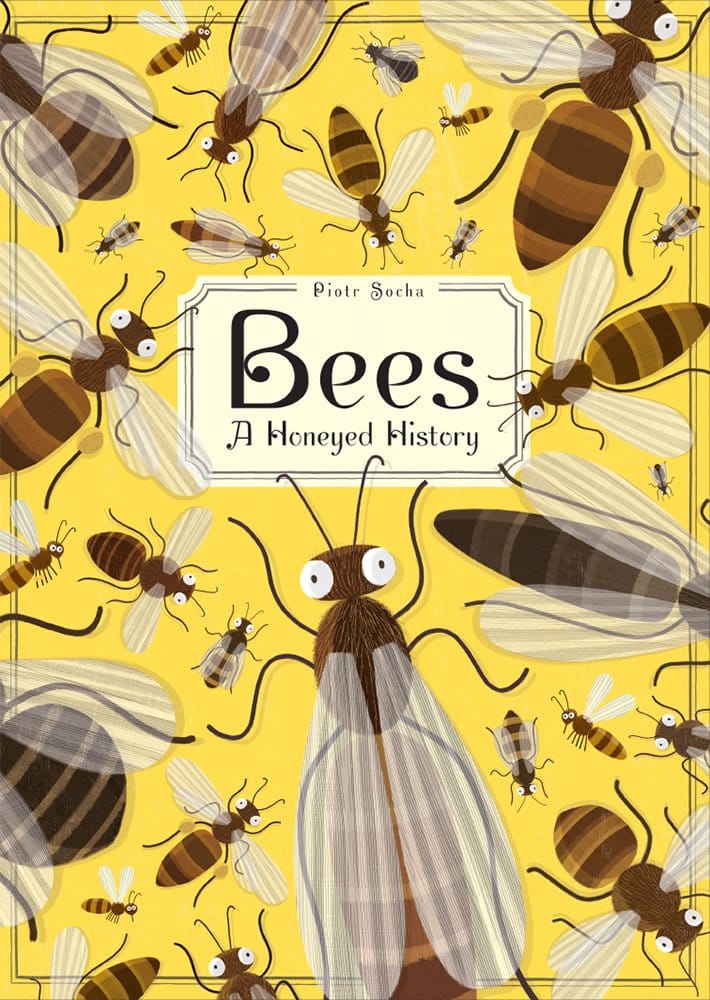
Bees: A Honeyed History is sure to teach your child something—and make them laugh in the process! Largely written for a younger audience, Bees: A Honeyed History has quickly become one of the best kids’ books on Bees that captures their importance to our environment.
Discovering the buzzing world of Bees will fascinate and delight your child as they explore the history, science, and culture all rolled into one! So let your little one embark on an adventure with Bees: A Honeyed History as they learn more about these majestic creatures along the way.

What’s the Point of Math? is one of the best kids’ books out there when it comes to discussing how math is closely intertwined with our everyday lives. Parents and children alike will find this an entertaining journey as it takes an informative look at where math initially came from and why it’s so important.
It also includes some fascinating facts, clever brain teasers, mind-blowing magic tricks, and delightful illustrations – all sure to make even the most reluctant learner fall in love with math! With What’s the Point of Math? your child will learn all sorts of new things about mathematics that you never knew before.

The Knowledge Illusion is a thought-provoking book that ventures deep into the psychology of knowledge and human intelligence. With co-authors Steven Sloman and Philip Fernbach leading the discourse, the book dissects the paradox of how we can orchestrate moon landings and map the human genome without knowing the workings of everyday objects like pens and toilets. This conundrum takes us on an intriguing exploration of our cognitive limitations and the societal web that compensates for them.
Through a series of engaging anecdotes and studies, the book unfurls the central idea that intelligence is not solely contained within the boundaries of individual minds but is instead a collective endeavor. Our dependency on communal knowledge becomes evident as the authors enlighten us on how our understanding of the world is not just internalized but externalized, drawing upon the minds and expertise of those around us.
In what seems to be an almost invisible dance of intellect, “The Knowledge Illusion” offers profound insights into why we often overestimate our own understanding and why we’re susceptible to the illusion of explanatory depth. The book carefully untangles the reasons behind our often unfounded confidence in personal knowledge, showing its roots in societal knowledge networks rather than in the individual’s expertise.
But the authors don’t leave the reader in despair about humanity’s cognitive blunders. In fact, they celebrate the collective mind’s accomplishments, suggesting that this interdependence has been the real key to humanity’s remarkable achievements and that true brilliance arises from the symbiotic relationships within our communities.
“The Knowledge Illusion” brings to light the implications of our networked intelligence on education, management, and politics. It warns us of the pitfalls of an overly individualistic view and promotes collaborative methods that leverage the collective brainpower to its fullest.
In conclusion, Sloman and Fernbach have crafted a book as enlightening as it is humbling. Meticulously researched and persuasively written, “The Knowledge Illusion” challenges readers to rethink what they know—or what they think they know. It’s a fascinating read for anyone curious about human cognition, social structures, and the limitations and potentials of our interconnected minds. The illusion, as it turns out, might be one of our greatest strengths when embraced wisely.
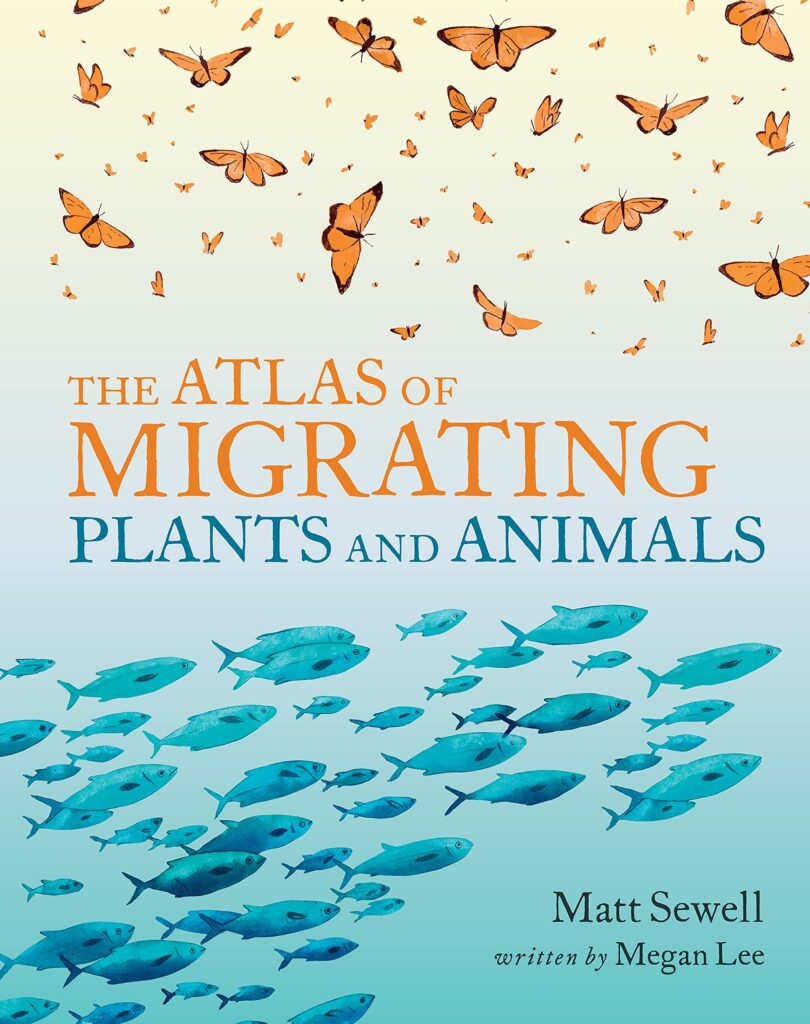
Migration is a natural phenomenon that has been happening for thousands of years. Every year, billions of animals and plants travel long distances to find food, breeding grounds, or better weather conditions. Have you ever wondered about the different types of animals and plants that migrate? If yes, then you are in for a treat! Today, I am excited to share our review of The Atlas of Migrating Plants and Animals book – an informative and beautifully illustrated book that takes us on a journey around the world to explore the incredible migrations of various species.
The Atlas of Migrating Plants and Animals features detailed watercolor illustrations that showcase various plants and animals across the globe. From monarch butterflies in North America to Adelie penguins in Antarctica, this book covers all continents. Each section not only includes illustrations but also information about each plant or animal’s migration patterns. For instance, did you know that Painted Lady Butterflies migrate higher than humans can see? Or that violets are one of many plants that migrate?
The information presented is easy to read and understand, making it an excellent resource for children as well as adults. It also piques interest in these remarkable creatures and encourages readers to conduct further research on their own.
One outstanding feature of this book is how it presents migration as more than just a seasonal event; it highlights how migrations differ in length, speed, time, and method. Some species migrate over vast distances within days or weeks while others take months or even years. Some travel alone while others move in groups called flocks or herds.
The Atlas of Migrating Plants and Animals is not only informative but also visually stunning. The detailed watercolor illustrations are captivating and bring every page to life. They showcase different environments such as oceans, forests, deserts, mountains which give readers an idea of the diverse habitats that these plants and animals migrate through.
In conclusion, The Atlas of Migrating Plants and Animals is a must-have for anyone interested in wildlife and nature. It is informative, visually stunning and provides insight into the incredible journeys taken by various species. This book is an excellent educational resource for teachers who teach about plants and animals’ life cycles or habitats. It also serves as a perfect addition to any home library where it can be enjoyed by both children and adults alike. So why not grab your copy today and embark on a journey around the world with The Atlas of Migrating Plants and Animals!
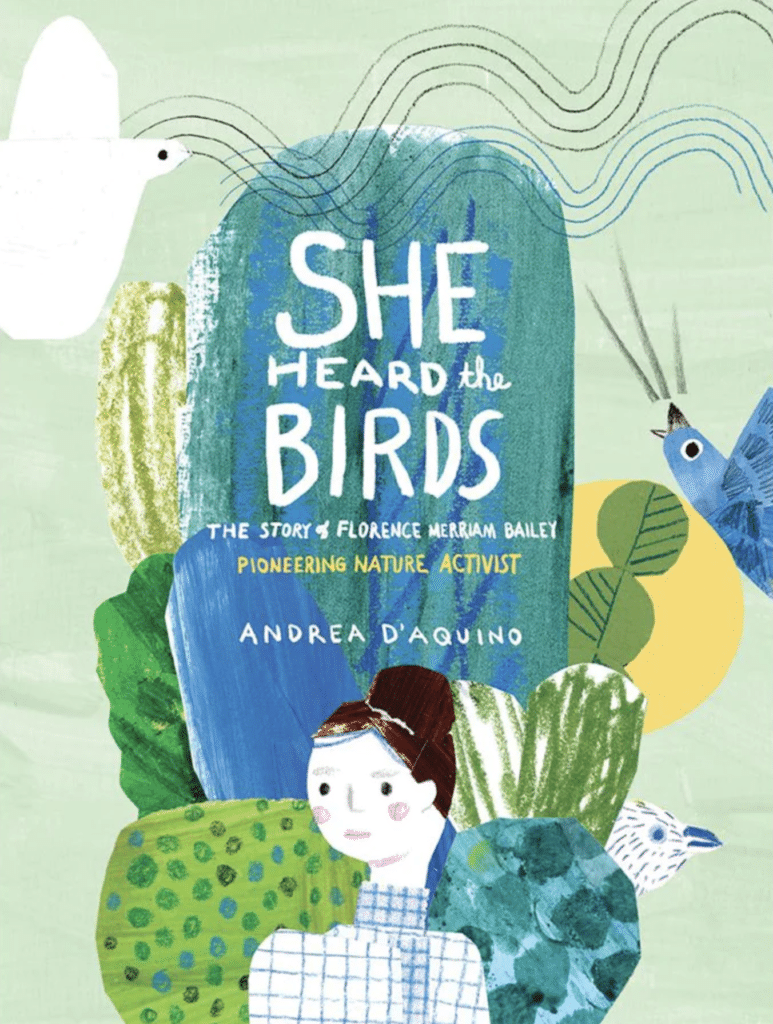
Children of all ages who love birds and want to learn more about them will appreciate “She Heard the Birds.” This book, written by Andrea D’Aquino, tells the incredible story of Florence Merriam Bailey, who dedicated her life to studying birds in their natural environment, allowing her to write one of the first field guides to American birds.
Andrea’s striking full-page collages make each page pleasurable to read and bring the story alive. It’s no wonder it’s becoming among the best kids’ books!

In the age of big data, being able to interpret an ocean of information is not just valuable but essential. “The Model Thinker” by Scott E. Page is an ambitious and insightful guide that aims to equip readers with the mental tools needed to analyze complex data sets and make better decisions. Page, a seasoned social scientist, dives into the realm of mathematical, statistical, and computational models to provide a robust framework for understanding our increasingly quantitative world.
“The Model Thinker” isn’t just another book about data analysis. It’s an exploration of how models can elevate our cognitive abilities. The central tenet of Page’s work lies in his “many-model paradigm.” This approach challenges the reader to apply a variety of models to a given set of data, ensuring a multi-faceted analysis that emphasizes diversity in problem-solving techniques.
Page goes to great lengths to make the content accessible, providing clear examples and avoiding unnecessary jargon. He discusses linear regression, random walks, and other complex topics in a manner that is digestible for readers with varying levels of expertise. However, it is the application of these models to real-world problems, from the stock market to genomic research, where Page truly excels.
His narrative moves beyond theory, pushing readers to explore how these models operate within daily contexts. This applied focus helps bridge the gap between abstract concepts and their practical utility. “The Model Thinker” doesn’t just talk about models; it demonstrates their power.
Scott E. Page writes with clarity and enthusiasm. His passion for the subject matter shines through and helps maintain the momentum across dense topics. He strikes a balance between being informative and engaging—an accomplishment in a book that could easily become bogged down by complexity.
The book has a rhythm that caters to patient readers willing to invest time to understand the intricacies of different models. Nevertheless, some may find certain sections challenging without a background in statistics or computer science. As such, “The Model Thinker” is highly rewarding for those who persist through its demanding chapters.
In conclusion, “The Model Thinker” is a stimulating read that offers a wealth of knowledge to anyone willing to peel back the layers of complexity surrounding data analysis. Scott E. Page has crafted a book that is both a reference and a manifesto, pushing us to adopt a broader outlook on problem solving. For students, scientists, business professionals, and anyone inquisitive about the mechanics of decision-making, this book is a comprehensive and invaluable resource.
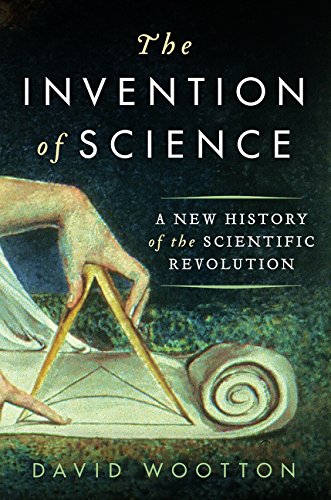
In his compelling work, “The Invention of Science: A New History of the Scientific Revolution,” David Wootton presents an engrossing narrative that examines the confluence of events and intellects that birthed modern science. This ambitious text is not merely a homage to the titans of scientific thought but is an articulate defense against contemporary skepticism towards scientific inquiry.
Wootton skillfully articulates the key themes central to the epochal shift in human thought known as the Scientific Revolution. The book accentuates the convergence of multiple streams of innovation across various disciplines – astronomy, mechanics, printing, painting, and more. It convincingly portrays the Scientific Revolution not as a single, unified phenomenon, but as a mosaic of interlinked breakthroughs.
The pivotal messages of the text highlight the importance of the fact as a foundational concept in the modern scientific method and the abandonment of antiquated superstitions. Wootton’s rich exploration extends beyond the innovations and into the ramifications these had on society, religion, and the eventual rise of industrialization.
Wootton’s analysis is meticulous. His choice to delineate the Scientific Revolution into five distinct yet overlapping events offers a fresh perspective that aids in understanding the complexity and diversity of the movement. The interplay of biographical sketches alongside the grand narrative imparts a relatable human element to the discourse.
Particularly persuasive is Wootton’s argument that scientific thought emerged not merely as a byproduct of new facts and technologies but as a new way of thinking that transcended geographical and disciplinary boundaries to define a new world order.
“The Invention of Science” invites readers into a detailed, historically rich environment. Wootton’s prose is both accessible and intelligent, drawing upon significant scholarly research without alienating those new to the subject. The book draws deep connections between past and present, making a compelling case for the enduring impact of the Scientific Revolution.
Structured to accommodate comprehensive examinations of each ‘separate event,’ the book weaves together a cohesive story. For the historically inclined, Wootton provides a fresh lens through which to re-examine familiar figures like Galileo and Newton.
While “The Invention of Science” is robust in its detail, some readers might find the wealth of information challenging to parse. The breadth of the study occasionally leads to dense passages that demand patient and careful reading. Additionally, those looking for a straightforward chronological history might find the thematic approach disorienting.
However, these challenges do not detract from the immense value of the book. One may argue that a subject as monumental as the Scientific Revolution deserves such a sweeping and thorough approach.
David Wootton’s “The Invention of Science: A New History of the Scientific Revolution” is a definitive work that enriches the reader’s understanding of how the Scientific Revolution has shaped the modern world. Not only does it pay tribute to the figures who dared to imagine a different world, but it also serves as a timely reminder of the importance of maintaining the tradition of rigorous scientific exploration and inquiry.
In an era where science faces skepticism, Wootton’s tome stands as a necessary beacon of rationality and an endorsement of the value of scientific advancement. For anyone interested in the history of science or in understanding the foundations of our current technological society, this book is an invaluable resource.