Have you ever considered learning how to think mathematically? Using math proofs requires logical reasoning, problem-solving skills, and the ability to make connections between concepts. By reading math books to learn mathematical proofs, you can unlock the power of this type of thinking and gain valuable insight into a variety of topics. Below, you will find 70 best math books to learn mathematical proofs.
The Benefits of Learning Math Proofs
Math proofs are used in various fields, such as engineering, economics, computer science, physics, and mathematics. Learning to think mathematically will benefit your studies in these fields and give you an edge in other aspects of life, such as problem-solving, decision-making, and critical thinking. Mathematical proofs provide a systematic way to analyze problems so that you can come up with solutions quickly and accurately.
Math Books to Learn Mathematical Proofs
Math books are essential if you want to learn mathematical proof. These books provide an easy-to-understand approach to understanding the fundamentals behind math proofs. They often include step-by-step instructions on how to solve problems as well as visual demonstrations of how these concepts work together. Reading these books is key to developing your skills in mathematical proof because they provide an accessible entry point into more advanced topics like abstract algebra or number theory.
While math books are great for getting started with learning mathematical proof, they have their limitations when it comes to tackling more complex problems. As you progress further down the road with studying math proofs, you must supplement your knowledge with online resources such as YouTube tutorials or online courses that give you a more comprehensive overview of various areas within mathematics.
Additionally, engaging in practice questions can help solidify your understanding and hone your skills when it comes to using logic and reasoning for problem-solving.
Mathematical proof is an invaluable skill that can be applied across multiple fields. It provides a framework for analyzing problems while helping develop your problem-solving abilities and critical thinking skills, which are transferable across many different domains in life. To get started with learning math proof, reading math books is essential as they provide an easy-to-understand introduction to this field while giving step-by-step instructions on how to solve various types of problems. However, as one progresses further into this area, more advanced resources should be utilized, such as online tutorials or courses along with practice questions which will help hone one’s understanding and application within this area even further!
Below, you can find 70 best math books to learn mathematical proofs. If you enjoy this book list, you should also check 30 Best Math Books to Learn Advanced Mathematics for Self-Learners.
Before I get started, I would like to suggest Audible for those of us who are not the best at reading. Whether you are commuting to work, driving, or simply doing dishes at home, you can listen to these books at any time through Audible.

Richard Rhodes’s “The Making of the Atomic Bomb” is a magisterial and exhaustive narrative that brings to life one of the most pivotal and controversial scientific advancements in modern history—the creation of the atomic bomb.
Rhodes masterfully threads multiple key themes through his work. The immense scientific undertaking is traced back to early theoretical foundations, detailing the breakthroughs in nuclear fission that eventually lead to this terrible weapon. Political intrigue runs deep as the race to develop the bomb pits nations against each other in the perilous times of World War II. Human psychology and ethical reflections are scrutinized, as scientists grapple with their discoveries’ potential for both progress and destruction.
“The Making of the Atomic Bomb” is storytelling at its finest. The detailed characterization of historic figures such as Einstein, Oppenheimer, and Bohr makes the narrative as gripping as any thriller while grounding it in personal and global consequences. Rhodes’s fascination with his subject matter is infectious, as he spans disciplines and recounts history with a lucid prose style that makes complex scientific concepts accessible to lay readers.
The book’s extensive research is evident in every chapter, charting a course through the historical events that unfolded across different continents and through various eras. It is a comprehensive account that not only informs but urges the reader to ponder the profound impact of scientific discovery on humanity and the morality of wielding such power.
Despite the technical subject matter, Rhodes manages to write a book that is richly humane by underscoring the stories of individuals involved in this extraordinary feat of science and engineering. The biographical approach offers unique insights into the minds of those who were a pivotal part of the bomb’s own genesis.
Rhodes does not shy away from the moral dimensions of the atomic bomb’s creation, providing a nuanced exploration of the ethical implications that resonate to this day. The arms race, the Cold War, and the constant looming threat of nuclear annihilation that emerged post-World War Two can trace their origins to the events and decisions captured so vividly in Rhodes’s chronicle.
“The Making of the Atomic Bomb” is a seminal work that has rightly earned its place as a definitive account of one of history’s most significant scientific breakthroughs. Rhodes combines exceptional historical scholarship with a novelist’s touch for narrative. Any reader interested in history, science, human character, or the ethics of technology will find this authoritative work both enlightening and thought-provoking.
Highly recommended, Richard Rhodes’s work is not just a recounting of historical fact but a meditation on the profound implications of scientific innovation. It is a book that stands the test of time and remains essential reading for anyone seeking to understand the world shaped by the atomic bomb’s creation.
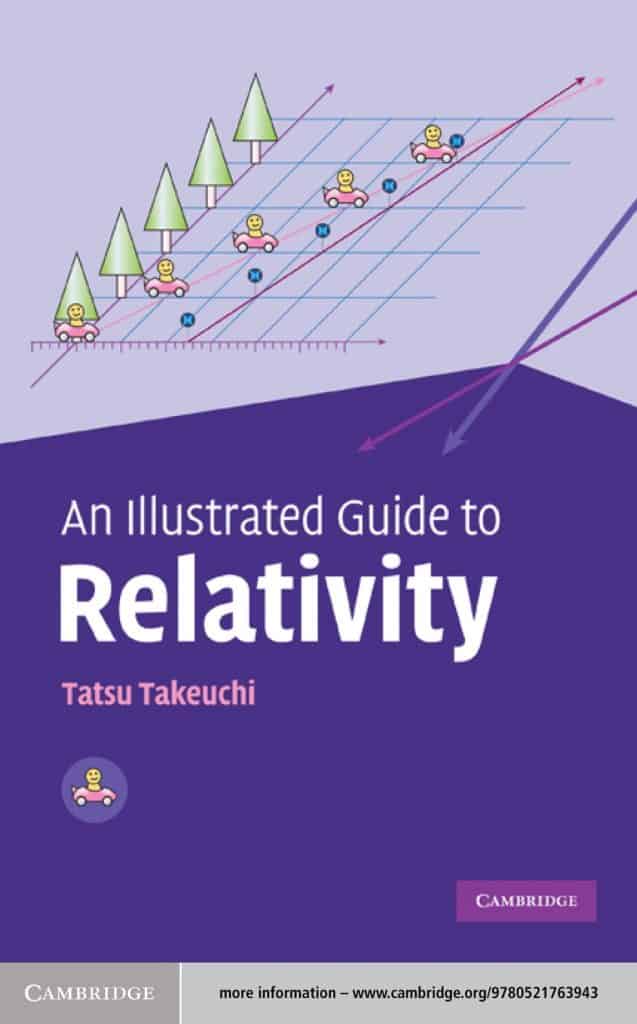
An Illustrated Guide to Relativity
Aimed at both physics students and non-science majors, this unique book explains Einstein’s special theory of relativity pictorially, using diagrams rather than equations. The diagrams guide the reader, step-by-step, from the basics of relativity to advanced topics, including the addition of velocities, Lorentz contraction, time dilation, the twin paradox, Doppler shift, and Einstein’s famous equation E=mc². The distinctive figures throughout the book enable the reader to visualize the theory in a way that cannot be fully conveyed through equations alone. The illustrative explanations maintain the logic and rigor necessary for physics students yet are simple enough to be understood by non-scientists. The book also contains entertaining problems which challenge the reader’s understanding of the materials covered.
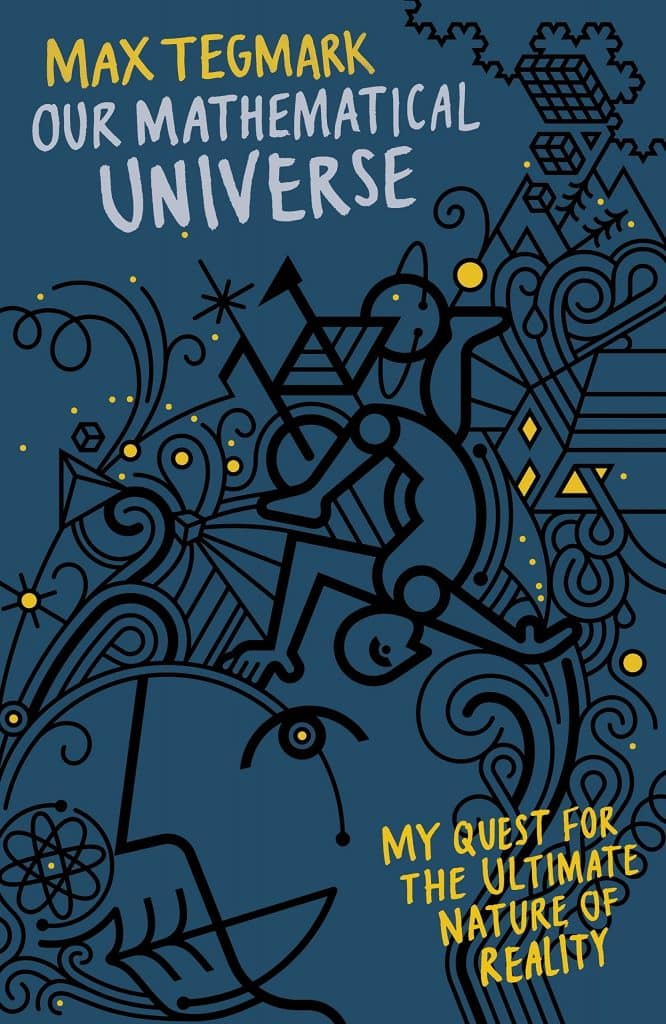
Our Mathematical Universe is a journey to explore the mysteries uncovered by cosmology and discover reality’s nature. Our Big Bang, our distant future, parallel worlds, the sub-atomic and intergalactic – none of them are what they seem. But there is a way to understand this immense strangeness – mathematics. Seeking an answer to the fundamental puzzle of why our universe seems so mathematical, Tegmark proposes a radical idea: that our physical world is not only described by mathematics but that it is mathematics. This may offer answers to our deepest questions: How large is reality? What is everything made of? Why is our universe the way it is?
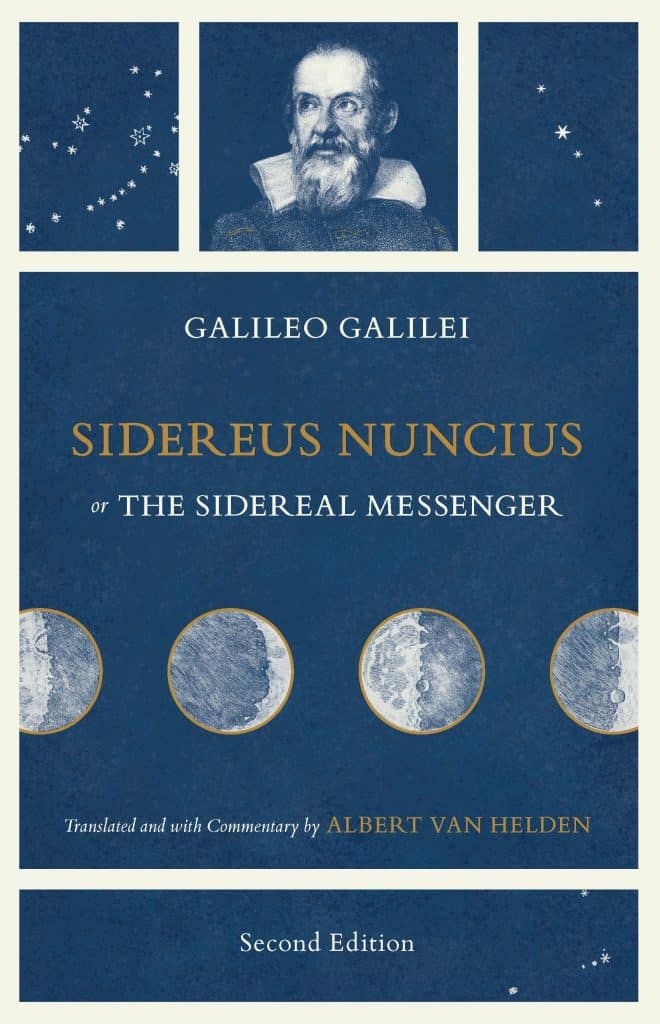
Sidereus Nuncius, or The Sidereal Messenger
Galileo Galilei’s Sidereus Nuncius is arguably the most dramatic scientific book published. It announced new and unexpected phenomena in the heavens, “unheard of through the ages,” revealed by a mysterious new instrument. Galileo had ingeniously improved the rudimentary “spyglasses” that appeared in Europe in 1608. In the autumn of 1609, he pointed his new instrument at the sky, revealing astonishing sights: mountains on the moon, fixed stars invisible to the naked eye, individual stars in the Milky Way, and four moons around the planet Jupiter. These discoveries changed the terms of the debate between geocentric and heliocentric cosmology and helped ensure the eventual acceptance of the Copernican planetary system.
Albert Van Helden’s beautifully rendered and eminently readable translation is based on the Venice 1610 edition’s original Latin text. An introduction, conclusion, and copious notes place the book in its historical and intellectual context, and a new preface, written by Van Helden, highlights recent discoveries in the field, including the detection of a forged copy of Sidereus Nuncius, and new understandings about the political complexities of Galileo’s work.
Why Does E=mc2 and Why Should We Care?
Professor Brian Cox and Professor Jeff Forshaw go on a journey to the frontier of 21st-century science to consider the real meaning behind the iconic sequence of symbols that make up Einstein’s most famous equation, E=mc2. Breaking down the symbols themselves poses a series of questions: What is energy? What is mass? What has the speed of light got to do with energy and mass?
In answering these questions, they take us to the site of one of the largest scientific experiments ever conducted. Lying beneath the city of Geneva, straddling the Franco-Swiss border, is a 27 km particle accelerator known as the Large Hadron Collider. Using this gigantic machine—which can recreate conditions in the early Universe fractions of a second after the Big Bang—Cox and Forshaw will describe the current theory behind the origin of mass.
Alongside questions of energy and mass, they will consider the third, and perhaps, most intriguing element of the equation: ‘c’ – or the speed of light. Why is it that the speed of light is the exchange rate? Answering this question is at the heart of the investigation as the authors demonstrate how, to truly understand why E=mc2, we must first understand why we must move forward in time and not backward and how objects in our 3-dimensional world move in 4-dimensional space-time. In other words, how the very fabric of our world is constructed. A collaboration between two of the youngest professors in the UK, Why Does E=mc2? Promises to be one of the most exciting and accessible explanations of the theory of relativity in recent years.
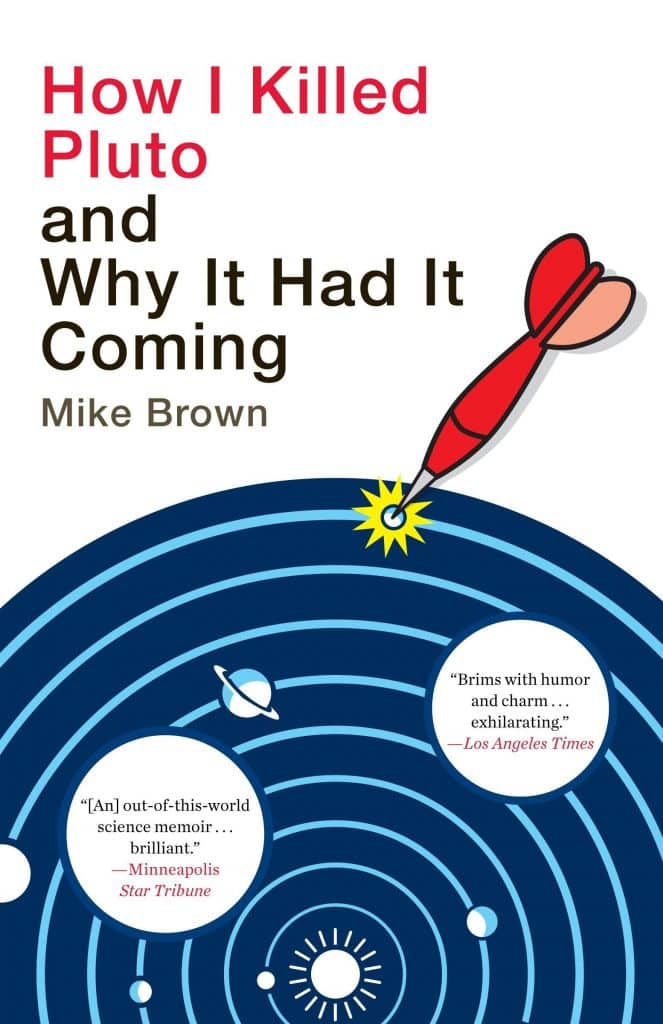
How I Killed Pluto and Why It Had It Coming
Most of us grew up with the solar system, including nine planets, with Mercury closest to the sun and Pluto at the outer edge. Then, in 2005, astronomer Mike Brown discovered of a lifetime: a tenth planet, Eris, slightly bigger than Pluto. But instead of its resulting in one more planet being added to our solar system, Brown’s find ignited a firestorm of controversy that riled the usually sedate world of astronomy and launched him into the public eye. The debate culminated in the demotion of Pluto from a real planet to the newly coined category of “dwarf” planet. Suddenly Brown was receiving hate mail from schoolchildren and being bombarded by TV reporters—all because of the discovery he had spent years searching for and a lifetime dreaming about.
Filled with humor and drama, How I Killed Pluto and Why It Had It Coming is Mike Brown’s engaging first-person account of the most tumultuous year in modern astronomy—which he inadvertently caused. As it guides readers through important scientific concepts and inspires us to think more deeply about our place in the cosmos, it is also an entertaining and enlightening personal story: While Brown sought to expand our understanding of the vast nature of space, his own life was changed in the most immediate, human ways by love, birth, and death. A heartfelt and personal perspective on the demotion of everyone’s favorite far-flung planet, How I Killed Pluto and Why It Had It Coming, is the book for anyone, young or old, who has ever dreamed of exploring the universe—and who among us hasn’t?
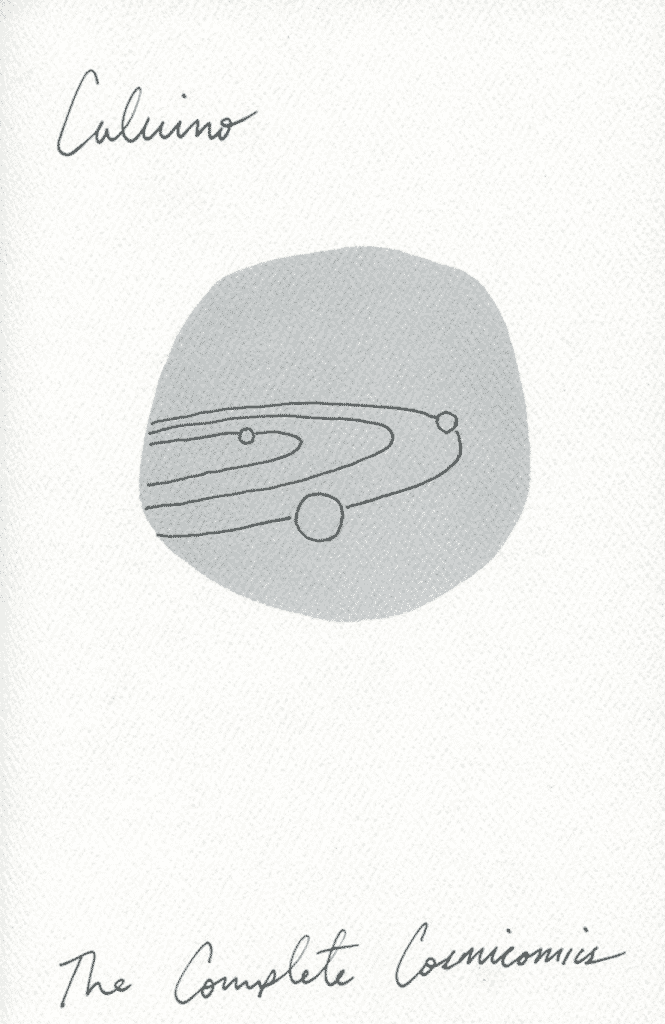
The Complete Cosmicomics
The definitive edition of the cosmicomics, Italo Calvino’s short stories explores natural phenomena and the universe’s origins. The Complete Cosmicomics brings together all of these enchanting stories—including some never before translated—in one volume for the first time.
Italo Calvino’s beloved cosmicomics cross planets and traverse galaxies, speed up time or slow it down to the particles of an instant. Through the eyes of an ageless guide named Qfwfq, Calvino explores natural phenomena and tells the story of the universe’s origins. Poignant, fantastical, and wise, these thirty-four sensational stories—collected here in one definitive anthology—relate complex scientific and mathematical concepts to our everyday world. They are a memorable (and unfailingly delightful) literary achievement.

Heisenberg’s War: The Secret History Of The German Bomb
One of the last secrets of World War II is why the Germans failed to build an atomic bomb. Germany was the birthplace of modern physics; it possessed raw materials and the industrial base and commanded key intellectual resources. What happened?
In Heisenberg’s War, Thomas Powers tells of the interplay between science and espionage, morality and military necessity, and paranoia and cool logic that marked the German bomb program and the Allied response. Based on dozens of interviews and years of intensive research, Powers concludes that Werner Heisenberg, who was the leading figure in the German atomic effort, consciously obstructed the development of the bomb and in a famous 1941 meeting in Copenhagen with his former mentor Neils Bohr in effect sought to dissuade the Allies from their pursuit of the bomb. Heisenberg’s War is a “superbly researched and well-written book” (Time) whose extraordinary story engrosses and haunts.
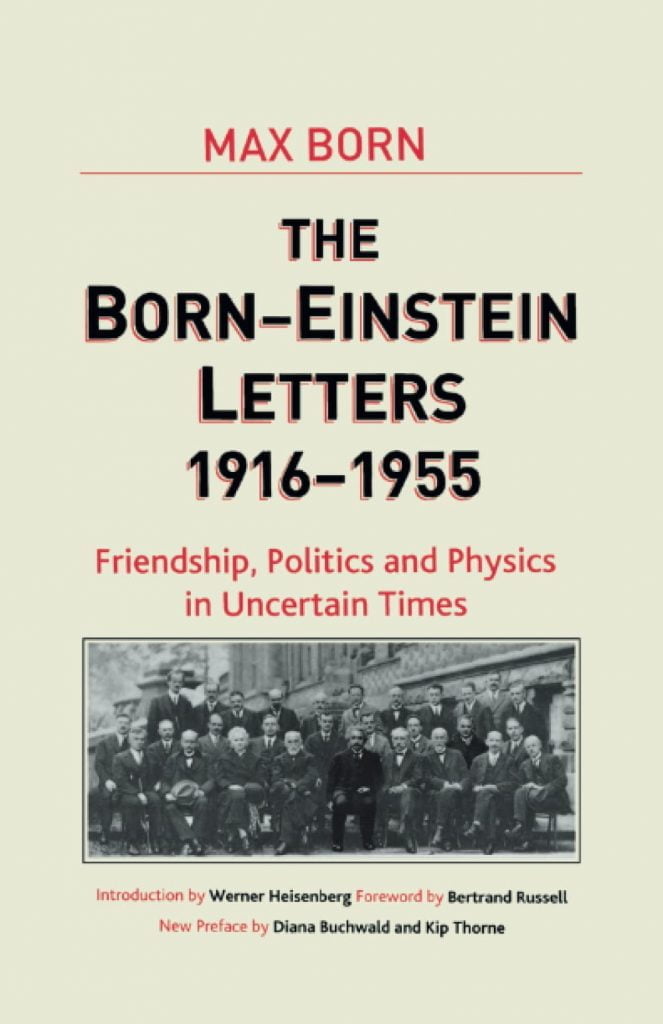
Born-Einstein Letters, 1916-1955: Friendship, Politics and Physics in Uncertain Times
One of the most iconic collections of letters between two Nobel Prize winners, The Born-Einstein Letters, is also one of the most timely: scientists are still grappling with quantum physics, their position in wartime, and the public’s ignorance of the subject.
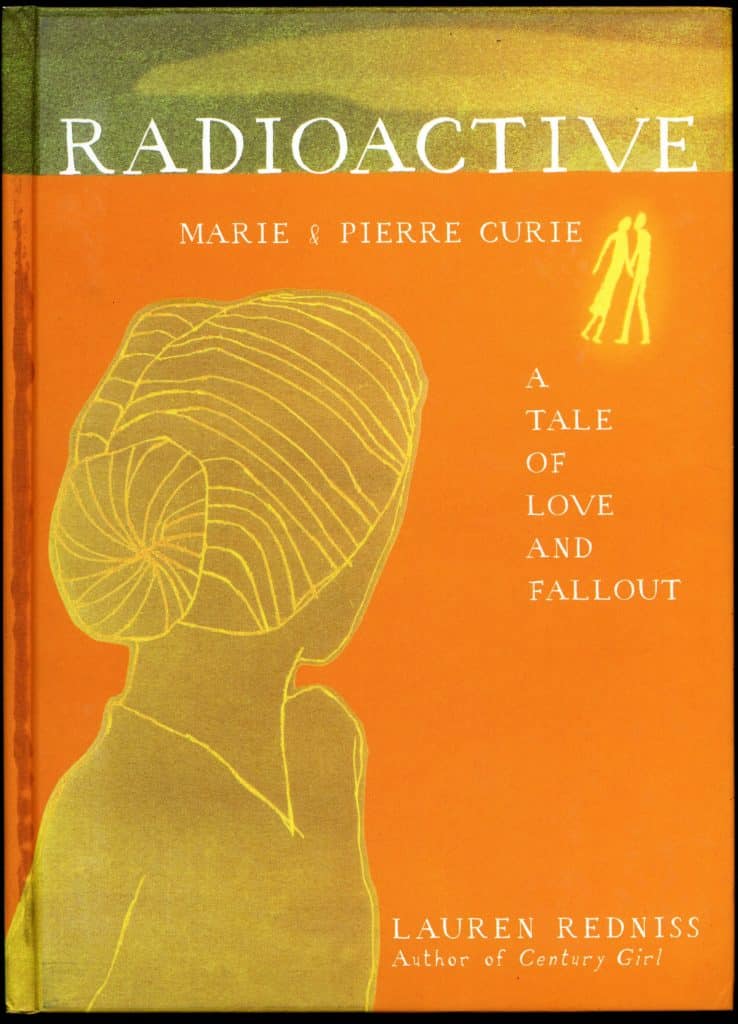
Radioactive: Marie & Pierre Curie: A Tale of Love and Fallout
In 1891, Marie Sklodowska, then 24 years old, relocated from Warsaw to Paris, where she got employment in the laboratory of Pierre Curie, a physicist who was conducting research on heat and magnetism at the time. They became head over heels in love. They rode bicycles across the country for their honeymoon. They expanded the periodic table by discovering two new elements, radium, and polonium, both of which possessed surprising properties. The recognition of radioactivity as an atomic property signaled the beginning of an entirely new era in scientific discovery. They were awarded the Nobel Prize. The Curies’ romance was mythologized by the media, with articles on the couple beginning with the phrase “Once upon a time… ” Then, in 1906, Pierre was tragically killed in an automobile accident. Marie was the only one who continued their task. In 1911, she was awarded a second Nobel Prize for physics, and she fell in love for the second time, this time with the married physicist Paul Langevin. A scandal erupted as a result. There were duels fought.
The Curies’ work has spanned a century, during which we have grappled with nuclear weapons proliferation, discussed the role of radiation in medical treatment, and considered nuclear energy as a solution to climate change. Lauren Redniss’ novel Radioactive weaves these divisive issues with a love story set in nineteenth-century Paris.
In addition to Redniss’s original reporting from Asia, Europe, and the United States, as well as her interviews with scientists, engineers, weapons specialists, atomic bomb survivors, and Marie and Pierre Curie’s granddaughter, Radioactive draws on a variety of other sources.
It is impossible not to be moved by Lauren Redniss’ haunting and magical evocation of one of history’s most intriguing figures, whether you are young or old, a scientific novice or a seasoned professional.