Have you ever considered learning how to think mathematically? Using math proofs requires logical reasoning, problem-solving skills, and the ability to make connections between concepts. By reading math books to learn mathematical proofs, you can unlock the power of this type of thinking and gain valuable insight into a variety of topics. Below, you will find 70 best math books to learn mathematical proofs.
The Benefits of Learning Math Proofs
Math proofs are used in various fields, such as engineering, economics, computer science, physics, and mathematics. Learning to think mathematically will benefit your studies in these fields and give you an edge in other aspects of life, such as problem-solving, decision-making, and critical thinking. Mathematical proofs provide a systematic way to analyze problems so that you can come up with solutions quickly and accurately.
Math Books to Learn Mathematical Proofs
Math books are essential if you want to learn mathematical proof. These books provide an easy-to-understand approach to understanding the fundamentals behind math proofs. They often include step-by-step instructions on how to solve problems as well as visual demonstrations of how these concepts work together. Reading these books is key to developing your skills in mathematical proof because they provide an accessible entry point into more advanced topics like abstract algebra or number theory.
While math books are great for getting started with learning mathematical proof, they have their limitations when it comes to tackling more complex problems. As you progress further down the road with studying math proofs, you must supplement your knowledge with online resources such as YouTube tutorials or online courses that give you a more comprehensive overview of various areas within mathematics.
Additionally, engaging in practice questions can help solidify your understanding and hone your skills when it comes to using logic and reasoning for problem-solving.
Mathematical proof is an invaluable skill that can be applied across multiple fields. It provides a framework for analyzing problems while helping develop your problem-solving abilities and critical thinking skills, which are transferable across many different domains in life. To get started with learning math proof, reading math books is essential as they provide an easy-to-understand introduction to this field while giving step-by-step instructions on how to solve various types of problems. However, as one progresses further into this area, more advanced resources should be utilized, such as online tutorials or courses along with practice questions which will help hone one’s understanding and application within this area even further!
Below, you can find 70 best math books to learn mathematical proofs. If you enjoy this book list, you should also check 30 Best Math Books to Learn Advanced Mathematics for Self-Learners.
Before I get started, I would like to suggest Audible for those of us who are not the best at reading. Whether you are commuting to work, driving, or simply doing dishes at home, you can listen to these books at any time through Audible.

Throughout history, women have made significant contributions to the field of science, paving the way for future generations. In her book “Ten Women Who Changed Science and the World,” author Catherine Whitlock highlights some of the extraordinary female scientists who have changed the course of history. From Marie Curie, who discovered radium and polonium, to Rita Levi-Montalcini, who discovered the nerve growth factor, these women have not only made remarkable scientific discoveries but have also challenged gender norms and contributed to the advancement of women’s rights. Their stories inspire us to strive for greatness and break down barriers, proving that women are just as capable of achieving great things as men.

Chien-Shiung Wu was a pioneer in the field of nuclear physics, and her work has had a lasting impact on the field. Born in China in 1912, Wu showed an early aptitude for mathematics and science, eventually becoming one of the few women to earn a PhD in physics from the University of California, Berkeley. Throughout her career, Wu tackled some of the most challenging problems in nuclear physics, including the question of whether parity was conserved in nuclear reactions. Her groundbreaking experiments showed that, contrary to prevailing theory, parity was not always conserved, a discovery that earned her the nickname “the First Lady of Physics.” Wu’s work continues to be an inspiration to young women pursuing careers in science and serves as a reminder that the boundaries of what is possible are always expanding.
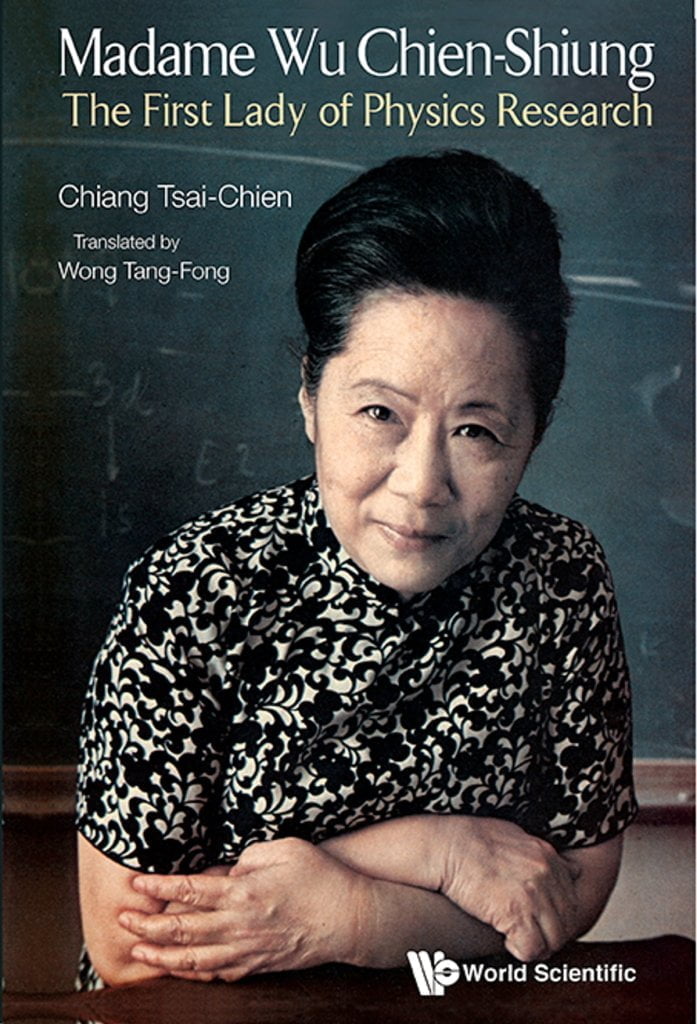
Madame Wu Chien-Shiung was a remarkable physicist, widely considered as the First Lady of Physics Research. Born in China in 1912, she faced numerous obstacles throughout her life, including gender discrimination and political unrest. However, through her tireless efforts and sheer determination, she achieved remarkable success in the field of physics. Her most significant research contribution was the confirmation of the law of conservation of parity experimentally, which not only fundamentally changed the field of physics but also earned her worldwide recognition. Through her extraordinary journey, she never failed to inspire those around her, and remains a role model today for anyone pursuing their dreams amidst challenging circumstances.

Grace Hopper: Admiral of the Cyber Sea, a biography written by Kathleen Broom Williams, is a fascinating account of one of the most important figures in computer science history. Grace Hopper, who lived from 1906 until 1992, was a pioneer in computer programming and helped lay the groundwork for many of the computing innovations we take for granted today. Williams’ book chronicles Hopper’s career, from her time as a mathematician working on some of the earliest computers to her role in developing COBOL, a programming language still in use today. Along the way, readers will learn about Hopper’s personal life and the challenges she faced as a woman working in a male-dominated field. With its mix of biography, technology history, and social commentary, Grace Hopper: Admiral of the Cyber Sea is a must-read for anyone interested in computing or the struggle for equality in the workplace.

Grace Hopper’s contributions to computer science and invention of the first compiler have truly shaped the Information Age we live in today. Through Kurt W. Beyer’s fascinating book, Grace Hopper and the Invention of the Information Age, readers are taken on a journey through Hopper’s life, including her pioneering work at Harvard University, where she began developing the first compiler. Her work was revolutionary in the field of computing, as it allowed programmers to write code in high-level language that could be easily translated into machine language. This book is a wonderful tribute to Hopper’s legacy and an essential read for anyone interested in the history of computing and technology.

Hypatia by Elbert Hubbard is not just a book, but a journey into the life of one of the greatest philosophers and thinkers of ancient times. Dive into the pages and discover the story of a woman who stood tall in a world dominated by men. A woman who dared to question societal norms and pushed the boundaries of knowledge. The book takes us through the life of Hypatia, from her birth to her tragic death, and shows us how her ideas still hold relevance in this modern era. Hubbard’s writing style is captivating and gives you an experience of traveling back in time to witness the life and works of this extraordinary woman. Reading this book will leave you inspired to challenge the status quo and make a difference in your own unique way.
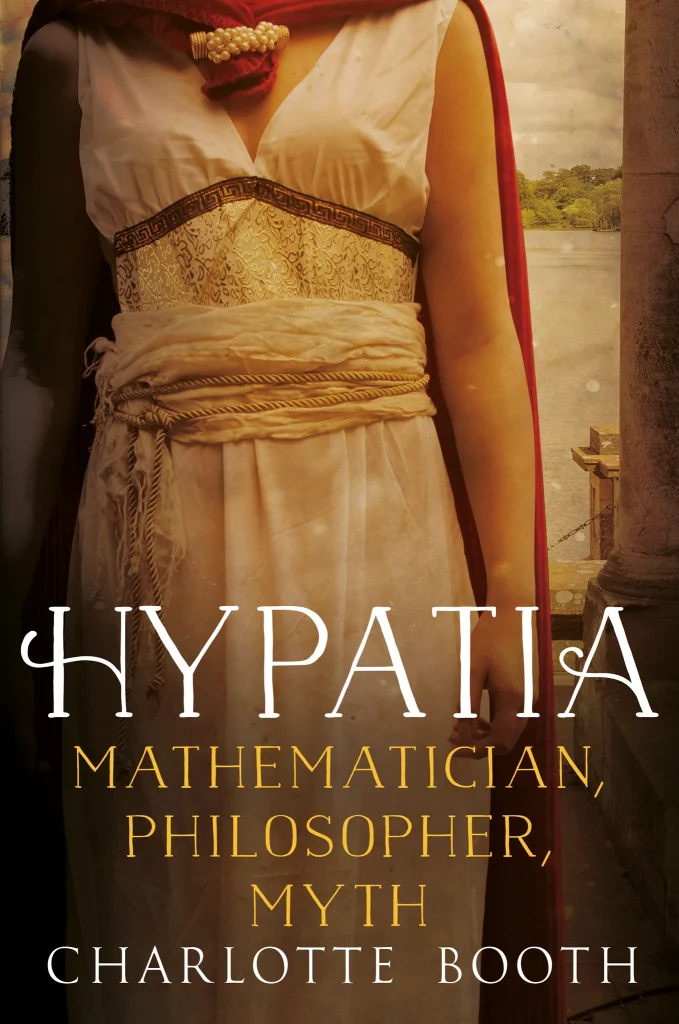
Charlotte Booth’s new book, Hypatia: Mathematician, Philosopher, Myth, illuminates the legacy of a remarkable woman whose story is as fascinating as it is tragic. Hypatia was a renowned mathematician and philosopher, an educator and inventor who lived in Alexandria during the fourth century CE. But she was also a victim of political and religious violence, accused of witchcraft and murdered by a mob. Booth’s book explores Hypatia’s life and work, tracing her intellectual achievements and examining the enduring myths and legends that surround her legacy. It’s a compelling read that sheds new light on one of history’s most important and enigmatic figures.

Hypatia of Alexandria is a name that may not be widely known, but her contributions to mathematics and philosophy cannot be overlooked. In Michael A. B. Deakin’s book, “Hypatia of Alexandria: Mathematician and Martyr,” he delves into the life of this remarkable woman who lived in the 4th century AD. As the daughter of a celebrated mathematician, Hypatia had the best education available and became a respected professor herself. However, her life was cut tragically short when she was brutally murdered by a mob during a period of religious turmoil in Alexandria. Deakin’s book not only sheds light on Hypatia’s intellectual achievements but also on the cultural and religious tensions that ultimately led to her untimely death.

In the world of ancient philosophy, there are many names that come to mind: Socrates, Aristotle, Plato. But there is one name, that of Hypatia, that may not be as well known but is no less important. Edward J. Watts delves into the life and legend of this remarkable woman in his book, “Hypatia: The Life and Legend of an Ancient Philosopher.” A scholar and mathematician during a time when women were not typically given the same opportunities as men, Hypatia was one of the few female philosophers of her era. She was a teacher, a thinker, and a symbol of female empowerment. But her life also ended tragically, as she was brutally murdered by a mob for her beliefs. Through his meticulous research and engaging writing, Watts brings Hypatia’s story to life and sheds light on a fascinating and important figure in ancient history.
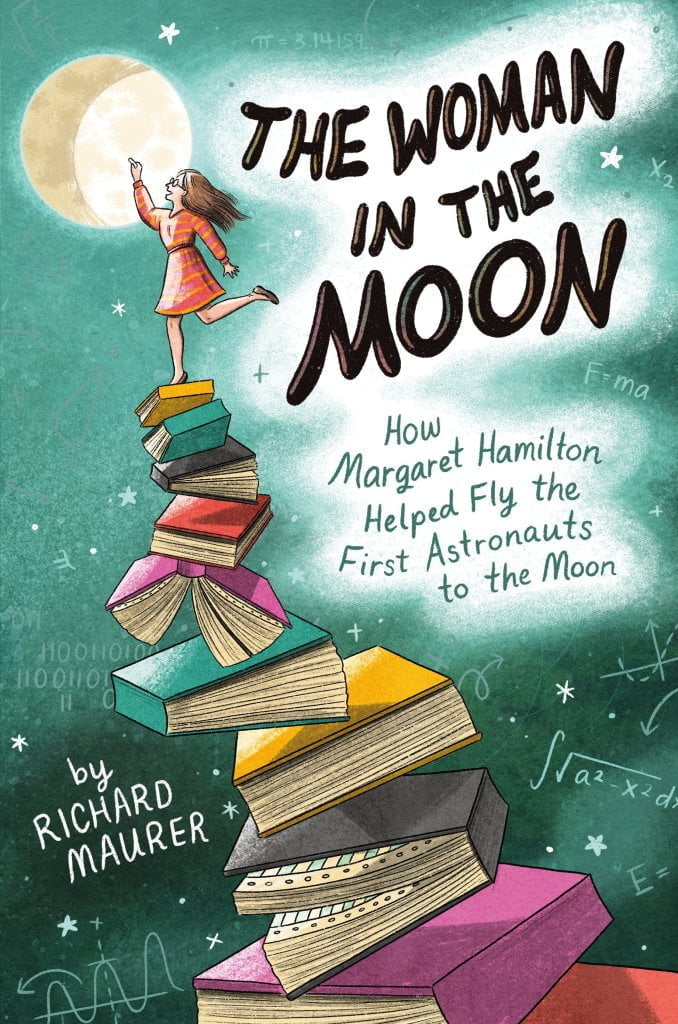
The Woman in the Moon is an awe-inspiring book that tells the story of Margaret Hamilton, a software engineer who played a crucial role in the first moon landing in 1969. Written by Richard Maurer, the book is a captivating tale of how Hamilton’s pioneering work in programming made it possible for NASA to fly the Apollo missions to the moon. Hamilton’s code not only made the lunar landing possible, but it also allowed the spacecraft to orbit and safely return back to Earth. Her contribution to space exploration has been a vital part of NASA’s history. This book is a must-read for anyone who wants to learn about the remarkable woman who helped make the Apollo missions a success.