
Mobile app design is a field in constant evolution, driven by ever-growing user expectations and rapid technological developments.
Designers who aim for the creation of apps that can be user-friendly while being compelling must focus on approaches for providing smooth, intuitive experiences that look beautiful.
One key technique high-performing apps embrace early on is visual storytelling in mobile design, which helps communicate ideas, brand values, and functionality seamlessly through imagery and animation.
This article highlights practical strategies to improve mobile app design with a focus on usability, engagement, also inclusivity.
These perceptions can be applied by researchers across several industries as well as app types.
Personalization and Intelligent User Experiences
Users today expect apps adjusted specifically to their needs and preferences.
Because of how it integrates smart personalization, apps are able to adapt in a dynamic way to individual behaviors as well as locations plus contexts.
Designers are able to increase both retention and user satisfaction through the creation of adaptive interfaces, along with personalized notifications and tailored content feeds.
Machine learning personalizes experiences as it predicts user intent.
Machine learning proactively offers relevant suggestions or shortcuts as well.
To design considerately here, designers with developers must collaborate to translate data perceptions into fluid user adventures that never feel intrusive but prove useful.
Clean Interfaces with Engaging Micro-Interactions
Simplicity in mobile app design is important in order to keep users focused so as to reduce cognitive load, but lifelessness should not be the aim of minimalism.
Subtle micro-interactions are added, with responsive button animations, gentle transitions, and visual feedback.
This addition turns still screens into active interfaces, guiding user behavior easily.
Micro-interactions importantly cue and reassure users that their actions have registered, and they help to engage senses by delighting without overwhelming them.
To design these details, one must carefully attend to when the animation occurs, how heavy things visually are, also whether things are consistent.
Prioritize Accessibility and User Comfort
High-quality design is inclusive while it also respects the preferences and capabilities of diverse users.
User-friendly apps for people facing visual, auditory, cognitive, or motor issues expand the user base.
Doing so also strengthens the brand reputation.
Important features are the alternative input methods with sufficient color contrast and scalable font sizes.
As a feature that is sought after, dark mode improves readability and reduces eye strain, especially in environments that are low-light environments.
For clarity coupled with visual harmony, designers should extensively test interfaces under light and dark themes.
Responsive Layouts and Device Adaptability
Mobile devices come in quite a wide range of orientations and screen sizes.
Responsive layouts adjust content fluidly also ensure consistent usability whether users use phones, tablets, or foldable devices.
Elements should reposition and resize smartly instead of scaling, since readability and navigation ease are preserved.
Also, apps must function quickly.
They also must load with speed and react promptly to input.
Since screens happen to be overloaded by too many interactive elements, they can slow responsiveness and confuse users, thus contributing to churn.
Voice and Gesture Interaction Integration
Beyond taps and swipes, convenience and accessibility are incorporated when we add voice commands and gesture navigation.
Voice interfaces ease hands-free operation and multitasking, and also require a clear conversational design along with graceful error handling so as to optimize the experience.
Gesture controls free up screen space and enable more natural movements through touch.
User frustration is avoided if the controls are intuitive as well as easily discoverable.
Mastering Visual Storytelling in Mobile Design
Early in the design process, visual storytelling gets integrated into mobile design and then establishes a strong connection with users.
Complex information is communicated quickly as well as memorably through storytelling via visuals, animations, and layouts.
Storytelling does not have reliance that is heavily on text for that communication.
For example, new users can be guided through key functions by animated onboarding sequences, while data visualizations can convey insights at a glance.
Stories that are created visually strengthen emotional engagement with brand identity, which helps users relate to and retain critical app information.
Consistency and Clarity in Design Language
Maintaining a uniform design language throughout the app builds familiarity and trust.
Uniform typography and color schemes, along with icon styles and interaction patterns, work to reduce cognitive friction so they cohere into an experience.
Clear visual hierarchy with intentional use of visual weight directs the user’s attention toward the most important elements on each screen because they make navigation and task completion intuitive.
Memory load should be minimized upon every screen.
Users should not be forced to have just to guess or recall where it is that they can find features.
Efficient Feedback and Error Handling
Providing immediate, understandable feedback is vital when users interact with the app.
Visual and audio cues for confirming actions prevent confusion, and friendly error messages help users recover smoothly from mistakes.
This approach can reduce feelings of frustration and abandonment since it reinforces more positive experiences, and in turn, it improves overall long-term user loyalty.
Leveraging Tools for Design Continuity
To hasten design teams’ use of pattern libraries plus design repositories to keep up quality.
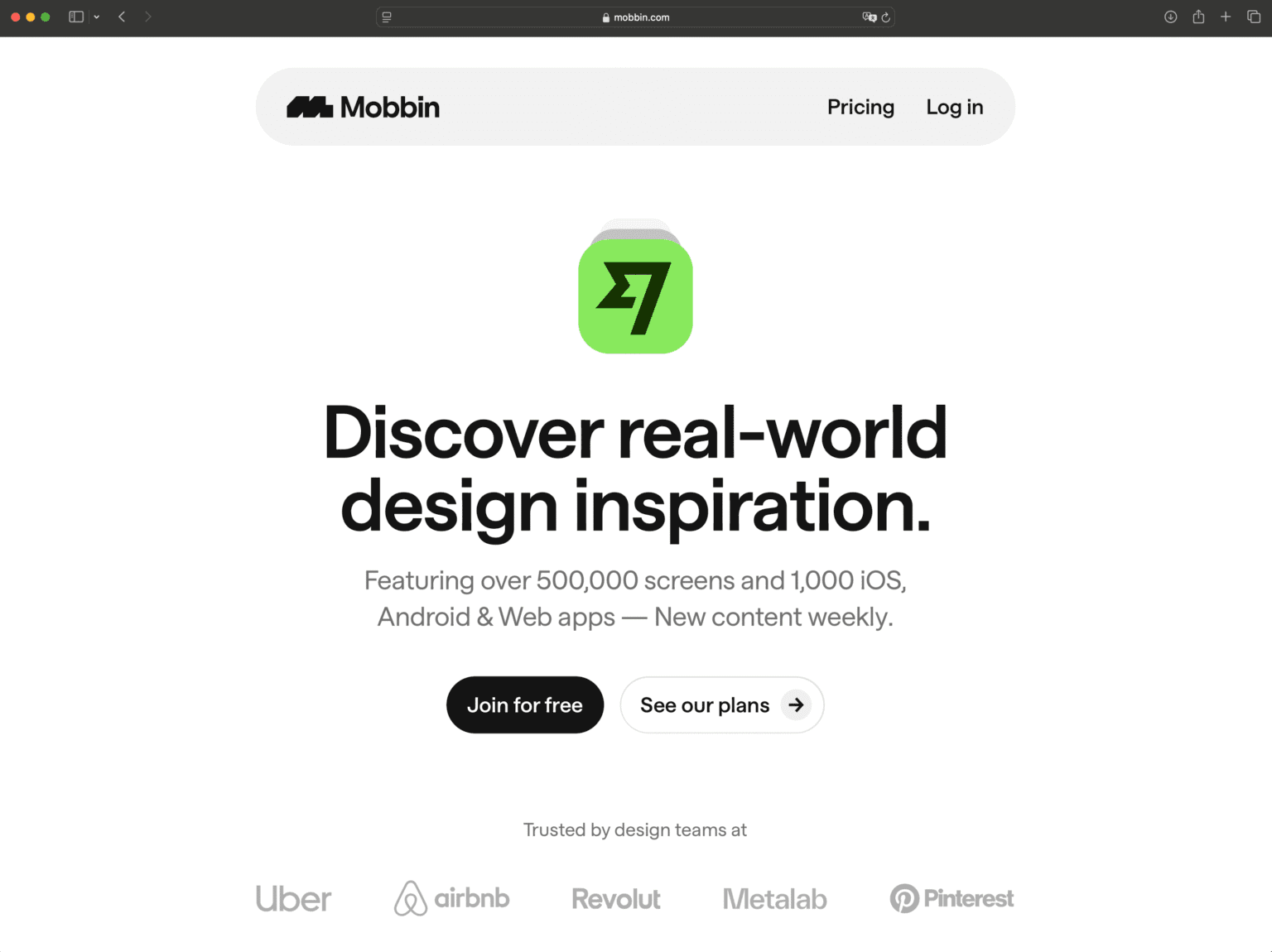
Mobbin lets users see selected instances of outstanding mobile app interfaces.
Platforms such as these inform design decisions without reinventing the wheel.
Adopting such tools ensures that things align with standards as well as inspires people to innovate, basing that on tested success.
Mobile app designers are able to create quite compelling and effective apps through embracing smart personalization and micro-interactions with inclusivity, and then visual storytelling.
These apps will resonate with users as well as stand out in crowded markets by using these strategies.
Apps do remain both functional and delightful, ensuring that emerging interaction patterns innovate with user needs at the center.
Design success is about the experiences that are smooth and meaningful for the users who want to revisit, and not aesthetics.


