Genius is a fragile gift. While some of history’s greatest minds were granted long lives to explore their ideas, many were not so fortunate. Time is not always on the side of the gifted, and the world of mathematics is filled with stories of profound talent extinguished far too early. This post explores the lives and legacies of eleven brilliant mathematicians whose careers were tragically cut short. Though their time was limited, their contributions are foundational, forever changing the way we understand numbers, space, and logic.
From 19th-century pioneers who battled poverty and illness to a modern-day Fields Medalist, their stories are both heartbreaking and inspiring. We celebrate the incredible depth of the work these brilliant mathematicians accomplished. Their work proves that the power of a great idea is not measured in years, but in its ability to withstand the test of time. These are the stories of geniuses who, despite their brief time on earth, left behind an infinite legacy.
1. Niels Henrik Abel (1802–1829)
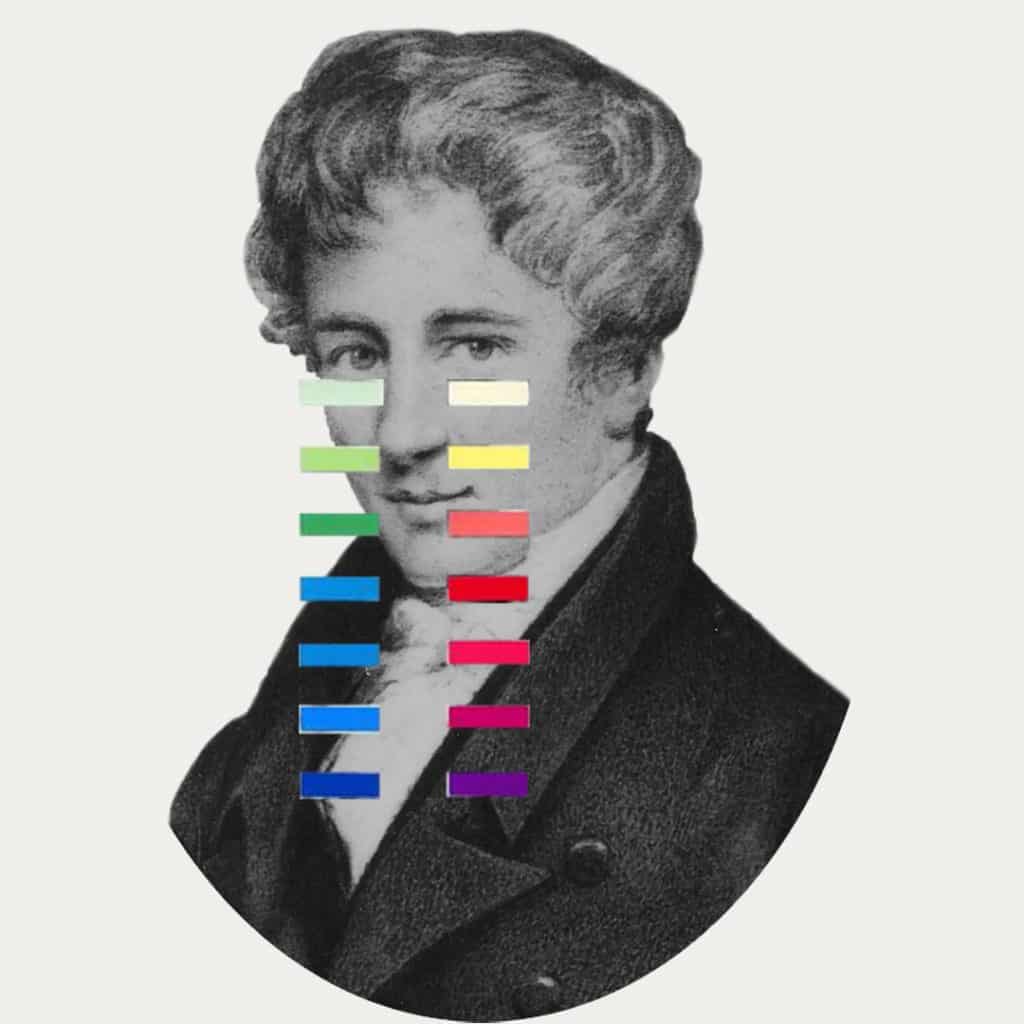
Niels Henrik Abel was a Norwegian mathematician who lived a life marked by poverty but defined by extraordinary intellectual achievement. Despite his difficult circumstances, he produced work that would fundamentally alter the course of mathematics.
His most famous accomplishment is the Abel–Ruffini theorem, which proved it was impossible to solve quintic equations (polynomials of the fifth degree) using standard algebraic operations. This solved a problem that had stumped mathematicians for centuries. He also did groundbreaking work on elliptic functions, which became a major field of study in the 19th century.
Tragically, Abel died from tuberculosis at the age of 26. He passed away just two days before a letter arrived offering him a professorship at the University of Berlin—a position that would have finally provided him with financial stability. In his honor, the Abel Prize was established, now considered one of the most prestigious awards in mathematics.
2. Évariste Galois (1811–1832)

The life of Évariste Galois was as turbulent and revolutionary as his mathematics. A passionate political activist in post-revolution France, his short life was filled with conflict and turmoil. Yet, in the midst of this chaos, he developed concepts that were decades ahead of their time.
Galois is the father of what is now known as Galois theory, a profound field of abstract algebra that connects field theory with group theory. He created a method to determine whether a polynomial equation could be solved by radicals, a major advancement from Abel’s work.
His life ended in a duel at the age of just 20. The exact reasons for the duel remain a subject of historical debate. Knowing he would likely die, Galois spent the entire night before the duel frantically writing down his mathematical discoveries, desperate to preserve his ideas for posterity. His work, initially overlooked, was later recognized as a monumental achievement by other brilliant mathematicians.
3. Gotthold Eisenstein (1823–1852)
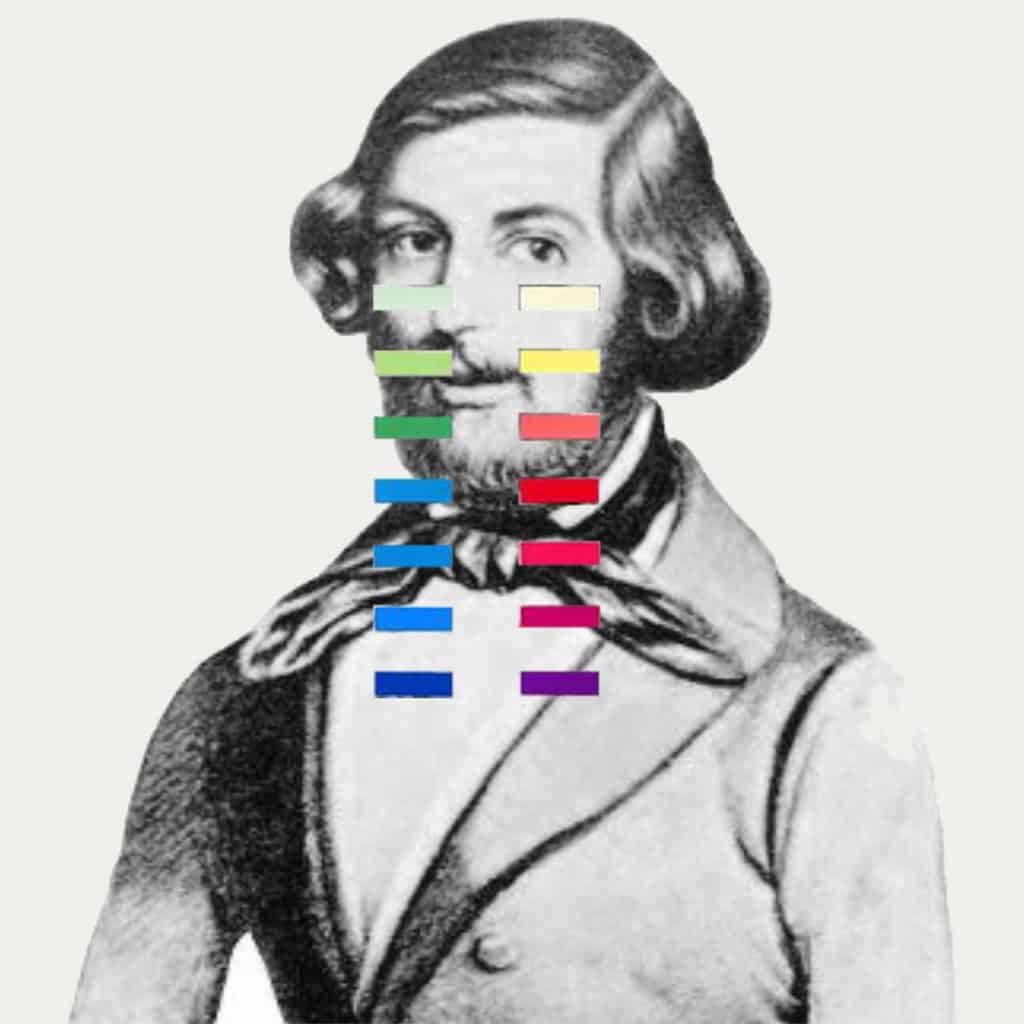
Ferdinand Gotthold Max Eisenstein battled poor health and poverty throughout his life but earned the profound respect of the era’s greatest mathematical mind, Carl Friedrich Gauss. Gauss famously declared that there had been “only three epoch-making mathematicians: Archimedes, Newton, and Eisenstein.”
Eisenstein’s work focused primarily on number theory and analysis. He made significant contributions to the theory of quadratic forms and developed what are now known as “Eisenstein integers” and “Eisenstein series.” These concepts have become fundamental tools in modern number theory. His contributions helped build the foundation for an entire generation of brilliant mathematicians.
Like many on this list, Eisenstein succumbed to tuberculosis, dying at the age of 29. His death was a significant loss, as Gauss and others believed he was on the path to making even greater discoveries.
4. Bernhard Riemann (1826–1866)
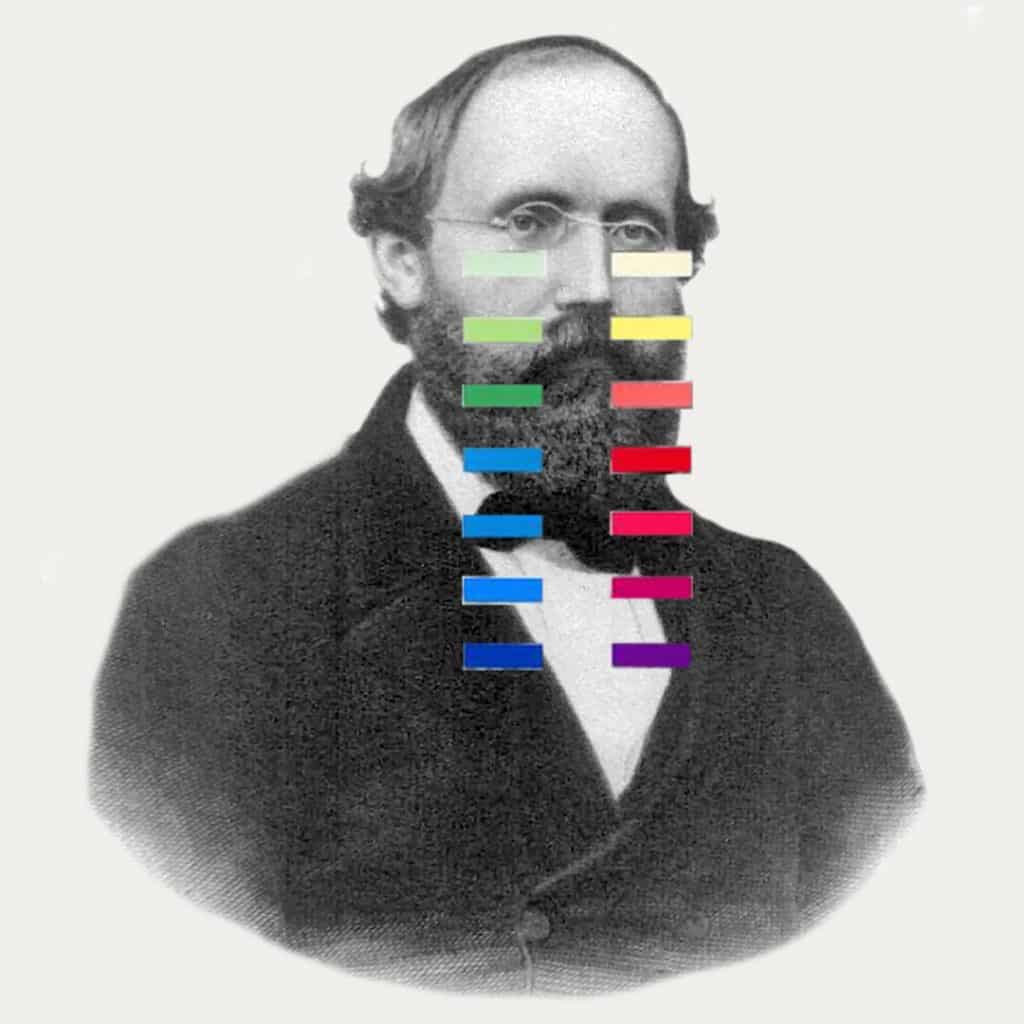
A shy and perfectionistic student of Gauss, Bernhard Riemann was one of the most influential mathematicians of the 19th century. His work reshaped multiple areas of mathematics and provided the essential framework for one of the most important scientific theories in history.
Riemann’s most celebrated contribution is Riemannian geometry. This field generalizes the concepts of geometry to curved spaces and higher dimensions. Decades later, Albert Einstein would use Riemannian geometry as the mathematical language for his theory of general relativity. Riemann is also famous for the Riemann Hypothesis, a conjecture about the distribution of prime numbers that remains one of the most famous unsolved problems in all of mathematics. His work cemented his place among the most brilliant mathematicians of his era.
He died of tuberculosis at age 39 while on a trip to Italy, a journey he had taken in hopes of improving his fragile health.
5. William Kingdon Clifford (1845–1879)
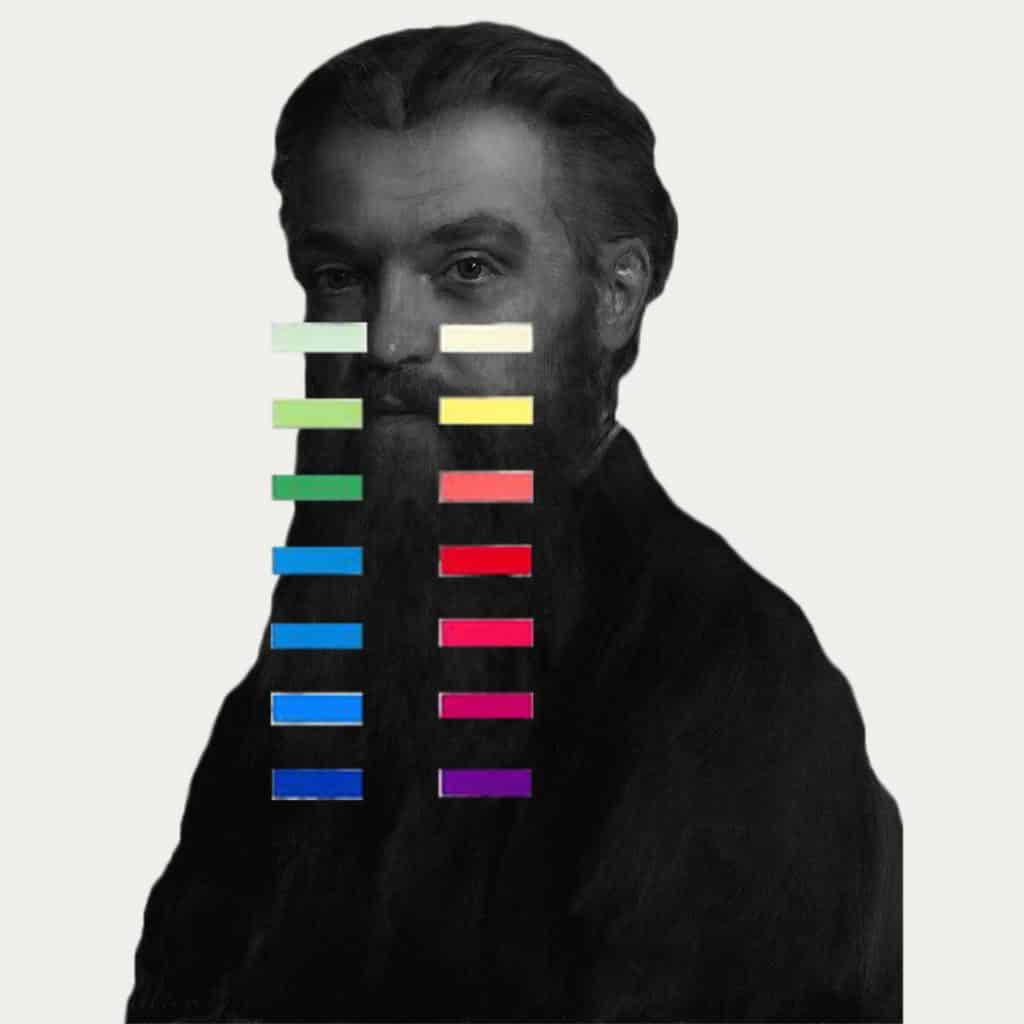
William Kingdon Clifford was a true polymath—an accomplished philosopher and gymnast in addition to being a visionary mathematician. His creative and unconventional mind saw connections between disciplines that others missed.
Clifford is best known for introducing Geometric Algebra, now often called Clifford Algebra in his honor. This powerful mathematical system unifies and generalizes complex numbers, quaternions, and vector algebra into a single framework. Today, Clifford Algebras are essential tools in theoretical physics, computer graphics, and robotics, demonstrating how far ahead of his time he was.
Years of overwork and a series of nervous breakdowns took a toll on his health. He contracted tuberculosis and passed away at the age of 33, leaving behind a legacy of ideas that would only be fully appreciated decades later.
6. Pavel Urysohn (1898–1924)

Pavel Urysohn was a Russian mathematician whose intense focus and passion were directed toward the emerging field of topology, the study of the properties of geometric objects that are preserved under continuous deformations.
In his very short career, Urysohn made foundational contributions. He developed Urysohn’s metrization theorem, which provides a condition for when a topological space can be given a metric. He is also credited with developing the first mathematically rigorous definition of dimension, a concept that is intuitive but notoriously difficult to formalize.
His promising career was cut short in a tragic accident. While on vacation, he drowned while swimming off the coast of Brittany, France, at the age of 26. His work helped establish topology as a major branch of modern mathematics.
7. Frank Ramsey (1903–1930)

Frank P. Ramsey was a British intellectual prodigy who made profound contributions to mathematics, philosophy, and economics, all before his 27th birthday. As a close friend of Ludwig Wittgenstein and John Maynard Keynes at Cambridge, he was at the center of intellectual life in the early 20th century.
In mathematics, he is the father of Ramsey Theory. This field explores the conditions under which order must appear in a system. The core idea is that complete disorder is impossible; any sufficiently large structure will contain a highly ordered substructure. This seemingly simple concept has grown into a vast and influential branch of combinatorics.
Ramsey suffered from chronic liver problems throughout his life. He died at the astonishingly young age of 26 following complications from abdominal surgery.
8. René Gâteaux (1889–1914)

René Gâteaux was a promising French mathematician whose career had barely begun when it was cut short by global conflict. His work showed immense potential in the developing field of functional analysis.
Gâteaux is remembered for the “Gâteaux derivative,” a concept that generalizes the notion of a derivative to functions defined on infinite-dimensional spaces. This idea has become a fundamental tool in the calculus of variations and optimization theory.
His work was tragically interrupted when he was killed in action at the age of 25 during one of the early battles of World War I. Many of his mathematical papers were lost, but some were recovered and published posthumously, securing his place in the history of analysis.
9. Yutaka Taniyama (1927–1958)

Yutaka Taniyama was a Japanese mathematician known for his deep intuition and visionary ideas. He, along with his colleague Goro Shimura, proposed a conjecture that revealed a stunning and unexpected connection between two completely different areas of mathematics.
The Taniyama-Shimura conjecture proposed that every elliptic curve (an object from algebraic geometry) is related to a modular form (a type of function from number theory). This idea was so profound that it was initially met with skepticism. Decades later, this conjecture would become the key to Andrew Wiles’s proof of Fermat’s Last Theorem, one of the most celebrated achievements in modern mathematics.
Tragically, Taniyama took his own life at the age of 31. His death was a profound shock to the global mathematical community and a devastating loss of one of its most creative minds.
10. Maryam Mirzakhani (1977–2017)

Maryam Mirzakhani stands as a monumental figure in modern mathematics. An Iranian mathematician, she was the first and, to date, only woman to win the Fields Medal, the most prestigious award in mathematics, often described as the “Nobel Prize of Math.”
Her work was highly complex, focusing on the dynamics and geometry of Riemann surfaces. She provided elegant and surprising insights into the behavior of geodesics on these surfaces, solving several long-standing problems. Her research connected multiple fields and opened up new avenues of exploration. The loss of such brilliant mathematicians is felt across the entire scientific community.
Mirzakhani was diagnosed with breast cancer in 2013. She continued her research while undergoing treatment but sadly passed away in 2017 at the age of 40. Her death was a great loss for the world of mathematics and for women in STEM, for whom she was an inspirational role model.
11. Alfred Clebsch (1833–1872)
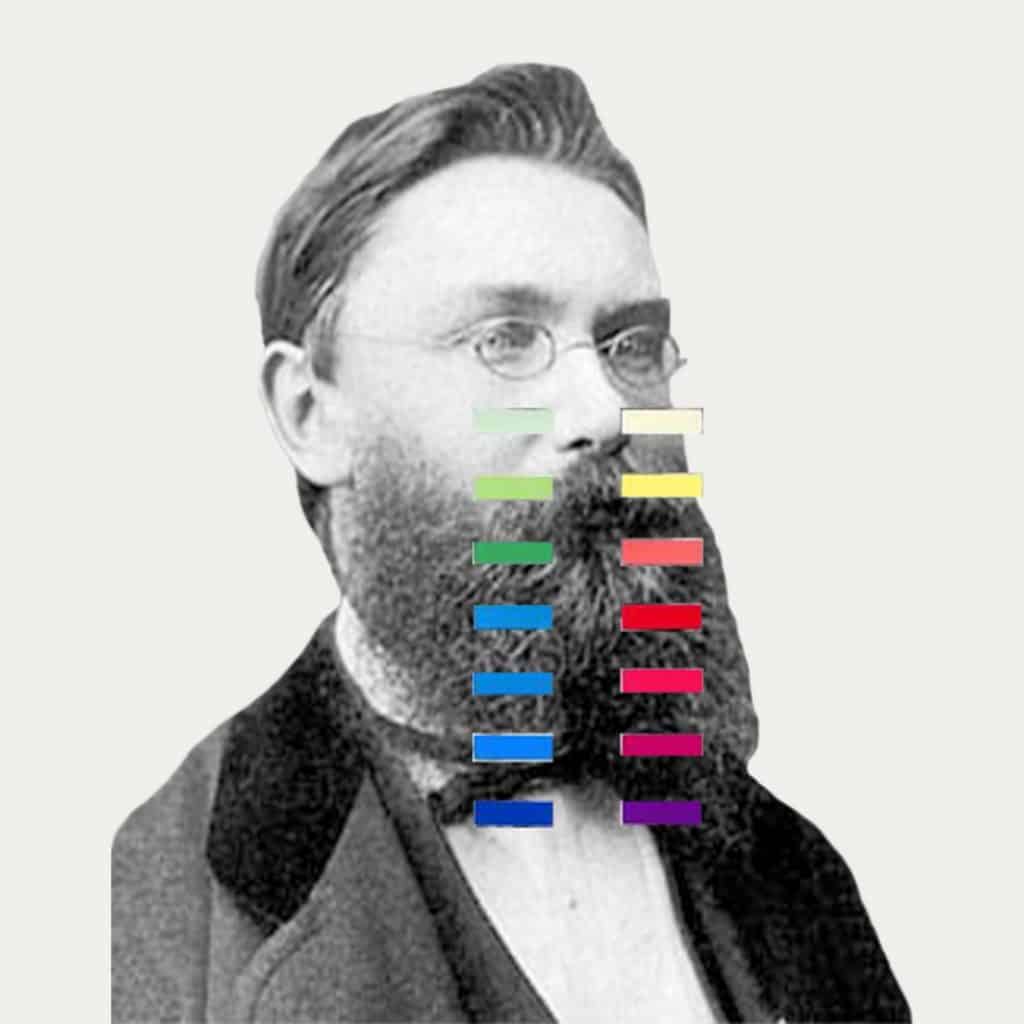
Alfred Clebsch was a prominent German mathematician who made profound contributions to algebraic geometry and invariant theory. Renowned for his elegant mathematical approach, Clebsch played a vital role in shaping many of the concepts that guide modern mathematics today.
Clebsch is particularly known for his work on the theory of algebraic surfaces and the development of Clebsch–Gordan coefficients, which are crucial in both mathematics and quantum physics. He also introduced fundamental ideas in the classification of surfaces, including the concept of genus, and co-founded the influential mathematical journal Mathematische Annalen.
Despite the breadth of his vision and output, Clebsch’s life was tragically brief. He died suddenly of diphtheria at just 39 years old, cutting short a career that had already influenced countless other brilliant mathematicians. His legacy endures through the concepts that bear his name and the generations of mathematicians he inspired.
A Lasting Legacy
The collective impact of these eleven brilliant mathematicians is immeasurable. One can only wonder how much further they might have pushed the boundaries of human knowledge had they been granted more time. Their stories are a poignant reminder of the fragility of life, but they also showcase the enduring power of mathematical truth. The theorems and theories they discovered remain as true and as beautiful today as when they were first written.
The work of these brilliant mathematicians lives on, forming the bedrock of modern science and technology. We encourage you to explore their specific contributions to fully appreciate the incredible legacy they left behind in such a short time.
Which mathematician’s story resonates most with you? Are there other unsung heroes you believe belong on this list? Share your thoughts in the comments below.
Meta Title: 11 Brilliant Mathematicians Who Died Young & Changed History
Meta Description: Explore the lives and legacies of 11 brilliant mathematicians like Ramanujan and Galois whose time was short but whose impact is eternal.